 Скачать презентацию BAROKKEN BAROQUE Epoke innanfor musikk biletkunst
b003e533d0f5d7aba443e8c48f780ec5.ppt
- Количество слайдов: 10




BAROKKEN/BAROQUE: ● ● ● Epoke innanfor musikk, biletkunst og arkitektur frå 1600 -1750. Tok til i Italia. Store og flotte byggverk skulle vise makta og innverknaden til kyrkja. Vanlege folk måtte betale høg skatt til kyrkja -> kyrkja vart rik og mektig, medan folket ofte levde i stor fattigdom. ● ● Kjende kunstnar: Michelangelo. ● Period of music, art and architecture from 1600 -1750. Started in Italy. Large and beautiful bulidings were put up to show the power and influence of the church. Ordinary people had to pay taxes to the church -> the church became rich and powerful, while people lived in extreme poverty. Famous artist: Michelangelo.
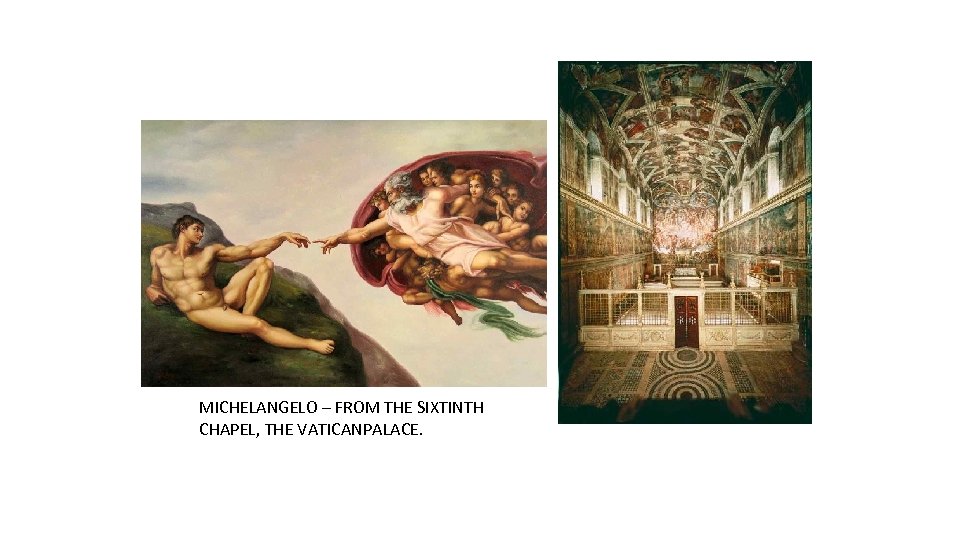
MICHELANGELO – FROM THE SIXTINTH CHAPEL, THE VATICANPALACE.
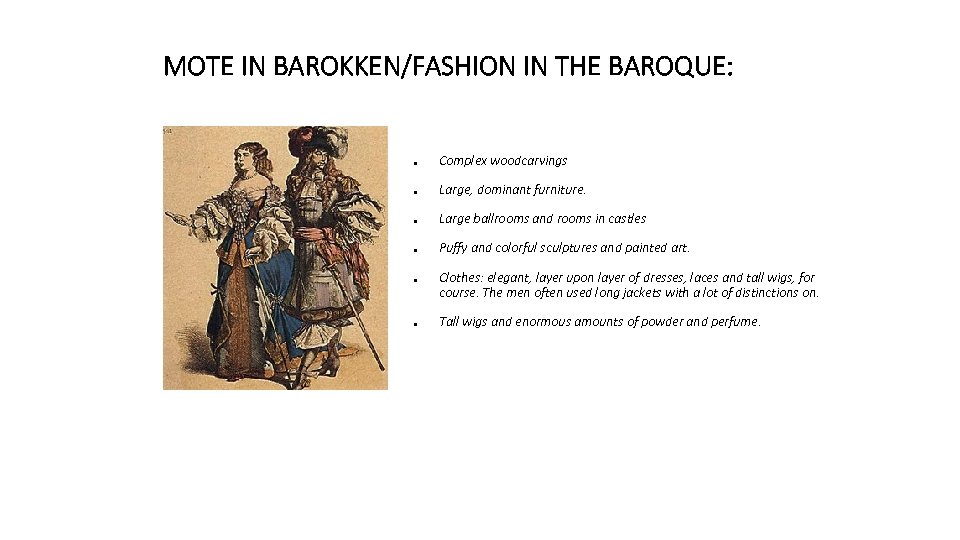
MOTE IN BAROKKEN/FASHION IN THE BAROQUE: ● Complex woodcarvings ● Large, dominant furniture. ● Large ballrooms and rooms in castles ● Puffy and colorful sculptures and painted art. ● ● Clothes: elegant, layer upon layer of dresses, laces and tall wigs, for course. The men often used long jackets with a lot of distinctions on. Tall wigs and enormous amounts of powder and perfume.
BAROKKMUSIKKEN/THE MUSIC: ● The minor- and majorscales were used systematically for the first time. ● The generalbass-system (one basstone lying through long parts of music) ● Cembalo; the most important instrument to use together with solists. ● «Terrace-dynamics» (things get bigger and bigger). ● Quick compositions: evolving tecnique. ● The slow compositions within the baroque often have nice, recognizable melodies.
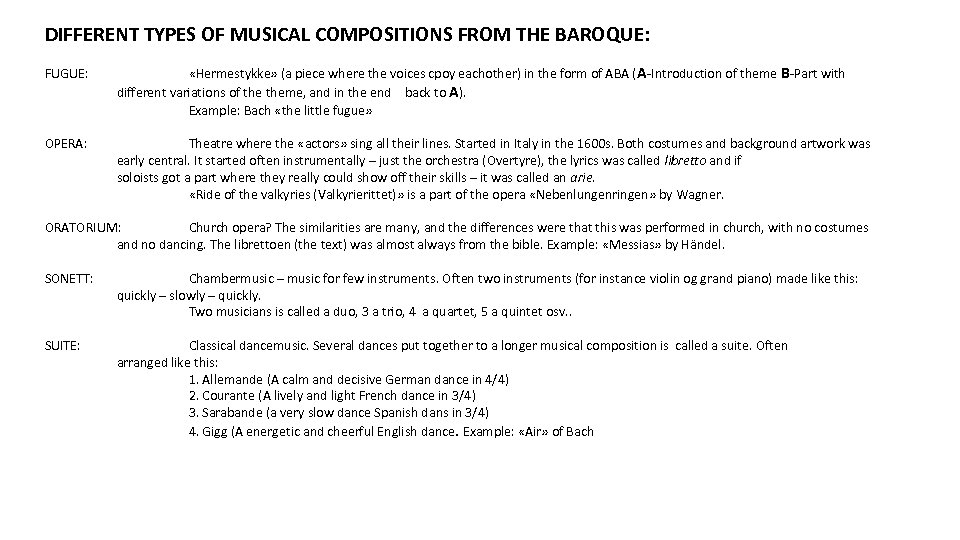
DIFFERENT TYPES OF MUSICAL COMPOSITIONS FROM THE BAROQUE: FUGUE: «Hermestykke» (a piece where the voices cpoy eachother) in the form of ABA ( A-Introduction of theme B-Part with different variations of theme, and in the end back to A). Example: Bach «the little fugue» OPERA: Theatre where the «actors» sing all their lines. Started in Italy in the 1600 s. Both costumes and background artwork was early central. It started often instrumentally – just the orchestra (Overtyre), the lyrics was called libretto and if soloists got a part where they really could show off their skills – it was called an arie. «Ride of the valkyries (Valkyrierittet)» is a part of the opera «Nebenlungenringen» by Wagner. ORATORIUM: Church opera? The similarities are many, and the differences were that this was performed in church, with no costumes and no dancing. The librettoen (the text) was almost always from the bible. Example: «Messias» by Händel. SONETT: Chambermusic – music for few instruments. Often two instruments (for instance violin og grand piano) made like this: quickly – slowly – quickly. Two musicians is called a duo, 3 a trio, 4 a quartet, 5 a quintet osv. . SUITE: Classical dancemusic. Several dances put together to a longer musical composition is called a suite. Often arranged like this: 1. Allemande (A calm and decisive German dance in 4/4) 2. Courante (A lively and light French dance in 3/4) 3. Sarabande (a very slow dance Spanish dans in 3/4) 4. Gigg (A energetic and cheerful English dance. Example: «Air» of Bach
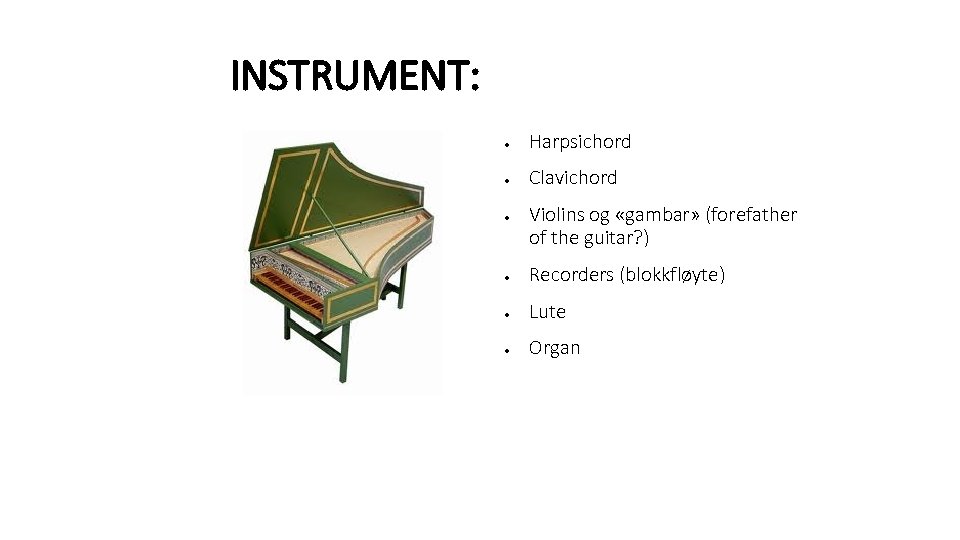
INSTRUMENT: ● Harpsichord ● Clavichord ● Violins og «gambar» (forefather of the guitar? ) ● Recorders (blokkfløyte) ● Lute ● Organ
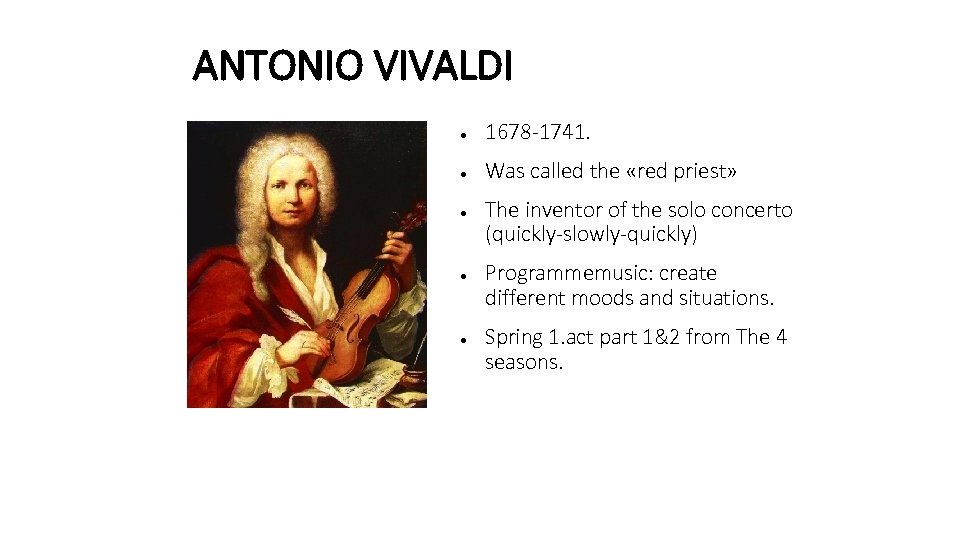
ANTONIO VIVALDI ● 1678 -1741. ● Was called the «red priest» ● ● ● The inventor of the solo concerto (quickly-slowly-quickly) Programmemusic: create different moods and situations. Spring 1. act part 1&2 from The 4 seasons.
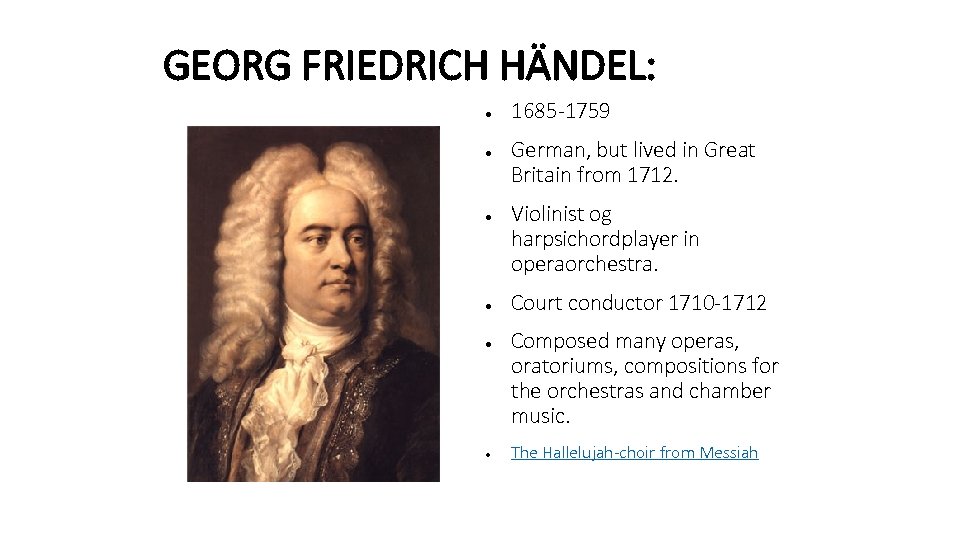
GEORG FRIEDRICH HÄNDEL: ● ● ● 1685 -1759 German, but lived in Great Britain from 1712. Violinist og harpsichordplayer in operaorchestra. Court conductor 1710 -1712 Composed many operas, oratoriums, compositions for the orchestras and chamber music. The Hallelujah-choir from Messiah
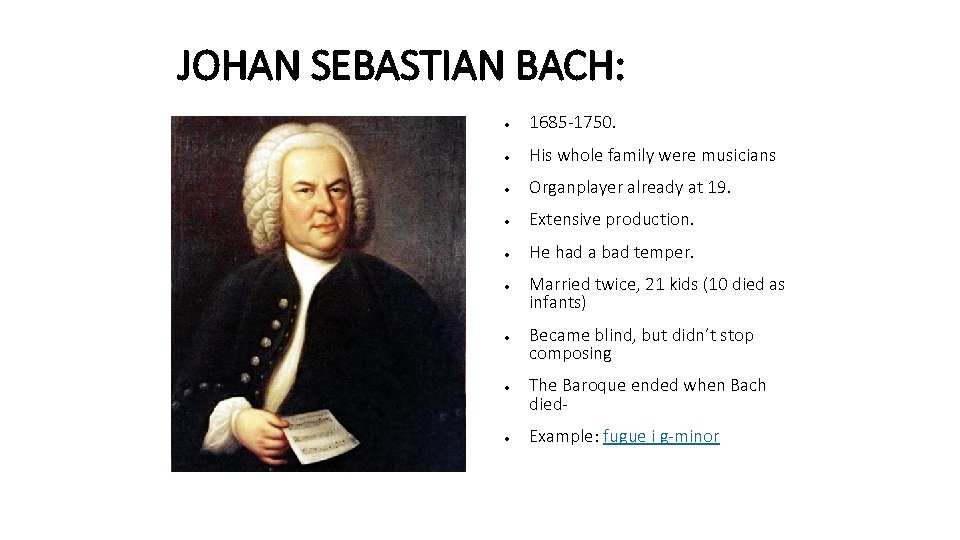
JOHAN SEBASTIAN BACH: ● 1685 -1750. ● His whole family were musicians ● Organplayer already at 19. ● Extensive production. ● He had a bad temper. ● ● Married twice, 21 kids (10 died as infants) Became blind, but didn’t stop composing The Baroque ended when Bach died. Example: fugue i g-minor
Скачать презентацию BAROKKEN BAROQUE Epoke innanfor musikk biletkunst
b003e533d0f5d7aba443e8c48f780ec5.ppt