 Скачать презентацию Balanced Development of HK Region Programs
1ec27d3ee88a3f21dfa3abdcabd8c1bf.ppt
- Количество слайдов: 44



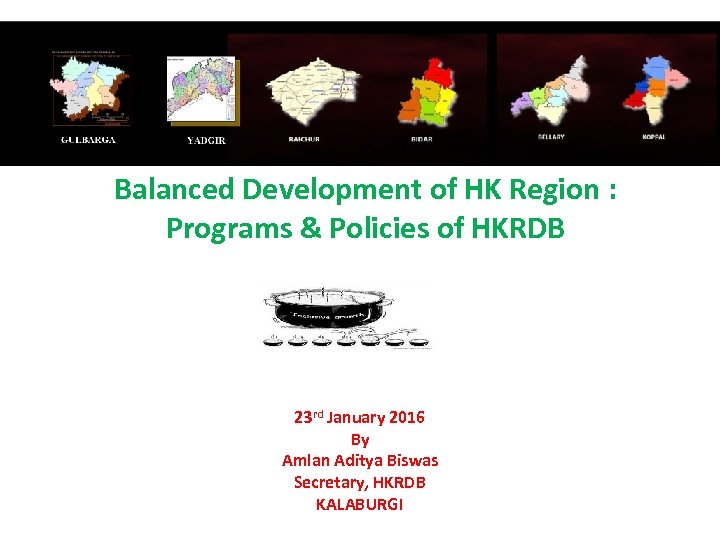
Balanced Development of HK Region : Programs & Policies of HKRDB 23 rd January 2016 By Amlan Aditya Biswas Secretary, HKRDB KALABURGI

“Those whom you push down will chain you down, Those whom you leave behind will pull you behind, The more you envelop them under darkness of ignorance, The more distant will your own welfare be, ” "Disgraced", Rabindranath Tagore.
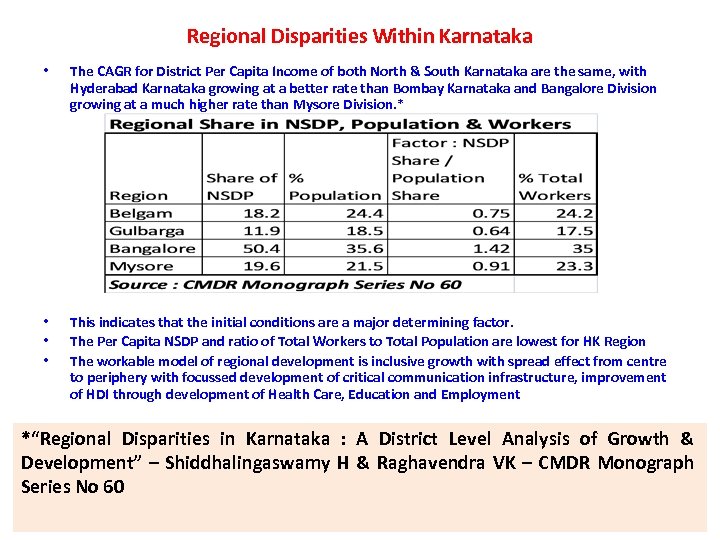
Regional Disparities Within Karnataka • The CAGR for District Per Capita Income of both North & South Karnataka are the same, with Hyderabad Karnataka growing at a better rate than Bombay Karnataka and Bangalore Division growing at a much higher rate than Mysore Division. * • • • This indicates that the initial conditions are a major determining factor. The Per Capita NSDP and ratio of Total Workers to Total Population are lowest for HK Region The workable model of regional development is inclusive growth with spread effect from centre to periphery with focussed development of critical communication infrastructure, improvement of HDI through development of Health Care, Education and Employment *“Regional Disparities in Karnataka : A District Level Analysis of Growth & Development” – Shiddhalingaswamy H & Raghavendra VK – CMDR Monograph Series No 60
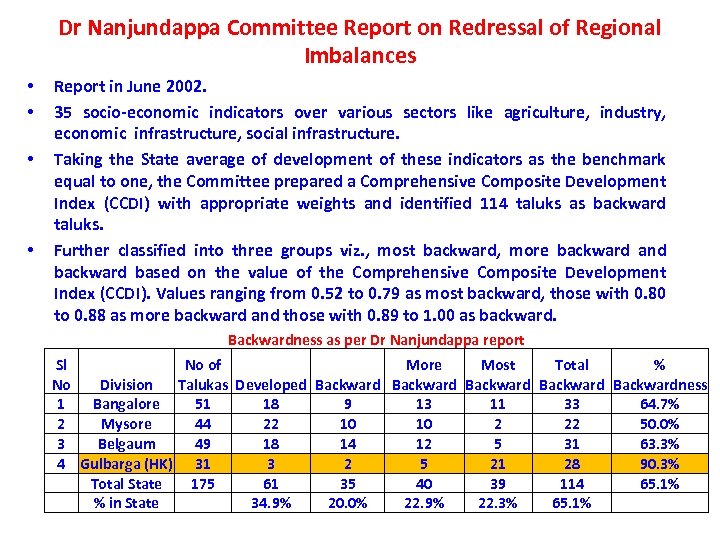
Dr Nanjundappa Committee Report on Redressal of Regional Imbalances • • Report in June 2002. 35 socio-economic indicators over various sectors like agriculture, industry, economic infrastructure, social infrastructure. Taking the State average of development of these indicators as the benchmark equal to one, the Committee prepared a Comprehensive Composite Development Index (CCDI) with appropriate weights and identified 114 taluks as backward taluks. Further classified into three groups viz. , most backward, more backward and backward based on the value of the Comprehensive Composite Development Index (CCDI). Values ranging from 0. 52 to 0. 79 as most backward, those with 0. 80 to 0. 88 as more backward and those with 0. 89 to 1. 00 as backward. Backwardness as per Dr Nanjundappa report Sl No of More Most Total % No Division Talukas Developed Backward Backwardness 1 Bangalore 51 18 9 13 11 33 64. 7% 2 Mysore 44 22 10 10 2 22 50. 0% 3 Belgaum 49 18 14 12 5 31 63. 3% 4 Gulbarga (HK) 31 3 2 5 21 28 90. 3% Total State 175 61 35 40 39 114 65. 1% % in State 34. 9% 20. 0% 22. 9% 22. 3% 65. 1%
Macro Level Issues for Development of HK Region • Currently for a population of 1. 12 crore in the Hy-Ka region the allocation to HKRDB is less than Rs 1000 per capita per annum. The allocation should at least be Rs 1000 per capita per annum based on 2011 population enhanced annually by Inflation Rate and AAGR of Population. • The SDP allocation should recognize the severe deprivation of this region and allocate funds as per the relative deprivation as follows: Bangalore Region – 12%, Mysore Region – 9%, Belgaum Region – 12% and Hyderabad Karnataka Region – 68%. This should be further sub-divided departmentally based on priorities and sectors identified by the Board and within departmental allocations it should follow the relative backwardness of Talukas. • The overall State Budget excluding the HKRDB Allocation and the SDP Allocation should follow a proportionate allocation formula. • The norms of institutions and posts should be common and fair for all districts and regions particularly in the critical sectors of Health, Social Welfare, Education and Women & Child Welfare. • The Government should come out with a Special Grant-in- Aid policy for educational institutions and an Industrial and Infrastructural Investment Policy for the Hy-Ka Region as required under Sections 22(g) and (h) of the HKRDB Order.
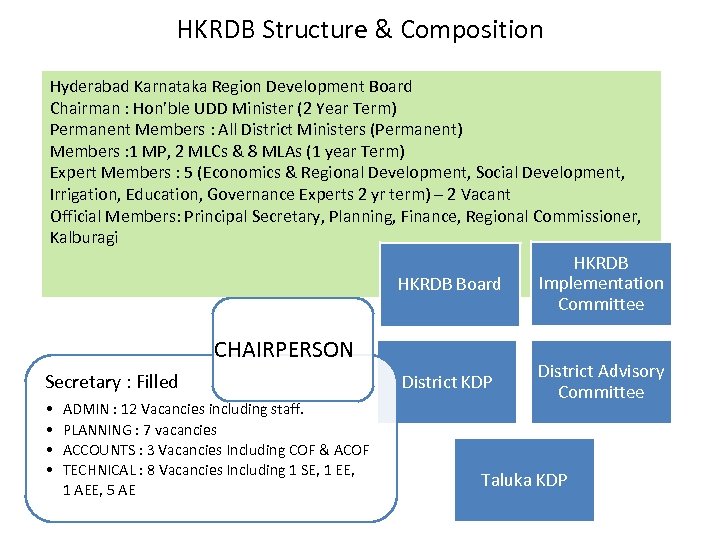
HKRDB Structure & Composition Hyderabad Karnataka Region Development Board Chairman : Hon’ble UDD Minister (2 Year Term) Permanent Members : All District Ministers (Permanent) Members : 1 MP, 2 MLCs & 8 MLAs (1 year Term) Expert Members : 5 (Economics & Regional Development, Social Development, Irrigation, Education, Governance Experts 2 yr term) – 2 Vacant Official Members: Principal Secretary, Planning, Finance, Regional Commissioner, Kalburagi HKRDB Board HKRDB Implementation Committee District KDP District Advisory Committee CHAIRPERSON Secretary : Filled • ADMIN : 12 Vacancies including staff. • PLANNING : 7 vacancies • ACCOUNTS : 3 Vacancies Including COF & ACOF • TECHNICAL : 8 Vacancies Including 1 SE, 1 EE, 1 AEE, 5 AE Taluka KDP
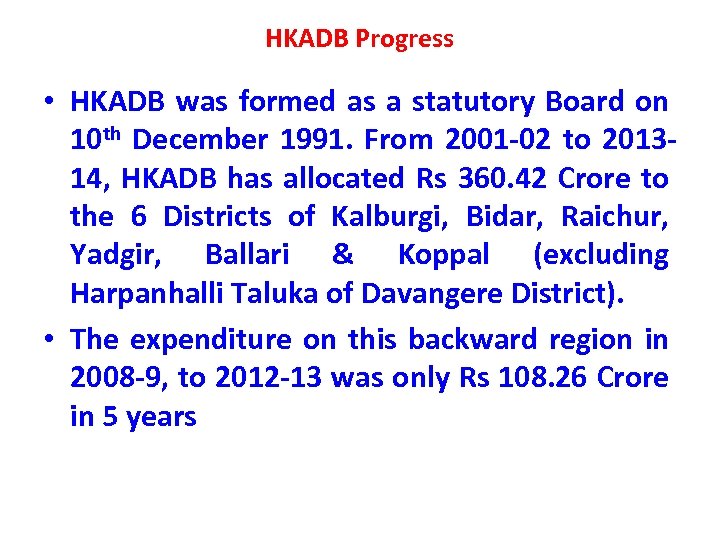
HKADB Progress • HKADB was formed as a statutory Board on 10 th December 1991. From 2001 -02 to 201314, HKADB has allocated Rs 360. 42 Crore to the 6 Districts of Kalburgi, Bidar, Raichur, Yadgir, Ballari & Koppal (excluding Harpanhalli Taluka of Davangere District). • The expenditure on this backward region in 2008 -9, to 2012 -13 was only Rs 108. 26 Crore in 5 years
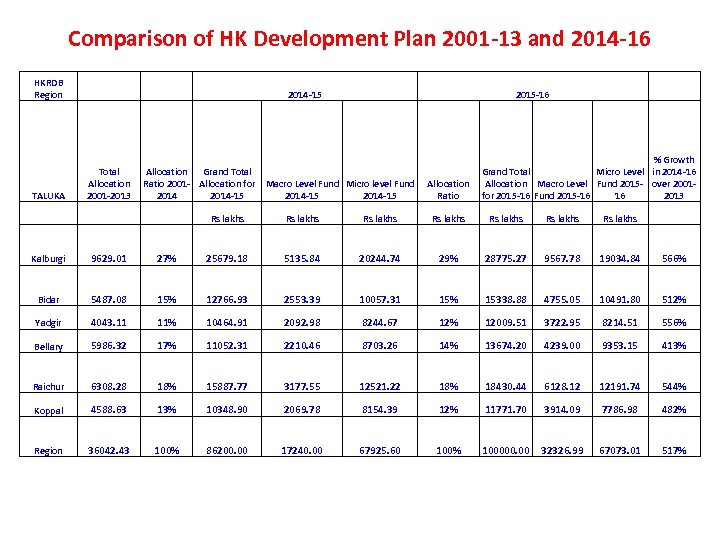
Comparison of HK Development Plan 2001 -13 and 2014 -16 HKRDB Region TALUKA Total Allocation 2001 -2013 Rs lakhs Rs lakhs Kalburgi 9629. 01 27% 25679. 18 5135. 84 20244. 74 29% 28775. 27 9567. 78 19034. 84 566% Bidar 5487. 08 15% 12766. 93 2553. 39 10057. 31 15% 15338. 88 4755. 05 10491. 80 512% Yadgir 4043. 11 11% 10464. 91 2092. 98 8244. 67 12% 12009. 51 3722. 95 8214. 51 556% Bellary 5986. 32 17% 11052. 31 2210. 46 8703. 26 14% 13674. 20 4239. 00 9353. 15 413% Raichur 6308. 28 18% 15887. 77 3177. 55 12521. 22 18% 18430. 44 6128. 12 12191. 74 544% Koppal 4588. 63 13% 10348. 90 2069. 78 8154. 39 12% 11771. 70 3914. 09 7786. 98 482% Region 36042. 43 100% 86200. 00 17240. 00 67925. 60 100% 100000. 00 32326. 99 67073. 01 517% 2014 -15 2015 -16 Allocation Grand Total Ratio 2001 - Allocation for Macro Level Fund Micro level Fund 2014 -15 % Growth Grand Total Micro Level in 2014 -16 Allocation Macro Level Fund 2015 - over 2001 Ratio for 2015 -16 Fund 2015 -16 16 2013
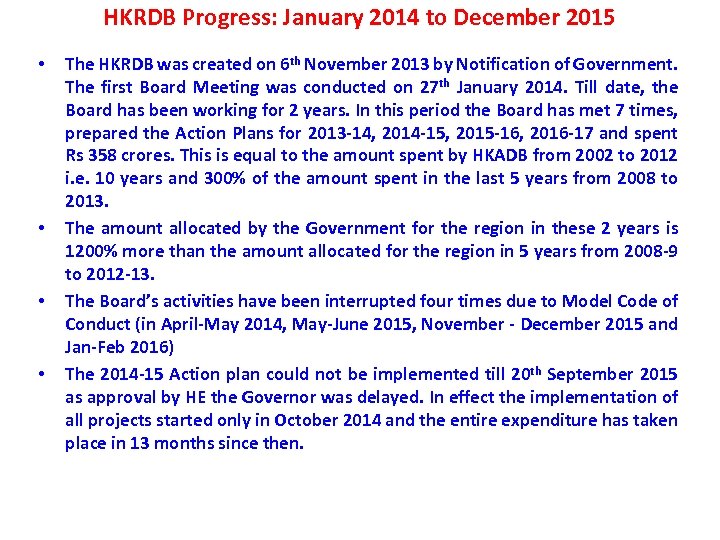
HKRDB Progress: January 2014 to December 2015 • • The HKRDB was created on 6 th November 2013 by Notification of Government. The first Board Meeting was conducted on 27 th January 2014. Till date, the Board has been working for 2 years. In this period the Board has met 7 times, prepared the Action Plans for 2013 -14, 2014 -15, 2015 -16, 2016 -17 and spent Rs 358 crores. This is equal to the amount spent by HKADB from 2002 to 2012 i. e. 10 years and 300% of the amount spent in the last 5 years from 2008 to 2013. The amount allocated by the Government for the region in these 2 years is 1200% more than the amount allocated for the region in 5 years from 2008 -9 to 2012 -13. The Board’s activities have been interrupted four times due to Model Code of Conduct (in April-May 2014, May-June 2015, November - December 2015 and Jan-Feb 2016) The 2014 -15 Action plan could not be implemented till 20 th September 2015 as approval by HE the Governor was delayed. In effect the implementation of all projects started only in October 2014 and the entire expenditure has taken place in 13 months since then.
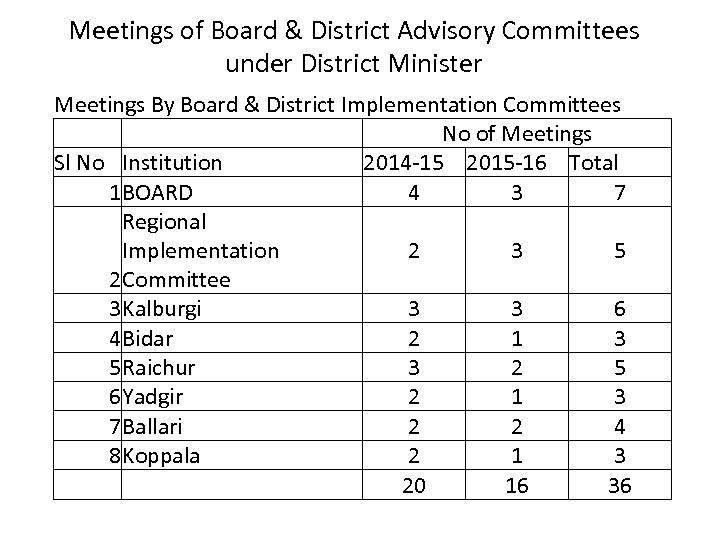
Meetings of Board & District Advisory Committees under District Minister Meetings By Board & District Implementation Committees No of Meetings Sl No Institution 2014 -15 2015 -16 Total 1 BOARD 4 3 7 Regional 2 3 5 Implementation 2 Committee 3 Kalburgi 3 3 6 4 Bidar 2 1 3 5 Raichur 3 2 5 6 Yadgir 2 1 3 7 Ballari 2 2 4 8 Koppala 2 1 3 20 16 36
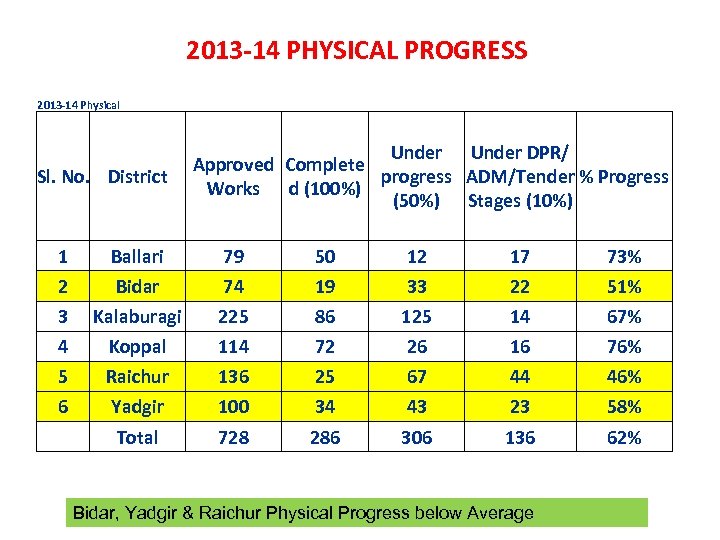
2013 -14 PHYSICAL PROGRESS 2013 -14 Physical Sl. No. District Under DPR/ Approved Complete progress ADM/Tender % Progress Works d (100%) (50%) Stages (10%) 1 Ballari 79 50 12 17 73% 2 Bidar 74 19 33 22 51% 3 Kalaburagi 225 86 125 14 67% 4 Koppal 114 72 26 16 76% 5 Raichur 136 25 67 44 46% 6 Yadgir 100 34 43 23 58% Total 728 286 306 136 62% Bidar, Yadgir & Raichur Physical Progress below Average
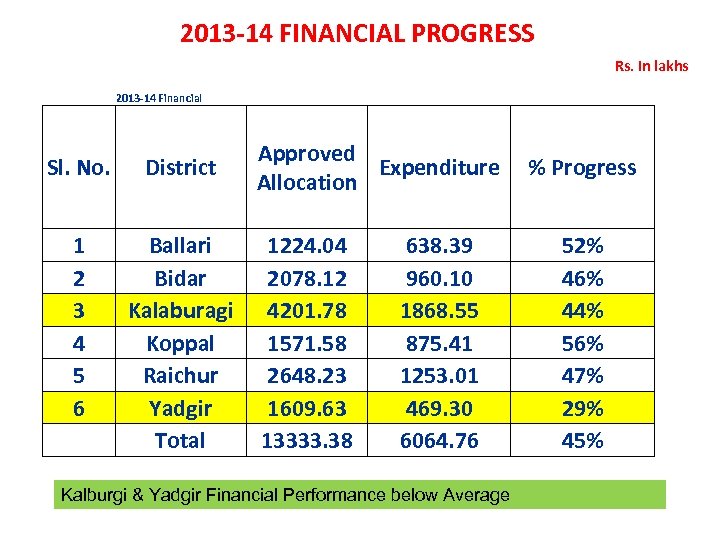
2013 -14 FINANCIAL PROGRESS Rs. In lakhs 2013 -14 Financial Sl. No. 1 2 3 4 5 6 District Approved Expenditure Allocation Ballari 1224. 04 Bidar 2078. 12 Kalaburagi 4201. 78 Koppal 1571. 58 Raichur 2648. 23 Yadgir 1609. 63 Total 13333. 38 638. 39 960. 10 1868. 55 875. 41 1253. 01 469. 30 6064. 76 Kalburgi & Yadgir Financial Performance below Average % Progress 52% 46% 44% 56% 47% 29% 45%
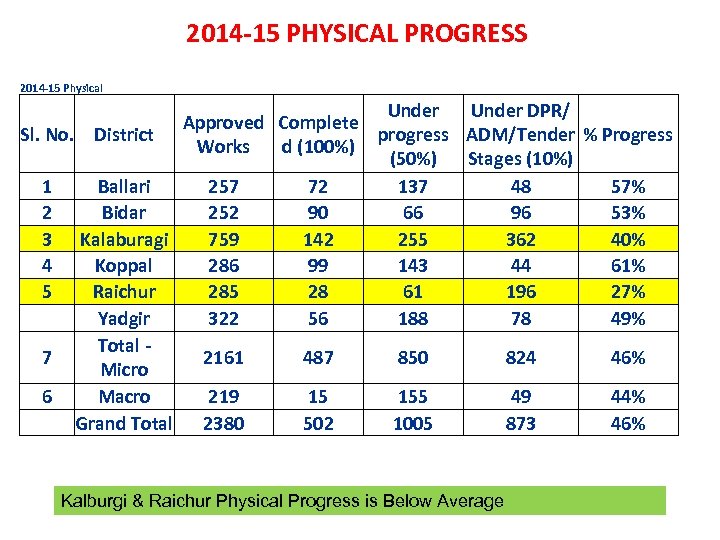
2014 -15 PHYSICAL PROGRESS 2014 -15 Physical Under DPR/ Approved Complete Sl. No. District progress ADM/Tender % Progress Works d (100%) (50%) Stages (10%) 1 Ballari 257 72 137 48 57% 2 Bidar 252 90 66 96 53% 3 Kalaburagi 759 142 255 362 40% 4 Koppal 286 99 143 44 61% 5 Raichur 285 28 61 196 27% Yadgir 322 56 188 78 49% Total - 7 2161 487 850 824 46% Micro 6 Macro 219 15 155 49 44% Grand Total 2380 502 1005 873 46% Kalburgi & Raichur Physical Progress is Below Average
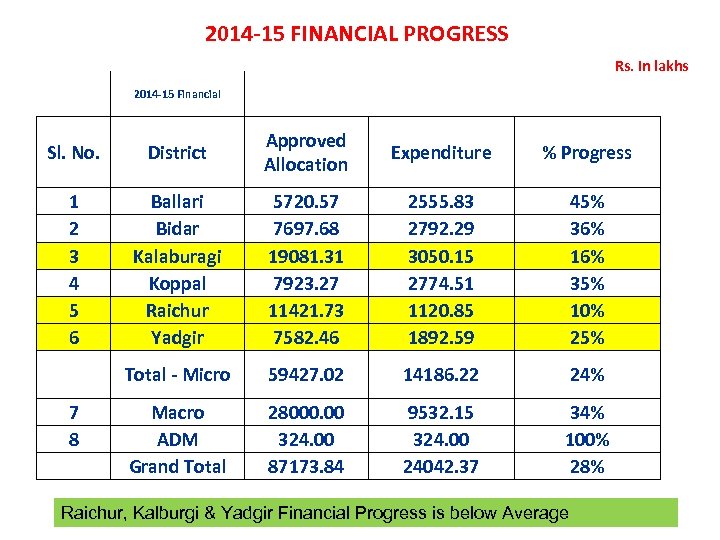
2014 -15 FINANCIAL PROGRESS Rs. In lakhs 2014 -15 Financial Sl. No. District Approved Allocation Expenditure % Progress 1 2 3 4 5 6 Ballari Bidar Kalaburagi Koppal Raichur Yadgir 5720. 57 7697. 68 19081. 31 7923. 27 11421. 73 7582. 46 2555. 83 2792. 29 3050. 15 2774. 51 1120. 85 1892. 59 45% 36% 16% 35% 10% 25% Total - Micro 59427. 02 14186. 22 24% 7 8 Macro ADM Grand Total 28000. 00 324. 00 87173. 84 9532. 15 324. 00 24042. 37 34% 100% 28% Raichur, Kalburgi & Yadgir Financial Progress is below Average
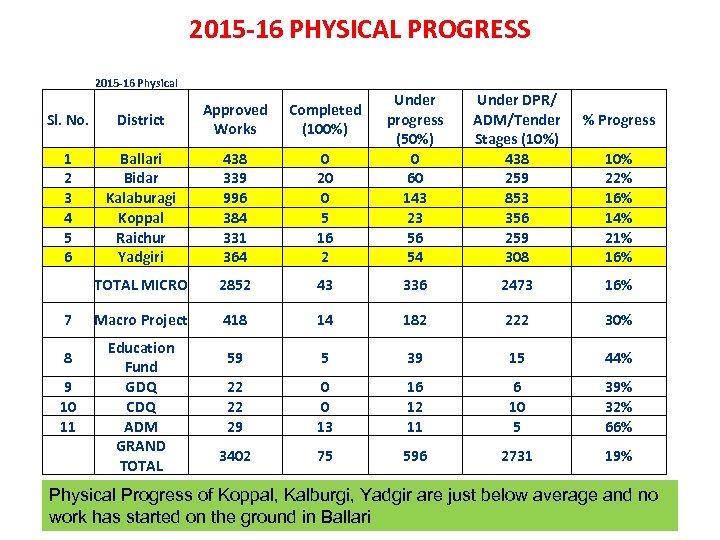
2015 -16 PHYSICAL PROGRESS 2015 -16 Physical Sl. No. District Approved Works 1 2 3 4 5 6 Ballari Bidar Kalaburagi Koppal Raichur Yadgiri 438 339 996 384 331 364 0 20 0 5 16 2 Under progress (50%) 0 60 143 23 56 54 TOTAL MICRO 2852 43 336 2473 16% 7 Macro Project 418 14 182 222 30% 59 5 39 15 44% 22 22 29 0 0 13 16 12 11 6 10 5 39% 32% 66% 3402 75 596 2731 19% 8 9 10 11 Education Fund GDQ CDQ ADM GRAND TOTAL Completed (100%) Under DPR/ ADM/Tender Stages (10%) 438 259 853 356 259 308 % Progress 10% 22% 16% 14% 21% 16% Physical Progress of Koppal, Kalburgi, Yadgir are just below average and no work has started on the ground in Ballari
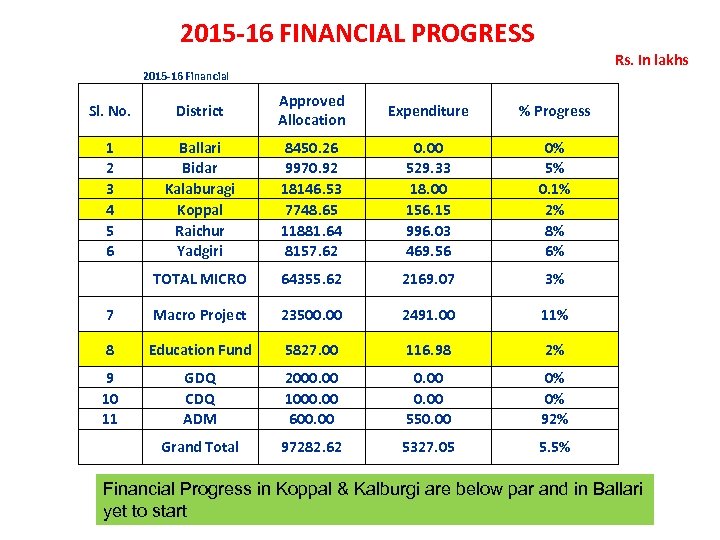
2015 -16 FINANCIAL PROGRESS Rs. In lakhs 2015 -16 Financial Sl. No. District Approved Allocation Expenditure % Progress 1 2 3 4 5 6 Ballari Bidar Kalaburagi Koppal Raichur Yadgiri 8450. 26 9970. 92 18146. 53 7748. 65 11881. 64 8157. 62 0. 00 529. 33 18. 00 156. 15 996. 03 469. 56 0% 5% 0. 1% 2% 8% 6% TOTAL MICRO 64355. 62 2169. 07 3% 7 Macro Project 23500. 00 2491. 00 11% 8 Education Fund 5827. 00 116. 98 2% 9 10 11 GDQ CDQ ADM 2000. 00 1000. 00 600. 00 550. 00 0% 0% 92% Grand Total 97282. 62 5327. 05 5. 5% Financial Progress in Koppal & Kalburgi are below par and in Ballari yet to start
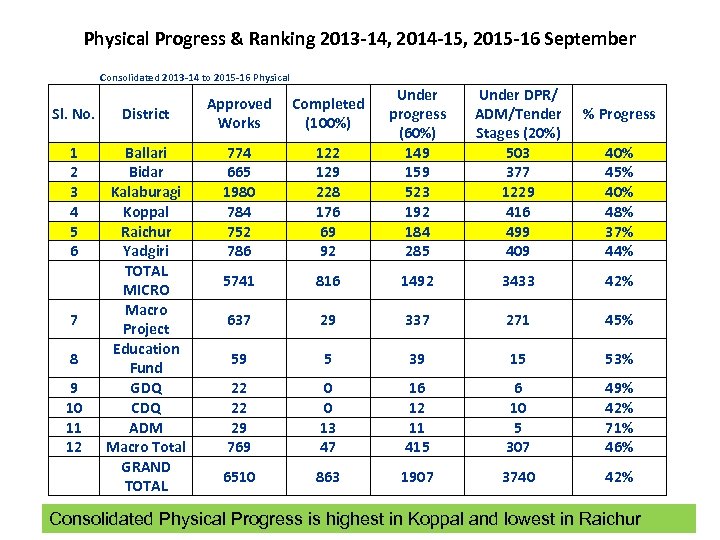
Physical Progress & Ranking 2013 -14, 2014 -15, 2015 -16 September Consolidated 2013 -14 to 2015 -16 Physical Sl. No. District 1 2 3 4 5 6 Ballari Bidar Kalaburagi Koppal Raichur Yadgiri TOTAL MICRO Macro Project Education Fund GDQ CDQ ADM Macro Total GRAND TOTAL 7 8 9 10 11 12 122 129 228 176 69 92 Under progress (60%) 149 159 523 192 184 285 Under DPR/ ADM/Tender Stages (20%) 503 377 1229 416 499 409 5741 816 1492 3433 42% 637 29 337 271 45% 59 5 39 15 53% 22 22 29 769 0 0 13 47 16 12 11 415 6 10 5 307 49% 42% 71% 46% 6510 863 1907 3740 42% Approved Works Completed (100%) 774 665 1980 784 752 786 % Progress 40% 45% 40% 48% 37% 44% Consolidated Physical Progress is highest in Koppal and lowest in Raichur
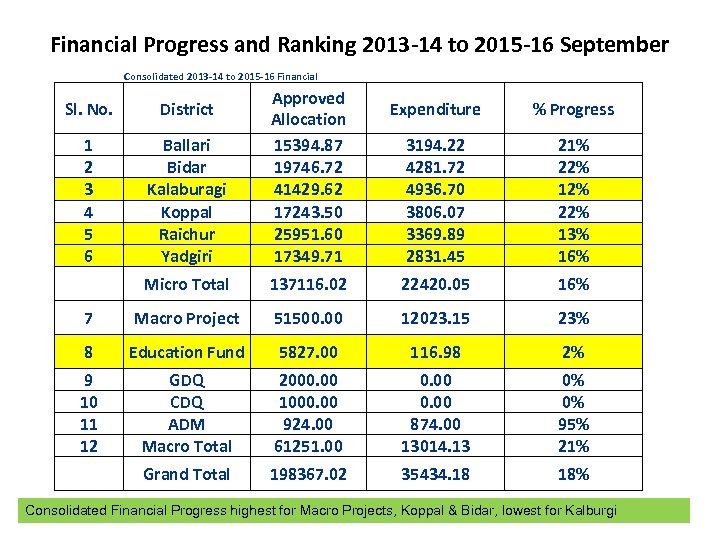
Financial Progress and Ranking 2013 -14 to 2015 -16 September Consolidated 2013 -14 to 2015 -16 Financial Sl. No. District 1 2 3 4 5 6 Ballari Bidar Kalaburagi Koppal Raichur Yadgiri Approved Allocation 15394. 87 19746. 72 41429. 62 17243. 50 25951. 60 17349. 71 Micro Total 7 Expenditure % Progress 3194. 22 4281. 72 4936. 70 3806. 07 3369. 89 2831. 45 21% 22% 12% 22% 13% 16% 137116. 02 22420. 05 16% Macro Project 51500. 00 12023. 15 23% 8 Education Fund 5827. 00 116. 98 2% 9 10 11 12 GDQ CDQ ADM Macro Total 2000. 00 1000. 00 924. 00 61251. 00 0. 00 874. 00 13014. 13 0% 0% 95% 21% Grand Total 198367. 02 35434. 18 18% Consolidated Financial Progress highest for Macro Projects, Koppal & Bidar, lowest for Kalburgi
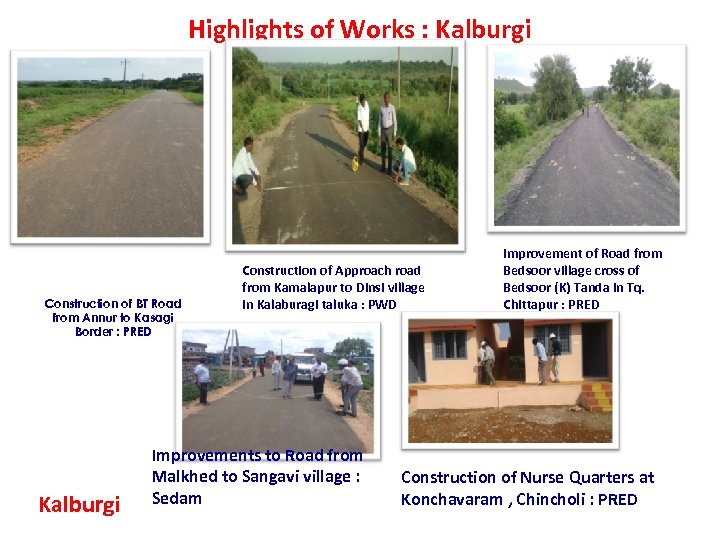
Highlights of Works : Kalburgi Construction of BT Road from Annur to Kasagi Border : PRED Kalburgi Construction of Approach road from Kamalapur to Dinsi village in Kalaburagi taluka : PWD Improvements to Road from Malkhed to Sangavi village : Sedam Improvement of Road from Bedsoor village cross of Bedsoor (K) Tanda in Tq. Chittapur : PRED Construction of Nurse Quarters at Konchavaram , Chincholi : PRED
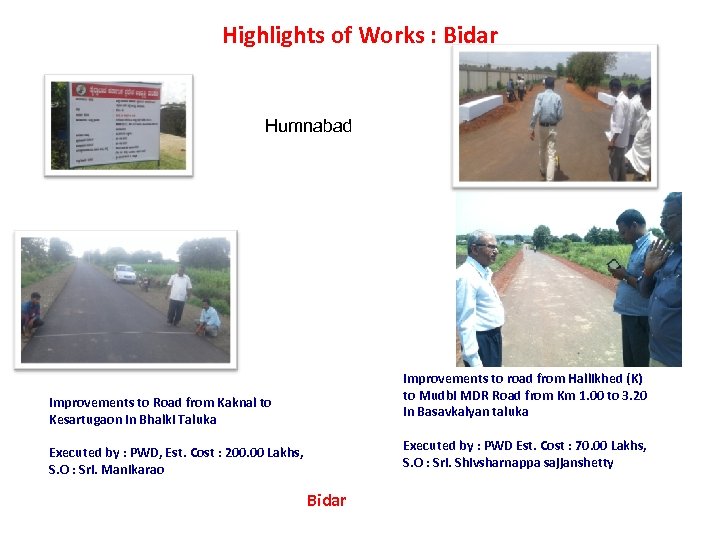
Highlights of Works : Bidar Humnabad Improvements to road from Hallikhed (K) to Mudbi MDR Road from Km 1. 00 to 3. 20 in Basavkalyan taluka Executed by : PWD Est. Cost : 70. 00 Lakhs, S. O : Sri. Shivsharnappa sajjanshetty Improvements to Road from Kaknal to Kesartugaon in Bhalki Taluka Executed by : PWD, Est. Cost : 200. 00 Lakhs, S. O : Sri. Manikarao Bidar
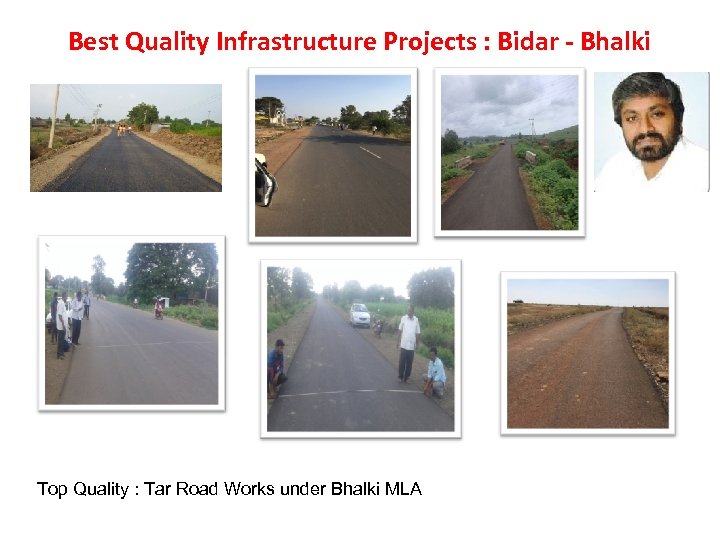
Best Quality Infrastructure Projects : Bidar - Bhalki Top Quality : Tar Road Works under Bhalki MLA
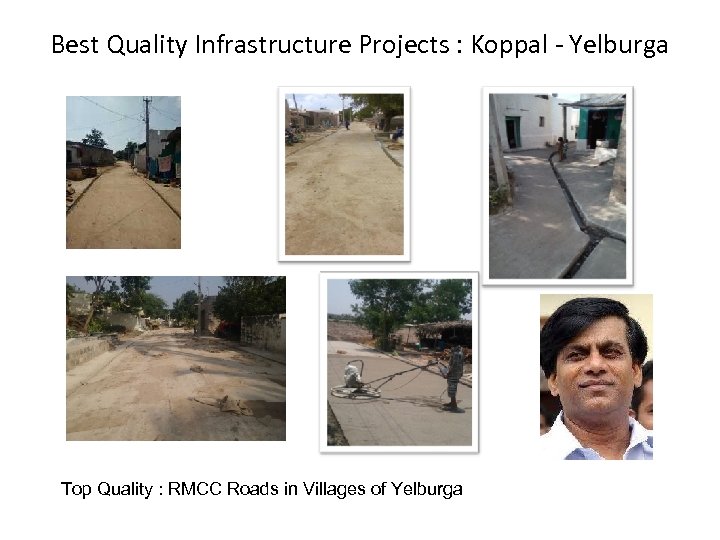
Best Quality Infrastructure Projects : Koppal - Yelburga Top Quality : RMCC Roads in Villages of Yelburga
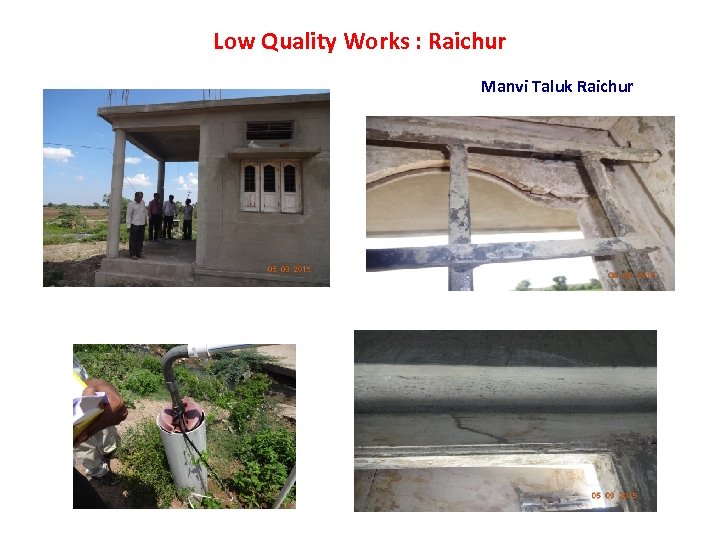
Low Quality Works : Raichur Manvi Taluk Raichur
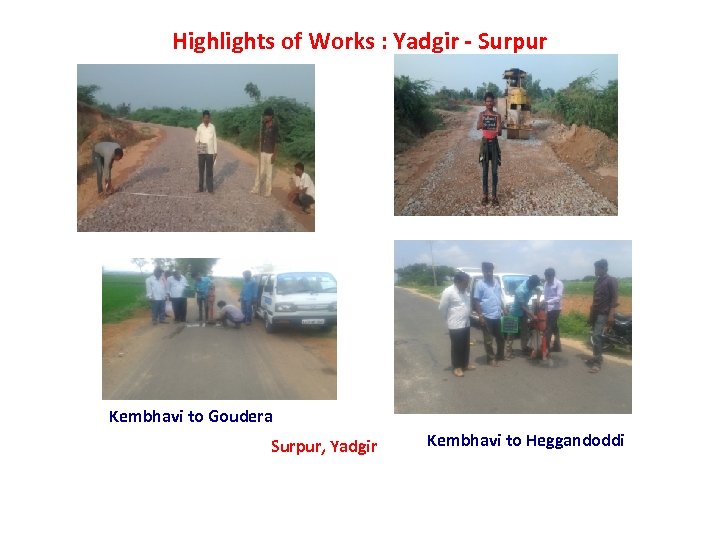
Highlights of Works : Yadgir - Surpur Kembhavi to Goudera Surpur, Yadgir Kembhavi to Heggandoddi
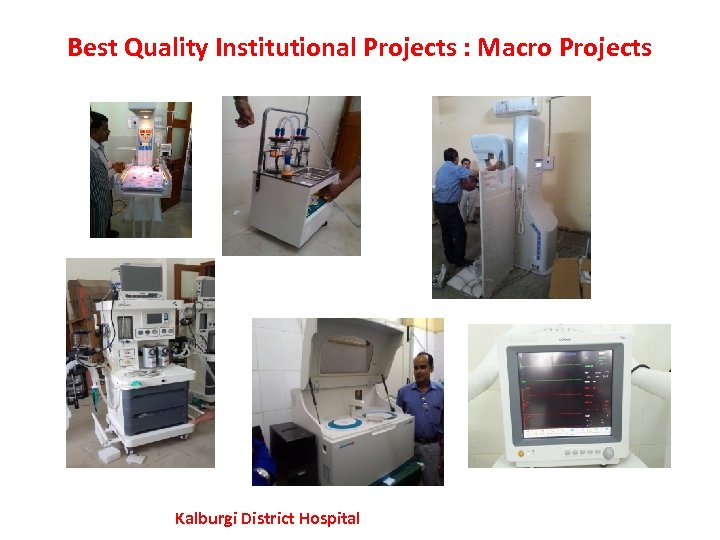
Best Quality Institutional Projects : Macro Projects Kalburgi District Hospital
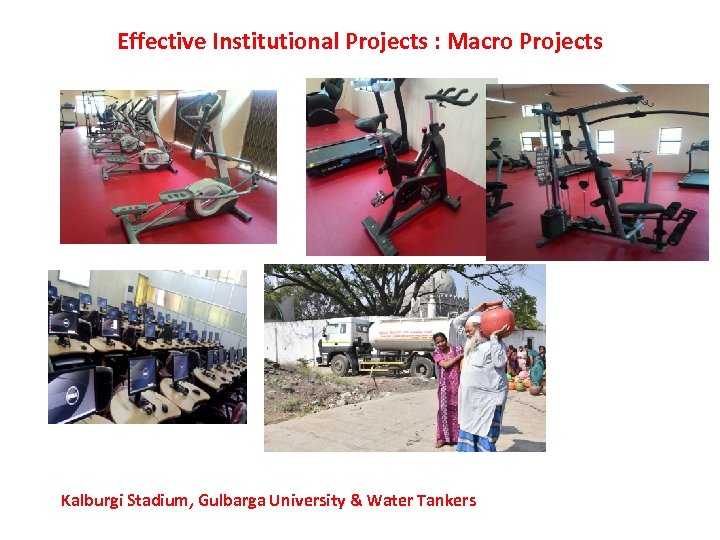
Effective Institutional Projects : Macro Projects Kalburgi Stadium, Gulbarga University & Water Tankers
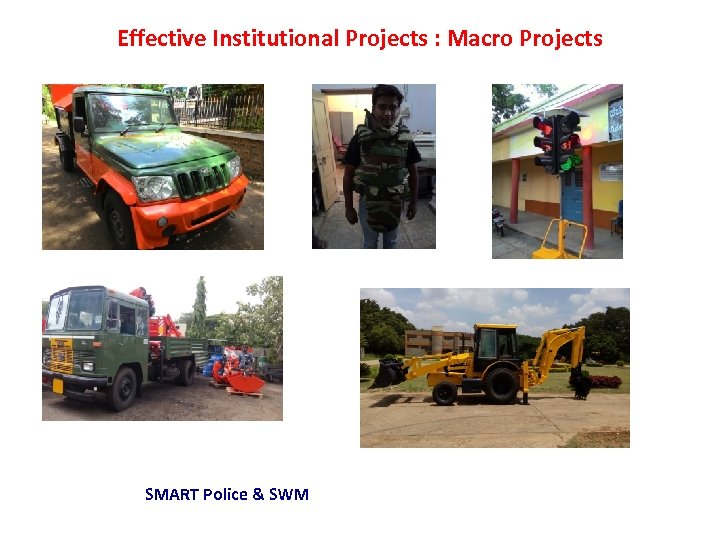
Effective Institutional Projects : Macro Projects SMART Police & SWM
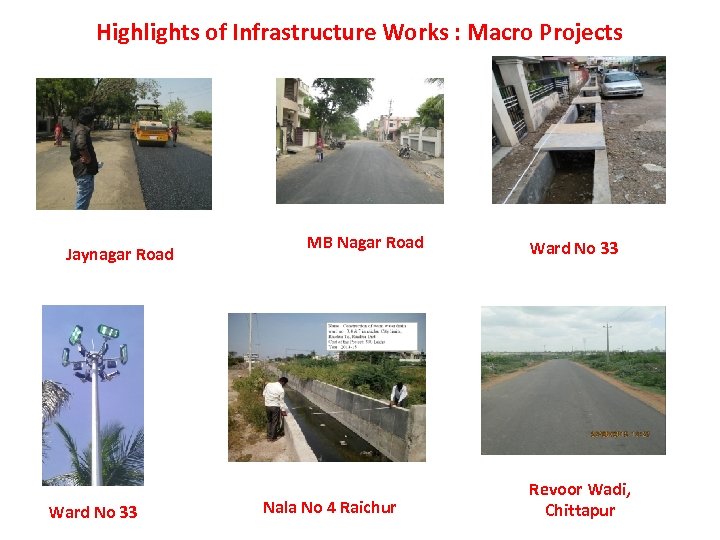
Highlights of Infrastructure Works : Macro Projects Jaynagar Road Ward No 33 MB Nagar Road Nala No 4 Raichur Ward No 33 Revoor Wadi, Chittapur
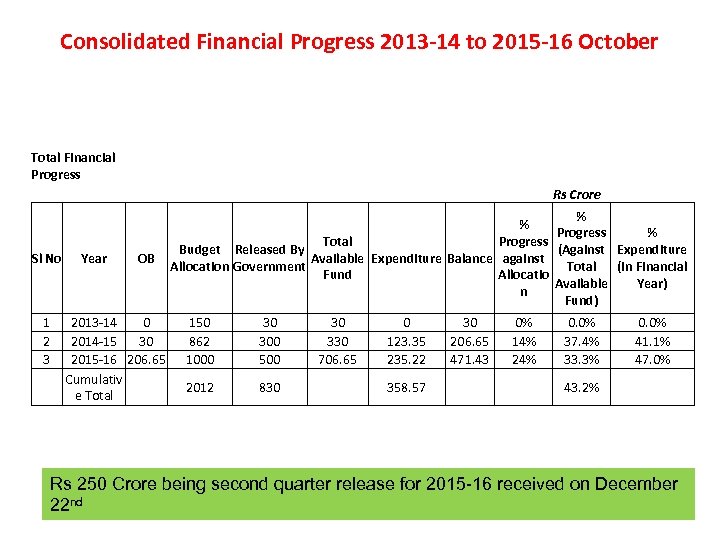
Consolidated Financial Progress 2013 -14 to 2015 -16 October Total Financial Progress Rs Crore Sl No 1 2 3 Year OB 2013 -14 0 2014 -15 30 2015 -16 206. 65 Cumulativ e Total % % Progress % Total Progress Budget Released By (Against Expenditure Available Expenditure Balance against Total (In Financial Allocation Government Fund Allocatio Year) Available n Fund) 150 862 1000 30 300 500 30 330 706. 65 0 123. 35 235. 22 30 206. 65 471. 43 0% 14% 24% 0. 0% 37. 4% 33. 3% 0. 0% 41. 1% 47. 0% 2012 830 358. 57 43. 2% Rs 250 Crore being second quarter release for 2015 -16 received on December 22 nd
Efficiency Efforts • • • The Government in the Hyderabad-Karnataka Region Development Board Order 2013 has provided several progressive and protective clauses to assist in the rapid development of this region so that it may catch up with the rest of the state. – a) The Board has power to suggest “policies” for the region for creating employment, investment and education – b) The Board has the power to advise on creation of institutions of Government and posts – c) Under Section 16(c), the funds allocated to the Board shall not lapse and balance amount shall be carried forward to the next year – d) Under Section 23, the outlays approved by the Budget for the Board cannot be diverted to any other part of the State In tune with the above, the Board has advised the Government to fill up vacancies in the region which is currently in process The Board has resolved to conduct studies on the investment potential, employment requirements, educational requirements of the region through CMDR, ISEC, Gulbarga University, Mysore University etc and will frame advisories soon. Though the funds of the Board are not lapsable, the Government has released only Rs 30 crore for 2013 -14, Rs 300 crore for 2014 -15 and Rs 500 crore for 2015 -16 so far. Out of Rs 830 crore released in 2014 - 2016, Rs 358 crore i. e. 44. 13% has been spent in about 13 months. To speed up expenditure without sacrificing quality, the Board has constituted District Level Advisory Committees, District level Implementation Committees and has resolved to use the KDP as a forum for participative planning and monitoring. The Board is preparing its Plan for the next year in advance.
HKRDB Regional Development Method • • Proposed Model of Development Planning, Fund Allocation & Execution – Planning, Allocation & Execution at Macro (District & Region) & Micro (Taluka & Village) Levels – Gap Filling Approach – Centre – Periphery Spread Effect Approach with Micro Planning to minimize Backwash Effect Fund Allocation : Infrastructure, Institutional & Administrative Funds : 70%, 30% Macro & Micro Projects : 40% & 60% SCP & TSP 25% Sectoral Interventions within Micro Projects: – Infrastructure Priority : Roads & Drains, Water Supply & Sanitation, Irrigation – Institutional Priority: Health, Social Sectors, Education, Animal Husbandry Sectoral Interventions within Macro Projects: – Communications – Education, Information, Communication – Environment – Culture – Regional Security – Urban Infrastructure – Social Deprivation Removal – Health & Nutritional Development – Innovation – Chairman & Government Discretion: 3% of Infrastructure & Institutional Funds Deprivation Index based Allocation for Micro Unit : Taluka Intra Taluka Allocation based on Planner Constituency – Population – Geo-spatial Area
Key Planning Initiatives • To ensure filling of historical gaps in the planning and developmental process, the Board has taken the following measures: • a) The planning is need based on the basis of Infrastructural Needs (70%) and Institutional Needs (30%). • b) The total funds are further divided into Micro Projects (68%), Macro Projects (31. 4%) and Administrative Grants (0. 6%) • c) For the Micro Projects the Taluka has been made the planning and developmental unit and Comprehensive Deprivation Index as prepared by the Dr Nanjundappa Committee has been used to allocate resource envelops to each Taluka with prioritising of sectors like Roads & Drains and Water Supply under Infrastructure and Health, Education, Child Welfare and Social Welfare under Institutional. SCP & TSP allocations are made under these sectors as per norms. • d) Based on the resource envelope as per CDI, the Taluka Plan is prepared through a consultative process by the MLAs & KDP and is placed before the Advisory Committee under the District Minister for approval. This is finally placed before the Board. • e) To ensure there is vision and perspective to this process, the Board has resolved to prepare a Vision 2030 and Perspective 2020 for which the preparatory work is being done.
Key Macro Initiatives & Programs • The Board also prepares Macro Action Plan to ensure that key developmental sectors with an impact on the macro levels can be effectively addressed as also works which go beyond the Taluka level. Accordingly key initiatives have been taken up in the following areas under Macro Projects: – – – – 1. Airport Infrastructure and other major infrastructure 2. Major Roads and Industrial Area infrastructure 3. Education Infrastructure& facilities in Universities, Colleges, High Schools, Science Centres and Libraries 4. Special Programs for Information & Communication through Internet Kiosks and Training for Employment in the Private Sector 5. Infrastructure & Facilities of District Stadia & Taluka Stadia 6. Development of Large Parks and Lung Spaces 7. SMART (Surveillance, Monitoring, Analysis, Rescue and Tactical) Police Project to improve the capabilities of the Police Force 8. Infrastructure & Facilities to District & Taluka Hospitals 9. Development of Small Tourist Destinations to improve the local economy 10. Creation of a Green Construction Technology and Training Institution 11. Nemmadiya Uru Project for upgrading the aesthetics and quality of life in small towns which includes constructing a Town Hall cum Ranga Mandira, a Shopping Mall, a large central Park cum Lung Space, a Graveyard & Crematorium, full Street Lighting and Footpaths etc. 12. Innovative Projects where Grama Panchayats, Urban Local Bodies, can prepare innovative solutions to local, historical or global problems which would be pilot tested and implemented generally if found successful. 13. Program for Improving the Quality of Life of the Differently Abled, Aged and Diasadvantaged Sections: Upgradation of facilities in Women’s Home, SC, ST, BC and Minority Hostels, Old Age Homes and Physically / mentally Challenged persons Homes 14. Projects for promoting the intellectual and capacity development of the region: • • a. Ishanyada Aisiri : A weekly radio magazine program on the region b. SSLC, PUC and CET radio coaching c. Project to purchase books penned by regional authors for all GP Libraries of the region d. Project to subscribe to periodicals produced in the region for Gram Panchayat Libraries of the region e. Project to give access to higher education digitized books in Gulbarga University to all persons through Internet Kiosks kept in Gram Panchayat Libraries. f. Digital Printing Press and Book Digitization Facilities to Universities to enable them to publish their research at low cost g. Competitive Excellence Centres in Universities of the region for training students for JRF-NET, CAT, GRE – GMAT, CLAT, Bank PO, Railways Entrance Exams, and Corporate Employment Courses.
2015 -16 New Projects – Dr. APJ Abdul Kalam Gnana Tunga • Improving Learning Skills, Competitive Skills & Scientific Temper in Schools, Colleges and Universities of the Region through ICT (Information & Communication Technology • ICT Network in GP Libraries • Library Infrastructure • Improvement of Digital Education & Mass Communication in Universities • Centre for Competitive Excellence in Universities • Improvement of Science Centres in District HQ • Tele – Education in Degree Colleges • Ishanyada Aisiri – Radio Program • TET and Competitive Skills Training in Schools • Training of High School Science Teachers through IISc • Dr APJ Abdul Kalam Gnana Tunga Centre in High Schools – Science Laboratory – Library – Audio Visual Content & Smart Class Equipment • Research Facilities for Agriculture, Horticulture & Veterinary Sciences
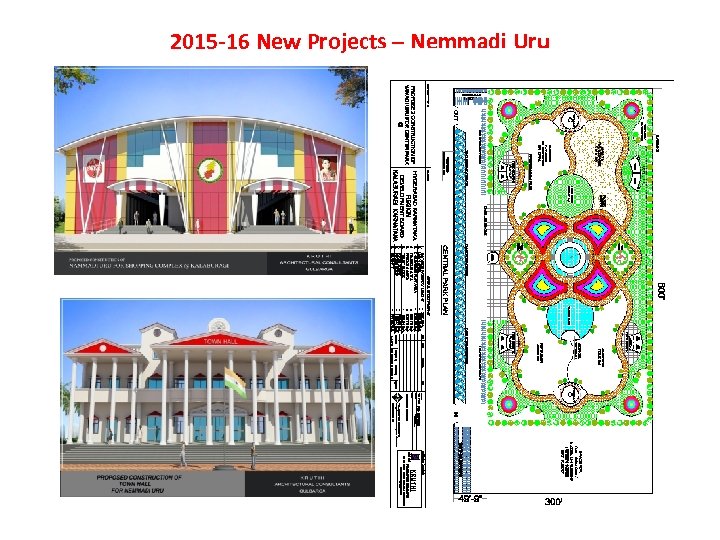
2015 -16 New Projects – Nemmadi Uru
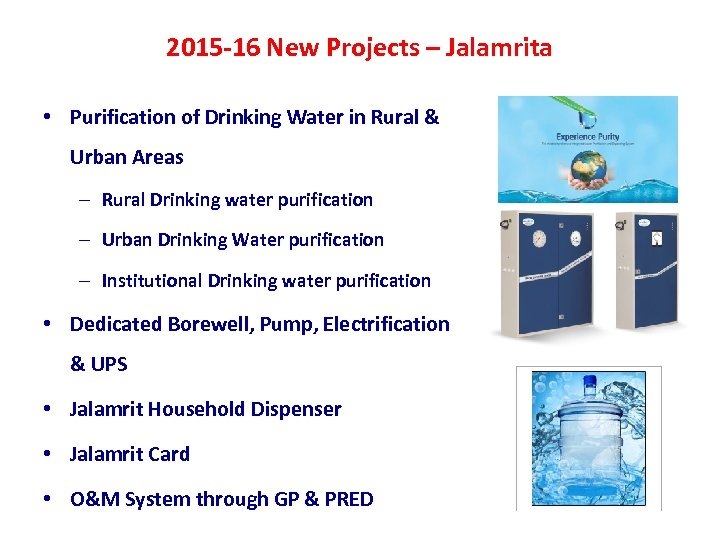
2015 -16 New Projects – Jalamrita • Purification of Drinking Water in Rural & Urban Areas – Rural Drinking water purification – Urban Drinking Water purification – Institutional Drinking water purification • Dedicated Borewell, Pump, Electrification & UPS • Jalamrit Household Dispenser • Jalamrit Card • O&M System through GP & PRED
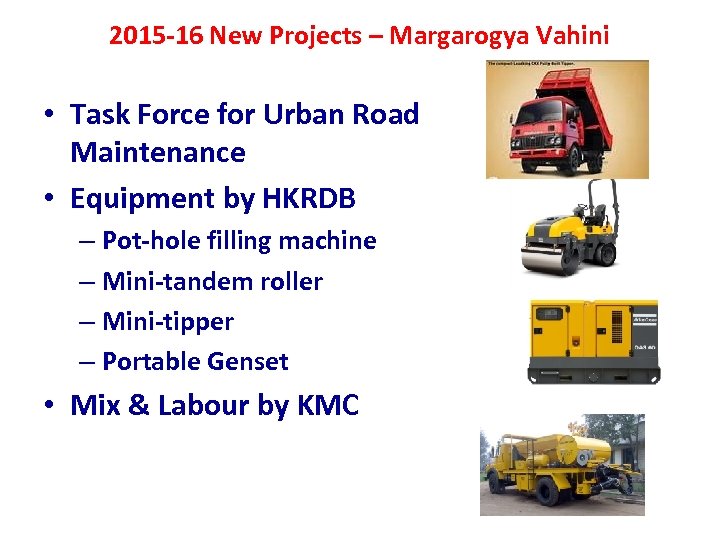
2015 -16 New Projects – Margarogya Vahini • Task Force for Urban Road Maintenance • Equipment by HKRDB – Pot-hole filling machine – Mini-tandem roller – Mini-tipper – Portable Genset • Mix & Labour by KMC
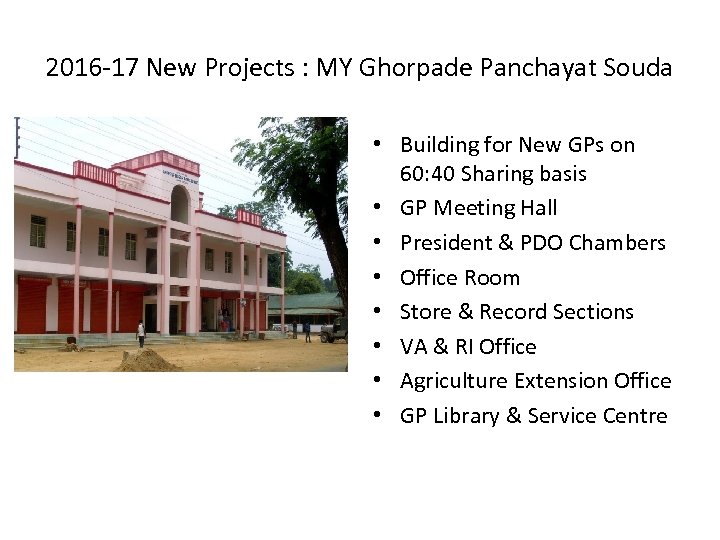
2016 -17 New Projects : MY Ghorpade Panchayat Souda • Building for New GPs on 60: 40 Sharing basis • GP Meeting Hall • President & PDO Chambers • Office Room • Store & Record Sections • VA & RI Office • Agriculture Extension Office • GP Library & Service Centre
Scheme of Quality Control & Audit • Commitment of HKRDB to not only the quality of the work but also the quality of development and the quality of life of citizens of the HK area. • While enforcing Quality, HKRDB also seeks change in procedure, method, and sensitivity to history of the region, respect for environment and concern for the citizens and labour. • The objective of Quality Control is not to find fault but to ensure that public funds are utilized fully for the ultimate benefit of the public and there is inter-generational equity in the public investment being made by the State Government through HKRDB • Three level Quality Control & Quality Monitoring mechanism. – IA level – Independent Quality Control Agencies – Quality Control Monitors – DC, CEO, HKRDB Officers • Method – Work Estimate, Work Plan, Measurement Book, Quality Tests all in a single spreadsheet – Stages of Quality Control : 1. Work Plan 2. Site Verification & Contractor Quality Verification (Machinery Quality, Mix Plant, Personnel Quality) 3. Work Stage-wise Measurements 4. Environment & Labour Management Checks 5. Field and Lab Tests 6. Physical & Social Completion of Projects
Administrative Measures and Improving Service Delivery • Survey Equipment & Quality Control Lab, Technical Library & Training for PRED, PWD • Administrative facilities for Government Advocates & Public Prosecutors : Legal Library, Computerisation, Functional Furniture • Improving Service Delivery for Wakf Board : Survey Equipment, Computerisation, Office Automation • Improving Service Delivery in DC Offices : HKRDB Cell fully outsourced with Retired Civil Engineer, Retired DT / Tahsildar & DEO • Awards for Excellence in Implementation of HKRDB Schemes – – – Best Micro Planner Best Implementing Officer Best Executive Agency Best GHS Principal Best GHS Subject Teacher in Science & Maths • Training Programs & Seminars of Regional History, Development, Legal Issues, Administrative Issues, Technical Issues, 371(j) • Application Software for Plan Formulation, Estimation, GIS, Monitoring, Evaluation & Report Preparation
Financial Issues – I. Method of Banking, Releases & Treatment of Interest & Unutilized Balance • Scheme wise banking – To compress fund transfer delays to IAs and to ensure proper tracking of releases and funds to be parked in source branch • Release Mechanism – HKRDB releases fund in advance to Implementing Agencies through DCs / CEOs or directly in 40%: 19% tranche`. Releases after 1 st Tranche` depends on 70% utilization of accumulated balance. – 1% is retained for 3 rd Party & Audit – Onward release to Executing Agencies to follow similar schemata. Advance release of funds by DCs/CEOs to Executing Agencies is not recommended except for initial advance not exceeding 30% on start of work (post tender). Thereafter further releases should be strictly on the basis of part UC and stagewise 3 rd Party Reports. As Funds are fungible DCs & CEOs should manage the funds in a way that rapid progress with quality is rewarded with timely release. – Contractor Releases to follow Running Bill system and seniority of Bill. – Funds to be kept in savings accounts only never in term deposit
Financial Issues – II. Method of Banking, Releases & Treatment of Interest & Unutilized Balance • Interest – Interest accumulated in the accounts of DCs/CEOs and IAs will have to be refunded to HKRDB in quarterly instalments. – All HKRDB accounts, releases & contractor payments will be audited by Independent Auditors and also selectively by SAD • Unutilized Balances – HKRDB does not dedicate a sum but a work – The planning process and allocation formula are of prime importance – Hence unutilized balances and interest are not to be force-utilized or retained but returned for reallocation through the planning process – Unutilized balances will compulsorily be returned after completion & 3 rd Party
Financial Issues – III. Price Escalation & Tender Premium • The HKRDB discourages tender premium and encourages correct estimation based on latest SR, technical considerations, site conditions and specifications. • No escalation will be allowed for agencies delaying the estimation and start of work or reporting unforeseen site problems during the work. • No automatic tender premium will be allowed • If due to some reason tender premium is quoted, the tendering agency will negotiate with the lowest bidder after analysing the bid as per Circular No PWD 1359 SO/FC 2001(P-2) dated 25 th October 2002 and 3 rd December 2002 and any other relevant orders / circulars. If the negotiation fails, the matter with all details should be reported to HKRDB for a decision on retendering or otherwise.
 Скачать презентацию Balanced Development of HK Region Programs
1ec27d3ee88a3f21dfa3abdcabd8c1bf.ppt