 Скачать презентацию BACTERIOPHAGES ECOLOGY GENOMICS THERAPEUTIC POTENTIAL Vijay Aswani
344e45e6aebcc2ff6fe1b1eb986ca29f.ppt
- Количество слайдов: 42




BACTERIOPHAGES– ECOLOGY GENOMICS & THERAPEUTIC POTENTIAL Vijay Aswani, MD, Ph. D, FACP, FAAP October 27, 2017 1
G e t t h i s t a l k a Scan this QR code or go to http: //buffalo. edu/~vaswani to get this talk. 2
Outline 1. Are phages found in the anterior nares? (Aswani & Shukla, 2011) 2. Staphylococcal phage families and properties (Aswani et al, 2011) 3. Phage Genomics (Aswani et al, 2014, and in prep. ) 4. History of Phage therapy (Aswani et al poster, 2014) 5. 2013 -2015: West Africa Ebola Outbreak 6. Future directions (to pursue here in Buffalo) • Phages in the sputum of CF patients – lower respiratory tract • Phages as members of the microbiome – the virome • Ebola genomics and biology? 3
Research and Medicine • Medical School • Lamba G, Aswani V. . 2011. A severe laryngeal angioedema reaction from cefadroxil in a patient with no known allergies to penicillins. West Indian Med J. 2011 Jun; 60(3): 346 -8. • Lamba, Gurprit and Vijay Aswani. 2012. A Case Study of Mental Illness and Psychiatric Services on the Caribbean Island of Nevis. International Journal of Mental Health 41(4): 24 -29. Winter 2012 -13. • Between medical school and residency • Chandler RJ, Aswani V, Tsai MS, Falk M, Wehrli N, Stabler S, Allen R, Sedensky M, Kazazian HH, Venditti CP. Propionyl-Co. A and adenosylcobalamin metabolism in Caenorhabditis elegans: Evidence for a role of methylmalonyl-Co. A epimerase in intermediary metabolism. Mol Genet Metab. 2006 Sep-Oct; 89(1 -2): 64 -73, 2006. • Residency • Haas, Ron & Aswani, Vijay Adventures in CO-Oximetry: Apparent Methemoglobinemia. Lab. Medicine 38(11): 1 -4, 2007. • Shukla SK, Aswani V, Stockwell PJ, Reed KD. Contribution of polymorphisms in ank. A, glt. A, and gro. ESL in defining genetic variants of Anaplasma phagocytophilum. J Clin Microbiol. 2007 Jul; 45(7): 2312 -5, 2007. • Practice • Aswani V, Shukla SK. Two unusual pediatric cases of fungal infections in farming families. J Agromedicine. 2011 Apr; 16(2): 153 -7. • Chalasani S, Bettadahalli SS, Bhupathi SV, Aswani VH. 2013. A novel case of diabetic muscle necrosis in a patient with cystic fibrosis-related diabetes. Clin Med Res. 2013 Sep; 11(3): 1136. 4
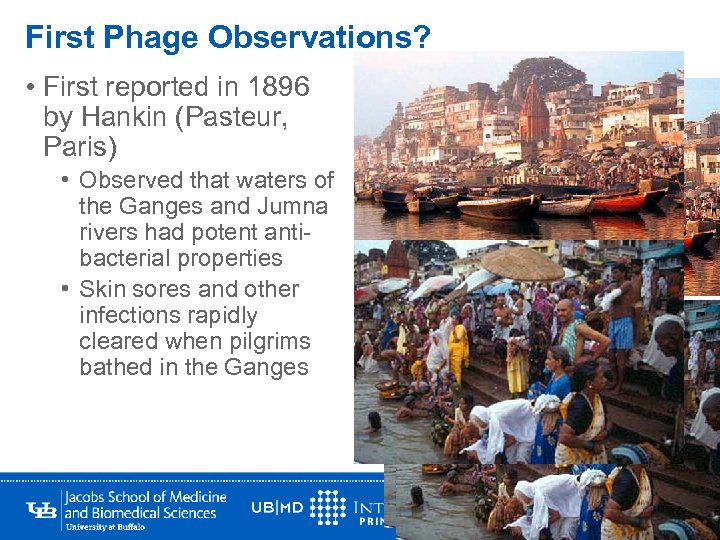
First Phage Observations? • First reported in 1896 by Hankin (Pasteur, Paris) • Observed that waters of the Ganges and Jumna rivers had potent antibacterial properties • Skin sores and other infections rapidly cleared when pilgrims bathed in the Ganges 5 5
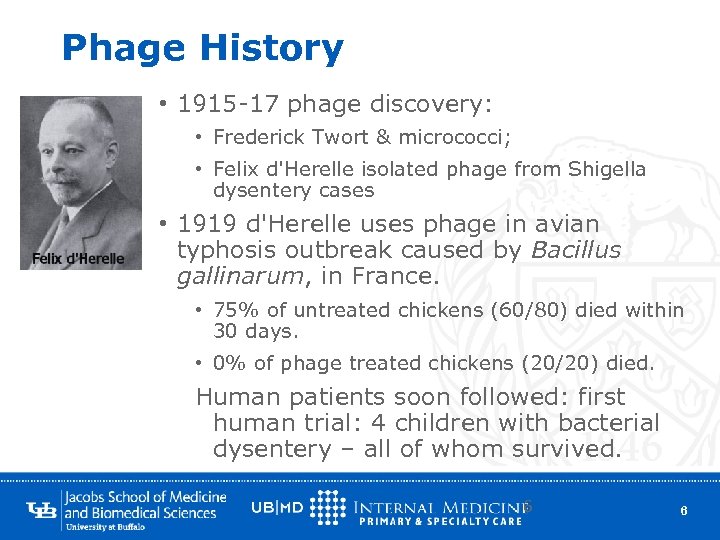
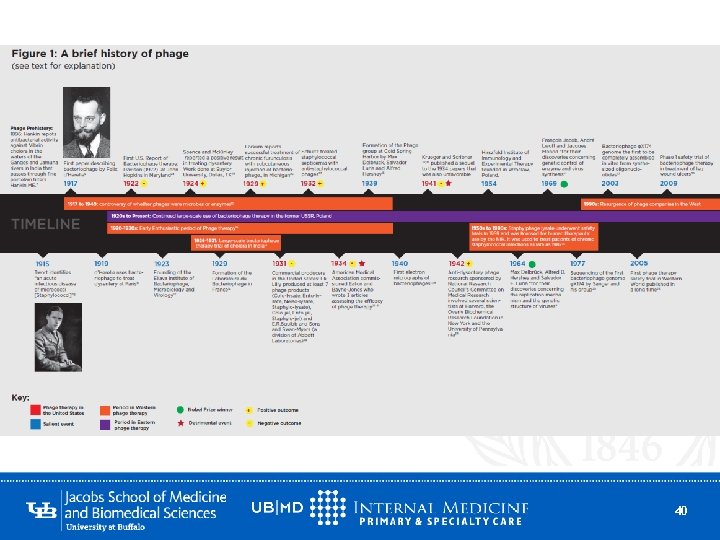
Phage History • 1915 -17 phage discovery: • Frederick Twort & micrococci; • Felix d'Herelle isolated phage from Shigella dysentery cases • 1919 d'Herelle uses phage in avian typhosis outbreak caused by Bacillus gallinarum, in France. • 75% of untreated chickens (60/80) died within 30 days. • 0% of phage treated chickens (20/20) died. Human patients soon followed: first human trial: 4 children with bacterial dysentery – all of whom survived. 6 6
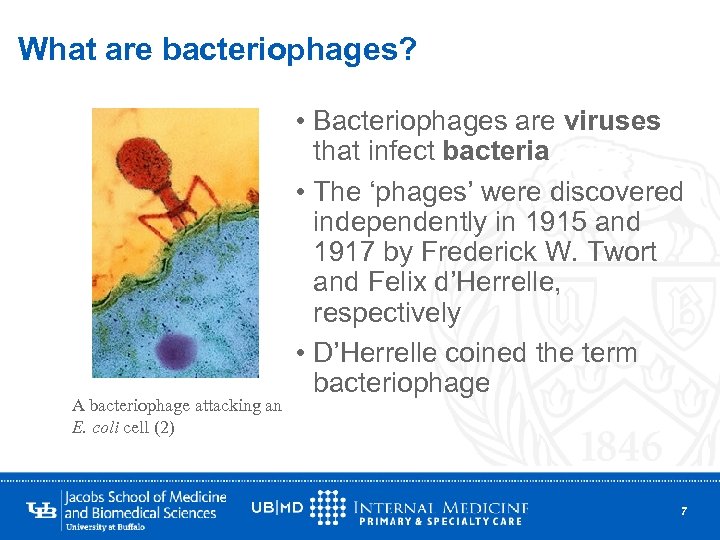
What are bacteriophages? A bacteriophage attacking an E. coli cell (2) • Bacteriophages are viruses that infect bacteria • The ‘phages’ were discovered independently in 1915 and 1917 by Frederick W. Twort and Felix d’Herrelle, respectively • D’Herrelle coined the term bacteriophage 7
1. Are phages found in the anterior nares? (Aswani & Shukla, 2011) 8
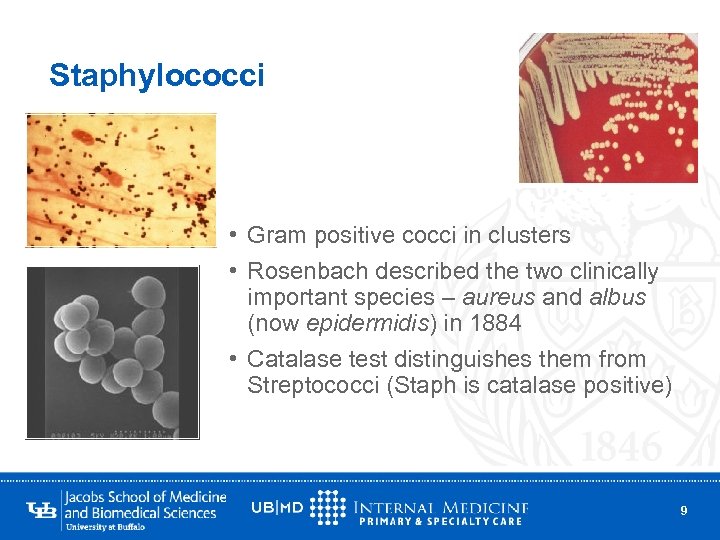
Staphylococci • Gram positive cocci in clusters • Rosenbach described the two clinically important species – aureus and albus (now epidermidis) in 1884 • Catalase test distinguishes them from Streptococci (Staph is catalase positive) 9
The anterior nares - ecology • nares are always heavily colonized, mostly with Staphylococcus epidermidis and corynebacteria, • S. aureus is present in at least 30% of individuals in the normal population • Lina et al (2003) analyzed the composition of the aerobic nasal flora of 216 healthy volunteers • found that the S. aureus colonization rate in subjects colonized by Corynebacterium spp. and/or non-aureus staphylococci, especially S. epidermidis, was significantly lower than in subjects not colonized by these species, • This suggests that both Corynebacterium spp. and S. epidermidis antagonize nasal colonization by S. aureus. 10
Background • Kuehnert et al (2006) reported a national incidence of 32% for S aureus and 0. 8% for MRSA. • S. aureus is an important cause of community- and hospitalacquired infections (Lowry, 1998). • Elimination of carriage in the anterior nares, the principal reservoirs of S. aureus, reduces the incidence of S. aureus infections (Holton et al, 1991). • Leszczyński et al, 2006 used phage to treat MRSA-carrier status • An anti-microbial product being developed for topical use in the UK based on a phage specific for S. aureus, including MRSA (O'Flaherty et al, 2005) 11
Background II • There is no published data documenting the presence of bacteriophages in the anterior nares. • What is the nasal carriage status of medical residents? • Is it different from that of other healthcare workers and/or the general population? • Do bacterteriophages play an ecological role in the anterior nares? • Do they affect the nasal carriage status of S. aureus and/or MRSA? 12
Objectives and Hypotheses • • • To detect and document the extent of staphylococcal bacteriophages in the anterior nares To determine the nasal carriage rates of S. aureus and MRSA in the house staff population at the Marshfield Clinic To determine if staphylococcal phages affect the nasal carriage status of S. aureus and MRSA in the anterior nares 13
Study Design • • • A sample size of 200 individuals --Marshfield Clinic ambulatory patients and house staff was selected for studying the prevalence of phages and S. aureus. The proposal was approved by IRB before proceeding House staff (residents and fellows) and ambulatory patients of General Internal Medicine, Med/Peds and Family Practice departments were approached to participate in the research study. Swabs were coded by a study number and signed informed consent forms securely stored. Samples were processed and data analyzed ‘blindly’ 14
Power of the study • Sample size of n=200 selected based on: • Prevalence of S. aureus in the anterior nares is estimated at 30% based on Kuehnert et al, 2006 • Based on prevalence of bacteriophages in the oral cavity and gut (ranging from 3% to 33%) (Chibani. Chennoufi et al, 2004; Tylenda et al, 1985; Bachrach et al, 2003), I estimated a prevalence of 5% for lytic phages. • Consequently, the estimated prevalence of S. aureus phages in the anterior nares is estimated at 0. 5 x 0. 3 = 0. 015 or 1. 5%. • A sample size of n=200 would be estimated to yield at least 3 positive samples for bacteriophages against S. aureus. 15
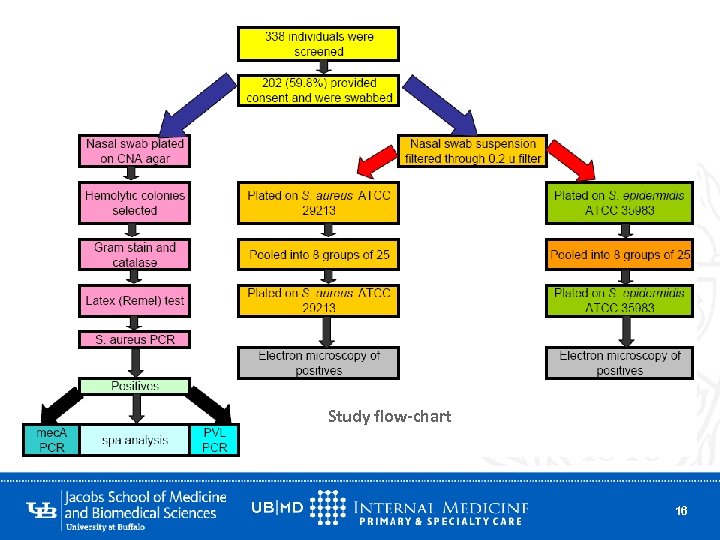
Study flow-chart 16
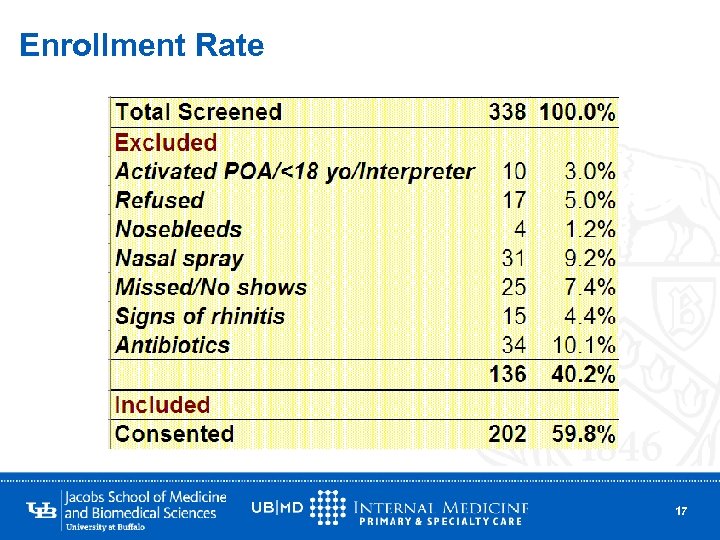
Enrollment Rate 17
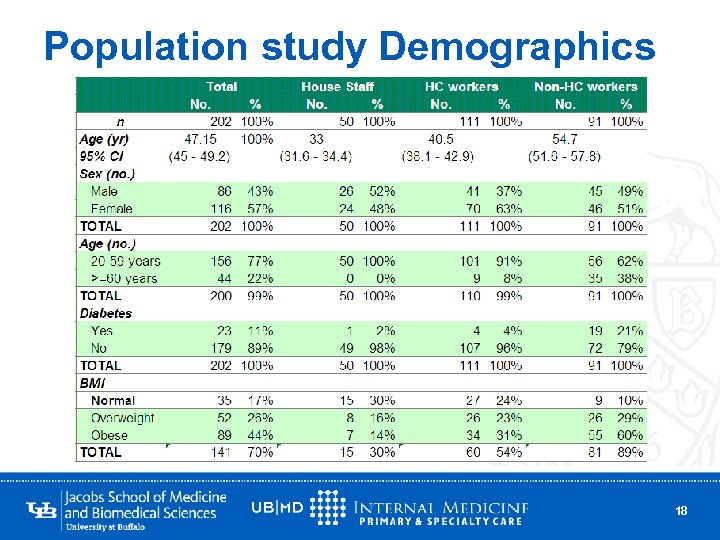
Population study Demographics 18
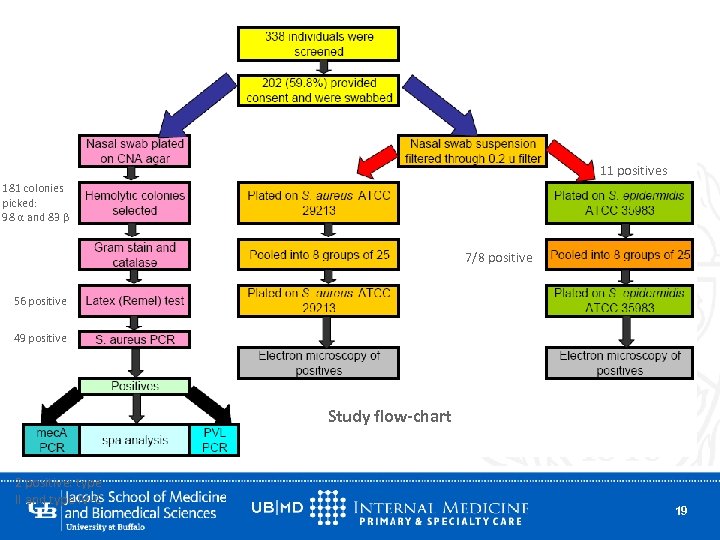
11 positives 181 colonies picked: 98 α and 83 β 7/8 positive 56 positive 49 positive Study flow-chart 2 positive: type II and type IV-C 19
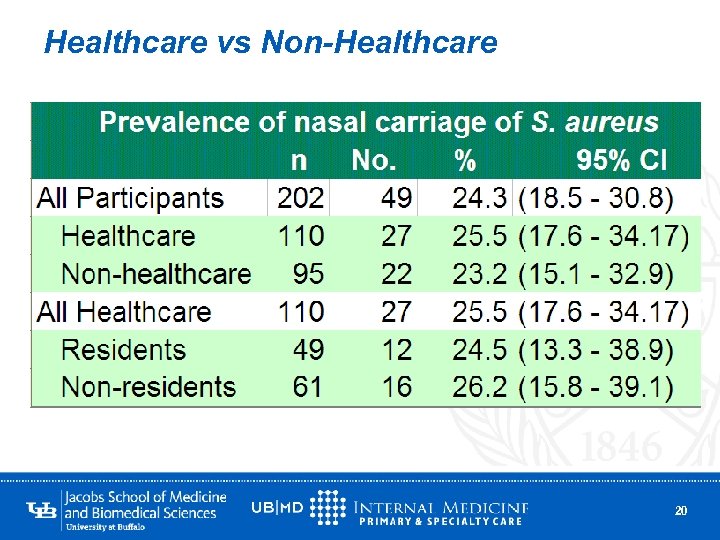
Healthcare vs Non-Healthcare 20
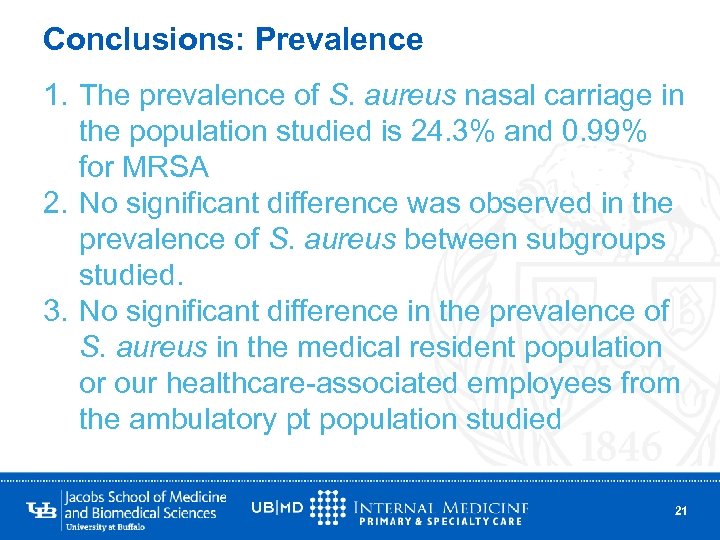
Conclusions: Prevalence 1. The prevalence of S. aureus nasal carriage in the population studied is 24. 3% and 0. 99% for MRSA 2. No significant difference was observed in the prevalence of S. aureus between subgroups studied. 3. No significant difference in the prevalence of S. aureus in the medical resident population or our healthcare-associated employees from the ambulatory pt population studied 21
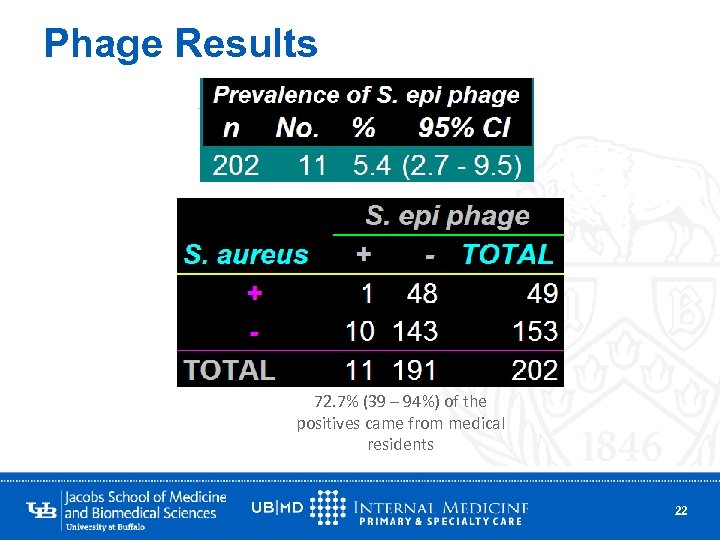
Phage Results 72. 7% (39 – 94%) of the positives came from medical residents 22
Conclusions: Phages 1. No lytic bacteriophages were isolated with activity against S. aureus 2. 11 bacteriophages with lytic activity against S. epidermidis belonging to at least 2 different families were isolated 3. Electron microscopy was able to demonstrate these phages attaching to S. epidermidis 23
Drawbacks of the study 1. The population size was insufficient for the subgroup analysis, so the lack of significant difference between subgroups must be interpreted with caution 2. We used 0. 2 u filter to filter our samples for phages. The electron micrographs showed that some of the phages were even 0. 5 u. 3. Concentrating the phage samples yielded more positives for phages; it is likely that we are underestimating the phage prevalence 24
Significance of this study 1. We demonstrate for the first time that lytic staphylococcal phages are found in the anterior nares of humans 2. Our study suggests an inverse relationship between prevalence of S. epidermidis phage and S. aureus nasal carriage 3. A preliminary survey of the literature suggests that this may be the first prevalence study of S. aureus and MRSA in house staff in the United States 25
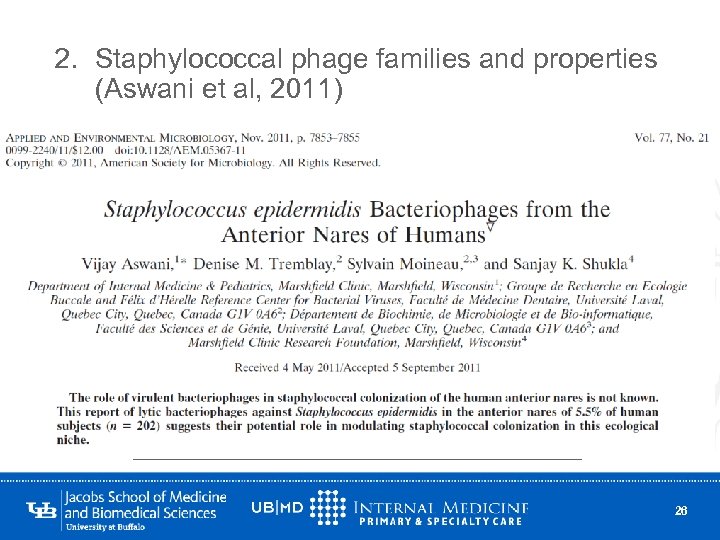
2. Staphylococcal phage families and properties (Aswani et al, 2011) 26
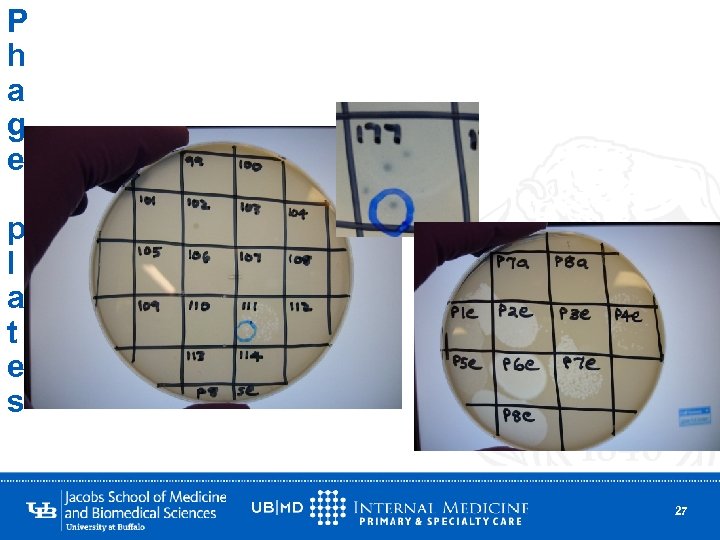
P h a g e p l a t e s 27
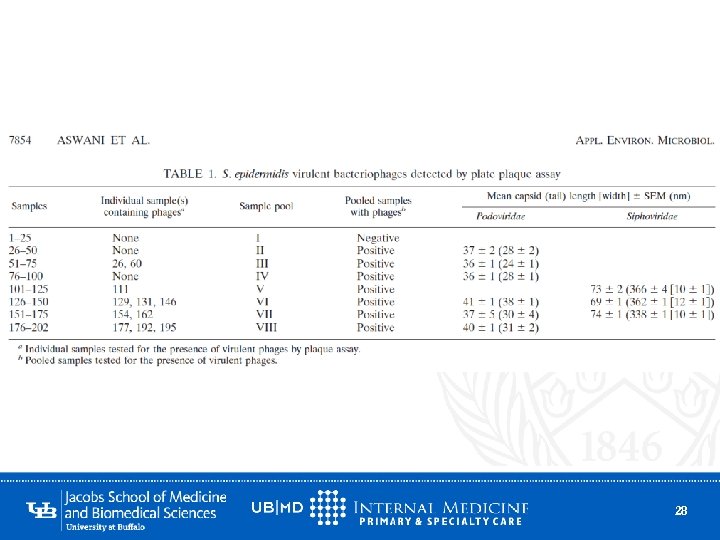
28
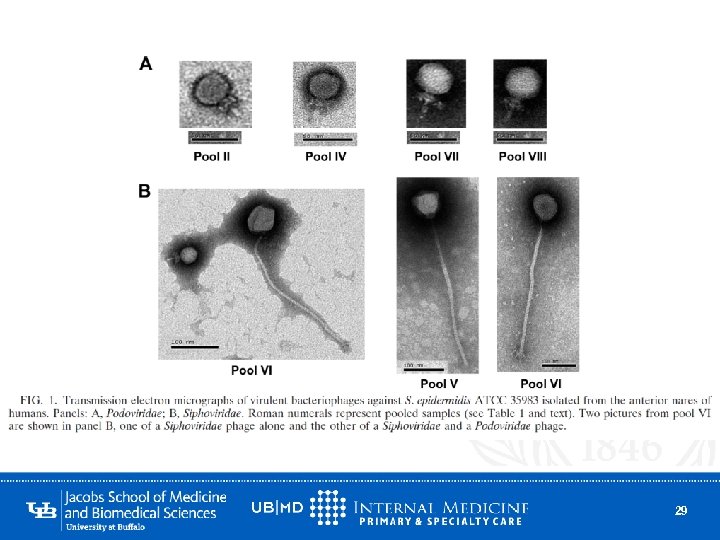
29
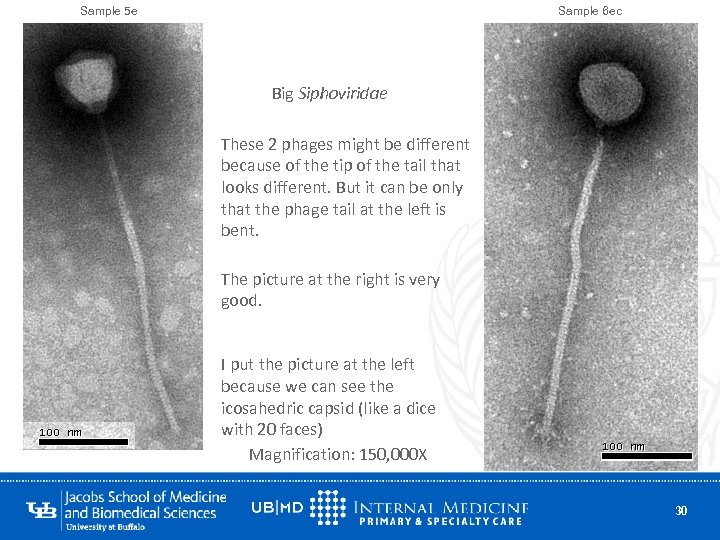
Sample 5 e Sample 6 ec Big Siphoviridae These 2 phages might be different because of the tip of the tail that looks different. But it can be only that the phage tail at the left is bent. The picture at the right is very good. I put the picture at the left because we can see the icosahedric capsid (like a dice with 20 faces) Magnification: 150, 000 X 30
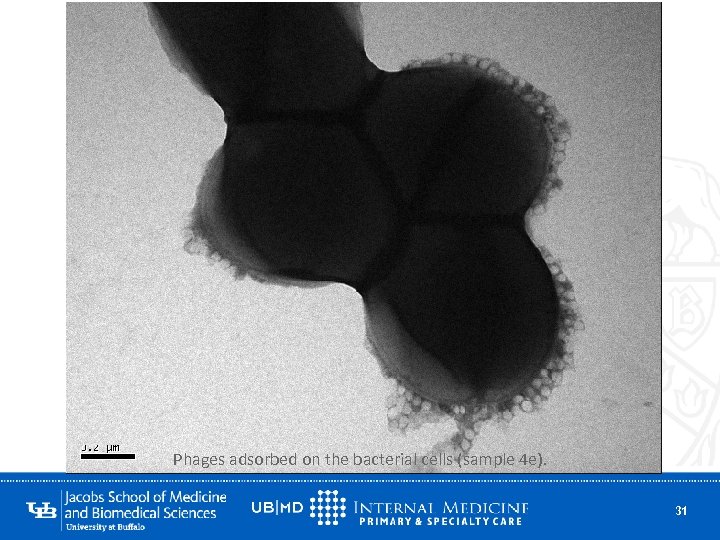
Phages adsorbed on the bacterial cells (sample 4 e). 31
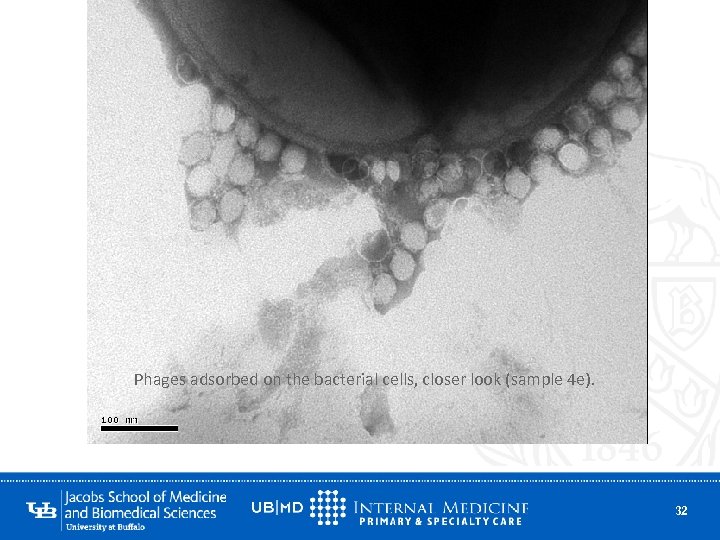
Phages adsorbed on the bacterial cells, closer look (sample 4 e). 32
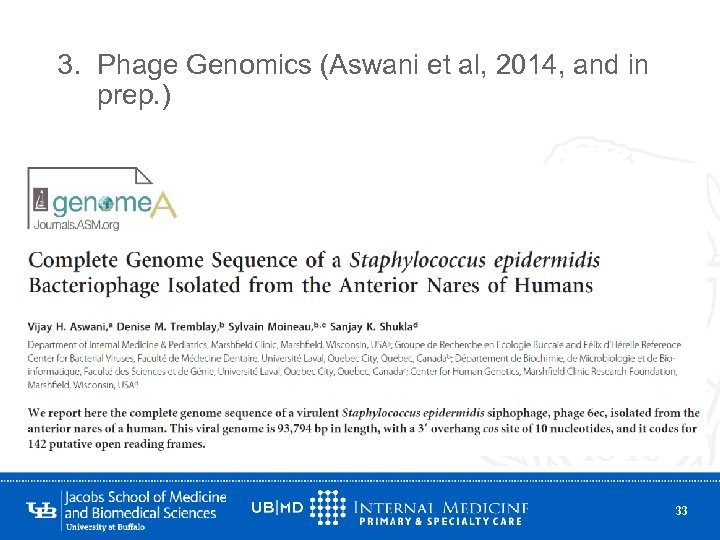
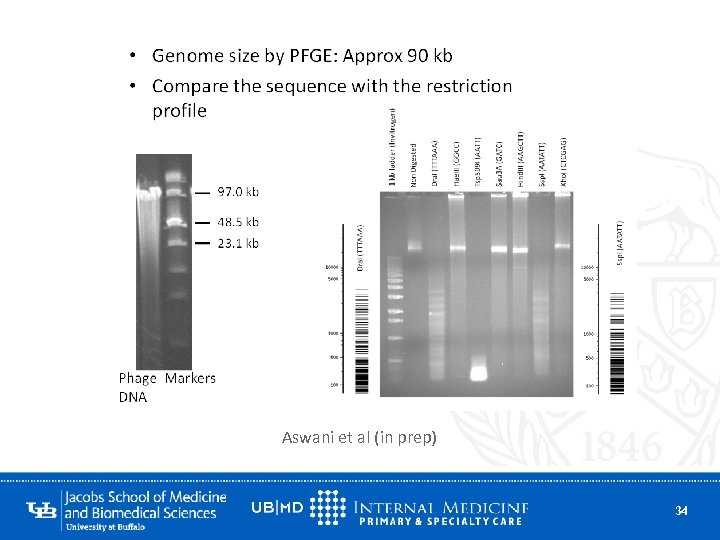
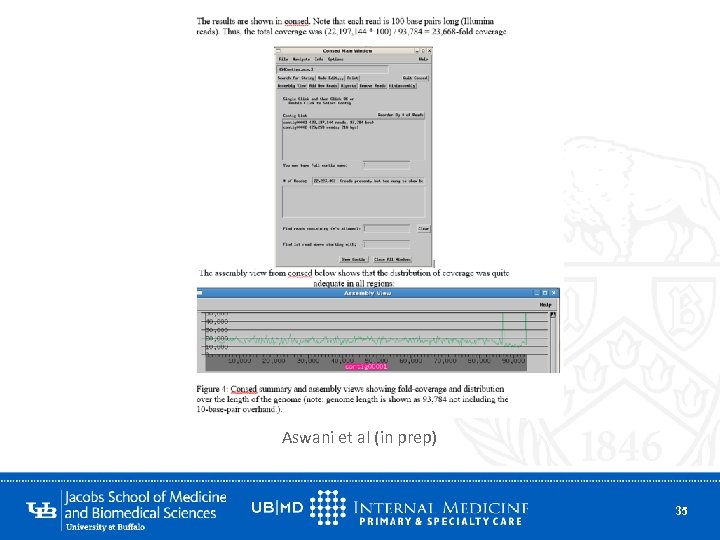
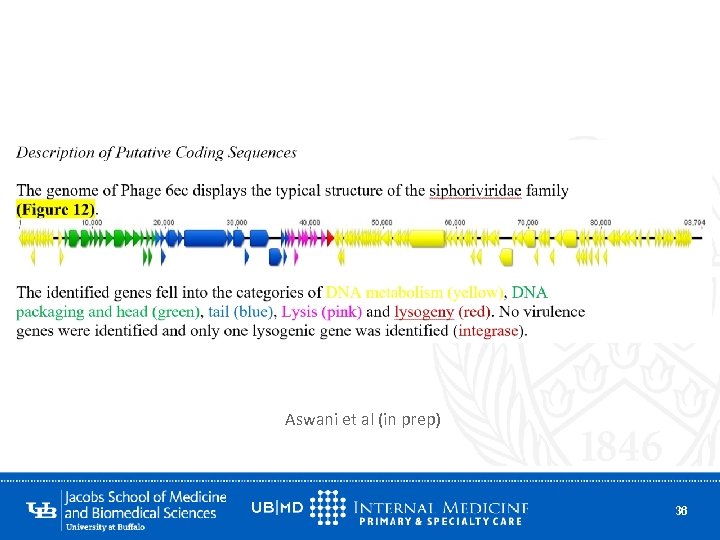
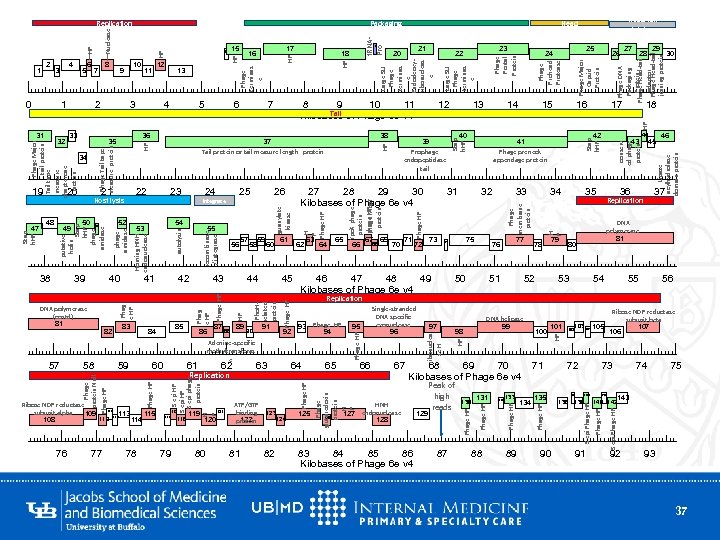
3. Phage Genomics (Aswani et al, 2014, and in prep. ) 33
Aswani et al (in prep) 34
Aswani et al (in prep) 35
Aswani et al (in prep) 36
2 3 4 5 6 7 8 9 10 11 Tail Kilobases of Phage 6 e v 4 12 13 14 15 27 16 29 28 adaptor Phage Head-tail joining protein 26 Phage Major Capsid Protein Phage Prohead Protease t. RNA- HP HP 13 Phage Portal Protein 11 25 24 17 30 18 HP 1 9 23 22 Large SU Phage terminas e 7 12 Large SU Pro Phage terminas e Endodeoxyribonucleas e 5 10 21 20 Phage DNA Packaging Protein Phage Head-tail 0 8 18 Head-tail joining Head 19 17 16 HP 3 6 15 14 Phage terminas e 4 Nuclease 1 2 Packaging HP HP Replication 78 79 118 119 121 120 80 63 ATP/GTP binding 123 124 122 protein 81 82 68 70 Phage membrane protein 73 72 75 74 46 47 48 49 Kilobases of Phage 6 e v 4 77 76 50 51 78 52 46 Lipase acylhydrolase domain protein conserv ed phage protein Stap h. HP 79 45 36 37 DNA polymerase 81 H P 71 Phage HP 69 Stap h. HP HP Ypo. X phage protein phage Mbp. T HP protein 67 44 Replication 80 53 54 55 56 Replication 64 125 65 95 66 67 126 97 DNA helicase 99 98 68 69 70 Kilobases of Phage 6 e v 4 HNH 127 endonuclease 128 83 84 85 86 Kilobases of Phage 6 e v 4 129 Peak of high reads 87 100 101 130 131 88 132 133 89 134 71 135 90 103 104 105 102 HP 93 Phage HP 94 Single-stranded DNA specific exonuclease 96 72 Ribose NDP reductase subunit beta 107 106 73 137 139 136 138 91 141 74 75 143 140 142 Phage HP 117 92 66 43 35 S epi Phage HP 62 Replication 91 65 34 Phage HP Adenine-specific methyltransferas e 61 116 90 64 33 Phage HP 89 45 63 Phage HP 88 62 32 HP 44 61 ribonuclea se H 87 60 Phage HP 86 59 H P Phage HP guanylate kinase recombinase / integrase 43 58 31 Phage HP 60 57 42 41 Phage preneck appendage protein S epi Phage HP 77 85 84 Ribose NDP reductase 111 subunit alpha 109 113 115 110 112 108 114 76 42 56 Phage glutaredoxin protein H P 59 Phage protein Nrdl Phage HP 58 83 55 40 39 Prophage endopeptidase tail 29 30 27 28 Kilobases of Phage 6 e v 4 Phage HP 82 26 Phage HP 41 Phag e HP DNA polymerase (contd) 81 54 53 25 Pho. Hrelated protein 40 24 Integrase HP 39 57 HP 52 51 23 S epi HP S epi phage protein H P 38 22 Phage HP 50 Tail protein or tail measure length protein Homing HNH endonuclease 49 putative holin Stap h. HP phage amidase 48 21 Host lysis 38 37 Phag e HP 34 20 Stap h. HP 47 Phage Tail tape measure protein Phage Major tail protein Tail tape measure chapterone protein 19 36 35 autolysin 33 32 phage amidase 31 92 93 37
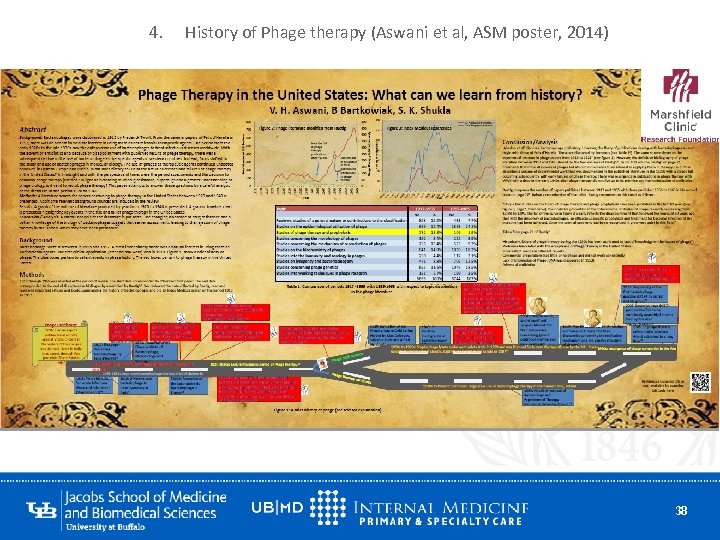
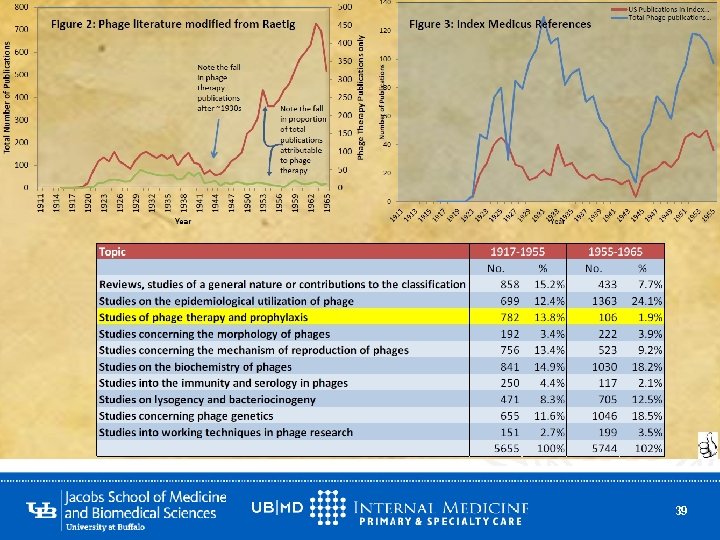
4. History of Phage therapy (Aswani et al, ASM poster, 2014) 38
39
40
5. 2013 -2015: West Africa Ebola Outbreak (see presentations here) 6. Future directions (to pursue here in Buffalo) • Phages in the sputum of CF patients – lower respiratory tract • Ebola genomics and biology? 41

Thank You! Questions? 42
Скачать презентацию BACTERIOPHAGES ECOLOGY GENOMICS THERAPEUTIC POTENTIAL Vijay Aswani
344e45e6aebcc2ff6fe1b1eb986ca29f.ppt