 Скачать презентацию Background to NHTSA NCAP Ratings for Rollover Resistance
a16bb85cb9ac288b5977b998906fc711.ppt
- Количество слайдов: 28




Background to NHTSA NCAP Ratings for Rollover Resistance Why are they based on Static Stability Factor?
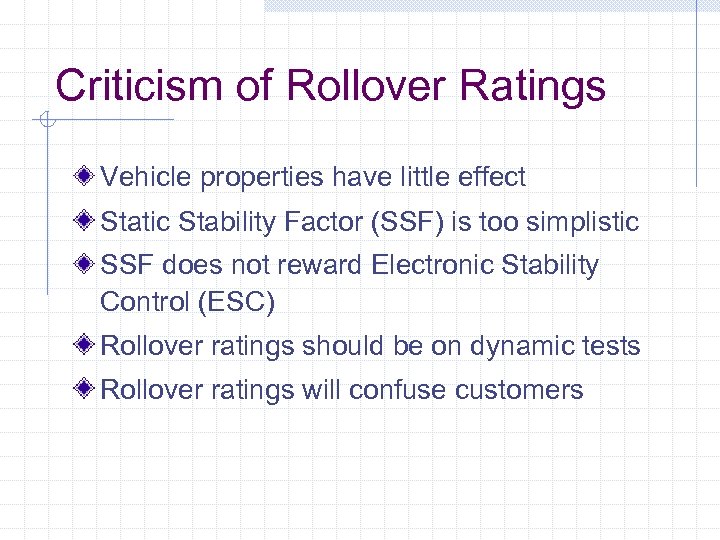
Criticism of Rollover Ratings Vehicle properties have little effect Static Stability Factor (SSF) is too simplistic SSF does not reward Electronic Stability Control (ESC) Rollover ratings should be on dynamic tests Rollover ratings will confuse customers
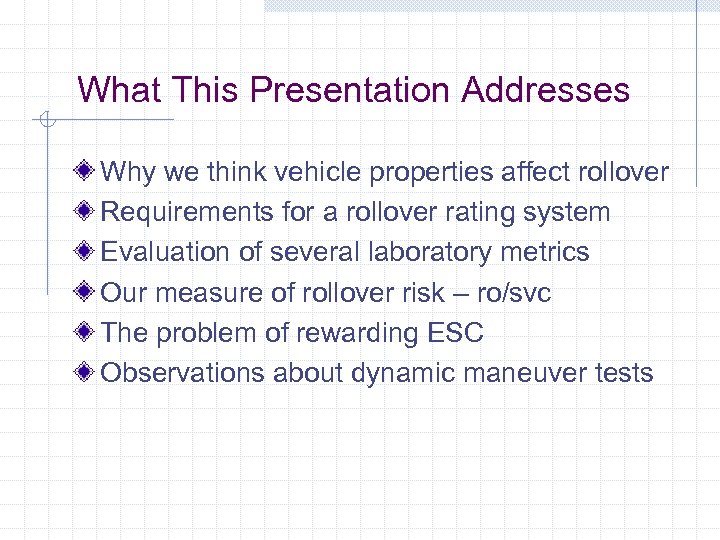
What This Presentation Addresses Why we think vehicle properties affect rollover Requirements for a rollover rating system Evaluation of several laboratory metrics Our measure of rollover risk – ro/svc The problem of rewarding ESC Observations about dynamic maneuver tests
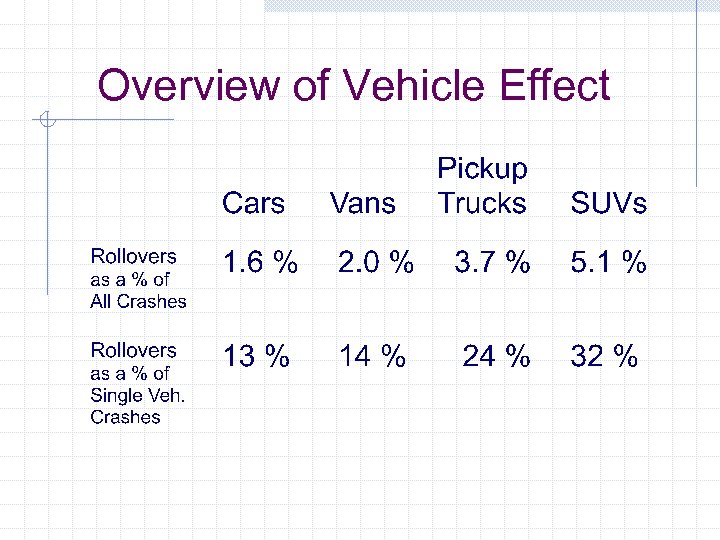
Overview of Vehicle Effect
Requirements for Rollover Rating System Represent tripped and untripped rollovers Correlation with rollover crash statistics Clear causal relationship to rollover Objective and repeatable measurements Low potential for unintended consequences Understandable by consumers
Tripped and Untripped Rollover 82% of Rollovers are in SVC 95% are tripped (curb, soft soil, ditch, guard rail, side slope, rim dig, etc. ) <5% are untripped (external forces provided by pavement friction) Driving maneuvers test only for untripped n Low tire traction, massive understeer and some ESC strategies that have no effect on a vehicle that encounters a tripping mechanism will prevent wheel lift in maneuver tests. Laboratory Metrics better relate to tripped rollover
Laboratory Metrics Tilt Table Ratio or Centrifuge Test Critical Sliding Velocity SSF Highly cross correlated because of the importance of cg height and track width Each correlate with crash statistics

Tilt Table Angle (TTA) Minimum table angle at which a vehicle on the table will tip over.
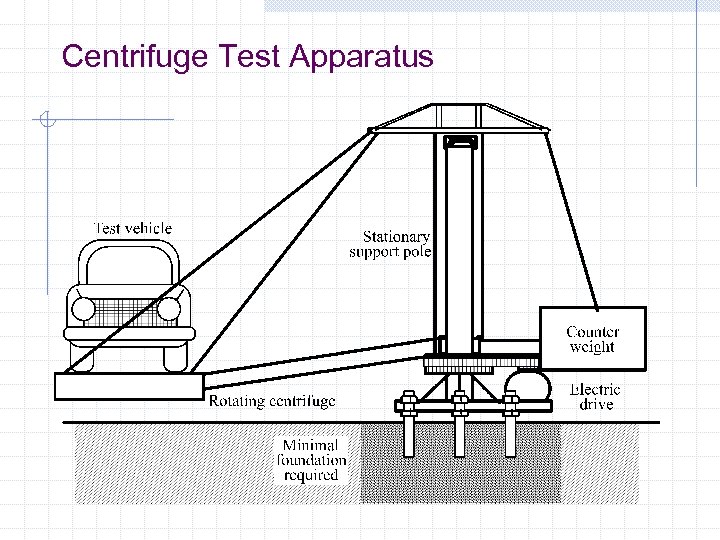
Centrifuge Test Apparatus
Why Not Tilt Table or Centrifuge? Their advantage is measurement of suspension and tire deflection effect Test performance increases when both tires lift simultaneously Roll stiffness ratios for best score cause more oversteer than current practice Potential for unintended consequences
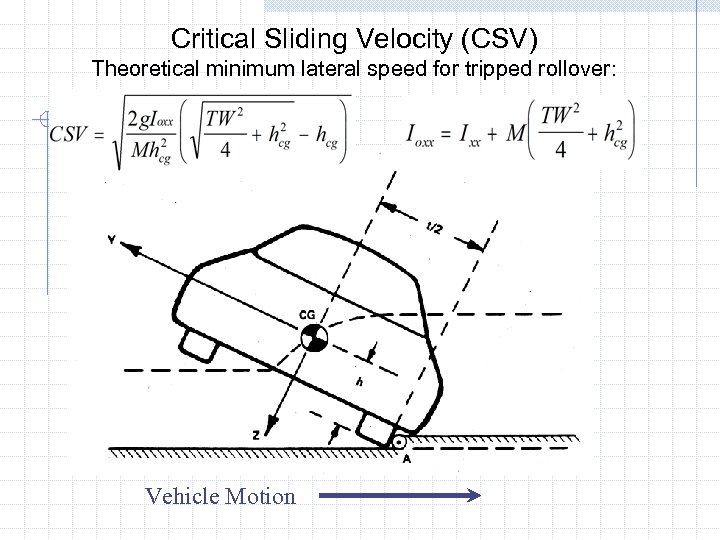
Critical Sliding Velocity (CSV) Theoretical minimum lateral speed for tripped rollover: Vehicle Motion
Why Not Critical Sliding Velocity? CSV adds the effect of roll moment inertia on tripped rollovers The rigid body model causes CSV to be less than realistic (range 10 to 15 mph) Increase in CSV through higher roll moment causes theoretical loss of maneuver test performance Consumer perception is the problem
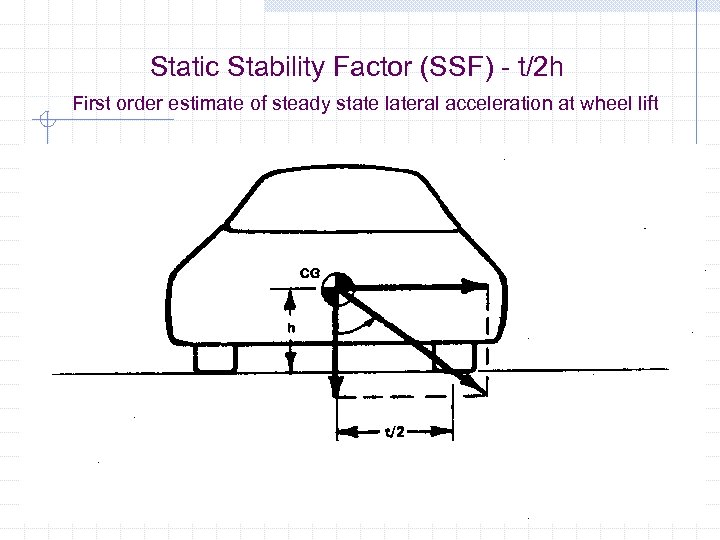
Static Stability Factor (SSF) - t/2 h First order estimate of steady state lateral acceleration at wheel lift
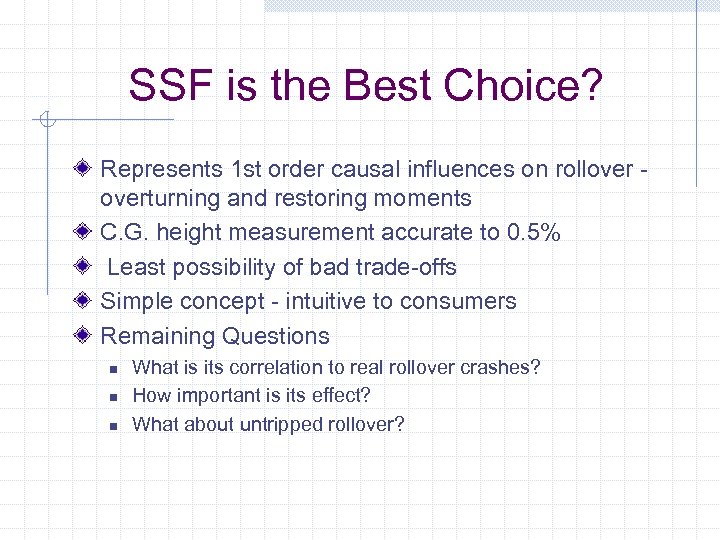
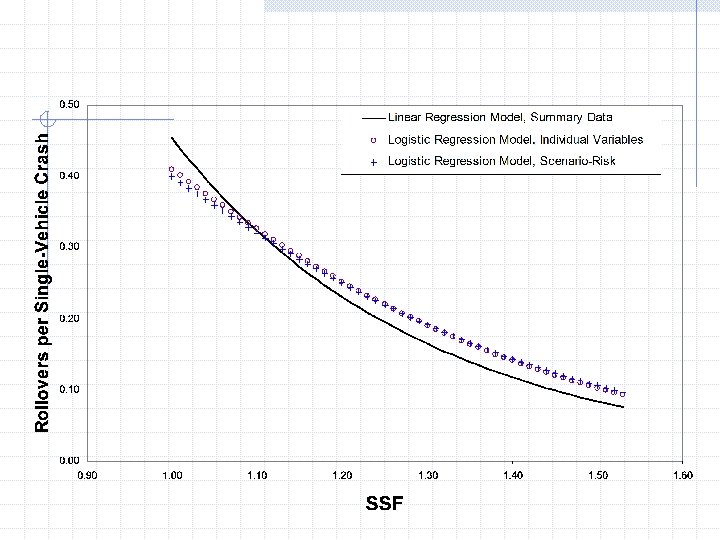
SSF is the Best Choice? Represents 1 st order causal influences on rolloverturning and restoring moments C. G. height measurement accurate to 0. 5% Least possibility of bad trade-offs Simple concept - intuitive to consumers Remaining Questions n n n What is its correlation to real rollover crashes? How important is its effect? What about untripped rollover?
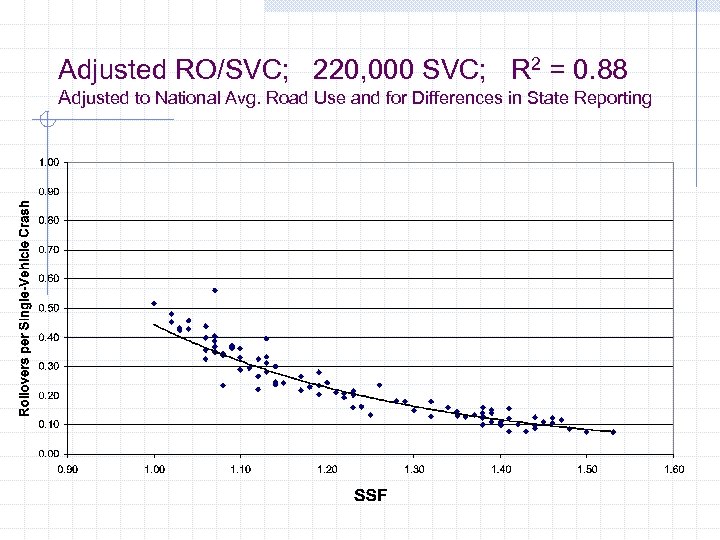
Adjusted RO/SVC; 220, 000 SVC; R 2 = 0. 88 Adjusted to National Avg. Road Use and for Differences in State Reporting
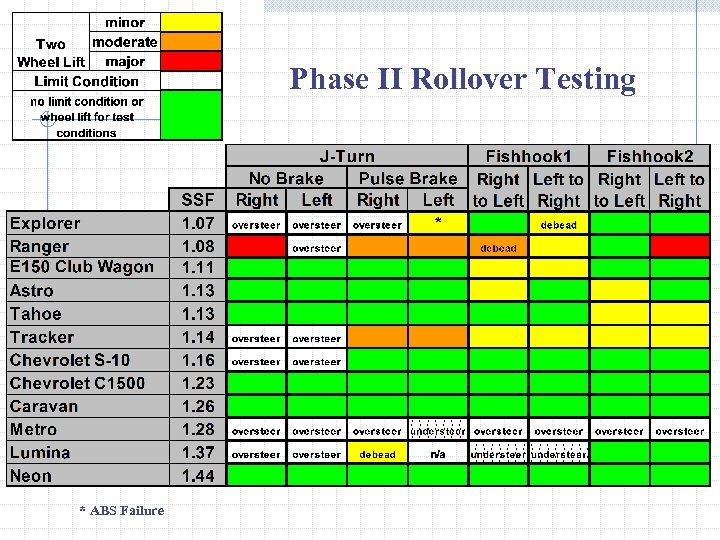
Phase II Rollover Testing * ABS Failure
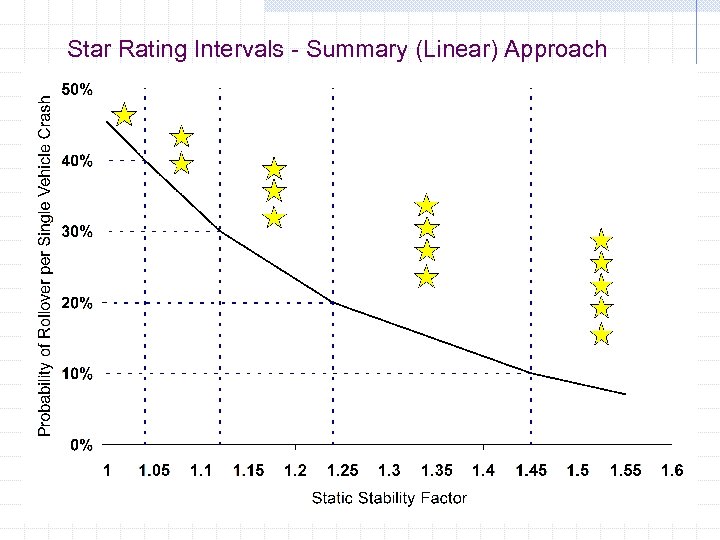
Star Rating Intervals - Summary (Linear) Approach
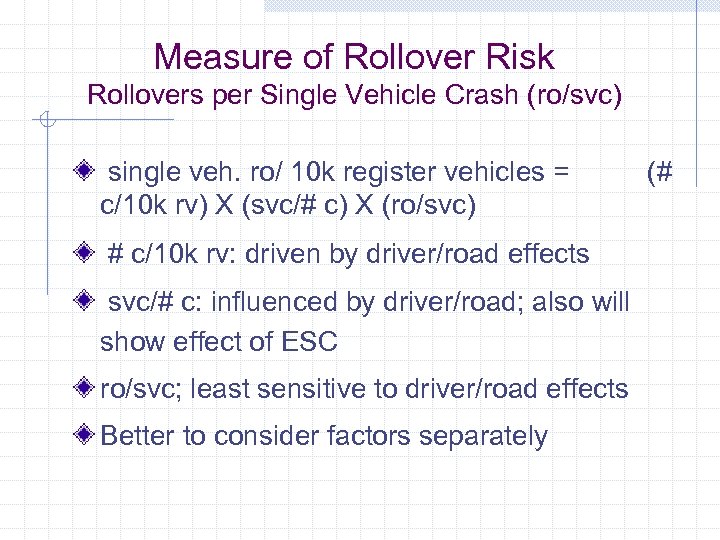
Measure of Rollover Risk Rollovers per Single Vehicle Crash (ro/svc) single veh. ro/ 10 k register vehicles = c/10 k rv) X (svc/# c) X (ro/svc) # c/10 k rv: driven by driver/road effects svc/# c: influenced by driver/road; also will show effect of ESC ro/svc; least sensitive to driver/road effects Better to consider factors separately (#
Rewarding ESC A Problem for SSF What is ESC? Treatment in consumer info web-site Expected to reduce (svc/total crashes) Expected to reduce untripped rollover Too new for much statistical evidence NHTSA monitoring ESC effectiveness
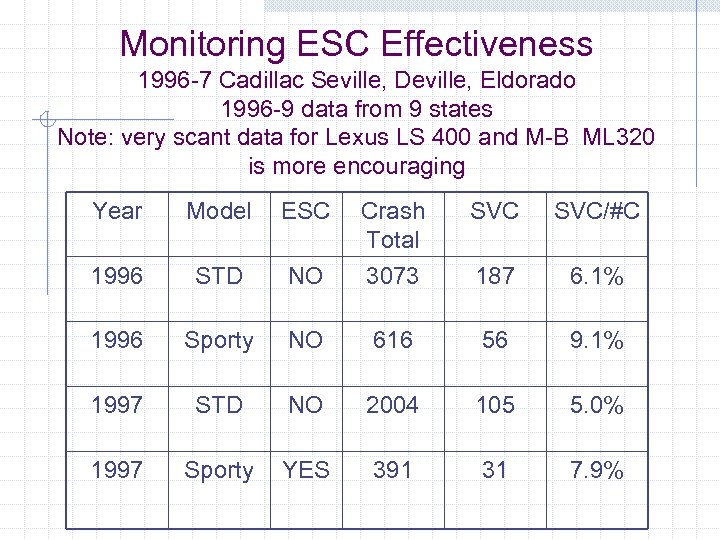
Monitoring ESC Effectiveness 1996 -7 Cadillac Seville, Deville, Eldorado 1996 -9 data from 9 states Note: very scant data for Lexus LS 400 and M-B ML 320 is more encouraging Year Model ESC Crash Total SVC/#C 1996 STD NO 3073 187 6. 1% 1996 Sporty NO 616 56 9. 1% 1997 STD NO 2004 105 5. 0% 1997 Sporty YES 391 31 7. 9%
Dynamic Maneuver Testing Two Main Types Path following – Double Lane Change n n Plus – Face Validity Minus – Objectivity and Repeatability Defined Steering- Fishhook n n Plus – Objectivity and repeatability Minus – Less Face Validity Information added by maneuver tests n n Roll momentum effect at steering reversal Operation of ESC
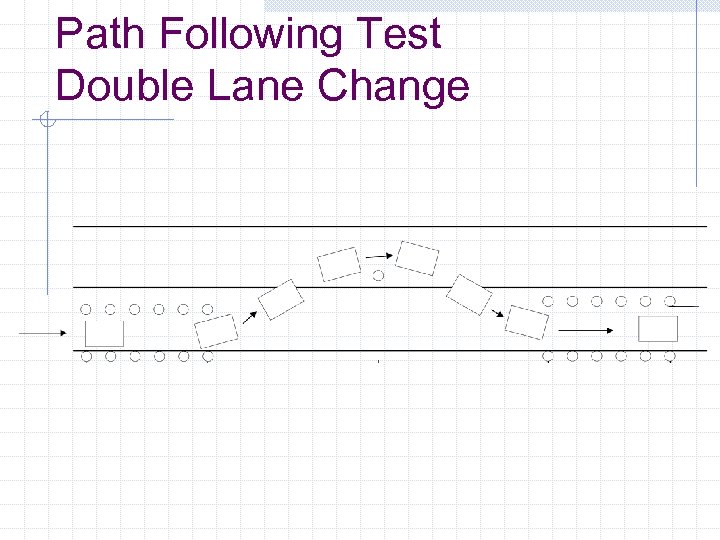
Path Following Test Double Lane Change
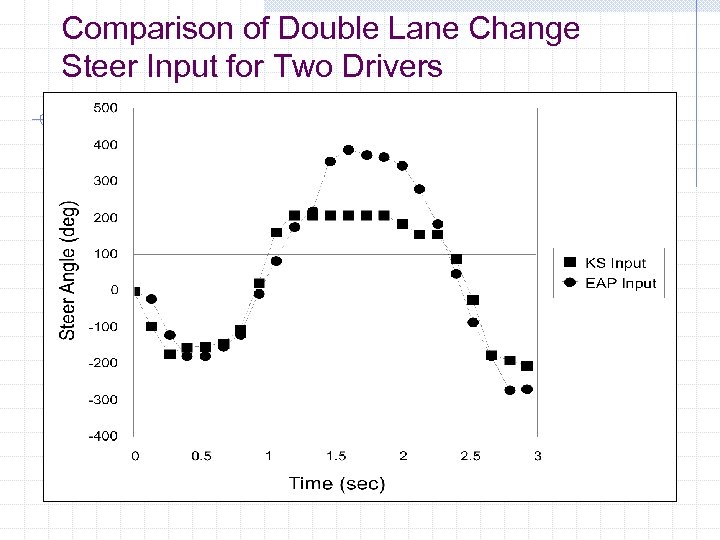
Comparison of Double Lane Change Steer Input for Two Drivers
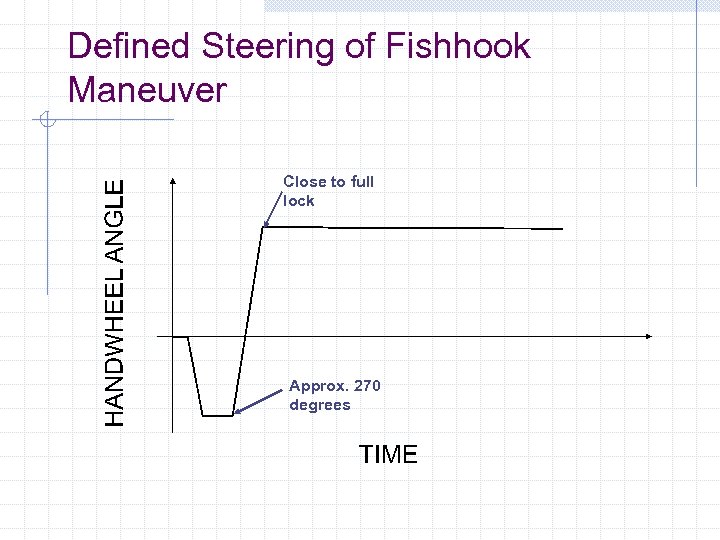
Defined Steering of Fishhook Maneuver Close to full lock Approx. 270 degrees
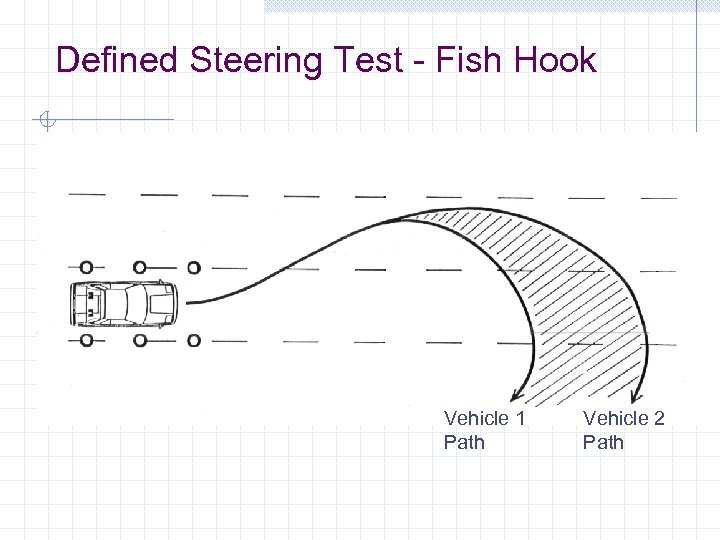
Defined Steering Test - Fish Hook Vehicle 1 Path Vehicle 2 Path
Difficulties Common to All Driving Maneuver Tests Driver safety High cost Effect of outriggers Effect of tire wear Complexity of ratings Correlation to crash statistics unlikely Effect of pavement friction variation May be overwhelmed by the brake intervention aspect of ESC- good or bad?
How Best to Reward ESC? Yaw Stability n n Original purpose of ESC Cannot be duplicated by driver action May not be rewarded by maneuver tests Future data needed to know effectiveness Brake Intervention n Not different from driver input Biggest vehicle attribute in maneuver test? Future data needed to know effectiveness Treatment of ESC requires wisdom
Скачать презентацию Background to NHTSA NCAP Ratings for Rollover Resistance
a16bb85cb9ac288b5977b998906fc711.ppt