 Скачать презентацию Background Monroe Doctrine Europeans can t colonize in
c74379c11ddf71e20877e01fd8589038.ppt
- Количество слайдов: 51



Background • Monroe Doctrine: Europeans can’t colonize in Western Hemisphere- why? – MO Compromise: Henry Clay, KY Senator » LA Purchase land divided slave / non slave » MO= slave state » ME= Free state » WHY? Impact?
Background • Henry Clay’s “American System”- 3 needs: – National Bank to fund economy – Tariffs to protect northern business – Railroads to connect north and south – John Quincy Adams likely to succeed Monroe (won’t run for third term because GW didn’t) because the Secretary of State traditionally succeeded President – Andrew Jackson- War hero from 1812
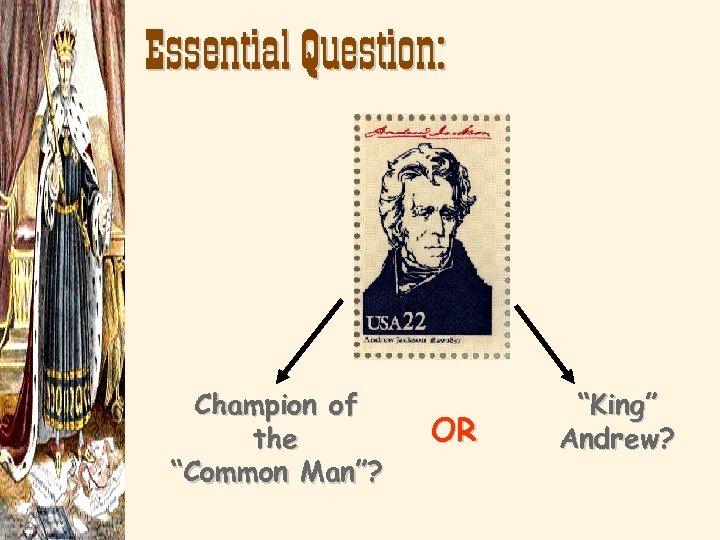
Essential Question: Champion of the “Common Man”? OR “King” Andrew?
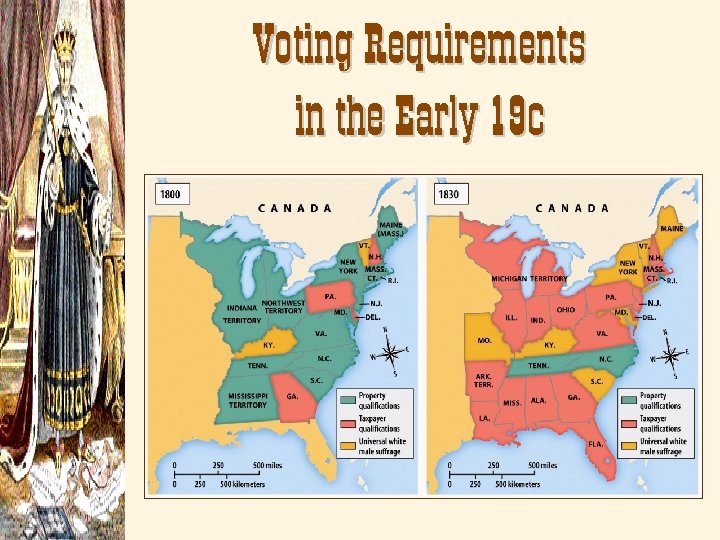
Voting Requirements in the Early 19 c
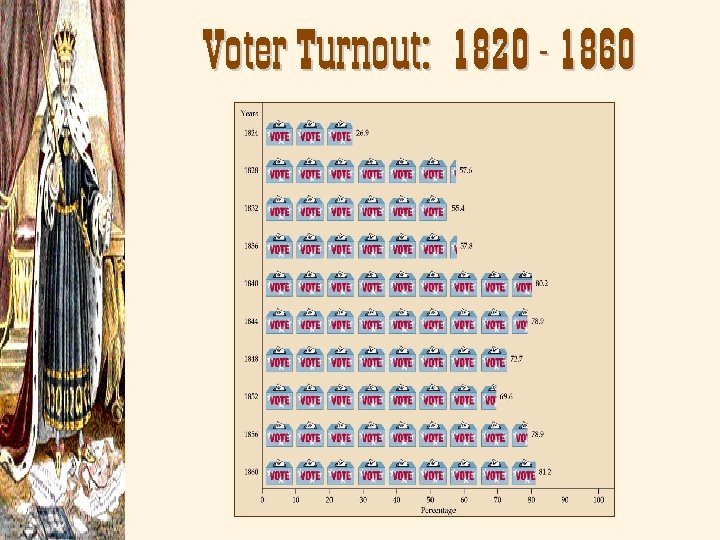
Voter Turnout: 1820 - 1860
Why Increased Democratization? 3 White male suffrage increased 3 Party nominating committees. 3 Voters chose their state’s slate of Presidential electors. 3 Spoils system. 3 Rise of Third Parties. 3 3 Popular campaigning (parades, rallies, floats, etc. ) Two-party system returned in the 1832 election: § Dem-Reps Natl. Reps. (1828) Whigs (1832) Republicans (1854) § Democrats (1828)
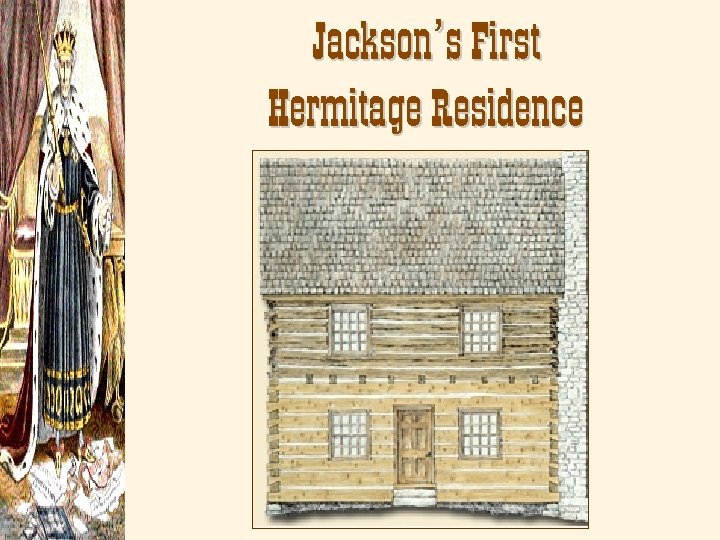
Jackson’s First Hermitage Residence
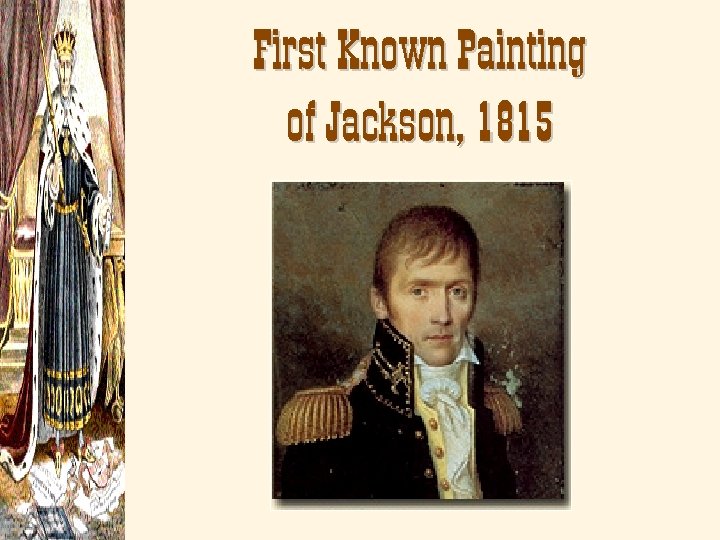
First Known Painting of Jackson, 1815
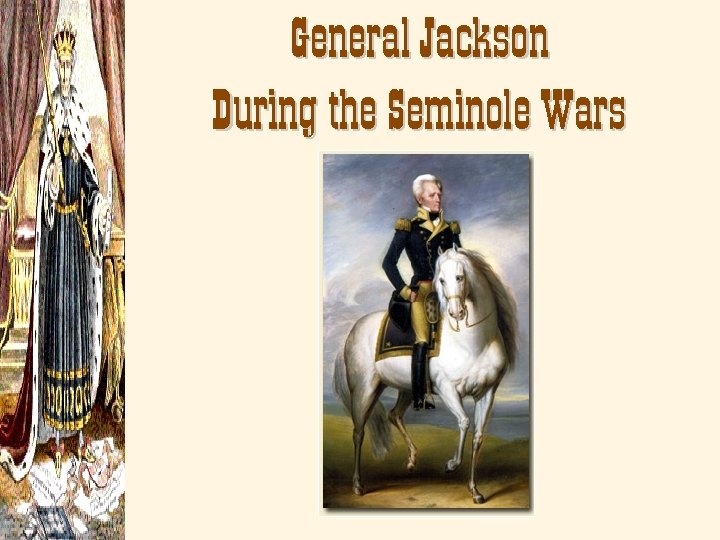
General Jackson During the Seminole Wars
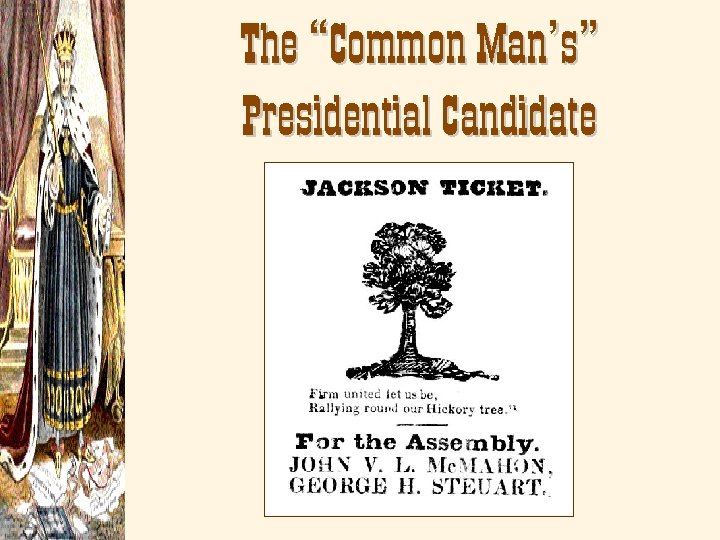
The “Common Man’s” Presidential Candidate
![Jackson’s Opponents in 1824 Henry Clay [KY] John Quincy Adams [MA] William H. Crawford](https://present5.com/presentation/c74379c11ddf71e20877e01fd8589038/image-15.jpg "Jackson’s Opponents in 1824 Henry Clay [KY] John Quincy Adams [MA] William H. Crawford")
Jackson’s Opponents in 1824 Henry Clay [KY] John Quincy Adams [MA] William H. Crawford [GA] John C. Calhoun [SC]
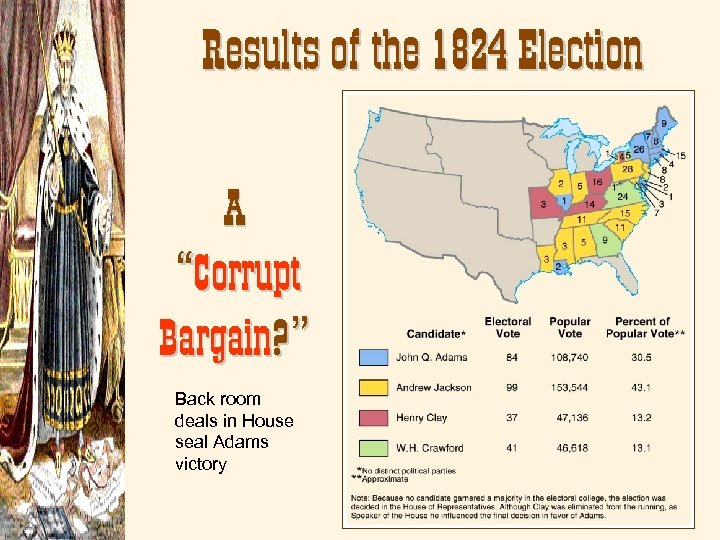
Results of the 1824 Election A “Corrupt Bargain? ” Back room deals in House seal Adams victory
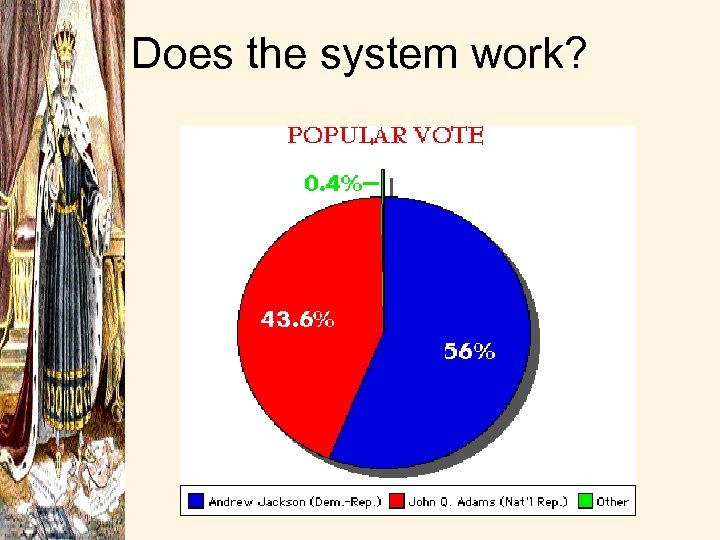
Does the system work?
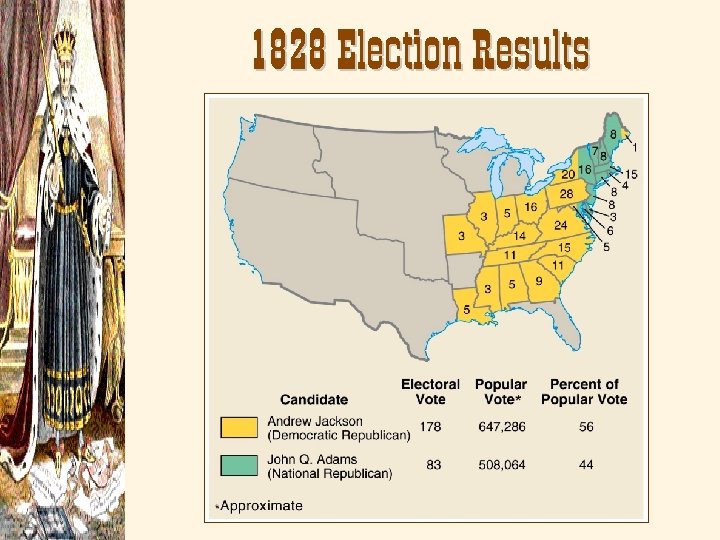
1828 Election Results
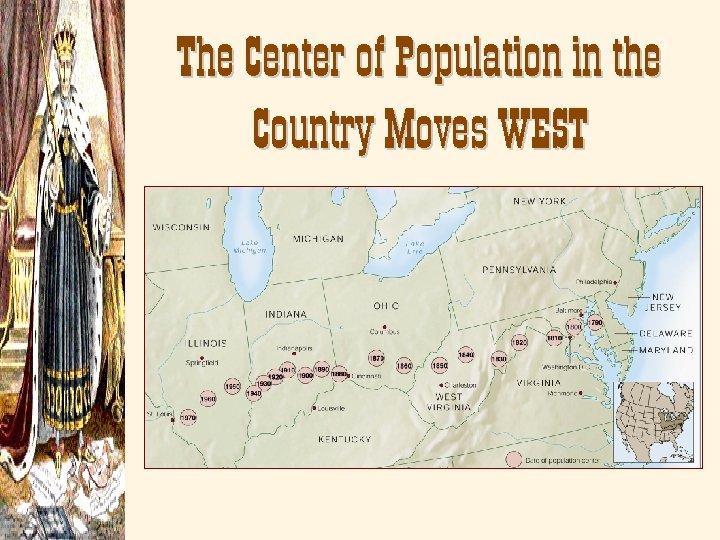
The Center of Population in the Country Moves WEST
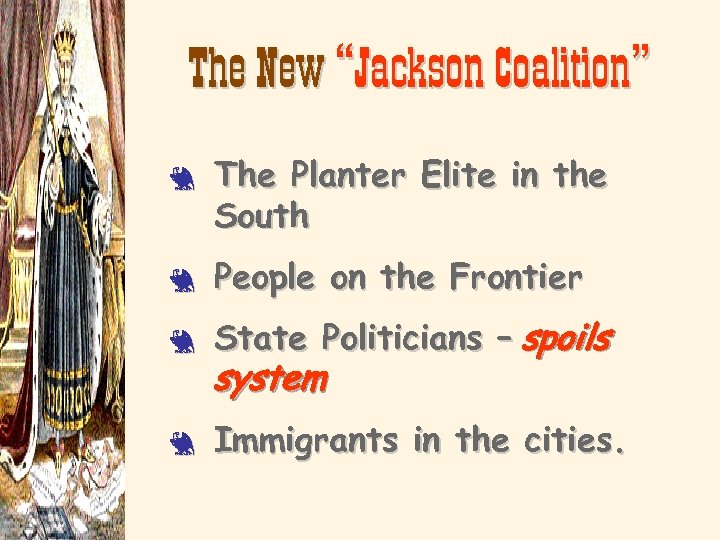
The New “Jackson Coalition” 3 The Planter Elite in the South 3 People on the Frontier 3 State Politicians – spoils 3 Immigrants in the cities. system
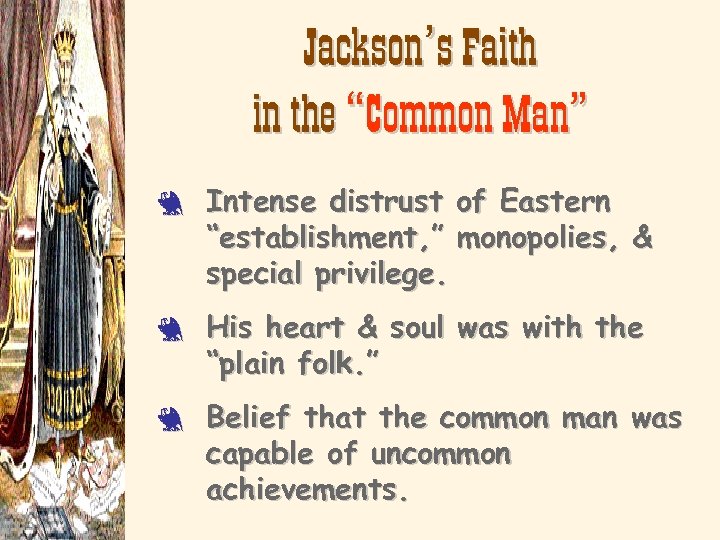
Jackson’s Faith in the “Common Man” 3 3 3 Intense distrust of Eastern “establishment, ” monopolies, & special privilege. His heart & soul was with the “plain folk. ” Belief that the common man was capable of uncommon achievements.
The Democratic Party – Formed after the 1828 election of Jackson – Organized by Martin Van Buren ( sec. of state and VP under Jackson) – Plans to revive Jeffersonian ideals- states’ rights and little federal spending – Unite planters of south and common man of north – Includes Jackson, Van Buren, Calhoun
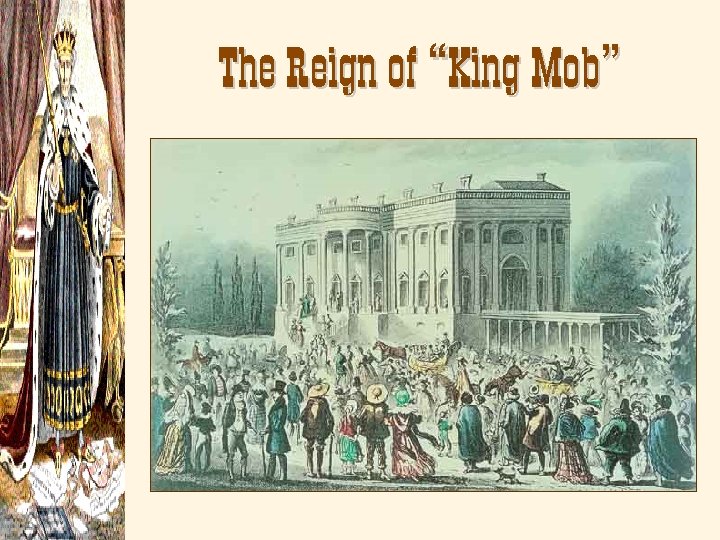
The Reign of “King Mob”
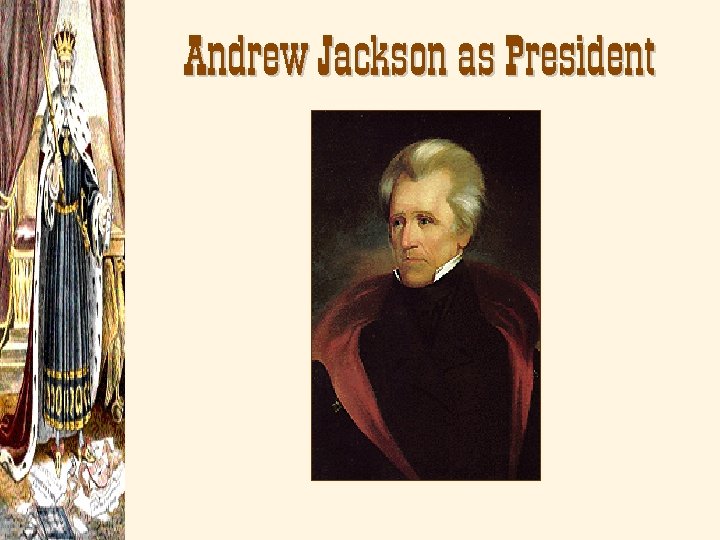
Andrew Jackson as President
States’ Rights- still an issue
1830 Webster (Sen. ): Liberty and Union, now and forever, one and inseparable. Jackson : Our Federal Union—it must be preserved. Calhoun (V. P. ) : The Union, next to our liberty, most dear.
Tariff’s date back to Clay’s American System- the north and south working together to produce goods and was meant to give the northern industry an advantage over foreign products
1832 Tariff Conflict meant to protect US industries 3 3 3 1828 --> “Tariff of Abomination” Hurts southern economy Forced to buy expensive goods from north rather than cheaper British goods
Indian Removal 1830 Indian Removal Act 3 Cherokee Nation v. GA (1831) 3 Worcester v. GA (1832) * “domestic dependent nation” 3“Cherokees Nation” = Independent
Marshall’s Decision The Cherokee nation, then, is a distinct community, occupying its own territory, with boundaries accurately described, in which the laws of Georgia can have no force, and which the citizens of Georgia have no right to enter, but with the assent of the Cherokees themselves, or in conformity with treaties, and with the acts of congress. The 3 Jackson’s Response: “ John Marshall has made his decision, now let him enforce it!”
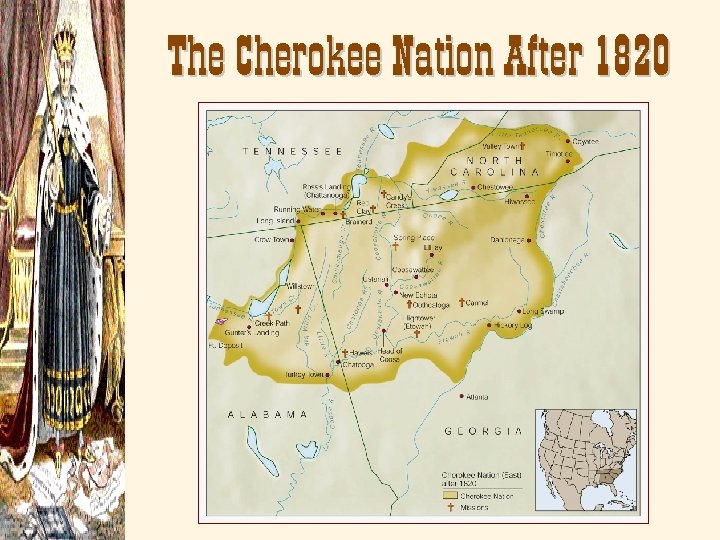
The Cherokee Nation After 1820
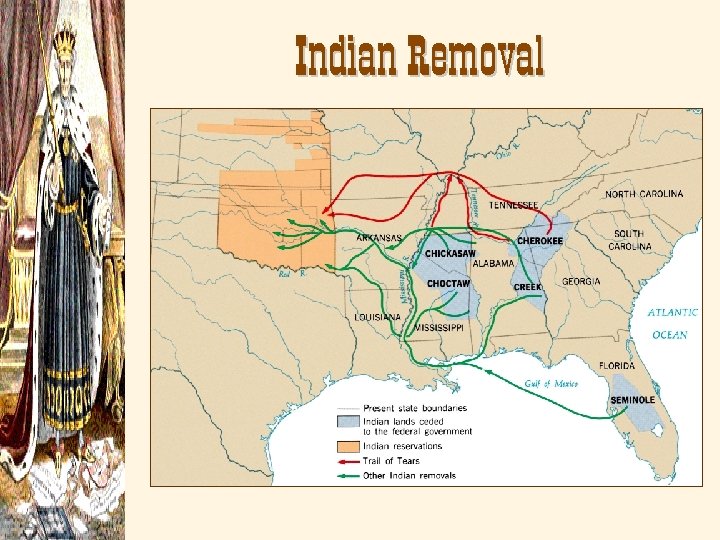
Indian Removal
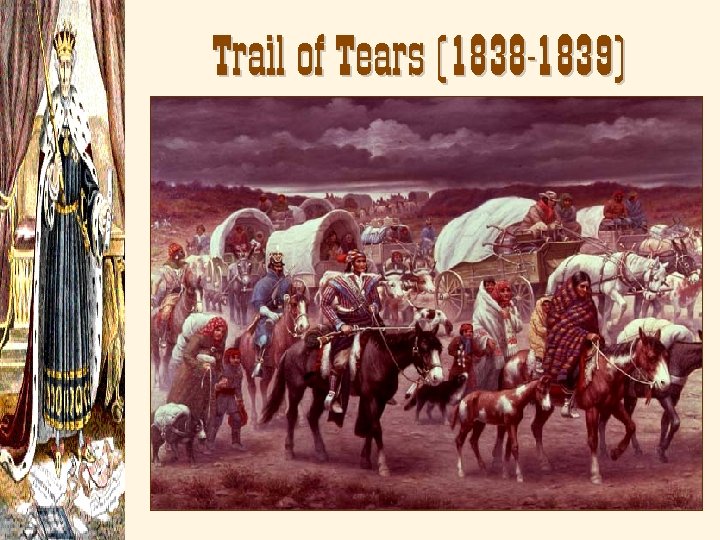
Trail of Tears (1838 -1839)
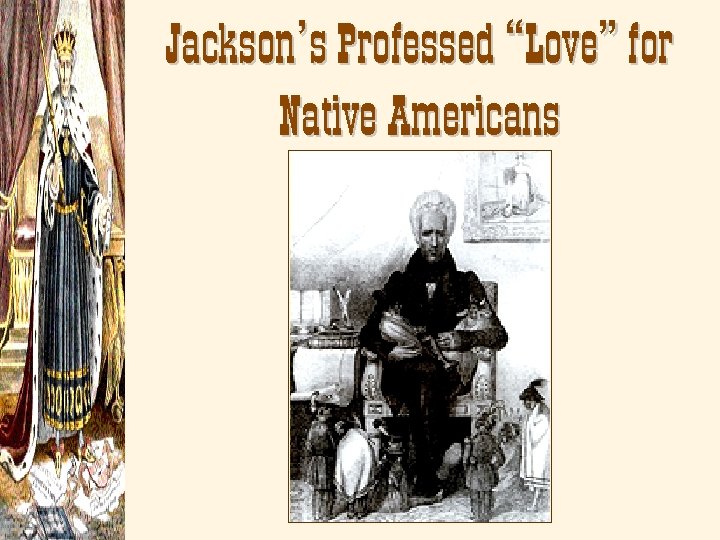
Jackson’s Professed “Love” for Native Americans
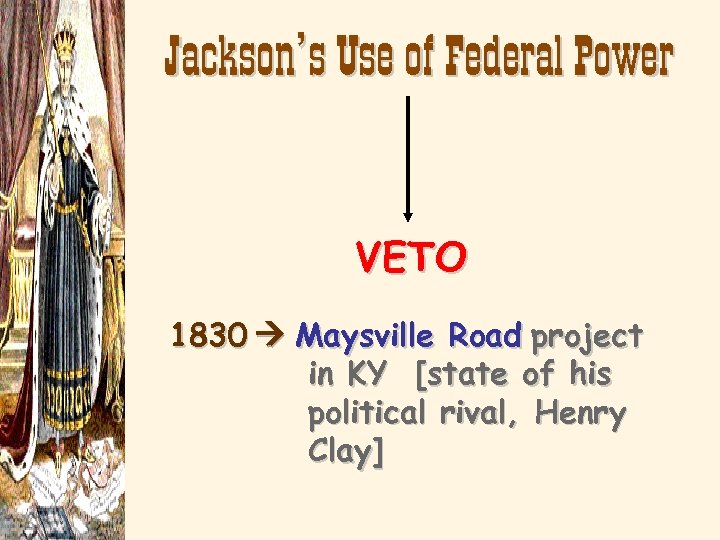
Jackson’s Use of Federal Power VETO 1830 Maysville Road project in KY [state of his political rival, Henry Clay]
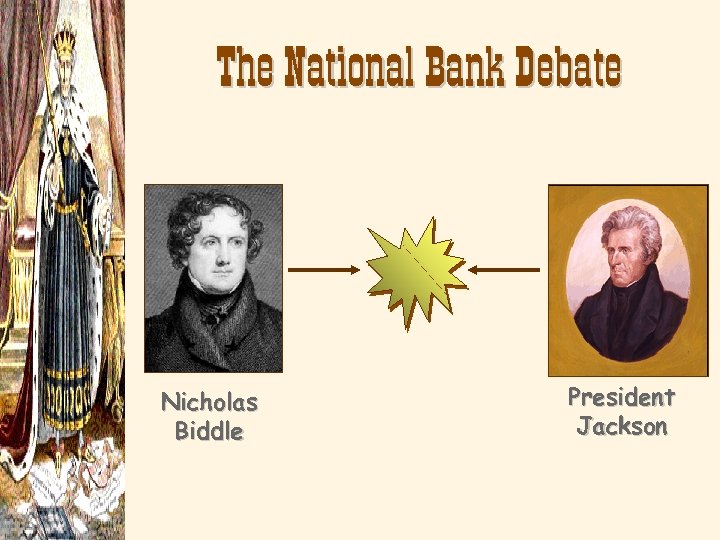
The National Bank Debate Nicholas Biddle President Jackson
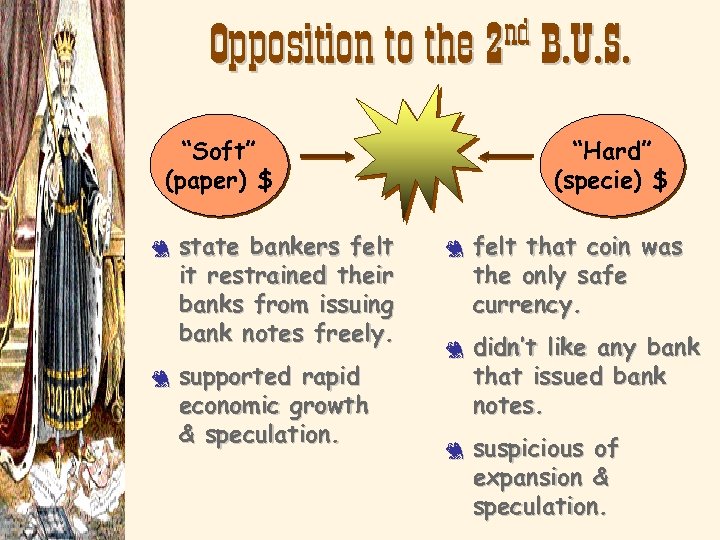
nd B. U. S. Opposition to the 2 “Soft” (paper) $ 3 3 state bankers felt it restrained their banks from issuing bank notes freely. supported rapid economic growth & speculation. “Hard” (specie) $ 3 3 3 felt that coin was the only safe currency. didn’t like any bank that issued bank notes. suspicious of expansion & speculation.
Why did Jackson oppose National Bank? 1. Concentrates Nations wealth in single institution 2. Exposes government to control of foreigners 3. Serves to make richer 4. Exercises control of members of Congress 5. Favors rich northeastern bankers over others
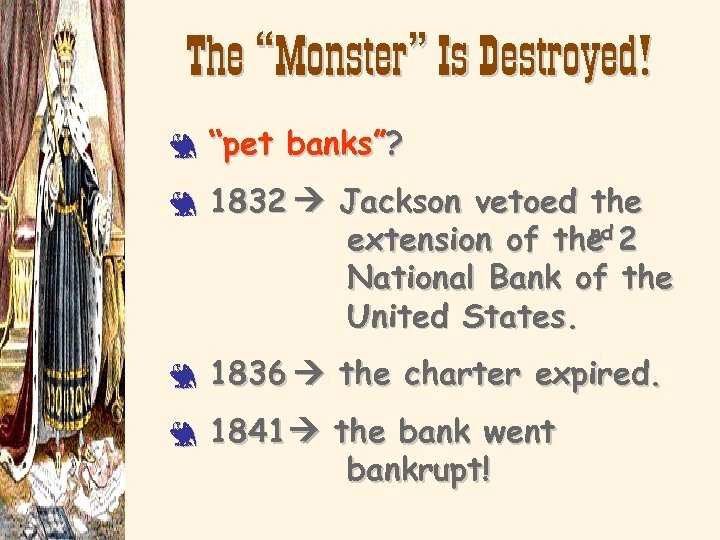
The “Monster” Is Destroyed! 3 3 “pet banks”? 1832 Jackson vetoed the nd extension of the 2 National Bank of the United States. 1836 the charter expired. 1841 the bank went bankrupt!
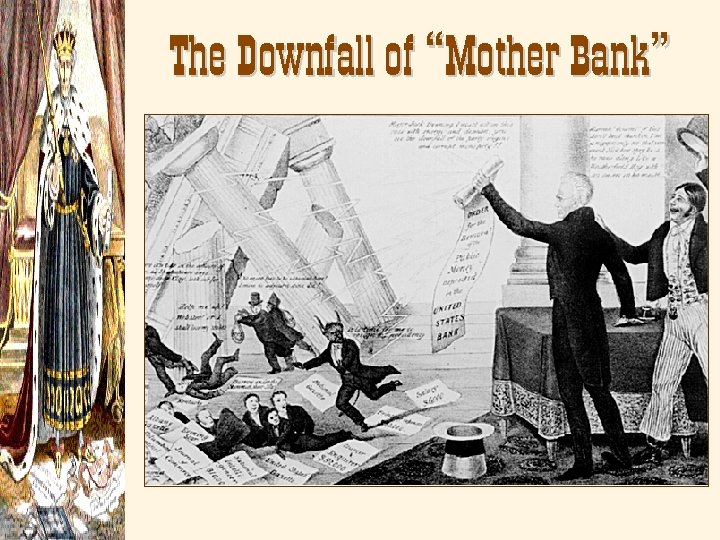
The Downfall of “Mother Bank”
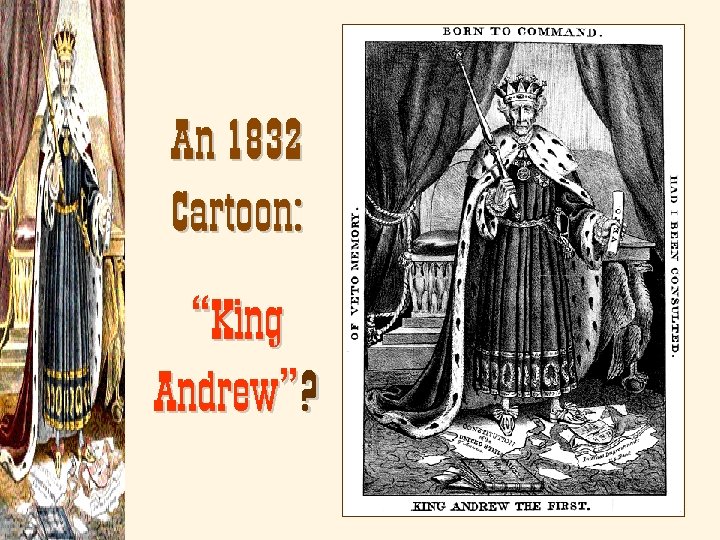
An 1832 Cartoon: “King Andrew”?
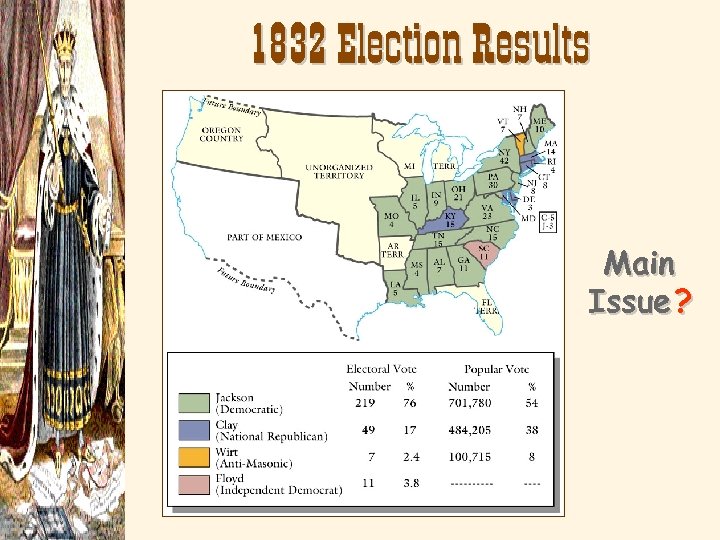
1832 Election Results Main Issue ?
The Specie Circular (1836) 3 “wildcat banks. ” 3 State licensed banks 3 buy future federal land only with gold or silver. 3 Jackson’s goal?
Results of the Specie Circular $ Banknotes loose their value. $ Land sales plummeted. $ Credit not available. $ Businesses began to fail. $ Unemployment rose. The Panic of 1837!
![The 1836 Election Results Martin Van Buren “Old Kinderhook” [O. K. ]](https://present5.com/presentation/c74379c11ddf71e20877e01fd8589038/image-48.jpg "The 1836 Election Results Martin Van Buren “Old Kinderhook” [O. K. ]")
The 1836 Election Results Martin Van Buren “Old Kinderhook” [O. K. ]
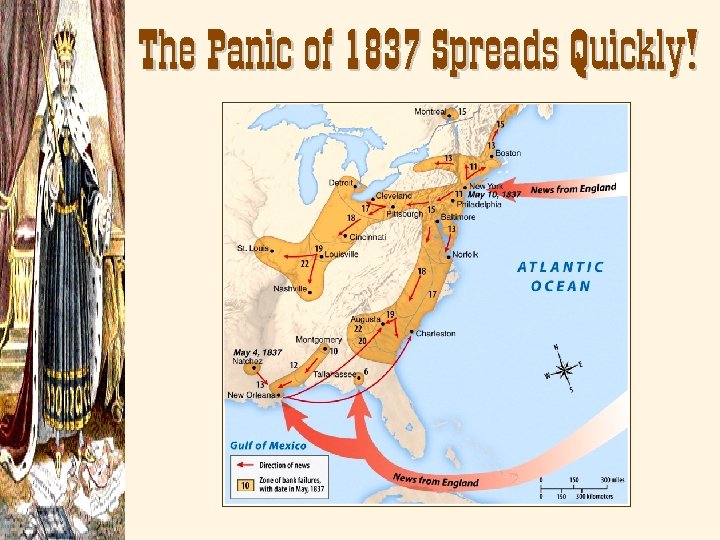
The Panic of 1837 Spreads Quickly!
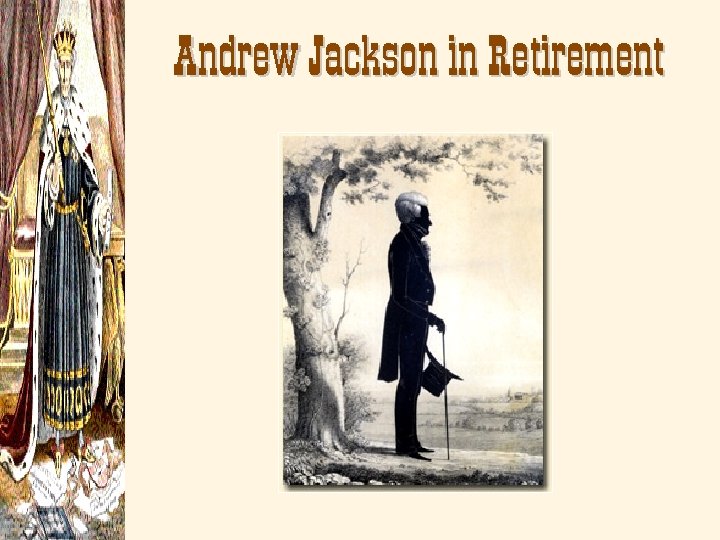
Andrew Jackson in Retirement
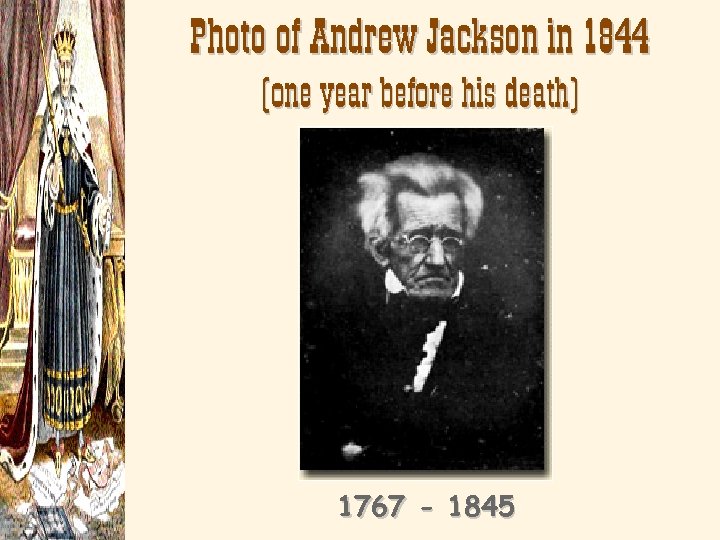
Photo of Andrew Jackson in 1844 (one year before his death) 1767 - 1845
Скачать презентацию Background Monroe Doctrine Europeans can t colonize in
c74379c11ddf71e20877e01fd8589038.ppt