 Скачать презентацию Background and Expectations of an Online Doctoral Cohort
8fe68ea73a4dad163d147641a5274095.ppt
- Количество слайдов: 19



Background and Expectations of an Online Doctoral Cohort: Implications for Program Design and Delivery Dr. Bob Spencer Dr. Pat Fahy Centre for Distance Education CNIE Ottawa, Ontario, Canada May, 2009 1
Background/History of Ed. D n AU’s first doctoral degree (May 2008) n Internal Approval 1. New program proposal process (STEP 1 -2) 2. Contingent on positive MDE review (Dec 2000) 3. Approved second time around (April 2004) n Government Institutional/Program Review 1. Doctoral standards 2. Curriculum review 3. Approved Feb 2007 a. New hirings: senior academics and Dean b. Review program after two years 2
Ed. D Program Overview n n Practitioner’s degree Six courses Required f 2 f program orientation Cohort based (12 students/annum) 3
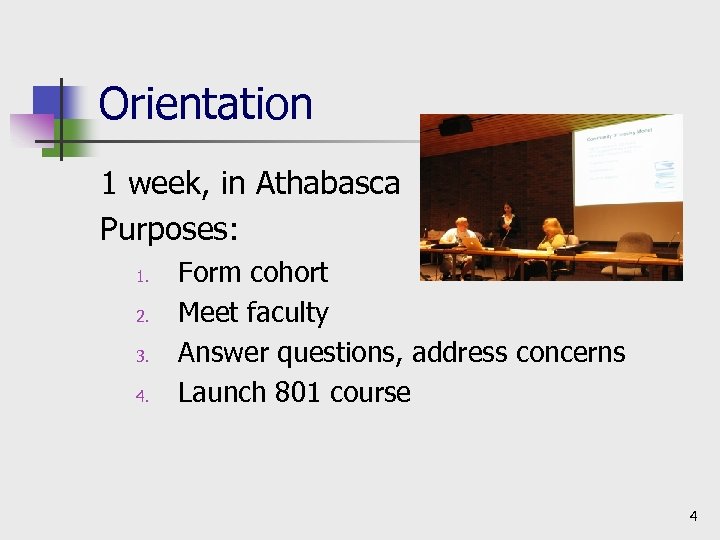
Orientation 1 week, in Athabasca Purposes: 1. 2. 3. 4. Form cohort Meet faculty Answer questions, address concerns Launch 801 course 4
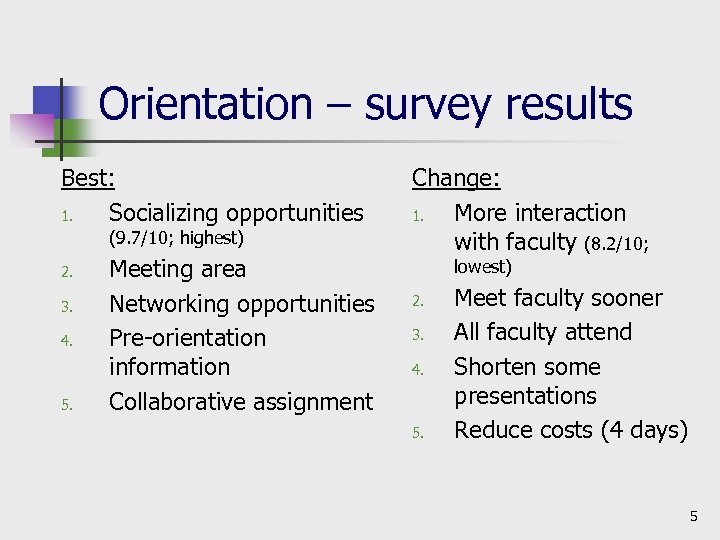
Orientation – survey results Best: 1. Socializing opportunities (9. 7/10; highest) 2. 3. 4. 5. Meeting area Networking opportunities Pre-orientation information Collaborative assignment Change: 1. More interaction with faculty (8. 2/10; lowest) 2. 3. 4. 5. Meet faculty sooner All faculty attend Shorten some presentations Reduce costs (4 days) 5
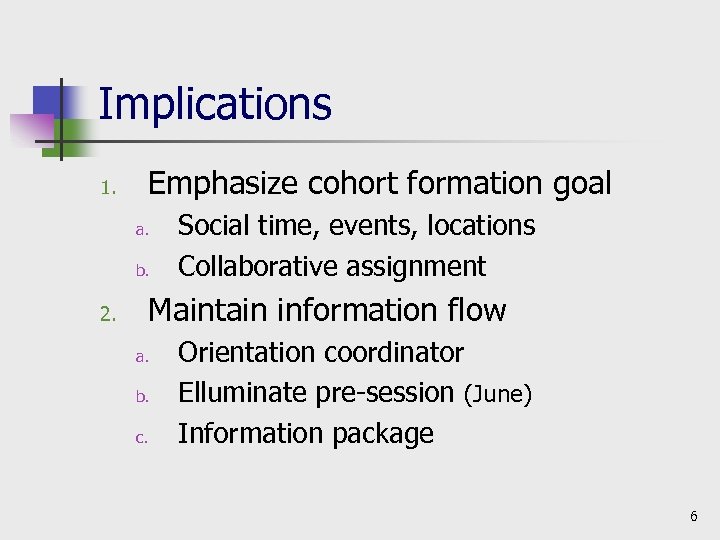
Implications 1. Emphasize cohort formation goal a. b. 2. Social time, events, locations Collaborative assignment Maintain information flow a. b. c. Orientation coordinator Elluminate pre-session (June) Information package 6
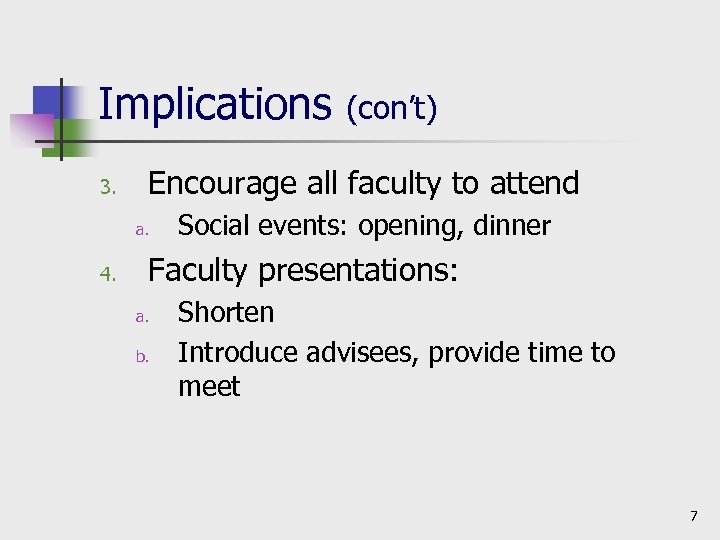
Implications 3. Encourage all faculty to attend a. 4. (con’t) Social events: opening, dinner Faculty presentations: a. b. Shorten Introduce advisees, provide time to meet 7
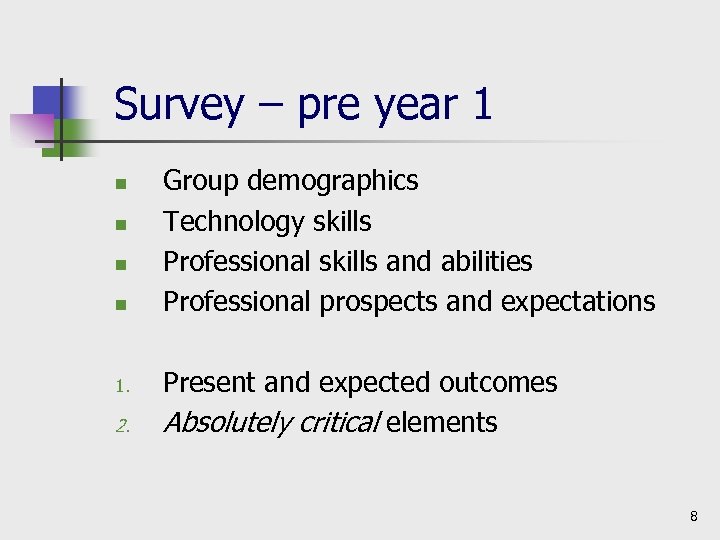
Survey – pre year 1 n n 1. 2. Group demographics Technology skills Professional skills and abilities Professional prospects and expectations Present and expected outcomes Absolutely critical elements 8
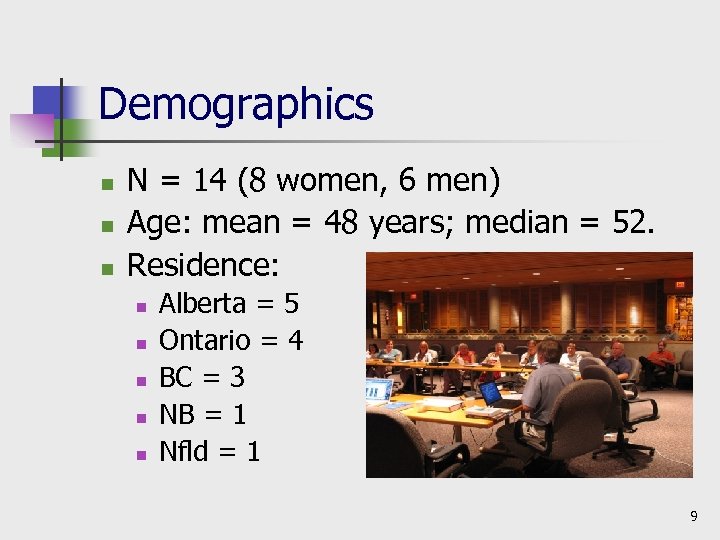
Demographics n n n N = 14 (8 women, 6 men) Age: mean = 48 years; median = 52. Residence: n n n Alberta = 5 Ontario = 4 BC = 3 NB = 1 Nfld = 1 9
Students’ backgrounds (con’t) Academics n 4 diplomas n n 19 bachelor’s degrees n n GDDET = 2 BA = 9, BEd = 5, BSc = 3 15 master’s degrees n n n MDE = 6 MEd = 3 MA = 2 10
Specializations n n n n Linguistics (2) English (2) Elementary education History Sociology Pharmacy Psychology Nursing Integrated studies Communication Information technology Educational technology Leadership and training 11
Employment n n 10 employed in DE-related field Median 4 years in current job, 10 years with current employer n Range: 0. 3 – 30 years 12
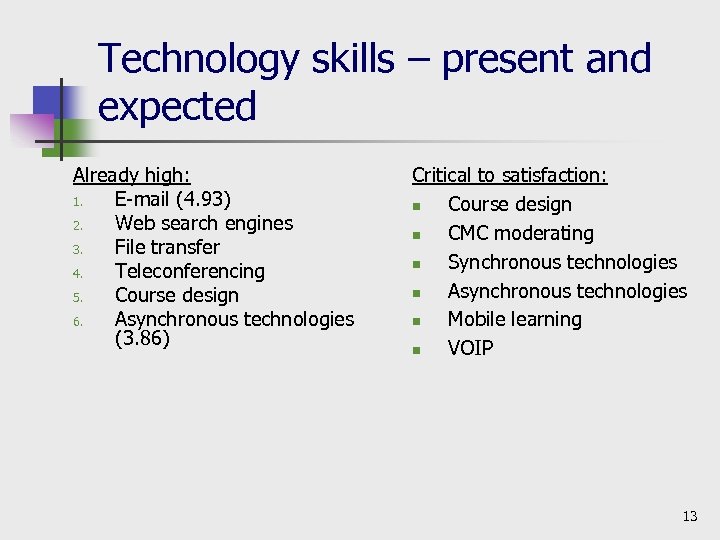
Technology skills – present and expected Already high: 1. E-mail (4. 93) 2. Web search engines 3. File transfer 4. Teleconferencing 5. Course design 6. Asynchronous technologies (3. 86) Critical to satisfaction: n Course design n CMC moderating n Synchronous technologies n Asynchronous technologies n Mobile learning n VOIP 13
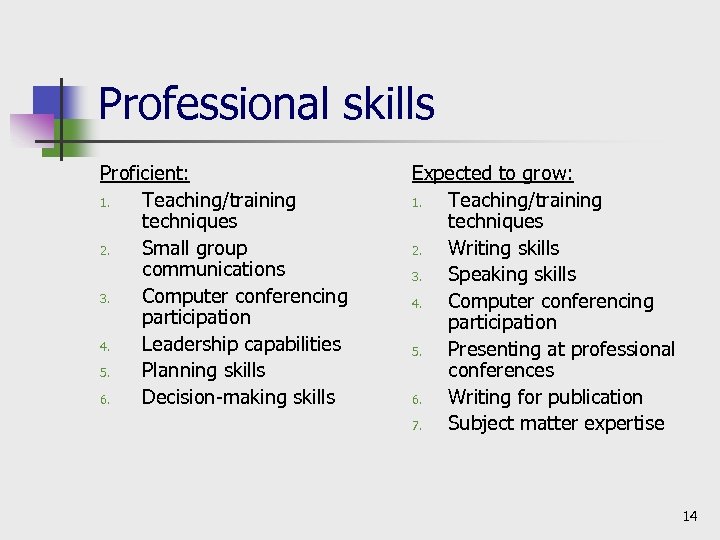
Professional skills Proficient: 1. Teaching/training techniques 2. Small group communications 3. Computer conferencing participation 4. Leadership capabilities 5. Planning skills 6. Decision-making skills Expected to grow: 1. Teaching/training techniques 2. Writing skills 3. Speaking skills 4. Computer conferencing participation 5. Presenting at professional conferences 6. Writing for publication 7. Subject matter expertise 14
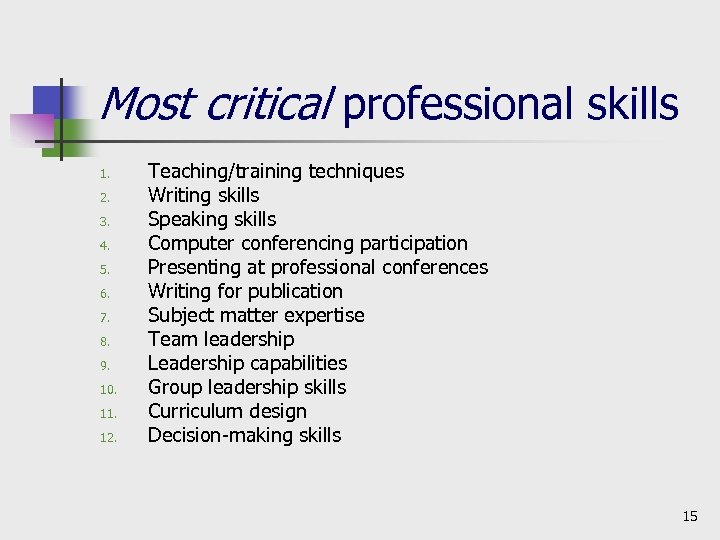
Most critical professional skills 1. 2. 3. 4. 5. 6. 7. 8. 9. 10. 11. 12. Teaching/training techniques Writing skills Speaking skills Computer conferencing participation Presenting at professional conferences Writing for publication Subject matter expertise Team leadership Leadership capabilities Group leadership skills Curriculum design Decision-making skills 15
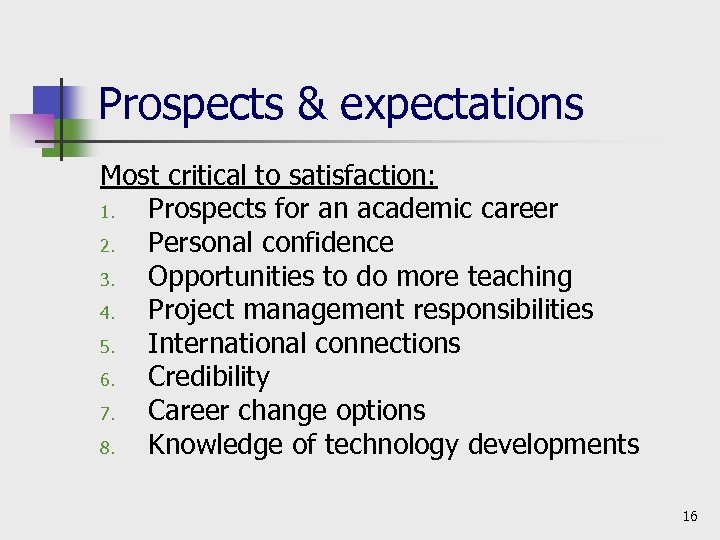
Prospects & expectations Most critical to satisfaction: 1. Prospects for an academic career 2. Personal confidence 3. Opportunities to do more teaching 4. Project management responsibilities 5. International connections 6. Credibility 7. Career change options 8. Knowledge of technology developments 16
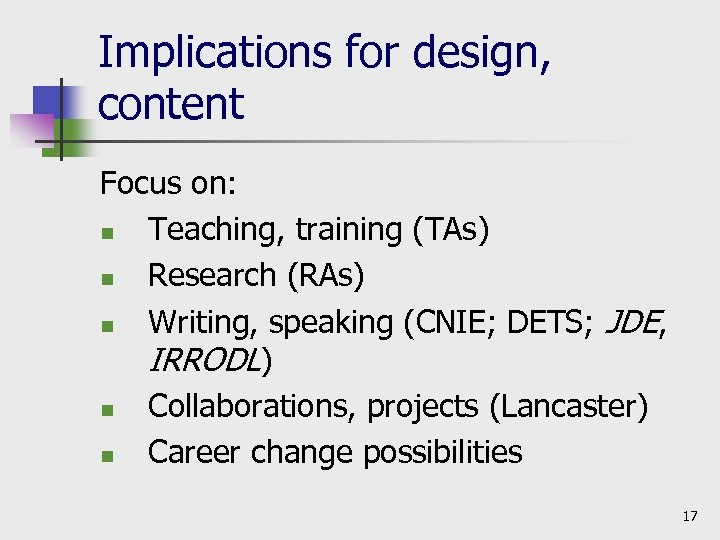
Implications for design, content Focus on: n Teaching, training (TAs) n Research (RAs) n Writing, speaking (CNIE; DETS; JDE, IRRODL) n Collaborations, projects (Lancaster) n Career change possibilities 17

Questions, discussion 18

19
Скачать презентацию Background and Expectations of an Online Doctoral Cohort
8fe68ea73a4dad163d147641a5274095.ppt