 Скачать презентацию BABY FRIENDLY HOSPITAL INITIATIVE IN MONGOLIA Dr G
c74c5a74a7708f9e62f1e05660f34aed.ppt
- Количество слайдов: 18



BABY FRIENDLY HOSPITAL INITIATIVE IN MONGOLIA Dr. G. Soyolgerel Dr. Sh. Oyukhuu
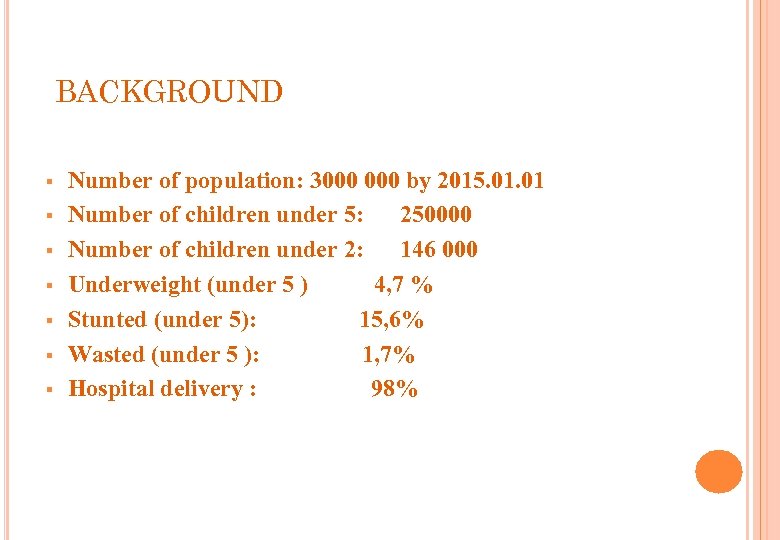
BACKGROUND § § § § Number of population: 3000 by 2015. 01 Number of children under 5: 250000 Number of children under 2: 146 000 Underweight (under 5 ) 4, 7 % Stunted (under 5): 15, 6% Wasted (under 5 ): 1, 7% Hospital delivery : 98%
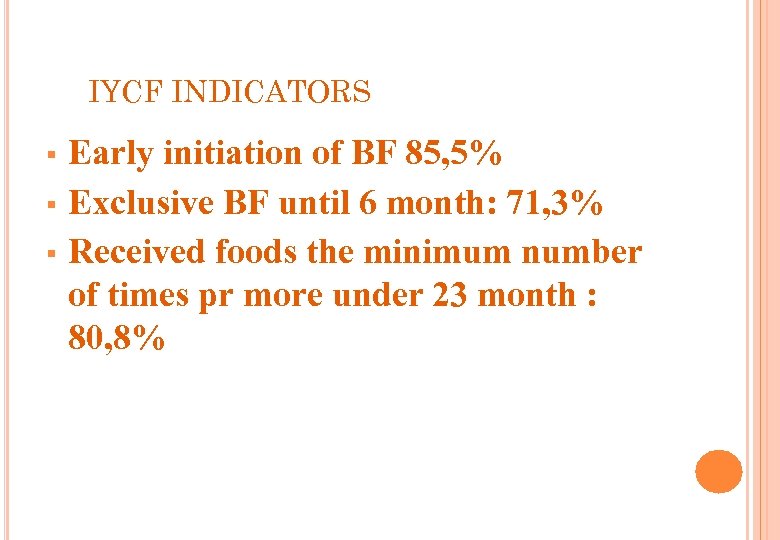
IYCF INDICATORS Early initiation of BF 85, 5% § Exclusive BF until 6 month: 71, 3% § Received foods the minimum number of times pr more under 23 month : 80, 8% §
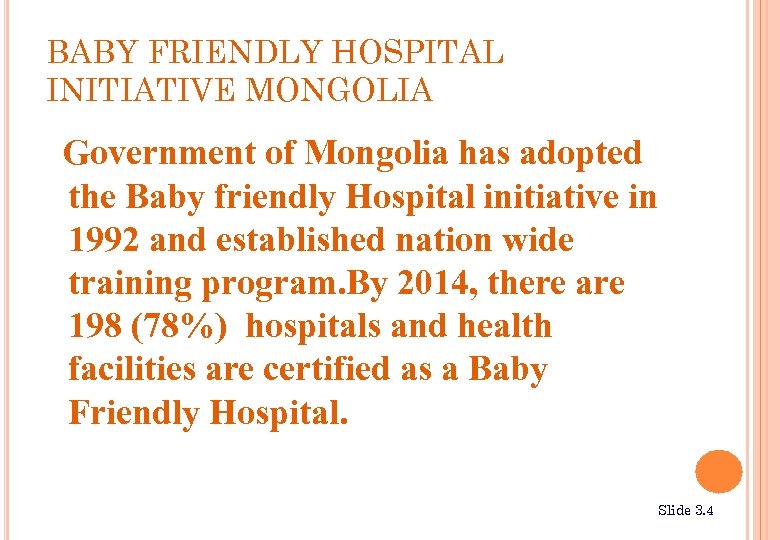
BABY FRIENDLY HOSPITAL INITIATIVE MONGOLIA Government of Mongolia has adopted the Baby friendly Hospital initiative in 1992 and established nation wide training program. By 2014, there are 198 (78%) hospitals and health facilities are certified as a Baby Friendly Hospital. Slide 3. 4
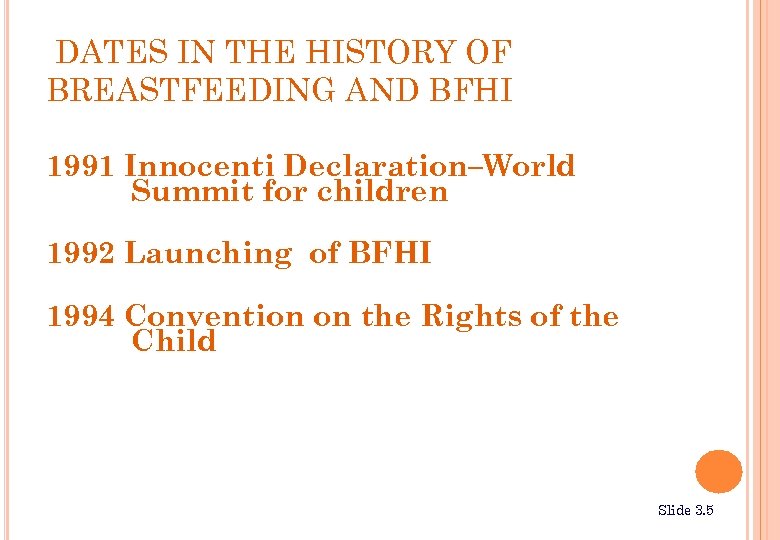
DATES IN THE HISTORY OF BREASTFEEDING AND BFHI 1991 Innocenti Declaration–World Summit for children 1992 Launching of BFHI 1994 Convention on the Rights of the Child Slide 3. 5
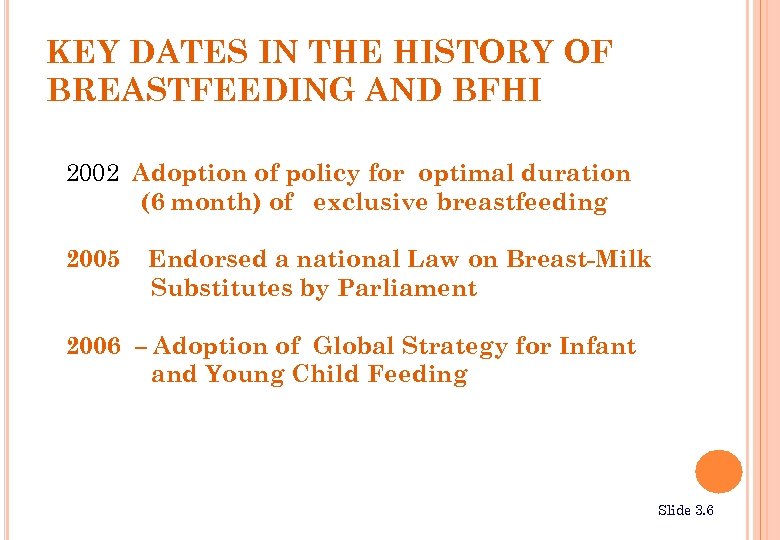
KEY DATES IN THE HISTORY OF BREASTFEEDING AND BFHI 2002 Adoption of policy for optimal duration (6 month) of exclusive breastfeeding 2005 Endorsed a national Law on Breast-Milk Substitutes by Parliament 2006 – Adoption of Global Strategy for Infant and Young Child Feeding Slide 3. 6
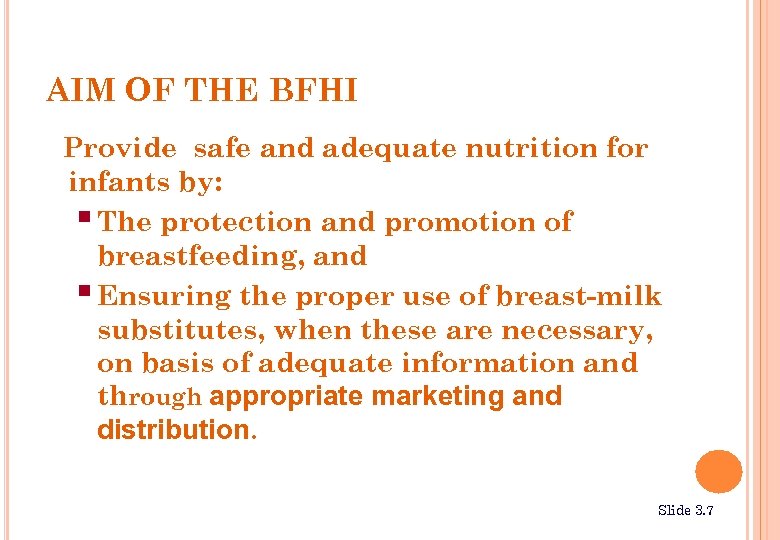
AIM OF THE BFHI Provide safe and adequate nutrition for infants by: § The protection and promotion of breastfeeding, and § Ensuring the proper use of breast-milk substitutes, when these are necessary, on basis of adequate information and through appropriate marketing and distribution. Slide 3. 7
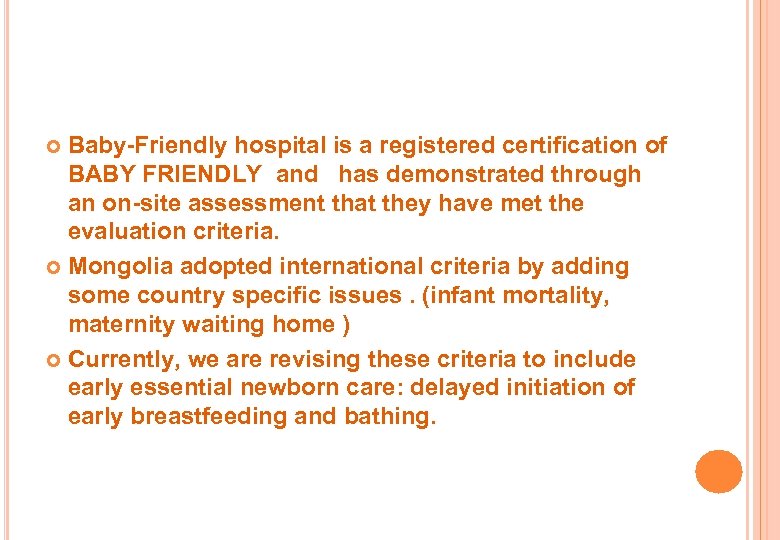
Baby-Friendly hospital is a registered certification of BABY FRIENDLY and has demonstrated through an on-site assessment that they have met the evaluation criteria. Mongolia adopted international criteria by adding some country specific issues. (infant mortality, maternity waiting home ) Currently, we are revising these criteria to include early essential newborn care: delayed initiation of early breastfeeding and bathing.
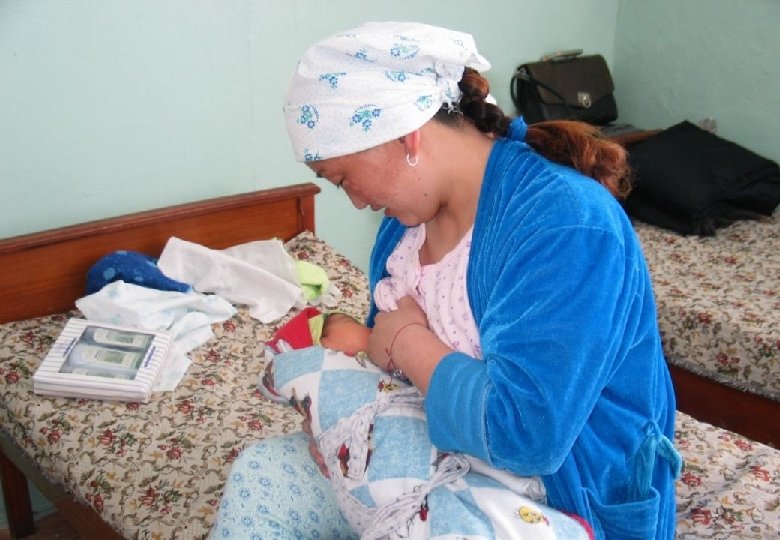
“MATERNITY WAITING HOME” Establishment of the room within health facility where pregnant mothers should come 1 -2 week the expected date. Health care providers check her and give knowledge about breastfeeding and essential care of newborn. After giving birth to child, she can stay in maternity waiting home for week for post natal care of both mother and baby. Here she receive full support for BF. (attachment, lactation, nutritious food for mother, KMC)
TEN STEPS FOR BFHI Breastfeeding policy document is as a routine for all health care staff. 1. 2. Train all health care workers to implement this policy. 3. Information and communication to all expected mothers about the benefits of breastfeeding. 4. Help mothers initiate breastfeeding earlier, 5. Mother and baby should stay together. 6. Give newborn infants no food or drink other than breast milk, unless medically indicated. 7. Practise rooming-in — allow mothers and infants to remain together. 8. Encourage breastfeeding when child want. 9. Give no artificial teats or pacifiers to breastfeeding infants. 10. Foster the establishment of breastfeeding support groups and refer mothers to them on discharge from the hospital or clinic. Slide 3. 11
EVERY HEALTH CARE STAFF MUST KNOW § No advertising of breast-milk substitutes and other products to the public § No donations of breast-milk substitutes and supplies to maternity hospitals § No free samples to mothers § No promotion in the health services § No company personnel to advise mothers § No gifts or personal samples to health workers § The HF should not allow sample gift with breast-milk substitutes or related supplies that interfere with breastfeeding to be distributed to pregnant women or mothers Slide 3. 12
ASSESSMENT : CURRENT PRACTICE § Conduct training for assessors , and certify them § Based on hospital’s request assigned assessors evaluate whether the hospital meets the Criteria for the “ 10 steps § Assessment usually organized by National Center of Public Health (nutrition department) § External assessors are prioritized Slide 3. 13
MONITORING n n n Measures progress on the “ 10 steps” Identifies gaps , needed helps Monitoring is done by the quality assurance control of the hospital or local assessors. Monitoring is organized once a year. Include into hospital accreditation is under discussion for agreement.
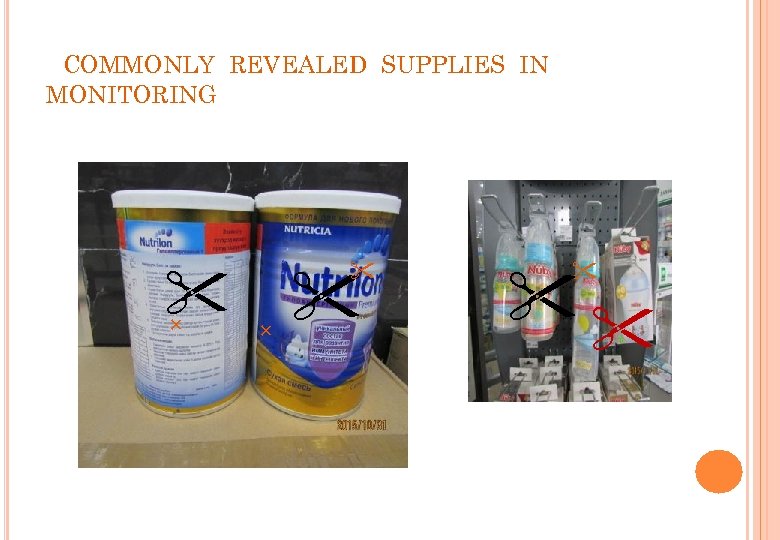
COMMONLY REVEALED SUPPLIES IN MONITORING × ×
FURTHER STRENGTHENING OF BFHI § § implementation of the Baby-friendly Hospital Initiative for all health facilities, including clinics, health center, and paediatric hospitals Frequent monitoring and reassessment in already designated facilities; Slide 3. 16
§ Update the BFHI by taking account of HIV/AIDS and agreement of the however national guideline on PMTCT
Thank you
Скачать презентацию BABY FRIENDLY HOSPITAL INITIATIVE IN MONGOLIA Dr G
c74c5a74a7708f9e62f1e05660f34aed.ppt