



b le e C t ra n io ew N in s d n la e Z
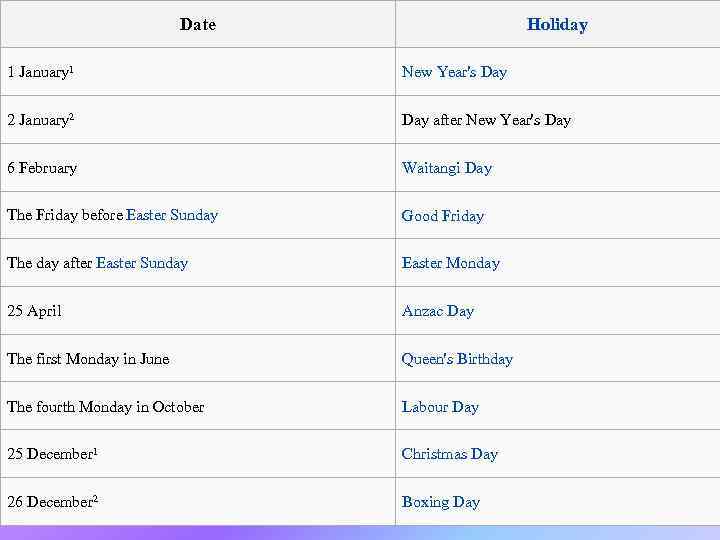
Date Holiday 1 January 1 New Year's Day 2 January 2 Day after New Year's Day 6 February Waitangi Day The Friday before Easter Sunday Good Friday The day after Easter Sunday Easter Monday 25 April Anzac Day The first Monday in June Queen's Birthday The fourth Monday in October Labour Day 25 December 1 Christmas Day 26 December 2 Boxing Day
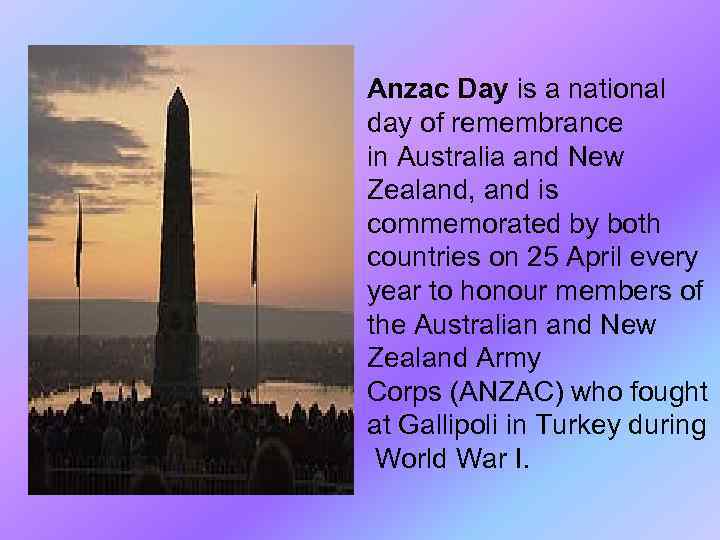
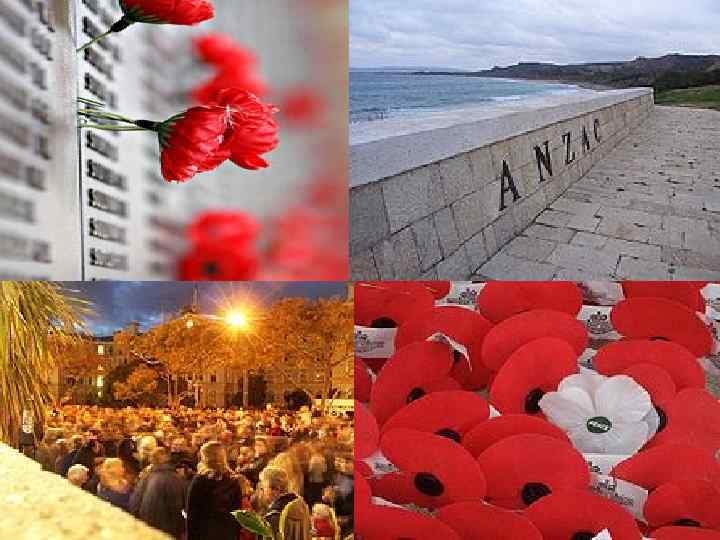
Anzac Day is a national day of remembrance in Australia and New Zealand, and is commemorated by both countries on 25 April every year to honour members of the Australian and New Zealand Army Corps (ANZAC) who fought at Gallipoli in Turkey during World War I.
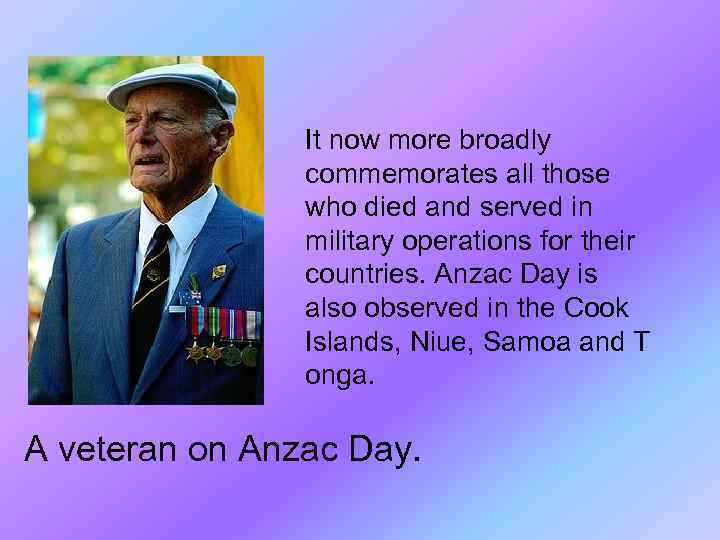
It now more broadly commemorates all those who died and served in military operations for their countries. Anzac Day is also observed in the Cook Islands, Niue, Samoa and T onga. A veteran on Anzac Day.
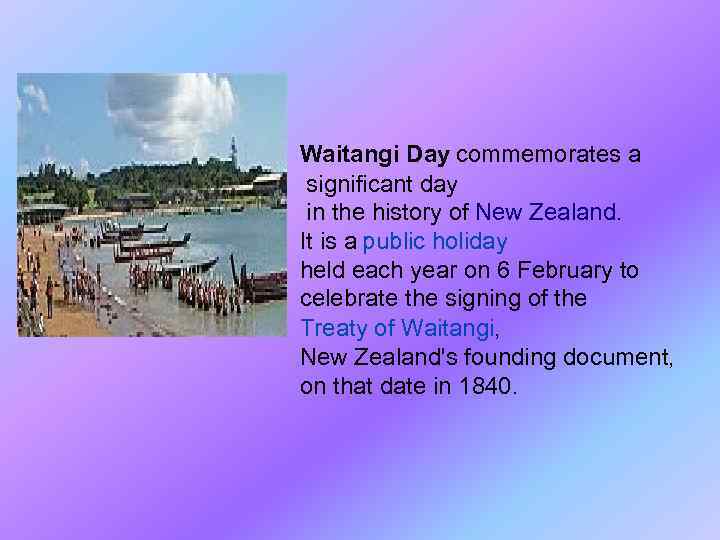
Waitangi Day commemorates a significant day in the history of New Zealand. It is a public holiday held each year on 6 February to celebrate the signing of the Treaty of Waitangi, New Zealand's founding document, on that date in 1840.

Easter Sunday
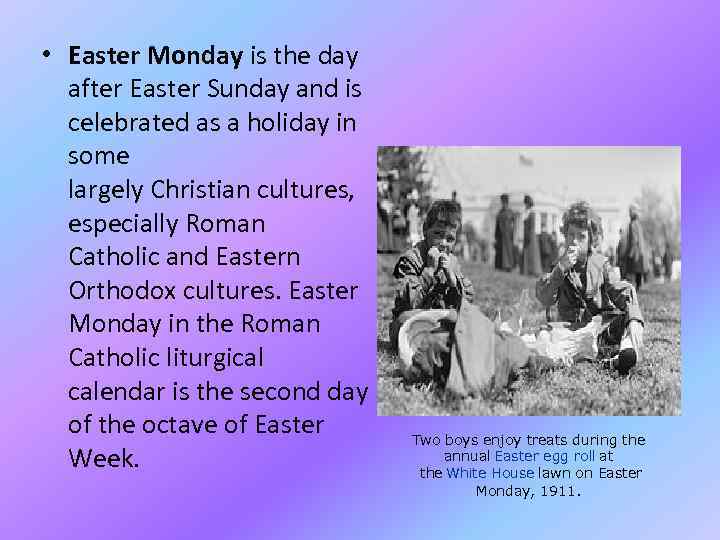
• Easter Monday is the day after Easter Sunday and is celebrated as a holiday in some largely Christian cultures, especially Roman Catholic and Eastern Orthodox cultures. Easter Monday in the Roman Catholic liturgical calendar is the second day of the octave of Easter Week. Two boys enjoy treats during the annual Easter egg roll at the White House lawn on Easter Monday, 1911.
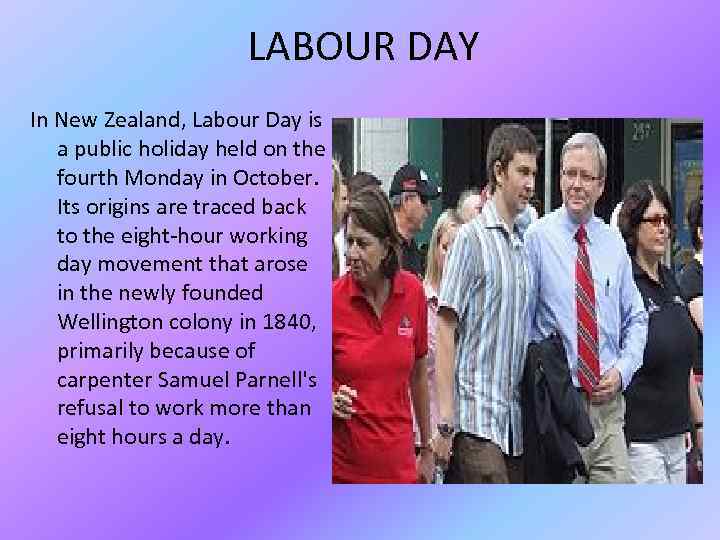
LABOUR DAY In New Zealand, Labour Day is a public holiday held on the fourth Monday in October. Its origins are traced back to the eight-hour working day movement that arose in the newly founded Wellington colony in 1840, primarily because of carpenter Samuel Parnell's refusal to work more than eight hours a day.
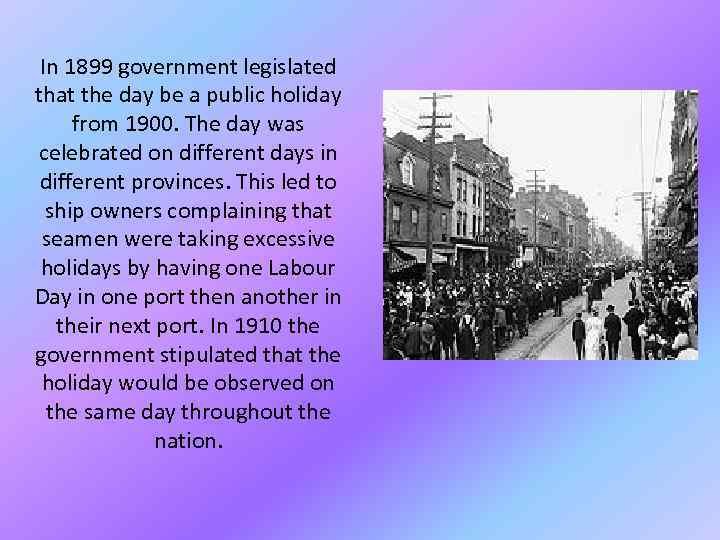
In 1899 government legislated that the day be a public holiday from 1900. The day was celebrated on different days in different provinces. This led to ship owners complaining that seamen were taking excessive holidays by having one Labour Day in one port then another in their next port. In 1910 the government stipulated that the holiday would be observed on the same day throughout the nation.
• Boxing Day is a bank or public holiday that occurs on 26 December, or the first or second weekday after Christmas Day, depending on national or regional laws. It is observed in Australia, Canada, New Zealand, the United Kingdom and some other Commonwealth nations.

Christmas and New Year
Christmas and New Year are ‘Mondayised’ holidays, so if these fall on a weekend that employee does not normally work then the holiday is transferred to the following Monday or Tuesday. If the employee would normally work on the particular weekend then it remains a traditional holiday and the employee is entitled to that day off on pay. If they normally work on both days, they are only entitled to the traditional holiday and the Mondayised holiday is treated as a normal work day.

Thank you!!!
