 Скачать презентацию Avoiding the Travesty of the Commons Tom Gruber
83125a14aed610b36b9cbce1a9a51127.ppt
- Количество слайдов: 48



(Avoiding) the Travesty of the Commons Tom Gruber Co-Founder and CTO, Real. Travel. com tomgruber. org
The Promise of the People-Powered Web n n n More people know more things. More people have more diverse perspectives and assumptions. Collectively we can know more. But. . . • When is More Better? • If you build it, will they come?
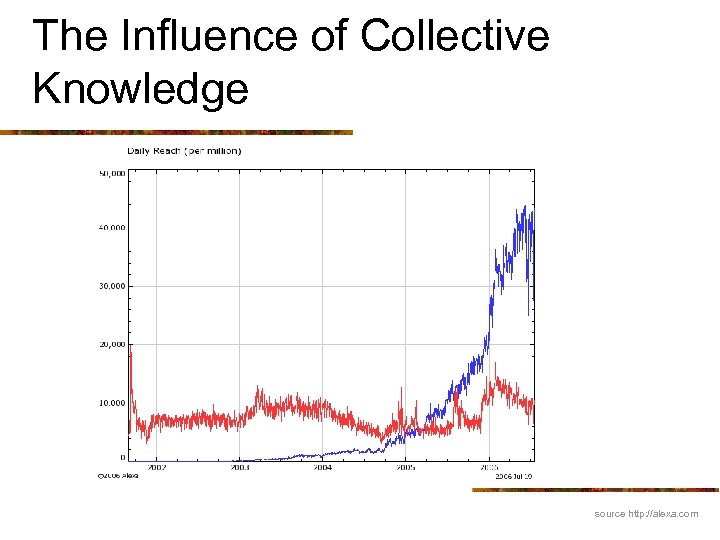
The Influence of Collective Knowledge source http: //alexa. com
The Influence of Collective Knowledge logo source http: //wikipedia. com
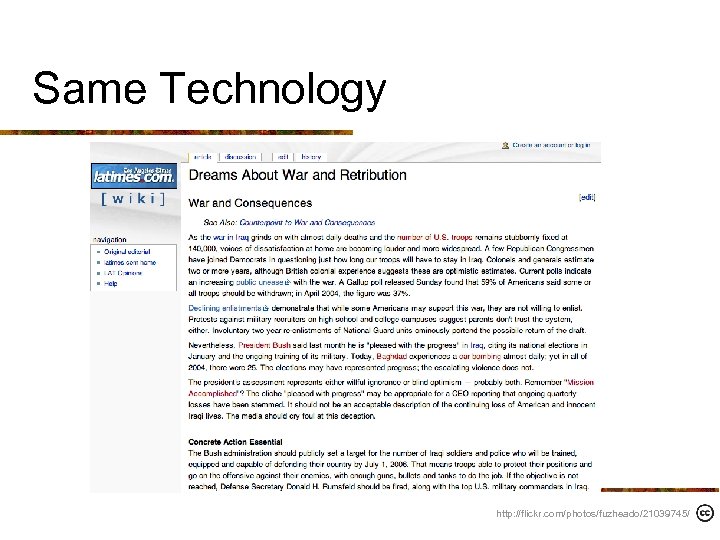
Same Technology http: //flickr. com/photos/fuzheado/21039745/
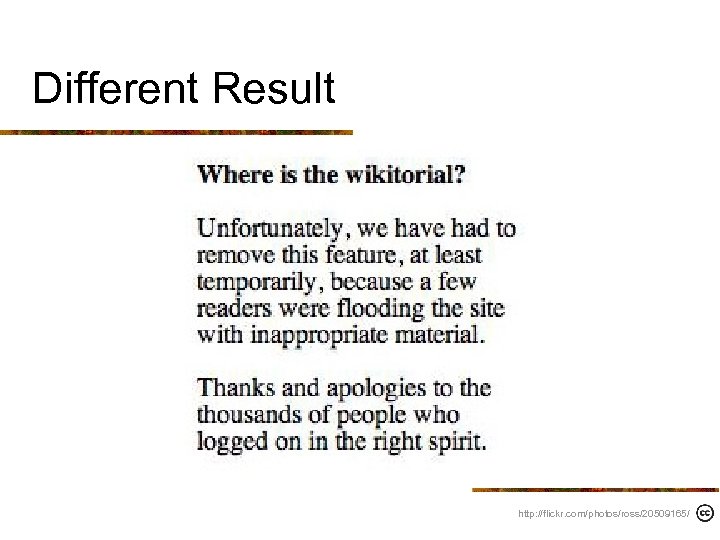
Different Result http: //flickr. com/photos/ross/20509165/
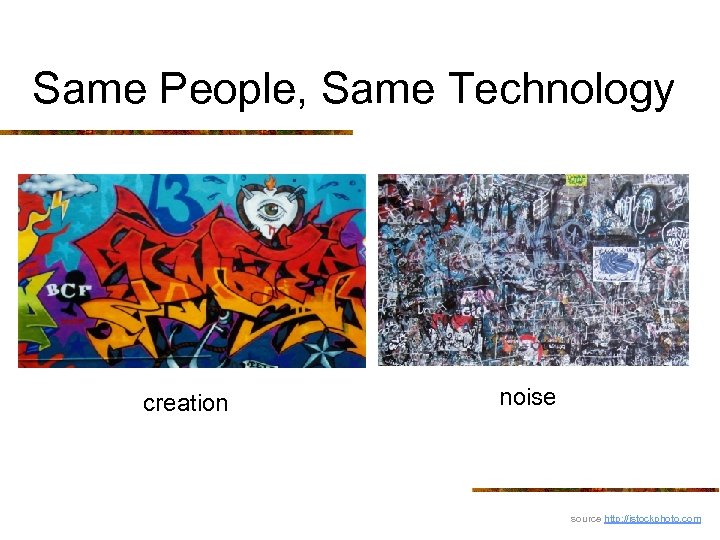
Same People, Same Technology creation noise source http: //istockphoto. com
Collective Knowledge is Real n n n FAQ-o-Sphere (self service Q&A forums) A-list Blogosphere for politics and tech Product reviews for gadgets and hotels Amateur Academia Collaborative filtering for books and music Social photo sharing
. . . and can be a real pain n IP looting in music Automated blog spam Marketplace of fraudulent reviews
The Art and Science of Collective Knowledge n Timing, luck, and vision are critical, but. . . n Claim: Design principles can influence the result.
Case Study: Real. Travel n n When planning travel, people want to benefit from experience of people who have been there. Let’s do this on a global scale.
Problem 1: Motivating Participation n Why should I share my feedback and advice about my travel experience with strangers? n So I can share it with friends and family. With style. n
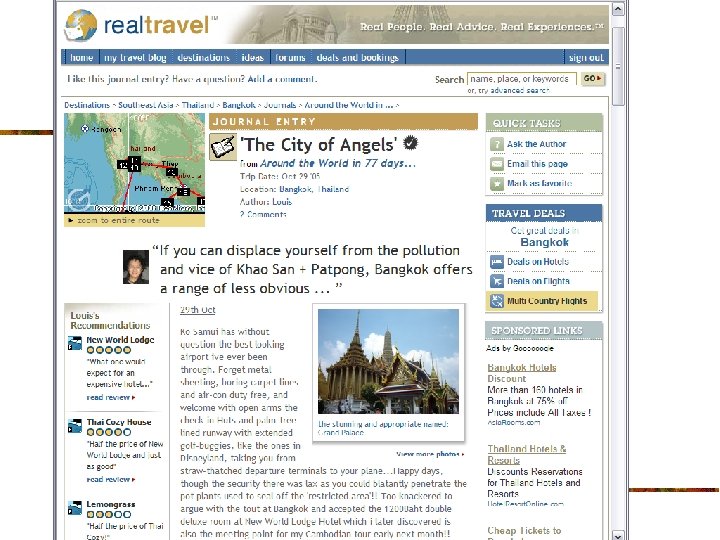
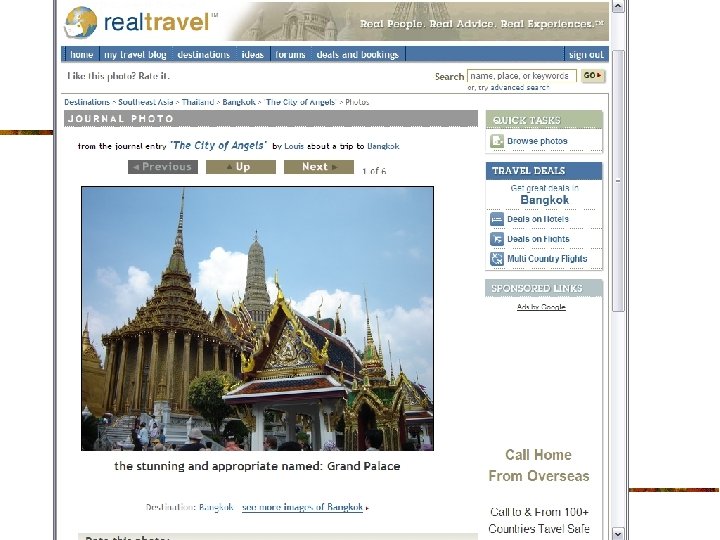
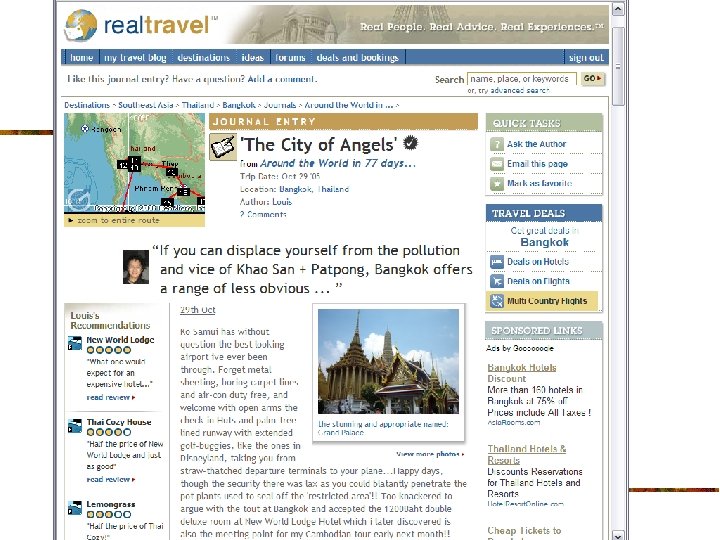
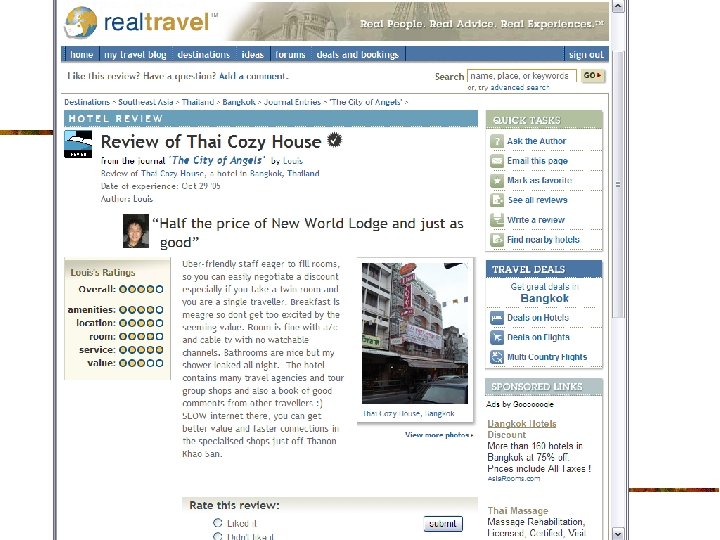
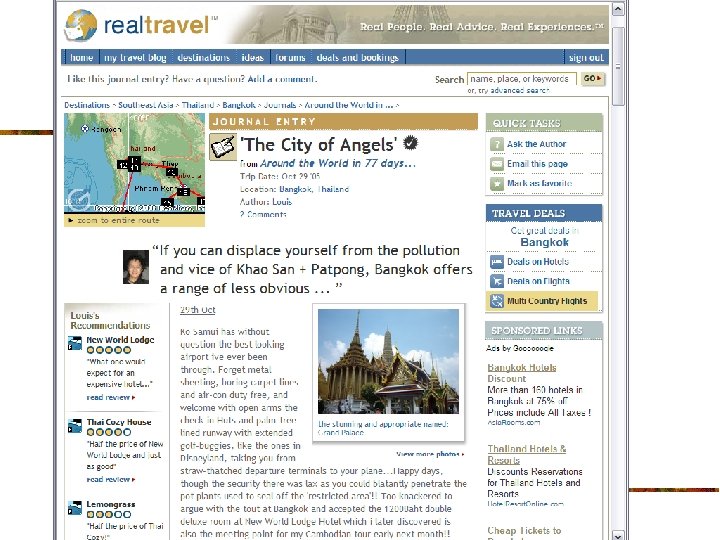
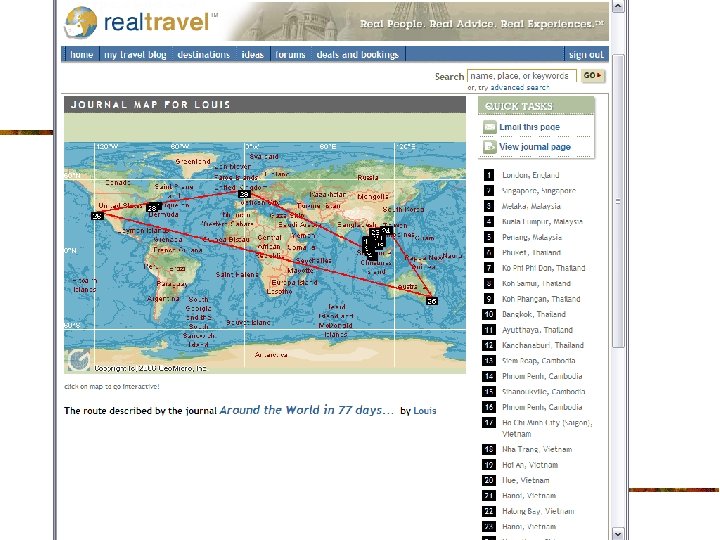
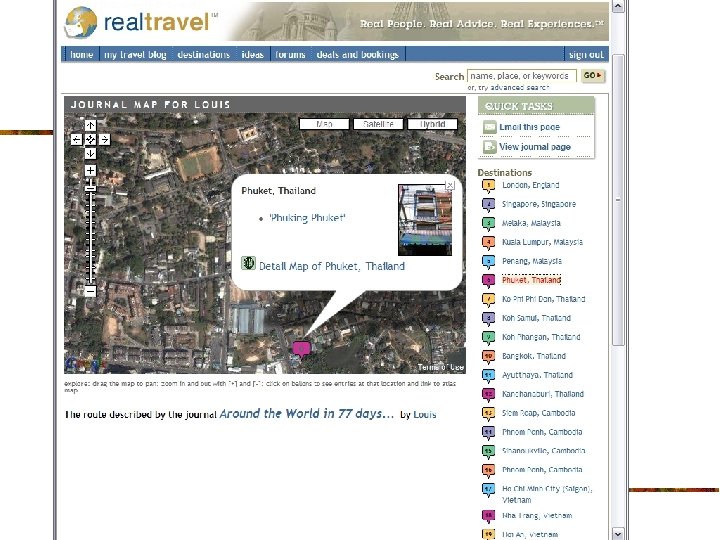
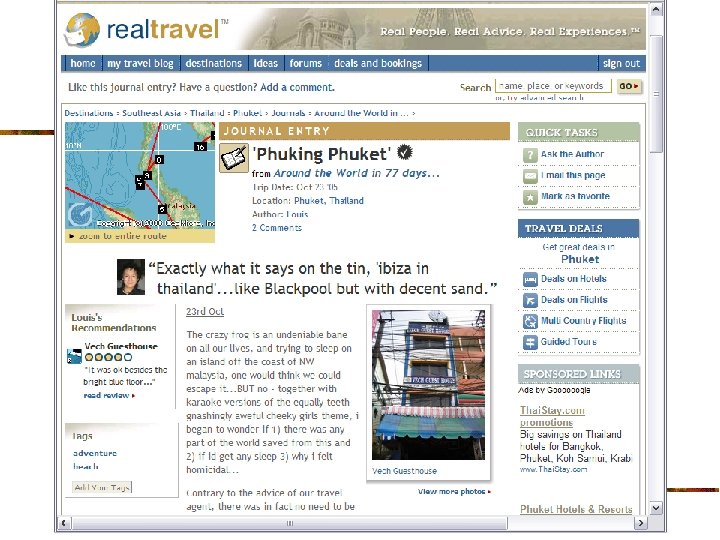
Principle of motivation: Enlightened Self Interest n n Design services that reward individual behavior that has global benefit. Communicate the value proposition to people who would recognize that value.
Motivators: What Powers “People-Powered” n n entertainment value of participation social connection ego / ambition altruism • Design for these motivators. • Target audiences with these motivators.
De-motivators n n Awkward or time-consuming UI Nontrivial learning curve n n except for games Lack of positive feedback for desired behavior. • Design to avoid these de-motivators. • Target audiences who don’t mind.
Problem 2: How to reach the right people? n n Participants are not necessarily the same population as those who benefit from their contributions. Participants are motivated differently n n n Travel bloggers care about trips. Travel researchers care about destinations. Design user experiences for targeted audiences.
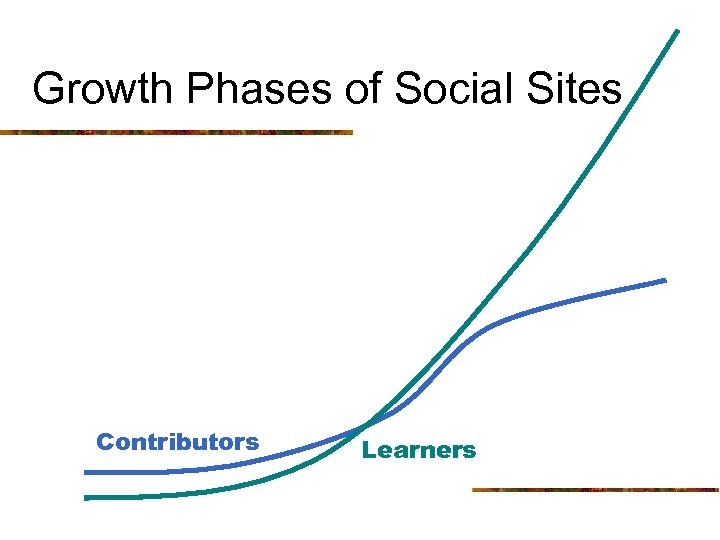
Growth Phases of Social Sites Contributors Learners
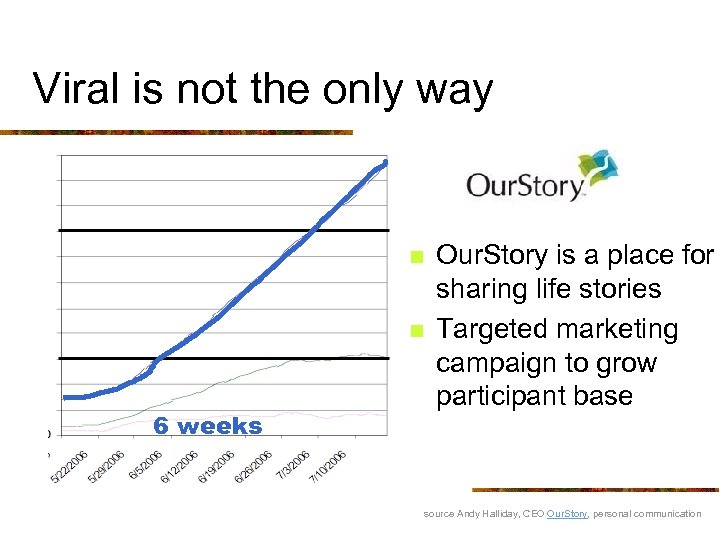
Viral is not the only way n n 6 weeks Our. Story is a place for sharing life stories Targeted marketing campaign to grow participant base source Andy Halliday, CEO Our. Story, personal communication
Problem 3: How to Harvest Value n Value of aggregate must be much greater than sum of parts n n need value for both contributors and learners Quality metrics of aggregate content are different than for individuals n n n Completeness/coverage matters Need “best first” criteria Bad apples can spoil the batch
Creating Aggregrate Value: “Mash-up” with structured data n Backbone of Web 2. 0 offering is competence in domain-specific data n n see O’Reiily paper The aggregate site creates unique value by tightly integrating user contributions of understructured content with centrally managed structured data. ref: http: //www. oreillynet. com/pub/a/oreilly/tim/news/2005/09/30/what-is-web-20. html
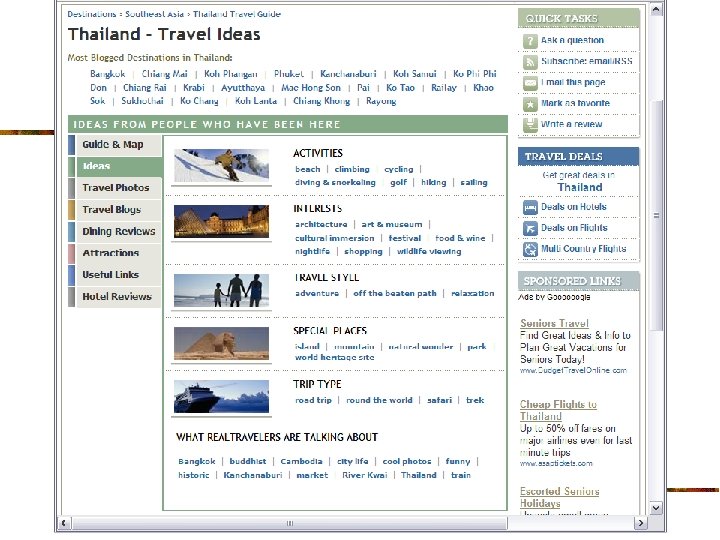
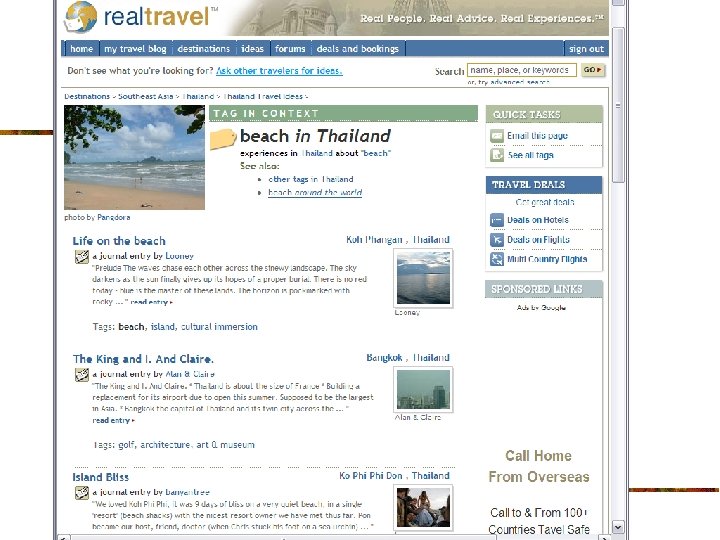
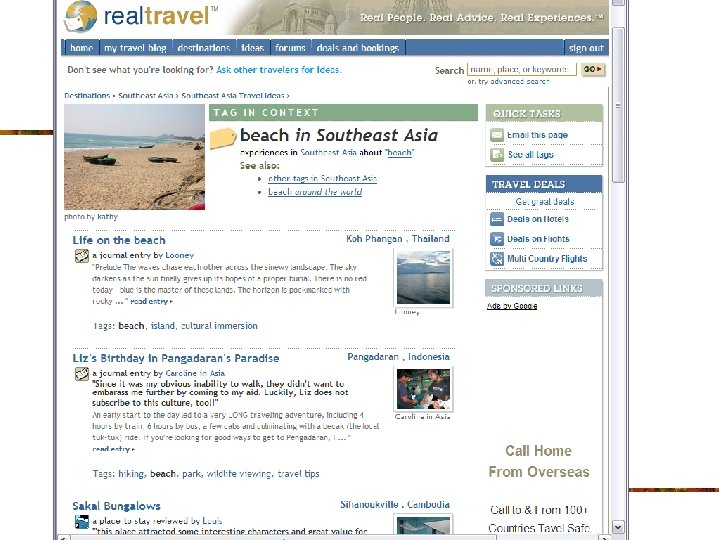
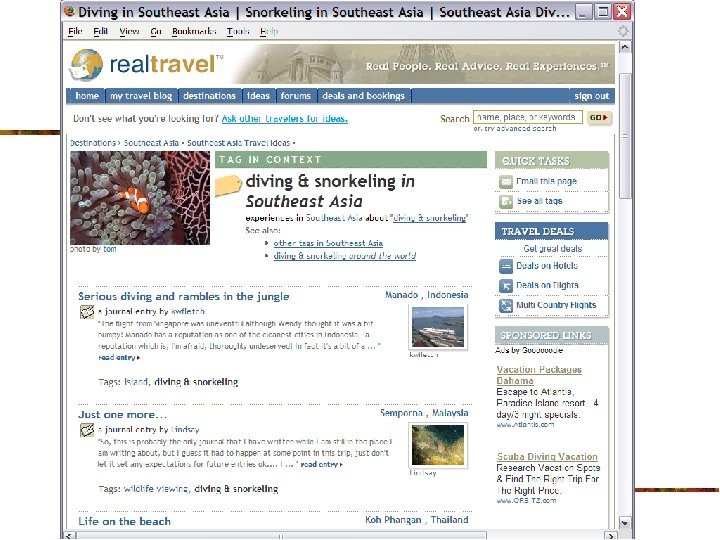
UI Technique: Pivot Browsing n n n Real. Travel manages an authoritative central database of destinations (places). Contributors place their content into the destination hierarchy. The combination offers travel researchers powerful browsing and search capabilities.
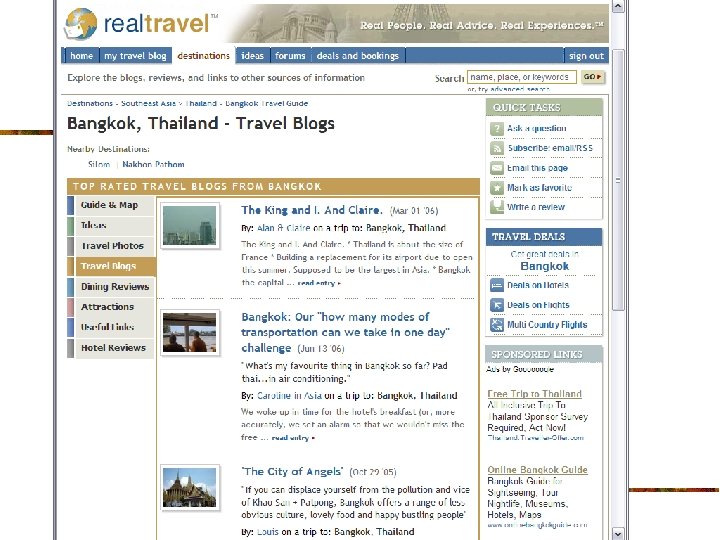
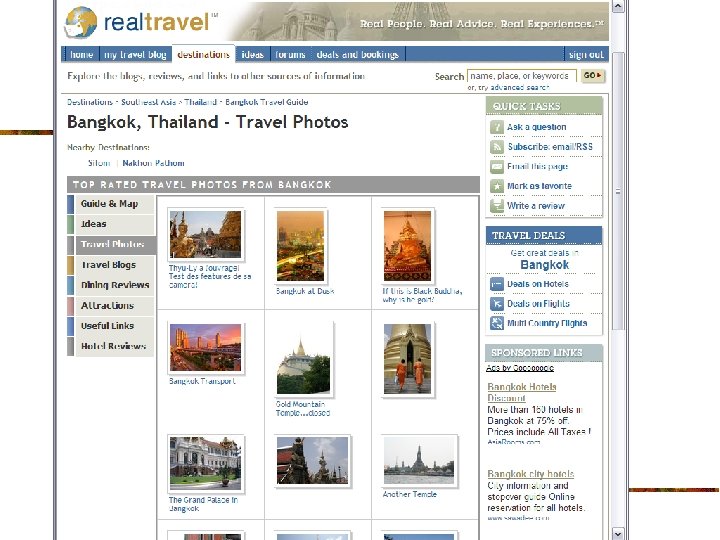
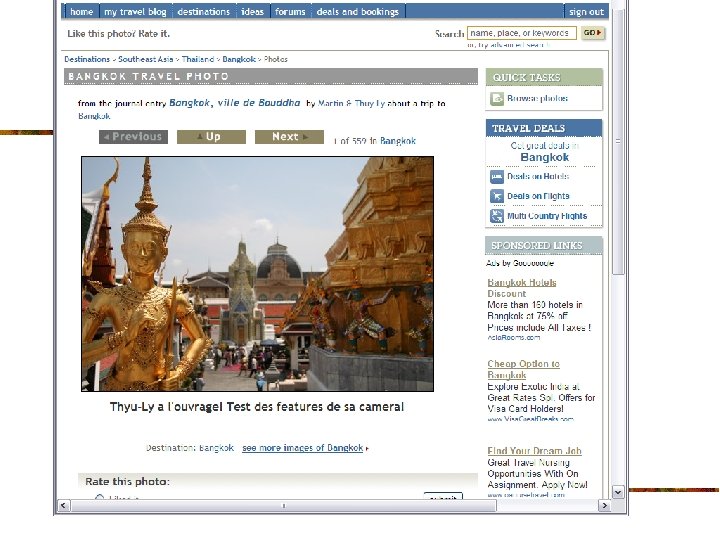
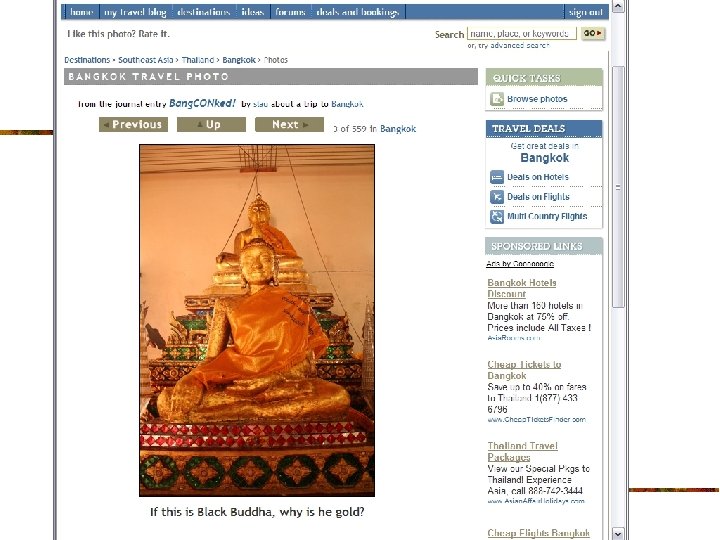
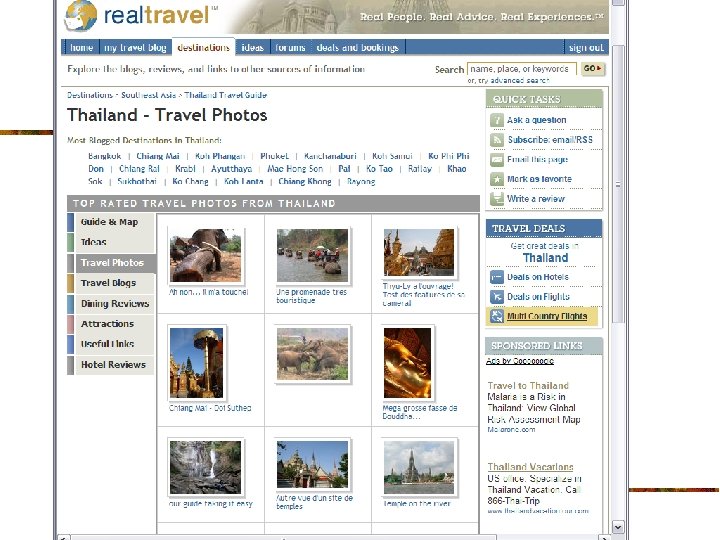
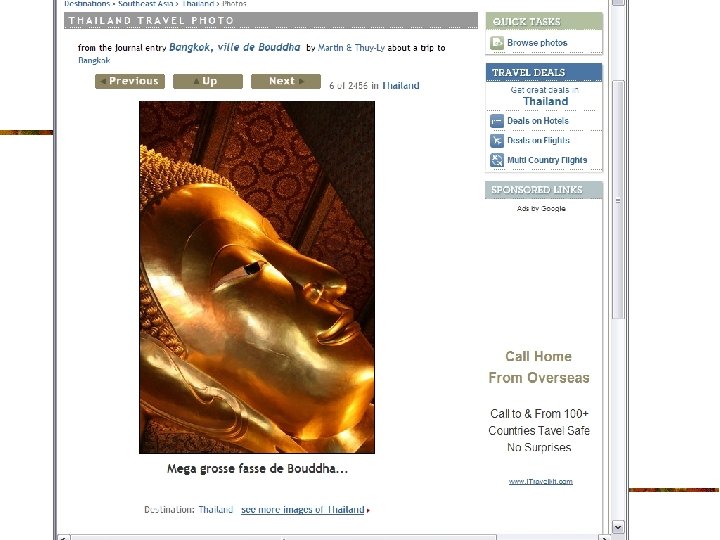
Contextual Tagging n n n Tags are bottom up labels, words without context. A structured data framework provides context. Combining context and tags creates insightful slices through the aggregate content.
Problem 4: Guiding Behavior n n n Question: Why should a user do something for the benefit of the community? Answer: Wrong question. Approach: Reduce friction of useful behavior.
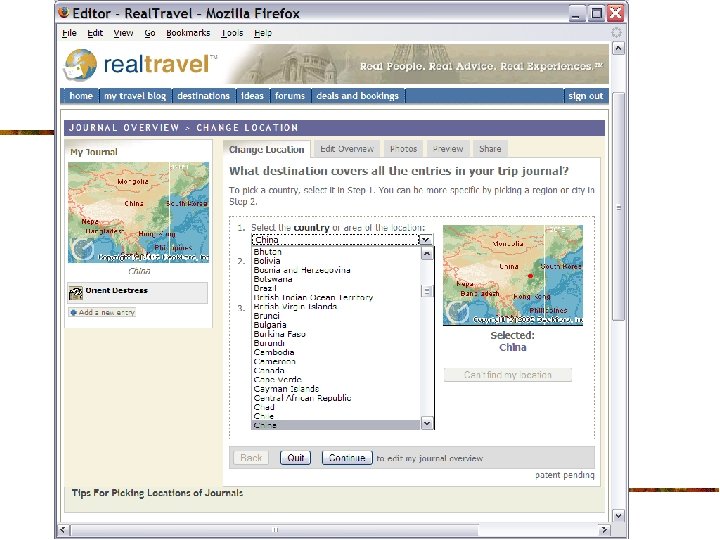
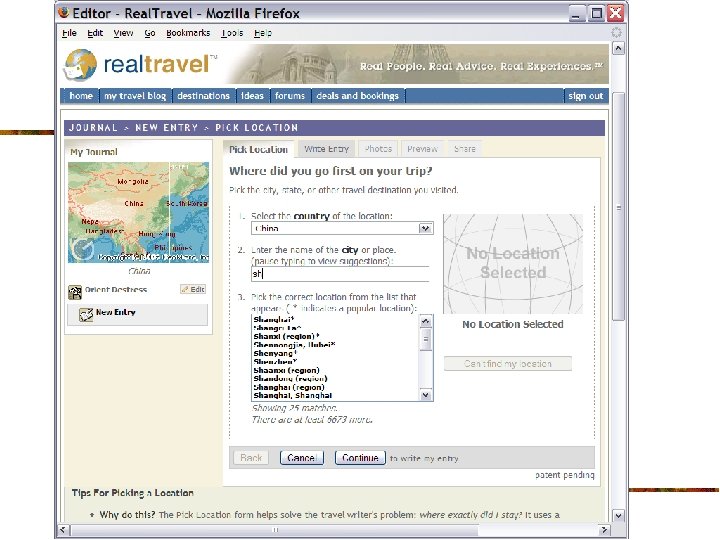
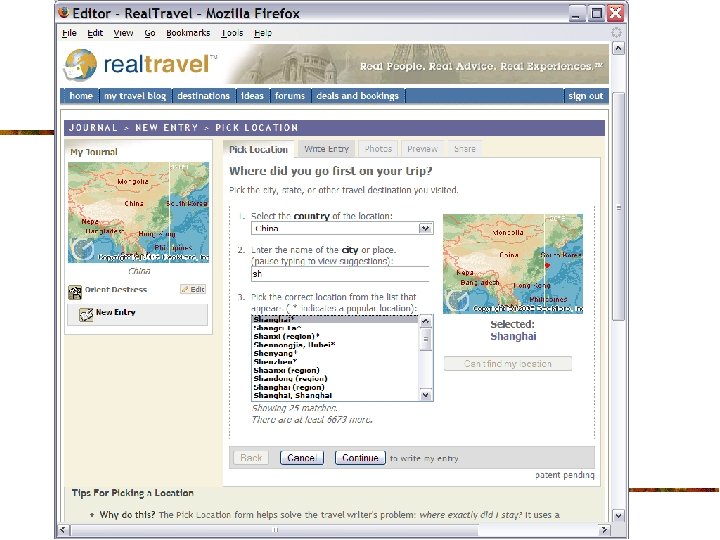
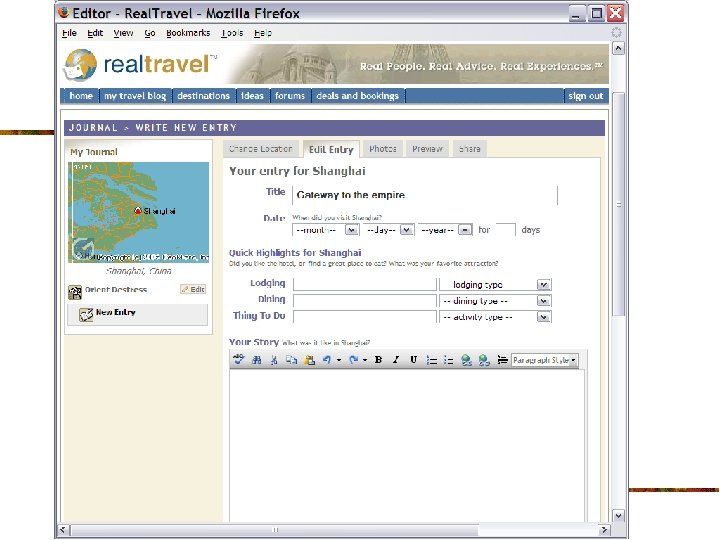
UI Technique: Snap to Grid n n n Observation: Left to their own, users won’t produce a consistent database. Technique: Elicit their data in the context of structured data – let them snap to grid. Inherit structure data to the unstructured contribution – provide value from the grid.
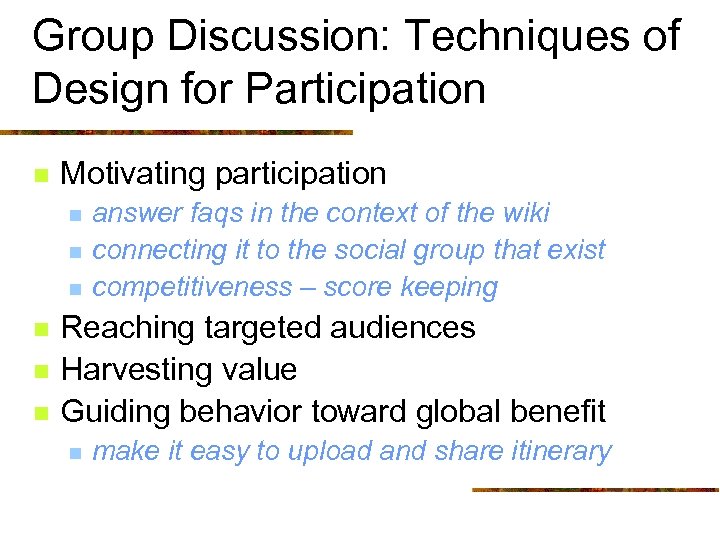
Group Discussion: Techniques of Design for Participation n Motivating participation n n n answer faqs in the context of the wiki connecting it to the social group that exist competitiveness – score keeping Reaching targeted audiences Harvesting value Guiding behavior toward global benefit n make it easy to upload and share itinerary
Thank You Tom Gruber tom@realtravel. com Real. Travel. com tomgruber. org
Скачать презентацию Avoiding the Travesty of the Commons Tom Gruber
83125a14aed610b36b9cbce1a9a51127.ppt