


 Скачать презентацию Avian Influenza and the Threat of an Impending
4730a344d5a5ee0e265ff10852cedafb.ppt
- Количество слайдов: 40
 Avian Influenza and the Threat of an Impending Pandemic Eden V. Wells, MD, MPH Michigan Department of Community Health
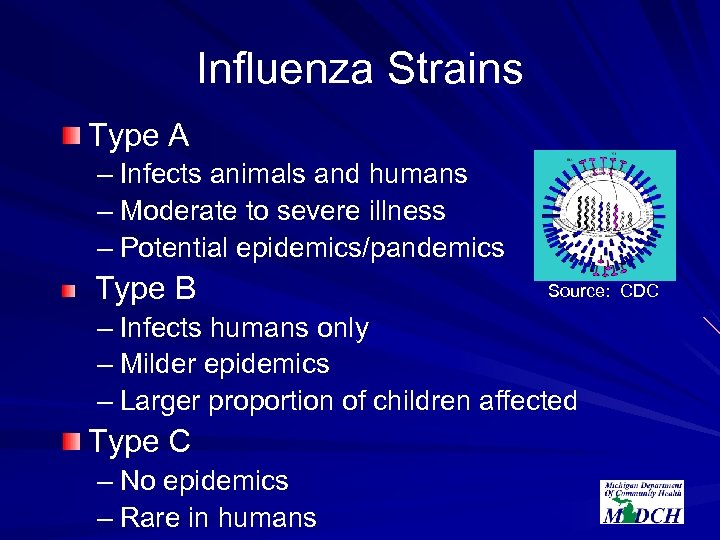 Influenza Strains Type A – Infects animals and humans – Moderate to severe illness – Potential epidemics/pandemics Type B Source: CDC – Infects humans only – Milder epidemics – Larger proportion of children affected Type C – No epidemics – Rare in humans
 A’s and B’s, H’s and N’s Classified by its RNA core – Type A or Type B influenza Further classified by surface protein – Neuraminidase (N) – 9 subtypes known – Hemagluttin (H) – 16 subtypes known Only Influenza A has pandemic potential
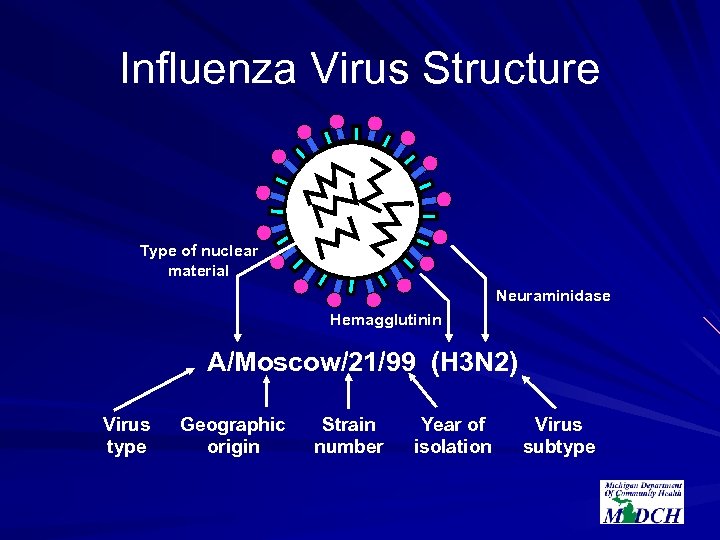 Influenza Virus Structure Type of nuclear material Neuraminidase Hemagglutinin A/Moscow/21/99 (H 3 N 2) Virus type Geographic origin Strain number Year of isolation Virus subtype
 Differentiating Influenza v Seasonal – Caused by influenza A or B strains circulating in humans – ~36, 000 human deaths annually in USA v Avian – Caused by Influenza A – Shorebirds and water fowl are the reservoir and rarely see outbreaks, except in current H 5 N 1 strain – Domestic poultry (chickens and turkeys), causes morbidity and mortality with outbreaks annually worldwide v Pandemic – When new virus strain occurs – Humans lack immunity – Simultaneous epidemics worldwide – Disease easily transmitted between people – Significant number of illness and deaths
 Influenza A: Antigenic Drift and Shift Hemagglutinin (HA) and neuraminadase (NA) structures can change Drift: minor point mutations – associated with seasonal changes/epidemics – subtype remains the same Shift: major genetic changes (reassortments) – making a new subtype – can cause pandemic
 Seasonal Influenza October to April People should get flu vaccine Children and elderly most prone ~36, 000 deaths annually in U. S.
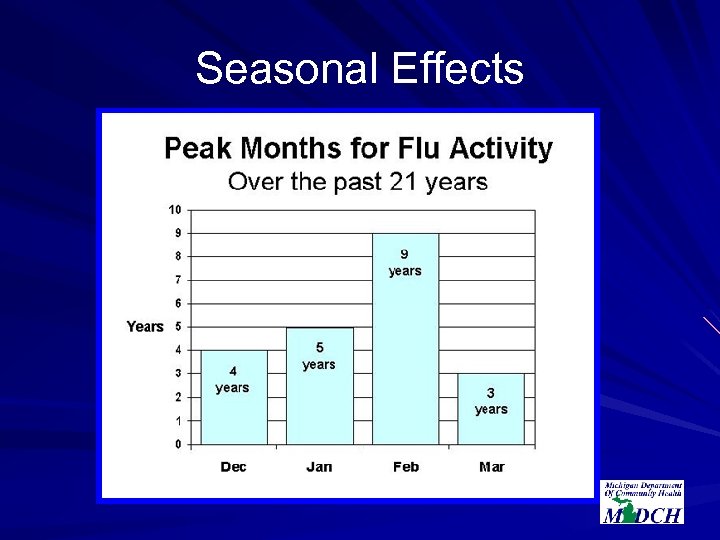 Seasonal Effects
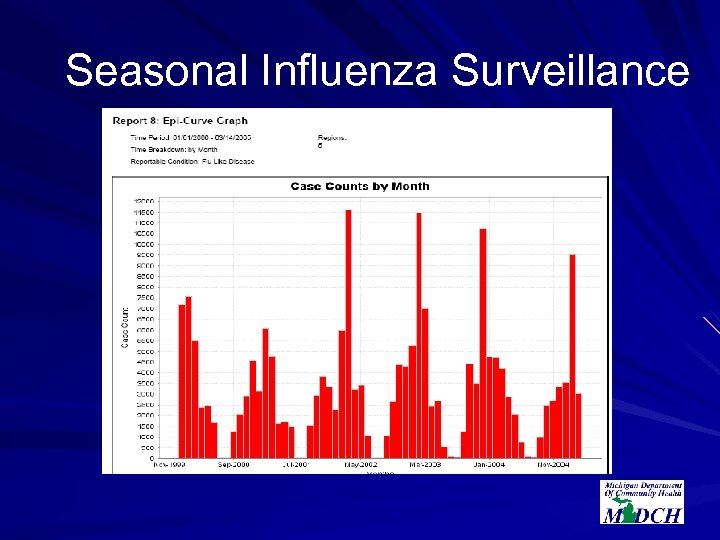 Seasonal Influenza Surveillance
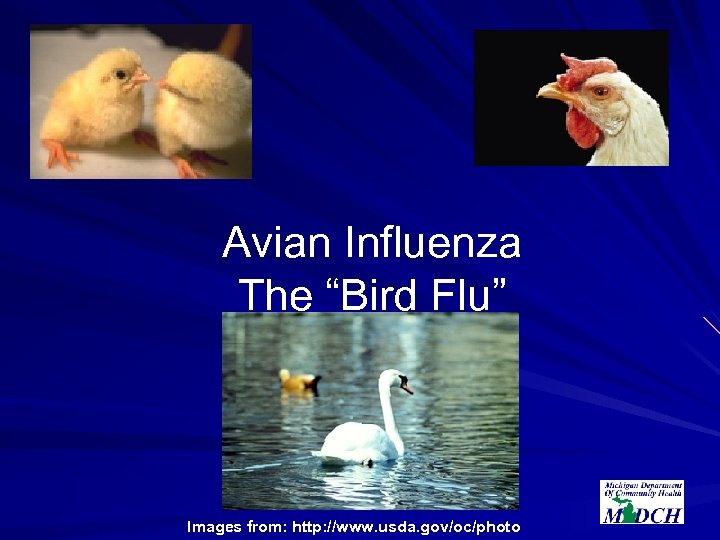 Avian Influenza The “Bird Flu” Images from: http: //www. usda. gov/oc/photo
 Avian Influenza Infection can be in two forms – “low pathogenic” (LPAI) - causes mild illness and may go undetected – “highly pathogenic” (HPAI) - affects multiple organs, spreads rapidly among birds, causes high mortality very quickly
 Avian Influenza and Domestic Poultry Virus is shed in saliva, nasal secretions, and feces of infected birds Virus can survive for long periods in feces, water, and even on the ground, especially when environmental temperatures are low Avian influenza is a reportable disease in Michigan
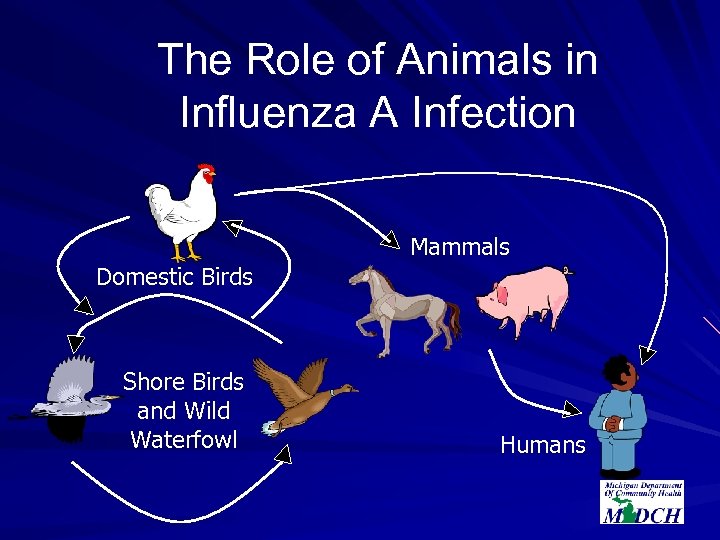 The Role of Animals in Influenza A Infection Mammals Domestic Birds Shore Birds and Wild Waterfowl Humans
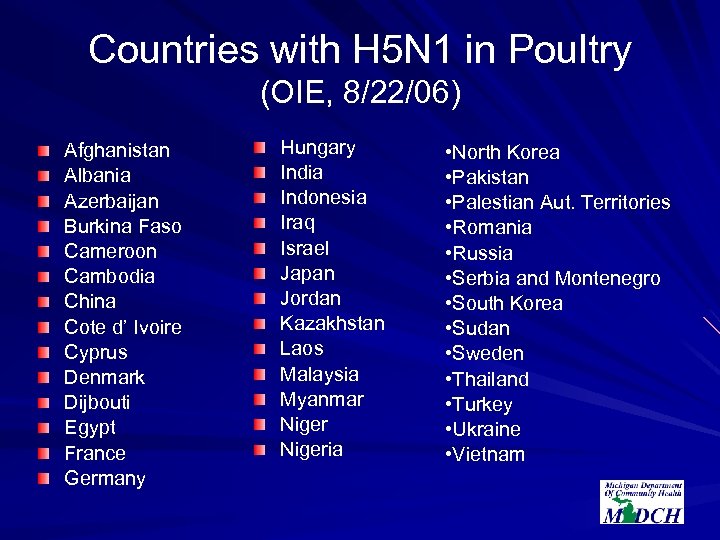 Countries with H 5 N 1 in Poultry (OIE, 8/22/06) Afghanistan Albania Azerbaijan Burkina Faso Cameroon Cambodia China Cote d’ Ivoire Cyprus Denmark Dijbouti Egypt France Germany Hungary India Indonesia Iraq Israel Japan Jordan Kazakhstan Laos Malaysia Myanmar Nigeria • North Korea • Pakistan • Palestian Aut. Territories • Romania • Russia • Serbia and Montenegro • South Korea • Sudan • Sweden • Thailand • Turkey • Ukraine • Vietnam
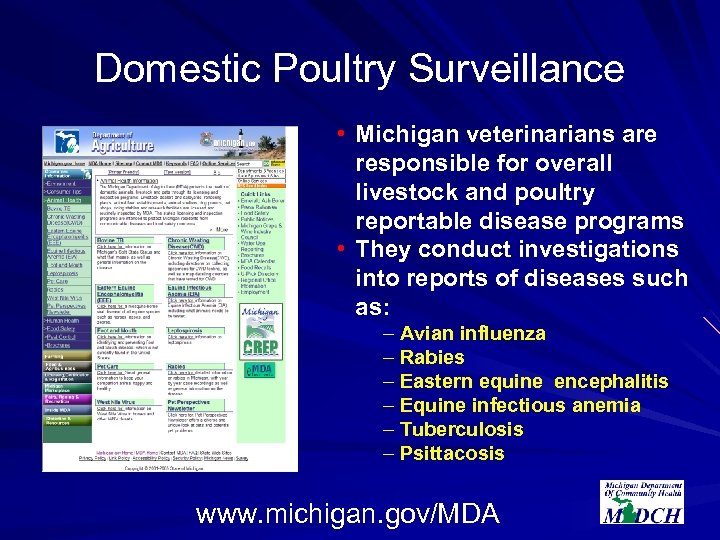 Domestic Poultry Surveillance • Michigan veterinarians are responsible for overall livestock and poultry reportable disease programs • They conduct investigations into reports of diseases such as: – Avian influenza – Rabies – Eastern equine encephalitis – Equine infectious anemia – Tuberculosis – Psittacosis www. michigan. gov/MDA
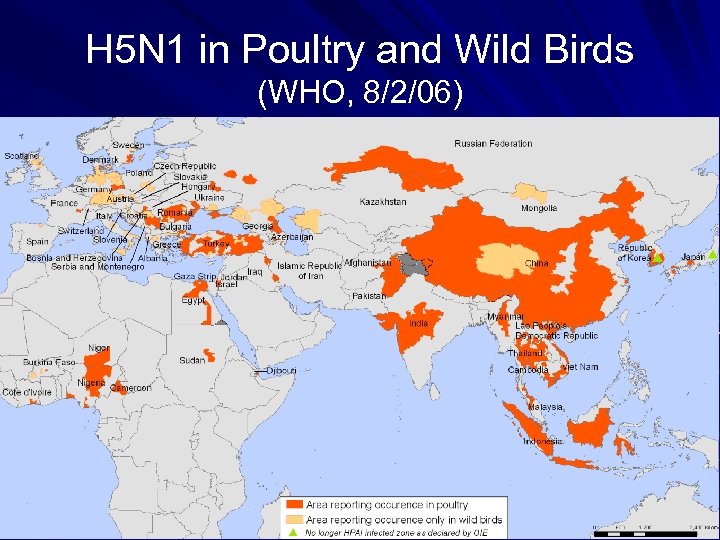 H 5 N 1 in Poultry and Wild Birds (WHO, 8/2/06)
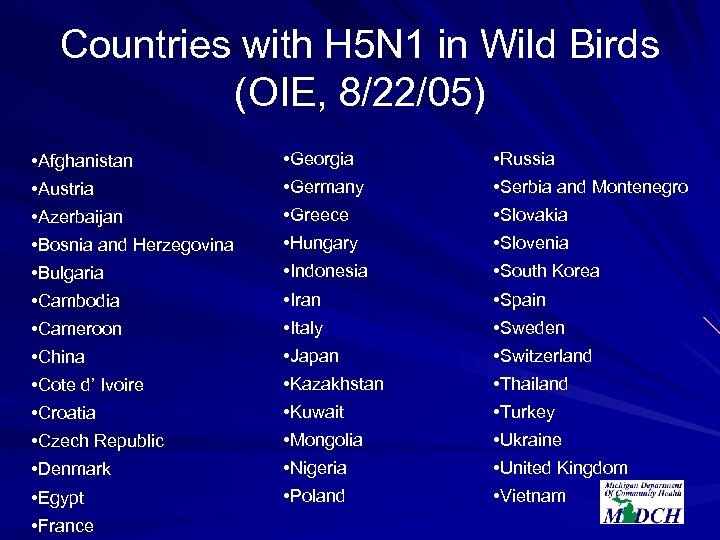 Countries with H 5 N 1 in Wild Birds (OIE, 8/22/05) • Afghanistan • Georgia • Russia • Austria • Germany • Serbia and Montenegro • Azerbaijan • Greece • Slovakia • Bosnia and Herzegovina • Hungary • Slovenia • Bulgaria • Indonesia • South Korea • Cambodia • Iran • Spain • Cameroon • Italy • Sweden • China • Japan • Switzerland • Cote d’ Ivoire • Kazakhstan • Thailand • Croatia • Kuwait • Turkey • Czech Republic • Mongolia • Ukraine • Denmark • Nigeria • United Kingdom • Egypt • Poland • Vietnam • France
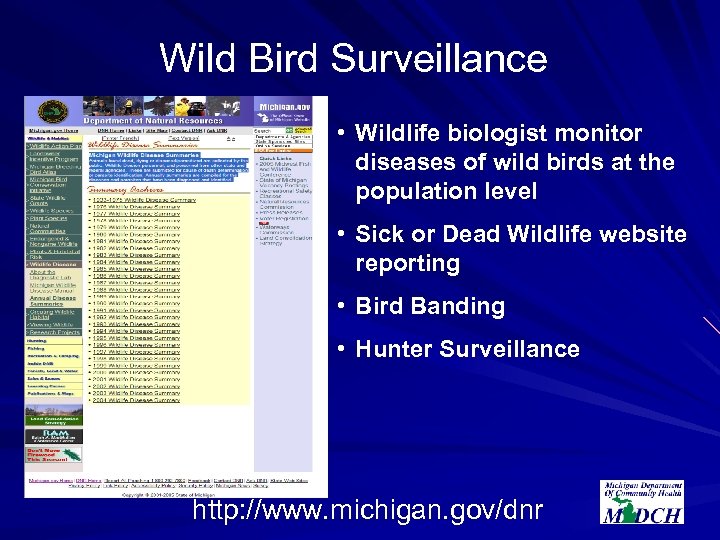 Wild Bird Surveillance • Wildlife biologist monitor diseases of wild birds at the population level • Sick or Dead Wildlife website reporting • Bird Banding • Hunter Surveillance http: //www. michigan. gov/dnr
 H 5 N 1 Influenza in Humans. Risk Transmission from birds to humans does not occur easily – Contact with feces or secretions from infected birds – Risk with butchering, preparing, defeathering of infected birds – NOT transmitted through cooked food
 Implications for Human Health Asian Strain H 5 N 1 in humans more aggressive than seasonal flu strains – – Severe clinical course Rapid deterioration High fatality Low transmissibility human-to-human Incubation may be longer than seasonal influenza – Seasonal influenza: 2 -3 days – H 5 N 1: possibly up to 10 days More studies needed
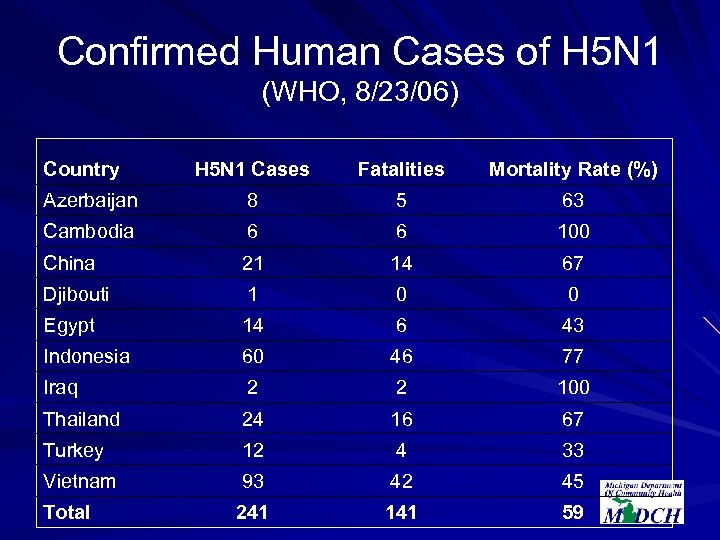 Confirmed Human Cases of H 5 N 1 (WHO, 8/23/06) Country H 5 N 1 Cases Fatalities Mortality Rate (%) Azerbaijan 8 5 63 Cambodia 6 6 100 China 21 14 67 Djibouti 1 0 0 Egypt 14 6 43 Indonesia 60 46 77 Iraq 2 2 100 Thailand 24 16 67 Turkey 12 4 33 Vietnam 93 42 45 Total 241 141 59
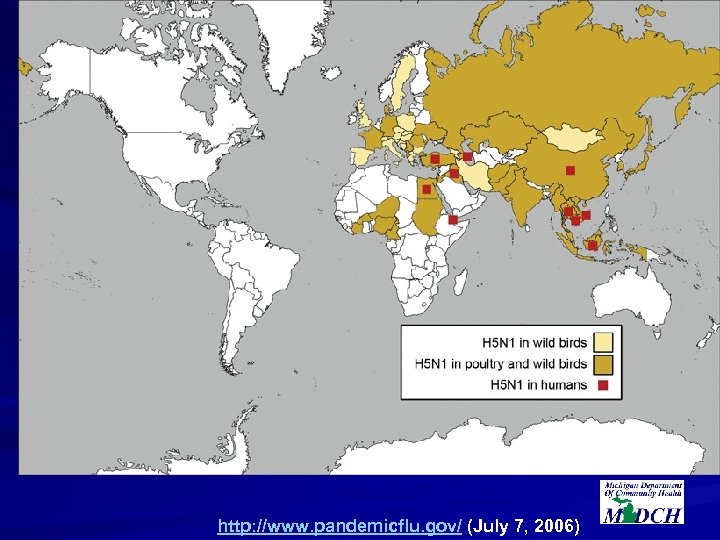 http: //www. pandemicflu. gov/ (July 7, 2006)
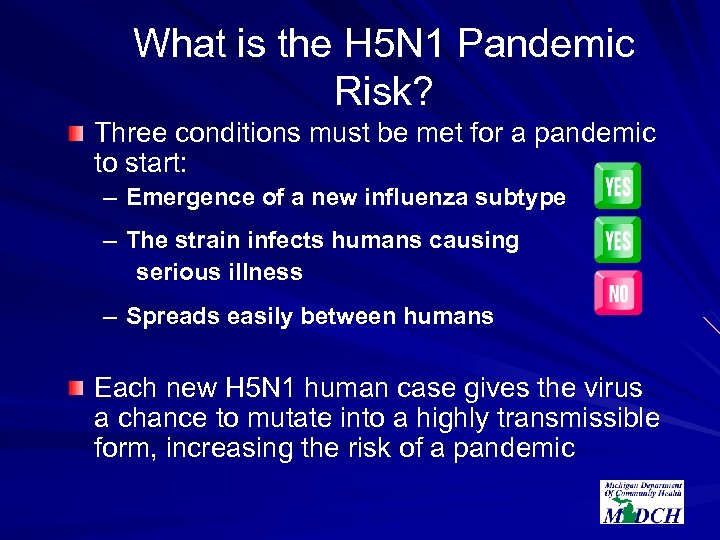 What is the H 5 N 1 Pandemic Risk? Three conditions must be met for a pandemic to start: – Emergence of a new influenza subtype – The strain infects humans causing serious illness – Spreads easily between humans Each new H 5 N 1 human case gives the virus a chance to mutate into a highly transmissible form, increasing the risk of a pandemic

 MDCH Pandemic Influenza Plan 2005 Revision of 2002 plan Released November 2005 Appendix to MDCH All-Hazards Response Plan Pandemic plan updated as needed www. michigan. gov/influenza
 Leads for Public Health International: World Health Organization United States: Centers for Disease Control and Prevention, DHHS Michigan: Michigan Department of Community Health County: Local Health Department/Jurisdiction
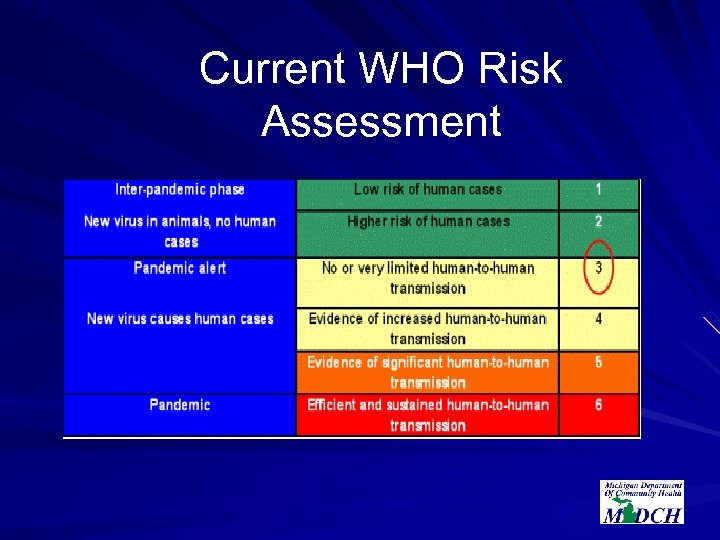 Current WHO Risk Assessment
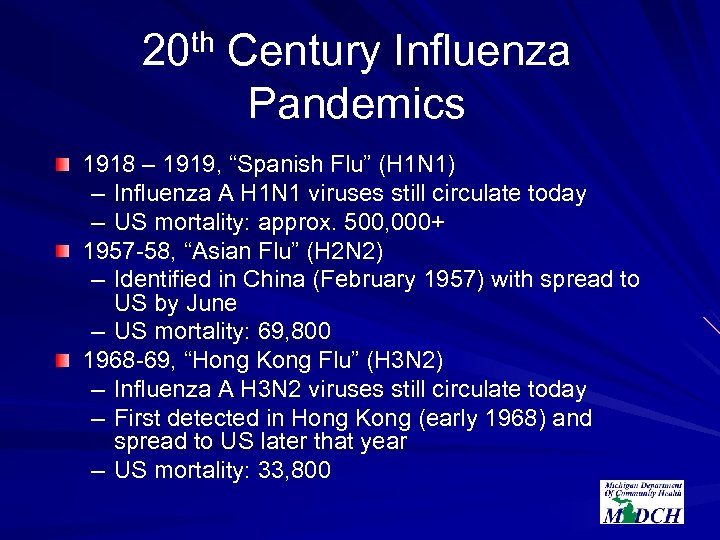 th 20 Century Influenza Pandemics 1918 – 1919, “Spanish Flu” (H 1 N 1) – Influenza A H 1 N 1 viruses still circulate today – US mortality: approx. 500, 000+ 1957 -58, “Asian Flu” (H 2 N 2) – Identified in China (February 1957) with spread to US by June – US mortality: 69, 800 1968 -69, “Hong Kong Flu” (H 3 N 2) – Influenza A H 3 N 2 viruses still circulate today – First detected in Hong Kong (early 1968) and spread to US later that year – US mortality: 33, 800
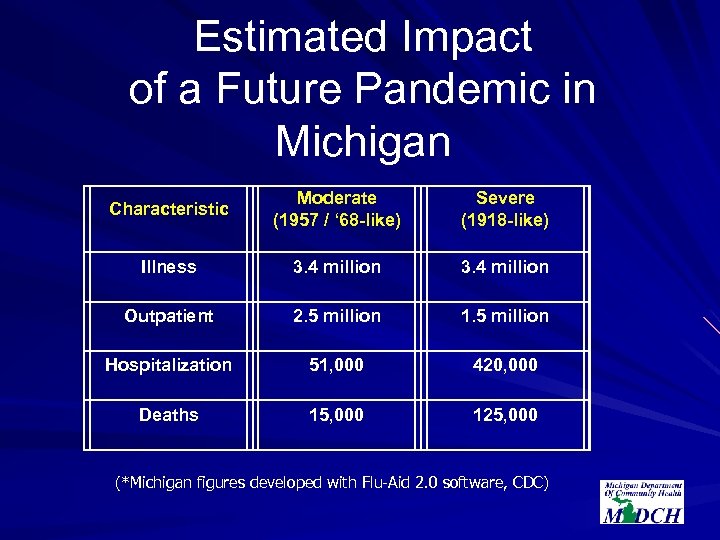 Estimated Impact of a Future Pandemic in Michigan Characteristic Moderate (1957 / ‘ 68 -like) Severe (1918 -like) Illness 3. 4 million Outpatient 2. 5 million 1. 5 million Hospitalization 51, 000 420, 000 Deaths 15, 000 125, 000 (*Michigan figures developed with Flu-Aid 2. 0 software, CDC)
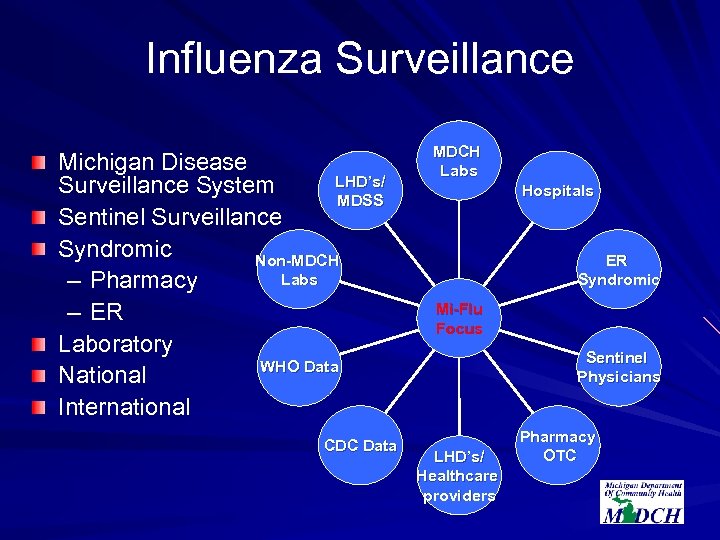 Influenza Surveillance Michigan Disease LHD’s/ Surveillance System MDSS Sentinel Surveillance Syndromic Non-MDCH Labs – Pharmacy – ER Laboratory WHO Data National International CDC Data MDCH Labs Hospitals ER Syndromic Mi-Flu Focus Sentinel Physicians LHD’s/ Healthcare providers Pharmacy OTC
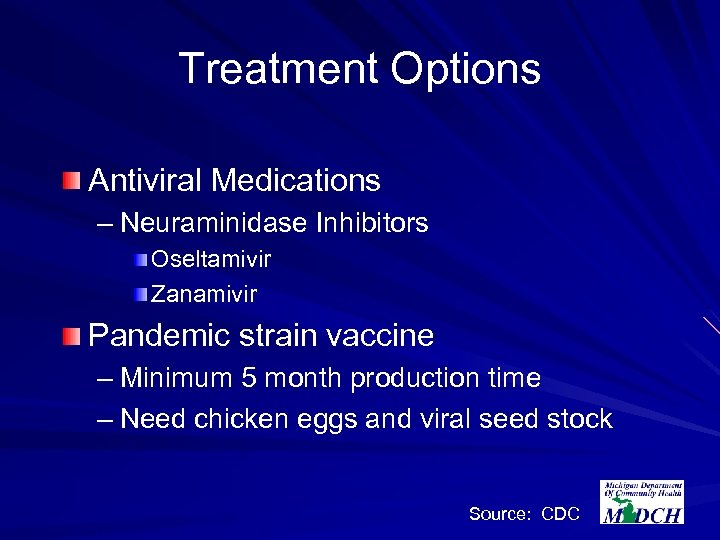 Treatment Options Antiviral Medications – Neuraminidase Inhibitors Oseltamivir Zanamivir Pandemic strain vaccine – Minimum 5 month production time – Need chicken eggs and viral seed stock Source: CDC
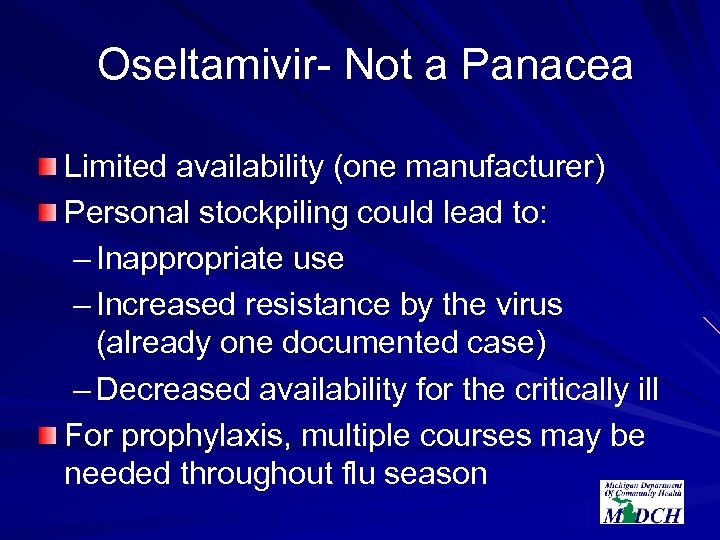 Oseltamivir- Not a Panacea Limited availability (one manufacturer) Personal stockpiling could lead to: – Inappropriate use – Increased resistance by the virus (already one documented case) – Decreased availability for the critically ill For prophylaxis, multiple courses may be needed throughout flu season
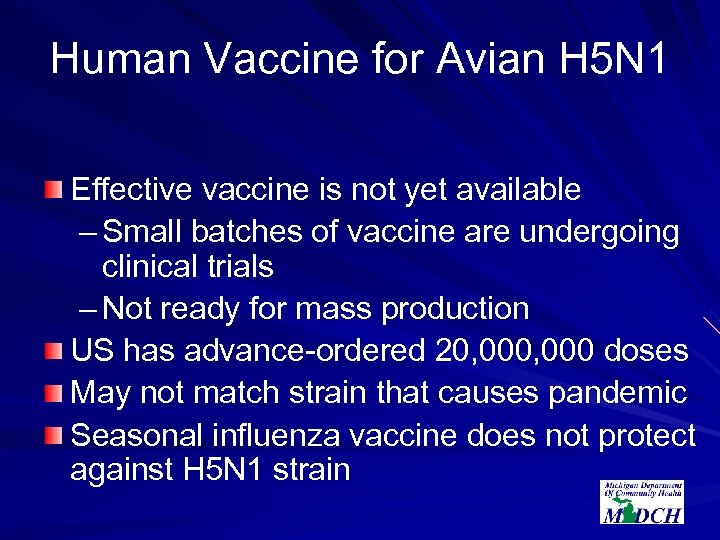 Human Vaccine for Avian H 5 N 1 Effective vaccine is not yet available – Small batches of vaccine are undergoing clinical trials – Not ready for mass production US has advance-ordered 20, 000 doses May not match strain that causes pandemic Seasonal influenza vaccine does not protect against H 5 N 1 strain
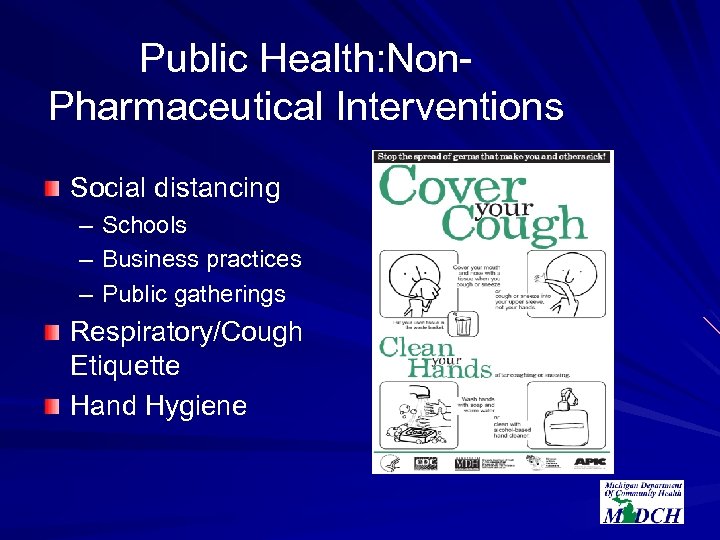 Public Health: Non. Pharmaceutical Interventions Social distancing – – – Schools Business practices Public gatherings Respiratory/Cough Etiquette Hand Hygiene
 Influenza Control Measures Education to encourage prompt selfdiagnosis Hand hygiene Consider masks, if possible, for symptomatic persons (then send them home!) Cancellation of school/social gatherings Quarantines
 Have a Plan! Develop Exercise Update Review Exercise Update…. CDC/EOC-PHIL
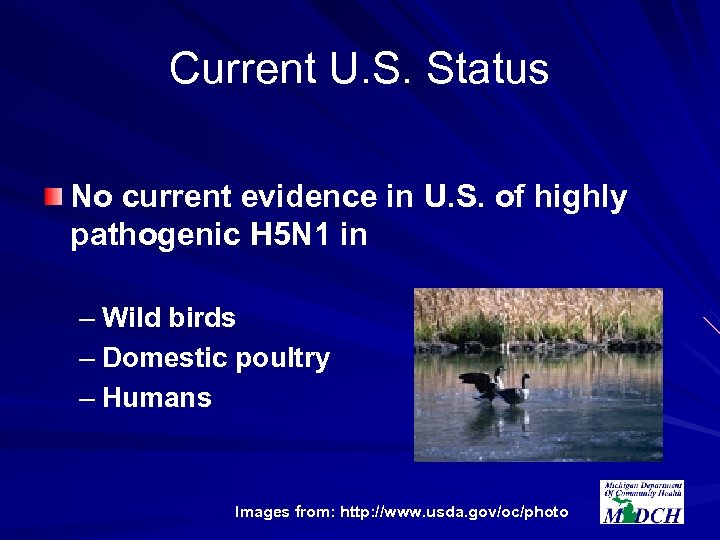 Current U. S. Status No current evidence in U. S. of highly pathogenic H 5 N 1 in – Wild birds – Domestic poultry – Humans Images from: http: //www. usda. gov/oc/photo
 Conclusion Many unknowns Simple precautions go a long way Education is critical to your COOP Get employees involved in the process
 Health Advice Good Now, Good in a Pandemic Get your annual flu shot – Won’t protect against a pandemic strain Stay at home if you have a fever Wash hands with soap or hand sanitizers when you sneeze or cough Get adequate sleep, eat healthy, stay hydrated
 References pandemicflu. gov Michigan Department of Community Health (www. michigan. gov/flu) www. who. int www. cdc. gov Local Health Department Chamber of Commerce