 Скачать презентацию AV Reformatting at Brandeis University Small is Good
12c6456daa53e31838f7d02f8b5719cd.ppt
- Количество слайдов: 22



AV Reformatting at Brandeis University: “Small is Good” ~~~~~ NEA Meeting Spring 2007
Presentation Goals § Demonstrate that small shops with limited resources can succeed. § Reassure that copyright need not be a barrier to reformatting. § Help to demystify grant application and reformatting processes. § Clarify that grants are time-consuming, but manageable.
URL to Grant Proposal Brandeis University’s proposal to the NTVPF can be found at: lts. brandeis. edu/research/archives-speccoll/ collections/ntvpfgrant. html
Project Overview § National Television & Video Preservation Foundation (NTVPF). § In-kind grants to preserve and reformat television and video materials (inaugural grants: 2003 -2004). § Funded preservation of ten videotapes from Morse Communications Research Center Collection.
Collection Background I § Comprises 34 cu. ft. of audio-visual materials: 16 mm film, reel-to-reel audiotape, 2 -inch quad videotape. § Originally housed at University’s former Morse Communications Research Center. § Discovered in building basement and transferred to University Archives ca. late 1990 s.
Collection Background II § Morse Communications Research Center established in 1961 to study and analyze communication in modern society. § Center’s goal: to improve educational radio and television in U. S. and abroad. § Created audio-visual archives documenting local, state, national political campaigns for in-house research purposes.
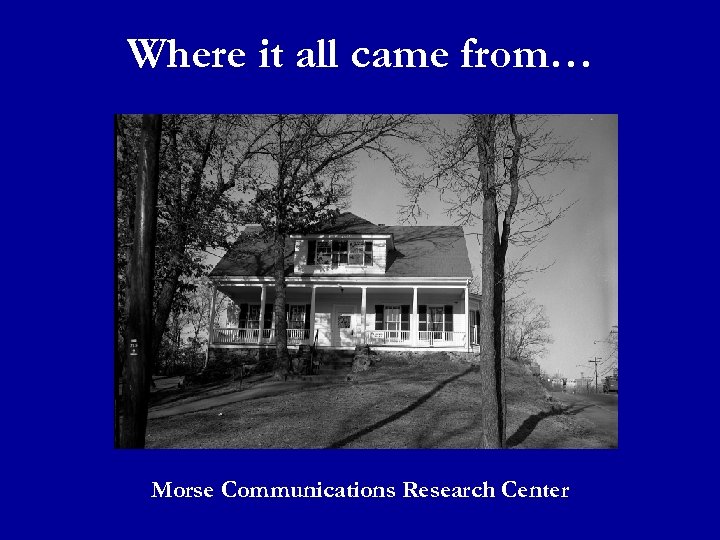
Where it all came from… Morse Communications Research Center
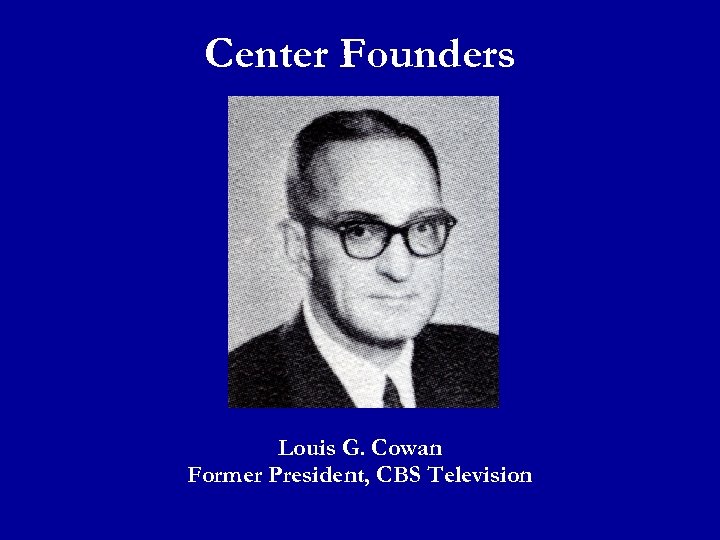
Center Founders Louis G. Cowan Former President, CBS Television
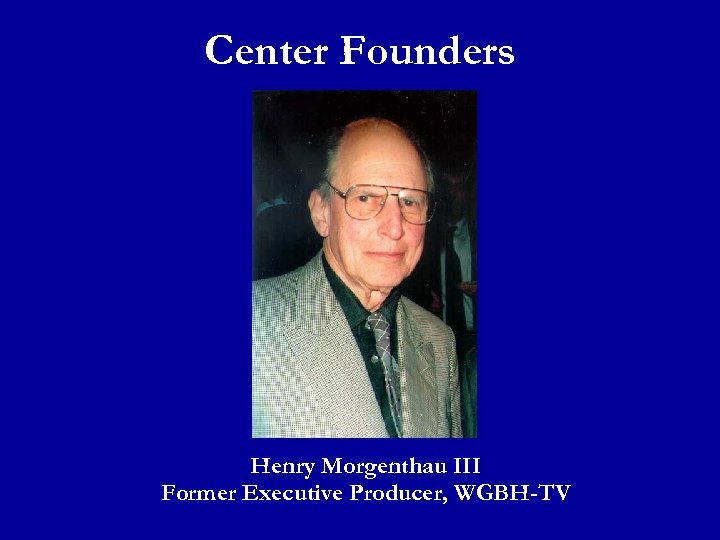
Center Founders Henry Morgenthau III Former Executive Producer, WGBH-TV
Who Needs Provenance? § Cowan acquired broadcasts from advertising agencies and TV networks across the country. § By mid-1960 s: Over 400 films, audiotapes, and videotapes covering key political campaigns in U. S. and Europe, 1959 -1964. § Collection rediscovered 35 years later with basic inventory, no provenancial information.
Can you say… COPYRIGHT NIGHTMARE ?
Selection Process § Criteria for culling AV materials: – historical and research value, and – lack of availability in other repositories, based on survey of relevant film/television archives, archival repositories, and bibliographic databases (see grant proposal).
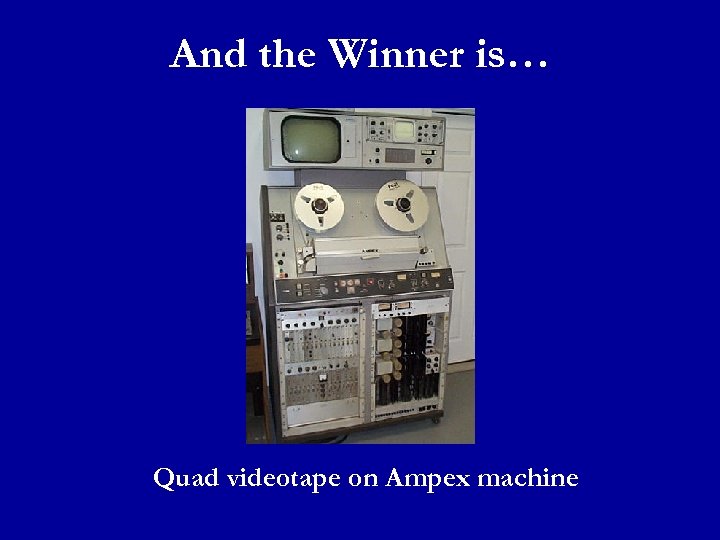
And the Winner is… Quad videotape on Ampex machine
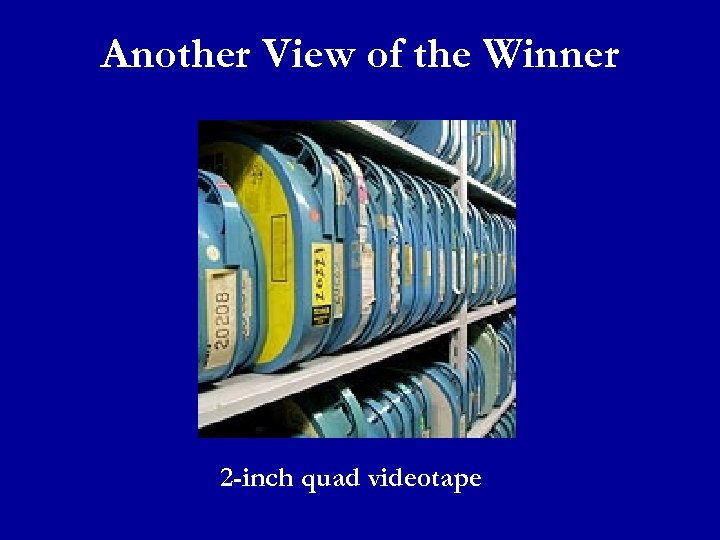
Another View of the Winner 2 -inch quad videotape
Fun with Copyright § Grants: Preference is always for materials in the public domain; don’t let that stop you! § Never hurts to ask about eligibility, despite perceived copyright restrictions. § In grant proposal: agreed to contact all known copyright holders and clarify permissions to use/reproduce materials. (What was I thinking? )
Fun with Copyright? § Grant stipulation: make good-faith effort to secure clearance from copyright holders and verify materials not reformatted elsewhere. § Tracking ownership an onerous task: original TV networks, independent production companies, etc. were defunct, or had changed hands ten times… § Sent out an SOS to NTVPF!
Fair Use Saves the Day § Reformatting of broadcasts likely considered Fair Use under Copyright Law : – Reformatting was solely for purposes of enhancing accessibility. – Works were factual news reports and political advertisements vs. fictional, artistic creations. – No perceived market for licensing of political broadcasts.
Copyright Can be Fun! § Political broadcasts were likely in public domain: – Copyright probably not registered in 1962 when programs were aired; or – Copyright not renewed 28 years later ( in 1990) as required at that time to retain copyright protection. § Case for Fair Use and search for copyright holders documented in letter to NTVPF, confirming our due diligence and assessment of legal risk to University. (Whew!)
The Joys of Bureaucracy § Office of Sponsored Research is your friend, though sometimes a lumbering one. § Have legal counsel or a seasoned grant writer review the agreement. § Make sure the agreement protects your organization, not just the granting institution.
From 20 lbs. to 3 oz. § Formatting choices based on preservation and access needs: – Beta. SP (analog preservation master) – Digi. Beta (digital access master) – DVD (access copy) § Original tapes, preservation masters, and access masters stored in off-site climate-controlled facility. § Access DVDs stored onsite and catalogued in library OPAC, in World. Cat, and on website.
In Closing… § Reformatting of AV materials presents project management issues we’ve faced before! § Small is Good: incremental, step-by-step approach to reformatting will increase probability of success, and may be parlayed into future reformatting projects.
YOU CAN DO IT! ~~~~~ Thank you.
Скачать презентацию AV Reformatting at Brandeis University Small is Good
12c6456daa53e31838f7d02f8b5719cd.ppt