


 Скачать презентацию Autonomic Nervous System I Divisions A Sympathetic
Autonomic Nervous System.ppt
- Количество слайдов: 17
 Autonomic Nervous System
 I. Divisions A. Sympathetic • fight or flight response B. Parasympathetic • rest and digestion II. Involuntary Motor System A. Autonomic vs. Somatic motor systems 1. Somatic • voluntary • direct synapse • excitatory
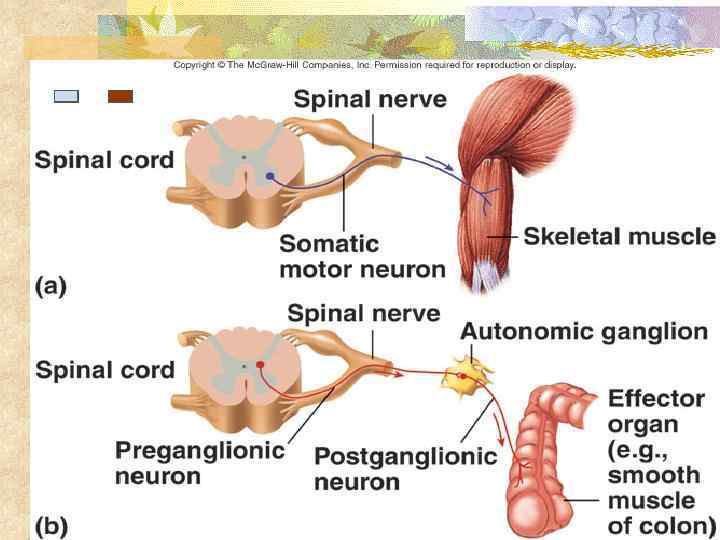
 2. Autonomic • involuntary • disynaptic (preganglion, postganglion) • Excitatory and inhibitory III General nerve pathways A. Sympathetic • Preganglion cell body – gray matter • axons move through ventral root of spinal nerve • synapse w/ postganglion at sympathetic chain ganglion
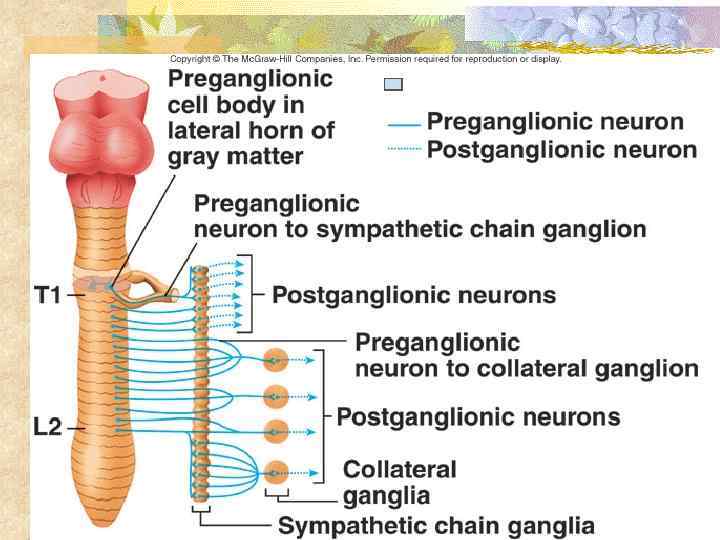
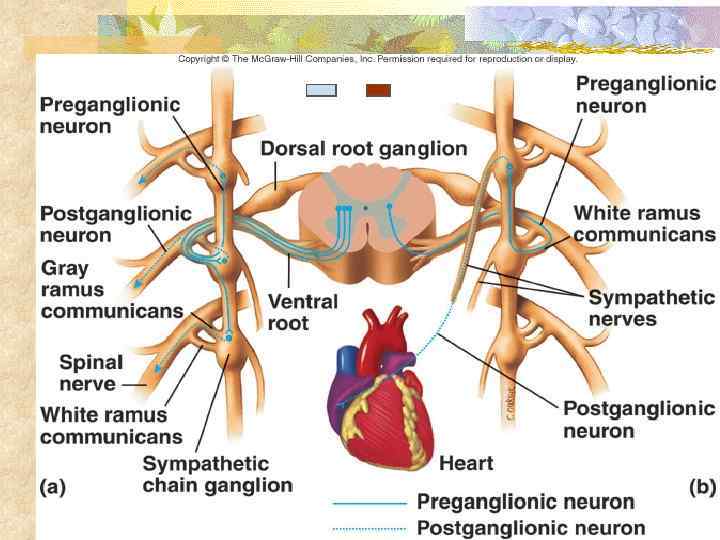
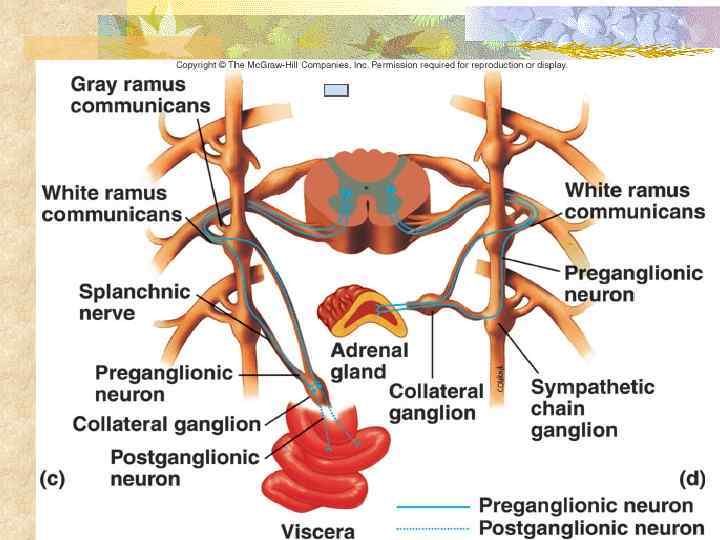
 • axons of postganglions exit via Spinal nerve Sympathetic nerve Exceptions: some pre do not synapse at symp chain Splanchnic nerve axons of preganglion exit Splanchnic nerve and synapse at collateral ganglion w/post Adrenal gland preganglion synapses directly w/adrenal
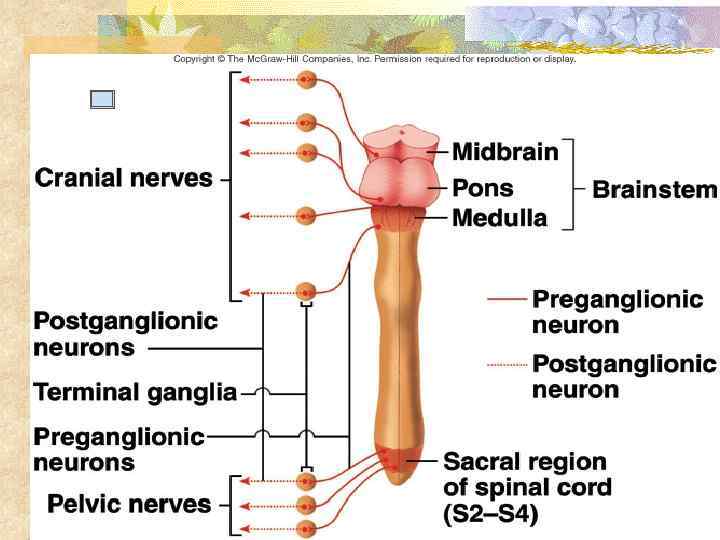
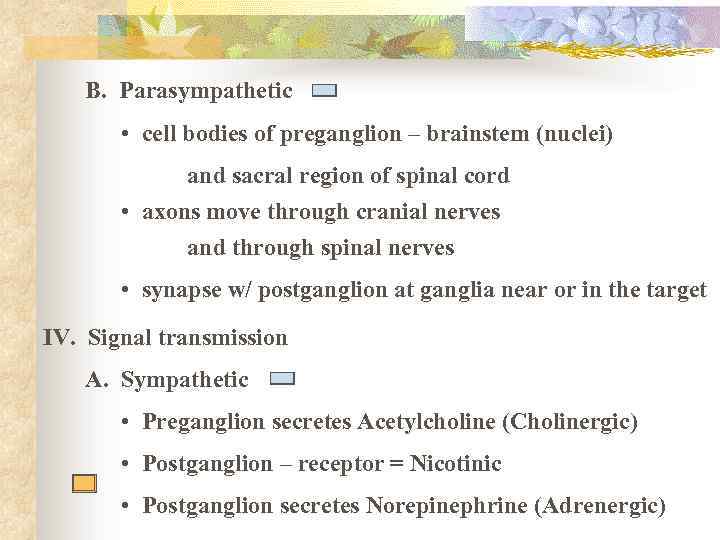 B. Parasympathetic • cell bodies of preganglion – brainstem (nuclei) and sacral region of spinal cord • axons move through cranial nerves and through spinal nerves • synapse w/ postganglion at ganglia near or in the target IV. Signal transmission A. Sympathetic • Preganglion secretes Acetylcholine (Cholinergic) • Postganglion – receptor = Nicotinic • Postganglion secretes Norepinephrine (Adrenergic)
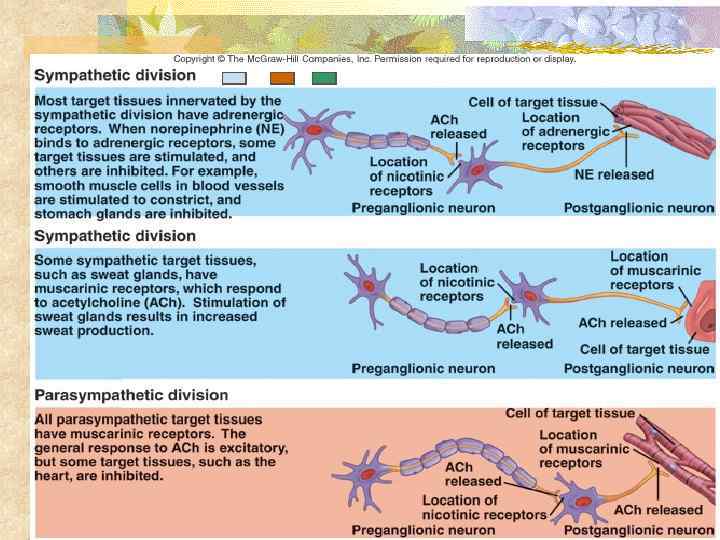
 • Target (smooth muscle, cardiac, glands) Receptor = Adrenergic (α, β) Sweat Glands • Preganglion secretes Acetylcholine • Postganglion – nicotinic receptor • Postganglion secretes Acetylcholine • Sweat gland – muscarinic receptor
 B. Parasympathetic • Preganglion secretes Acetylcholine (Cholinergic) • Postganglion – receptor = nicotinic • Postganglion secretes Acetylcholine • Target (Smooth muscle, heart, glands) receptor = muscarinic V. ANS generalized A. Regulated
 B. Excitatory and inhibitory • depends on the target organ C. Opposite effects VI. Autonomic control A. Cardiovascular function • Sympathetic: Norepinephrine Increases cardiac muscle contractions Increases blood pressure • Parasympathetic: Acetylcholine Decrease in cardiac output due to decrease in calcium influx
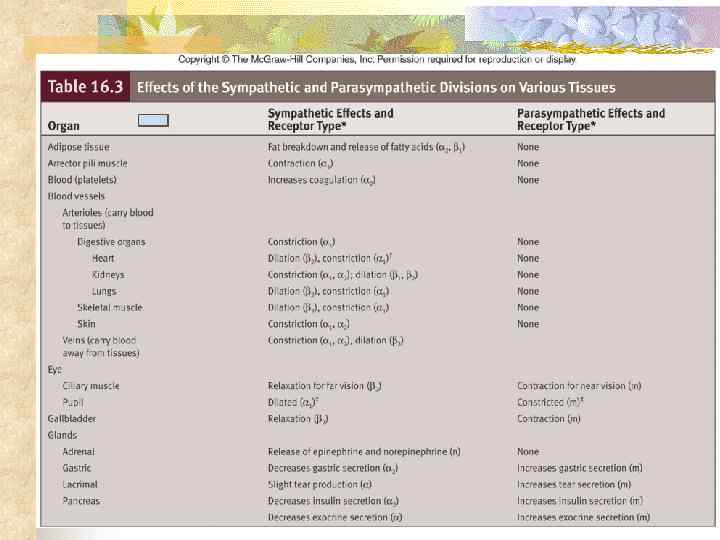
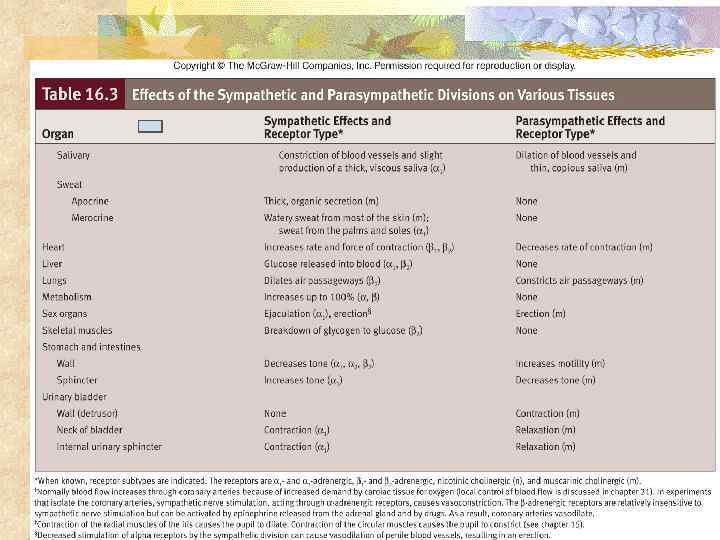
 B. Pupillary light reflex 1. Parasympathetic • constricts pupil 2. Sympathetic • Dilates pupil C. Salivary glands 1. Sympathetic • viscous secretion/ vasoconstriction of blood vessels 2. Parasympathetic • watery secretion/ vasodilation of blood vessels