


 Скачать презентацию Automated Maze System Development Group 9 Tanvir Haque
0694c612539e3d9609261d7adfce79bc.ppt
- Количество слайдов: 27
 Automated Maze System Development Group 9 Tanvir Haque Sidd Murthy Samar Shah Advisors: Dr. Herbert Y. Meltzer, Psychiatry Dr. Paul King, Biomedical Engineering
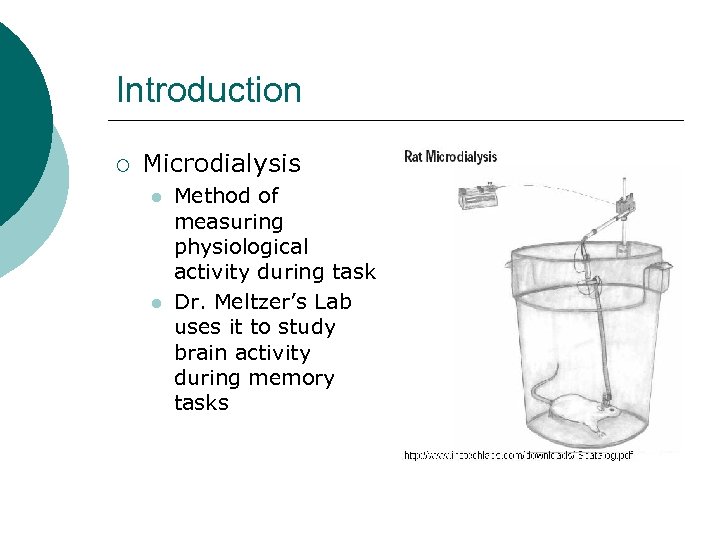 Introduction ¡ Microdialysis l l Method of measuring physiological activity during task Dr. Meltzer’s Lab uses it to study brain activity during memory tasks
 Experimental Setup Rat hooked up to Microdialysis ¡ Rat placed in Maze, performs memory tasks ¡ Sample collected during maze run ¡ Sample Analyzed for content ¡
 Problems Dialysis tubes’ entanglement ¡ Rat’s recognition of overhead device psychological repercussions ¡ Manual guiding of tubes cumbersome for researcher ¡
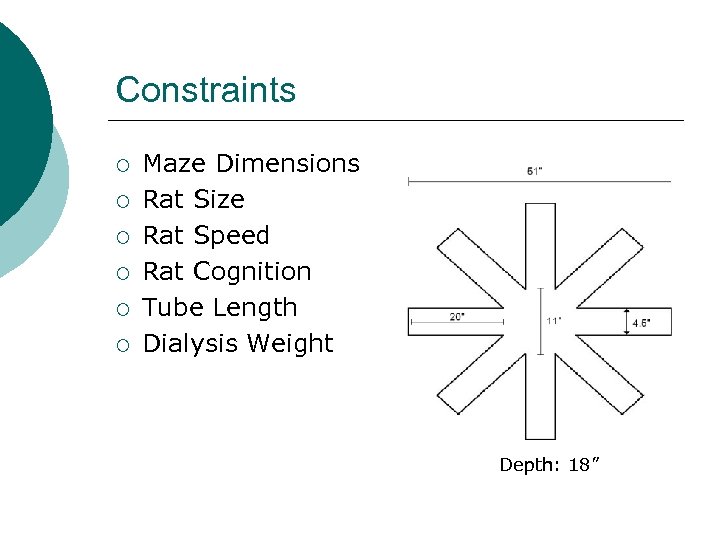 Constraints ¡ ¡ ¡ Maze Dimensions Rat Size Rat Speed Rat Cognition Tube Length Dialysis Weight Depth: 18”
 Primary Objective ¡ To develop a fully independent research module that facilitates the study of memory.
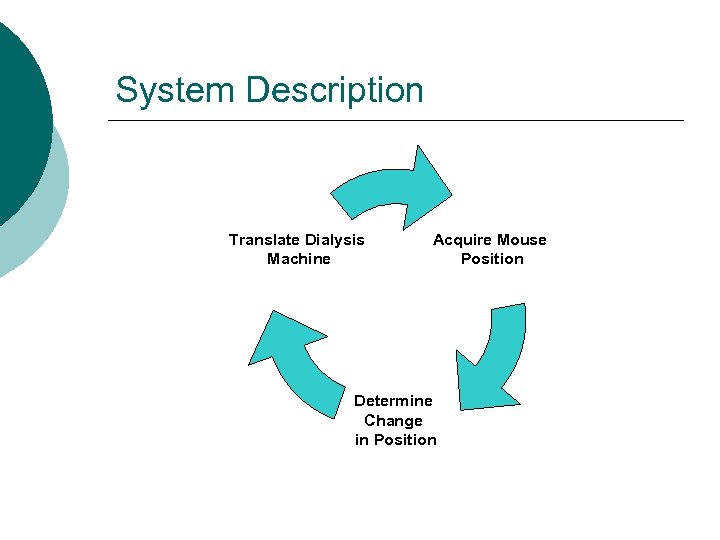 System Description Translate Dialysis Machine Acquire Mouse Position Determine Change in Position
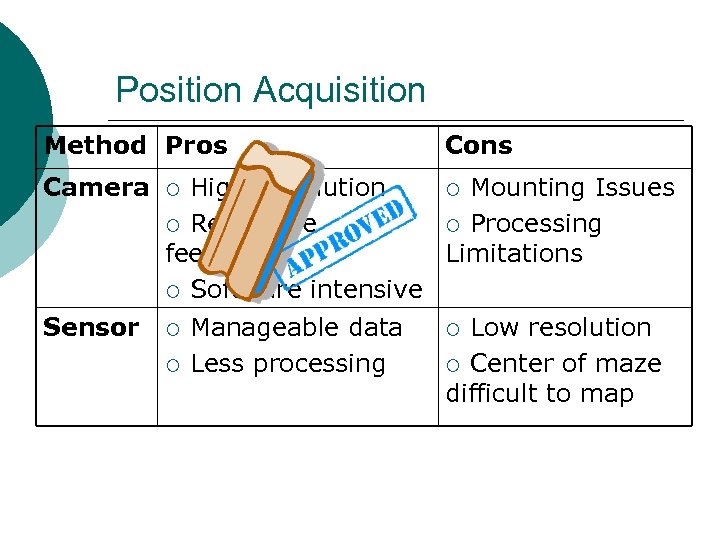 Position Acquisition Method Pros Cons Camera ¡ High Resolution ¡ Mounting Issues ¡ Real-Time ¡ Processing Sensor feedback Limitations ¡ Software intensive ¡ Manageable data ¡ Low resolution ¡ Less processing ¡ Center of maze difficult to map
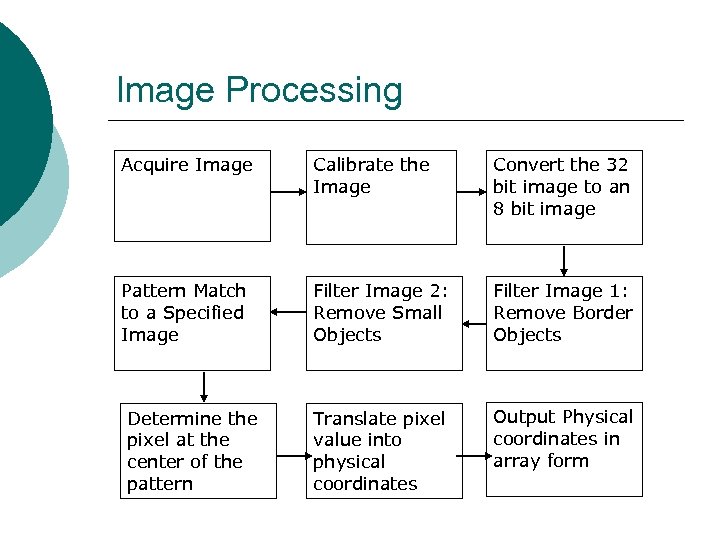 Image Processing Acquire Image Calibrate the Image Convert the 32 bit image to an 8 bit image Pattern Match to a Specified Image Filter Image 2: Remove Small Objects Filter Image 1: Remove Border Objects Translate pixel value into physical coordinates Output Physical coordinates in array form Determine the pixel at the center of the pattern
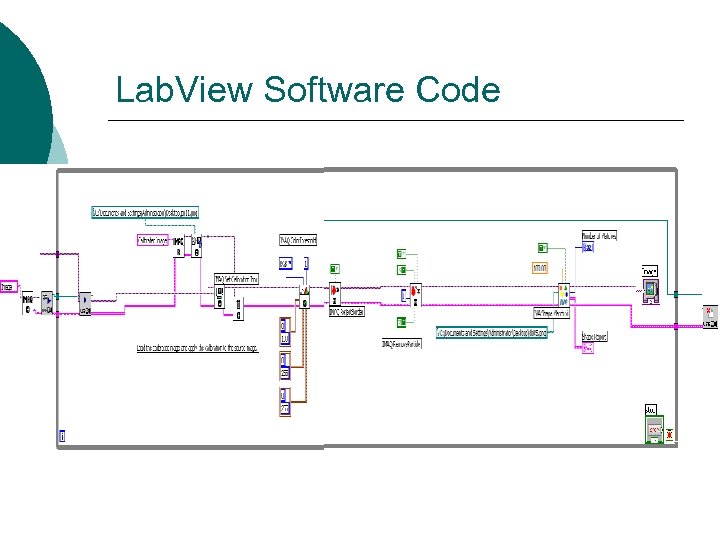 Lab. View Software Code
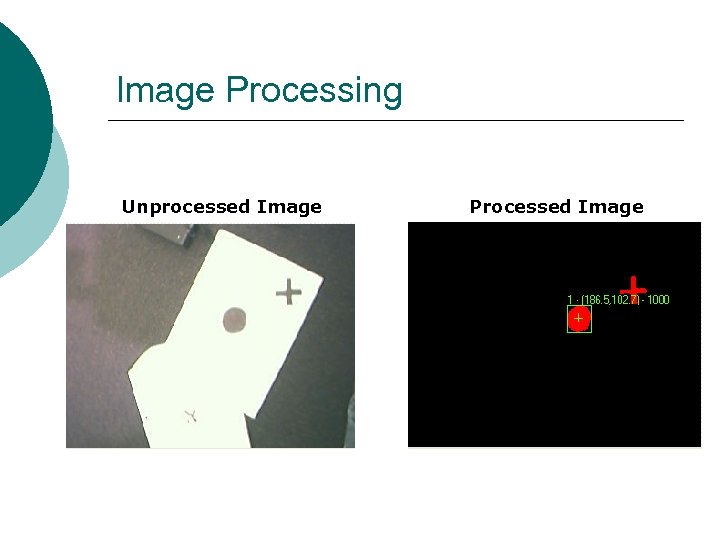 Image Processing Unprocessed Image Processed Image
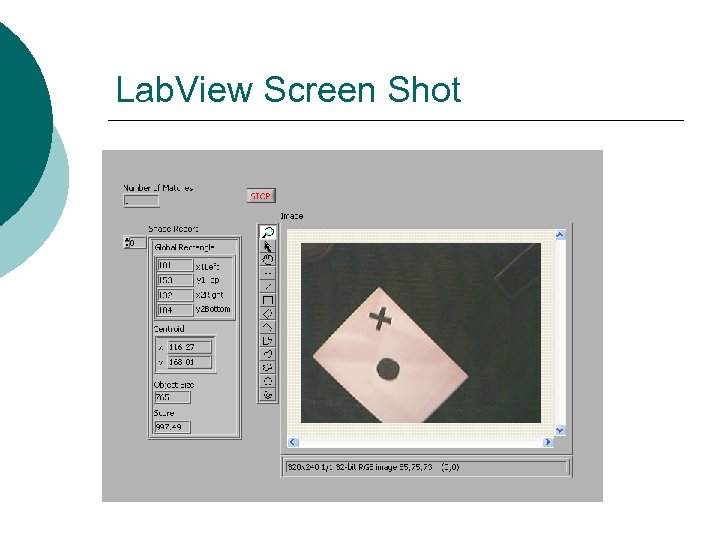 Lab. View Screen Shot
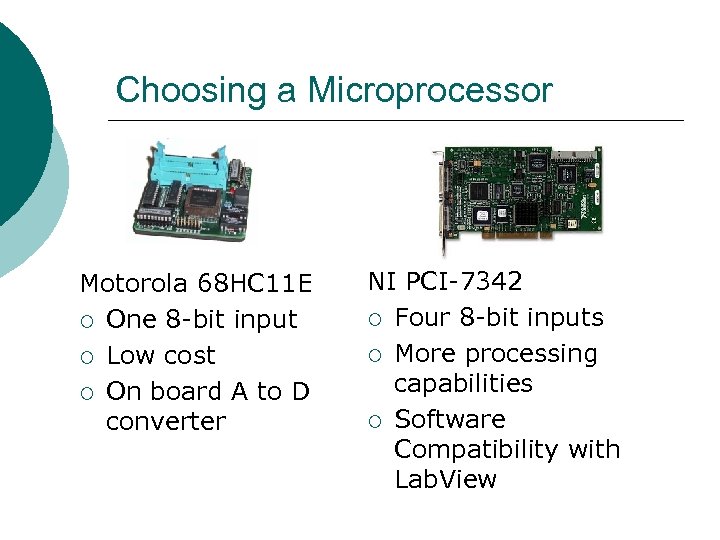 Choosing a Microprocessor Motorola 68 HC 11 E ¡ One 8 -bit input ¡ Low cost ¡ On board A to D converter NI PCI-7342 ¡ Four 8 -bit inputs ¡ More processing capabilities ¡ Software Compatibility with Lab. View
 Processing the Information ¡ ¡ Continually Given one set of coordinates (X, Y) Compares the coordinates of (Xn-1, Yn-1) to (Xn, Yn), computes the difference, and rounds the significant digits Converts the difference into specified timed waveform for the driver Driver amplifies signal and controls motor speeds
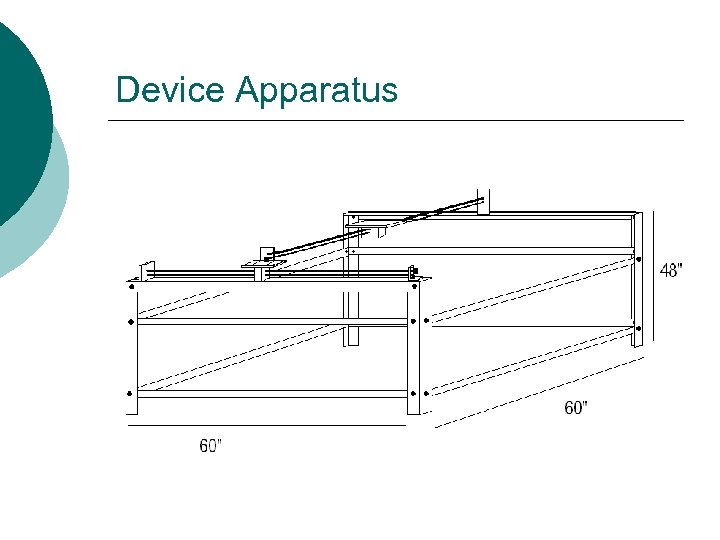
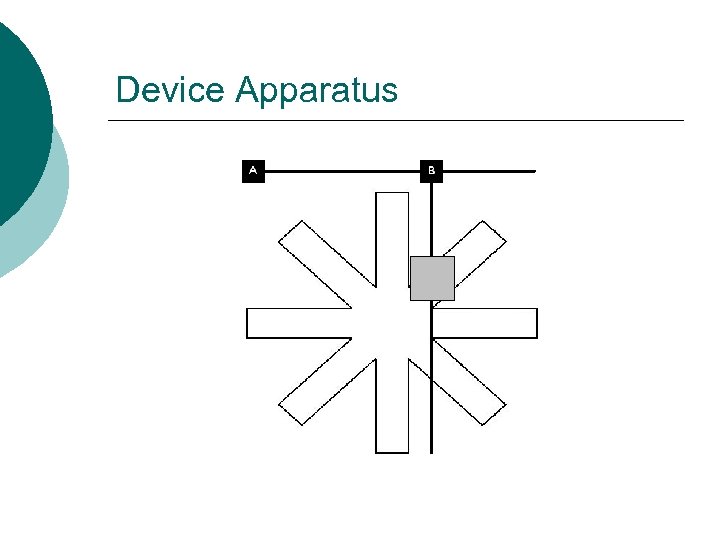
 Drive System ¡ Lead-screw Device l l l ¡ Relatively Easy to build Not very efficient Cheap Pulley/Belt System l l l Complicated System Efficient Expensive
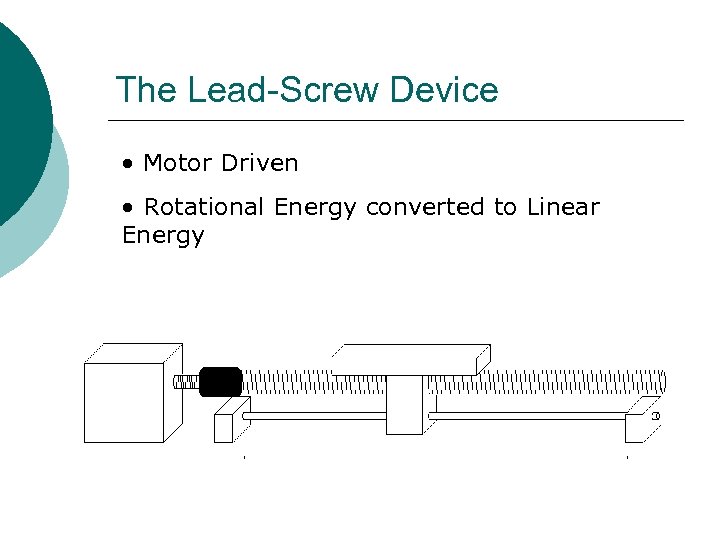 The Lead-Screw Device • Motor Driven • Rotational Energy converted to Linear Energy
 Device Apparatus
 Device Apparatus
 Choosing a Motor ¡ Design Considerations: l l Speed of Mouse: roughly 2 ft/s Torque needed to drive apparatus ¡ Torque needed to provide acceleration ¡ ¡ Stepper Motor or DC Motor?
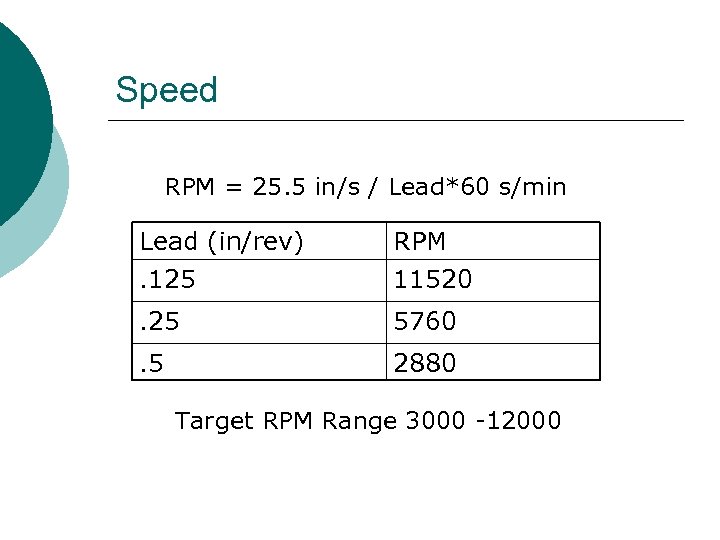 Speed RPM = 25. 5 in/s / Lead*60 s/min Lead (in/rev). 125 RPM 11520 . 25 5760 . 5 2880 Target RPM Range 3000 -12000
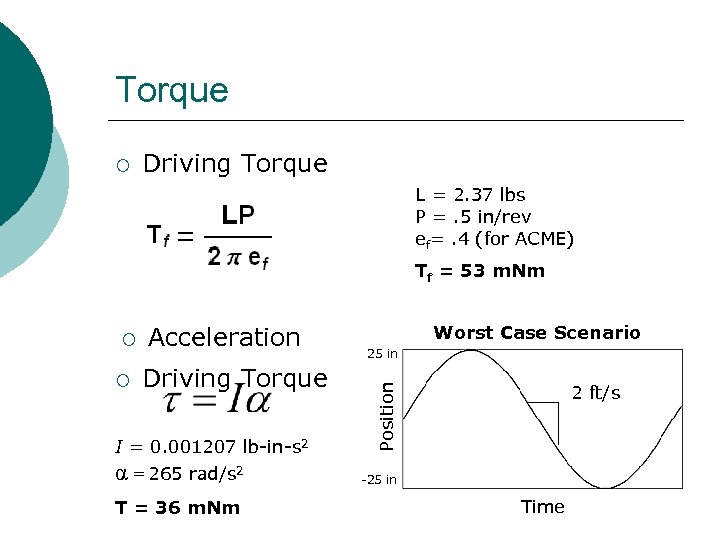 Torque ¡ Driving Torque L = 2. 37 lbs P =. 5 in/rev ef=. 4 (for ACME) Tf = 53 m. Nm ¡ Acceleration Driving Torque I = 0. 001207 lb-in-s 2 α = 265 rad/s 2 T = 36 m. Nm Worst Case Scenario 25 in 2 ft/s Position ¡ -25 in Time
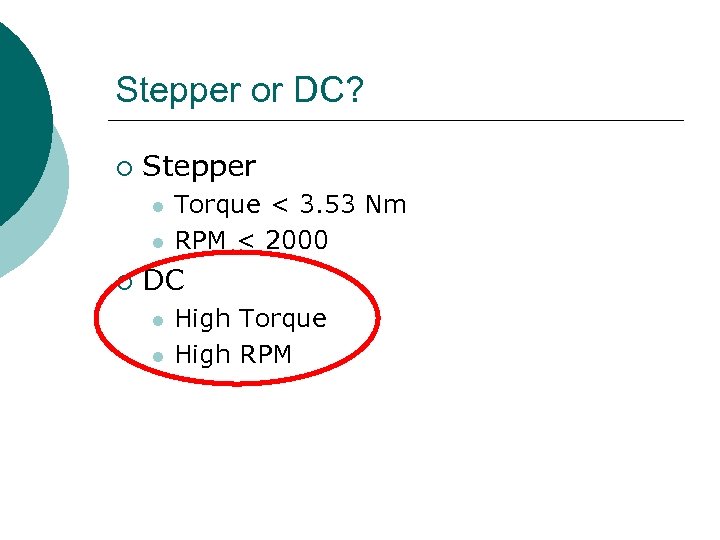 Stepper or DC? ¡ Stepper l l ¡ Torque < 3. 53 Nm RPM < 2000 DC l l High Torque High RPM
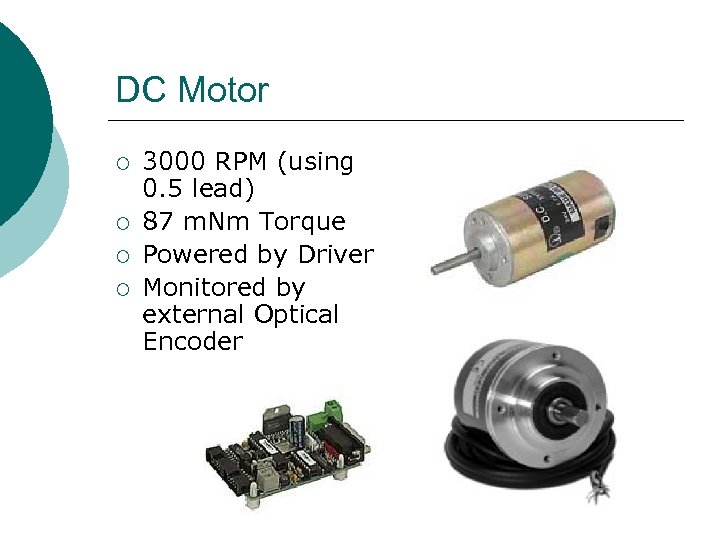 DC Motor ¡ ¡ 3000 RPM (using 0. 5 lead) 87 m. Nm Torque Powered by Driver Monitored by external Optical Encoder
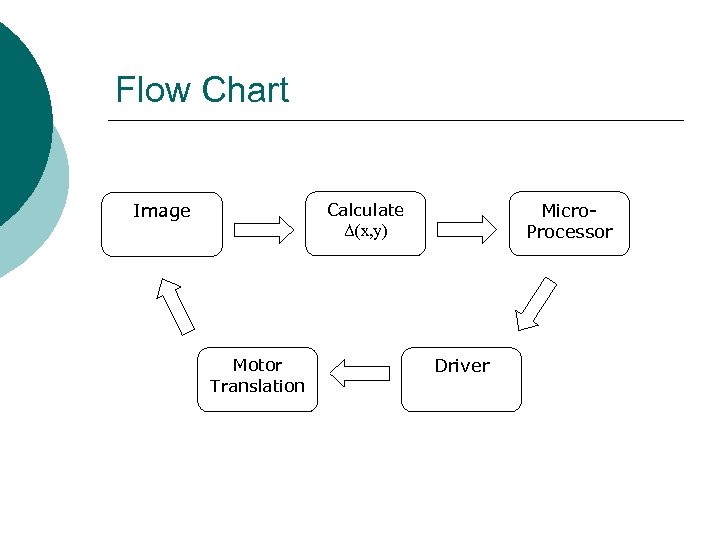 Flow Chart Micro. Processor Calculate Δ(x, y) Image Motor Translation Driver
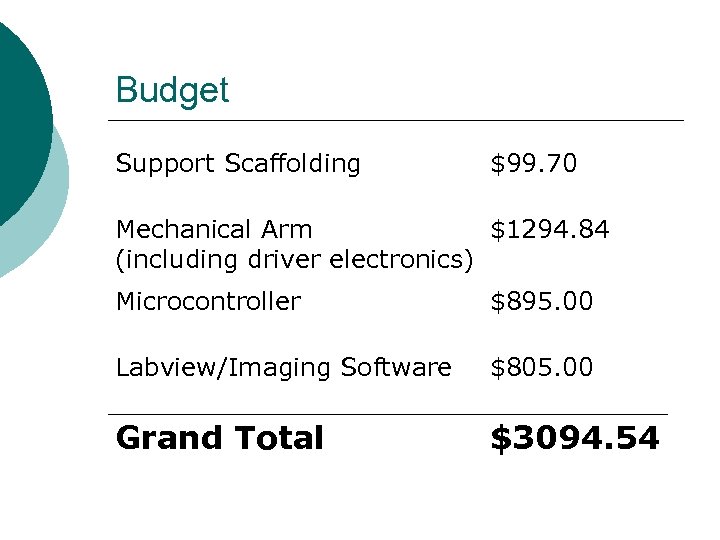 Budget Support Scaffolding $99. 70 Mechanical Arm $1294. 84 (including driver electronics) Microcontroller $895. 00 Labview/Imaging Software $805. 00 Grand Total $3094. 54
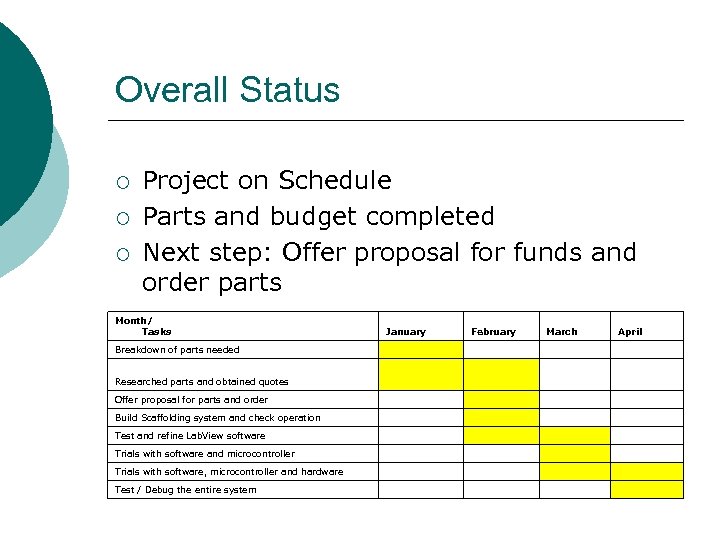 Overall Status ¡ ¡ ¡ Project on Schedule Parts and budget completed Next step: Offer proposal for funds and order parts Month/ Tasks January February March April Breakdown of parts needed Researched parts and obtained quotes Offer proposal for parts and order Build Scaffolding system and check operation Test and refine Lab. View software Trials with software and microcontroller Trials with software, microcontroller and hardware Test / Debug the entire system
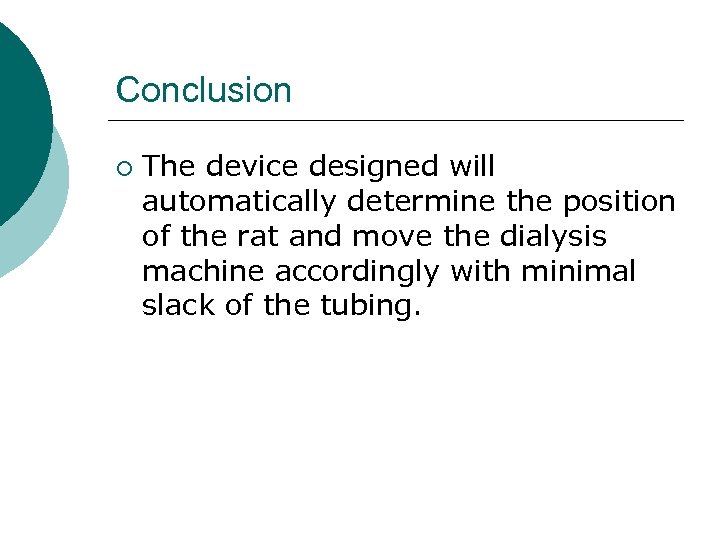 Conclusion ¡ The device designed will automatically determine the position of the rat and move the dialysis machine accordingly with minimal slack of the tubing.