


 Скачать презентацию AUTHOR PRESENTATIONS VERONICA SHIKUNETS RUSSIAN TRADITIONAL COSTUMES
Russian Traditional costumes [Автосохраненный].pptx
- Количество слайдов: 16
 AUTHOR PRESENTATIONS: VERONICA SHIKUNETS RUSSIAN TRADITIONAL COSTUMES
 VOCABULARY Ø According to – по мнению, в соответствии. A: Ø Arrangements – механизм. Ø Beginning – начало Ø Based – основан Ø Bast shoes – лапти. Ø Birch – берёза Ø Being – существование, существо. Ø Еexpansion – расширение, распространение. . Ø Lovely – прекрасный. Ø Nomadic pastoralists – кочевые скотоводы. Ø Half – половина. Ø considered – считается. Ø Ethnically – этнически. Ø Pure – чистый.
 VOCABULARY Ø Inhabited – населенный Ø Reflected – отражается, отображается. Ø Clothing – одежда. Ø Heritage – наследие. Ø Suppose – полагать. Ø Taking – захват, брать(берёт). Ø Shape – форма. Ø Fitted – носить, соответствовать. Ø Layers – слои. Ø Decrees – указ. Ø Nobility - благородство, дворянство. Ø Undergone – подвергаться, испытывать. Ø Diversity – разнообразие. Ø Kinds – вид, разновидность Ø Outfits - снаряжение, оборудование.
 VOCABULARY Ø Flaxen – льняной, соломенный. Ø Silk – шёлк. Ø Lace – кружево, тесьма. Ø Threads – нить, резьба, волокно. Ø Spangles – блёстка. Ø Collars – воротник. Ø Sleeves – рукава. Ø Extensively – широко. Ø Widespread – широко распространенный. Ø Homespun - домотканой. Ø literally – буквально. Ø Common – распространённый. Ø Composed – спокойный, выдержанный. Ø Trousers – брюки, штаны, панталоны Ø Enriched – обогащённый
 VOCABULARY Ø Festive – праздничный, торжественный. Ø Head-dress – головной убор. Ø Pearls – жемчуг. Ø meshwork - сеть. Ø Needlework – вышивка, шитьё. Ø Foil – фольга, рапира. Ø Handed – передавать, вручать. Ø Dowry – приданое. Ø Bride – невеста. Ø Down – вниз. Ø Treasured – хранить, оберегать Ø Woven – тканный. Ø Fibres –. волокно
 VOCABULARY • • • Hanging – подвешивание, повешение. Wore - носил Coat – шуба. Footwear - обувь Extremely - чрезвычайно Northern - северная Turned - оказалось Inside - внутри Warm - теплый truck - грузовик Protect - защищать Knitting - вязание
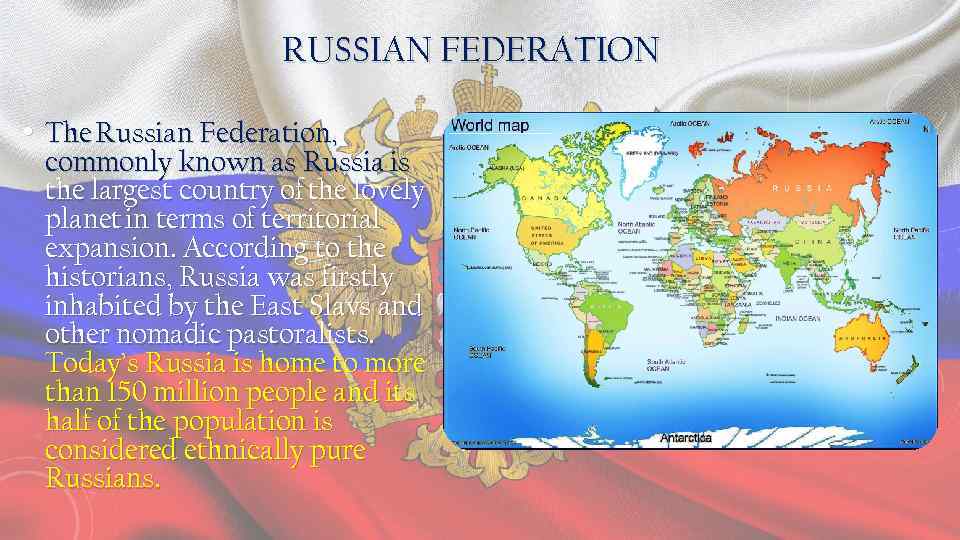 RUSSIAN FEDERATION • The Russian Federation, commonly known as Russia is the largest country of the lovely planet in terms of territorial expansion. According to the historians, Russia was firstly inhabited by the East Slavs and other nomadic pastoralists. Today’s Russia is home to more than 150 million people and its half of the population is considered ethnically pure Russians.
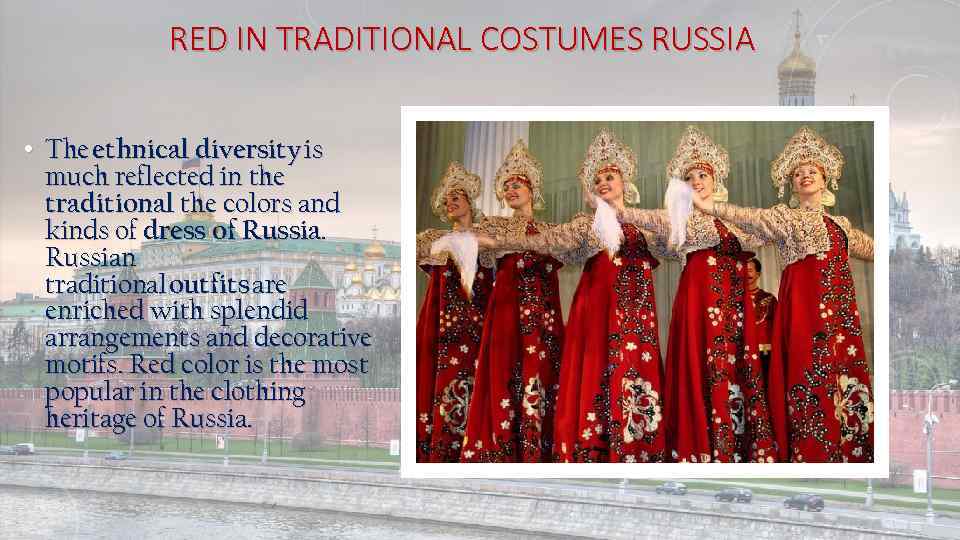 RED IN TRADITIONAL COSTUMES RUSSIA • The ethnical diversity is much reflected in the traditional the colors and kinds of dress of Russian traditional outfits are enriched with splendid arrangements and decorative motifs. Red color is the most popular in the clothing heritage of Russia.
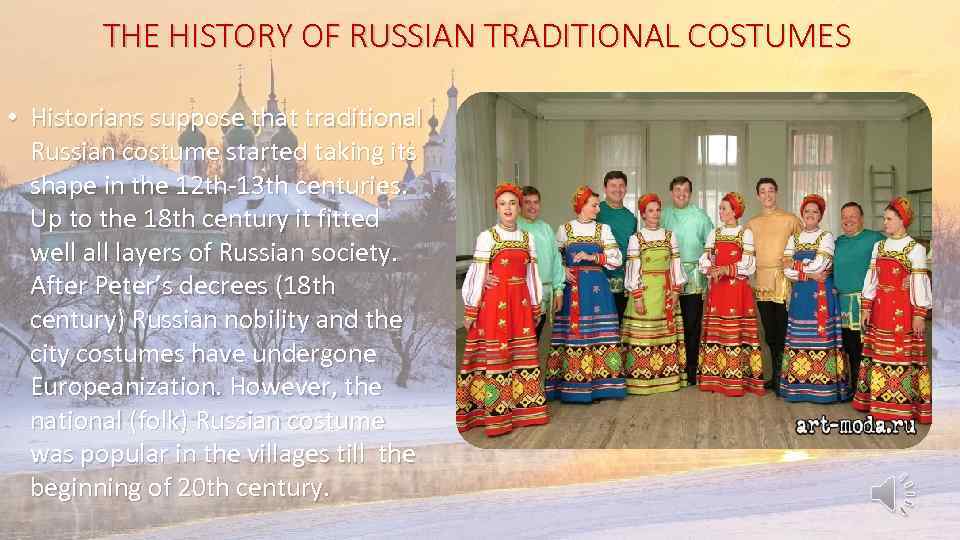 THE HISTORY OF RUSSIAN TRADITIONAL COSTUMES • Historians suppose that traditional Russian costume started taking its shape in the 12 th-13 th centuries. Up to the 18 th century it fitted well all layers of Russian society. After Peter’s decrees (18 th century) Russian nobility and the city costumes have undergone Europeanization. However, the national (folk) Russian costume was popular in the villages till the beginning of 20 th century.
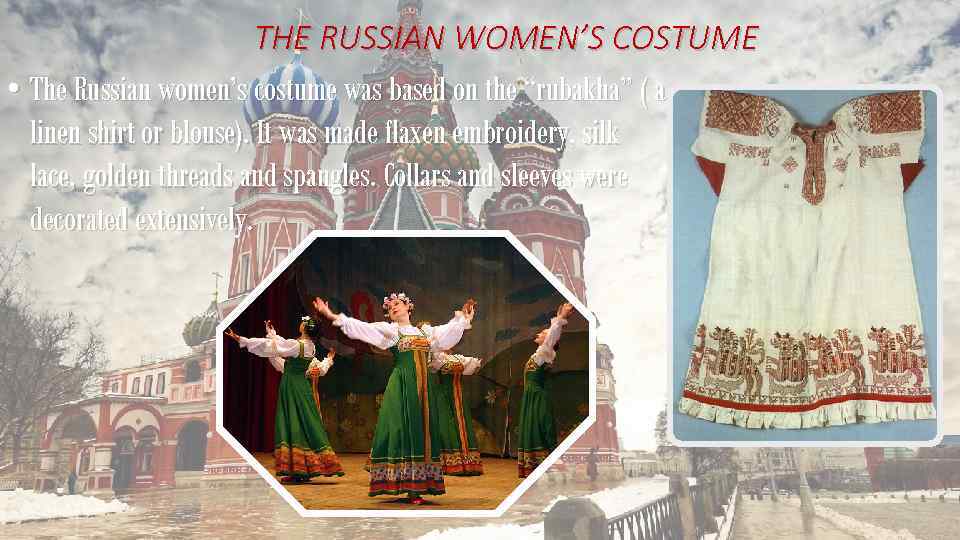 THE RUSSIAN WOMEN’S COSTUME • The Russian women’s costume was based on the “rubakha” ( a linen shirt or blouse). It was made flaxen embroidery, silk lace, golden threads and spangles. Collars and sleeves were decorated extensively.
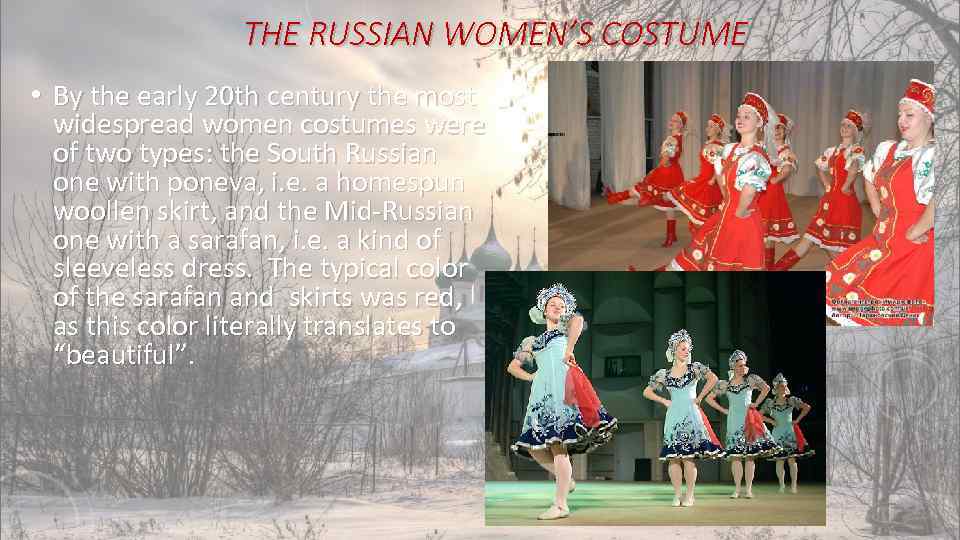 THE RUSSIAN WOMEN’S COSTUME • By the early 20 th century the most widespread women costumes were of two types: the South Russian one with poneva, i. e. a homespun woollen skirt, and the Mid-Russian one with a sarafan, i. e. a kind of sleeveless dress. The typical color of the sarafan and skirts was red, as this color literally translates to “beautiful”.
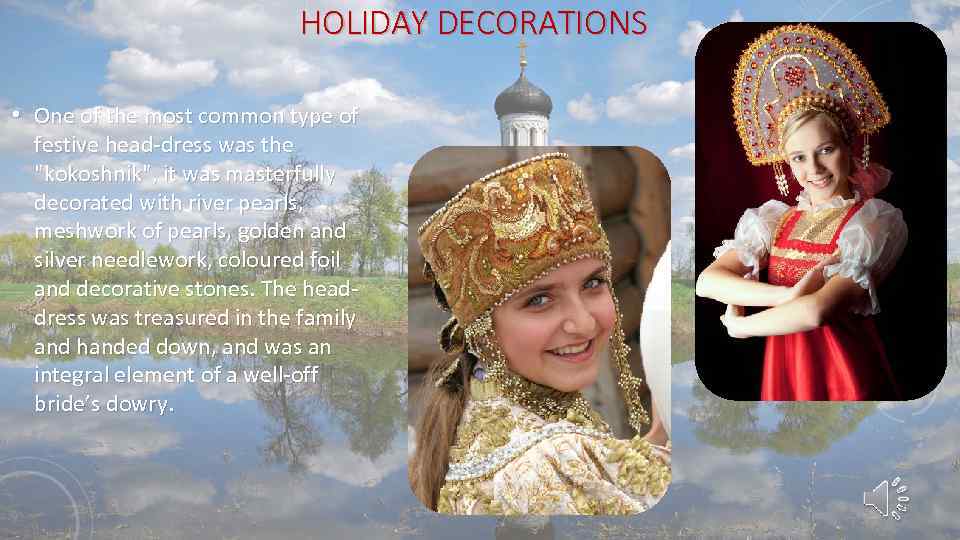 HOLIDAY DECORATIONS • One of the most common type of festive head-dress was the "kokoshnik", it was masterfully decorated with river pearls, meshwork of pearls, golden and silver needlework, coloured foil and decorative stones. The headdress was treasured in the family and handed down, and was an integral element of a well-off bride’s dowry.
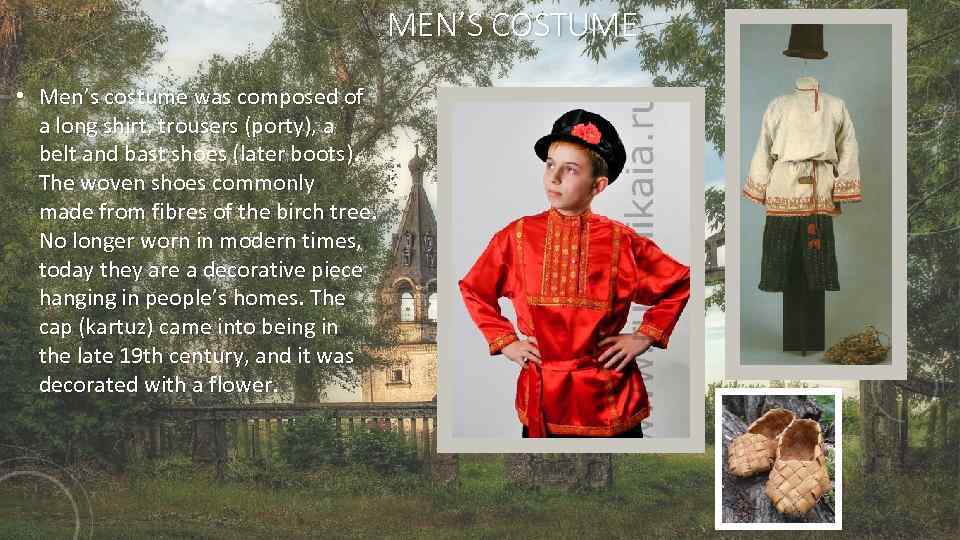 MEN’S COSTUME • Men’s costume was composed of a long shirt, trousers (porty), a belt and bast shoes (later boots). The woven shoes commonly made from fibres of the birch tree. No longer worn in modern times, today they are a decorative piece hanging in people’s homes. The cap (kartuz) came into being in the late 19 th century, and it was decorated with a flower.
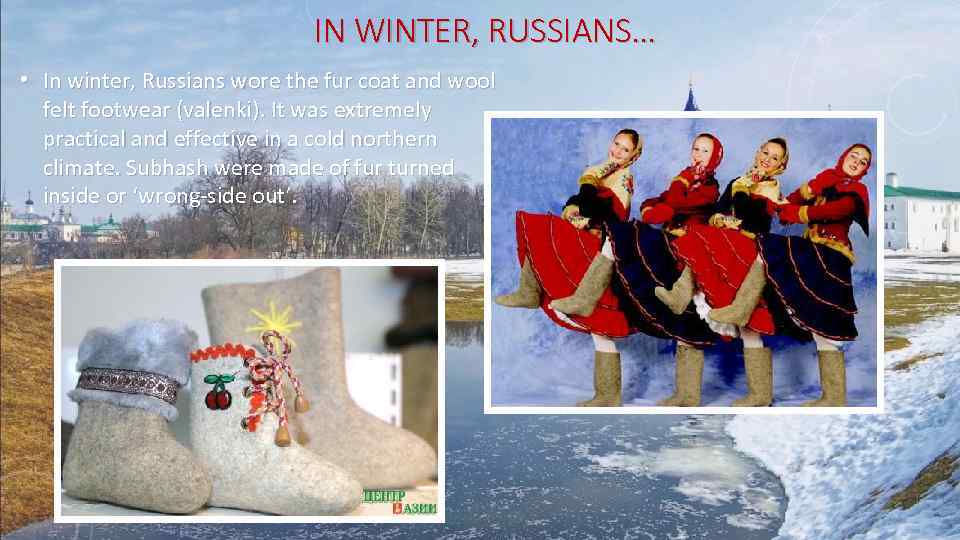 IN WINTER, RUSSIANS… • In winter, Russians wore the fur coat and wool felt footwear (valenki). It was extremely practical and effective in a cold northern climate. Subhash were made of fur turned inside or ‘wrong-side out’.
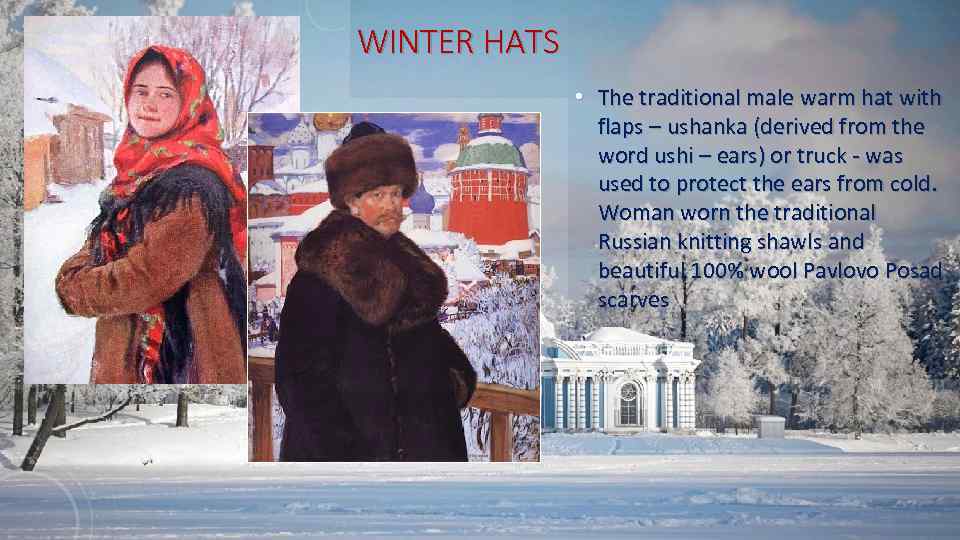 WINTER HATS • The traditional male warm hat with flaps – ushanka (derived from the word ushi – ears) or truck - was used to protect the ears from cold. Woman worn the traditional Russian knitting shawls and beautiful 100% wool Pavlovo Posad scarves
 THE END THANK YOU FOR ATTENTION