


 Скачать презентацию AUSTRALIA LOCATION Australia is in the Southern
02dc6b8831c67c31d26bac69146f6afa.ppt
- Количество слайдов: 31
 AUSTRALIA
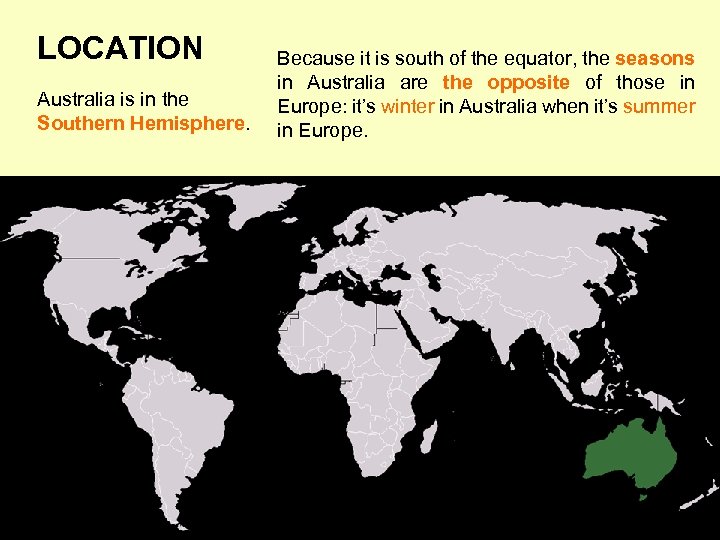 LOCATION Australia is in the Southern Hemisphere. Because it is south of the equator, the seasons in Australia are the opposite of those in Europe: it’s winter in Australia when it’s summer in Europe.
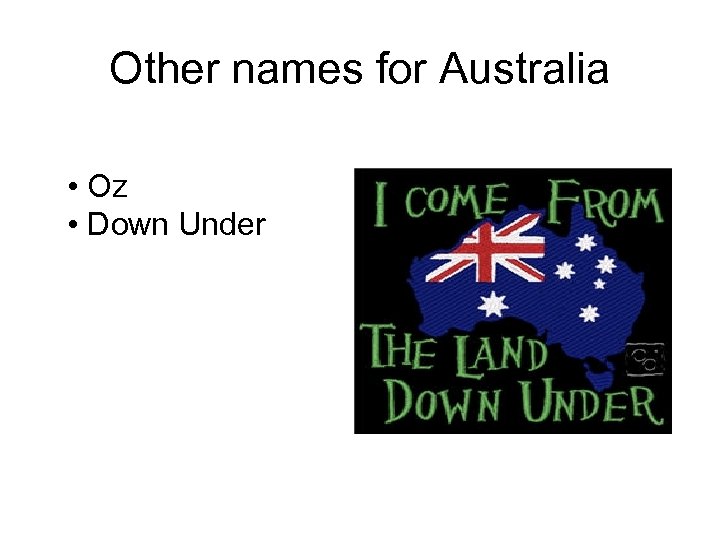 Other names for Australia • Oz • Down Under
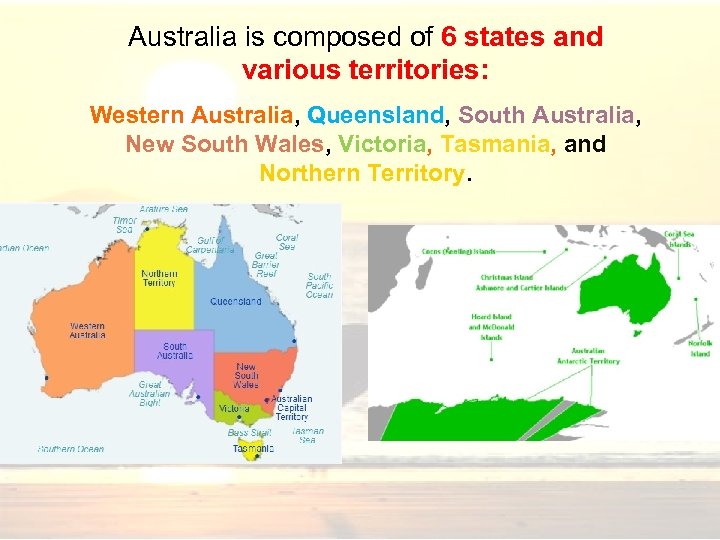 Australia is composed of 6 states and various territories: Western Australia, Queensland, South Australia, New South Wales, Victoria, Tasmania, and Northern Territory.
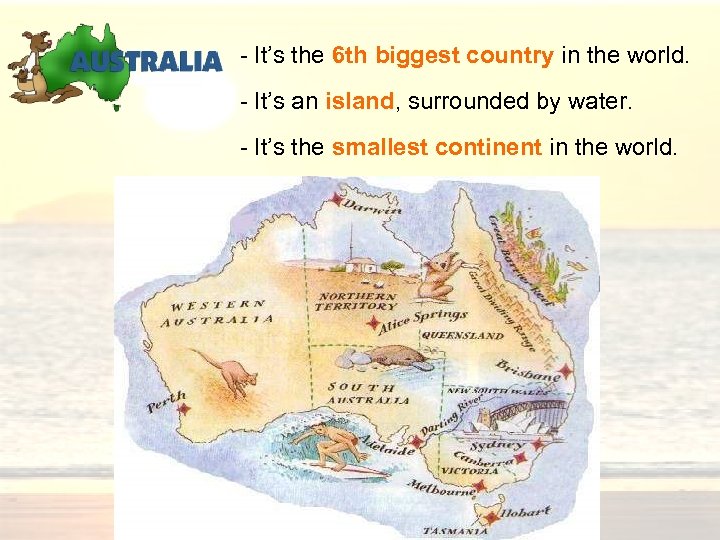 - It’s the 6 th biggest country in the world. - It’s an island, surrounded by water. - It’s the smallest continent in the world.
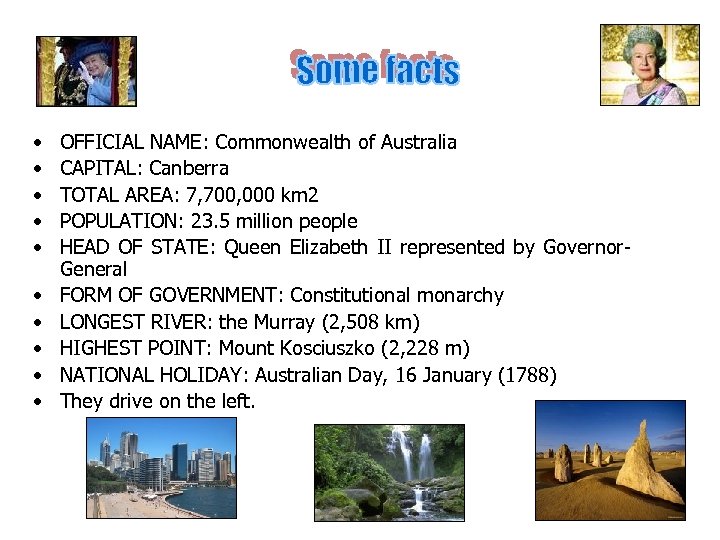 • • • OFFICIAL NAME: Commonwealth of Australia CAPITAL: Canberra TOTAL AREA: 7, 700, 000 km 2 POPULATION: 23. 5 million people HEAD OF STATE: Queen Elizabeth II represented by Governor. General FORM OF GOVERNMENT: Constitutional monarchy LONGEST RIVER: the Murray (2, 508 km) HIGHEST POINT: Mount Kosciuszko (2, 228 m) NATIONAL HOLIDAY: Australian Day, 16 January (1788) They drive on the left.
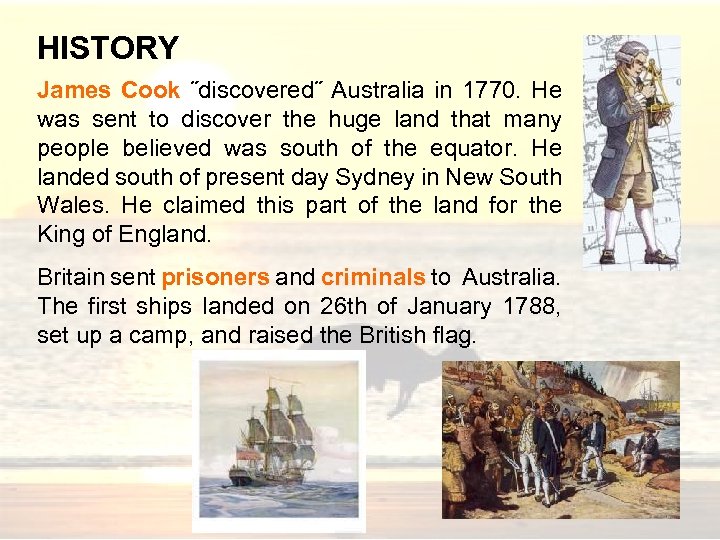 HISTORY James Cook ˝discovered˝ Australia in 1770. He was sent to discover the huge land that many people believed was south of the equator. He landed south of present day Sydney in New South Wales. He claimed this part of the land for the King of England. Britain sent prisoners and criminals to Australia. The first ships landed on 26 th of January 1788, set up a camp, and raised the British flag.
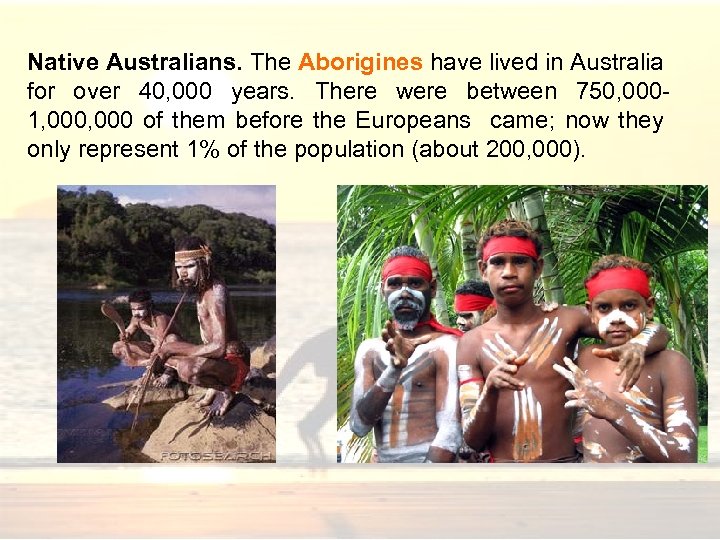 Native Australians. The Aborigines have lived in Australia for over 40, 000 years. There were between 750, 0001, 000 of them before the Europeans came; now they only represent 1% of the population (about 200, 000).
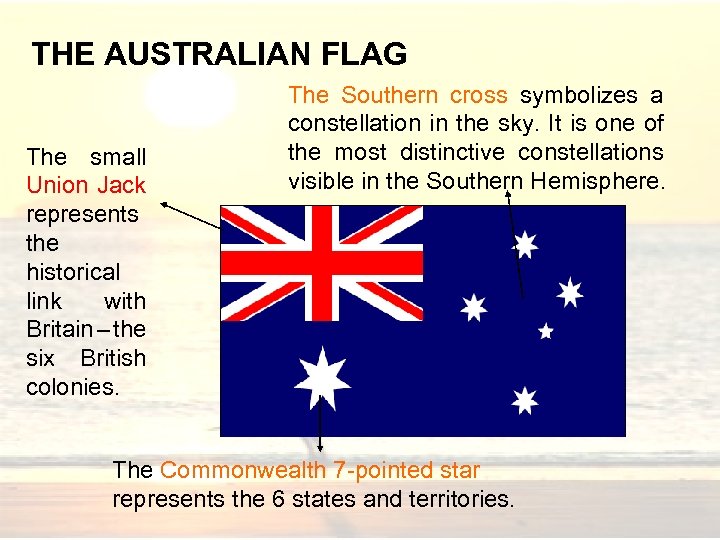 THE AUSTRALIAN FLAG The small Union Jack represents the historical link with Britain – the six British colonies. The Southern cross symbolizes a constellation in the sky. It is one of the most distinctive constellations visible in the Southern Hemisphere. The Commonwealth 7 -pointed star represents the 6 states and territories.
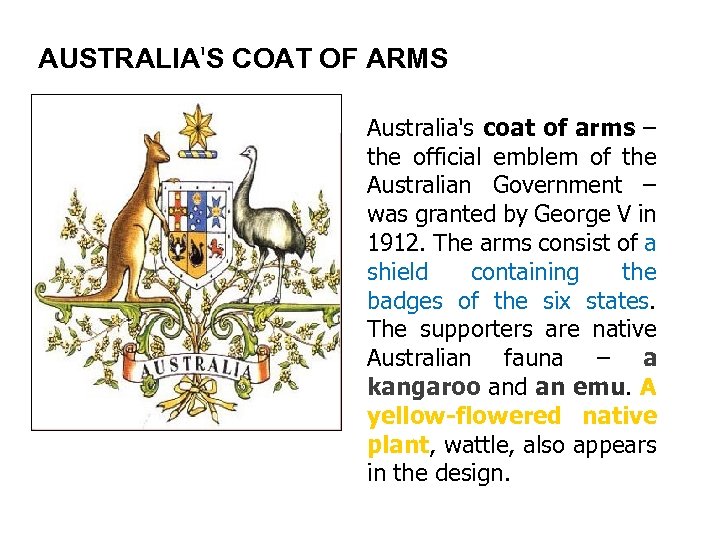 AUSTRALIA'S COAT OF ARMS Australia's coat of arms – the official emblem of the Australian Government – was granted by George V in 1912. The arms consist of a shield containing the badges of the six states. The supporters are native Australian fauna – a kangaroo and an emu. A yellow-flowered native plant, wattle, also appears in the design.
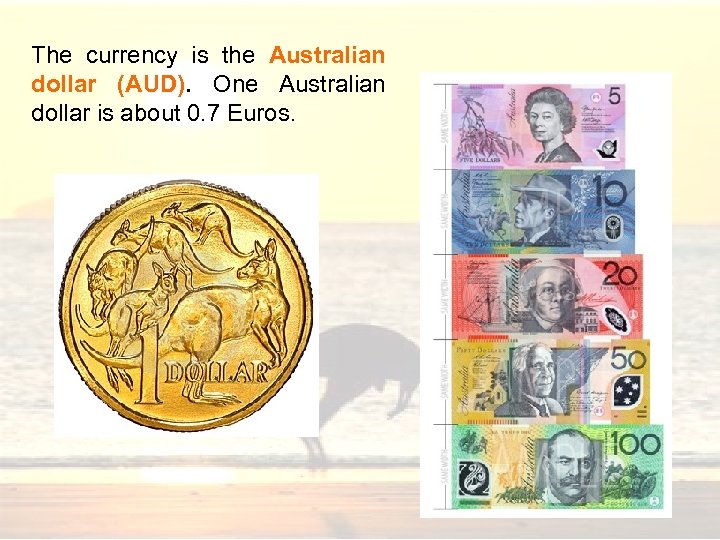 The currency is the Australian dollar (AUD). One Australian dollar is about 0. 7 Euros.
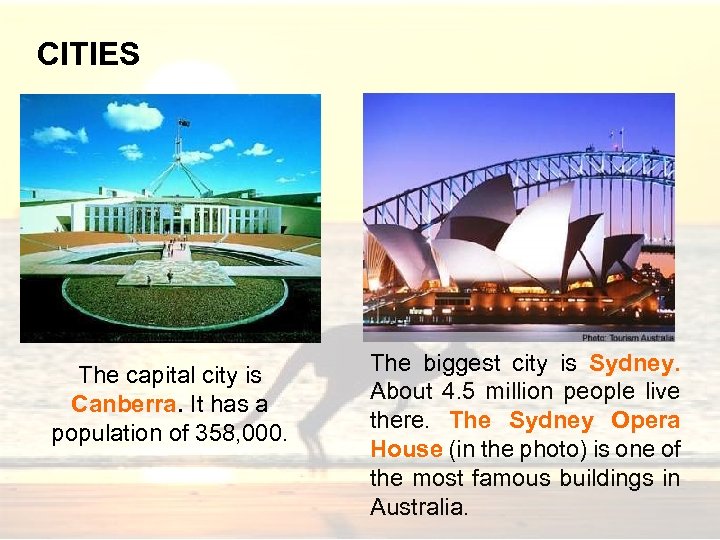 CITIES The capital city is Canberra. It has a population of 358, 000. The biggest city is Sydney. About 4. 5 million people live there. The Sydney Opera House (in the photo) is one of the most famous buildings in Australia.
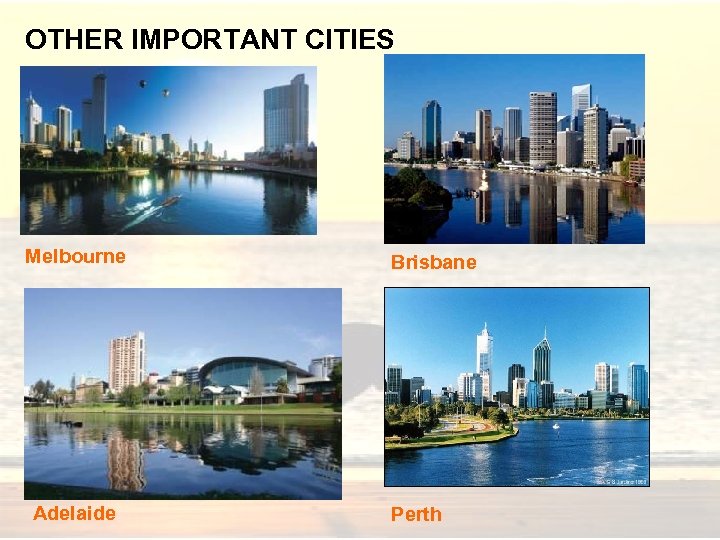 OTHER IMPORTANT CITIES Melbourne Adelaide Brisbane Perth
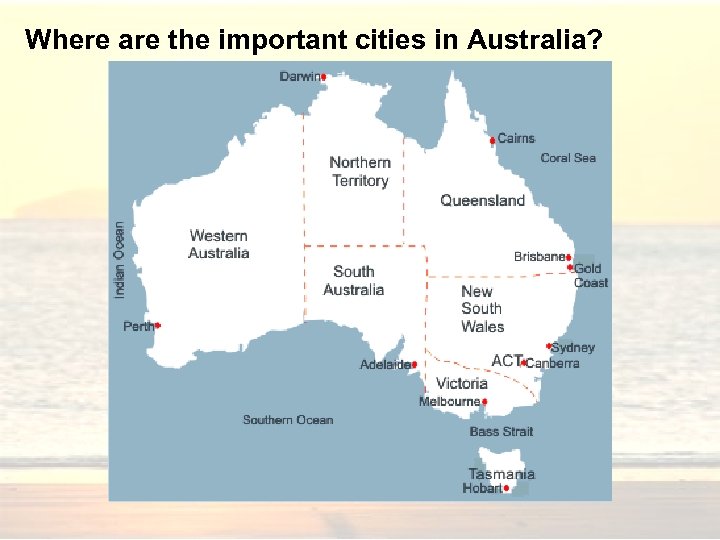 Where are the important cities in Australia?
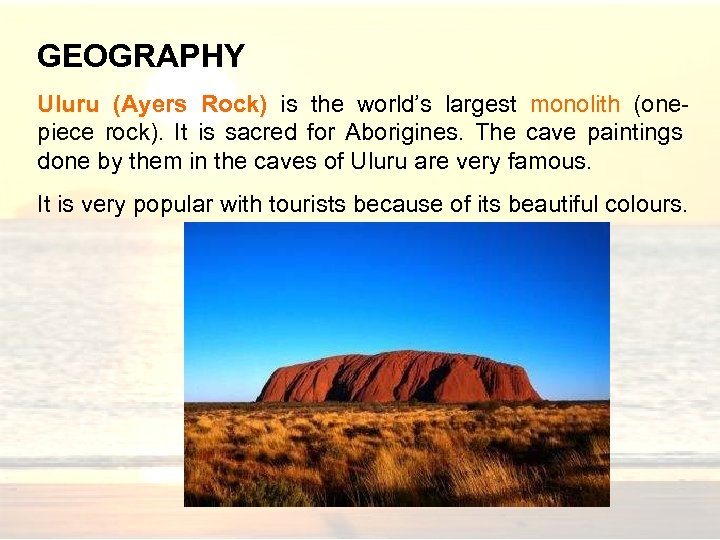 GEOGRAPHY Uluru (Ayers Rock) is the world’s largest monolith (onepiece rock). It is sacred for Aborigines. The cave paintings done by them in the caves of Uluru are very famous. It is very popular with tourists because of its beautiful colours.
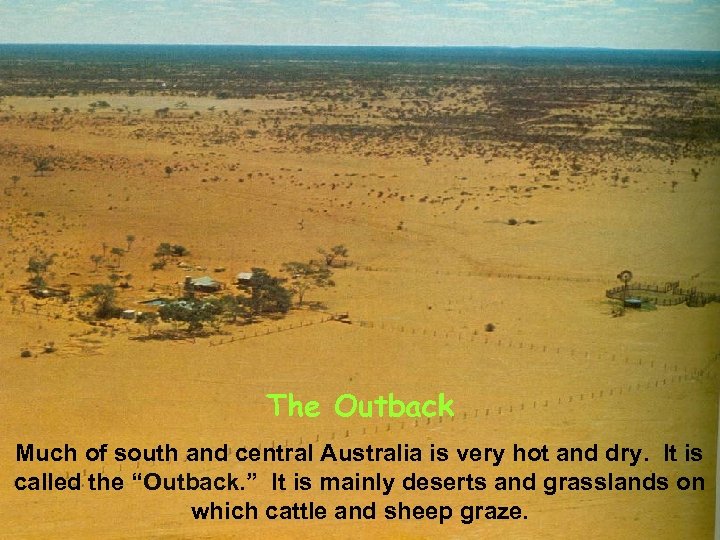 The Outback Much of south and central Australia is very hot and dry. It is called the “Outback. ” It is mainly deserts and grasslands on which cattle and sheep graze.
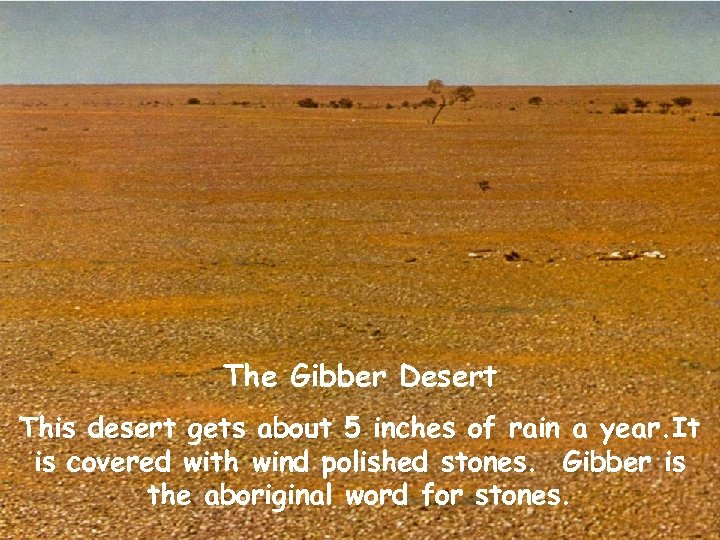 The Gibber Desert This desert gets about 5 inches of rain a year. It is covered with wind polished stones. Gibber is the aboriginal word for stones.
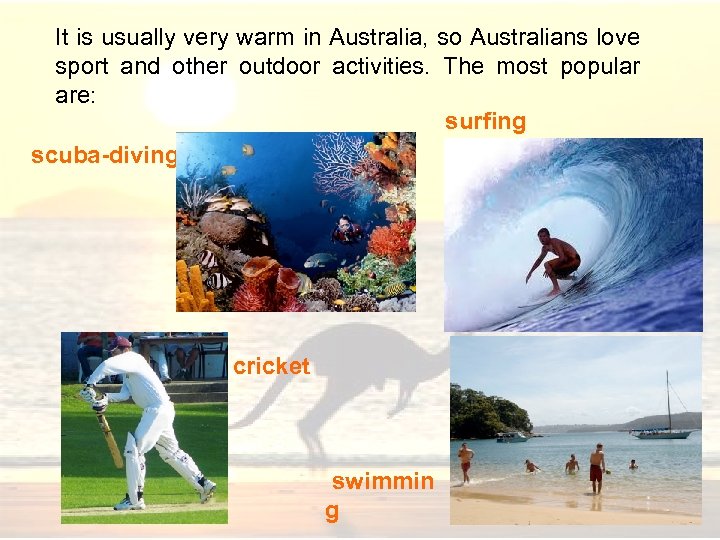 It is usually very warm in Australia, so Australians love sport and other outdoor activities. The most popular are: surfing scuba-diving cricket swimmin g
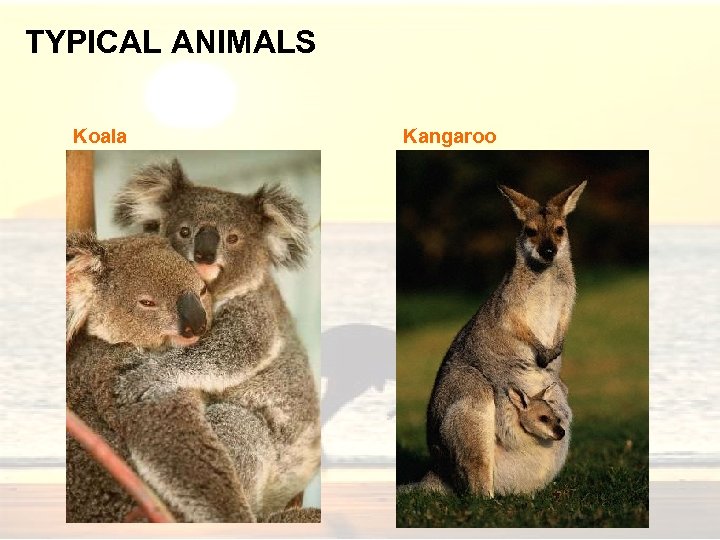 TYPICAL ANIMALS Koala Kangaroo
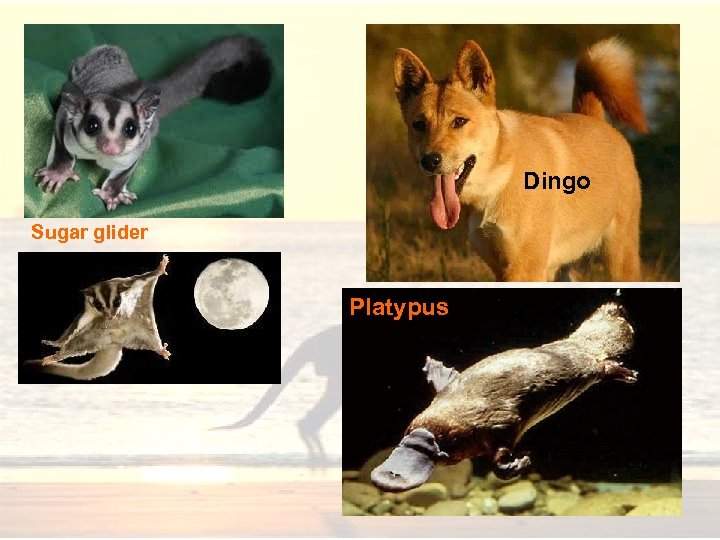 Dingo Sugar glider Platypus
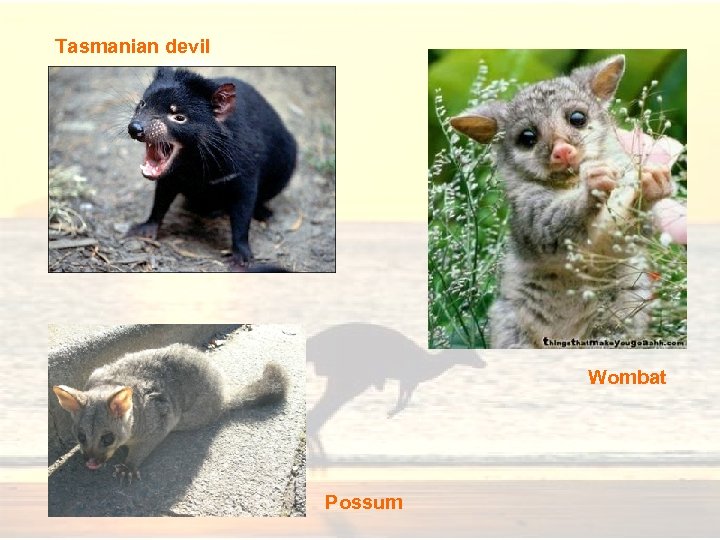 Tasmanian devil Wombat Possum
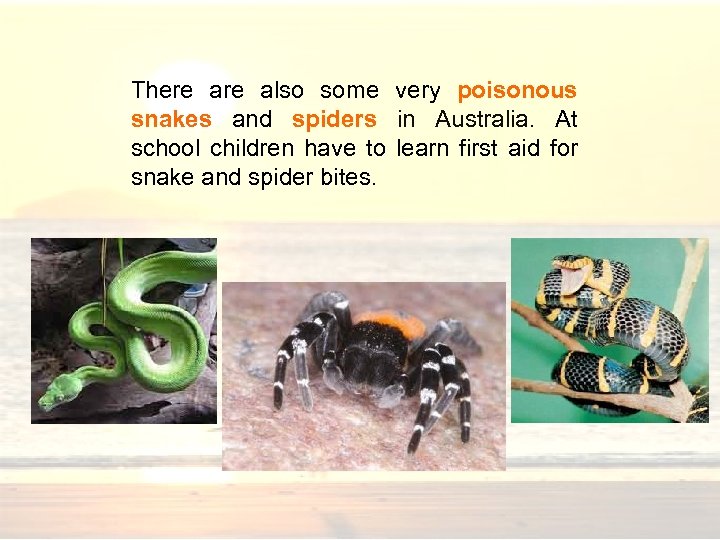 There also some very poisonous snakes and spiders in Australia. At school children have to learn first aid for snake and spider bites.
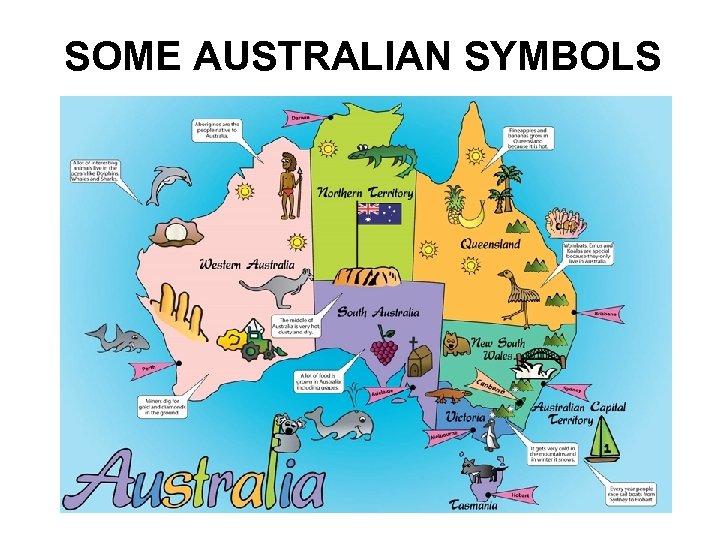 SOME AUSTRALIAN SYMBOLS
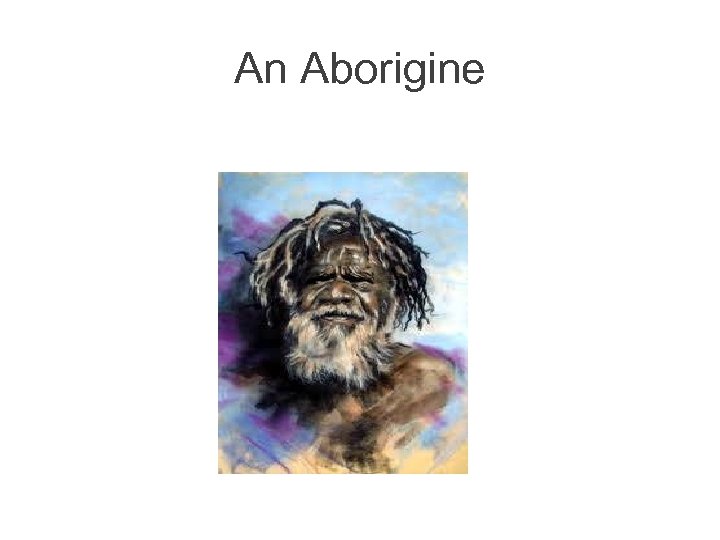 An Aborigine
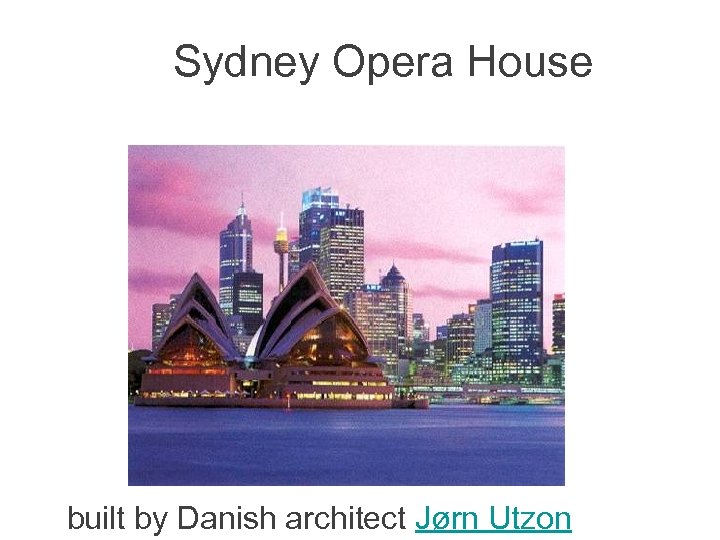 Sydney Opera House built by Danish architect Jørn Utzon
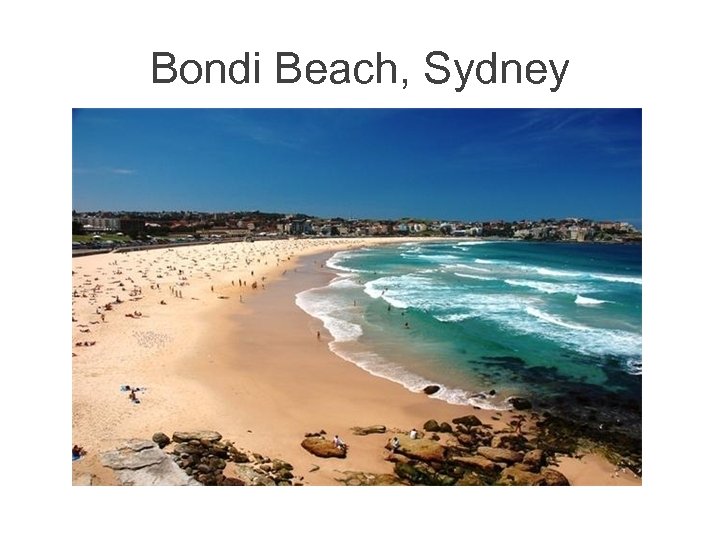 Bondi Beach, Sydney
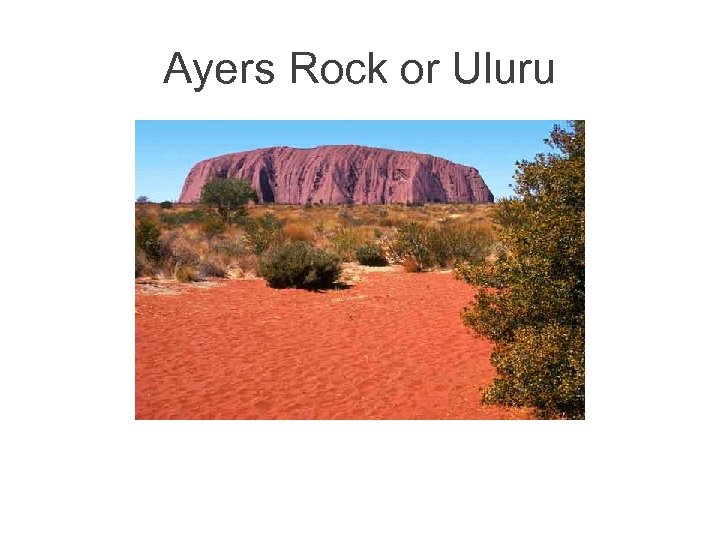 Ayers Rock or Uluru
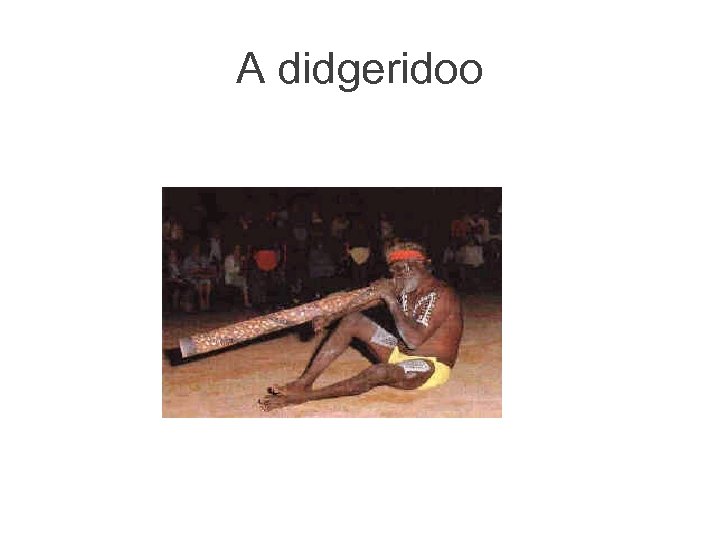 A didgeridoo
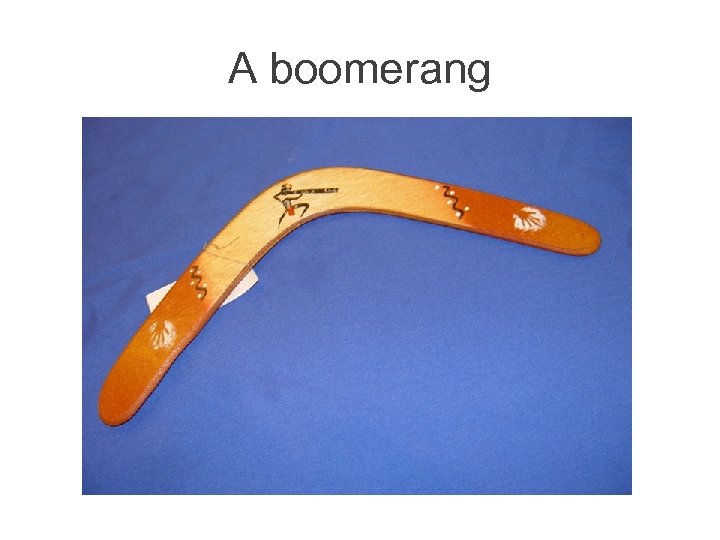 A boomerang
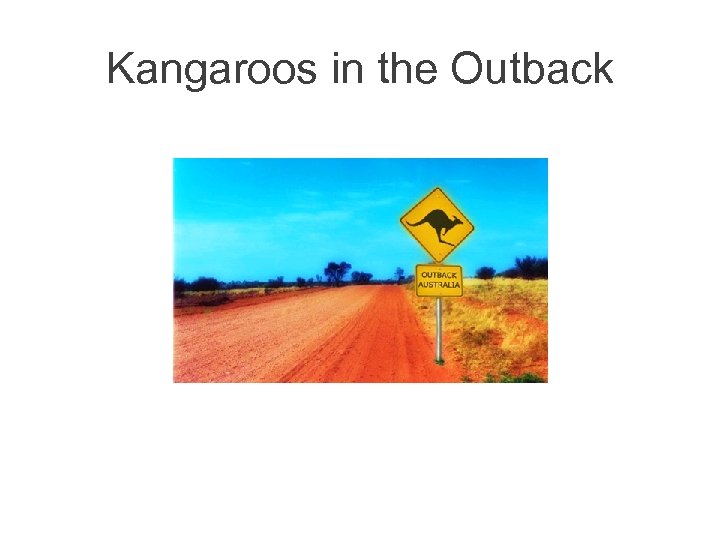 Kangaroos in the Outback
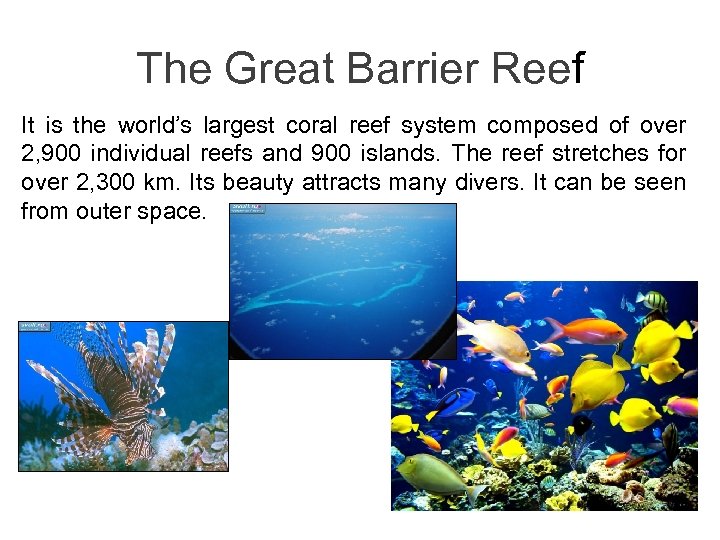 The Great Barrier Reef It is the world’s largest coral reef system composed of over 2, 900 individual reefs and 900 islands. The reef stretches for over 2, 300 km. Its beauty attracts many divers. It can be seen from outer space.