 Скачать презентацию Audiological Medicine SALZBURG Sept Oct 2005 Katherine Harrop-Griffiths London
5e0787875b607369c17282329fc55e92.ppt
- Количество слайдов: 26



Audiological Medicine SALZBURG Sept/Oct 2005 Katherine Harrop-Griffiths London
Audiological Medicine… … is the medical discipline concerned with the investigation, diagnosis, management and habilitation/rehabilitation of children and adults with hearing, balance and communication disorders.
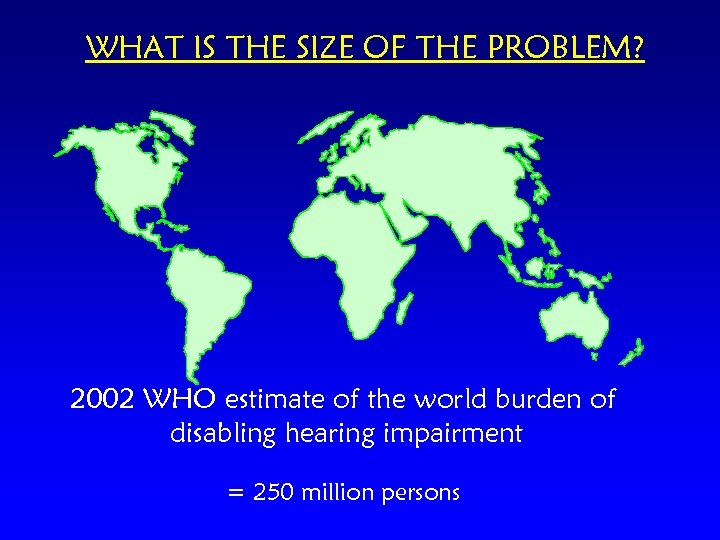
WHAT IS THE SIZE OF THE PROBLEM? 2002 WHO estimate of the world burden of disabling hearing impairment = 250 million persons
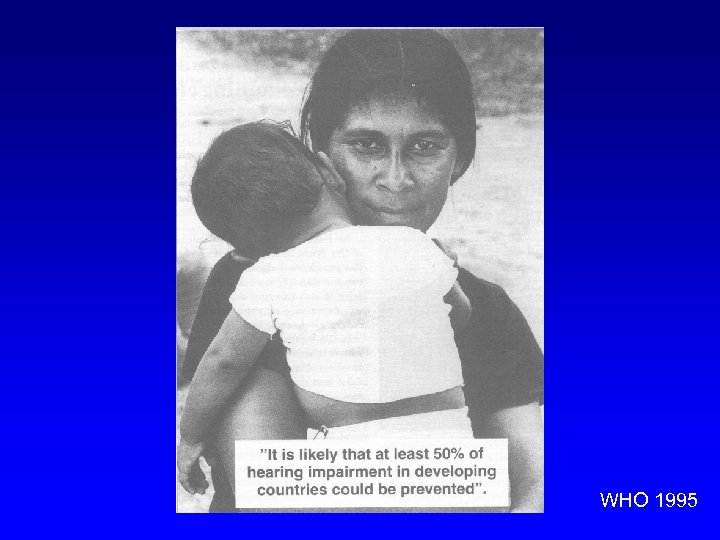
WHO 1995
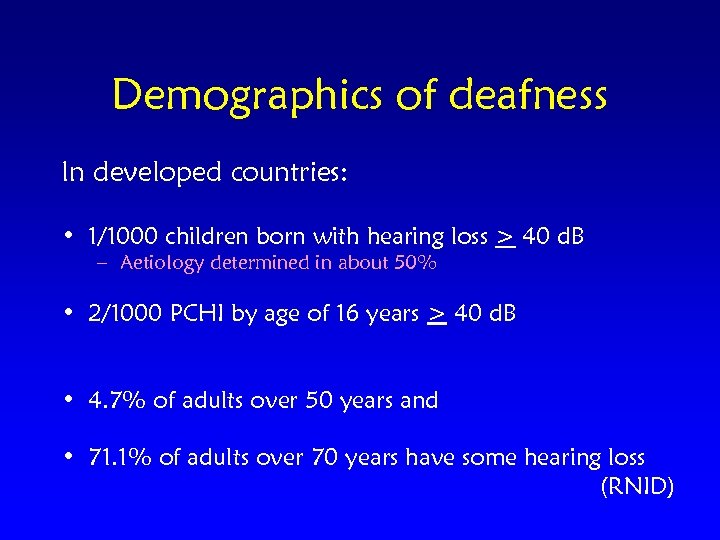
Demographics of deafness In developed countries: • 1/1000 children born with hearing loss > 40 d. B – Aetiology determined in about 50% • 2/1000 PCHI by age of 16 years > 40 d. B • 4. 7% of adults over 50 years and • 71. 1% of adults over 70 years have some hearing loss (RNID)
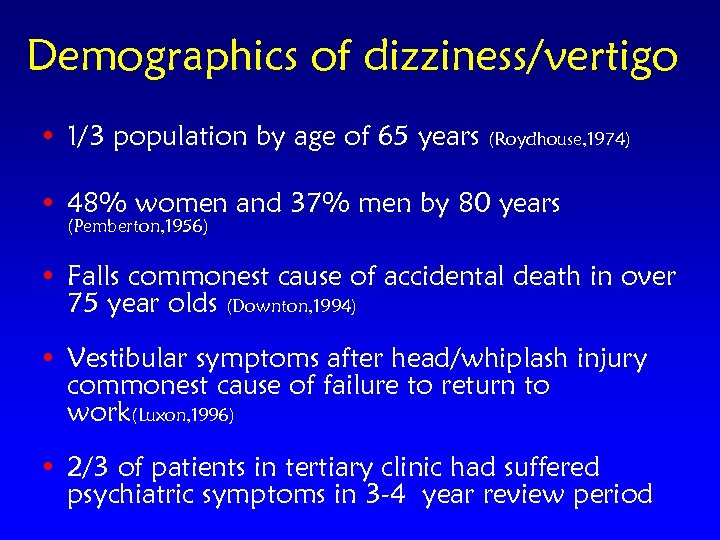
Demographics of dizziness/vertigo • 1/3 population by age of 65 years (Roydhouse, 1974) • 48% women and 37% men by 80 years (Pemberton, 1956) • Falls commonest cause of accidental death in over 75 year olds (Downton, 1994) • Vestibular symptoms after head/whiplash injury commonest cause of failure to return to work(Luxon, 1996) • 2/3 of patients in tertiary clinic had suffered psychiatric symptoms in 3 -4 year review period
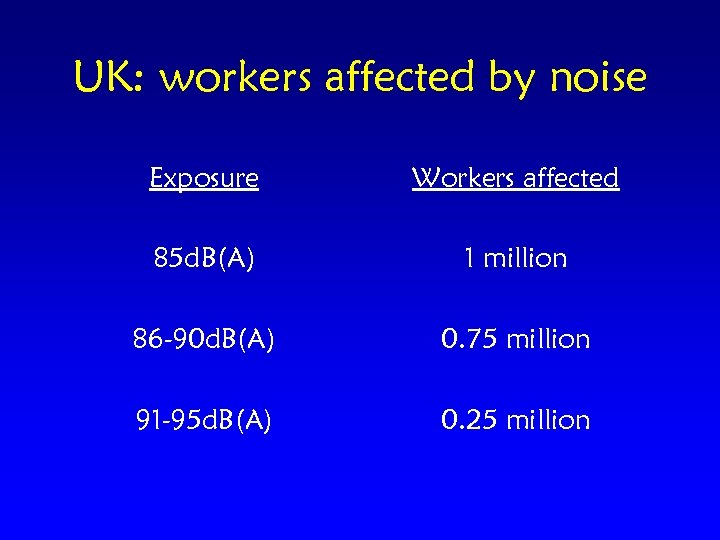
UK: workers affected by noise Exposure Workers affected 85 d. B(A) 1 million 86 -90 d. B(A) 0. 75 million 91 -95 d. B(A) 0. 25 million

A Specialty ………. . a specialty is established when the subject matter begins to subspecialise. Sir Douglas Black President Royal College of Physicians 1965
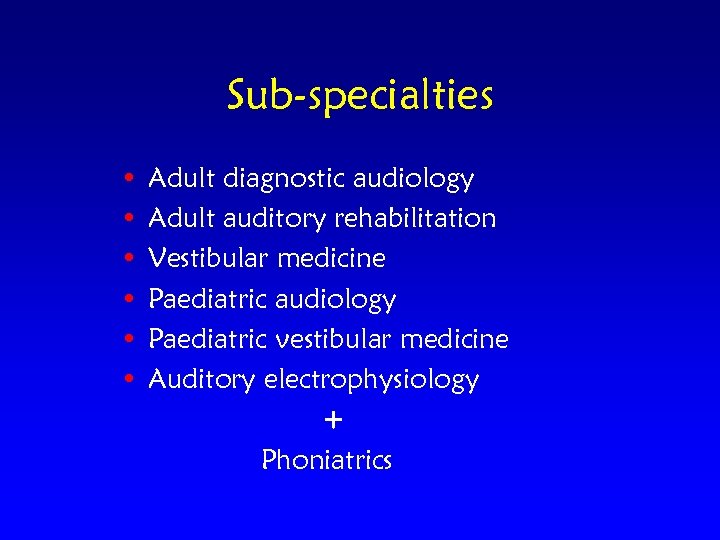
Sub-specialties • • • Adult diagnostic audiology Adult auditory rehabilitation Vestibular medicine Paediatric audiology Paediatric vestibular medicine Auditory electrophysiology + Phoniatrics
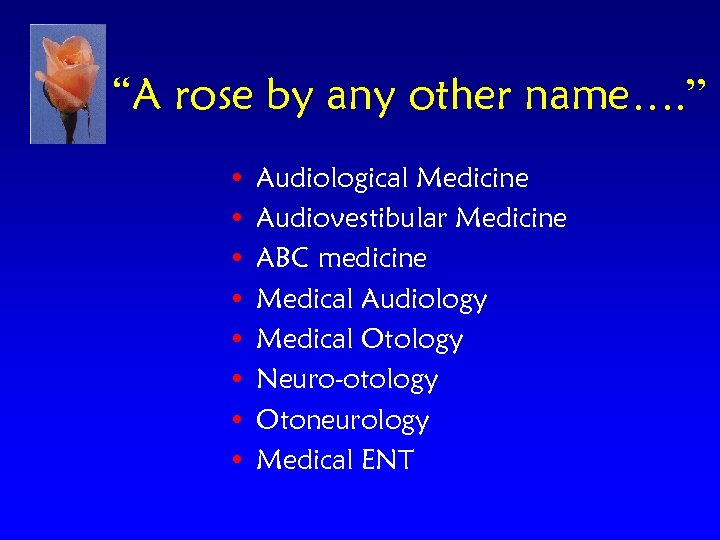
“A rose by any other name…. ” • • Audiological Medicine Audiovestibular Medicine ABC medicine Medical Audiology Medical Otology Neuro-otology Otoneurology Medical ENT
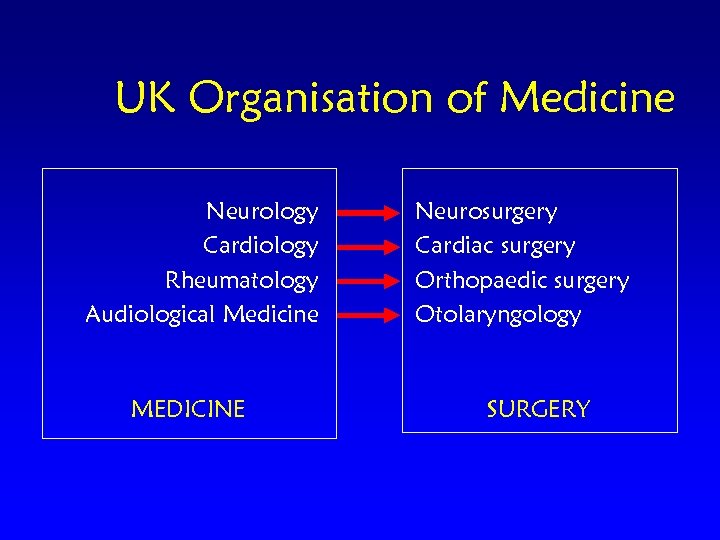
UK Organisation of Medicine Neurology Cardiology Rheumatology Audiological Medicine MEDICINE Neurosurgery Cardiac surgery Orthopaedic surgery Otolaryngology SURGERY
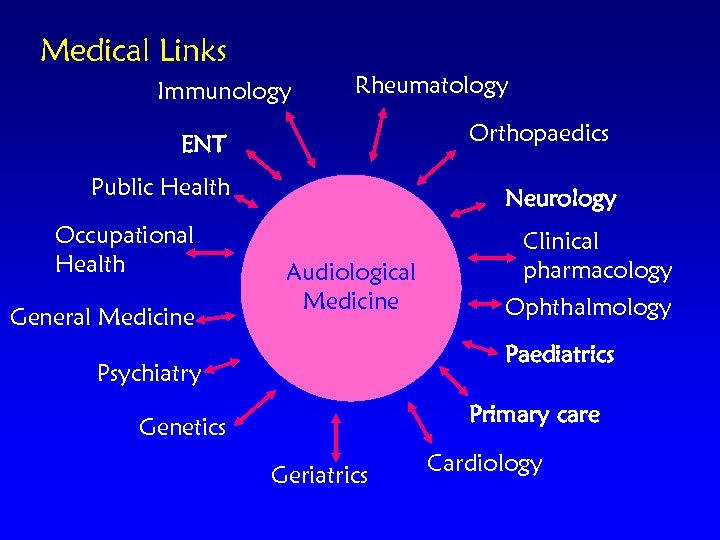
Medical Links Immunology Rheumatology Orthopaedics ENT Public Health Occupational Health General Medicine Neurology Audiological Medicine Clinical pharmacology Ophthalmology Paediatrics Psychiatry Primary care Genetics Geriatrics Cardiology
Non - medical Colleagues • • • Audiologists Hearing therapists Hearing aid dispensers Teachers of the deaf Speech and language therapists • Pharmacologists • Play therapists • Social workers • Physiotherapists • Occupational therapists • Psychologists • Nurse specialists • Epidemiologists • Lawyers • Neuroscientists A multidisciplinary team approach
Drivers of Health Provision • Costs • EU unification • Clinical governance
Costs • • Mergers – economy of scale More doctors New initiatives – NHS Direct Change of emphasis to primary care Tertiary care: outpatient v. inpatient Technical/scientist led services Move away from specialist training

• Specialty register • Training • Work patterns • Research collaborations • Publications EU Unification • Professional bodies
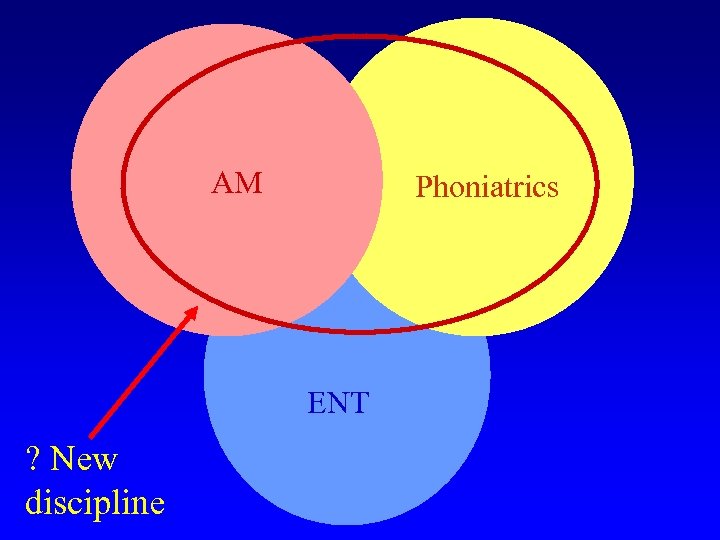
AM AM Phoniatrics ENT ? New discipline
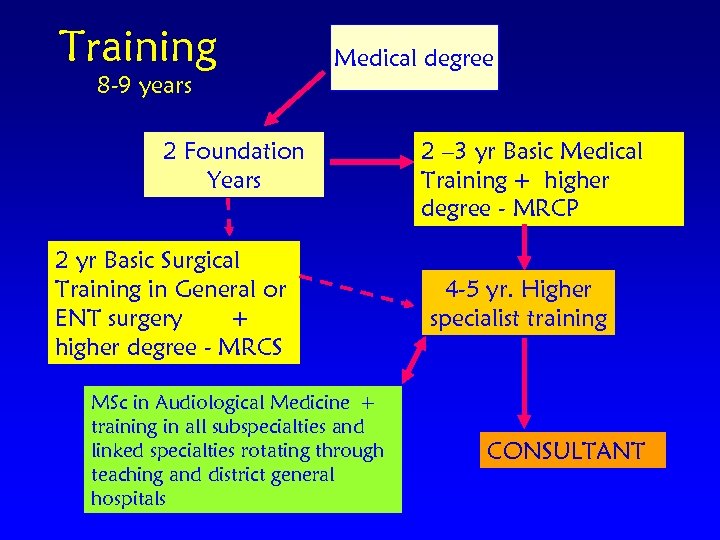
Training 8 -9 years Medical degree 2 Foundation Years 2 yr Basic Surgical Training in General or ENT surgery + higher degree - MRCS MSc in Audiological Medicine + training in all subspecialties and linked specialties rotating through teaching and district general hospitals 2 – 3 yr Basic Medical Training + higher degree - MRCP 4 -5 yr. Higher specialist training CONSULTANT
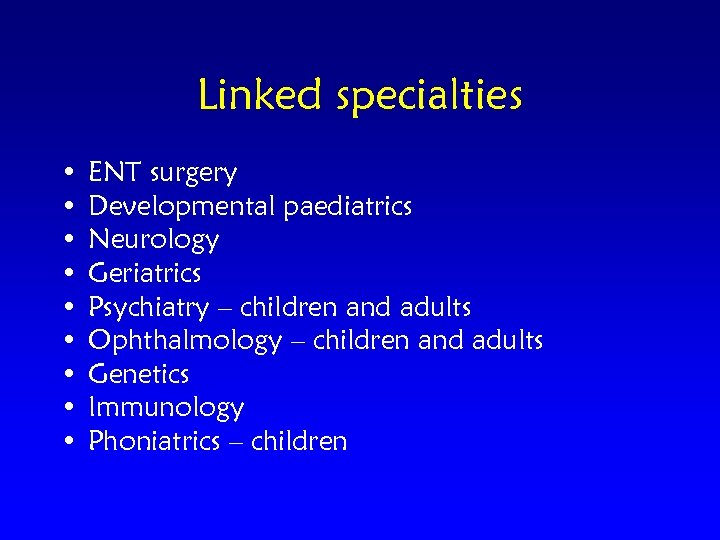
Linked specialties • • • ENT surgery Developmental paediatrics Neurology Geriatrics Psychiatry – children and adults Ophthalmology – children and adults Genetics Immunology Phoniatrics – children
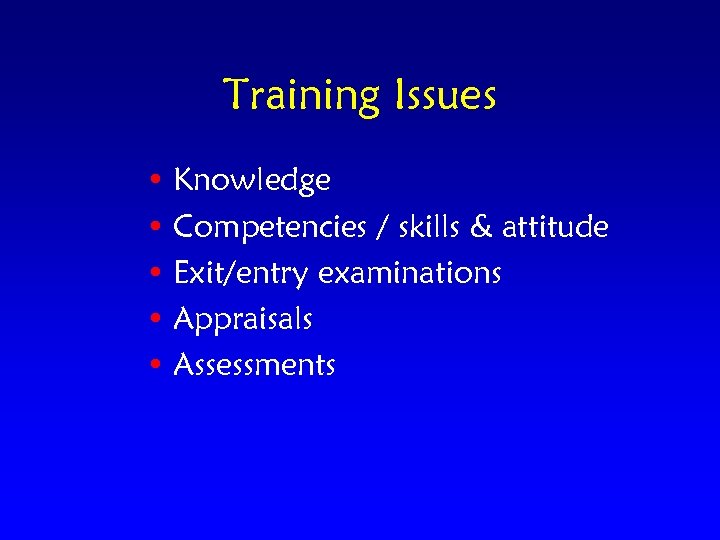
Training Issues • Knowledge • Competencies / skills & attitude • Exit/entry examinations • Appraisals • Assessments
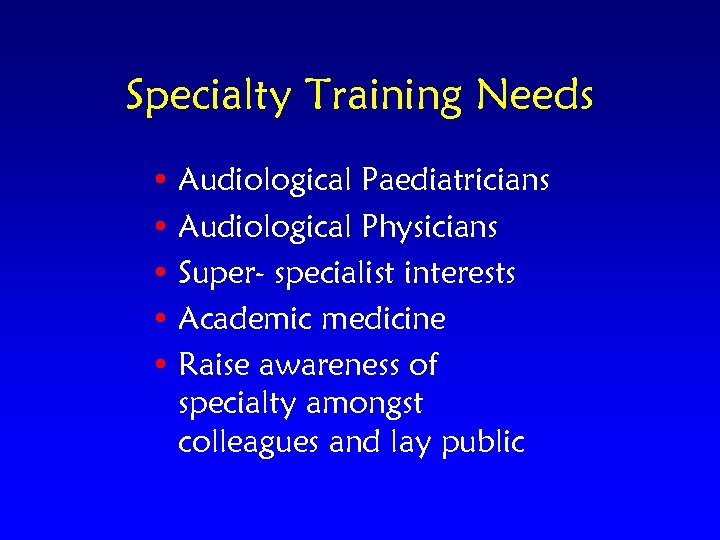
Specialty Training Needs • Audiological Paediatricians • Audiological Physicians • Super- specialist interests • Academic medicine • Raise awareness of specialty amongst colleagues and lay public
National Specialty Requirements • Good general internist • Integration of service needs across disciplines ie seamless service • One stop provision of care • Cost effective service • “Value added” service • Patient led service
Clinical Governance "A framework through which NHS organisations are accountable for continually improving the quality of their services and safeguarding high standards of care by creating an environment in which excellence in clinical care will flourish. "
Future Trends • Occupational health • Public health • Genetics – gene therapy • Neuropharmacology • Neuroscience • Computer/electronic technology
Audiological Medicine much needs to be done: • Depth and breadth of specialty to be defined • Raise awareness of meaning of specialty amongst colleagues, public and politicians • Promote IAPA Thank you.
Скачать презентацию Audiological Medicine SALZBURG Sept Oct 2005 Katherine Harrop-Griffiths London
5e0787875b607369c17282329fc55e92.ppt