Скачать презентацию ATTRACTION SCOTLAND Nikitin Denis 6 A school
Scotland.pptx
- Количество слайдов: 7
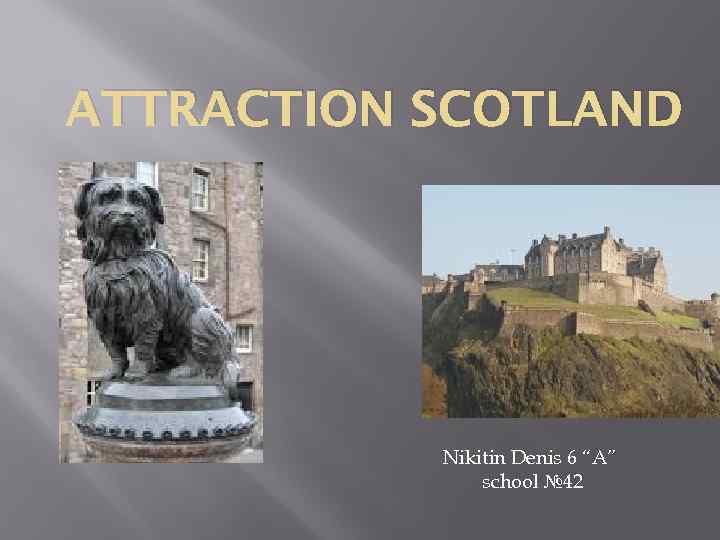 ATTRACTION SCOTLAND Nikitin Denis 6 “A” school № 42
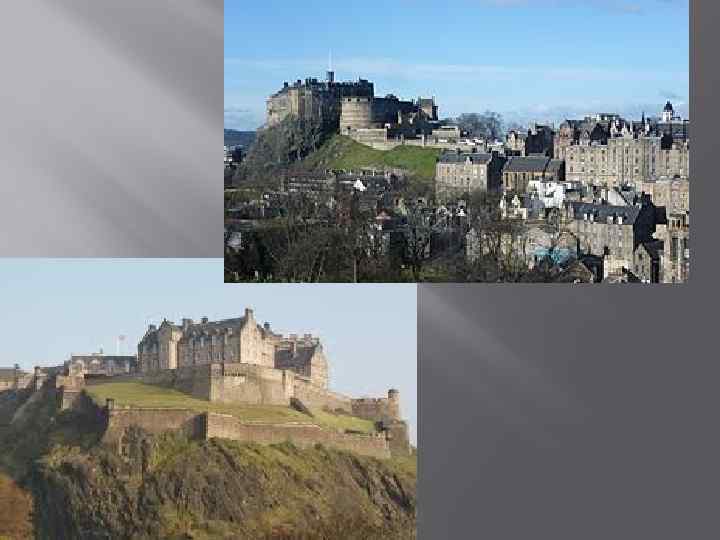
 Edinburgh Castle is a historic fortress which dominates the skyline of the city of Edinburgh, Scotland from its position on the Castle Rock. Archaeologists have established human occupation of the rock since at least the Iron Age (2 nd century AD), although the nature of the early settlement is unclear. There has been a royal castle on the rock since at least the reign of David I in the 12 th century, and the site continued to be a royal residence until the Union of the Crowns in 1603. From the 15 th century the castle's residential role declined, and by the 17 th century it was principally used as military barracks with a large garrison. Its importance as a part of Scotland's national heritage was recognised increasingly from the early 19 th century onwards, and various restoration programmes have been carried out over the past century and a half. As one of the most important strongholds in the Kingdom of Scotland, Edinburgh Castle was involved in many historical conflicts from the Wars of Scottish Independence in the 14 th century to the Jacobite Rising of 1745. It has been besieged, both successfully and unsuccessfully, on several occasions.
 Few of the present buildings pre-date the Lang Siege of the 16 th century, when the medieval defences were largely destroyed by artillery bombardment. The most notable exceptions are St Margaret's Chapel from the early 12 th century, which is regarded as the oldest building in Edinburgh, the Royal Palace and the early-16 th-century Great Hall, although the interiors have been much altered from the mid. Victorian period onwards. The castle also houses the Scottish regalia, known as the Honours of Scotland is the site of the Scottish National War Memorial and the National War Museum of Scotland. The British Army is still responsible for some parts of the castle, although its presence is now largely ceremonial and administrative. Some of the castle buildings house regimental museums which contribute to its presentation as a tourist attraction. The castle is in the care of Historic Scotland is Scotland's most-visited paid tourist attraction, with over 1. 2 million visitors in 2011. As the backdrop to the Edinburgh Military Tattoo during the annual Edinburgh International Festival the castle has become a recognisable symbol of Edinburgh and of Scotland.
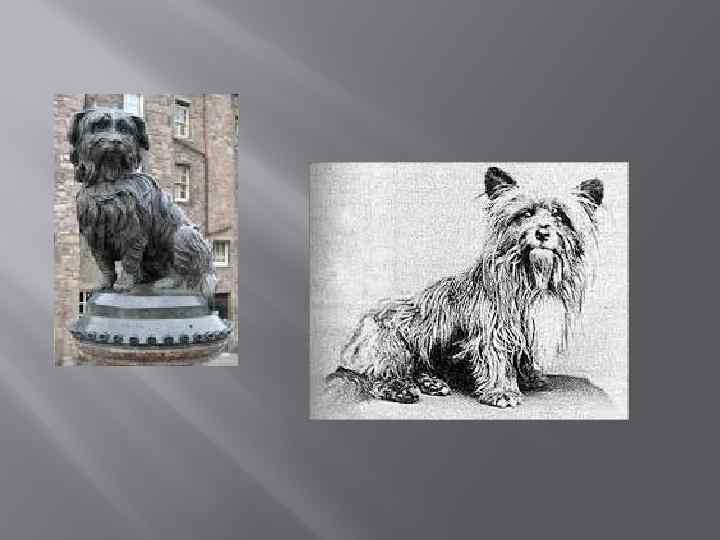
 Greyfriars Bobby Traditional view The best-known version of the story is that Bobby belonged to John Gray, who worked for the Edinburgh City Police as a night watchman. When John Gray died he was buried in Greyfriars Kirkyard, the graveyard surrounding Greyfriars Kirk in the Old Town of Edinburgh. Bobby then became known locally, spending the rest of his life sitting on his master's grave. In 1867 Lord Provost of Edinburgh, Sir William Chambers— who was also a director of the Scottish Society for the Prevention of Cruelty to Animals—paid for Bobby's licence, and gave the dog a collar now in the Museum of Edinburgh. Bobby is said to have sat by the grave for 14 years. He died in 1872 and was buried just inside the gate of Greyfriars Kirkyard, not far from John Gray's grave.
 Greyfriars Kirkyard A year later, Lady Burdett-Coutts had a statue and fountain erected at the southern end of the George IV Bridge to commemorate him. Several books and films have since been based on Bobby's life, including the novel Greyfriars Bobby (1912) by Eleanor Atkinson and the films Greyfriars Bobby (1961) and The Adventures of Greyfriars Bobby (2006).