


 Скачать презентацию Atomic Structure 3 1 Atomic History
7d4aada2795670776ca6bff9b72adcf9.ppt
- Количество слайдов: 91
 Atomic Structure 3. 1
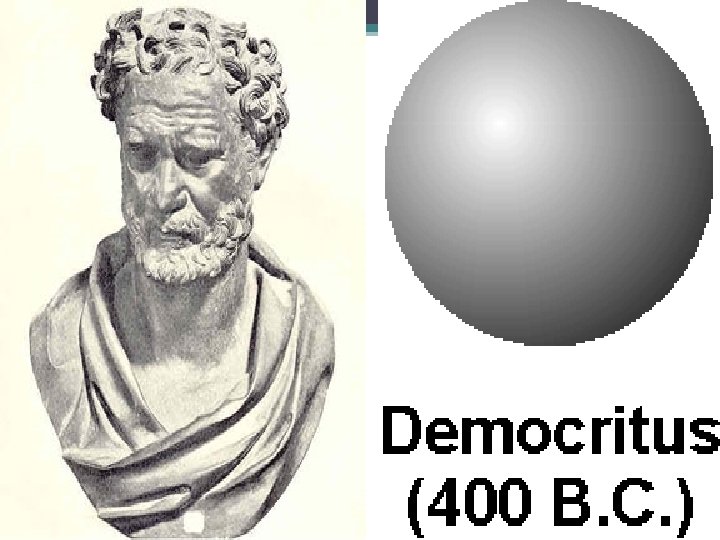
 Atomic History • In 400 BC a Greek Philosopher named Democritus suggested the universe was made of invisible units called atoms.
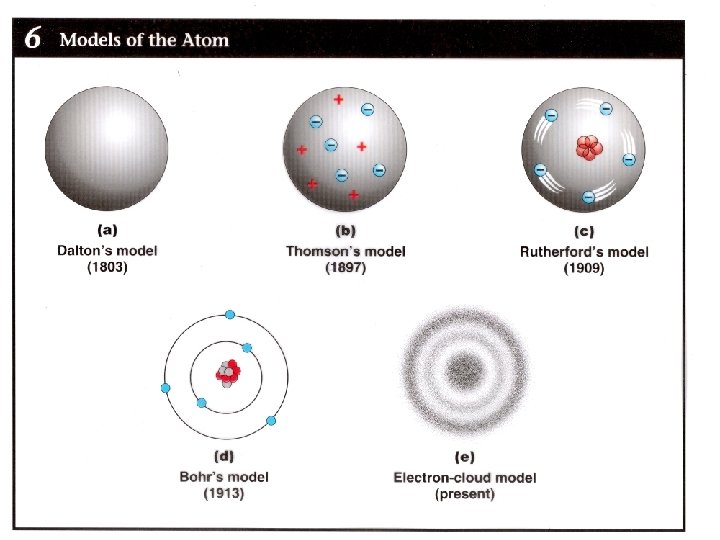
 1800’s John Dalton’s Theory (Still Accepted) 1. Every element is made of tiny, unique particles called atoms 2. Atoms of different elements can join to form
 John Dalton’s Theory- Disproved 3. Atoms are the smallest particles and cannot be subdivided. 4. Atoms of the same element are exactly alike in mass
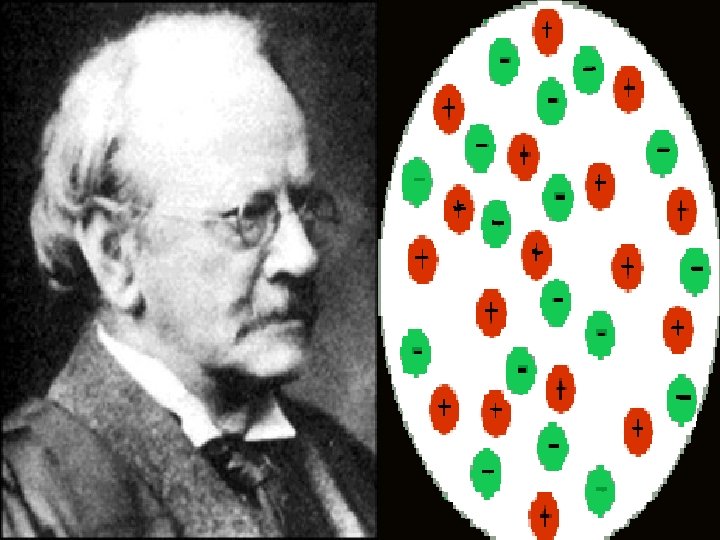
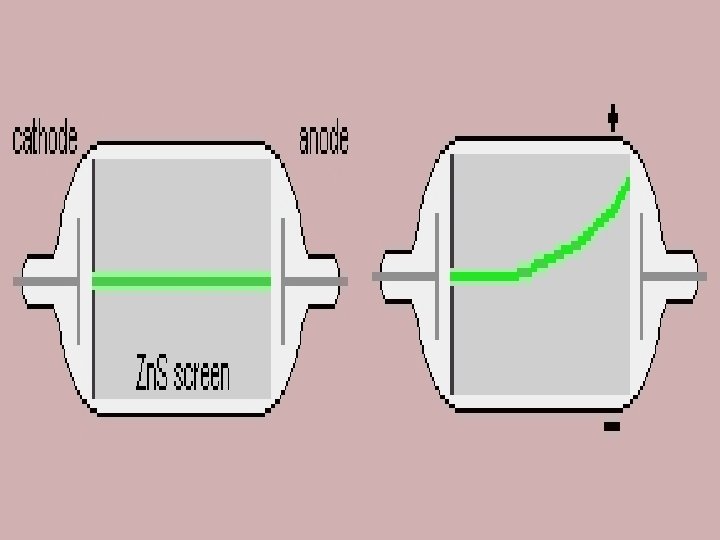
 JJ Thomson • Credited with discovering negative charged particles called electrons.
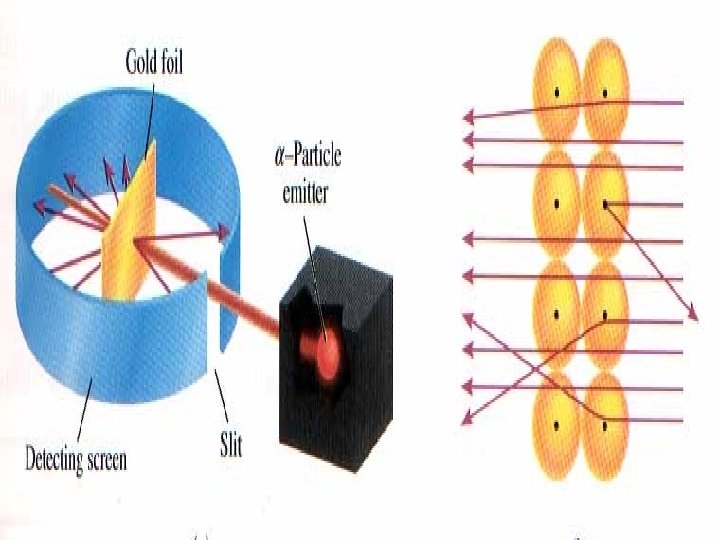
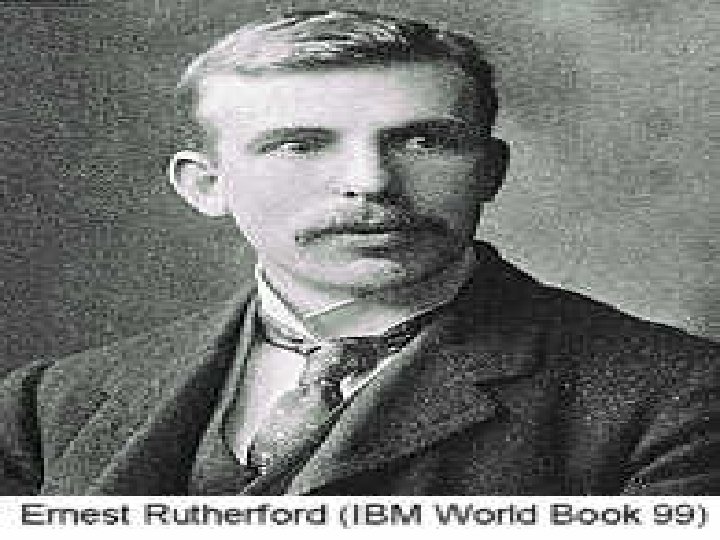
 Rutherford • Credited with discovering the nucleus. • Also concluded that atoms are mostly empty space.
 http: //micro. magnet. fsu. edu/electromag/java/rutherford/
 Further Research Finding • Later on, the discovery of protons and neutrons were discovered in the nucleus. • And it was later concluded that all atoms are neutral in charge. • The number of protons and electrons in any atom are always equal.
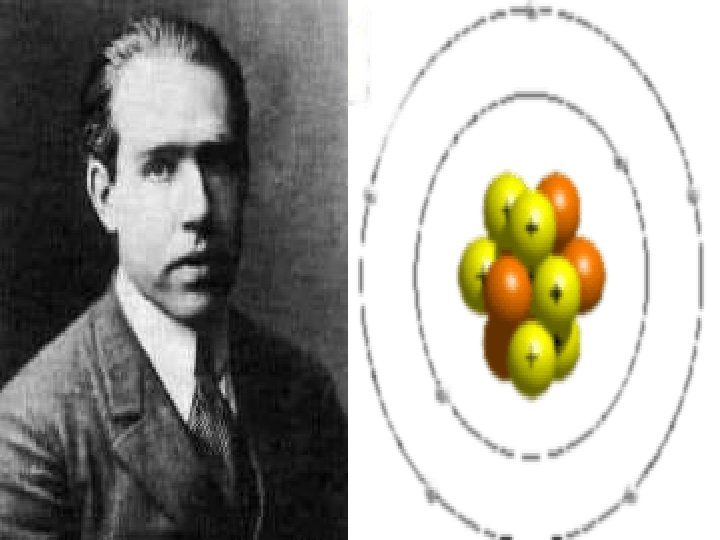
 Niels Bohr • Suggested that electrons move around atoms in set paths around the nucleus. • He said each path is an energy level
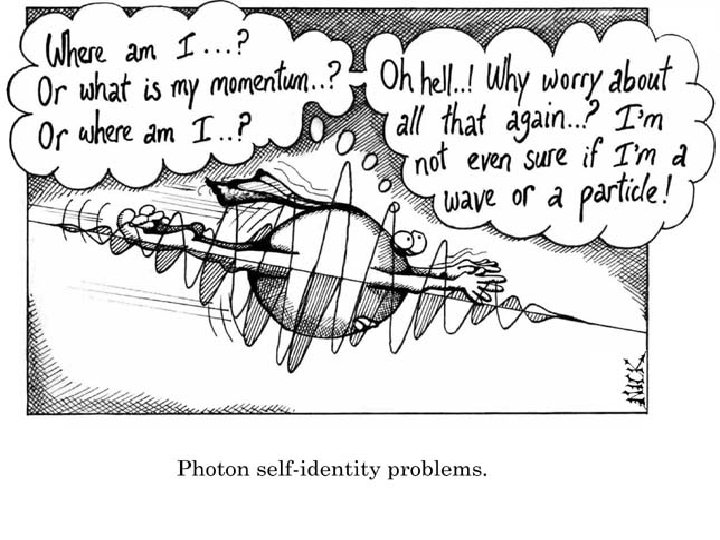
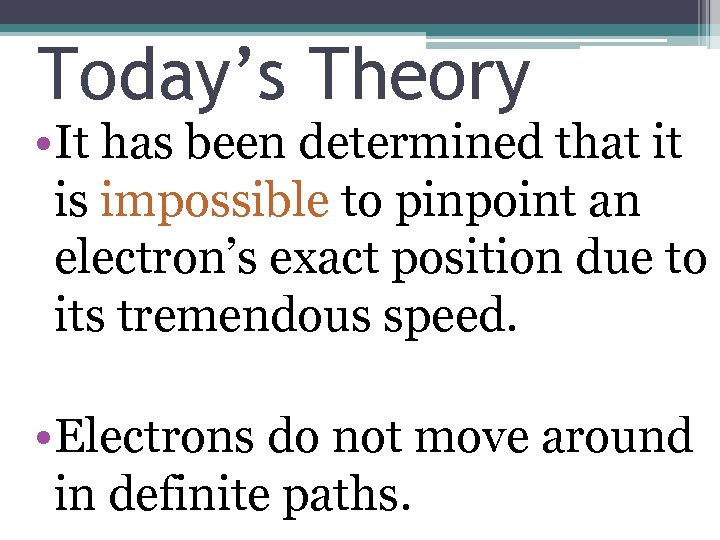 Today’s Theory • It has been determined that it is impossible to pinpoint an electron’s exact position due to its tremendous speed. • Electrons do not move around in definite paths.
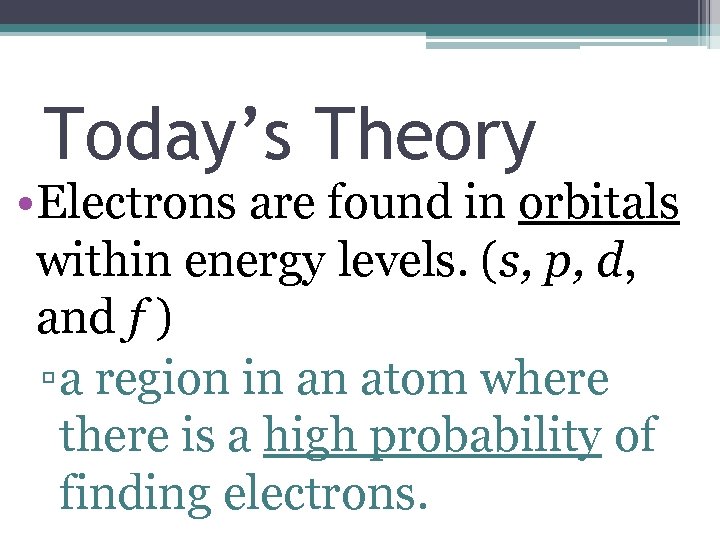 Today’s Theory • Electrons are found in orbitals within energy levels. (s, p, d, and f ) ▫ a region in an atom where there is a high probability of finding electrons.
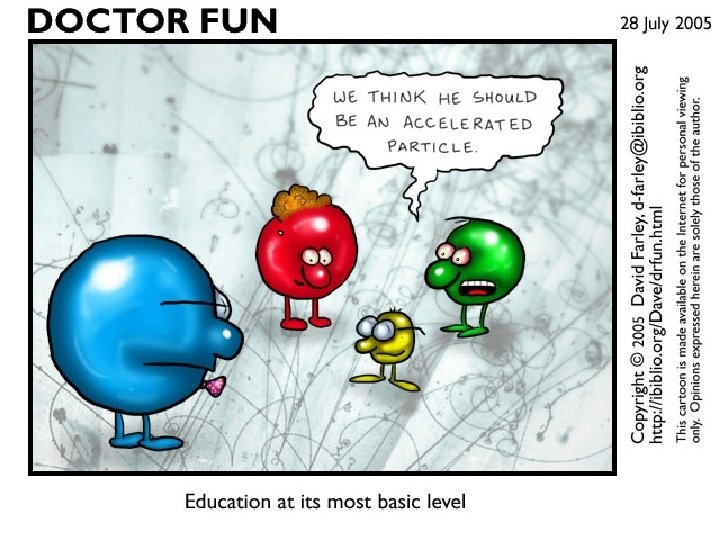
 Today’s Theory • Electrons are now viewed as waves vibrating on a string rather than simple particles. • Wave-Particle Duality Theory
 What are atoms? • The smallest part of an element that still has the element’s properties.
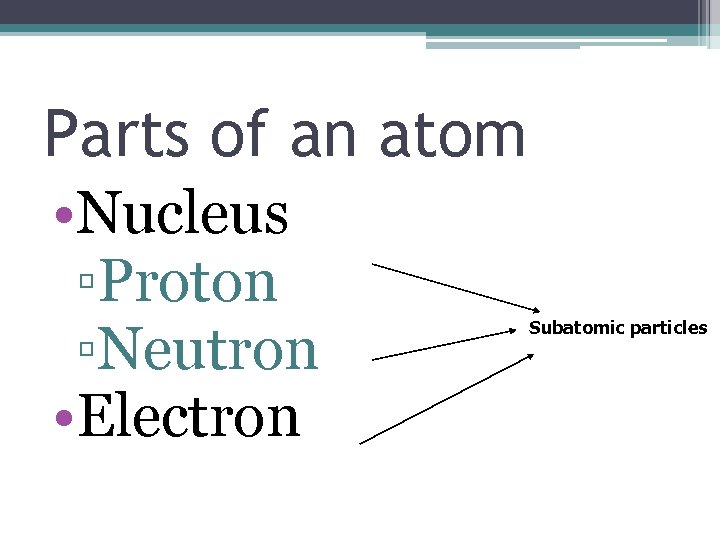 Parts of an atom • Nucleus ▫Proton ▫Neutron • Electron Subatomic particles
 Nucleus • center of an atom • positively charged • makes up 99. 9% of the atom’s mass • contains protons and neutrons
 Protons • Charge (+) • Mass is equal to 1 atomic mass unit (amu) • Found in the nucleus • Identifies the element/atom
 Neutrons • Charge (0) – neutral • Mass is equal to 1 amu • Found in the nucleus • Helps determine mass
 Electrons • Charge is negative (-) • Mass is equal to 0 amu • Found outside the nucleus, in the electron cloud
 Energy levels st • 1 e level holds up to 2 • 2 nd level holds up to 8 e • 3 rd level holds up to 8 or 18 eth level holds up to 8, 18, or 32 e • 4 • Outer Level holds up to 8 e(called valence electrons)
 Valence Electron • The number of electrons in the outermost electron shell. • Most important
 A Guided Tour of the Periodic Table 3. 2
 Periodic Law to • Properties of elements tend change in a regular pattern when elements are arranged in order of increasing atomic number.
 Periodic Law • Periodic Table is set up by increasing atomic number. • Atomic Number is the # of protons in the atom.
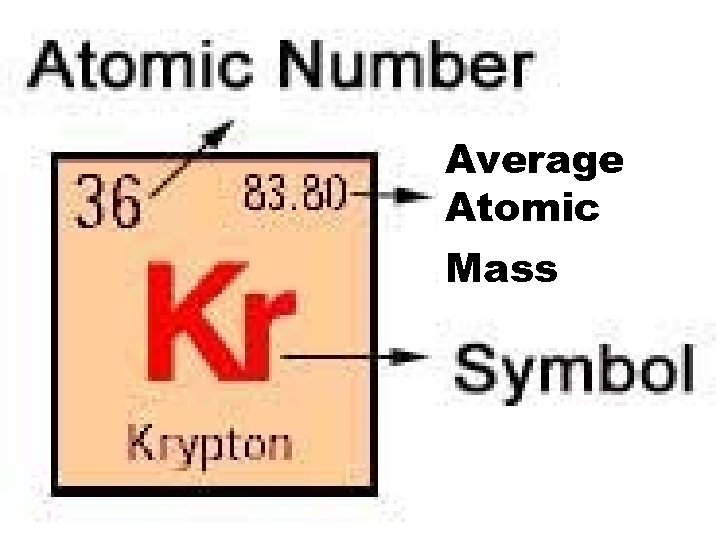 Average Atomic Mass
 Atomic Number • tells you number of protons • Never Changes for an atom. • Appears as a whole # on the periodic table. • No two elements can have same atomic #.
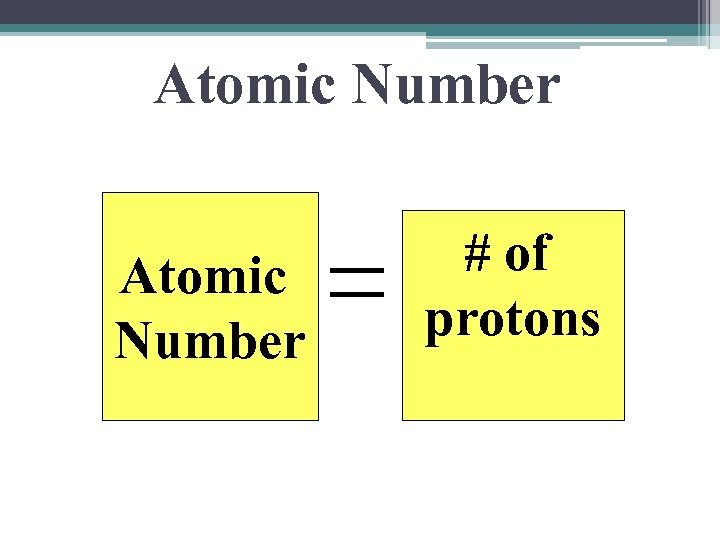 Atomic Number # of protons
 Mass Number • The mass of an atom • Total number of protons plus neutrons in the nucleus of a single atom. • Atoms of the same element won’t always have the same mass number
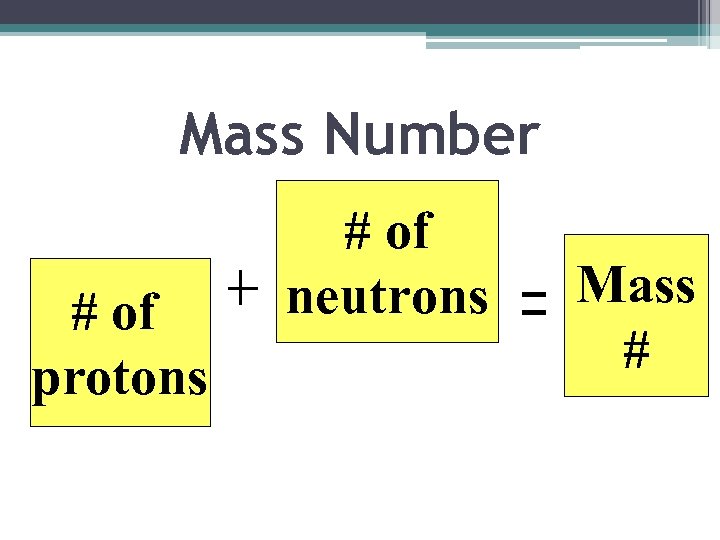 Mass Number # of protons # of neutrons Mass #
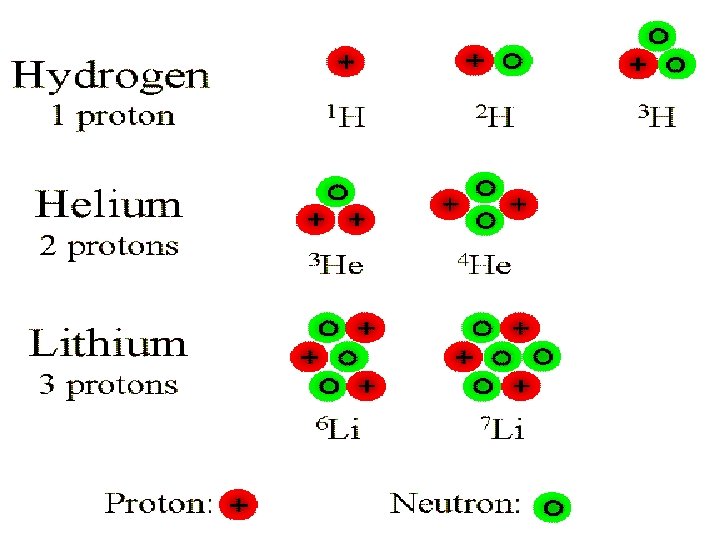
 Isotopes • Any atoms having the same number of protons but different number of neutrons. • So they also have different mass numbers.
 Average Atomic Mass • Average mass of all known isotopes for an element • Found on the periodic table as a number with a decimal
 Atom’s Charge • They are neutral. • All atoms have the same number of protons and electrons. • Charges cancel each other out.
 Ions • Charged particles. • Form when atoms lose or gain electrons. • They do this so the ions have a full outer shell • Two Types.
 Cations • Positively charged ions. • Form when atoms lose electrons. • Metals • Left side of table
 Cations • # of protons greater than # of electrons • More (+) than (-)
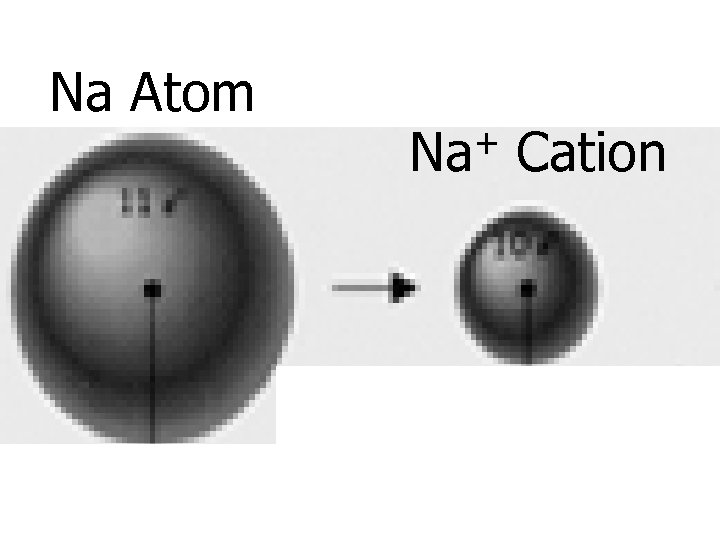 Na Atom + Na Cation
 Anions • Negatively charged ions. • Form when atoms gain electrons. • Nonmetals • Right side of table
 Anions • # of protons less than # of electrons • More (-) than (+)
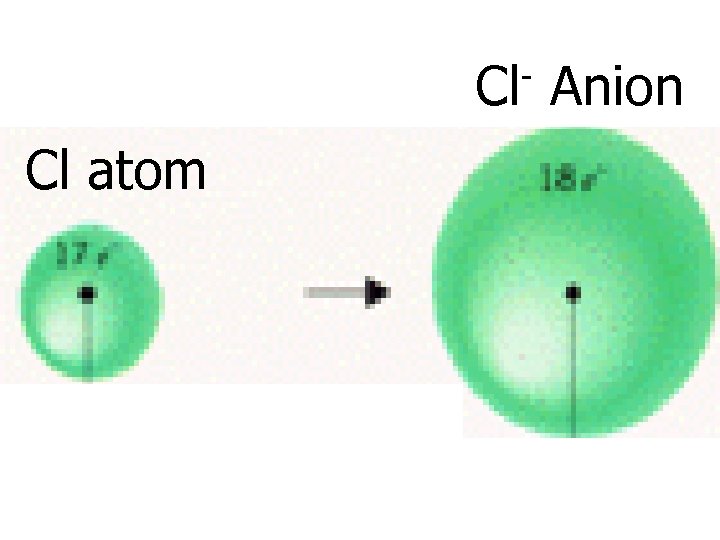 Cl Cl atom Anion
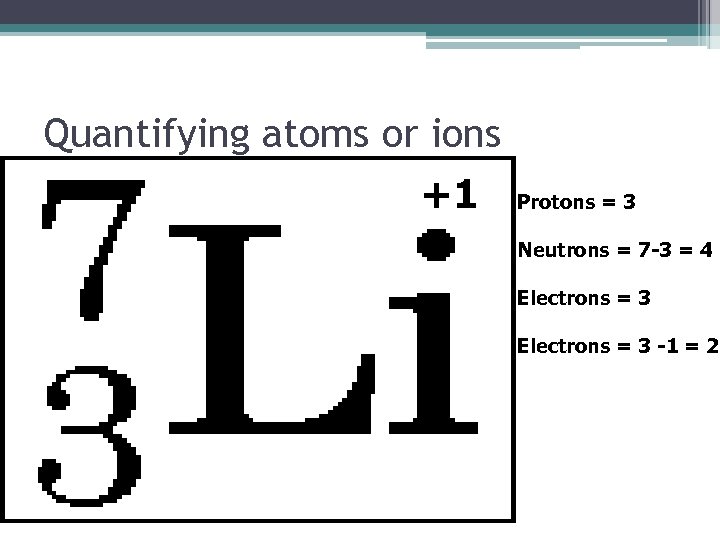 Quantifying atoms or ions +1 Protons = 3 Neutrons = 7 -3 = 4 Electrons = 3 -1 = 2
 Families of Elements 3. 3
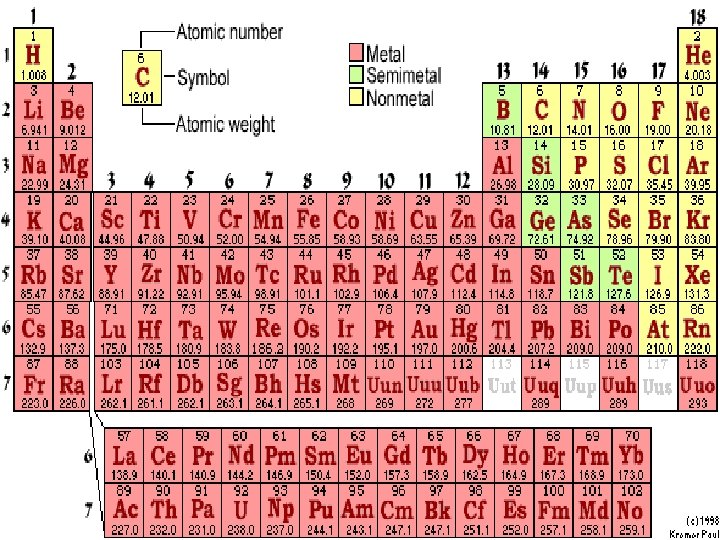
 Periodic Table • Periods -a horizontal row of elements. -Tells you the electrons energy level.
 Periodic Table • Groups (families) -a vertical column of elements. -Tells us the # of valence electrons and the elements’ chemical properties.
 Types of Elements 1. Metals 2. Nonmetals 3. Semiconductors/metalloid s
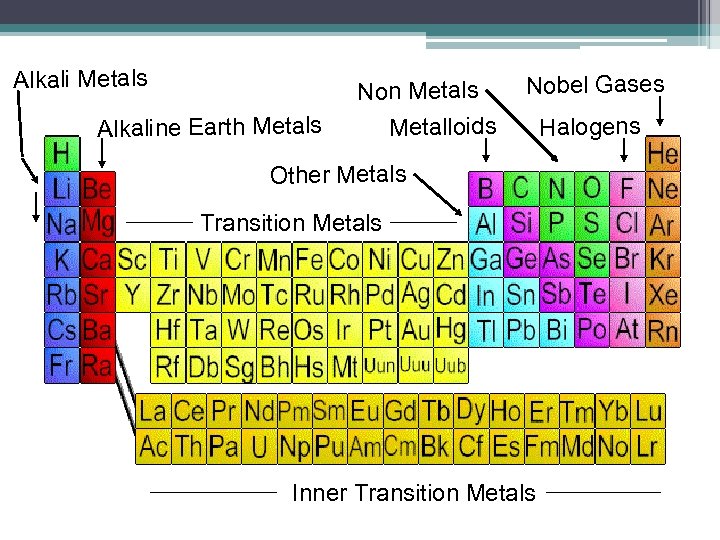 Alkali Metals Alkaline Earth Metals Non Metals Metalloids Nobel Gases Other Metals Transition Metals Inner Transition Metals Halogens
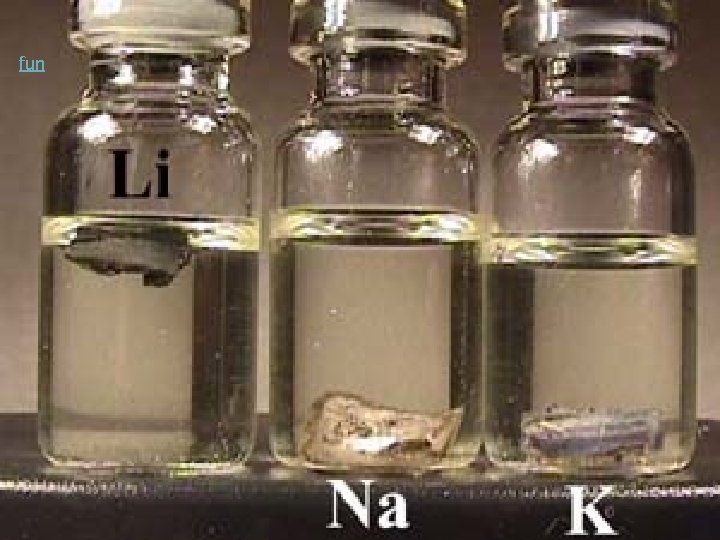
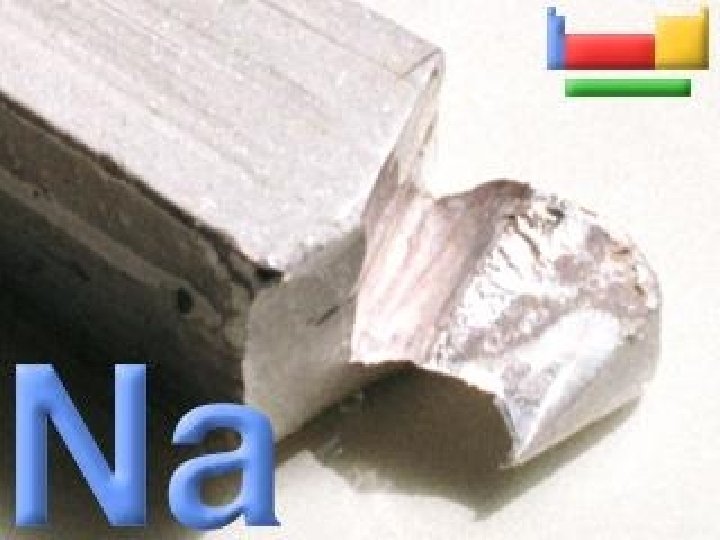
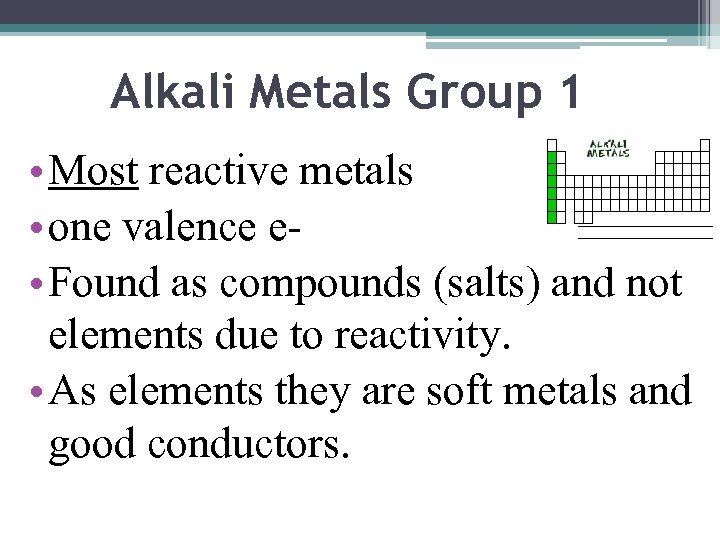 Alkali Metals Group 1 • Most reactive metals • one valence e • Found as compounds (salts) and not elements due to reactivity. • As elements they are soft metals and good conductors.
 fun
fun
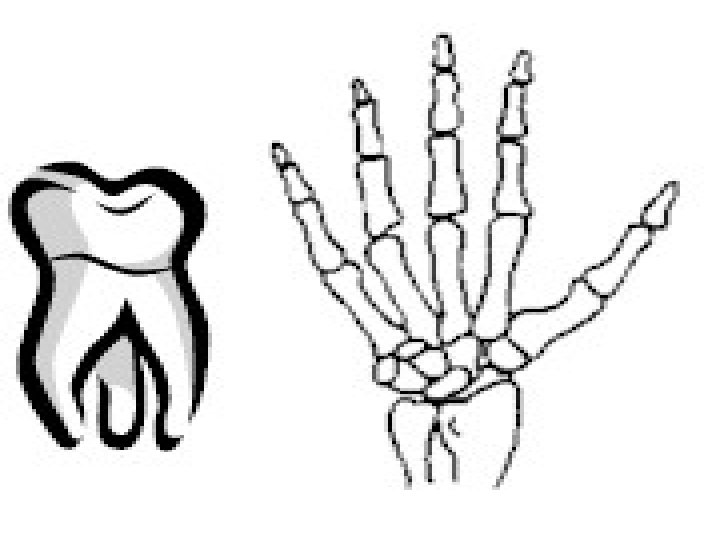
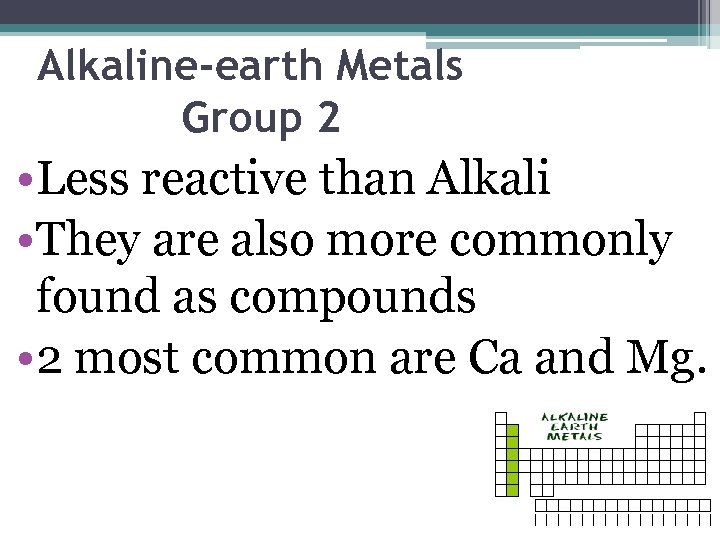 Alkaline-earth Metals Group 2 • Less reactive than Alkali • They are also more commonly found as compounds • 2 most common are Ca and Mg.
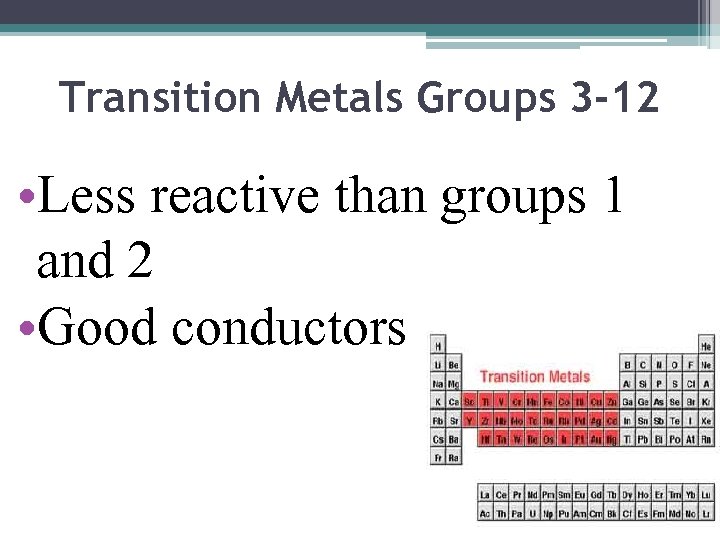 Transition Metals Groups 3 -12 • Less reactive than groups 1 and 2 • Good conductors
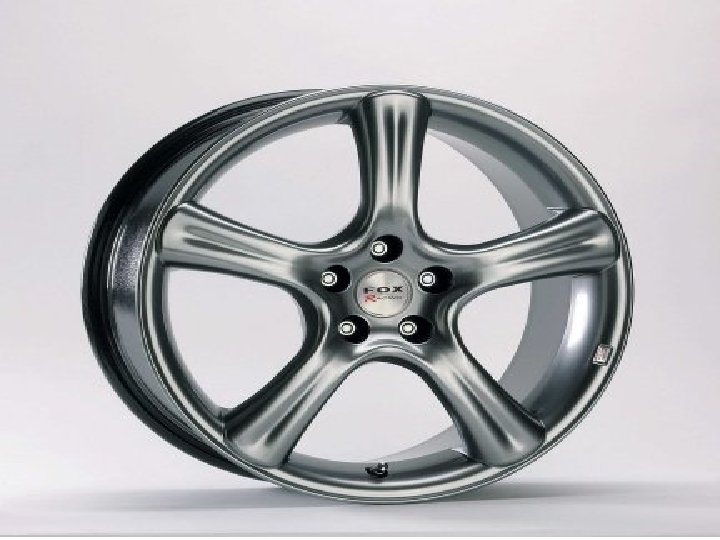
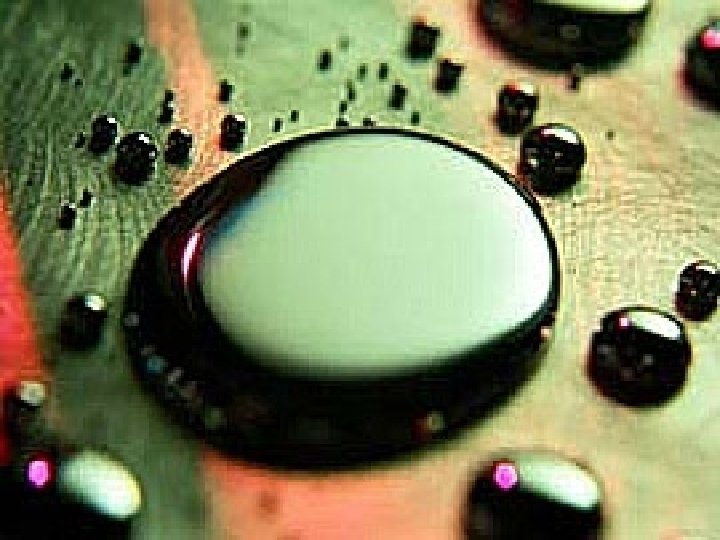
 Transition Metals • All solids with the exception of mercury • Valuable metals (Ag, Au, Pt, Cu, Ni, Fe, Co)
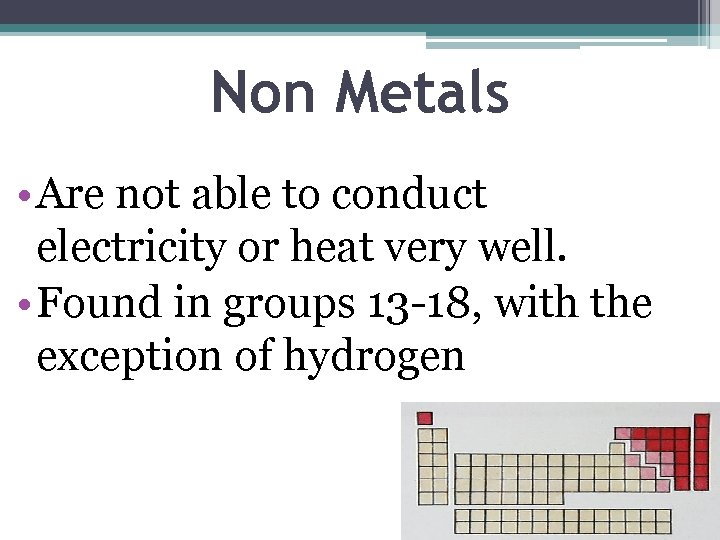 Non Metals • Are not able to conduct electricity or heat very well. • Found in groups 13 -18, with the exception of hydrogen
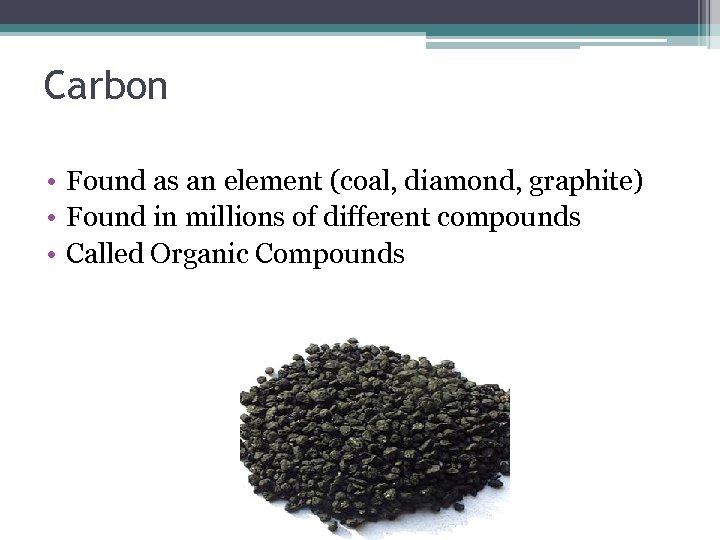 Carbon • Found as an element (coal, diamond, graphite) • Found in millions of different compounds • Called Organic Compounds
 HYDROGEN • It is a gas/nonmetal • A very explosive gas. • It is located in group one because it has one valence electron • http: //video. google. com/videoplay? docid=2380118142773657669&q=hindenburg&hl=en
 Oxygen and Nitrogen • Oxygen is the most common element found on Earth • Nitrogen most common gas found in the atmosphere
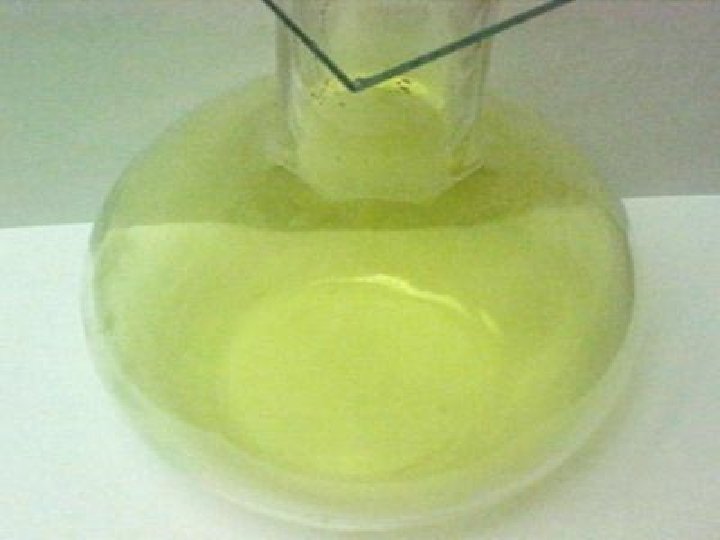
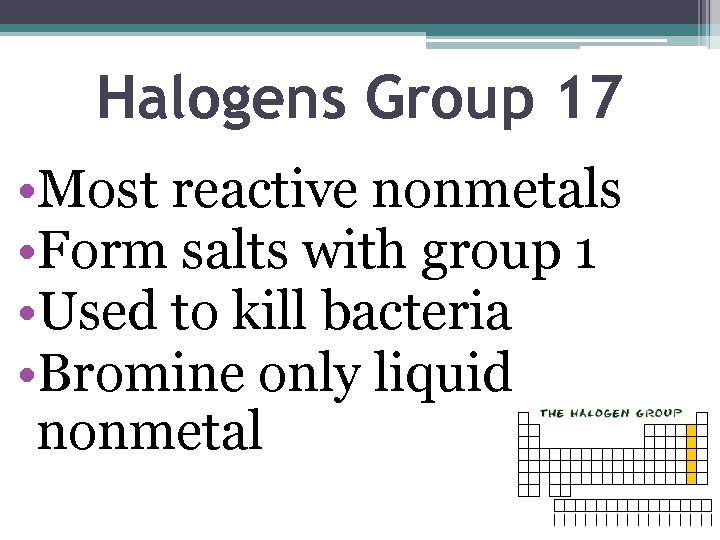 Halogens Group 17 • Most reactive nonmetals • Form salts with group 1 • Used to kill bacteria • Bromine only liquid nonmetal
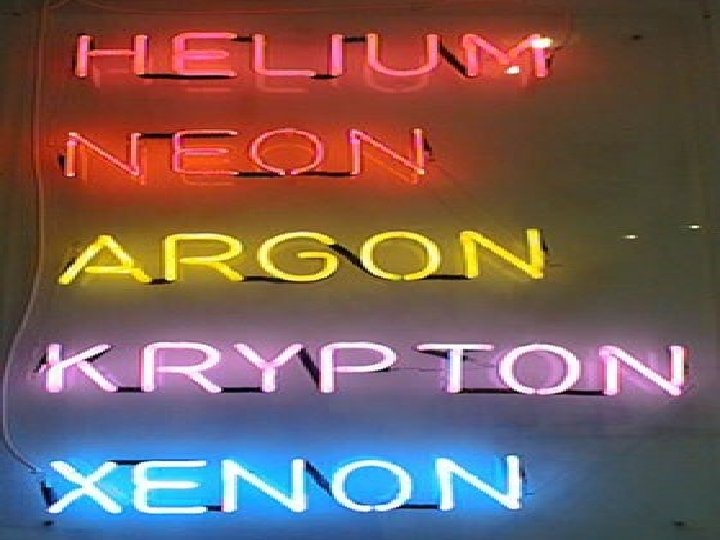
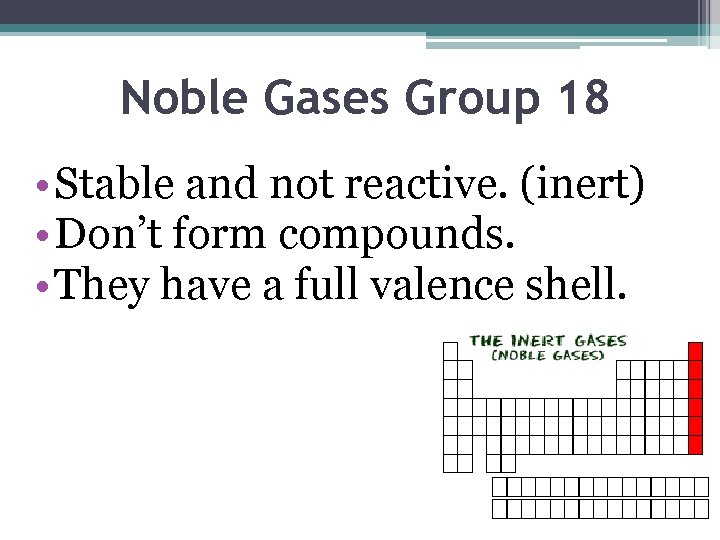 Noble Gases Group 18 • Stable and not reactive. (inert) • Don’t form compounds. • They have a full valence shell.
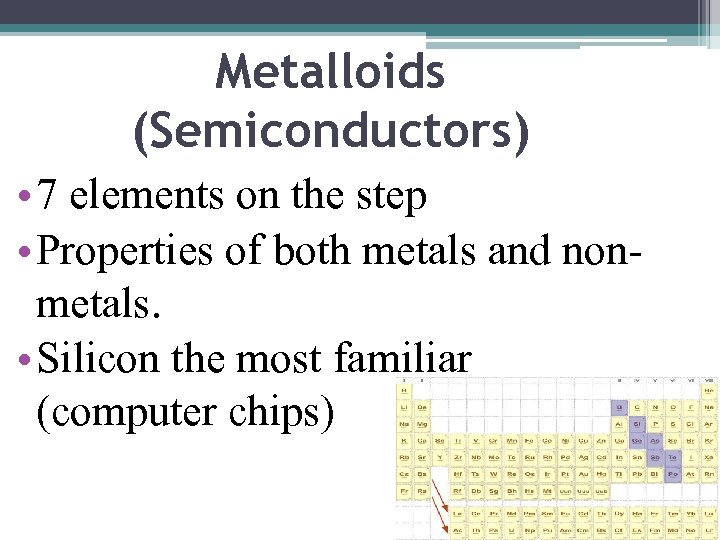 Metalloids (Semiconductors) • 7 elements on the step • Properties of both metals and nonmetals. • Silicon the most familiar (computer chips)
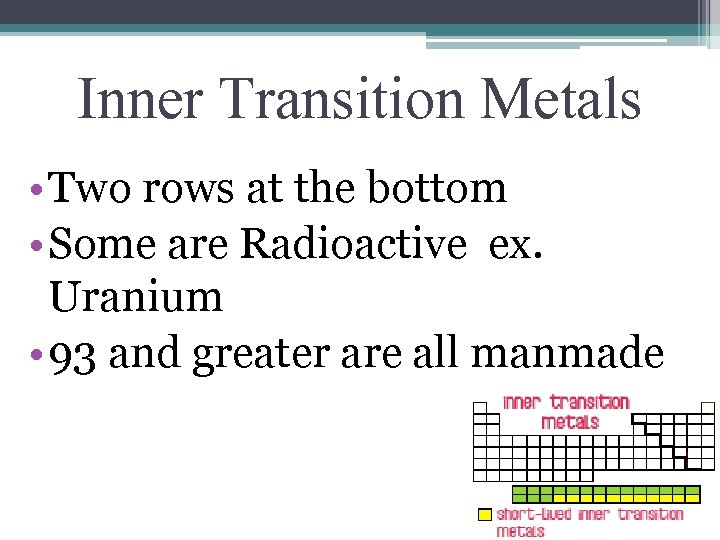 Inner Transition Metals • Two rows at the bottom • Some are Radioactive ex. Uranium • 93 and greater are all manmade
 Moles 3. 4
 Counting Units • We buy things by the dozen. • One dozen = 12 items • We use the unit mole to count things in chemistry
 Moles • the SI base unit that describes the amount of a substance.
 Avogadro’s Constant • Represents the number of particles in one mole of a substance. • The number is 6. 02 x 1023 particles, atoms, or molecules
 Moles • Used for counting with really tiny atoms • One mole represents the atomic mass of an element.
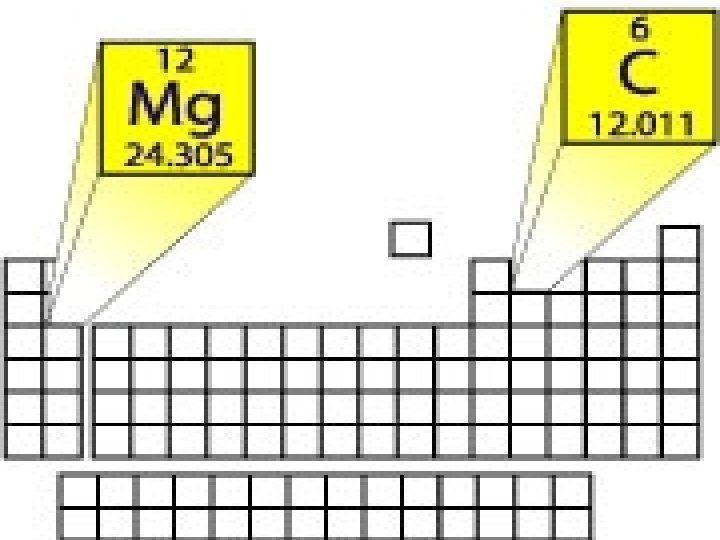
 Molar Mass • The mass in grams of 1 mol of a substance. • Using the periodic chart you can determine the molar mass of any element or compound.
 Molar Mass Example • So how many grams in two moles of Ca?
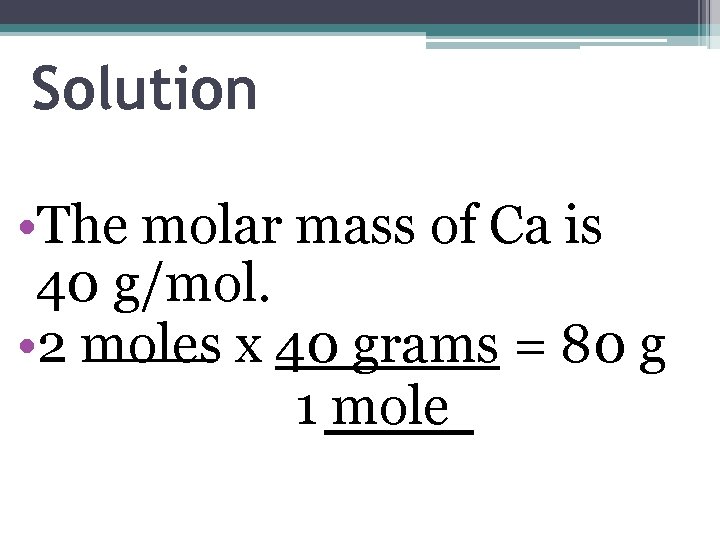 Solution • The molar mass of Ca is 40 g/mol. • 2 moles x 40 grams = 80 g 1 mole
 Mole Problems • You can determine how many moles of a substance you have if you know the mass of the substance.
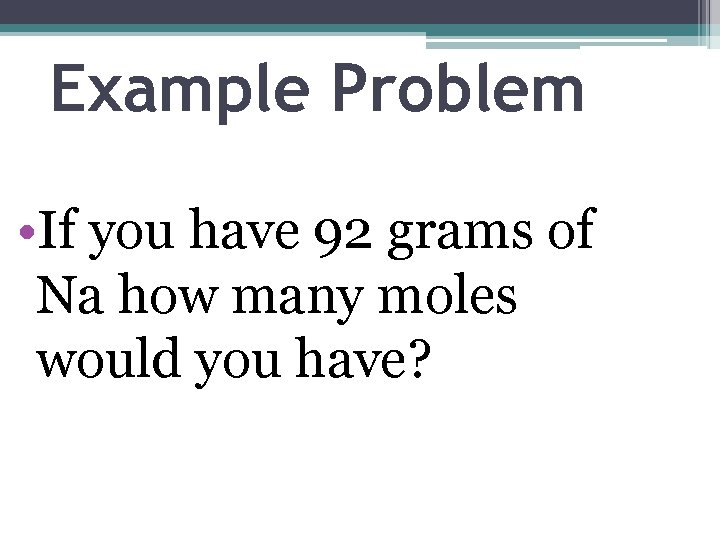 Example Problem • If you have 92 grams of Na how many moles would you have?
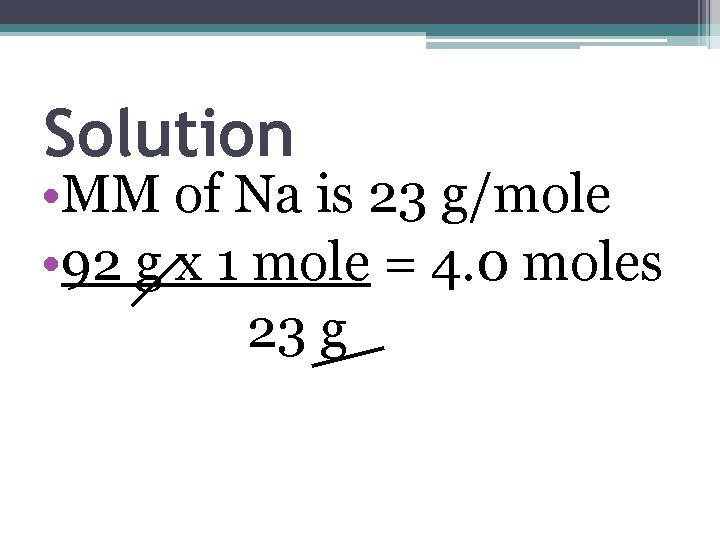 Solution • MM of Na is 23 g/mole • 92 g x 1 mole = 4. 0 moles 23 g