Скачать презентацию Atlantic Zone Aquatic Invasive Species Monitoring Program Thomas
e87638ffa9ef135a3b46ad6f9951b324.ppt
- Количество слайдов: 28
 Atlantic Zone Aquatic Invasive Species Monitoring Program Thomas Landry, Andrea Locke, Neil Mc. Nair and Art Smith Aquatic Health Division Fisheries and Oceans Canada Gulf Fisheries Centre, Moncton NB Oceans and Science Branch
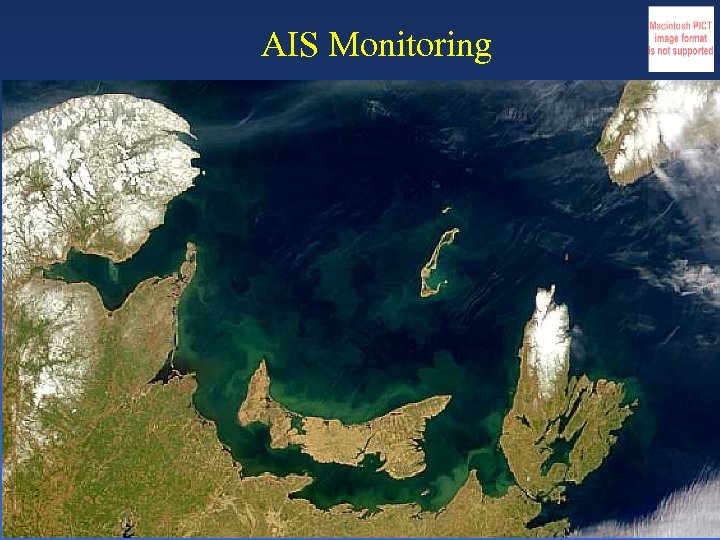
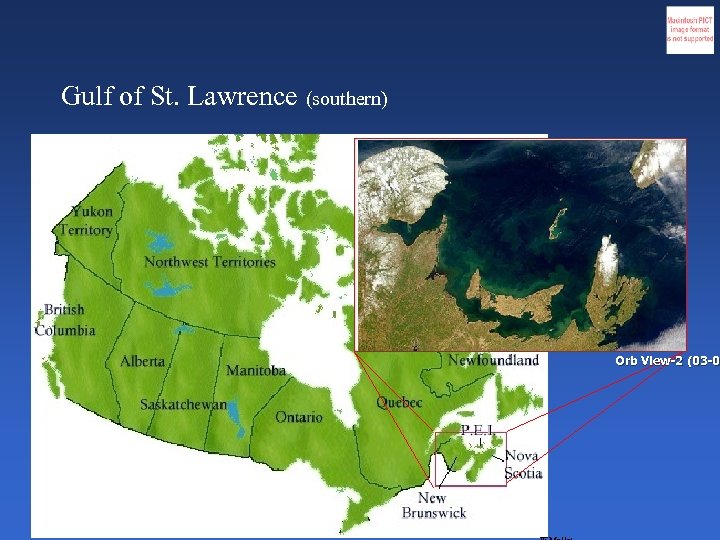 Gulf of St. Lawrence (southern) Orb View-2 (03 -0
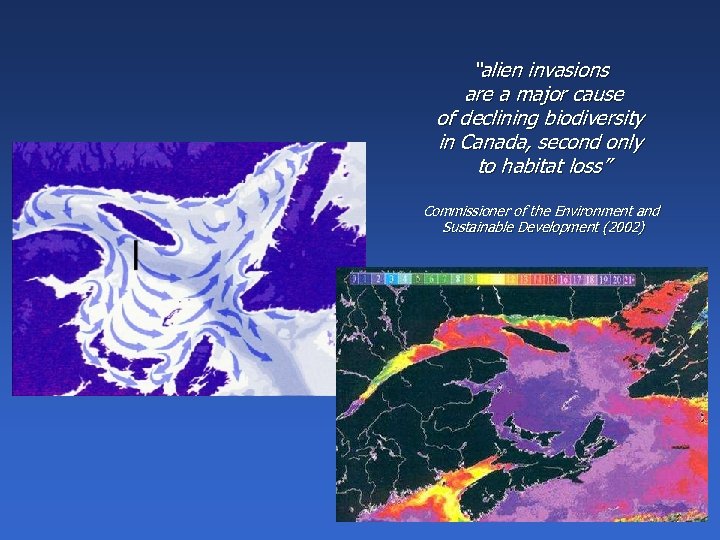 “alien invasions are a major cause of declining biodiversity in Canada, second only to habitat loss” Commissioner of the Environment and Sustainable Development (2002)
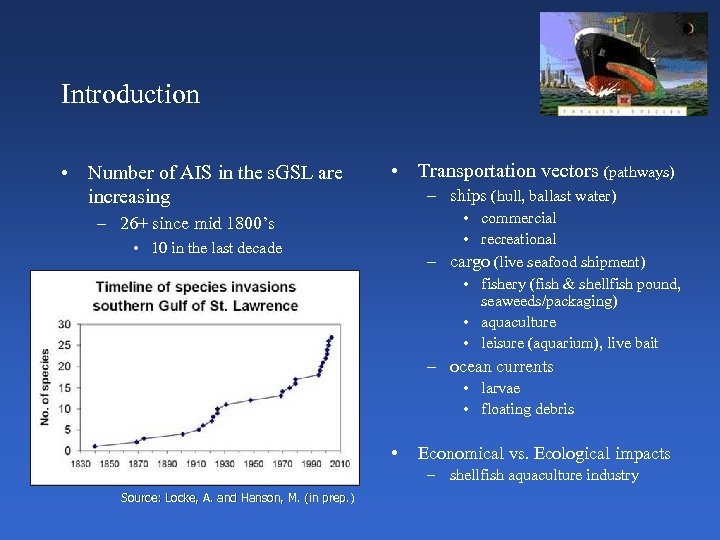 Introduction • Number of AIS in the s. GSL are increasing • Transportation vectors (pathways) – ships (hull, ballast water) • commercial • recreational – cargo (live seafood shipment) • fishery (fish & shellfish pound, seaweeds/packaging) • aquaculture • leisure (aquarium), live bait – 26+ since mid 1800’s • 10 in the last decade – ocean currents • larvae • floating debris • Economical vs. Ecological impacts – shellfish aquaculture industry Source: Locke, A. and Hanson, M. (in prep. )
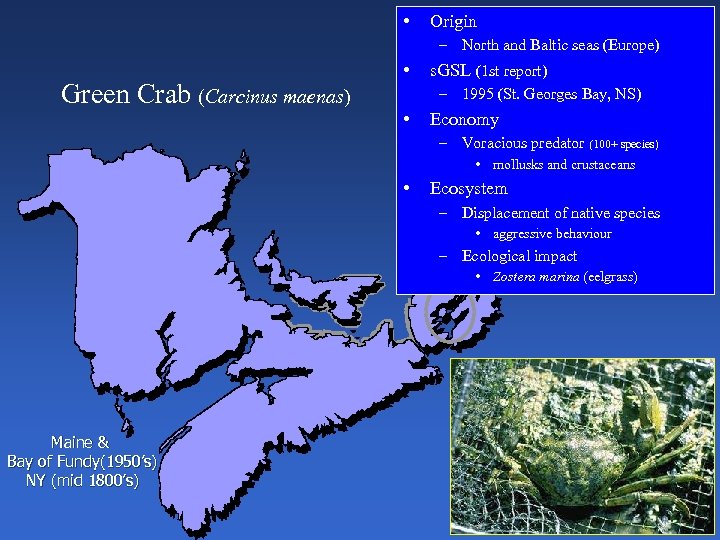 • Origin – North and Baltic seas (Europe) Green Crab (Carcinus maenas) • s. GSL (1 st report) – 1995 (St. Georges Bay, NS) • Economy – Voracious predator (100+ species) • mollusks and crustaceans • Ecosystem – Displacement of native species • aggressive behaviour – Ecological impact • Zostera marina (eelgrass) Maine & Bay of Fundy(1950’s) NY (mid 1800’s)
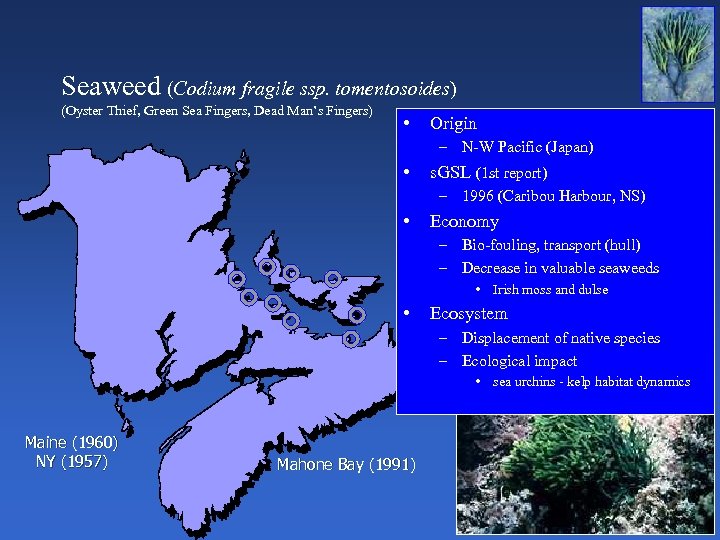 Seaweed (Codium fragile ssp. tomentosoides) (Oyster Thief, Green Sea Fingers, Dead Man’s Fingers) • Origin – N-W Pacific (Japan) • s. GSL (1 st report) – 1996 (Caribou Harbour, NS) • Economy – Bio-fouling, transport (hull) – Decrease in valuable seaweeds • Irish moss and dulse • Ecosystem – Displacement of native species – Ecological impact • sea urchins - kelp habitat dynamics Maine (1960) NY (1957) Mahone Bay (1991)
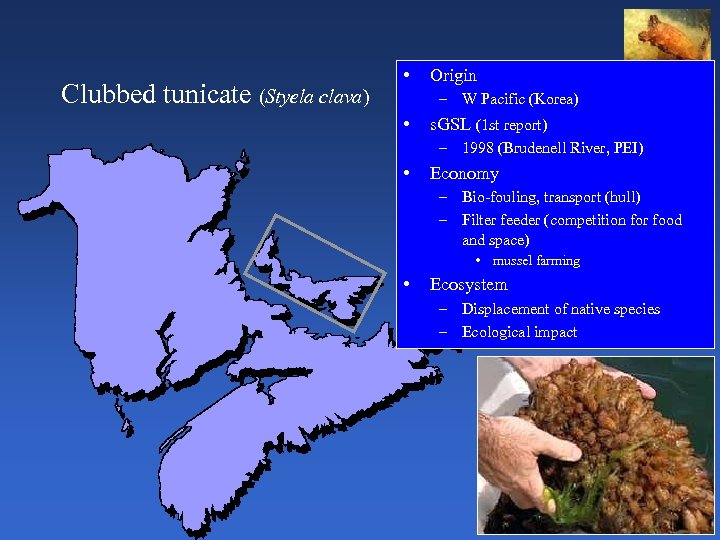 Clubbed tunicate (Styela clava) • Origin – W Pacific (Korea) • s. GSL (1 st report) – 1998 (Brudenell River, PEI) • Economy – Bio-fouling, transport (hull) – Filter feeder (competition for food and space) • mussel farming • Ecosystem – Displacement of native species – Ecological impact
 New tunicate species Sea vase tunicate Golden star tunicate • Origin – • s. GSL (1 st report) – Ciona intestinalis • 2001 (St. Peters Bay, PEI) Botryllus schlosseri Origin – • Europe N Atlantic (Europe) • s. GSL (1 st report) – Origin – 2004 (Montague River, PEI) • s. GSL (1 st report) – Botrylloides violaceus Violet (orange or red) sheath tunicate N-W Pacific (Japan) 2004 (Savage Harbour, PEI)
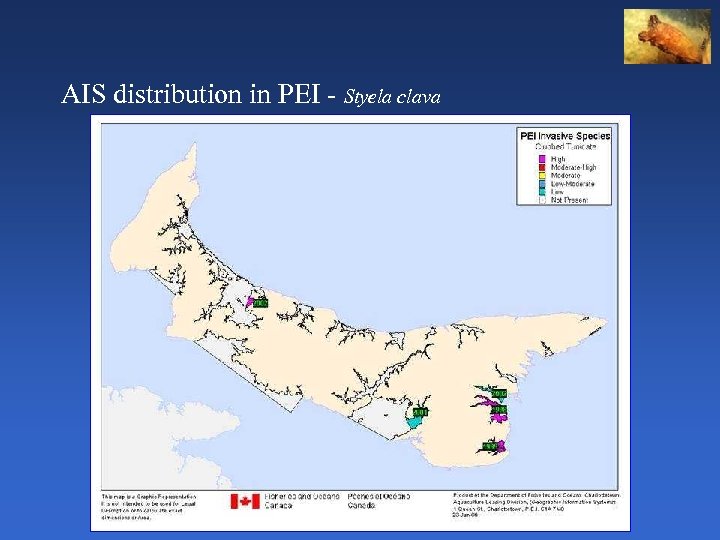 AIS distribution in PEI - Styela clava
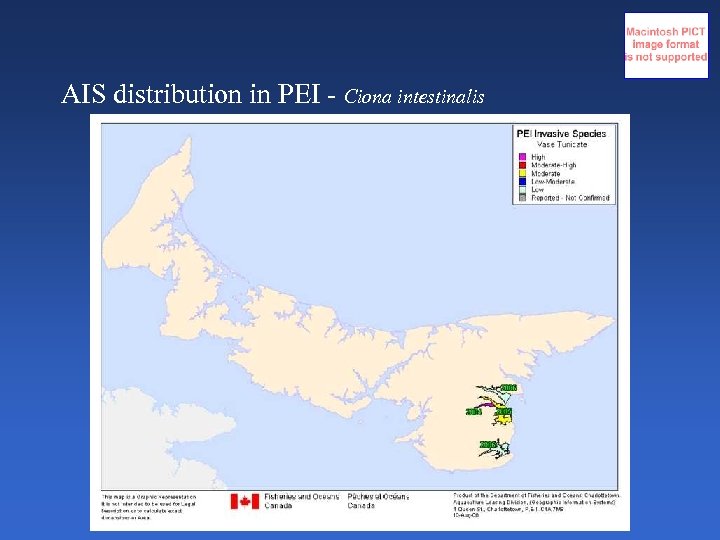 AIS distribution in PEI - Ciona intestinalis
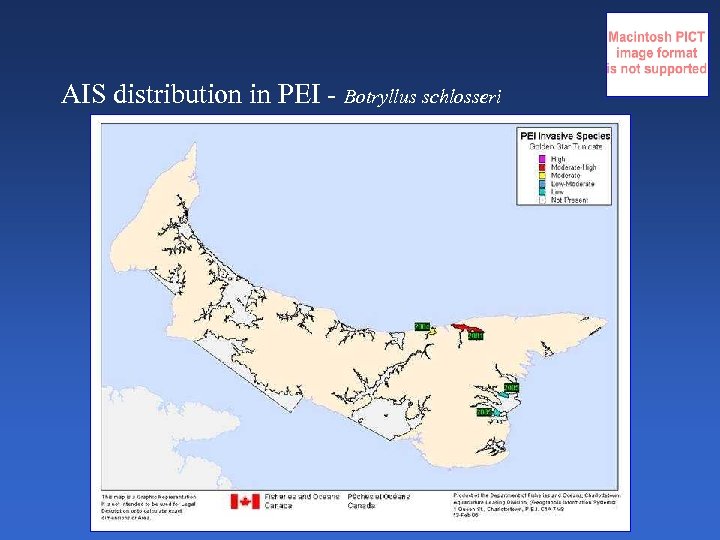 AIS distribution in PEI - Botryllus schlosseri
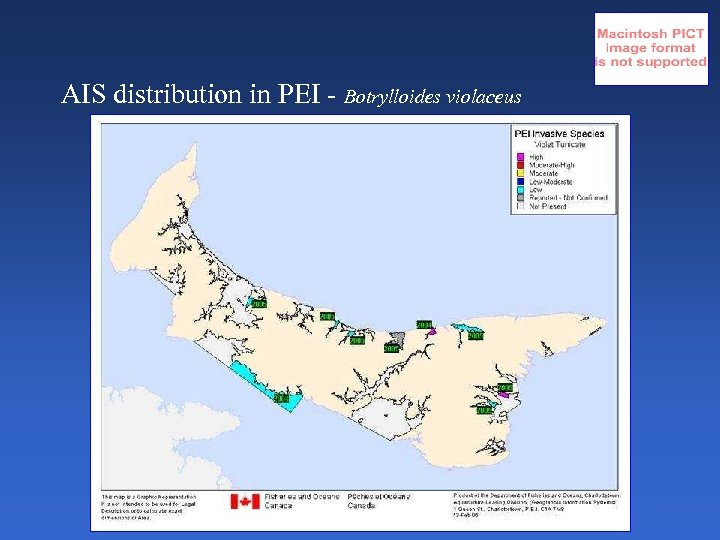 AIS distribution in PEI - Botrylloides violaceus
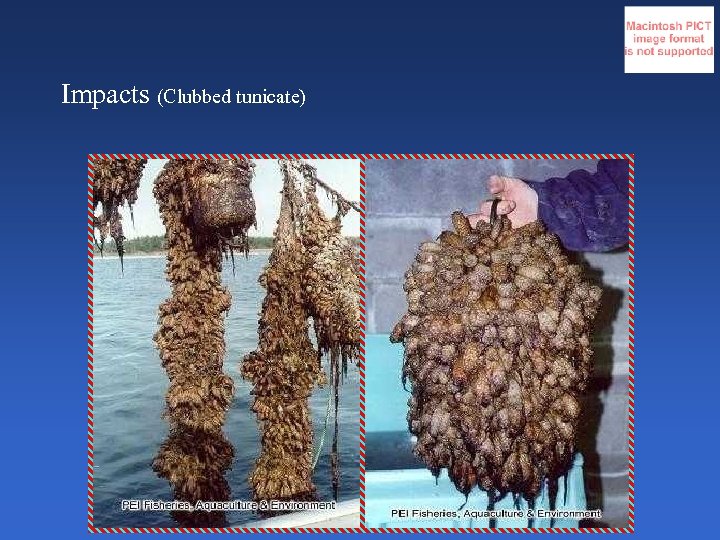 Impacts (Clubbed tunicate)
 Impacts (Vase tunicate)
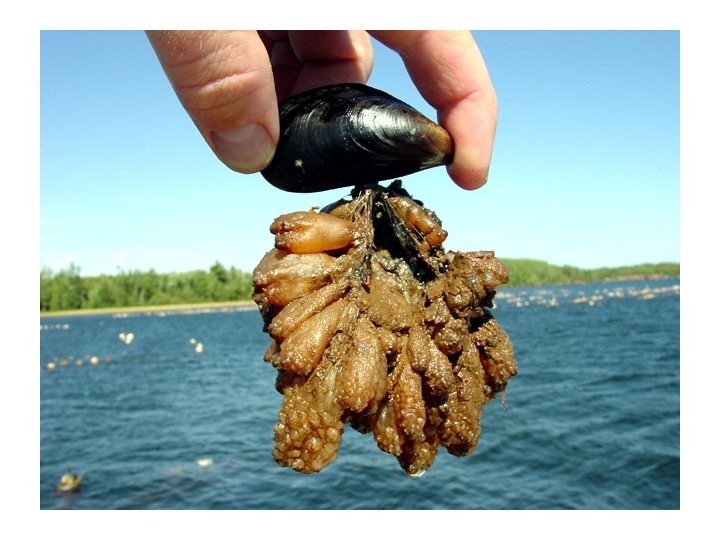
 Impacts (Colonial tunicates) PEI DAFA
 AIS Monitoring Proposal
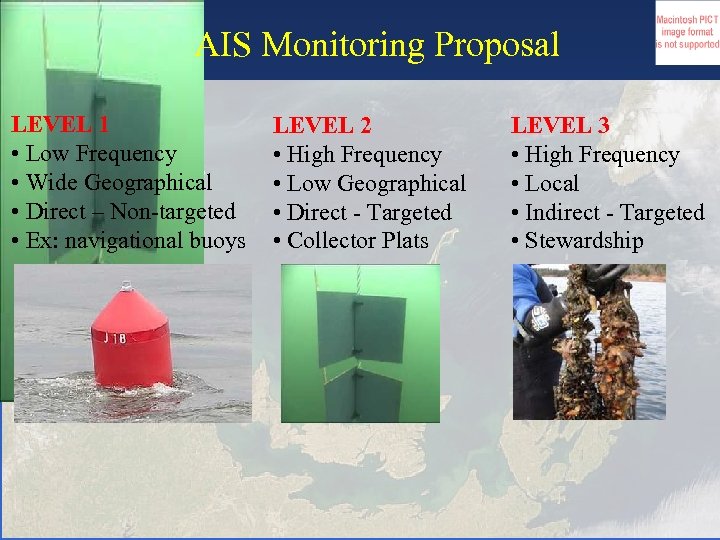 AIS Monitoring Proposal LEVEL 1 • Low Frequency • Wide Geographical • Direct – Non-targeted • Ex: navigational buoys LEVEL 2 • High Frequency • Low Geographical • Direct - Targeted • Collector Plats LEVEL 3 • High Frequency • Local • Indirect - Targeted • Stewardship
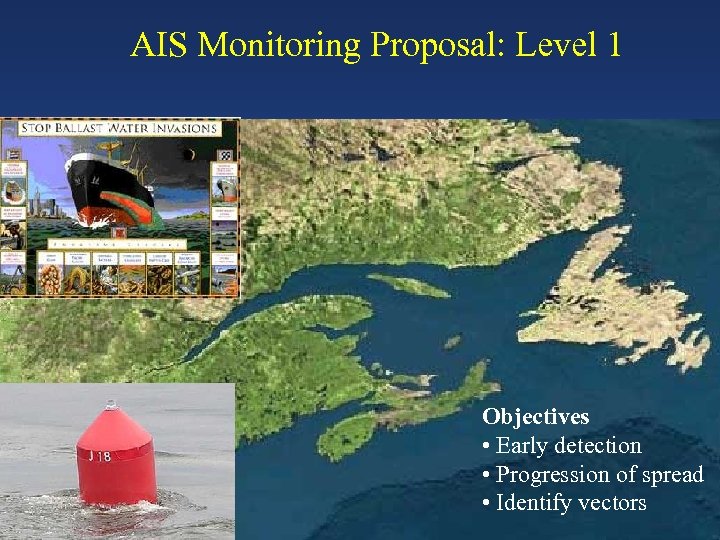 AIS Monitoring Proposal: Level 1 Objectives • Early detection • Progression of spread • Identify vectors

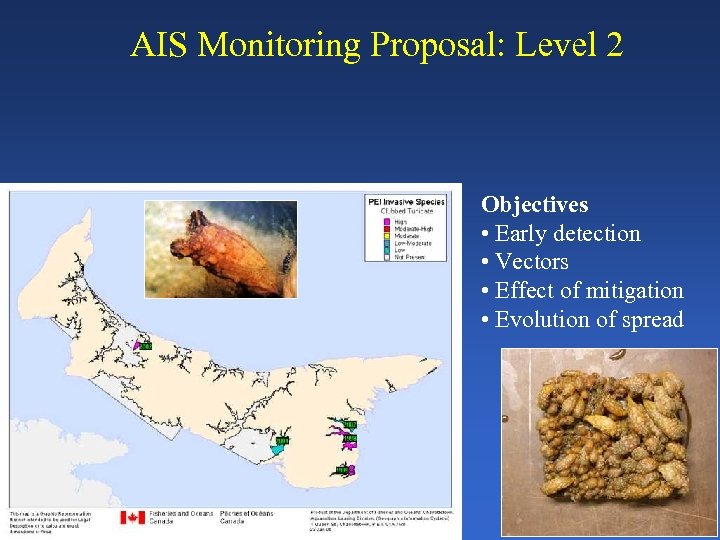 AIS Monitoring Proposal: Level 2 Objectives • Early detection • Vectors • Effect of mitigation • Evolution of spread
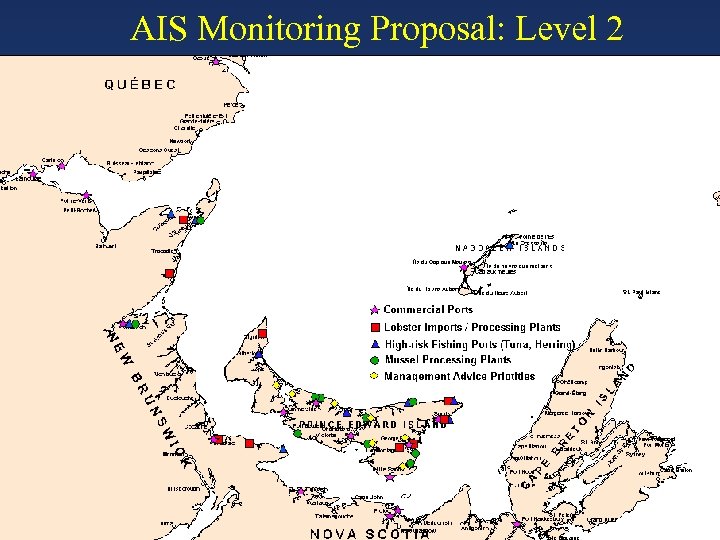 AIS Monitoring Proposal: Level 2
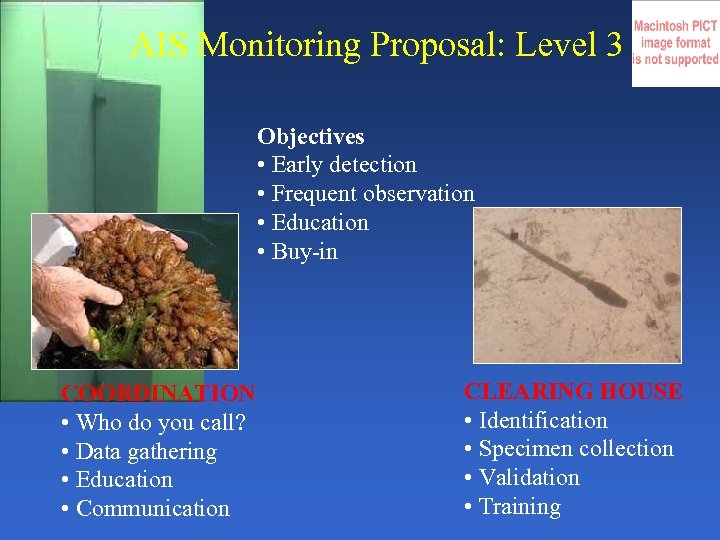 AIS Monitoring Proposal: Level 3 Objectives • Early detection • Frequent observation • Education • Buy-in COORDINATION • Who do you call? • Data gathering • Education • Communication CLEARING HOUSE • Identification • Specimen collection • Validation • Training
 AIS Monitoring Proposal: Level 3 Public involvement 1 -800 -759 -6600 invaderr. glc. dfo-mpo. gc. ca
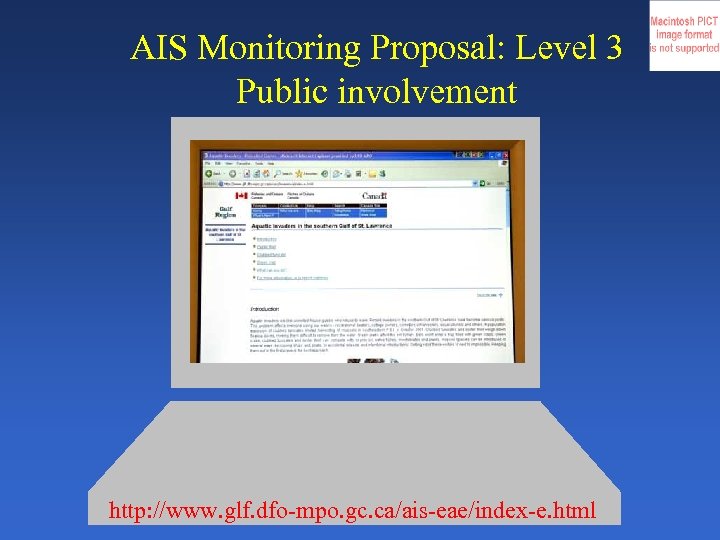 AIS Monitoring Proposal: Level 3 Public involvement http: //www. glf. dfo-mpo. gc. ca/ais-eae/index-e. html
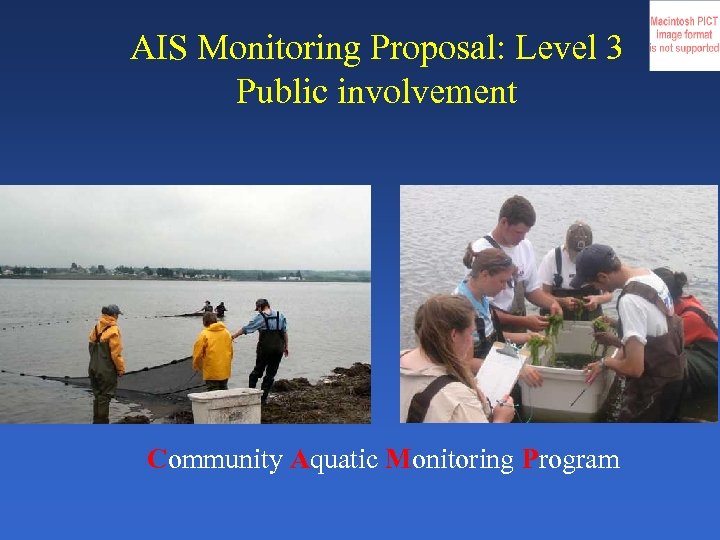 AIS Monitoring Proposal: Level 3 Public involvement Community Aquatic Monitoring Program
 AIS Monitoring Proposal: Level 3 Industry involvement
 Research and Development – Management • Coordination of efforts to control invasive tunicates – Monitoring • • Monitoring of the distribution of invasive tunicates in PEI Monitoring for new tunicate invasions at high-risk sites Investigation on vectors Investigation on environmental interactions (climate change) – Reproduction and recruitment • • Effect of temperature and salinity on the spawning behaviour of colonial tunicates Effect of the epifauna on the settlement of tunicates Effect of anthropogenic factors on the settlement of tunicates Effect of temperature and salinity on the survival of colonial tunicate larvae – Competition (mussel – tunicate) • Effect of invasive tunicates on mussel farm productivity – Control methods • • Epidemiologic study (fish plant effluents, . . . ) Effect of various chemicals (e. g. lime, vinegar) on the violet and golden star tunicates Effect of husbandry (seeding density) on the settlement of tunicates Documentation of treatment trials conducted by the industry