 Скачать презентацию ASSOCIATION BETWEEN MYCOPLASMA INFECTION AND COMPLICATIONS DURING PREGNANCY
27fe2e2ade4015aa11dc69c59c8b5679.ppt
- Количество слайдов: 23



ASSOCIATION BETWEEN MYCOPLASMA INFECTION AND COMPLICATIONS DURING PREGNANCY Steven Lovrich, Gundersen Lutheran Medical Foundation
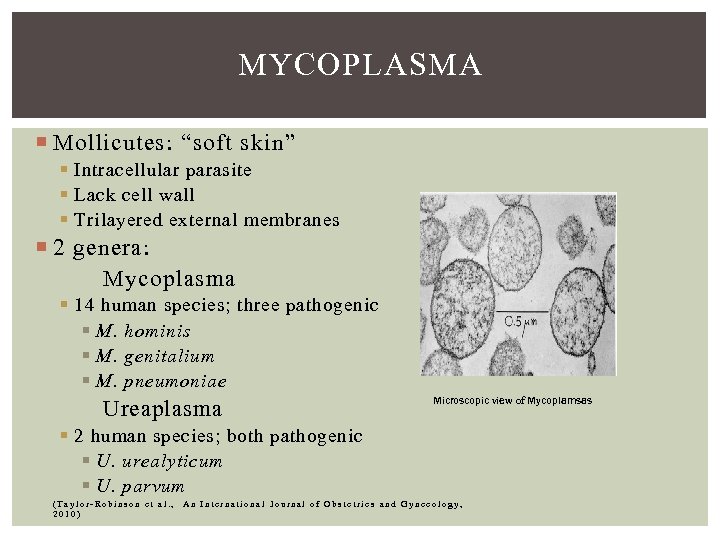
MYCOPLASMA Mollicutes: “soft skin” § Intracellular parasite § Lack cell wall § Trilayered external membranes 2 genera: Mycoplasma § 14 human species; three pathogenic § M. hominis § M. genitalium § M. pneumoniae Ureaplasma Microscopic view of Mycoplamsas § 2 human species; both pathogenic § U. urealyticum § U. parvum (Taylor-Robinson et al. , 2010) An International Journal of Obstetrics and Gynecology,
LABORATORY CHARACTERISTICS Facultative anaerobes Pleomorphic Limited genome Unable to gram stain Culture? (Larsen et al. , Infectious Diseases in Obstetrics and Gynecology, 2010)
VIRULENCE Normal Flora/Non-pathogenic colonizers? Pathogenic? Opportunistic pathogen § Location of colonization § Host immune response § Conditions of pregnancy § Co-infections § Genetic factors § Environmental factors
PATHOGENICITY DURING PREGNANCY Adherence to host cell by mycoplasmal adhesion proteins/lipoproteins Stimulate secretion of pro-inflammatory cytokines (tumor necrosis factor- , interleukin, & interferon-γ) Stimulate release of prostaglandins which leads to protease production Protease can cause adverse pregnancy outcomes § miscarriage, pre-term labor, bacterial vaginosis, chorioamnionitis, spontaneous abortion, perinatal morbidity & mortality, PROM, etc.
PRE-TERM BIRTH Problems: Genital tract infections associated with approximately 50% of preterm deliveries 13% of pregnancies in the U. S. result in preterm delivery or low infant birth weight 60% of mortality among infants (with no anatomic/chromosomal defects) is low birth weight (Kataoka, Journal of Clinical Microbiology, 2006), (Taylor-Robinson, An International Journal of Obstetrics and Gynecology, 2010)
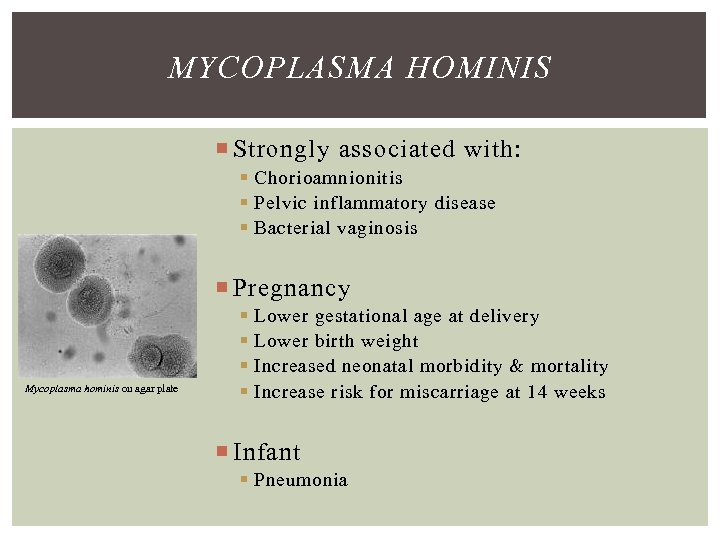
MYCOPLASMA HOMINIS Strongly associated with: § Chorioamnionitis § Pelvic inflammatory disease § Bacterial vaginosis Pregnancy Mycoplasma hominis on agar plate § Lower gestational age at delivery § Lower birth weight § Increased neonatal morbidity & mortality § Increase risk for miscarriage at 14 weeks Infant § Pneumonia
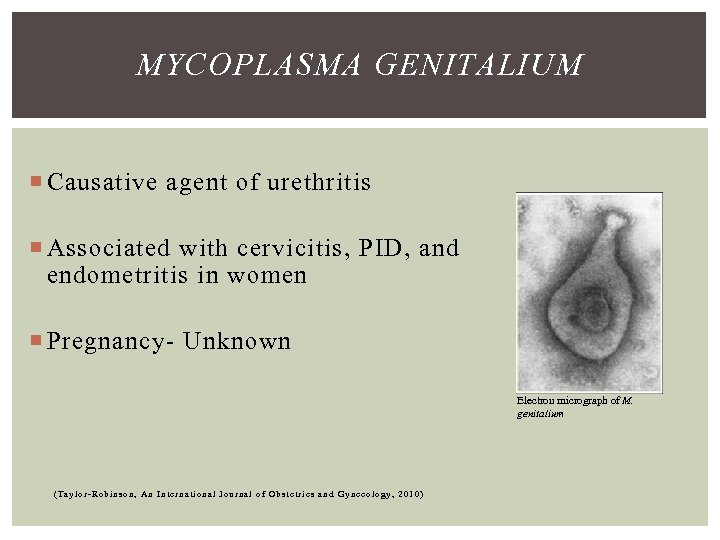
MYCOPLASMA GENITALIUM Causative agent of urethritis Associated with cervicitis, PID, and endometritis in women Pregnancy- Unknown Electron micrograph of M. genitalium (Taylor-Robinson, An International Journal of Obstetrics and Gynecology, 2010)
UREAPLASMA SPP. In 2002, U. urealyticum & U. parvum distinguished as separate species Therefore, studies pre-2002 confounded
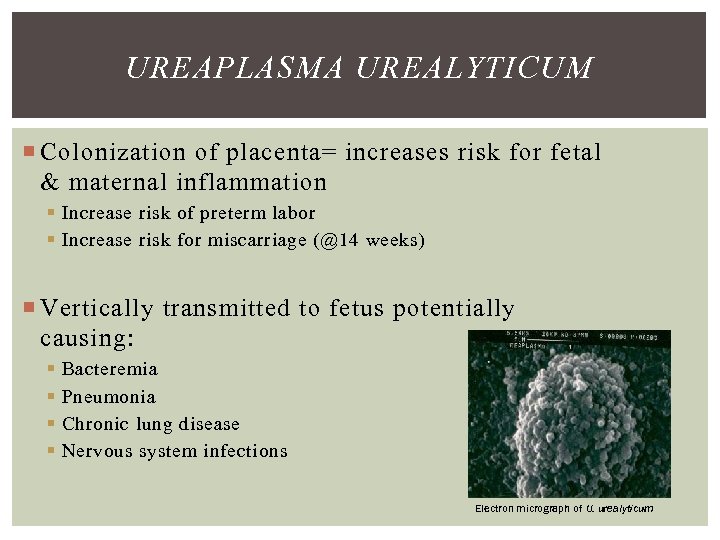
UREAPLASMA UREALYTICUM Colonization of placenta= increases risk for fetal & maternal inflammation § Increase risk of preterm labor § Increase risk for miscarriage (@14 weeks) Vertically transmitted to fetus potentially causing: § Bacteremia § Pneumonia § Chronic lung disease § Nervous system infections Electron micrograph of U. urealyticum
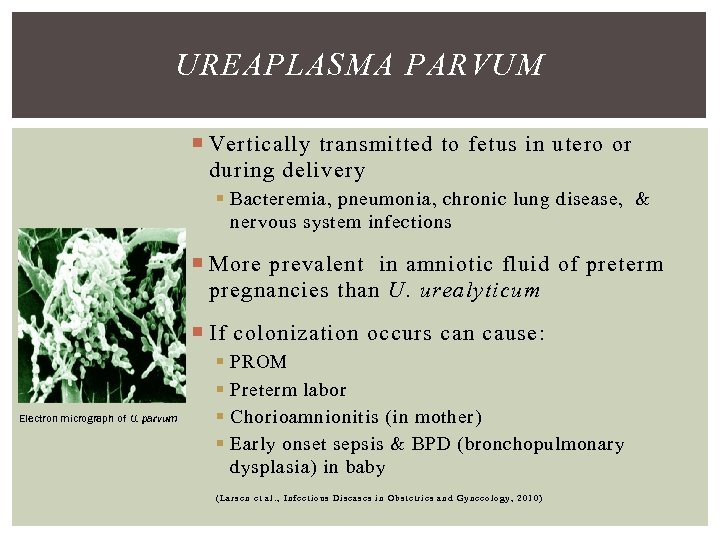
UREAPLASMA PARVUM Vertically transmitted to fetus in utero or during delivery § Bacteremia, pneumonia, chronic lung disease, & nervous system infections More prevalent in amniotic fluid of preterm pregnancies than U. urealyticum If colonization occurs can cause: Electron micrograph of U. parvum § PROM § Preterm labor § Chorioamnionitis (in mother) § Early onset sepsis & BPD (bronchopulmonary dysplasia) in baby (Larsen et al. , Infectious Diseases in Obstetrics and Gynecology, 2010)
ASSOCIATION OF UREAPLASMA WITH PRETERM BIRTH Objectives: 1. Determine if colonization of either Ureaplasma species had association with miscarriage or preterm labor 2. To perfect detection methods and discrimination of species Methods: Tested 239 pregnant women (PCR) from the La Crosse area for colonization with Ureaplasma urealyticum & parvum during early prenatal period
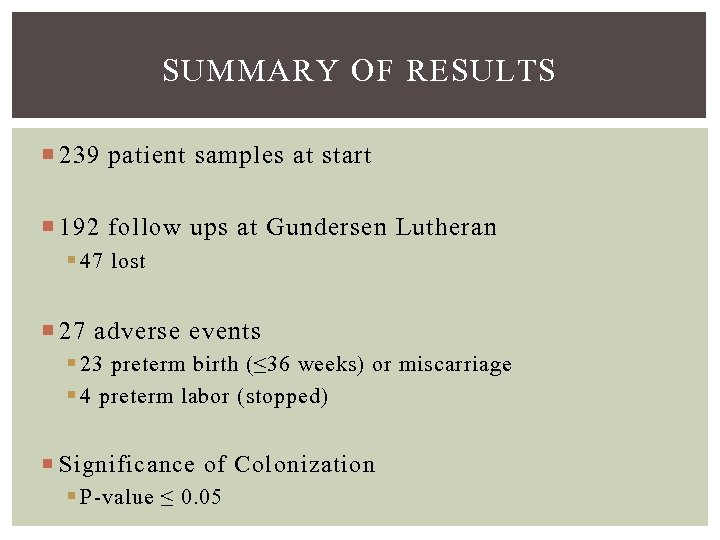
SUMMARY OF RESULTS 239 patient samples at start 192 follow ups at Gundersen Lutheran § 47 lost 27 adverse events § 23 preterm birth (≤ 36 weeks) or miscarriage § 4 preterm labor (stopped) Significance of Colonization § P-value ≤ 0. 05
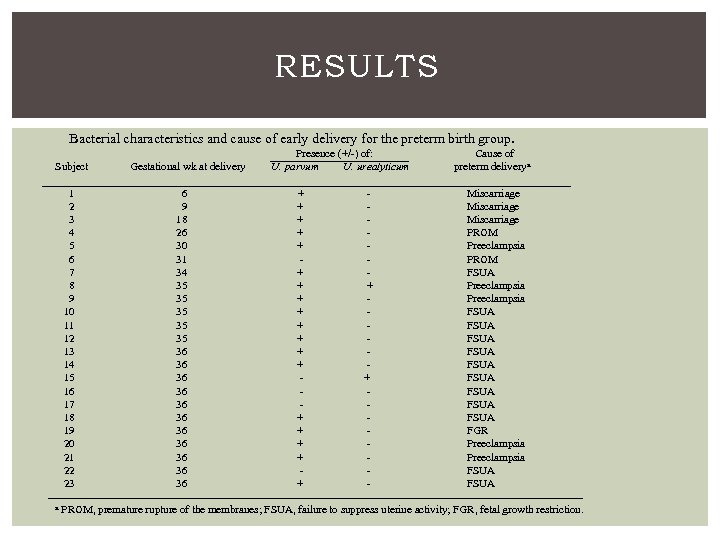
RESULTS Bacterial characteristics and cause of early delivery for the preterm birth group. Subject 1 2 3 4 5 6 7 8 9 10 11 12 13 14 15 16 17 18 19 20 21 22 23 a Gestational wk at delivery 6 9 18 26 30 31 34 35 35 35 36 36 36 Presence (+/-) of: U. parvum U. urealyticum + + + + + - Cause of preterm deliverya Miscarriage PROM Preeclampsia PROM FSUA Preeclampsia FSUA FSUA FSUA FGR Preeclampsia FSUA PROM, premature rupture of the membranes; FSUA, failure to suppress uterine activity; FGR, fetal growth restriction.
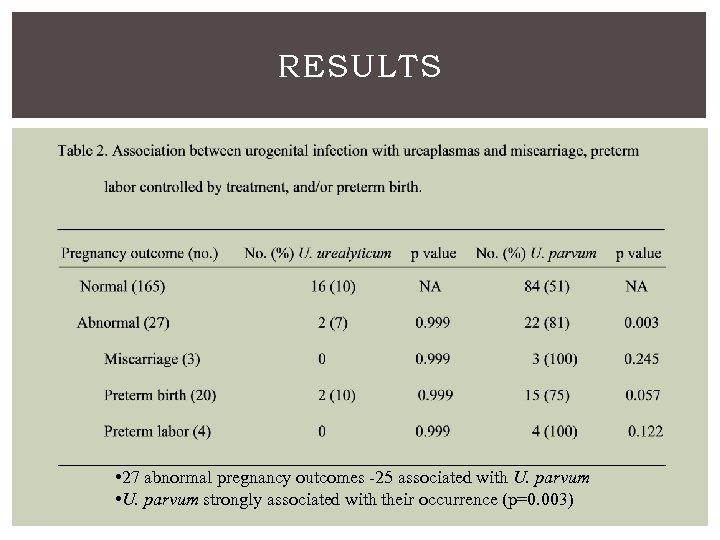
RESULTS • 27 abnormal pregnancy outcomes -25 associated with U. parvum • U. parvum strongly associated with their occurrence (p=0. 003)
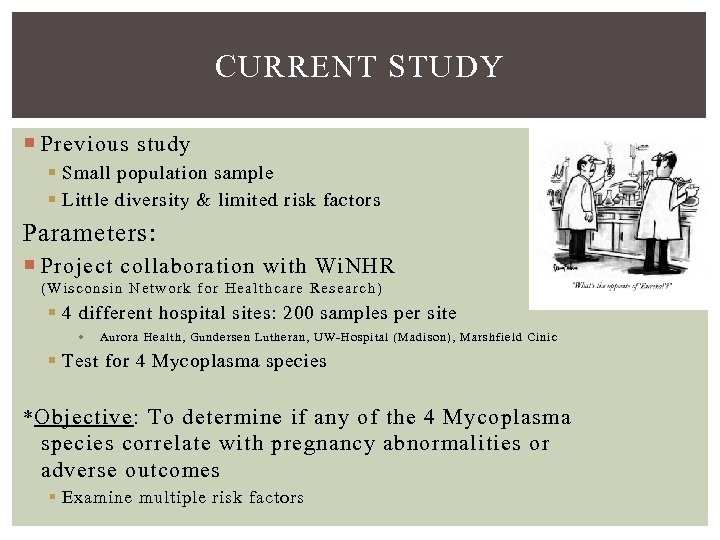
CURRENT STUDY Previous study § Small population sample § Little diversity & limited risk factors Parameters: Project collaboration with Wi. NHR ( Wis consin Ne tw ork for He al thc are Research) § 4 different hospital sites: 200 samples per site Aurora Health, Gundersen Lutheran, UW-Hospital (Madison), Marshfield Cinic § Test for 4 Mycoplasma species * Objective: To determine if any of the 4 Mycoplasma species correlate with pregnancy abnormalities or adverse outcomes § Examine multiple risk factors
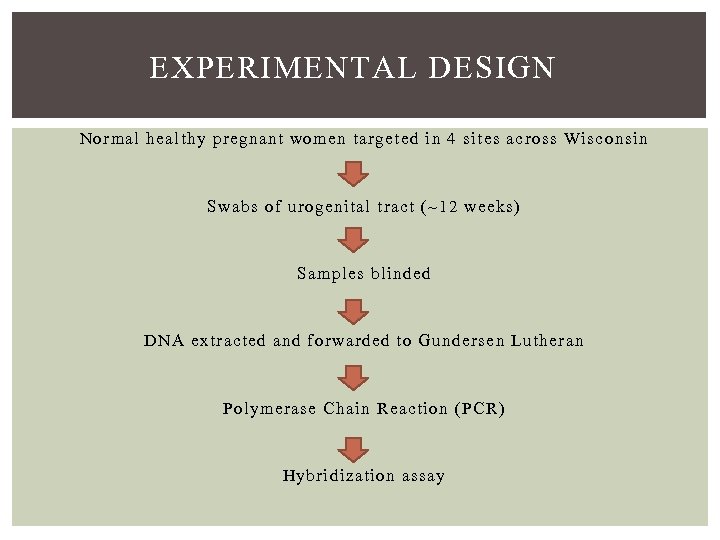
EXPERIMENTAL DESIGN Normal healthy pregnant women targeted in 4 sites across Wisconsin Swabs of urogenital tract (~12 weeks) Samples blinded DNA extracted and forwarded to Gundersen Lutheran Polymerase Chain Reaction (PCR) Hybridization assay
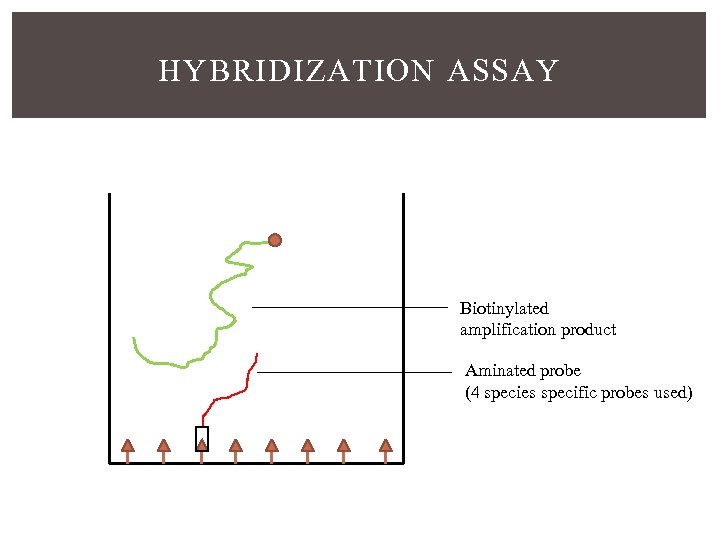
HYBRIDIZATION ASSAY Biotinylated amplification product Aminated probe (4 species specific probes used)
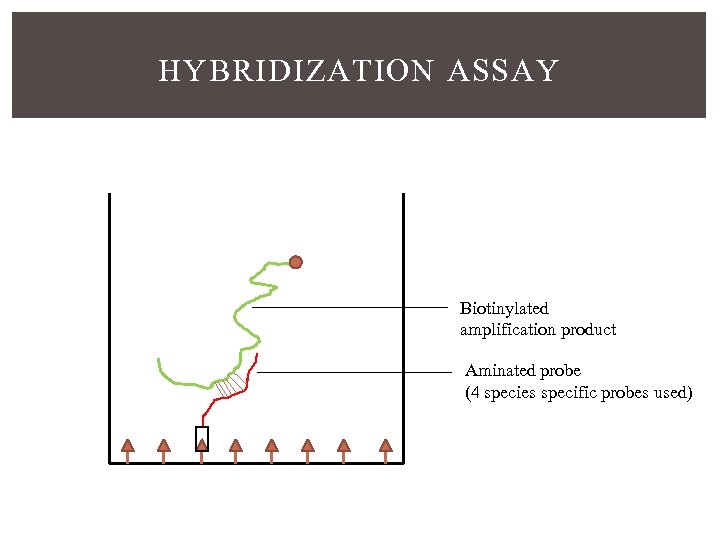
HYBRIDIZATION ASSAY Biotinylated amplification product Aminated probe (4 species specific probes used)
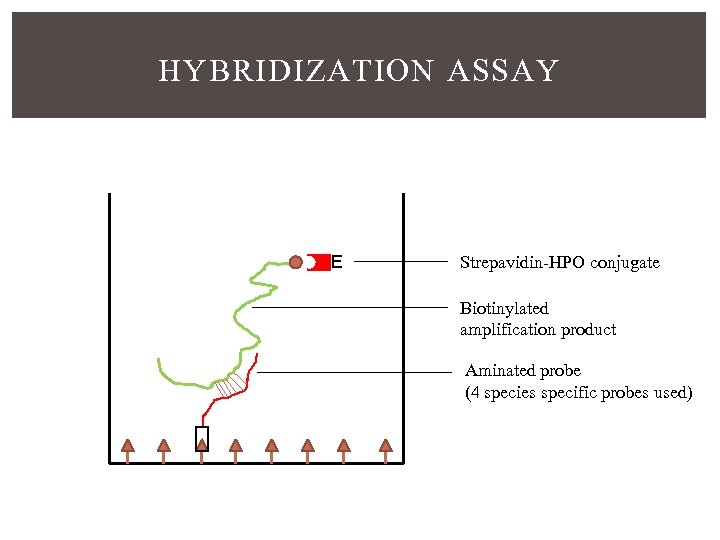
HYBRIDIZATION ASSAY E Strepavidin-HPO conjugate Biotinylated amplification product Aminated probe (4 species specific probes used)
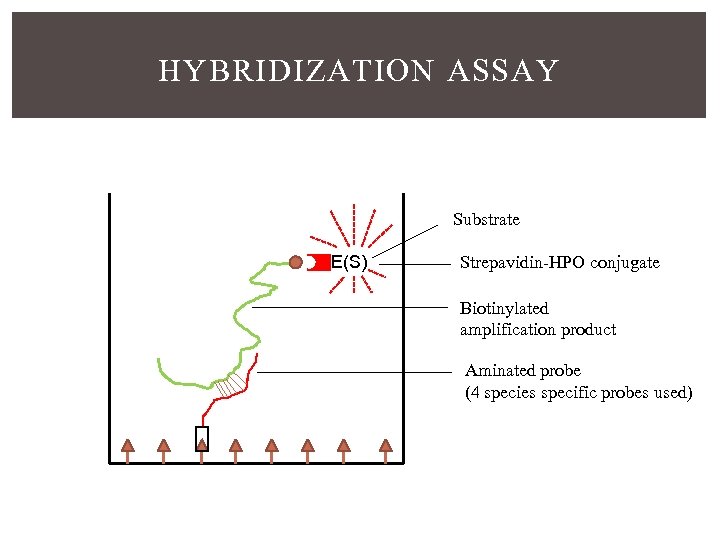
HYBRIDIZATION ASSAY Substrate E(S) Strepavidin-HPO conjugate Biotinylated amplification product Aminated probe (4 species specific probes used)
STUDY PROGRESS § PCR hybridization assay completed on samples § Correlations between species and adverse pregnancy outcomes

ACKNOWLEDGEMENTS Thanks to: § § Microbiology Research Laboratory Gundersen Lutheran Medical Foundation Dr. Steve Callister Dean Jobe
Скачать презентацию ASSOCIATION BETWEEN MYCOPLASMA INFECTION AND COMPLICATIONS DURING PREGNANCY
27fe2e2ade4015aa11dc69c59c8b5679.ppt