


 Скачать презентацию Assessment Management and Decision Making in the Treatment
e1b75ebc95a8d8d0d8304e587829f9dd.ppt
- Количество слайдов: 55
 Assessment, Management and Decision Making in the Treatment of Polytrauma Patients with Head Injuries Roman A. Hayda, MD Created March 2004; Revised July 2006, November 2010
 Epidemiologic Aspects • 80, 000 survivors of head injury annually • 125, 000 children <15 yo head injured annually • 40 -60% of head injured patients have extremity injury • 32, 000 -48, 000 head injury survivors with orthopaedic injuries annually
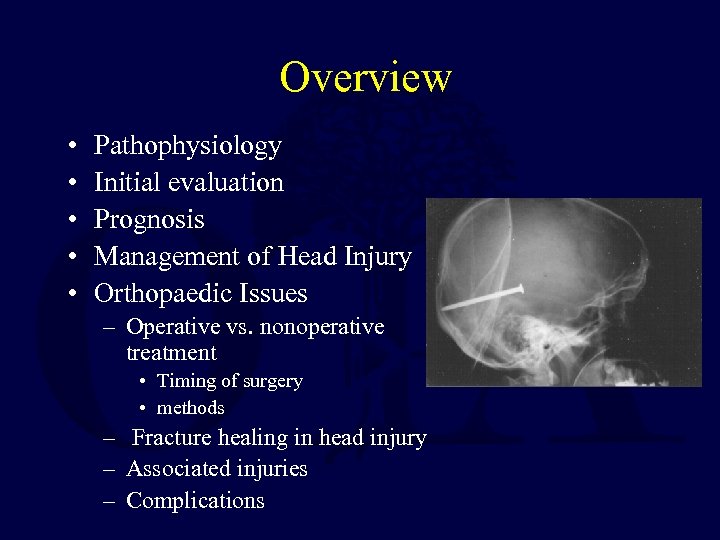 Overview • • • Pathophysiology Initial evaluation Prognosis Management of Head Injury Orthopaedic Issues – Operative vs. nonoperative treatment • Timing of surgery • methods – Fracture healing in head injury – Associated injuries – Complications
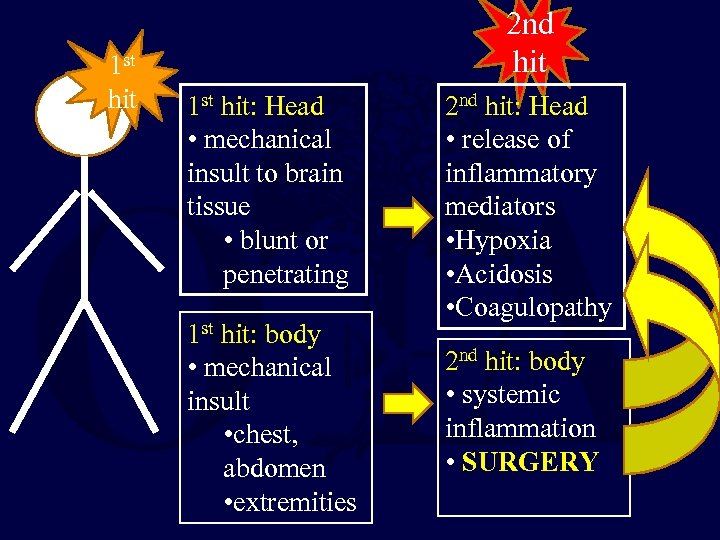 1 st hit 2 nd hit 1 st hit: Head • mechanical insult to brain tissue • blunt or penetrating 1 st hit: body • mechanical insult • chest, abdomen • extremities 2 nd hit: Head • release of inflammatory mediators • Hypoxia • Acidosis • Coagulopathy 2 nd hit: body • systemic inflammation • SURGERY
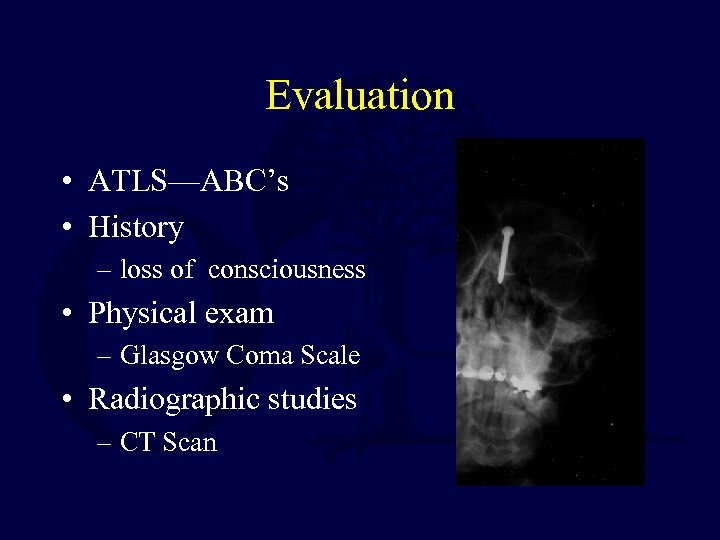 Evaluation • ATLS—ABC’s • History – loss of consciousness • Physical exam – Glasgow Coma Scale • Radiographic studies – CT Scan
 Evaluation • Must exclude head injury by evaluation if – history of loss of consciousness – significant amnesia – confusion, combativeness • Cannot be simply attributed to drug or alcohol use – neurologic deficits on exam of cranial nerves or extremities
 Physical Exam • Exam of head and cranial nerves for lateralizing signs – dilated or sluggish pupil(s) • Extremities – unilateral weakness – posturing • decorticate (flexor) • decerebrate (extensor)
 Glasgow Coma Scale • Eye opening: 1 -4 • Motor response: 1 -6 • Verbal response: 1 -5
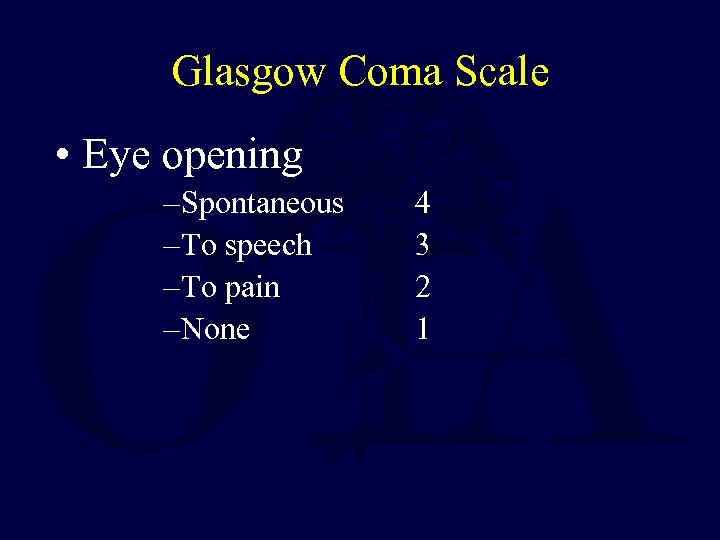 Glasgow Coma Scale • Eye opening – Spontaneous – To speech – To pain – None 4 3 2 1
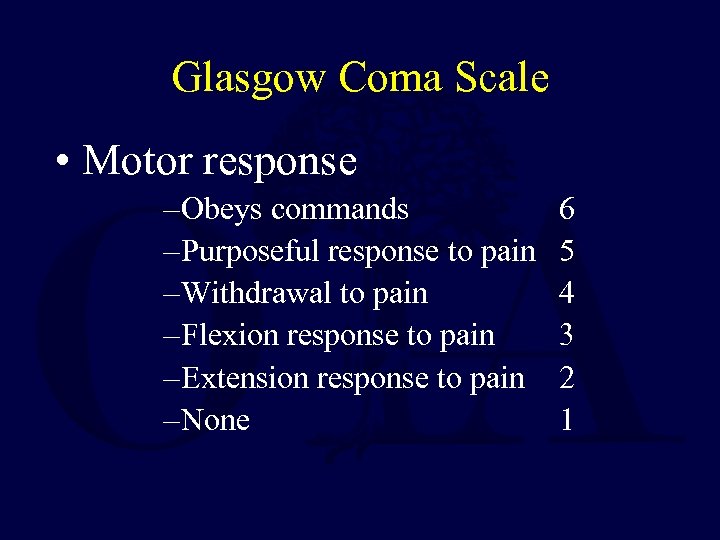 Glasgow Coma Scale • Motor response – Obeys commands – Purposeful response to pain – Withdrawal to pain – Flexion response to pain – Extension response to pain – None 6 5 4 3 2 1
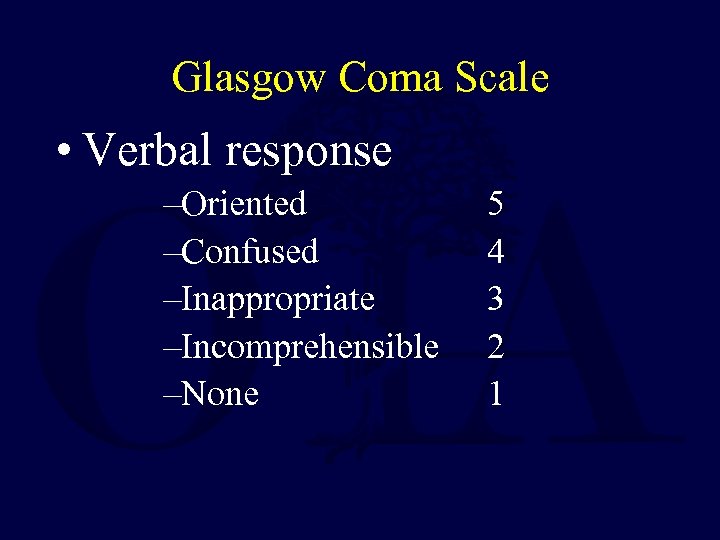 Glasgow Coma Scale • Verbal response –Oriented 5 –Confused 4 –Inappropriate 3 –Incomprehensible 2 –None 1
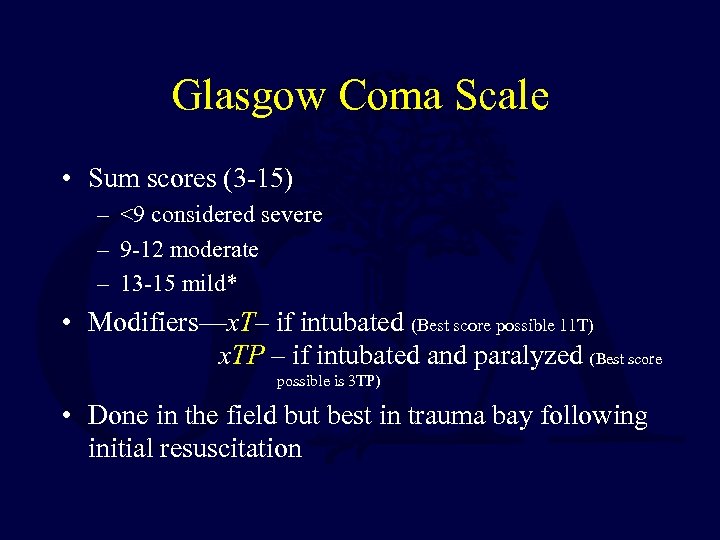 Glasgow Coma Scale • Sum scores (3 -15) – <9 considered severe – 9 -12 moderate – 13 -15 mild* • Modifiers—x. T– if intubated (Best score possible 11 T) x. TP – if intubated and paralyzed (Best score possible is 3 TP) • Done in the field but best in trauma bay following initial resuscitation
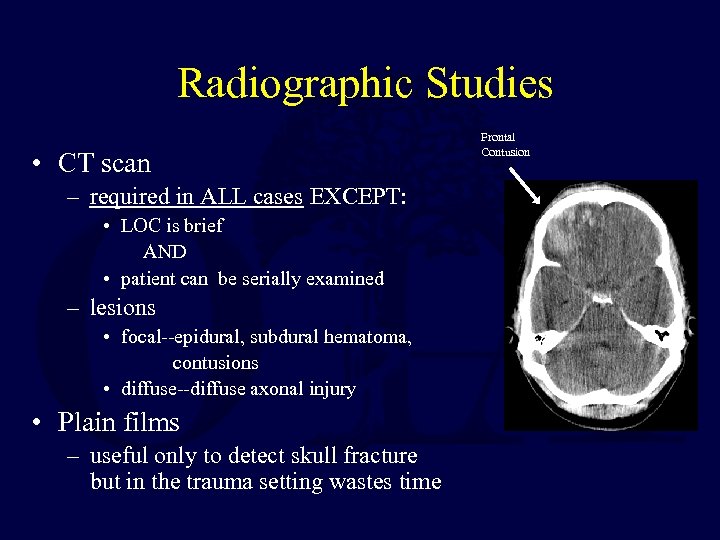 Radiographic Studies • CT scan Frontal Contusion – required in ALL cases EXCEPT: • LOC is brief AND • patient can be serially examined – lesions • focal--epidural, subdural hematoma, contusions • diffuse--diffuse axonal injury • Plain films – useful only to detect skull fracture but in the trauma setting wastes time
 Treatment • Initial – Intubation if unresponsive or combative to give controlled ventilation – pharmacologic paralysis • after neurologic exam is completed – Blood pressure and O 2 saturation monitoring • keep systolic > 90 mm Hg • 100% O 2 saturation
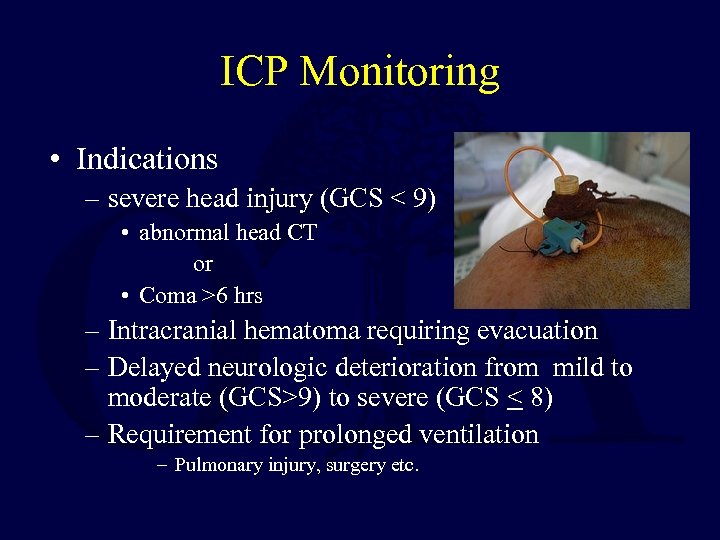 ICP Monitoring • Indications – severe head injury (GCS < 9) • abnormal head CT or • Coma >6 hrs – Intracranial hematoma requiring evacuation – Delayed neurologic deterioration from mild to moderate (GCS>9) to severe (GCS < 8) – Requirement for prolonged ventilation – Pulmonary injury, surgery etc.
 ICU Management Goals • O 2 saturation 100% • Mean arterial pressure 90 -110 mm Hg • ICP < 20 mm Hg • Cerebral Perfusion Pressure (CPP=MAP-ICP) >70 mm Hg
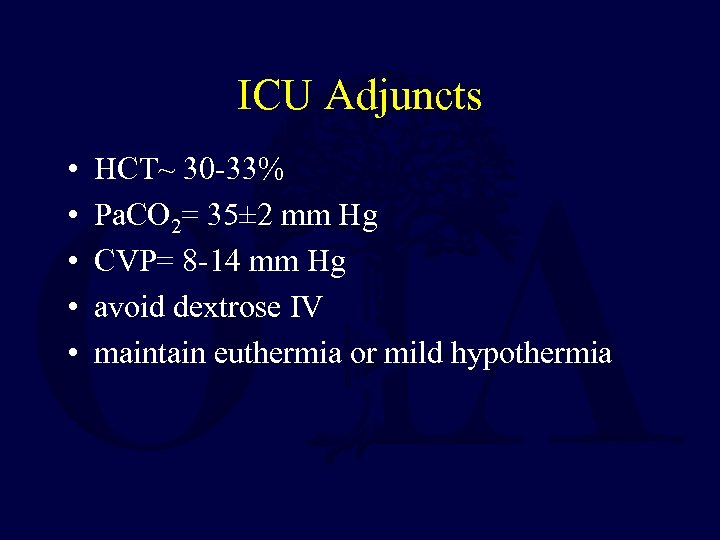 ICU Adjuncts • • • HCT~ 30 -33% Pa. CO 2= 35± 2 mm Hg CVP= 8 -14 mm Hg avoid dextrose IV maintain euthermia or mild hypothermia
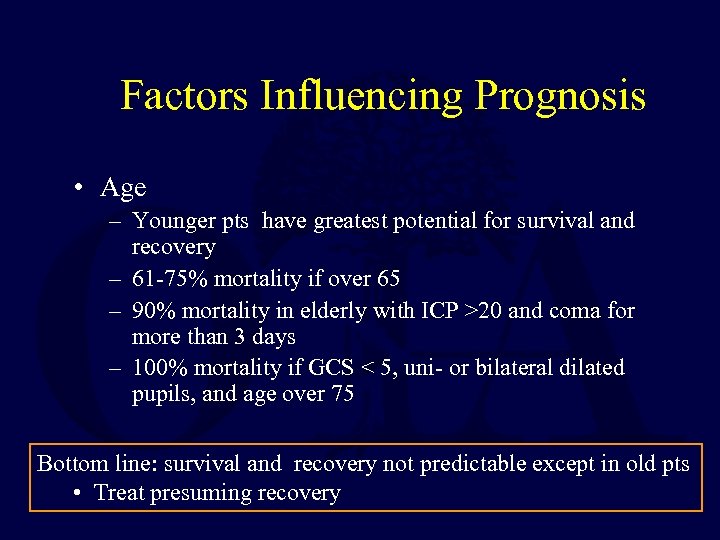 Factors Influencing Prognosis • Age – Younger pts have greatest potential for survival and recovery – 61 -75% mortality if over 65 – 90% mortality in elderly with ICP >20 and coma for more than 3 days – 100% mortality if GCS < 5, uni- or bilateral dilated pupils, and age over 75 Bottom line: survival and recovery not predictable except in old pts • Treat presuming recovery
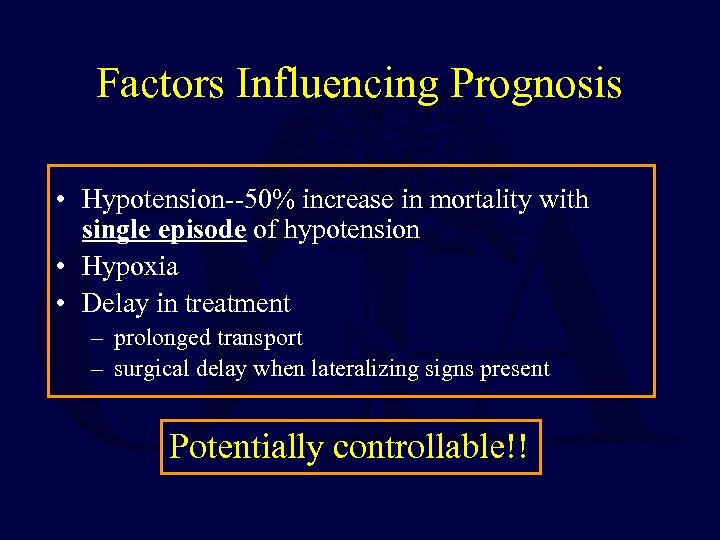 Factors Influencing Prognosis • Hypotension--50% increase in mortality with single episode of hypotension • Hypoxia • Delay in treatment – prolonged transport – surgical delay when lateralizing signs present Potentially controllable!!
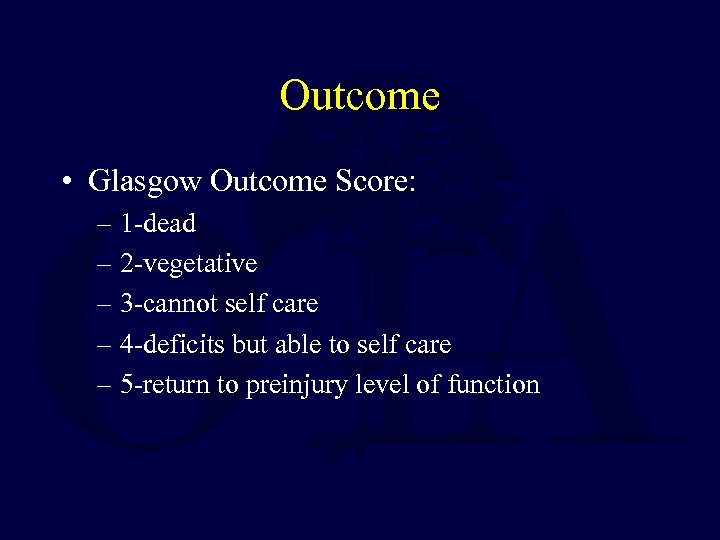 Outcome • Glasgow Outcome Score: – 1 -dead – 2 -vegetative – 3 -cannot self care – 4 -deficits but able to self care – 5 -return to preinjury level of function
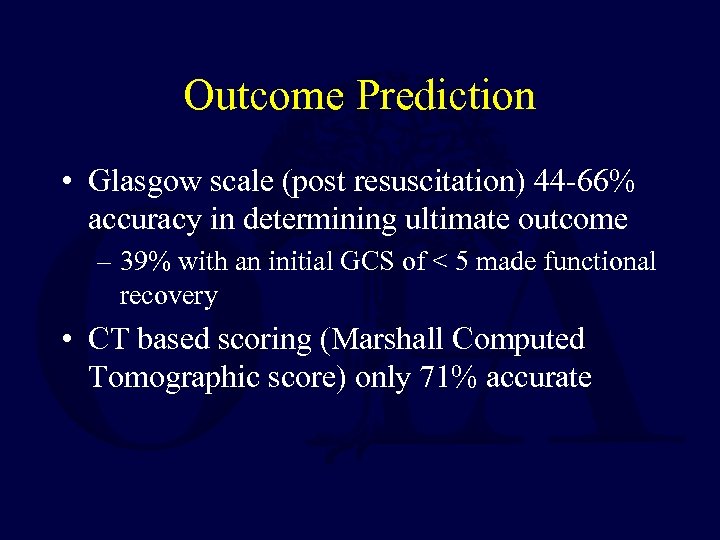 Outcome Prediction • Glasgow scale (post resuscitation) 44 -66% accuracy in determining ultimate outcome – 39% with an initial GCS of < 5 made functional recovery • CT based scoring (Marshall Computed Tomographic score) only 71% accurate
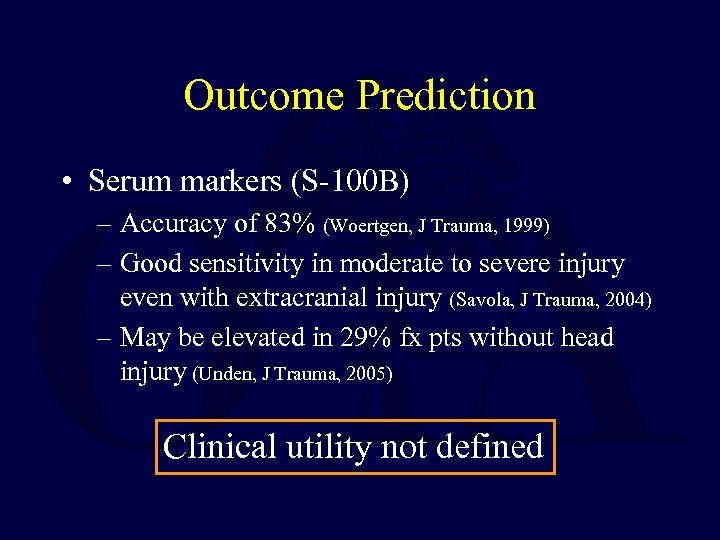 Outcome Prediction • Serum markers (S-100 B) – Accuracy of 83% (Woertgen, J Trauma, 1999) – Good sensitivity in moderate to severe injury even with extracranial injury (Savola, J Trauma, 2004) – May be elevated in 29% fx pts without head injury (Unden, J Trauma, 2005) Clinical utility not defined
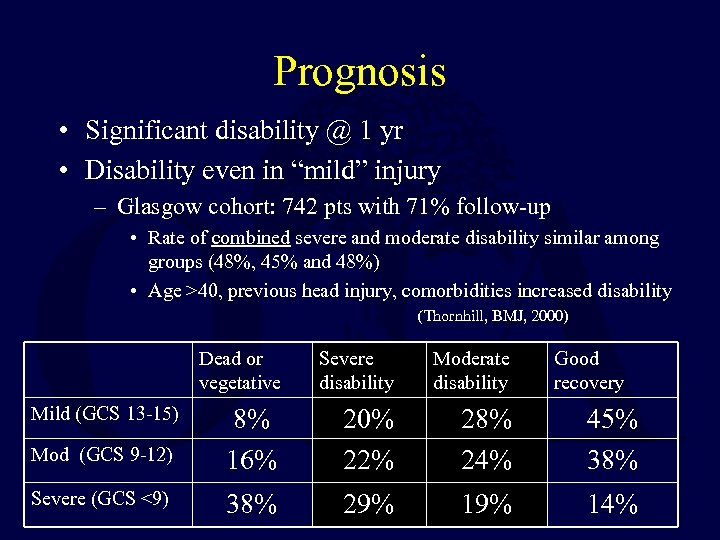 Prognosis • Significant disability @ 1 yr • Disability even in “mild” injury – Glasgow cohort: 742 pts with 71% follow-up • Rate of combined severe and moderate disability similar among groups (48%, 45% and 48%) • Age >40, previous head injury, comorbidities increased disability (Thornhill, BMJ, 2000) Dead or vegetative Severe disability Moderate disability Mod (GCS 9 -12) 8% 16% 20% 22% 28% 24% 45% 38% Severe (GCS <9) 38% 29% 14% Mild (GCS 13 -15) Good recovery
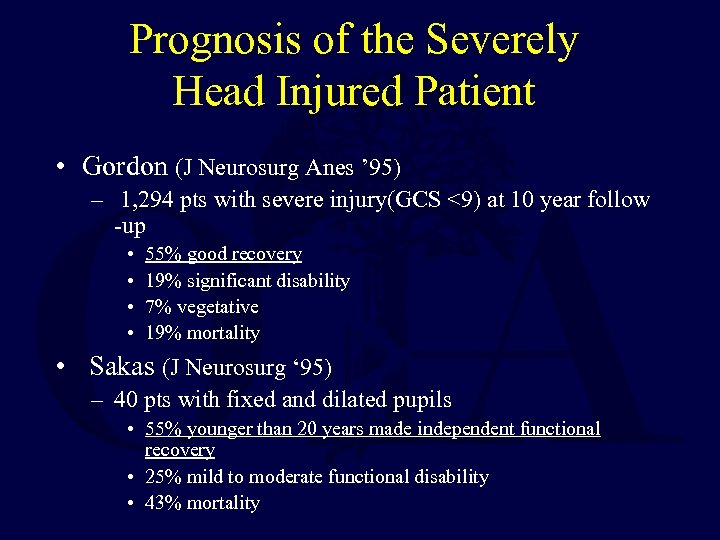 Prognosis of the Severely Head Injured Patient • Gordon (J Neurosurg Anes ’ 95) – 1, 294 pts with severe injury(GCS <9) at 10 year follow -up • • 55% good recovery 19% significant disability 7% vegetative 19% mortality • Sakas (J Neurosurg ‘ 95) – 40 pts with fixed and dilated pupils • 55% younger than 20 years made independent functional recovery • 25% mild to moderate functional disability • 43% mortality
 Orthopaedic Issues in the Head Injured Patient • Role in resuscitation – pelvic ring injury – open injuries – long bone fractures • Treatment methods and timing • Associated injuries • Complications
 Initial Surgery in the Head Injured is Damage Control Surgery
 Damage Control Orthopaedics • Goal – Limit ongoing hemorrhage, hypotension, and release of inflammatory factors – Limit stress on injured brain – Initial surgery • <1 -2 hrs • limit surgical blood loss
 Damage Control Orthopaedics • Methods – Initial focus on stabilization • External fixation • Limited debridement • Limited or no internal fixation or definitive care – Delayed definitive fixation (5 -7 days)
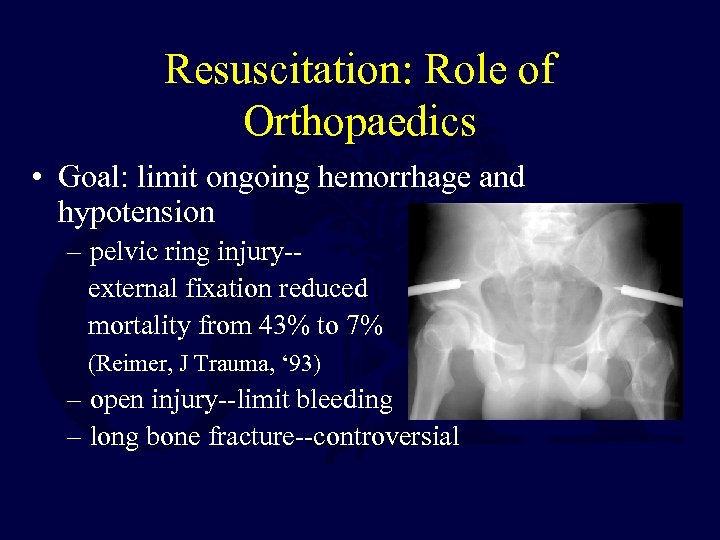 Resuscitation: Role of Orthopaedics • Goal: limit ongoing hemorrhage and hypotension – pelvic ring injury- external fixation reduced mortality from 43% to 7% (Reimer, J Trauma, ‘ 93) – open injury--limit bleeding – long bone fracture--controversial
 Long Bone Fracture in the Head Injured Patient • Early fixation (<24 hours) well accepted in the polytrauma patient • In the head injured patient early fixation may be associated with – hypotension – blood loss/coagulopathy – hypoxia – elevated ICP • Advocates of early and delayed treatment
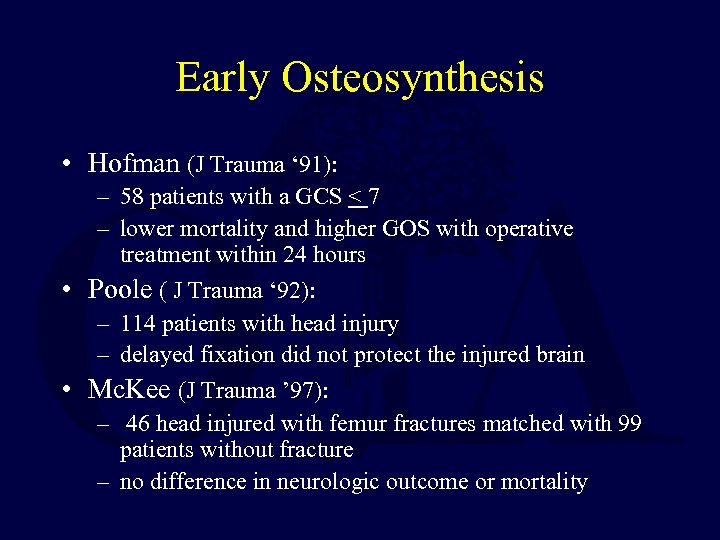 Early Osteosynthesis • Hofman (J Trauma ‘ 91): – 58 patients with a GCS < 7 – lower mortality and higher GOS with operative treatment within 24 hours • Poole ( J Trauma ‘ 92): – 114 patients with head injury – delayed fixation did not protect the injured brain • Mc. Kee (J Trauma ’ 97): – 46 head injured with femur fractures matched with 99 patients without fracture – no difference in neurologic outcome or mortality
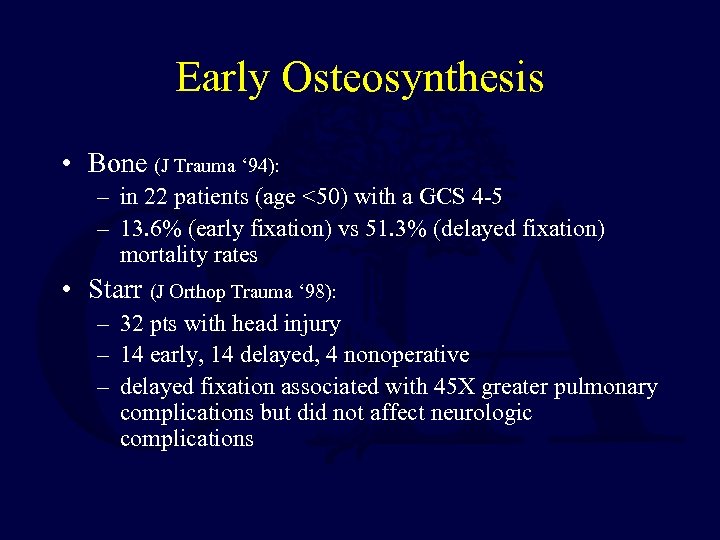 Early Osteosynthesis • Bone (J Trauma ‘ 94): – in 22 patients (age <50) with a GCS 4 -5 – 13. 6% (early fixation) vs 51. 3% (delayed fixation) mortality rates • Starr (J Orthop Trauma ‘ 98): – 32 pts with head injury – 14 early, 14 delayed, 4 nonoperative – delayed fixation associated with 45 X greater pulmonary complications but did not affect neurologic complications
 Early Osteosynthesis • Kalb (Surgery ‘ 98): – 123 patients, head AIS > 2, 84 early, 39 late fixation – early group had increased fluid requirement but no other difference in mortality or complication – emphasized the role of appropriate monitoring • Scalea (J Trauma ‘ 99): – 171 patients, mean GCS 9, 147 early, 24 late fixation – early fixation no effect on length of stay, mortality, CNS complications
 Delayed Osteosynthesis • Reynolds (Annals of Surg ‘ 95): – Mortality 2/105 patients, both early rodding (<24 hrs) – one due to neurologic and the other pulmonary deterioration • Jaicks (J Trauma ‘ 97): – 33 patients with head AIS > 2; 19 early fixation 14 late – early group required more fluid in 48 hrs (14 vs 8. 7 l); more intraoperative hypotension (16% vs 7%); lower discharge GCS (13. 5 vs 15)
 Delayed Osteosythesis • Townsend (J Trauma ‘ 98): – 61 patients with GCS < 8; – hypotension 8 X more likely if operated < 2 hrs and 2 X more likely when operated within 24 hrs – no difference noted in GOS
 Advances in Care of Head Injured • ICP monitoring • Evolution of anesthetic agents • Improvement in neuroanesthetic techniques Allow for safer surgery in the head injured
 Fracture Care • Ultimate neurologic outcome continues to be difficult to predict – Presume recovery – Avoid treatments that may compromise neurologic outcome • All interventions must strive to reduce musculoskeletal complications inherent in the head injured patient • Management decisions made in conjunction with trauma/neurosurgical team
 Algorithm for Fracture care in Head injured • Severe Head injury (GCS<9) or unstable pt DAMAGE CONTROL SURGERY Convert to definitive at 5+ days • Mild head injury (GCS 13 -15); stable pt Consider EARLY TOTAL CARE • Intermediate head injury Determined by pt stability; complexity of surgery
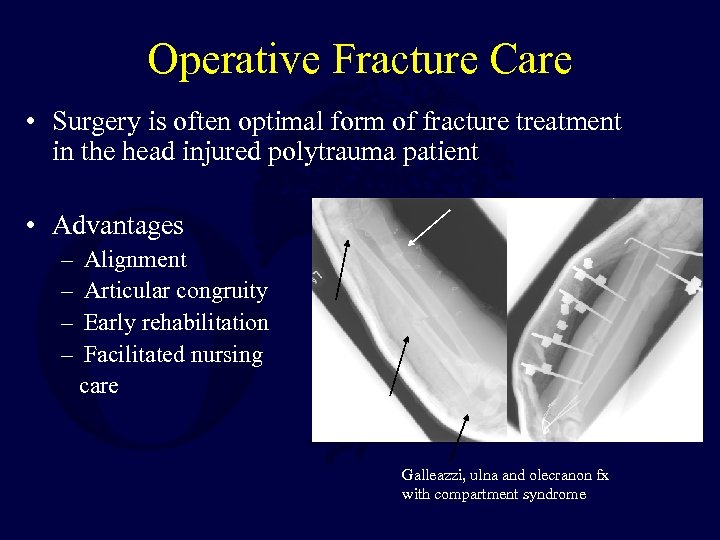 Operative Fracture Care • Surgery is often optimal form of fracture treatment in the head injured polytrauma patient • Advantages – Alignment – Articular congruity – Early rehabilitation – Facilitated nursing care Galleazzi, ulna and olecranon fx with compartment syndrome
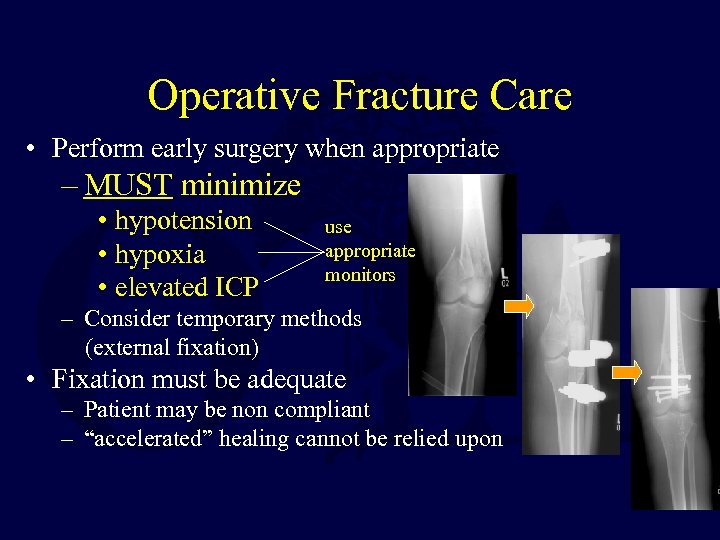 Operative Fracture Care • Perform early surgery when appropriate – MUST minimize • hypotension • hypoxia • elevated ICP use appropriate monitors – Consider temporary methods (external fixation) • Fixation must be adequate – Patient may be non compliant – “accelerated” healing cannot be relied upon
 Nonoperative Fracture Management • Treatment of choice when – nonoperative means best treat that particular fracture – operative risks outweigh potential benefits • Modalities – – splint brace cast traction • Caveat – device must be removed periodically to inspect underlying skin for decubiti
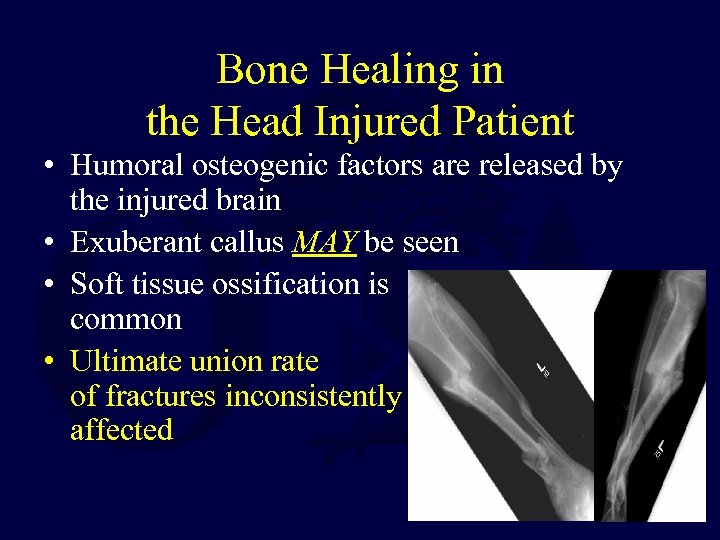 Bone Healing in the Head Injured Patient • Humoral osteogenic factors are released by the injured brain • Exuberant callus MAY be seen • Soft tissue ossification is common • Ultimate union rate of fractures inconsistently affected
 Fracture Healing with Head Injury • Cadosch, JBJS-A, 2009 – Case matched series of 17 pts with avg GCS 5. 6, treated with IM nail – Union 2 X faster; 37 -50%> callus; serum induced osteoblast proliferation • Boes, JBJS-A, 2006 – Experimental model of 43 rats with IM nailed femur fx +/- head injury – More fx stiffness in head injury cohort – Serum of head injured rats promoted stem cell proliferation
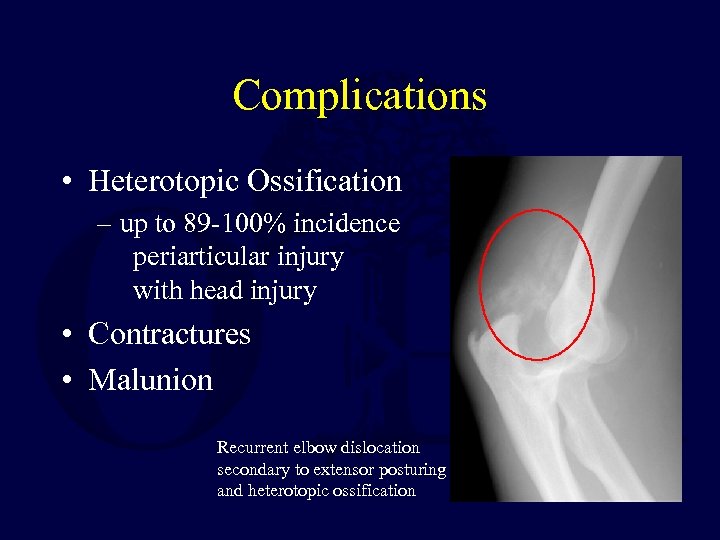 Complications • Heterotopic Ossification – up to 89 -100% incidence periarticular injury with head injury • Contractures • Malunion Recurrent elbow dislocation secondary to extensor posturing and heterotopic ossification
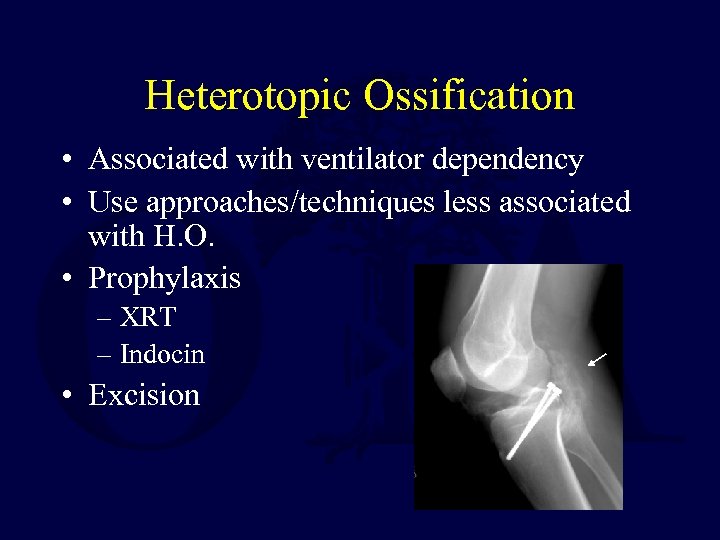 Heterotopic Ossification • Associated with ventilator dependency • Use approaches/techniques less associated with H. O. • Prophylaxis – XRT – Indocin • Excision
 Contractures • Occurs due to spasticity/posturing • Effects – Inhibits restoration of function – Complicates nursing care – Predisposes to decubitus ulcers
 Contractures • Treatment: – Prevention • splinting/positioning • early physical and occupational therapy – Established • • serial casting manipulation surgery nerve blocks
 Associated Injuries • Normal methods of clinical and radiologic assessment may not apply in the head injured patient – C spine injury – Occult fractures and injury
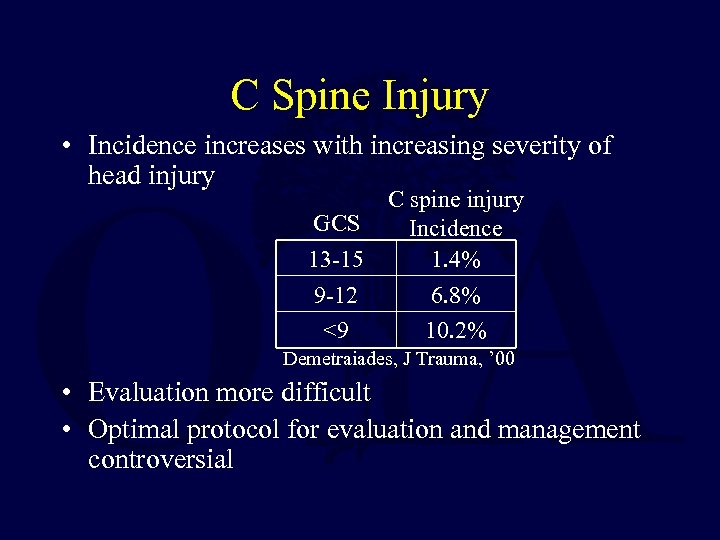 C Spine Injury • Incidence increases with increasing severity of head injury GCS 13 -15 9 -12 <9 C spine injury Incidence 1. 4% 6. 8% 10. 2% Demetraiades, J Trauma, ’ 00 • Evaluation more difficult • Optimal protocol for evaluation and management controversial
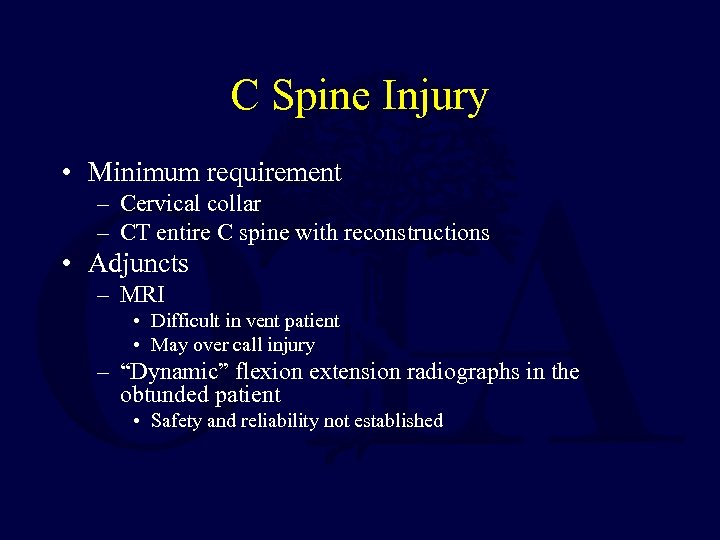 C Spine Injury • Minimum requirement – Cervical collar – CT entire C spine with reconstructions • Adjuncts – MRI • Difficult in vent patient • May over call injury – “Dynamic” flexion extension radiographs in the obtunded patient • Safety and reliability not established
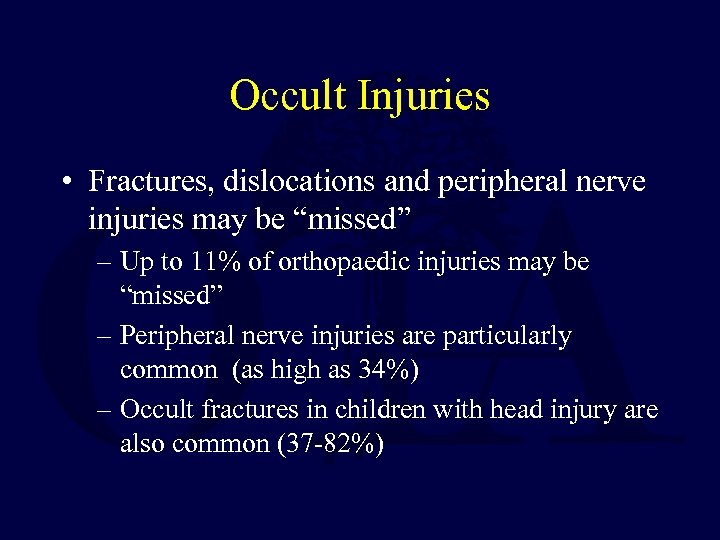 Occult Injuries • Fractures, dislocations and peripheral nerve injuries may be “missed” – Up to 11% of orthopaedic injuries may be “missed” – Peripheral nerve injuries are particularly common (as high as 34%) – Occult fractures in children with head injury are also common (37 -82%)
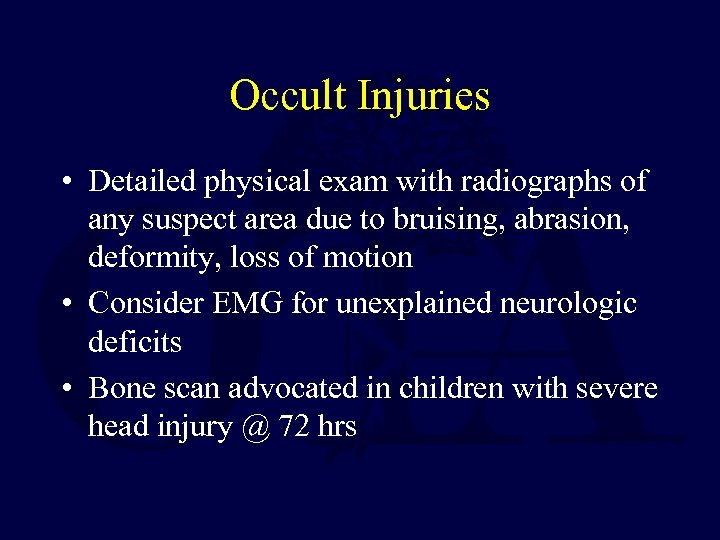 Occult Injuries • Detailed physical exam with radiographs of any suspect area due to bruising, abrasion, deformity, loss of motion • Consider EMG for unexplained neurologic deficits • Bone scan advocated in children with severe head injury @ 72 hrs
 Summary • Orthopaedic injuries are common in head injured polytrauma patients • Head injury outcome is difficult to predict • Management requires multidisciplinary approach • Operative management is safe and often improves functional outcome if secondary brain insults are avoided – Hypotension, hypoxia, increased ICP If you would like to volunteer as an author for the Resident Slide Project or recommend updates to any of the following slides, please send an email to ota@ota. org E-mail OTA about Questions/Comments Return to General/Principles Index
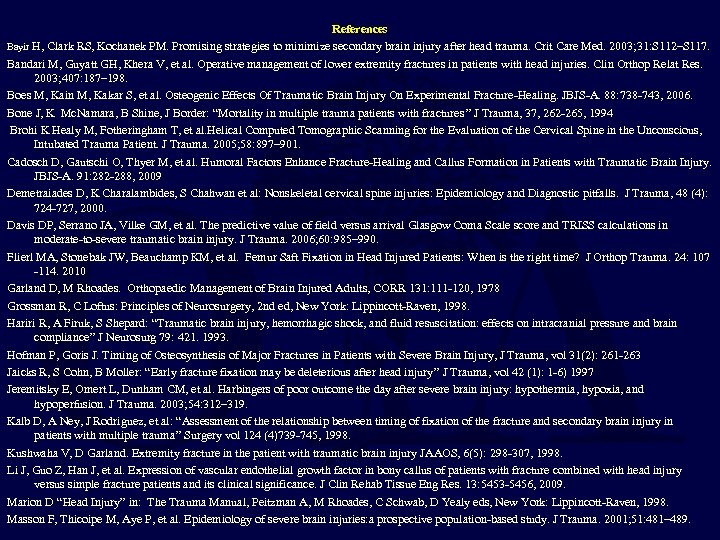 References Bayir H, Clark RS, Kochanek PM. Promising strategies to minimize secondary brain injury after head trauma. Crit Care Med. 2003; 31: S 112–S 117. Bandari M, Guyatt GH, Khera V, et al. Operative management of lower extremity fractures in patients with head injuries. Clin Orthop Relat Res. 2003; 407: 187– 198. Boes M, Kain M, Kakar S, et al. Osteogenic Effects Of Traumatic Brain Injury On Experimental Fracture-Healing. JBJS-A. 88: 738 -743, 2006. Bone J, K Mc. Namara, B Shine, J Border: “Mortality in multiple trauma patients with fractures ” J Trauma, 37, 262 -265, 1994 Brohi K Healy M, Fotheringham T, et al. Helical Computed Tomographic Scanning for the Evaluation of the Cervical Spine in the Unconscious, Intubated Trauma Patient. J Trauma. 2005; 58: 897– 901. Cadosch D, Gautschi O, Thyer M, et al. Humoral Factors Enhance Fracture-Healing and Callus Formation in Patients with Traumatic Brain Injury. JBJS-A. 91: 282 -288, 2009 Demetraiades D, K Charalambides, S Chahwan et al: Nonskeletal cervical spine injuries: Epidemiology and Diagnostic pitfalls. J Trauma, 48 (4): 724 -727, 2000. Davis DP, Serrano JA, Vilke GM, et al. The predictive value of field versus arrival Glasgow Coma Scale score and TRISS calculations in moderate-to-severe traumatic brain injury. J Trauma. 2006; 60: 985– 990. Flierl MA, Stonebak JW, Beauchamp KM, et al. Femur Saft Fixation in Head Injured Patients: When is the right time? J Orthop Trauma. 24: 107 -114. 2010 Garland D, M Rhoades. Orthopaedic Management of Brain Injured Adults, CORR 131: 111 -120, 1978 Grossman R, C Loftus: Principles of Neurosurgery, 2 nd ed, New York: Lippincott-Raven, 1998. Hariri R, A Firuk, S Shepard: “Traumatic brain injury, hemorrhagic shock, and fluid resuscitation: effects on intracranial pressure and brain compliance” J Neurosurg 79: 421. 1993. Hofman P, Goris J. Timing of Osteosynthesis of Major Fractures in Patients with Severe Brain Injury, J Trauma, vol 31(2): 261 -263 Jaicks R, S Cohn, B Moller: “Early fracture fixation may be deleterious after head injury ” J Trauma, vol 42 (1): 1 -6) 1997 Jeremitsky E, Omert L, Dunham CM, et al. Harbingers of poor outcome the day after severe brain injury: hypothermia, hypoxia, and hypoperfusion. J Trauma. 2003; 54: 312– 319. Kalb D, A Ney, J Rodriguez, et al: “Assessment of the relationship between timing of fixation of the fracture and secondary brain injury in patients with multiple trauma” Surgery vol 124 (4)739 -745, 1998. Kushwaha V, D Garland. Extremity fracture in the patient with traumatic brain injury JAAOS, 6(5): 298 -307, 1998. Li J, Guo Z, Han J, et al. Expression of vascular endothelial growth factor in bony callus of patients with fracture combined with head injury versus simple fracture patients and its clinical significance. J Clin Rehab Tissue Eng Res. 13: 5453 -5456, 2009. Marion D “Head Injury” in: The Trauma Manual, Peitzman A, M Rhoades, C Schwab, D Yealy eds, New York: Lippincott-Raven, 1998. Masson F, Thicoipe M, Aye P, et al. Epidemiology of severe brain injuries: a prospective population-based study. J Trauma. 2001; 51: 481– 489.
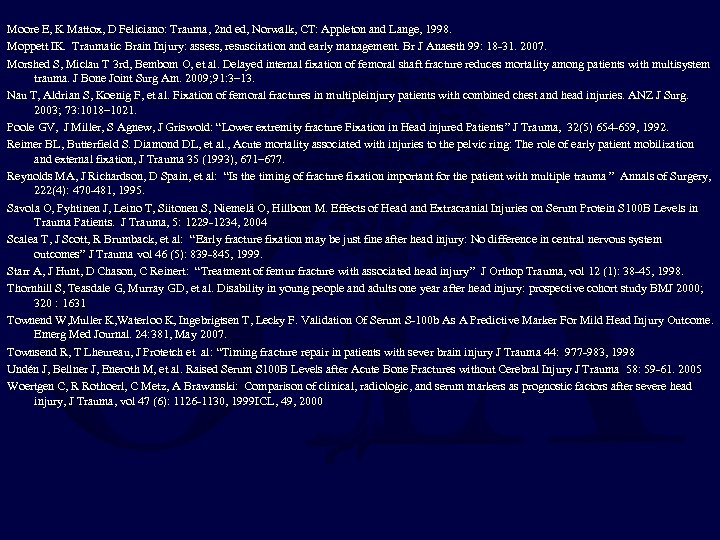 Moore E, K Mattox, D Feliciano: Trauma, 2 nd ed, Norwalk, CT: Appleton and Lange, 1998. Moppett IK. Traumatic Brain Injury: assess, resuscitation and early management. Br J Anaesth 99: 18 -31. 2007. Morshed S, Miclau T 3 rd, Bembom O, et al. Delayed internal fixation of femoral shaft fracture reduces mortality among patients with multisystem trauma. J Bone Joint Surg Am. 2009; 91: 3– 13. Nau T, Aldrian S, Koenig F, et al. Fixation of femoral fractures in multipleinjury patients with combined chest and head injuries. ANZ J Surg. 2003; 73: 1018– 1021. Poole GV, J Miller, S Agnew, J Griswold: “Lower extremity fracture Fixation in Head injured Patients ” J Trauma, 32(5) 654 -659, 1992. Reimer BL, Butterfield S. Diamond DL, et al. , Acute mortality associated with injuries to the pelvic ring: The role of early patient mobilization and external fixation, J Trauma 35 (1993), 671– 677. Reynolds MA, J Richardson, D Spain, et al: “Is the timing of fracture fixation important for the patient with multiple trauma ” Annals of Surgery, 222(4): 470 -481, 1995. Savola O, Pyhtinen J, Leino T, Siitonen S, Niemelä O, Hillbom M. Effects of Head and Extracranial Injuries on Serum Protein S 100 B Levels in Trauma Patients. J Trauma, 5: 1229 -1234, 2004 Scalea T, J Scott, R Brumback, et al: “Early fracture fixation may be just fine after head injury: No difference in central nervous system outcomes” J Trauma vol 46 (5): 839 -845, 1999. Starr A, J Hunt, D Chason, C Reinert: “Treatment of femur fracture with associated head injury ” J Orthop Trauma, vol 12 (1): 38 -45, 1998. Thornhill S, Teasdale G, Murray GD, et al. Disability in young people and adults one year after head injury: prospective cohort study BMJ 2000; 320 : 1631 Townend W, Muller K, Waterloo K, Ingebrigtsen T, Lecky F. Validation Of Serum S-100 b As A Predictive Marker For Mild Head Injury Outcome. Emerg Med Journal. 24: 381, May 2007. Townsend R, T Lheureau, J Protetch et al: “Timing fracture repair in patients with sever brain injury J Trauma 44: 977 -983, 1998 Undén J, Bellner J, Eneroth M, et al. Raised Serum S 100 B Levels after Acute Bone Fractures without Cerebral Injury J Trauma 58: 59 -61. 2005 Woertgen C, R Rothoerl, C Metz, A Brawanski: Comparison of clinical, radiologic, and serum markers as prognostic factors after severe head injury, J Trauma, vol 47 (6): 1126 -1130, 1999 ICL, 49, 2000