


 Скачать презентацию Assessing the Impact of Stressful Life Events on
d1240ec85d3a328fbafe204ec24f9dbf.ppt
- Количество слайдов: 30
 Assessing the Impact of Stressful Life Events on Small-for-Gestational Age Births: Data from the Indiana Access Project Natalie Di. Pietro, Pharm. D, MPH Larry Humbert, MSSW, Pg. Dip Indiana Strombom, Ph. D APHA 135 th Annual Meeting November 5, 2007
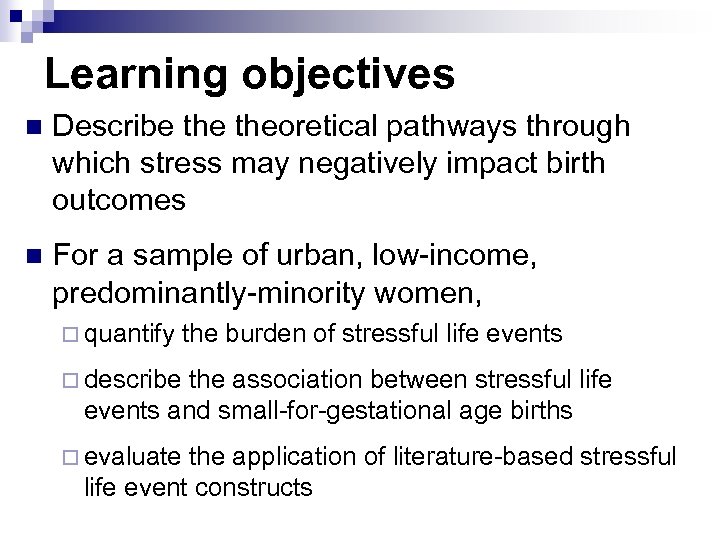 Learning objectives n Describe theoretical pathways through which stress may negatively impact birth outcomes n For a sample of urban, low-income, predominantly-minority women, ¨ quantify the burden of stressful life events ¨ describe the association between stressful life events and small-for-gestational age births ¨ evaluate the application of literature-based stressful life event constructs
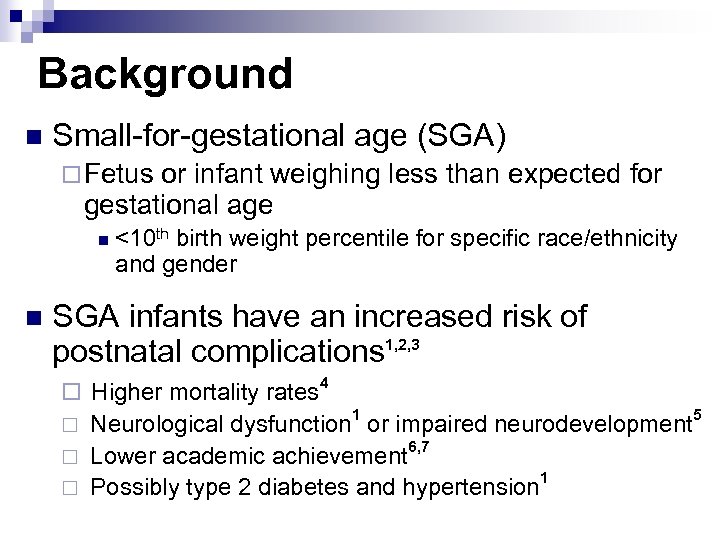 Background n Small-for-gestational age (SGA) ¨ Fetus or infant weighing less than expected for gestational age n n <10 th birth weight percentile for specific race/ethnicity and gender SGA infants have an increased risk of postnatal complications 1, 2, 3 4 ¨ Higher mortality rates 1 5 ¨ Neurological dysfunction or impaired neurodevelopment 6, 7 ¨ Lower academic achievement 1 ¨ Possibly type 2 diabetes and hypertension
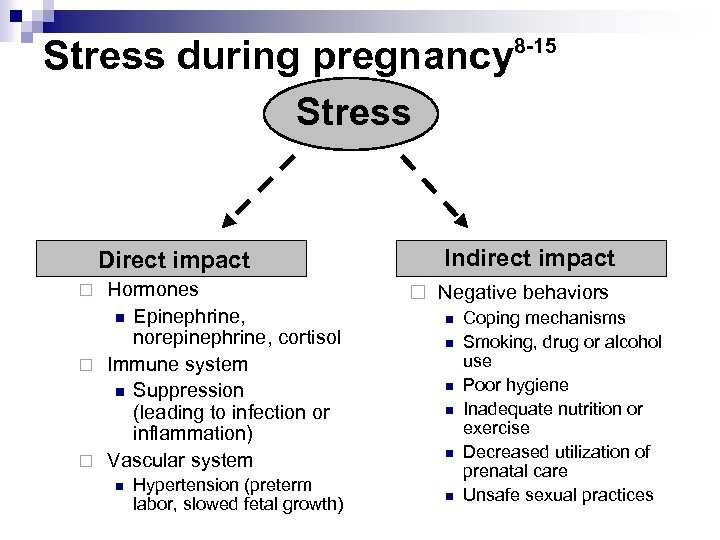 Stress during pregnancy 8 -15 Stress Direct impact Hormones n Epinephrine, norepinephrine, cortisol ¨ Immune system n Suppression (leading to infection or inflammation) ¨ Vascular system ¨ n Hypertension (preterm labor, slowed fetal growth) Indirect impact ¨ Negative behaviors n n n Coping mechanisms Smoking, drug or alcohol use Poor hygiene Inadequate nutrition or exercise Decreased utilization of prenatal care Unsafe sexual practices
 Stress during pregnancy, continued n Previous studies have been inconclusive ¨ Lack of association -OR¨ Limitations in study design or modeling n Primary objective: ¨ Examine the relationship between stressful life events (SLE) and SGA births in a sample of urban, low-income women
 Stressful life event (SLE) n Definition 16 ¨ Out of ordinary, demanding event ¨ Has the capacity to change patterns of life or lead to unpleasant feelings n Pregnancy Risk Assessment Monitoring System (PRAMS) ¨ Thirteen validated questions ¨ Family and social support issues, financial and housing issues, legal issues
 Methods n Approved by Indiana University IRB n Indiana Access Project ¨ Inclusion criteria Medicaid or socioeconomic equivalence n Informed consent/consent to release medical records n ¨ Exclusion criteria Fetal or infant death n Infant placed in neonatal intensive care unit (NICU) n
 Methods, continued ¨ 162 item face-to-face interview with women during post-partum stay (n=525) n Assessed occurrence of stressful life event (SLE) utilizing PRAMS questions ¨ File linked to birth certificate data (n=493)
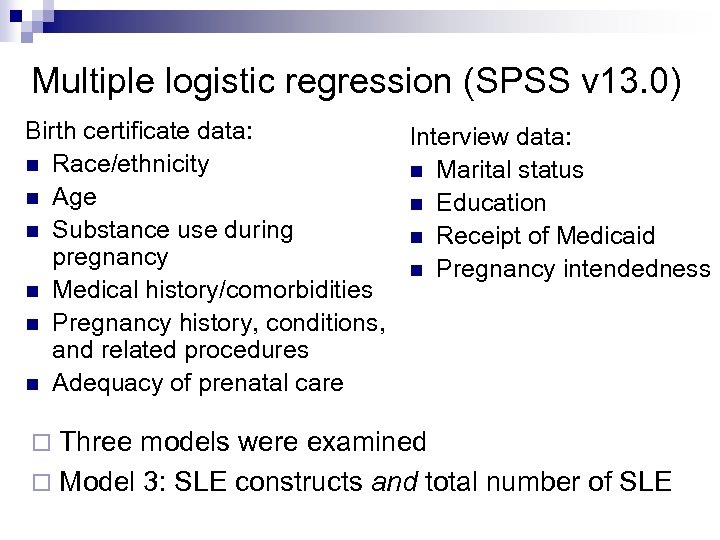 Multiple logistic regression (SPSS v 13. 0) Birth certificate data: Interview data: n Race/ethnicity n Marital status n Age n Education n Substance use during n Receipt of Medicaid pregnancy n Pregnancy intendedness n Medical history/comorbidities n Pregnancy history, conditions, and related procedures n Adequacy of prenatal care ¨ Three models were examined ¨ Model 3: SLE constructs and total number of SLE
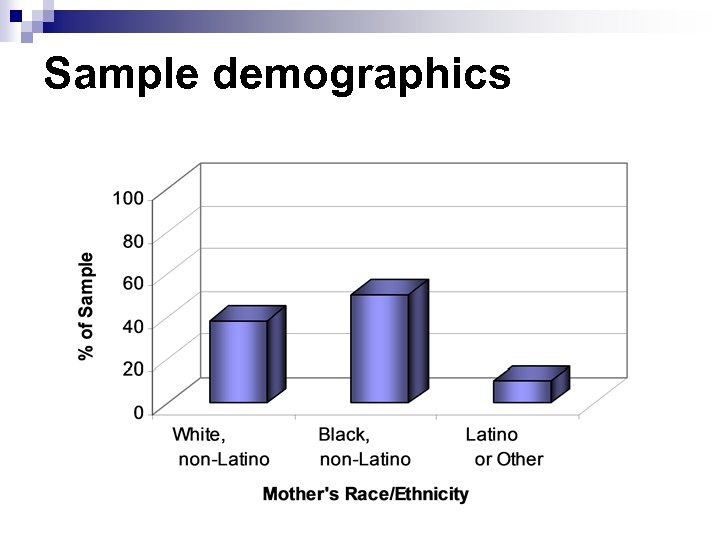 Sample demographics
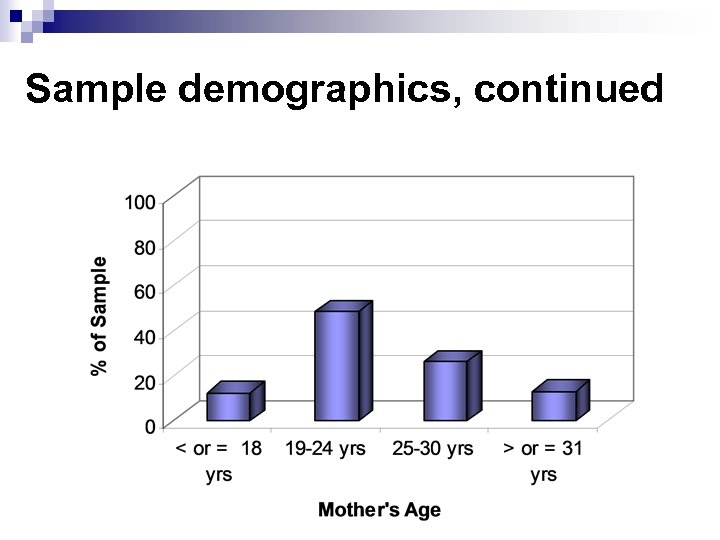 Sample demographics, continued
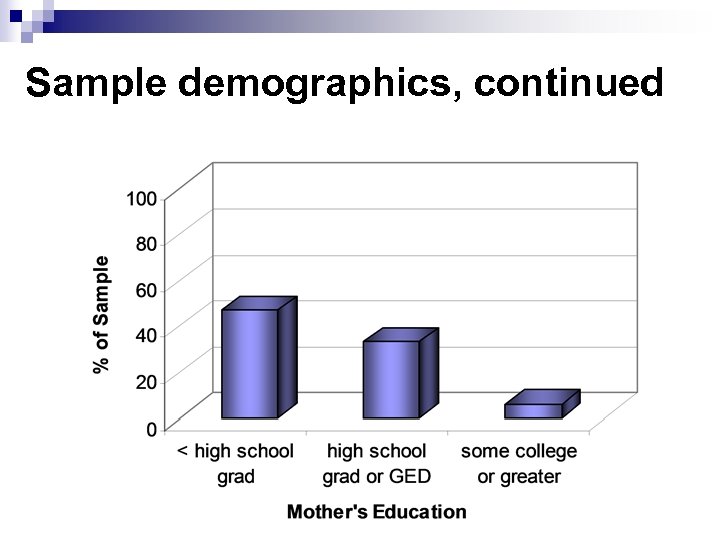 Sample demographics, continued
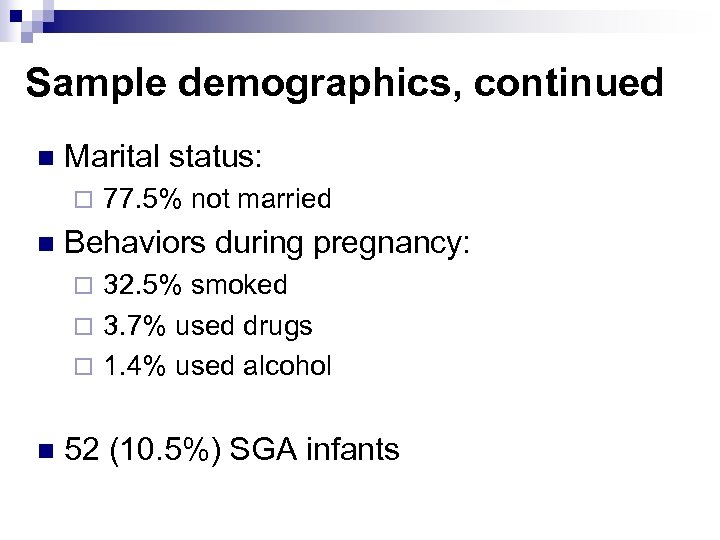 Sample demographics, continued n Marital status: ¨ 77. 5% not married n Behaviors during pregnancy: ¨ 32. 5% smoked ¨ 3. 7% used drugs ¨ 1. 4% used alcohol n 52 (10. 5%) SGA infants
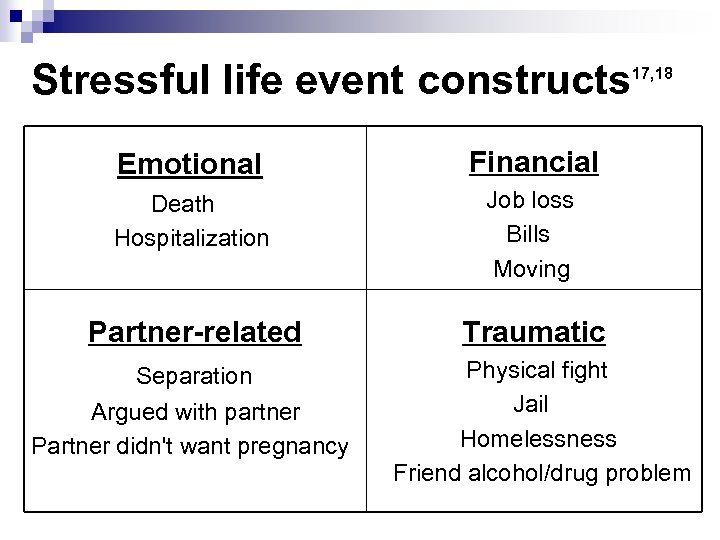 Stressful life event constructs Emotional Death Hospitalization Partner-related Separation Argued with partner Partner didn't want pregnancy 17, 18 Financial Job loss Bills Moving Traumatic Physical fight Jail Homelessness Friend alcohol/drug problem
 Frequency of SLE reported
 Total number of SLE reported
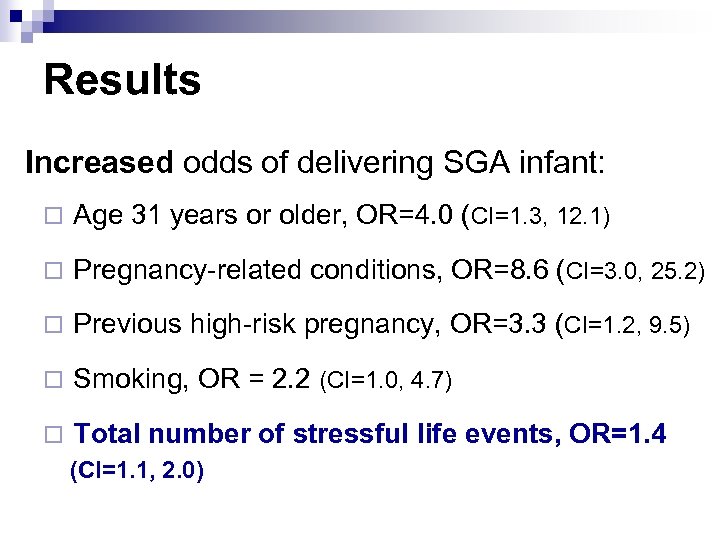 Results Increased odds of delivering SGA infant: ¨ Age 31 years or older, OR=4. 0 (CI=1. 3, 12. 1) ¨ Pregnancy-related conditions, OR=8. 6 (CI=3. 0, 25. 2) ¨ Previous high-risk pregnancy, OR=3. 3 (CI=1. 2, 9. 5) ¨ Smoking, OR = 2. 2 (CI=1. 0, 4. 7) ¨ Total number of stressful life events, OR=1. 4 (CI=1. 1, 2. 0)
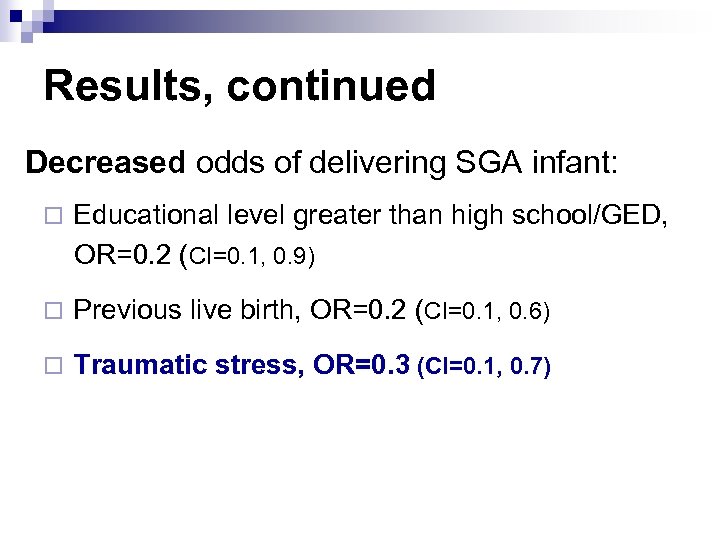 Results, continued Decreased odds of delivering SGA infant: ¨ Educational level greater than high school/GED, OR=0. 2 (CI=0. 1, 0. 9) ¨ Previous live birth, OR=0. 2 (CI=0. 1, 0. 6) ¨ Traumatic stress, OR=0. 3 (CI=0. 1, 0. 7)
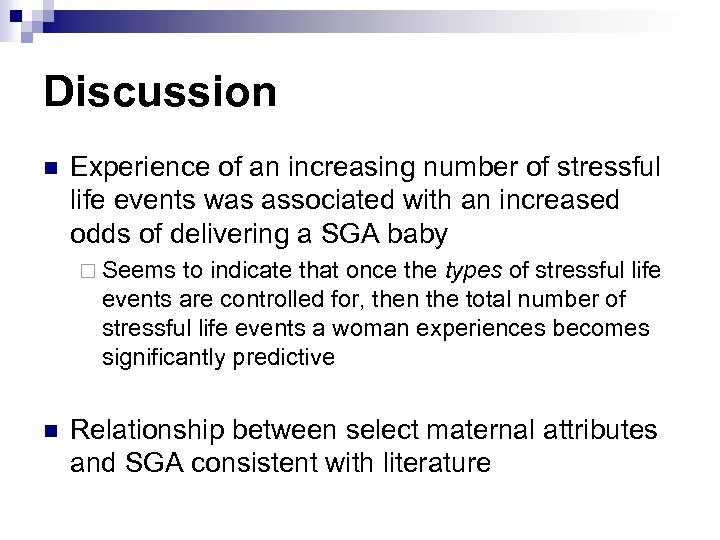 Discussion n Experience of an increasing number of stressful life events was associated with an increased odds of delivering a SGA baby ¨ Seems to indicate that once the types of stressful life events are controlled for, then the total number of stressful life events a woman experiences becomes significantly predictive n Relationship between select maternal attributes and SGA consistent with literature
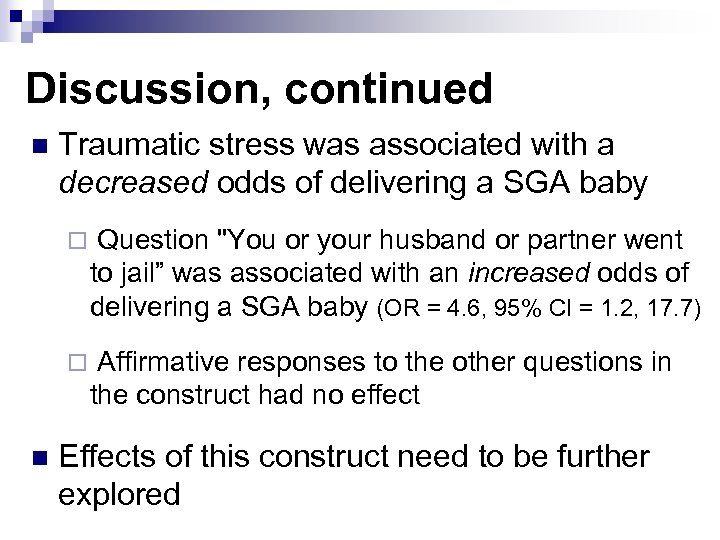 Discussion, continued n Traumatic stress was associated with a decreased odds of delivering a SGA baby ¨ Question "You or your husband or partner went to jail” was associated with an increased odds of delivering a SGA baby (OR = 4. 6, 95% CI = 1. 2, 17. 7) ¨ Affirmative responses to the other questions in the construct had no effect n Effects of this construct need to be further explored
 Discussion, continued n Financial stress ¨ Although most often reported (72% of sample), financial stress was not statistically associated with SGA ¨ Possibly not enough variance in this sample to fully elucidate the potential impact of financial stress
 Limitations n Representativeness n No control group n Selection bias n Recall bias n Prevarication bias
 Limitations, continued n Incomplete information regarding stress and support for women in our sample ¨ Timing ¨ Additional types of stress ¨ Women’s perception and response to stress ¨ Available support
 Areas for future research n Utility of these assessment tools in diverse populations n Assessment of meaning and impact of stress and coping strategies n Further examination of association between SLE and adverse birth outcomes n Whether interventions that reduce stress before delivery result in healthier babies
 Conclusion n Consistent with the literature, select maternal attributes impact the odds of delivering a SGA baby n As women in our sample experienced an increasing number of stressful life events, the odds of delivering a SGA baby increased
 Acknowledgements n Greg Steele, Dr. PH n Mike Przybylski, Ph. D n National Friendly Access Evaluation Staff, Lawton and Rhea Chiles Center, University of South Florida n Indiana Access Data Advisory Committee
 Select bibliography 1. Coomarsamy A, Fisk NM, Gee H, Robson SC. The investigation and management of the small-for-gestational-age fetus. Royal College of Obstetricians and Gynecologists 2002; Guideline Number 31. 2. Bartels DB, Kreienbrock L, Dammann O, Wenzlaff P, Poetes CF. Population based study on the outcome of small for gestational age newborns. Arch Dis Child Fetal Neonatal Ed. 2005; 90: F 53 -F 59. 3. Merck Manual Online. Section 19, Chapter 260: Disturbances in Newborns and Infants. Accessed February 27, 2006 from http: //www. merck. com/mrkshared/mmanual/section 19/chapter 260/260 d. jsp 4. Clausson B. Risk factors and adverse pregnancy outcomes in small-forgestational-age births. Acta Universaitatis Upsaliensis. Comprehensive Summaries of Uppsala Dissertations from the Faculty of Medicine 2000; 973: 41 5. Goldenberg RL, Hoffman HJ, Cliver SP. Neurodevelopment outcome of smallfor-gestational-age infants. Accessed February 27, 2006 from: http: //www. unu. edu/unupress/food 2/UID 03 E/uid 03 e 0 m. htm
 Select bibliography, continued 6. Paz I, Gale R, Laor A, Danon YL, Stevenson DK, Seidman DS. The cognitive outcome of full-term small for gestational age infants at late adolescence. Obstet Gynecol 1995; 85(3): 452 -456. 7. Strauss RS. Adult functional outcome of those born small for gestational age: Twenty-six-year follow-up of the 1970 British Birth Cohort. JAMA 2000; 283(5): 625 -632. 8. Larriuex C, Grigorescu V, Bouraoui Y, Miller K, Patterson D. Michigan Department of Community Health. The experience of stressful life events in pregnant women. MI PRAMS Delivery, Vol 3, No 2. Family and Community Health, Michigan Department of Community Health, April 2004. 9. Barbosa GA. The association of life events to gestational age at delivery among low-income, urban, African-American women. J Perinatal 2000; 20: 438442. 19. 10. Hobel CJ, Dunkel-Schetter C, Roesch S. Maternal stress as a signal to the fetus. Prenat Neonat Med 1998; 3: 116 -120. 11. Dudley DJ. Hormonal pathways of preterm birth. . Am J Obstet Gynecol 1999; 180 (suppl): s 251 -256.
 Select bibliography, continued 12. Wadhwa PD, Culhane JF, Rauh V, Barve SS. Stress and preterm birth: neuroendocrine, immune/inflammatory, and vascular mechanisms. Maternal Child Health 2001; 5(2): 119 -125. 13. James SA. Racial and ethnic differences in infant mortality and low birth weight: a psychosocial critique. Ann Epidemiol 1993; 3: 130 -136. 14. Mustafa T. Are pregnant women in South Carolina stressed out? South Carolina PRAMS Program. 15. Bullock LF, Means JL, Woodcock C, Record R. Retrospective study of the association of stress and smoking during pregnancy in rural women. Addictive Behaviors 2001; 26(3): 405 -413. 17. Lu MC, Chen B. Racial and ethnic disparities in preterm birth: the role of stressful life events. Am J Obstet Gynecol 2004; 191: 691 -699. 18. Adwaulia IB, Merritt R, Beck LF, Rogers M. Multiple lifestyle and psychosocial risks and delivery of small for gestational age infants. Obstet Gynecol 2001; 97: 649 -656.
 Thank You