


 Скачать презентацию Assalamu alaikum WE ARE FROM EIGHT GROUP UNIV MUHAMMADIYAH
f054795ef5bc91563abc3d5c050d6f90.ppt
- Количество слайдов: 26
 Assalamu’alaikum WE ARE FROM EIGHT GROUP UNIV MUHAMMADIYAH DR HAMKA
 Name from group v. Resta v. Rully v. Hanifa v. Della Lecture Name MS MILA Topic material Direct speech & Indirect speech
 REPORTING SPEECH There are two ways of reporting what somebody says; v Direct speech (DS) v Indirect (or reported) speech. (IS)
 DIRECT SPEECH In direct speech we use the speaker’s own words. “In text we put speech marks around the words spoken” “Speech marks are also called inverted commas”
 DIRECT SPEECH Characteristics of DIRECT SPEECH v. It is original quotation of a talk v. It is always placed between two quotation marks v. It is always preceded by Capital letter
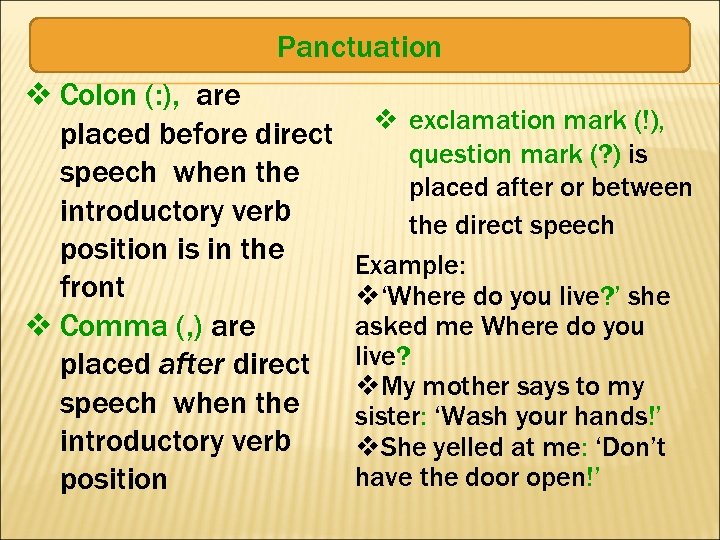 Panctuation v Colon (: ), are placed before direct speech when the introductory verb position is in the front v Comma (, ) are placed after direct speech when the introductory verb position v exclamation mark (!), question mark (? ) is placed after or between the direct speech Example: v‘Where do you live? ’ she asked me Where do you live? v. My mother says to my sister: ‘Wash your hands!’ v. She yelled at me: ‘Don’t have the door open!’
 WHAT IS REPORTED SPEECH? v Reported lly ua ed Us rt po ch re ee a sp ing ” us HAT “T Speech is a way how we report what someone has said by changing some of the words said, but retaining the same meaning.
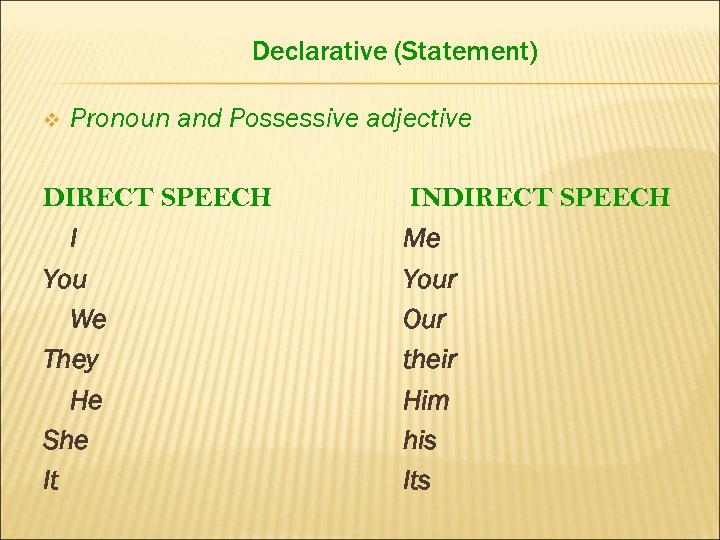 Declarative (Statement) v Pronoun and Possessive adjective DIRECT SPEECH I You We They He She It INDIRECT SPEECH Me Your Our their Him his Its
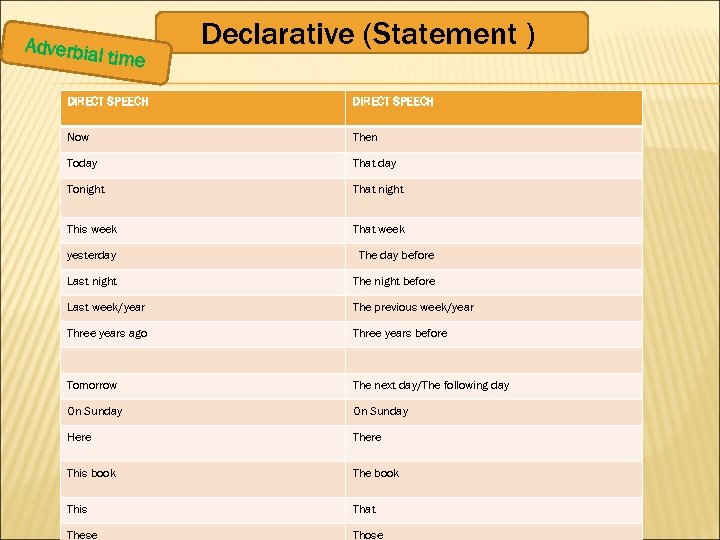 Adverbia l time Declarative (Statement ) DIRECT SPEECH Now Then Today That day Tonight That night This week That week yesterday The day before Last night The night before Last week/year The previous week/year Three years ago Three years before Tomorrow The next day/The following day On Sunday Here This book The book This That These Those
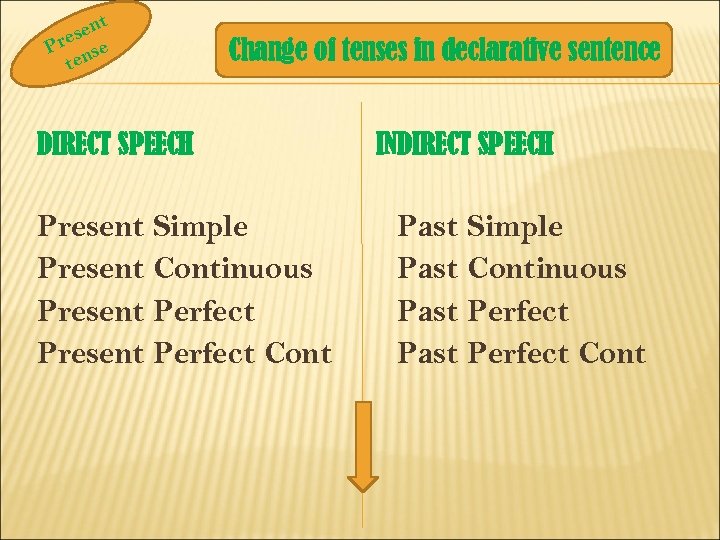 ent s Pre nse te Change of tenses in declarative sentence DIRECT SPEECH Present Simple Present Continuous Present Perfect Cont INDIRECT SPEECH Past Simple Past Continuous Past Perfect Cont
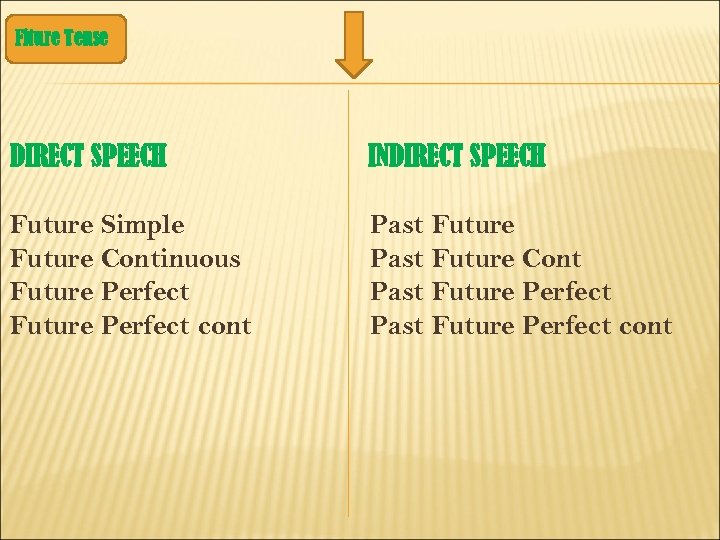 Fiture Tense DIRECT SPEECH INDIRECT SPEECH Future Simple Future Continuous Future Perfect cont Past Future Cont Past Future Perfect cont
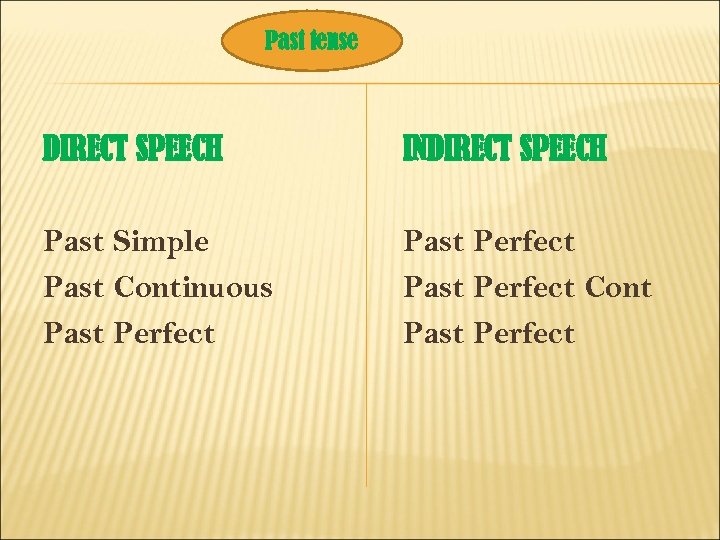 Past tense DIRECT SPEECH INDIRECT SPEECH Past Simple Past Continuous Past Perfect Cont Past Perfect
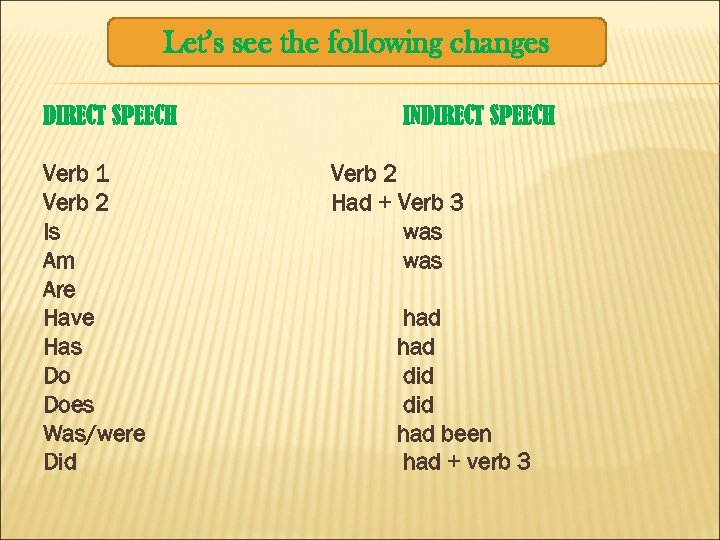 Let’s see the following changes DIRECT SPEECH Verb 1 Verb 2 Is Am Are Have Has Do Does Was/were Did INDIRECT SPEECH Verb 2 Had + Verb 3 was had did had been had + verb 3
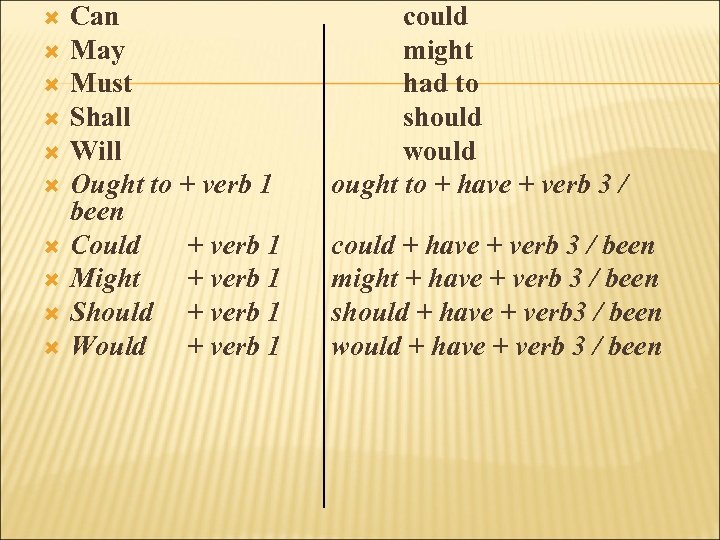 Can May Must Shall Will Ought to + verb 1 been Could + verb 1 Might + verb 1 Should + verb 1 Would + verb 1 could might had to should would ought to + have + verb 3 / could + have + verb 3 / been might + have + verb 3 / been should + have + verb 3 / been would + have + verb 3 / been
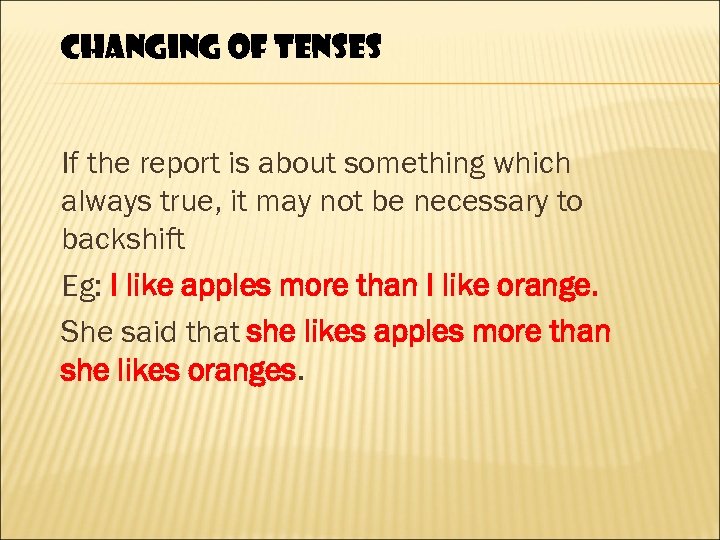 CHANGING OF TENSES If the report is about something which always true, it may not be necessary to backshift Eg: I like apples more than I like orange. She said that she likes apples more than she likes oranges.
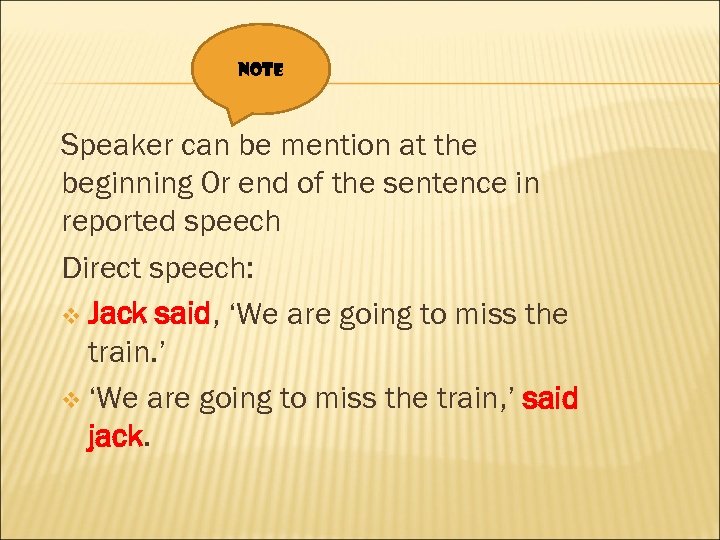 NOTE Speaker can be mention at the beginning 0 r end of the sentence in reported speech Direct speech: v Jack said, ‘We are going to miss the train. ’ v ‘We are going to miss the train, ’ said jack.
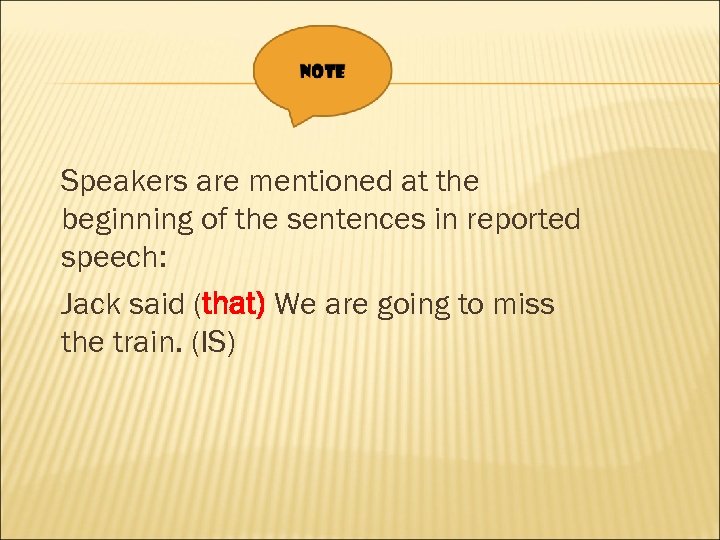 Speakers are mentioned at the beginning of the sentences in reported speech: Jack said (that) We are going to miss the train. (IS)
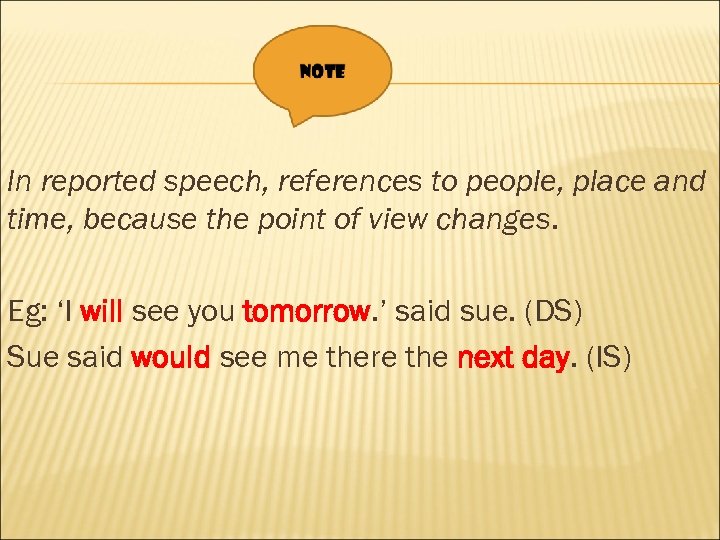 In reported speech, references to people, place and time, because the point of view changes. Eg: ‘I will see you tomorrow. ’ said sue. (DS) Sue said would see me there the next day. (IS)
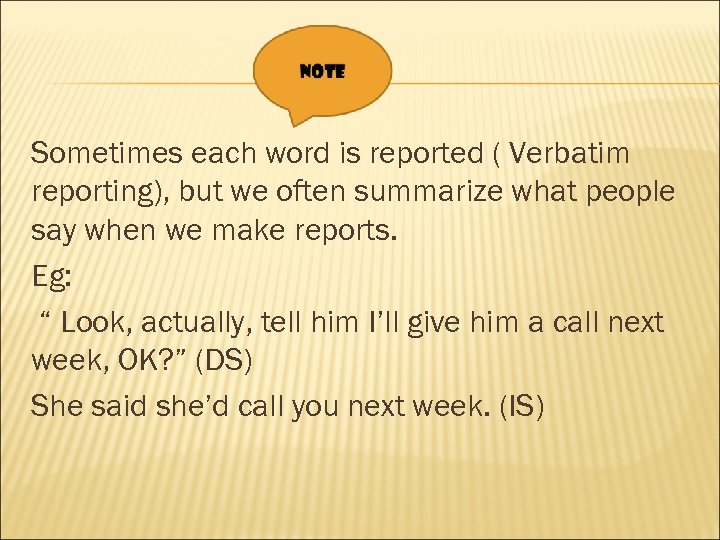 Sometimes each word is reported ( Verbatim reporting), but we often summarize what people say when we make reports. Eg: “ Look, actually, tell him I’ll give him a call next week, OK? ” (DS) She said she’d call you next week. (IS)
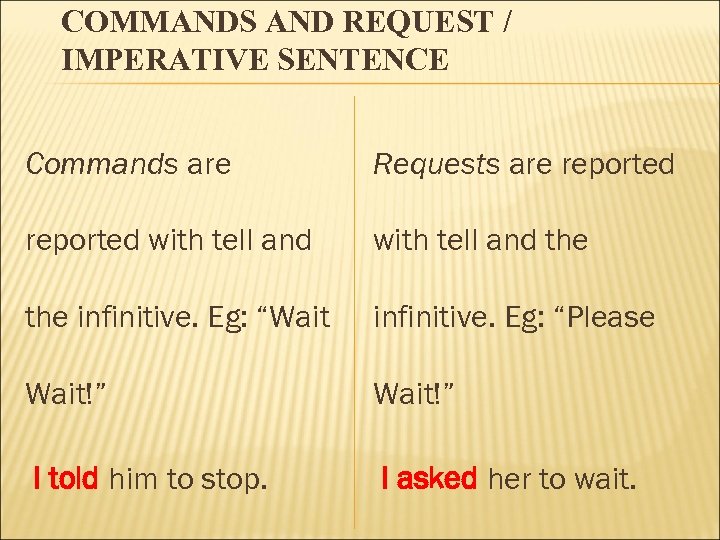 COMMANDS AND REQUEST / IMPERATIVE SENTENCE Commands are Requests are reported with tell and the infinitive. Eg: “Wait infinitive. Eg: “Please Wait!” I told him to stop. I asked her to wait.
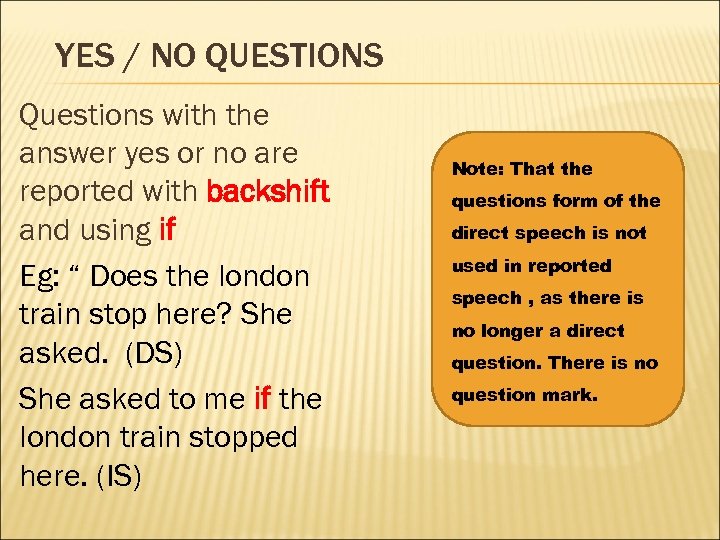 YES / NO QUESTIONS Questions with the answer yes or no are reported with backshift and using if Eg: “ Does the london train stop here? She asked. (DS) She asked to me if the london train stopped here. (IS) Note: That the questions form of the direct speech is not used in reported speech , as there is no longer a direct question. There is no question mark.
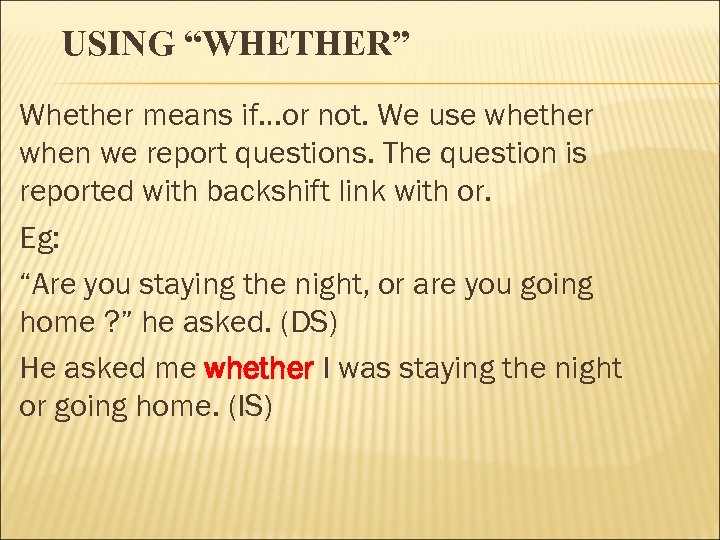 USING “WHETHER” Whether means if…or not. We use whether when we report questions. The question is reported with backshift link with or. Eg: “Are you staying the night, or are you going home ? ” he asked. (DS) He asked me whether I was staying the night or going home. (IS)
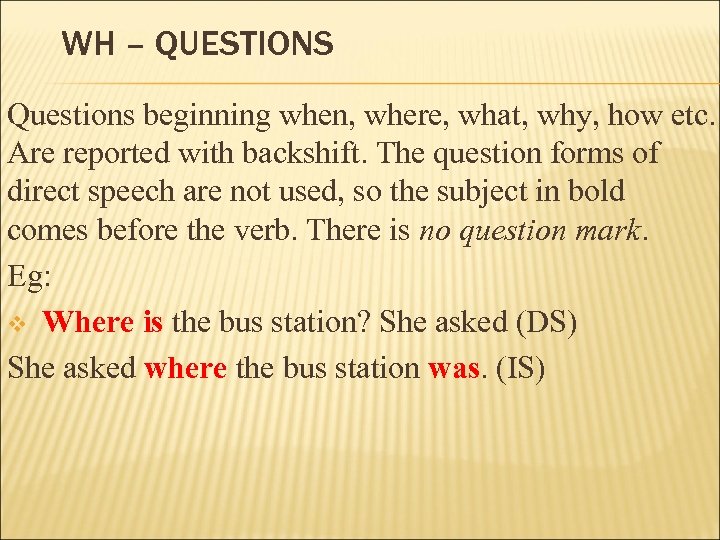 WH – QUESTIONS Questions beginning when, where, what, why, how etc. Are reported with backshift. The question forms of direct speech are not used, so the subject in bold comes before the verb. There is no question mark. Eg: v Where is the bus station? She asked (DS) She asked where the bus station was. (IS)
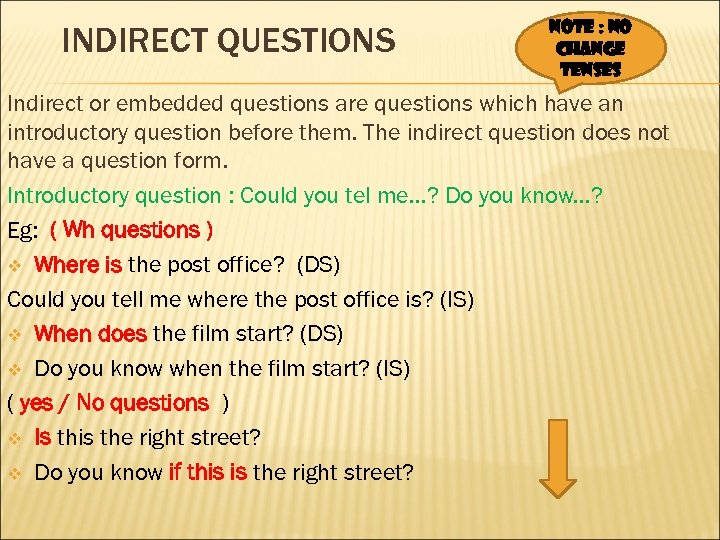 INDIRECT QUESTIONS Note : NO CHANGE TENSES Indirect or embedded questions are questions which have an introductory question before them. The indirect question does not have a question form. Introductory question : Could you tel me…? Do you know…? Eg: ( Wh questions ) v Where is the post office? (DS) Could you tell me where the post office is? (IS) v When does the film start? (DS) v Do you know when the film start? (IS) ( yes / No questions ) v Is this the right street? v Do you know if this is the right street?
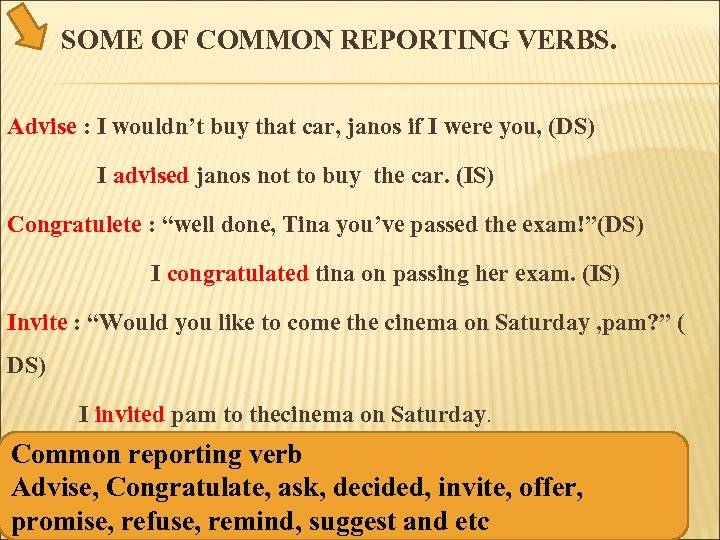 SOME OF COMMON REPORTING VERBS. Advise : I wouldn’t buy that car, janos if I were you, (DS) I advised janos not to buy the car. (IS) Congratulete : “well done, Tina you’ve passed the exam!”(DS) I congratulated tina on passing her exam. (IS) Invite : “Would you like to come the cinema on Saturday , pam? ” ( DS) I invited pam to thecinema on Saturday. Common reporting verb Advise, Congratulate, ask, decided, invite, offer, promise, refuse, remind, suggest and etc
 FINISH THANKS A LOT FOR YOUR EXTENTION WASSALAMU’ALAIKUM