 Скачать презентацию Asia Pacific Accessible Tourism Committee meeting Eden Foundation
1bf5f7c09c83ea78b9849ba6f4e49749.ppt
- Количество слайдов: 28



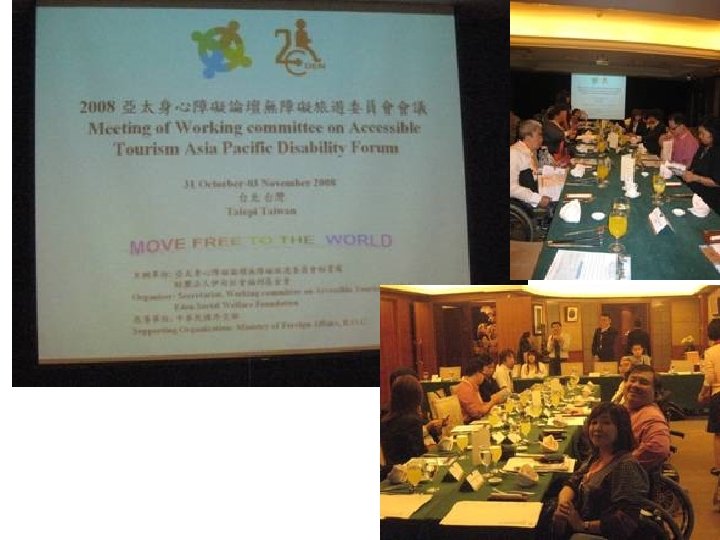
Asia Pacific Accessible Tourism Committee meeting, Eden Foundation Ms. Saowalak Thongkuay Regional Development Officer Disabled Peoples’ International Asia Pacific
• Accessible Tourism aims at promoting barrier free and accessibilities in build environments in the region as a way to enhance the implementation of the Biwako Millennium Framework for Action towards an Inclusive, Barrier-free and Rights –based Society for Persons with Disabilities (BMF), Biwako Plus Five and the Plan of Action for Sustainable Tourism Development in Asia and the Pacific (Phase II 2006 -2012) focusing on access to built environments, public transport and training & employment including self-employment. Besides, tourism is often considered as a valuable alternative for diversifying the economy in the areas dependent on only one maritime activity (e. g. fisheries). Quality tourism can contribute to the development of coastal areas by improving the competitiveness of businesses, meeting social needs and preserving the natural and cultural heritage. However, to be simultaneously successful in all these areas at the level of the tourist destination requires a global approach, called integrated quality management focusing on tourist satisfaction and based on the principle of sustainable development. Tourism clearly requires not only an attractive environment but also its accessibility.
• Furthermore, barrier free tourism is also alternative choices for elderly persons and travelers with disabilities of which the number of them gradually increases. However, those travelers face significant barriers in traveling such as information planning, accessible accommodation, transportation or any kinds of discrimination. Recently, the Disability Travel on the Rise Despite Barrier to Access research found that numbers of American travelers with disabilities have been increasing 50 percent since year 2005. The numbers of European travelers with disabilities increase to 134 -267. 9 million. UN survey also found that by year 2050, the numbers of ageing population will rise to 2, 000 million and 54 percent of them live in Asia and the Pacific region.
Sustainable Tourism Aspects ICAT 2007 emphasized the 6 aspects of accessible tourism as follows: a. Accessible Planning Information Before we start traveling, information of where we are going is very important. Information is available in various formats and methods such as brochure, pamphlet, map, website, guide book, transportation information, tourist agency, tourist information center, etc. However, persons with some types of disabilities such as blind and deaf people may find it difficult to get information in these formats or by these methods for their traveling planning.
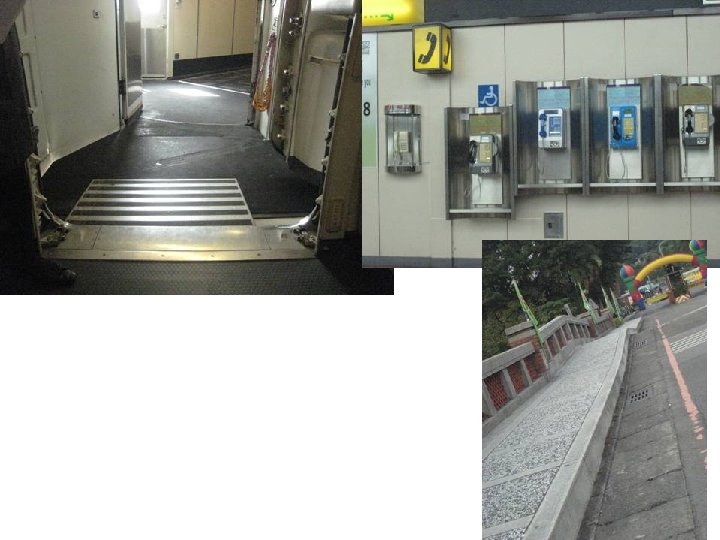
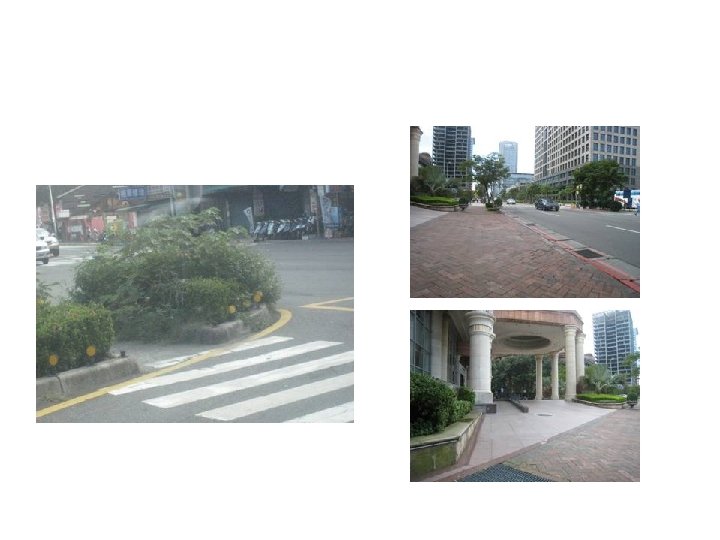
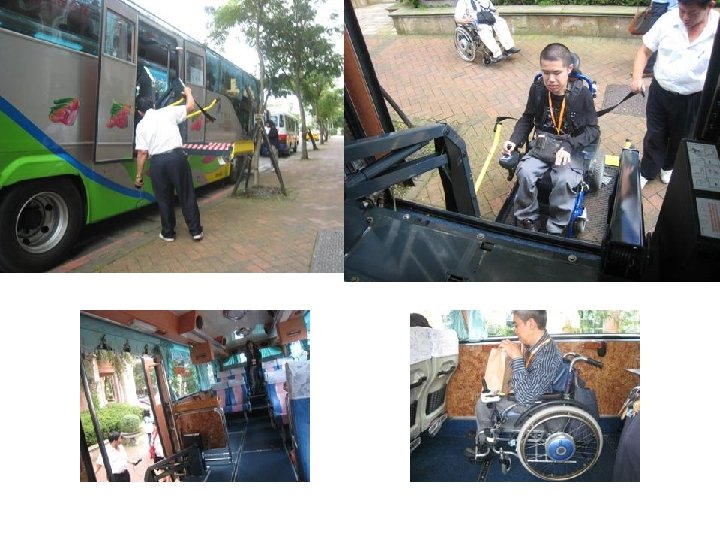
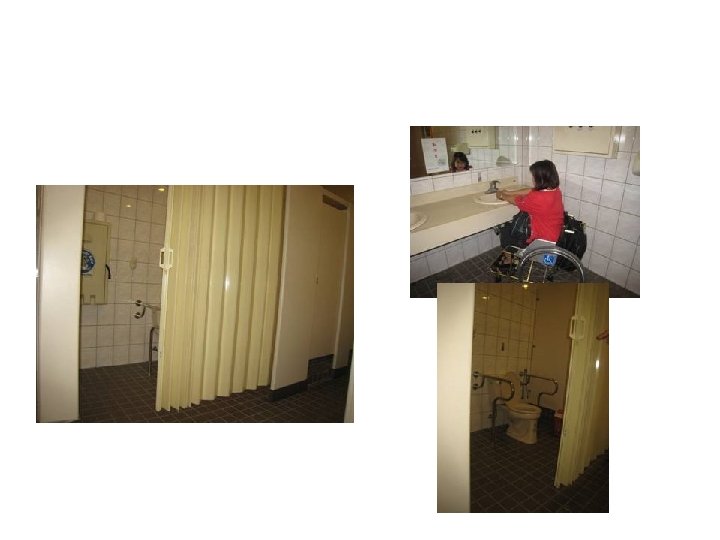
b. Transportation Barriers The 3 modes of transportation, land, sea and air, often hinder persons with disabilities from traveling. Most of vehicles such as buses, trains, air planes, boats, ships, etc. are made with steps and narrow doors or walkways. People with physical disabilities often find it difficult to travel by such vehicles. c. Accessible Accommodation such as hotels, resorts, serviced apartments, guesthouses, hostels, camping grounds, etc. are also designed inaccessible for persons with disabilities. For example, rooms or toilets are too small or doors are too narrow to get in.
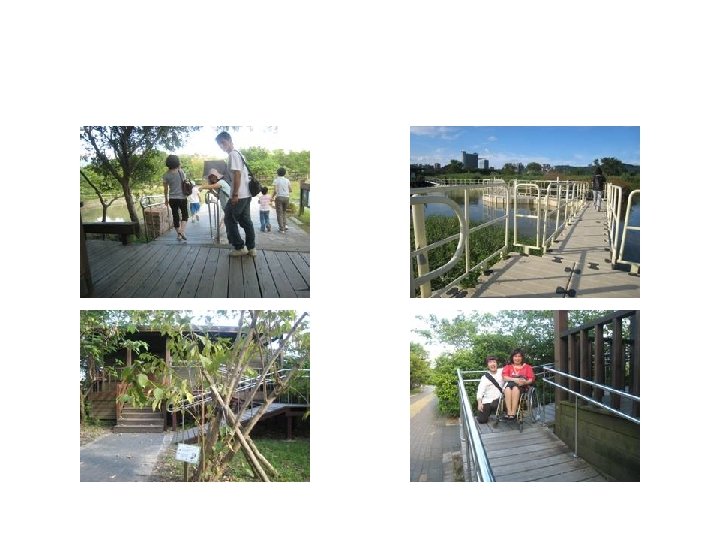
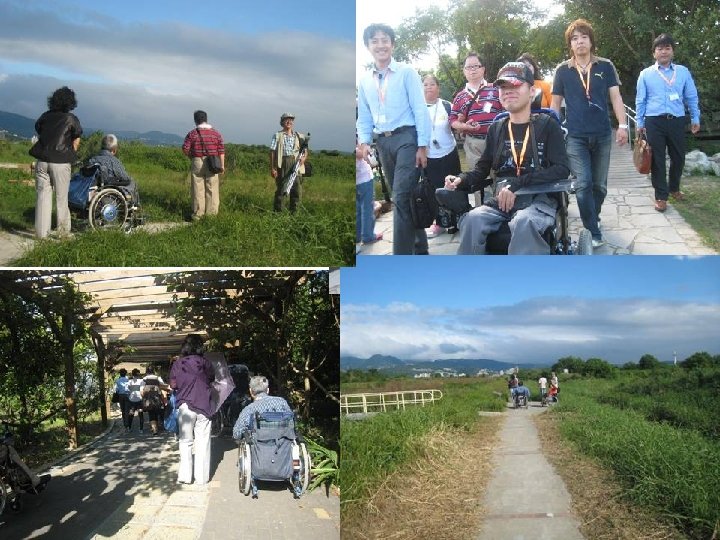
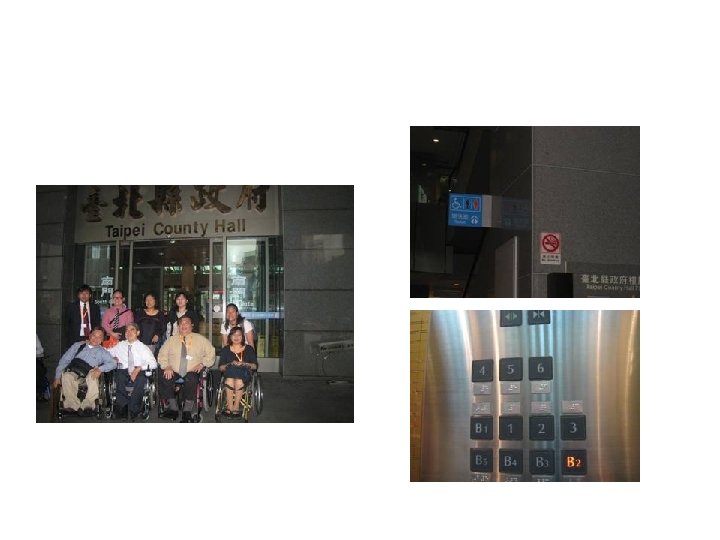
d. Accessible Tourist Sites Public buildings, parks, museums, gardens, historical sites, sports facilities, etc. often pose difficulties for persons with disabilities. Many of these sites have no ramps or alternative entrances, no elevators, no toilets, etc. e. Mainstream Services for All Tourists Services available for visitors in recreational sites such as car park, shopping center, concert hall, etc. are often difficult to access. For example, if a hotel has an airport pick-up service but none of the cars are accessible, persons with disabilities may find it difficult to use such service. Moreover, at places where accessibility is limited or impossible, other services to help persons with disabilities with their access are also necessary.
f. Destination Experiences Destination experience is an impression of persons with disabilities or others with a certain tourist site, accommodation or service. Apart from many physical barriers, many persons with disabilities face discrimination when traveling as well. For example, if a taxi driver refuses to accept a person with disability, it would cause a bad impression for that person. He/she may not come to visit again and recommend others to not come.
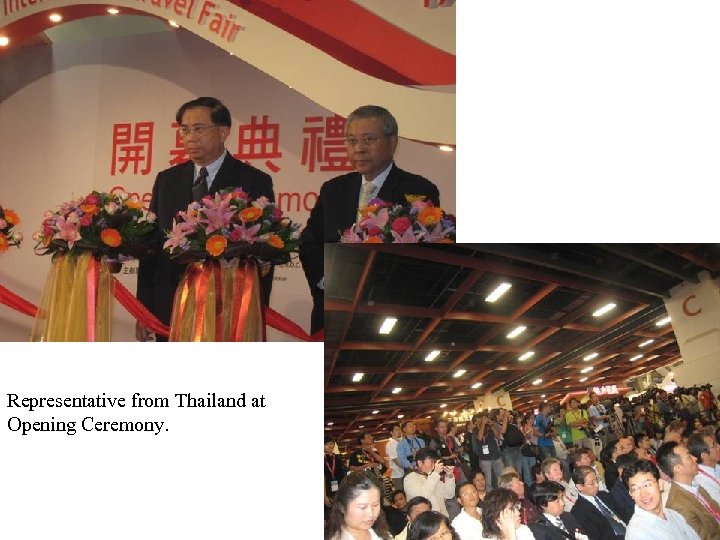
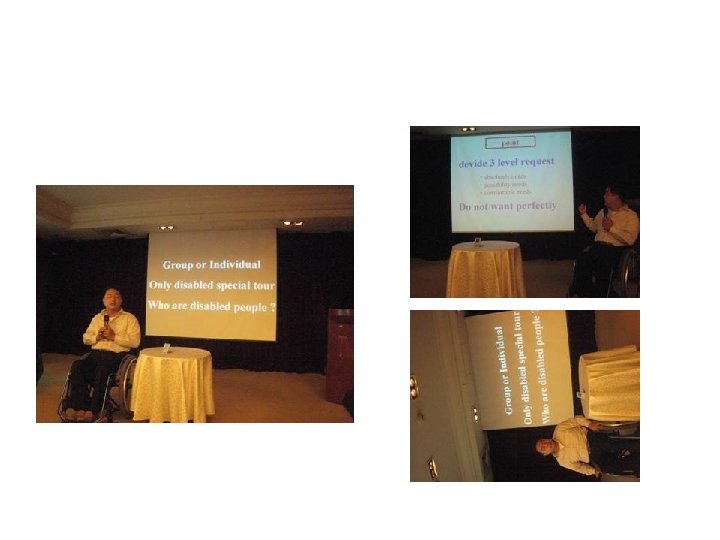
Representative from Thailand at Opening Ceremony.
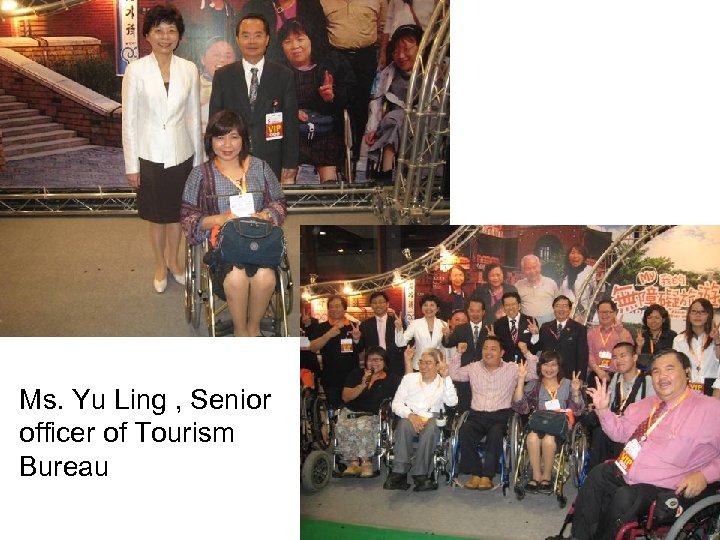
Ms. Yu Ling , Senior officer of Tourism Bureau
• Accessibility is a hot button issue in the travel industry, with seniors and person with disabilities becoming a force to be recommended with.
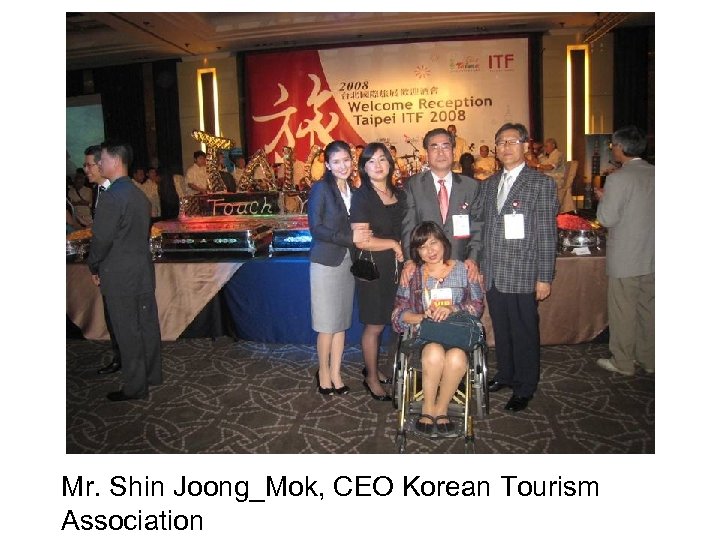
Mr. Shin Joong_Mok, CEO Korean Tourism Association
• ICAT 2009, International Conference on Accessible Tourism 2009 will be held on April 22 -24, 2009 at YMCA Fort Canning Lodge, Singapore, • ICAT 2009 Theme: Tourism Unlimited: Access for ALL. • Asia Pacific guideline on Accessible Tourism will be complete by 2009.
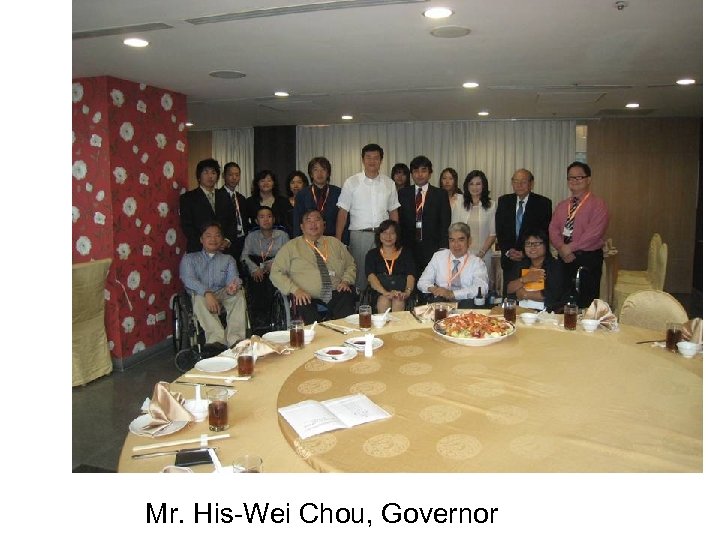
Mr. His-Wei Chou, Governor
Скачать презентацию Asia Pacific Accessible Tourism Committee meeting Eden Foundation
1bf5f7c09c83ea78b9849ba6f4e49749.ppt