


 Скачать презентацию Ash Management from Coal Fired Power Plants Current
35e6249f82ba6021c5655e06029138ac.ppt
- Количество слайдов: 26
 Ash Management from Coal Fired Power Plants Current Practices and Potential Impact of Proposed EPA Regulation Rochelle Routman, PG Environmental Specialist Georgia Power Environmental Affairs
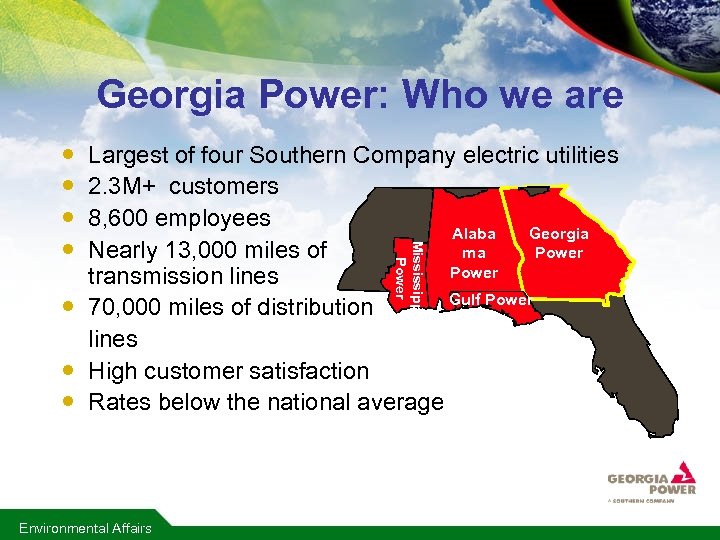 Georgia Power: Who we are Environmental Affairs Mississippi Power Largest of four Southern Company electric utilities 2. 3 M+ customers 8, 600 employees Alaba Georgia Alaba Nearly 13, 000 miles of Power ma ma gia Power transmission lines Gulf Powerr 70, 000 miles of distribution lines High customer satisfaction Rates below the national average
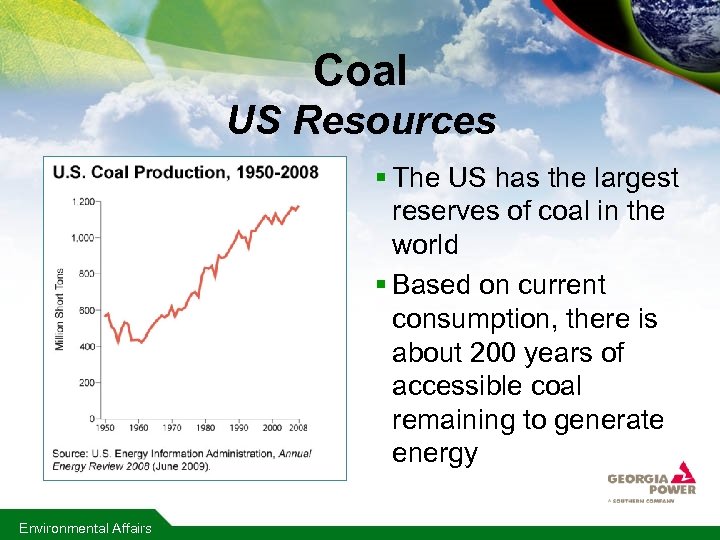 Coal US Resources § The US has the largest reserves of coal in the world § Based on current consumption, there is about 200 years of accessible coal remaining to generate energy Environmental Affairs
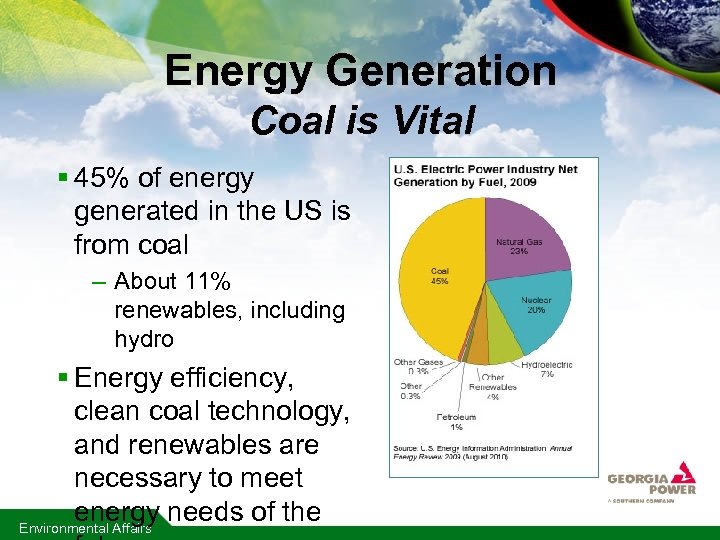 Energy Generation Coal is Vital § 45% of energy generated in the US is from coal – About 11% renewables, including hydro § Energy efficiency, clean coal technology, and renewables are necessary to meet energy needs of the Environmental Affairs
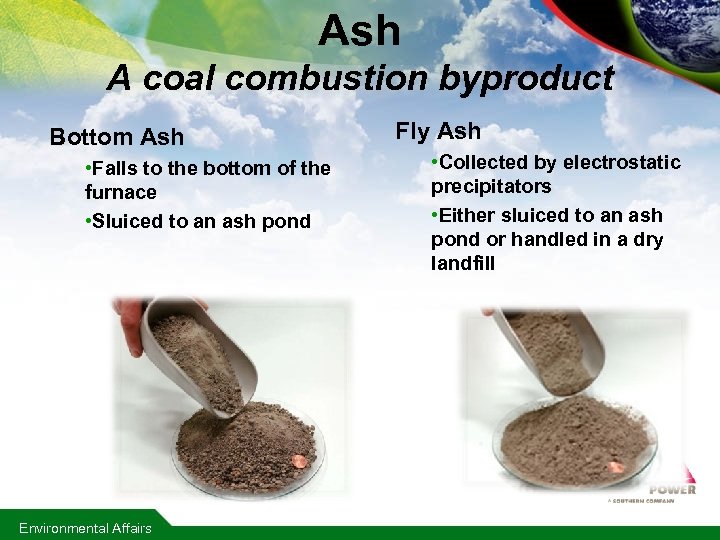 Ash A coal combustion byproduct Bottom Ash • Falls to the bottom of the furnace • Sluiced to an ash pond Environmental Affairs Fly Ash • Collected by electrostatic precipitators • Either sluiced to an ash pond or handled in a dry landfill
 Composition of Ash § Dependant on coal source, combustion, etc. § Generally consists of silicon, aluminum, iron, and calcium § Also contains trace amounts of heavy metals, such as arsenic, selenium, chromium § Is classified as an industrial solid Environmental Affairs
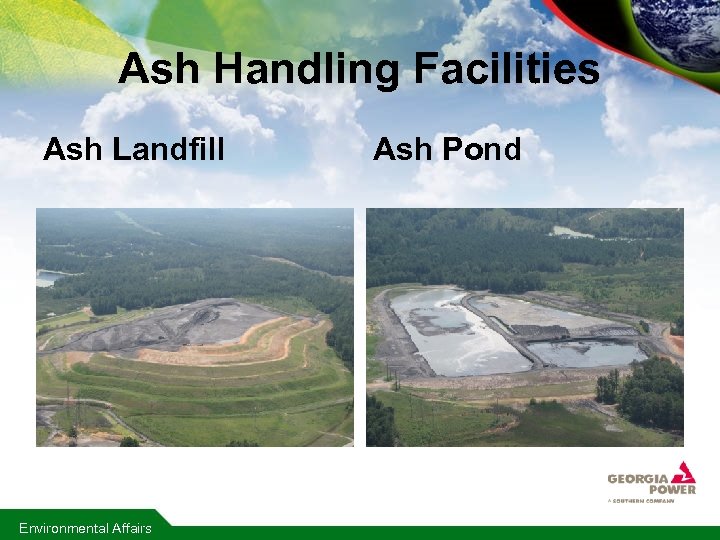 Ash Handling Facilities Ash Landfill Environmental Affairs Ash Pond
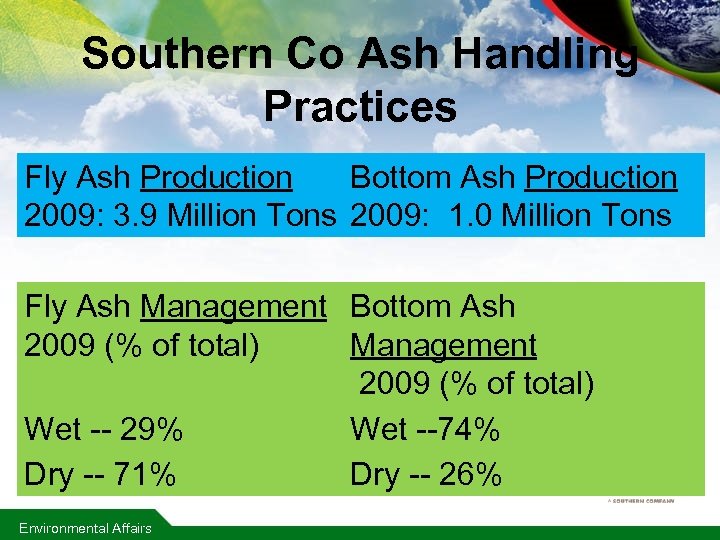 Southern Co Ash Handling Practices Fly Ash Production Bottom Ash Production 2009: 3. 9 Million Tons 2009: 1. 0 Million Tons Fly Ash Management Bottom Ash 2009 (% of total) Management 2009 (% of total) Wet -- 29% Wet --74% Dry -- 71% Dry -- 26% Environmental Affairs
 Southern Co. Beneficial Reuse About 30% Annually Bottom Ash § Replacement for naturally mined aggregate (clay and shale) Top Ash § Cement manufacturing § Ready-mix concrete – Road base –One ton of fly ash used as replacement for Concrete block cement conserves landfill space to hold about 1200 lbs of waste, reduces the equivalent of 2 months of an automobile’s CO 2 emissions, and saves the same amount of energy used by an average home for 19 days (US EPA, April 2005, EPA-530 -K-05 -002) Environmental Affairs
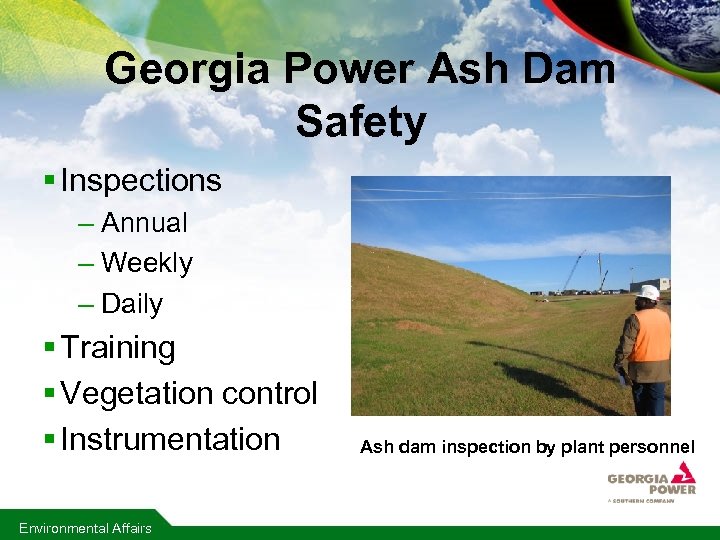 Georgia Power Ash Dam Safety § Inspections – Annual – Weekly – Daily § Training § Vegetation control § Instrumentation Environmental Affairs Ash dam inspection by plant personnel
 CCB Regulation § Currently exempt from RCRA regulation – Bevill Amendment § Regulated as an industrial waste in Georgia § December 2008: Tennessee Valley Authority impoundment failure – Triggered ash pond dam inspections and Environmental Affairs proposed CCR rule
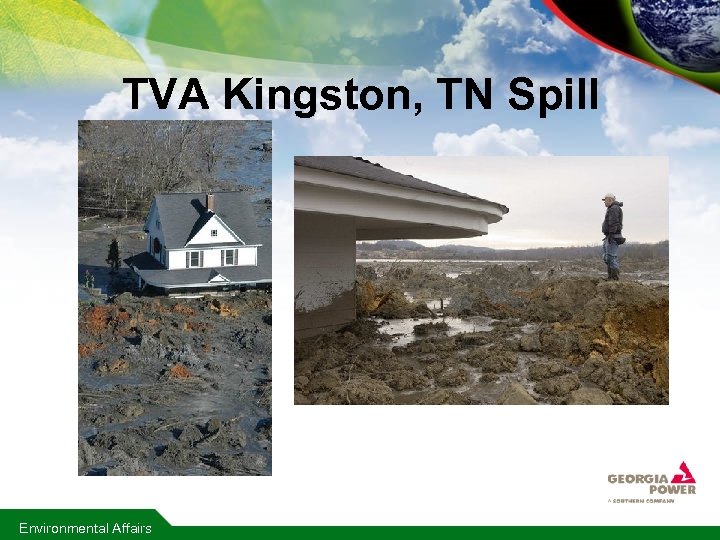
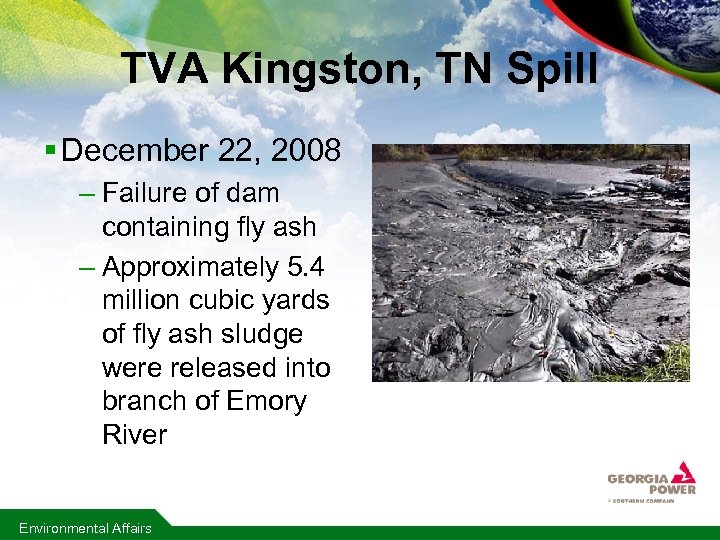 TVA Kingston, TN Spill § December 22, 2008 – Failure of dam containing fly ash – Approximately 5. 4 million cubic yards of fly ash sludge were released into branch of Emory River Environmental Affairs
 TVA Kingston, TN Spill Environmental Affairs
 TVA Ash Spill Root Cause Analysis § According to TVA’s web site: 1. High water content of the wet ash 2. Increasing height of ash 3. Construction of the sloping dikes over the wet ash 4. Unusual bottom layer of ash and silt Environmental Affairs
 EPA Ash Pond Inspections § As a result of TVA spill, EPA contractors inspected ash impoundment dam integrity § Tremendous effort by both EPA and the utilities § Each ash pond received condition rating § Reports are posted on EPA web site Environmental Affairs
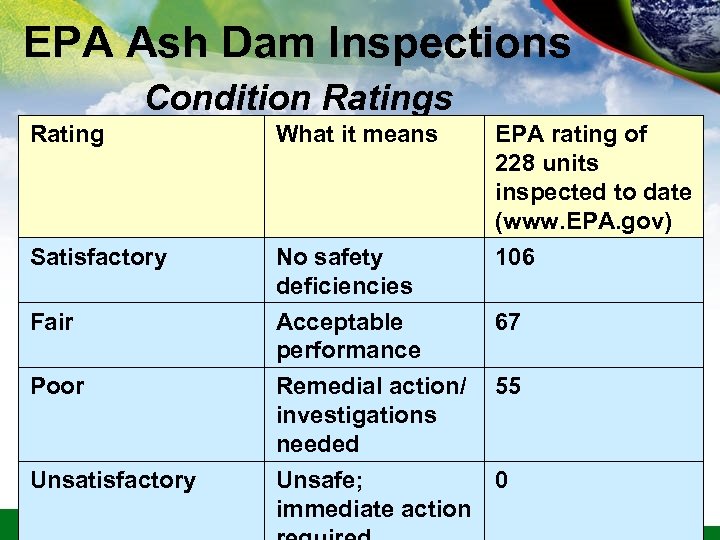 EPA Ash Dam Inspections Condition Ratings Rating What it means Satisfactory No safety deficiencies Fair Acceptable 67 performance Remedial action/ 55 investigations needed Unsafe; 0 immediate action Poor Unsatisfactory Environmental Affairs EPA rating of 228 units inspected to date (www. EPA. gov) 106
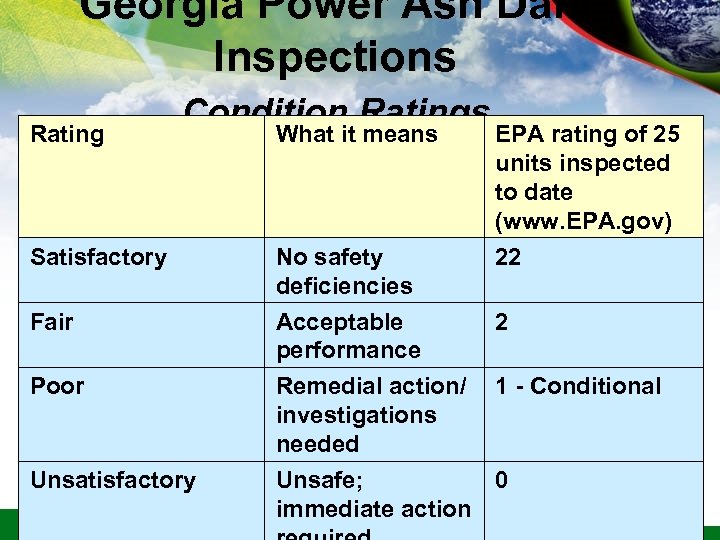 Georgia Power Ash Dam Inspections Rating Condition Ratings What it means EPA rating of 25 units inspected to date (www. EPA. gov) 22 Satisfactory No safety deficiencies Fair Acceptable 2 performance Remedial action/ 1 - Conditional investigations needed Unsafe; 0 immediate action Poor Unsatisfactory Environmental Affairs
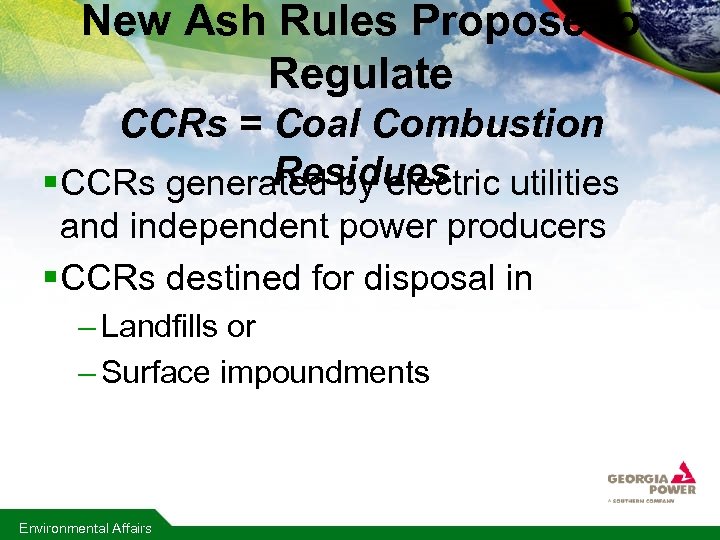 New Ash Rules Propose to Regulate CCRs = Coal Combustion Residues § CCRs generated by electric utilities and independent power producers § CCRs destined for disposal in – Landfills or – Surface impoundments Environmental Affairs
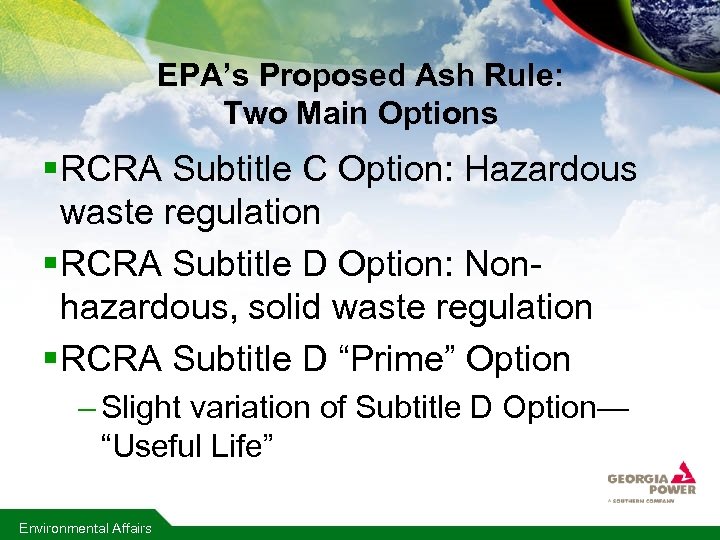 EPA’s Proposed Ash Rule: Two Main Options § RCRA Subtitle C Option: Hazardous waste regulation § RCRA Subtitle D Option: Nonhazardous, solid waste regulation § RCRA Subtitle D “Prime” Option – Slight variation of Subtitle D Option— “Useful Life” Environmental Affairs
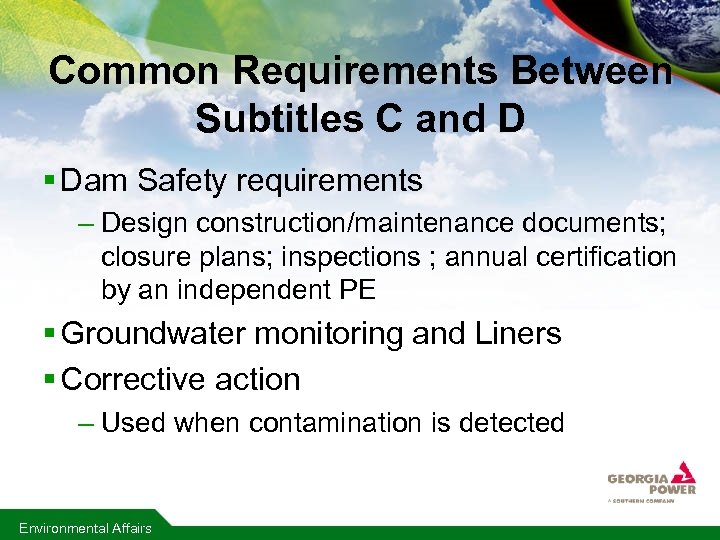 Common Requirements Between Subtitles C and D § Dam Safety requirements – Design construction/maintenance documents; closure plans; inspections ; annual certification by an independent PE § Groundwater monitoring and Liners § Corrective action – Used when contamination is detected Environmental Affairs
 RCRA Subtitle C Option § “Special Waste” classification – Subject to most hazardous waste requirements – Includes CCRs intended for disposal, not CCRs intended for beneficial use § Federal permit required § Regulation from generation to disposal – Including during and after closure of disposal unit Environmental Affairs
 RCRA Subtitle C Option Some Industry Implications § Ash Pond phase-out § Shortage of hazardous waste handling facilities – White House Council on Environmental Quality: Classifying ash as hazardous waste will add about 130 M tons annually to the 2. 5 M tons of hazardous waste now disposed of annually § Likely decline in beneficial reuse due to stigma – American Concrete Association: Designation of fly ash as a ‘hazardous waste’ will likely eliminate its inclusion in future project Environmental Affairs
 RCRA Subtitle D Option § State-led approach; no federal permits – EPA has no direct role § Performance Standards – More focused on performance than Subtitle C Option – E. g. , national performance criteria for safe disposal in landfills Environmental Affairs
 RCRA Subtitle D Option Some Industry Implications § Retrofit existing surface impoundments with composite liners within 5 years or close. – Except for D Prime option § Effect of phasing out surface impoundments § Capacity shortages § Still higher costs; rate recovered Environmental Affairs
 Public Comment § Closing date November 19, 2010 § EPA received 450, 000 comments § Latest newsflash: Rule will not be finalized in 2011, due to the large amount of comments that EPA must review Environmental Affairs
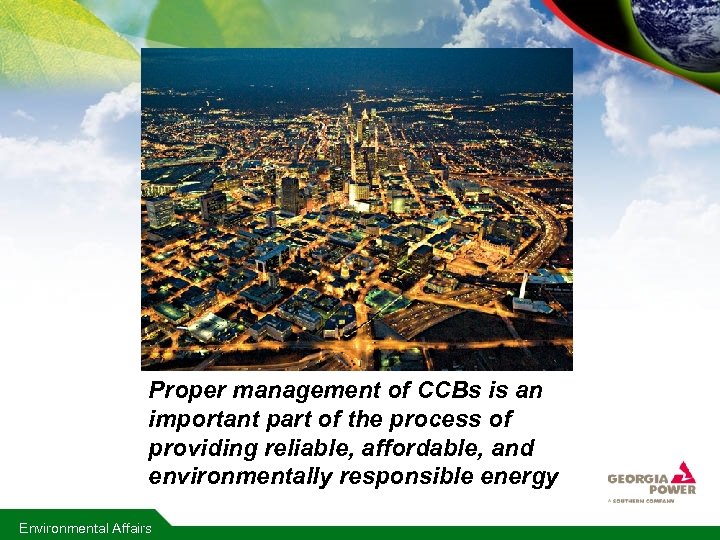 Proper management of CCBs is an important part of the process of providing reliable, affordable, and environmentally responsible energy Environmental Affairs