


 Скачать презентацию Arizona s Approach to Loss to Follow-up
453be1ce44a5c35143f023e20b3a85d8.ppt
- Количество слайдов: 15
 Arizona’s Approach to Loss to Follow-up § § Lylis Olsen Christy Taylor Jan Kerrigan Randi Winston 1
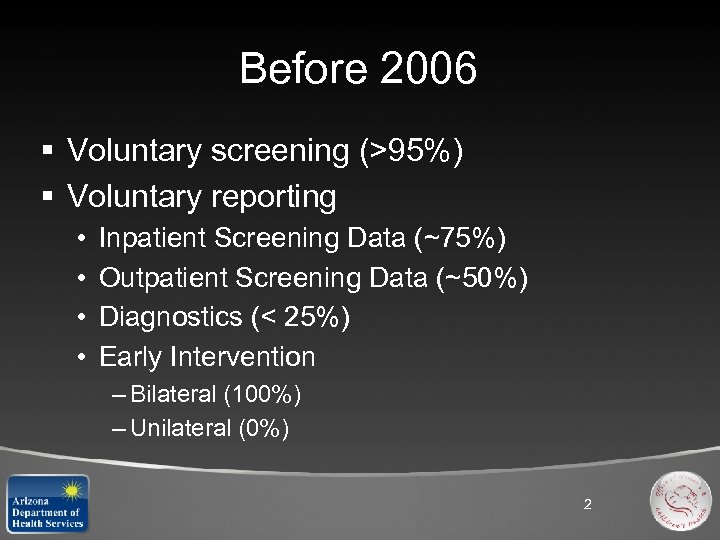 Before 2006 § Voluntary screening (>95%) § Voluntary reporting • • Inpatient Screening Data (~75%) Outpatient Screening Data (~50%) Diagnostics (< 25%) Early Intervention – Bilateral (100%) – Unilateral (0%) 2
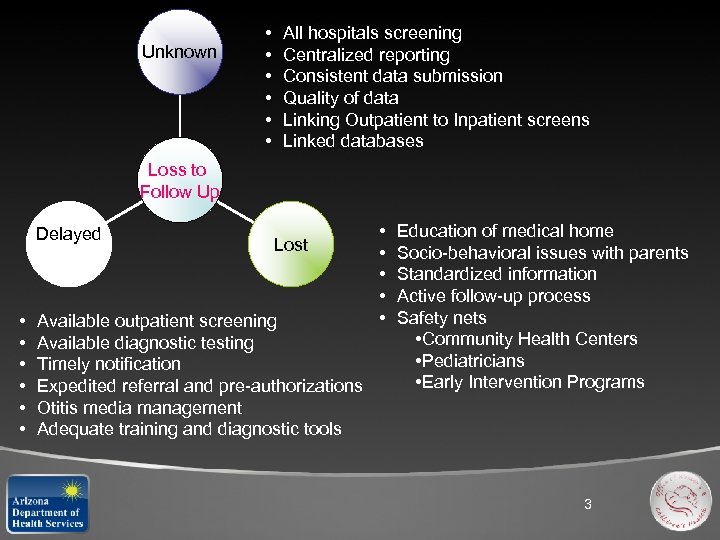 Unknown • • • All hospitals screening Centralized reporting Consistent data submission Quality of data Linking Outpatient to Inpatient screens Linked databases Loss to Follow Up Delayed • • • Lost Available outpatient screening Available diagnostic testing Timely notification Expedited referral and pre-authorizations Otitis media management Adequate training and diagnostic tools • • • Education of medical home Socio-behavioral issues with parents Standardized information Active follow-up process Safety nets • Community Health Centers • Pediatricians • Early Intervention Programs 3
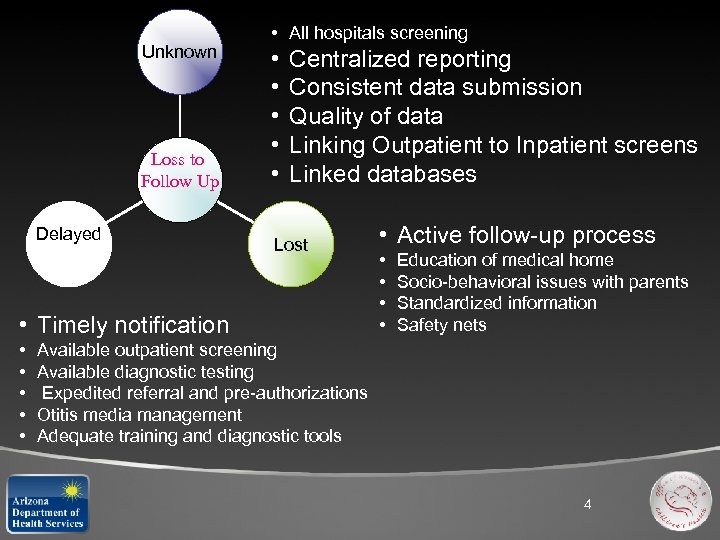 Unknown Loss to Follow Up Delayed • All hospitals screening • • • Centralized reporting Consistent data submission Quality of data Linking Outpatient to Inpatient screens Linked databases Lost • Timely notification • • • Active follow-up process • • Education of medical home Socio-behavioral issues with parents Standardized information Safety nets Available outpatient screening Available diagnostic testing Expedited referral and pre-authorizations Otitis media management Adequate training and diagnostic tools 4
 Legislation § Did not mandate screening (no need) § Mandated Reporting • Within one week- Electronically or Fax • All screening, all diagnostic testing • Anyone who screens or tests § Active follow-up at state level § Ongoing technical assistance to hospitals § Education to stakeholders 5
 Centralized Tracking § Electronic merging of data each week from HI*Track § Manual data entry for some outpatient screens and diagnostic reports § Case management through automated link with Neometrics the newborn screening system § Dedicated Staff • One program manager • One data manager • One follow-up coordinator 6
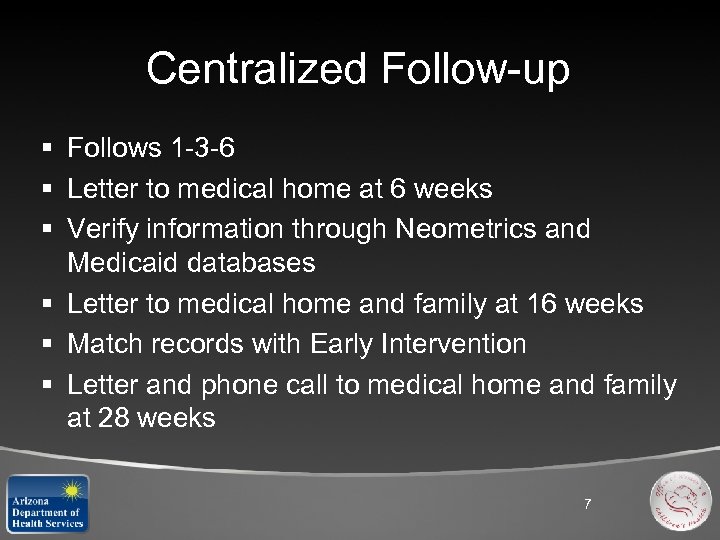 Centralized Follow-up § Follows 1 -3 -6 § Letter to medical home at 6 weeks § Verify information through Neometrics and Medicaid databases § Letter to medical home and family at 16 weeks § Match records with Early Intervention § Letter and phone call to medical home and family at 28 weeks 7
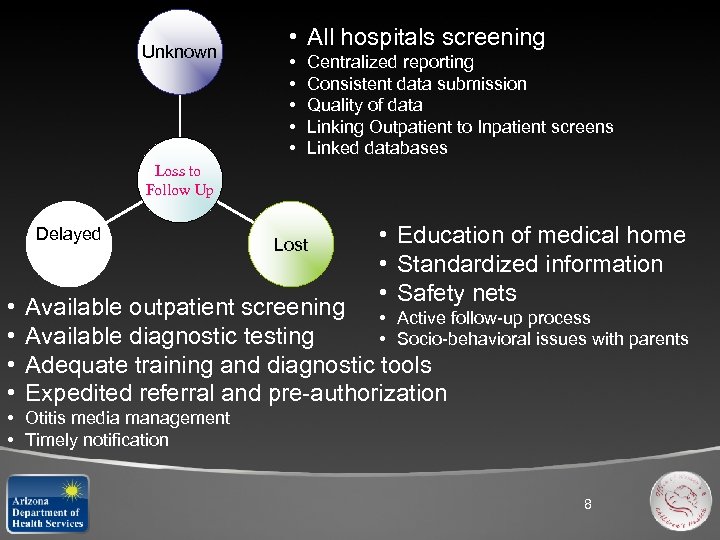 Unknown • All hospitals screening • • • Centralized reporting Consistent data submission Quality of data Linking Outpatient to Inpatient screens Linked databases Loss to Follow Up Delayed • • Lost • Education of medical home • Standardized information • Safety nets Available outpatient screening • Active follow-up process Available diagnostic testing • Socio-behavioral issues with parents Adequate training and diagnostic tools Expedited referral and pre-authorization • Otitis media management • Timely notification 8
 Screening programs § Hospitals • • All provide inpatient screening Most provide outpatient screen Keep refer rates in appropriate range Standardize information to parents and medical home – Immunization card – Training of the screeners 9
 Diagnosis § Education of medical home • Expedite the referral and preauthorization process • Look for the results of the newborn screen • Know available resources § Audiology • • Adequate training and equipment Monitor hand offs Prioritize scheduling of infants Make reporting easy 10
 11
11
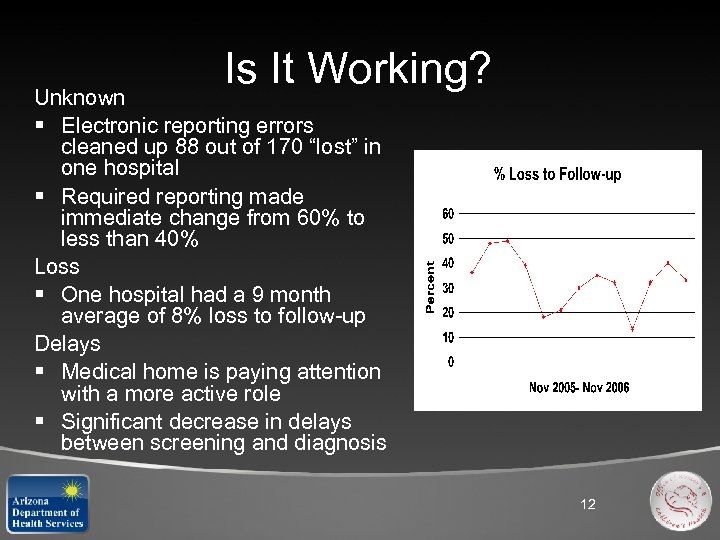 Is It Working? Unknown § Electronic reporting errors cleaned up 88 out of 170 “lost” in one hospital § Required reporting made immediate change from 60% to less than 40% Loss § One hospital had a 9 month average of 8% loss to follow-up Delays § Medical home is paying attention with a more active role § Significant decrease in delays between screening and diagnosis 12
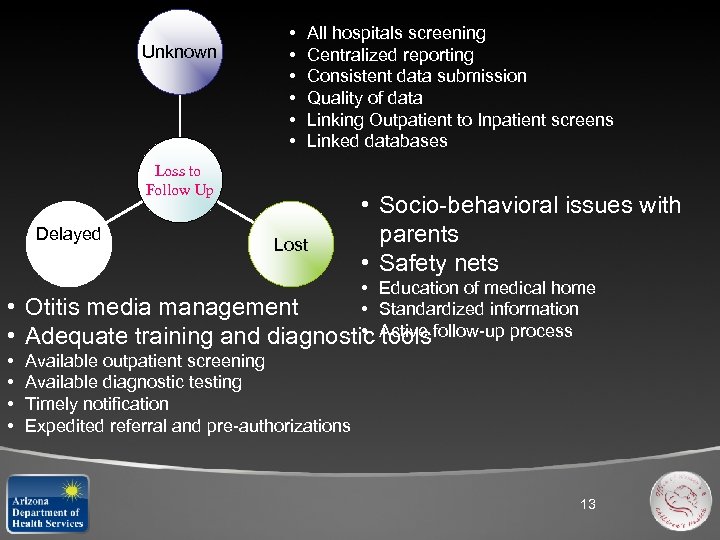 Unknown • • • All hospitals screening Centralized reporting Consistent data submission Quality of data Linking Outpatient to Inpatient screens Linked databases Loss to Follow Up Delayed Lost • Socio-behavioral issues with parents • Safety nets • • • Education of medical home Otitis media management • Standardized information • tools Adequate training and diagnostic Active follow-up process • • Available outpatient screening Available diagnostic testing Timely notification Expedited referral and pre-authorizations 13
 Arizona Newborn Screening Phone § (602) 364 -1409 § (800) 548 -8381(outside Maricopa County) Fax § (602) 364 -1495 Website http: //www. azdhs. gov/phs/owch/newbrnscrn. htm lylisolsen@msn. com taylorc@azdhs. gov rlwinston@aol. com kerrigj@azdhs. gov 14
 Thank You!