 Скачать презентацию Arigatoni A Simple Programmable Overlay Network Luigi Liquori
105cd2852d123b38f51ebb07212bc7c4.ppt
- Количество слайдов: 42



Arigatoni: A Simple, Programmable Overlay Network Luigi Liquori, joint work with Didier Benza, Raphael Chand, Michel Cosnard, and Marc Vesin 1
2 Talk Outline Context: Global Computing & Overlays Networks The Arigatoni Main Units Arigatoni’s Resource Discovery Protocol (GIP) Arigatoni’s Intermittence Protocol (VIP) Protocols Evaluation Conclusions This work is supported by the IST Research Project AEOLUS (Algorithmic Principles for Building Efficient Overlay Computers) of the FET Global Computing Program, and by the Core. GRID Network of Excellence
3 3 K Computer Architectural Challenges • Conceive a Programmable Global Computer (GC), a. k. a, Overlay Computer (OC) of Grand Scale, consisting of: • Internet connected, globally available “Computing Individuals” (Laptop, PC, GSM, PDA, PCluster, Sens. Net, i. Pod, i. Washing Machine, Electro. Pizzas, etc) • Able to (de)aggregate together leading to a Virtual Organization (VO), a. k. a. Overlay Network (ON) • Able to offer and demand each other a rich set of resources such as: Computational Power, Storage, Raw/Semantic Data retrieval, Bandwidth, etc. • • Resources being globally available Transparently, Securely and Efficiently All GC cooperate to make the OC, “General Purpose”, or more formally, “Turing Complete”, i. e. able to program, compute/run all Partial Recursive Functions, according to the well-known “Church’s thesis”
4 3 K Computer Architectural Challenges II • The Overlay Network of GC, physically connected via IP, is logically organized in Virtual Organizations, a. k. a. “Colonies” with “Leaders” and “Individuals” • • Clear rules to join/leave the colony (topology of the VO highly dynamic) Based on the Pareto & Nash Equilibriums, (well known from Game Theory) … to be simple: agree with the Roman-inspired “Do Ut Des” philosophy TECHNOLOGICAL ISSUES Crossing administrative barriers (Adm. Domains), Security (PKI certificate) • • Algorithms for Routing Requests and Discover Resources Scaling up to Large Overlay Computer, Reliability (point of failure) Service Availability, Load Balancing, QOS, Registration policy (specialized vs. general purpose colonies), etc
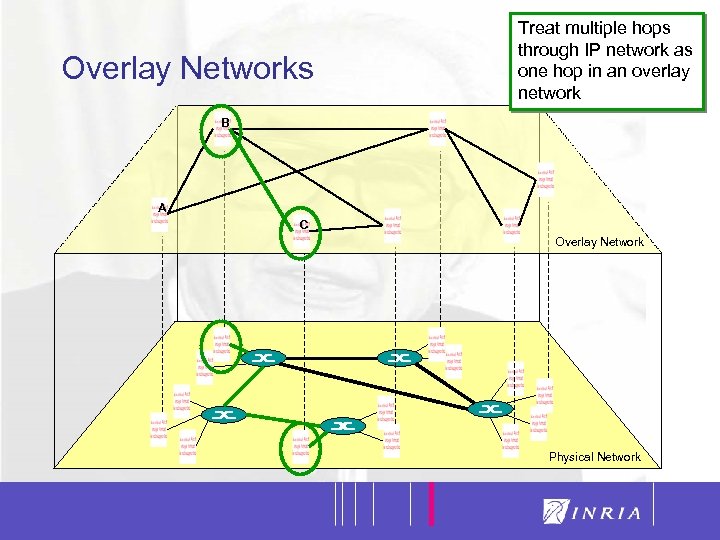
Overlay Networks Treat multiple hops Focus on the through IP network as oneapplicationoverlay hop in an layer network B A C Overlay Network Physical Network 5
6 The Arigatoni Overlay Network (©INRIA) Challenges • • • Virtual Organizations of Individuals Resource Discovery between Individuals (of course … Security, Scalability, Reliability, etc) Virtual Organization (Colony) • • How individuals organize themselves to share resources transparently How the organization evolves in time and in space transparently Resource Discovery • • How resources, offered by individuals, are discovered transparently How changed states of resources are upgraded in routing tables
7 Global Computers, Brokers, Routers Global Computers (GC) • • • Discontinuous participation in the VO (Colony) Partial/Zero knowledge of the current VO Ask and provide services with variable guarantees Can work in Local Mode or in Global Mode Motto: Global Mode … ask to the Colony boss, and wait for the best … … if the Colony boss ask for something do your best … Global Brokers (GB) • • • Colony’s leader, but recursively an individual in a surrounding “Super. Colony” Register/Unregister GC in the own colony Send/Receive GC’s queries Contact GCs in its population or contact its direct Super. GBs Trust their population at any level of the negotiation (via e. g. PKI) Global Routers (GR) • Send/Receive Packets via a protocol (GIP) between GC and GB
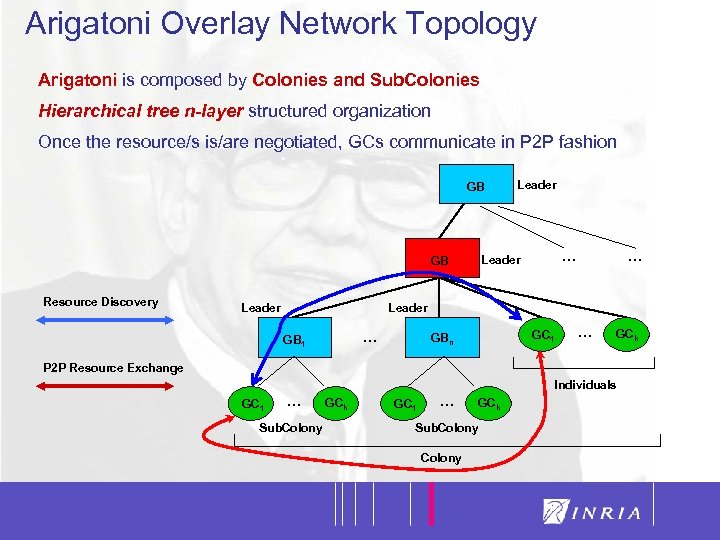
Arigatoni Overlay Network Topology 8 Arigatoni is composed by Colonies and Sub. Colonies Hierarchical tree n-layer structured organization Once the resource/s is/are negotiated, GCs communicate in P 2 P fashion GB Leader … Leader GB Resource Discovery Leader … GB 1 GC 1 GBn … GCk P 2 P Resource Exchange GC 1 … Sub. Colony GCk GC 1 … Individuals GCk Sub. Colony
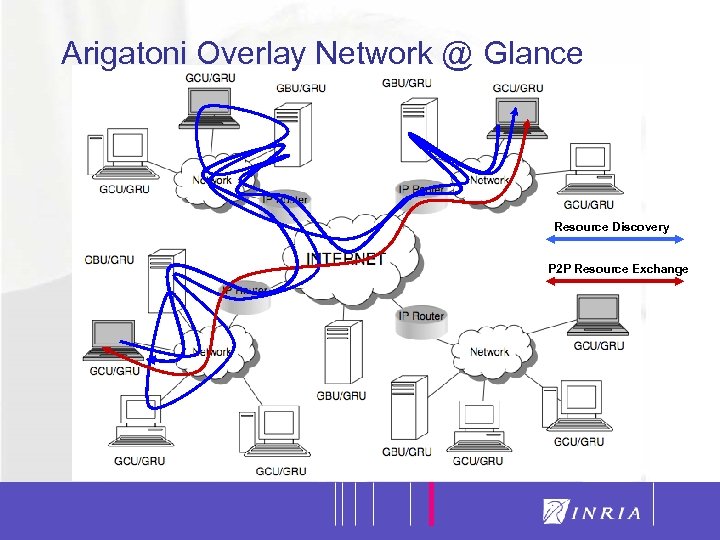
9 Arigatoni Overlay Network @ Glance Resource Discovery P 2 P Resource Exchange
10 Protocols in the Arigatoni Overlay Resource Discovery Protocol (RDP) • Deals with Service Requests and Service Response between individuals (clients and servers) • • Filter and route through Colony leaders (GB) Completely independent on the ”kind of service” Virtual Intermittence Protocol (VIP) • • • Deals with intermittent participation of individuals Registration and unregistration modalities of individuals in colonies Measure and fire “free riders” in a colony
11 Resource Discovery Protocol (RDP) Routing tables maintained at each GB • Set of services registered in each Colony Always search in own colony first: promote OO encapsulation • • • Local colony of GCs Other sub-colonies in Colony Other Colonies via the GB leader=recursive search, OO-based (à la Java) Service request for service S • • • Search GCs in local colony that accepts to serve S Search in other sub-colonies If none are found, delegate to the leader GB … Looks much like “method lookup” in OO languages …
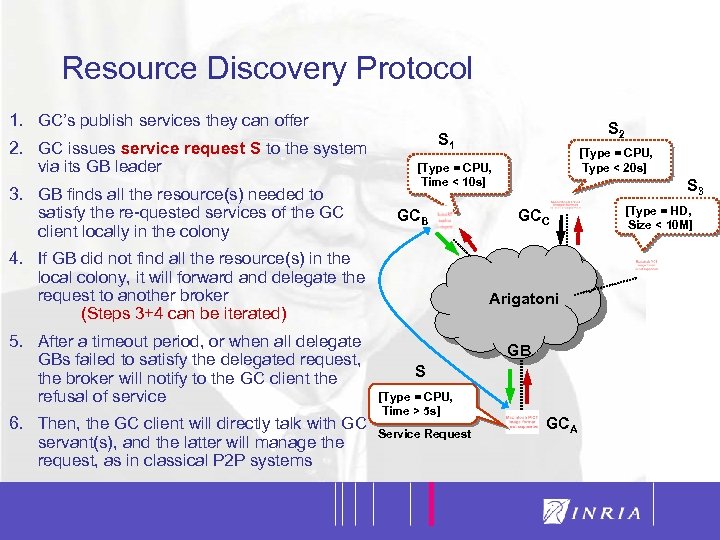
12 Resource Discovery Protocol 1. GC’s publish services they can offer 2. GC issues service request S to the system via its GB leader 3. GB finds all the resource(s) needed to satisfy the re-quested services of the GC client locally in the colony 6. Then, the GC client will directly talk with GC servant(s), and the latter will manage the request, as in classical P 2 P systems [Type = CPU, Type < 20 s] [Type = CPU, Time < 10 s] GCB 4. If GB did not find all the resource(s) in the local colony, it will forward and delegate the request to another broker (Steps 3+4 can be iterated) 5. After a timeout period, or when all delegate GBs failed to satisfy the delegated request, the broker will notify to the GC client the refusal of service S 2 S 1 S 3 GCC Arigatoni GB S [Type = CPU, Time > 5 s] Service Request GCA [Type = HD, Size < 10 M]
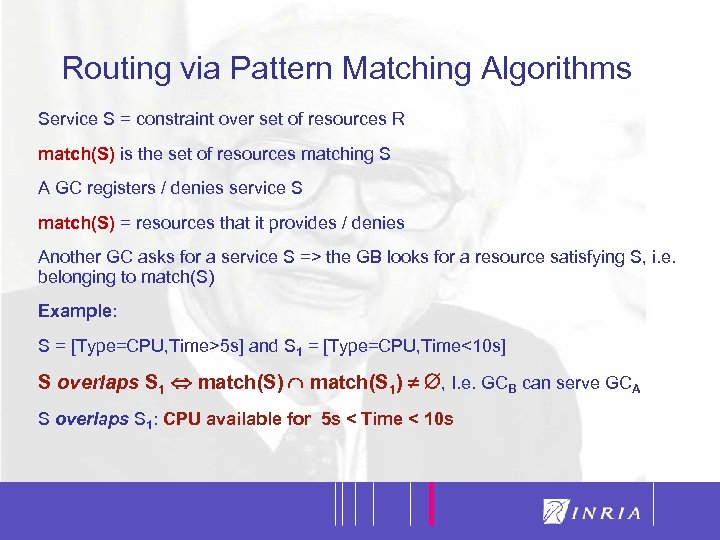
13 Routing via Pattern Matching Algorithms Service S = constraint over set of resources R match(S) is the set of resources matching S A GC registers / denies service S match(S) = resources that it provides / denies Another GC asks for a service S => the GB looks for a resource satisfying S, i. e. belonging to match(S) Example: S = [Type=CPU, Time>5 s] and S 1 = [Type=CPU, Time<10 s] S overlaps S 1 match(S) match(S 1) , I. e. GCB can serve GCA S overlaps S 1: CPU available for 5 s < Time < 10 s
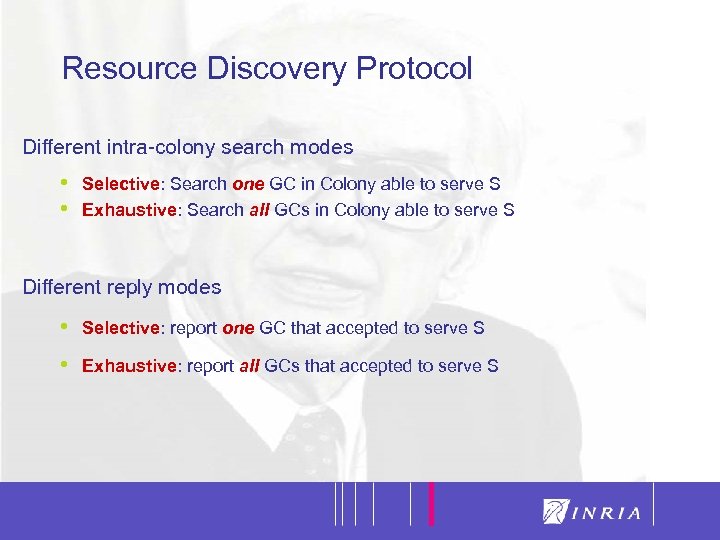
14 Resource Discovery Protocol Different intra-colony search modes • • Selective: Search one GC in Colony able to serve S Exhaustive: Search all GCs in Colony able to serve S Different reply modes • Selective: report one GC that accepted to serve S • Exhaustive: report all GCs that accepted to serve S
![15 Resource Discovery Protocol [I 2 CS 2006, LNCS To appear] Selective intra-colony search](https://present5.com/presentation/105cd2852d123b38f51ebb07212bc7c4/image-15.jpg "15 Resource Discovery Protocol [I 2 CS 2006, LNCS To appear] Selective intra-colony search")
15 Resource Discovery Protocol [I 2 CS 2006, LNCS To appear] Selective intra-colony search Exhaustive intra-colony search S = [Type = CPU, Time > 10 s] A Selective intra-colony search mode B • uses less resources • can lead to poor delay C D E Exhaustive search mode • uses more resources • [Type = CPU, Time > 10 s] F G H can improve delay GC 3 S 3 [Type = MEM, Size < 20 M] GC 2 S 2 [Type = CPU, Time < 200 s] GC 1 [Type = CPU, Time < 20 s] S 1
16 Resource Discovery Protocol V 1
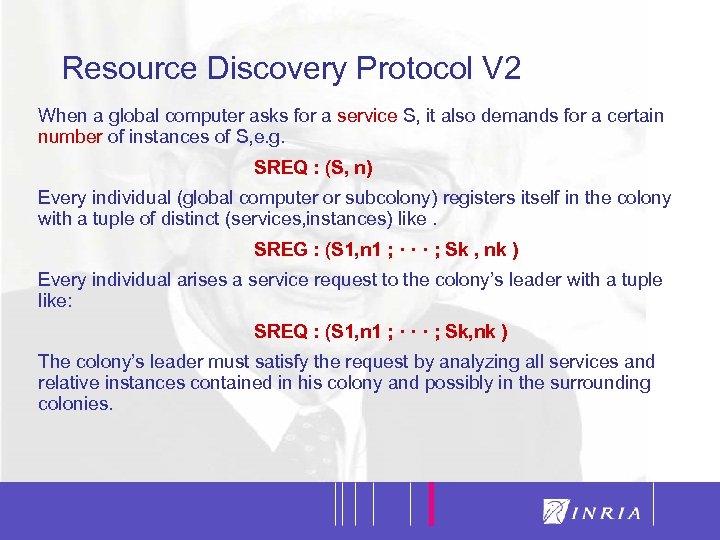
17 Resource Discovery Protocol V 2 When a global computer asks for a service S, it also demands for a certain number of instances of S, e. g. SREQ : (S, n) Every individual (global computer or subcolony) registers itself in the colony with a tuple of distinct (services, instances) like. SREG : (S 1, n 1 ; · · · ; Sk , nk ) Every individual arises a service request to the colony’s leader with a tuple like: SREQ : (S 1, n 1 ; · · · ; Sk, nk ) The colony’s leader must satisfy the request by analyzing all services and relative instances contained in his colony and possibly in the surrounding colonies.
18 The. Gold Internet Era is Over “In the early days of the Internet one could rely on a flat name space given by IP addresses knowing the IP address of a computer would very likely allow now to talk to that computer in some way. This is no longer the case Firewalls partition the Internet into administrative domains that are isolated from each other except for rigidly controlled pathways [Cardelli & Gordon Microsoft 98]”
19 VIP: Two Registration Modalities Registration of a GC to the GB leader of a colony belonging to the same current administrative domain of the GC Registration via remote tunneling of an GC to another GB leader of a colony belonging to a different administrative domain of the GC Summarizing, one GC registers to the GB leader of the colony belonging to the same administrative domain in which it resides and to some other GBs belonging to others administrative domain via tunneling
20 VIP: One Unregistration Modality Unregistration of a GC when there are no pending services demanded or requested to the leader GB of the colony it belongs. The colony accepts the unregistration only if the colony itself will not be corrupted A GB cannot unregister from its own colony (i. e. it cannot discharge itself). For fault tolerance purposes, a GB can be faulty. In that case, the GCs will unregister one after the other and the colony will “disappear” Once a GC has been disconnected from a colony belonging to any administrative domain, it can migrate in another colony belonging to any other administrative domain (“emigrant-like” model)
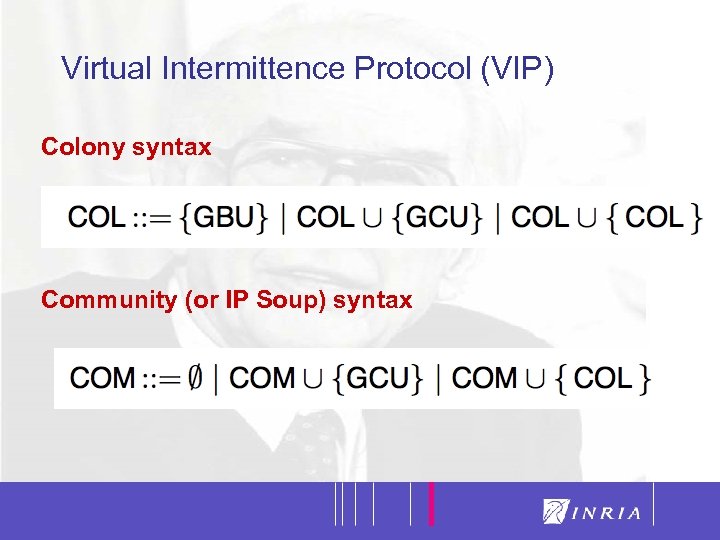
21 Virtual Intermittence Protocol (VIP) Colony syntax Community (or IP Soup) syntax
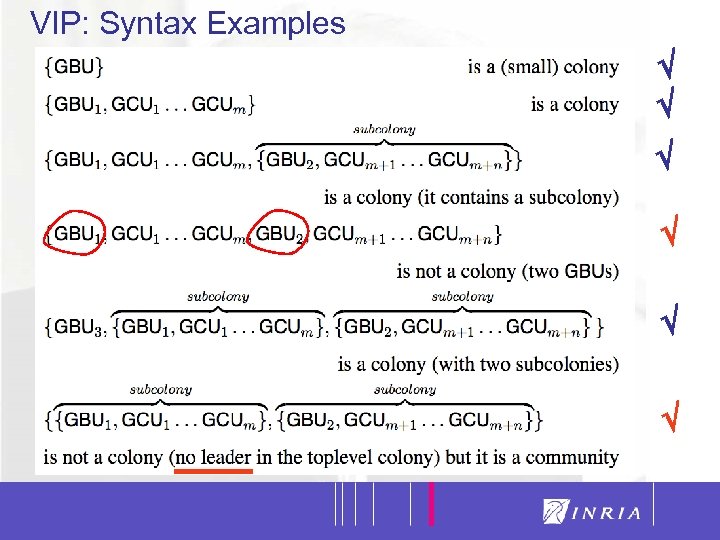
VIP: Syntax Examples 22
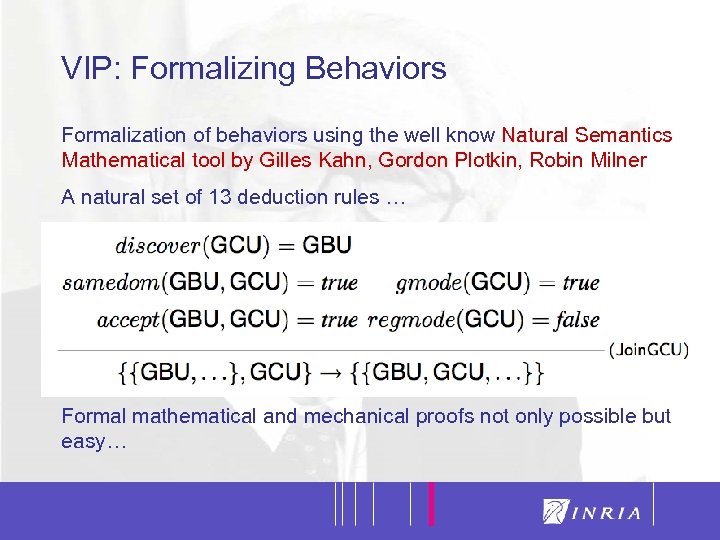
23 VIP: Formalizing Behaviors Formalization of behaviors using the well know Natural Semantics Mathematical tool by Gilles Kahn, Gordon Plotkin, Robin Milner A natural set of 13 deduction rules … Formal mathematical and mechanical proofs not only possible but easy…
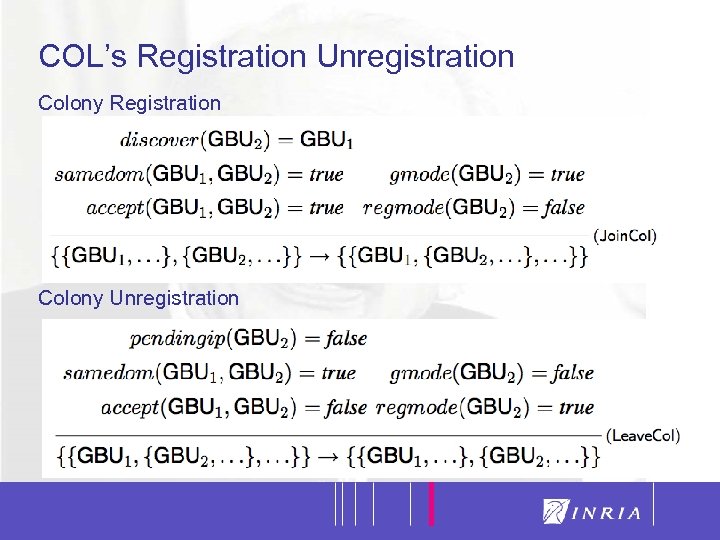
24 COL’s Registration Unregistration Colony Registration Colony Unregistration
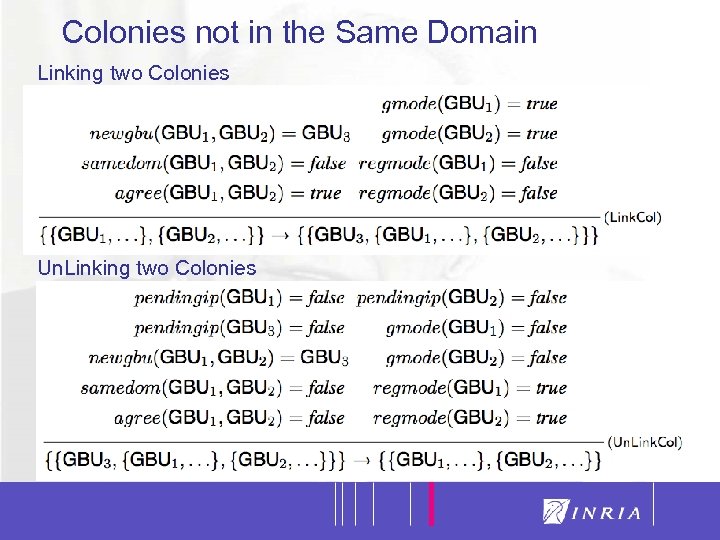
Colonies not in the Same Domain Linking two Colonies Un. Linking two Colonies 25
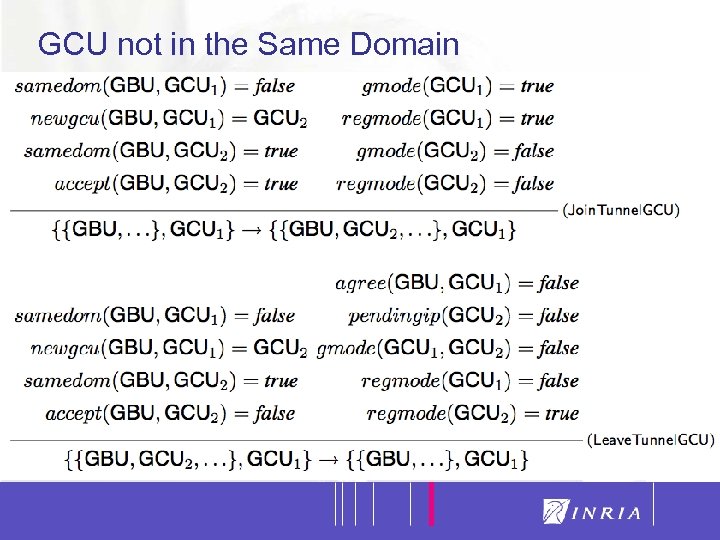
26 GCU not in the Same Domain
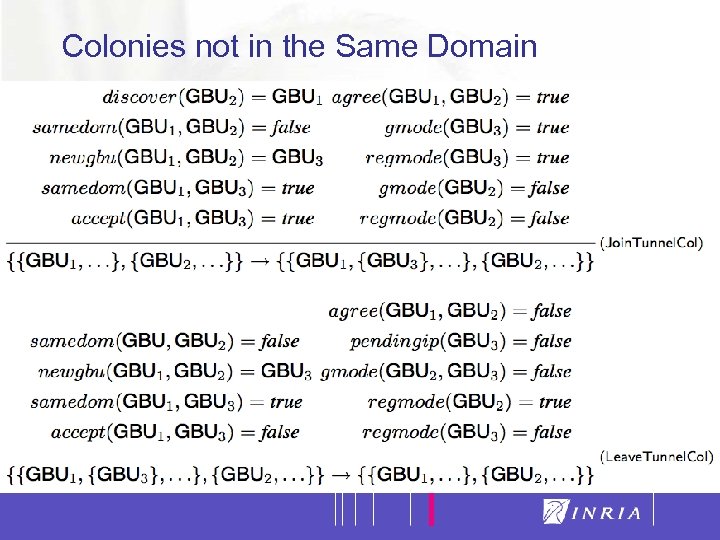
27 Colonies not in the Same Domain
28 Free Riders in Overlay Networks In economics and political science, free riders are actors who consume more than their fair share of a resource, or shoulder less than a fair share of the costs of its production … The free rider problem is the question of how to prevent free riding from taking place, or at least limit its negative effects … Because the notion of “fairness” is a subject of controversy, free riding is usually only considered to be an ”economic problem” when it leads to the non-production or under- production of a public good, and thus to Pareto inefficiency, or when it leads to the excessive use of a common property resource. [From Wikipedia].
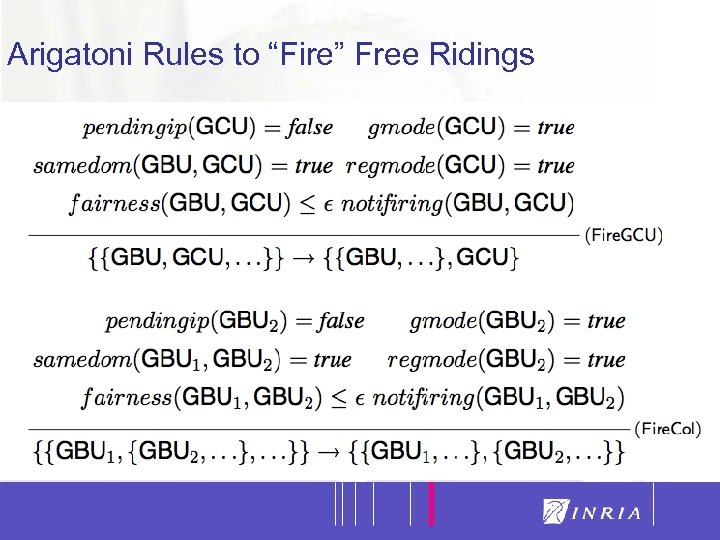
29 Arigatoni Rules to “Fire” Free Ridings
30 GIP: Evaluation via Simulation Sample Topology • Georgia. Tech-ITM (transit-stub) 103 GBs each with their local colony GCs acceptation rate = 75% Let be the probability that a service is provided in a local colony = service availability Issued n service requests Evaluated • • Scalability in terms of load Acceptation ratio
31 GIP Evaluation: Load more evenly distributed • Super Brokers work less • Sub Brokers work more ⇒ encapsulation of resources à la O. O. Scalability: Every GBs receive ~3. 5% of requests (in average) No Super Broker overload
32 GIP Evaluation: Success Rate Success rate depends on availability of services Efficiency: 90% for = 4%
33 GIP & VIP: Simulator
34 In Fine … Arigatoni: Lightweight Overlay Network for dynamic Resource Discovery. Main Achievements • Intermittence, Generality, Asynchronicity, Scalability Current, future work • • • More functionalities Statistical model of the framework (with Philippe Nain) Protoimplementation (from Simulator to real SW Agent) Routing Table based on Coloring graphs … (with Sereni) Deployment on a (Sophia intranet, Planet. Lab, G 5000)
35 Conclusions I 1. From Physical, Real, Proprietary, Personal, more or less expensive, programmable, Turing Complete, Computers … 2. … to Ethereal, Virtual, Public, Impersonal, Ubiquitous, not expensive, programmable, Turing Complete, Overlay Computers 3. Looks a bit like a Capitalist vs. Communist Social Model “querelle”, but we can also pay to be logged inside a “rich” colony 4. I can conjecture, in the next 2 -3 decades, at least 2 categories of Overlay Computers: • • Not-free, Closed Overlay Networks, made by semantically powerful Overlay Computers offering services in change of money Free, Open Overlay Networks, made by semantically powerful Overlay Computers offering services for free
![36 Conclusions II • [John Gustafson’s Paper on history of Computing] • • Linear](https://present5.com/presentation/105cd2852d123b38f51ebb07212bc7c4/image-36.jpg "36 Conclusions II • [John Gustafson’s Paper on history of Computing] • • Linear")
36 Conclusions II • [John Gustafson’s Paper on history of Computing] • • Linear Equations Automatic Solvers motivates computing innovation The quest for Linear Solvers helps the development of Matrices, Negative Numbers, Loops, Binary Arithmetic, LINPACK Open-source, . . . • Research on Network Computing, Overlay Networks will be motivated by • Solving Linear Equations, Bio-Challenges, Cracking RSA codes, Physical simulation, Quantum computation simulation, • • • Finding life in Mars, Solving Sudokus Running other more or less serious & useful algorithms, Last but not least (sure, Atanassof & Von Neumann would like!)
37 Yes, Downloading the Last Madonna’s tube!
38 One “run” within the Arigatoni Overlay Network ? http: //www. nsf. gov/news/special_report s/cyber/Cover. Animation. htm
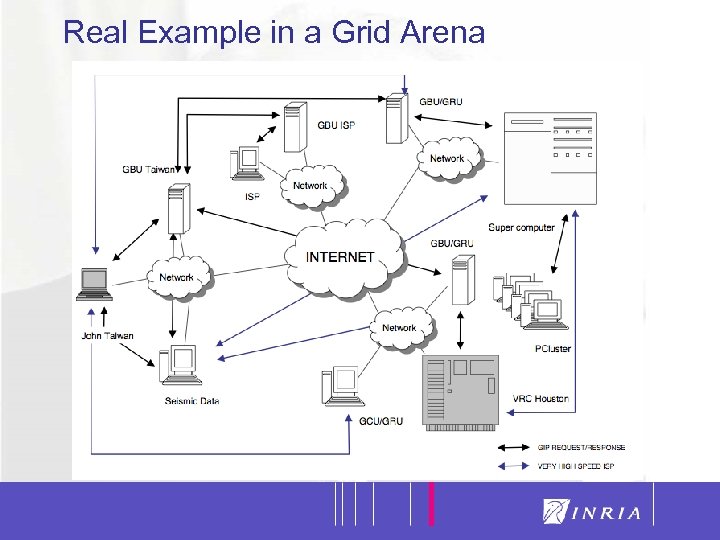
Real Example in a Grid Arena 39
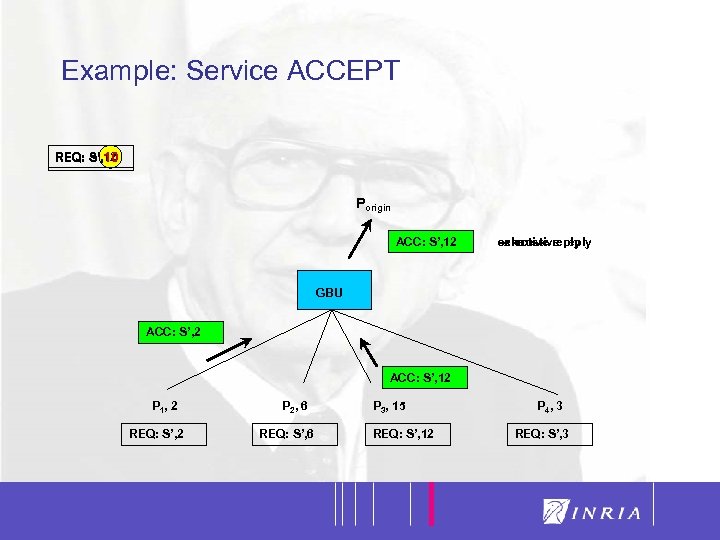
40 Example: Service ACCEPT REQ: S’, 12 S’, 10 Porigin ACC: S’, 2 S’, 10 exhaustive reply selective reply GBU ACC: S’, 2 ACC: S’, 12 P 1, 2 REQ: S’, 2 P 2, 6 REQ: S’, 6 P 3, 15 REQ: S’, 12 P 4, 3 REQ: S’, 3
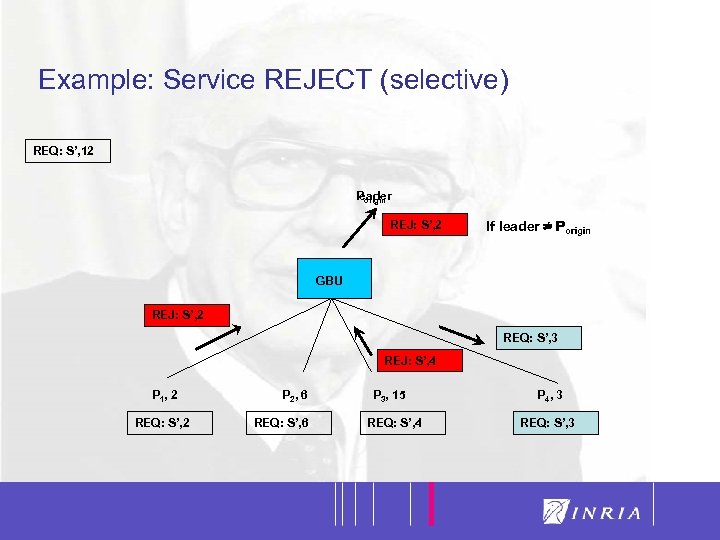
41 Example: Service REJECT (selective) REQ: S’, 12 Porigin leader REJ: S’, 2 REQ: S’, 1 S’, 2 S’, 1 If leader = Porigin GBU REJ: S’, 2 REQ: S’, 3 REJ: S’, 4 P 1, 2 REQ: S’, 2 P 2, 6 REQ: S’, 6 P 3, 15 REQ: S’, 4 P 4, 3 REQ: S’, 3
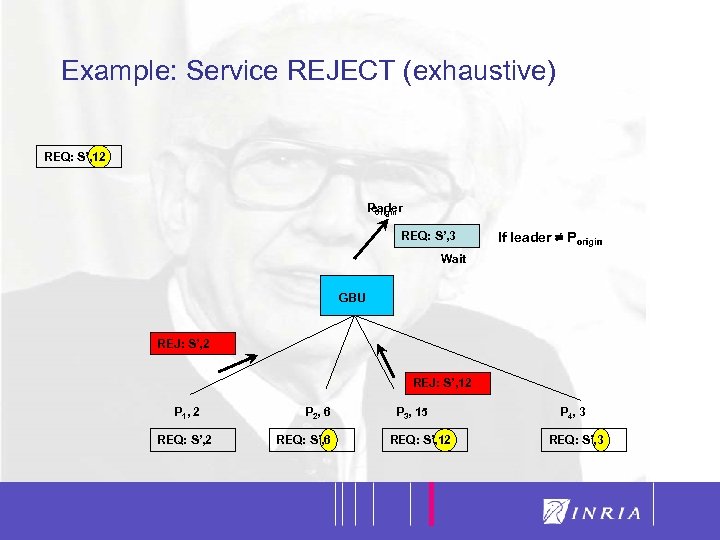
42 Example: Service REJECT (exhaustive) REQ: S’, 12 leader Porigin REJ: S’, 3 REQ: S’, 3 If leader = Porigin Wait GBU REJ: S’, 2 REJ: S’, 12 P 1, 2 REQ: S’, 2 P 2, 6 REQ: S’, 6 P 3, 15 REQ: S’, 12 P 4, 3 REQ: S’, 3
Скачать презентацию Arigatoni A Simple Programmable Overlay Network Luigi Liquori
105cd2852d123b38f51ebb07212bc7c4.ppt