


 Скачать презентацию Are you Listening LM-37 Language Week 1 -3
18a18ba0ea1951ebf9aefb9ef21017b7.ppt
- Количество слайдов: 51
 Are you Listening? LM-37 Language Week 1 -3 March 2017 Louise Williams
 Are you Listening? • sound in our everyday lives • discuss what listening actually means and raise awareness regarding our (in)ability to listen • listening and language learning
 3
3
 really Are you listening? Can everyone hear me? Are you Listening?
 So why are you looking at the slides? ?
 6
6
 7
7
 Things I hear around 6. 45 am • The kids getting dressed, usually whinging about something, the bathroom tap running, the toilet flushing… • My husband in the kitchen, coughing, sneezing, the coffee grinding, the bread knife cutting, the milk gushing into the cereal bowl, feeding the cat… • The radiator in the hall dripping, lightswitches going on and off, stairs creaking, wardrobes opening closing… • The neighbours’ dogs barking making a racket outside, cars whooshing past the house in the rain…
 9
9
 Are we really listening?
 • sound in our everyday lives • discuss what listening actually means and raise awareness regarding our (in)ability to listen Your definitions
 Sources Il dizionario della lingua italiana Devoto Oli • udire • sentire • ascoltare The Concise Oxford Dictionary • hear • listen
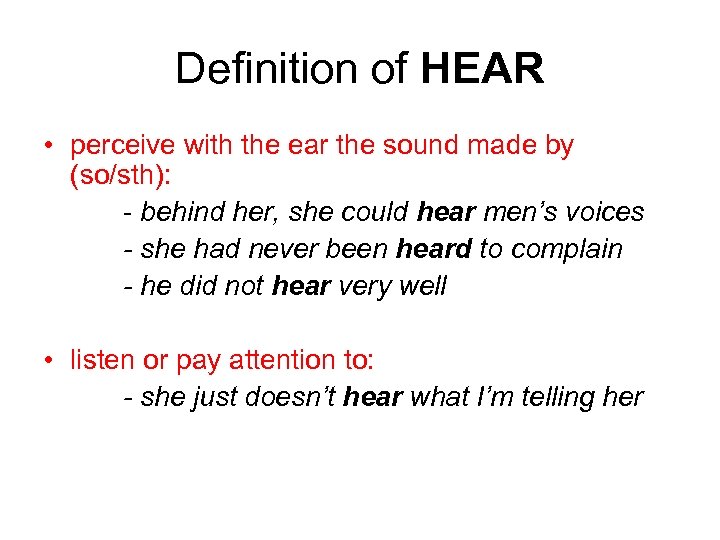 Definition of HEAR • perceive with the ear the sound made by (so/sth): - behind her, she could hear men’s voices - she had never been heard to complain - he did not hear very well • listen or pay attention to: - she just doesn’t hear what I’m telling her
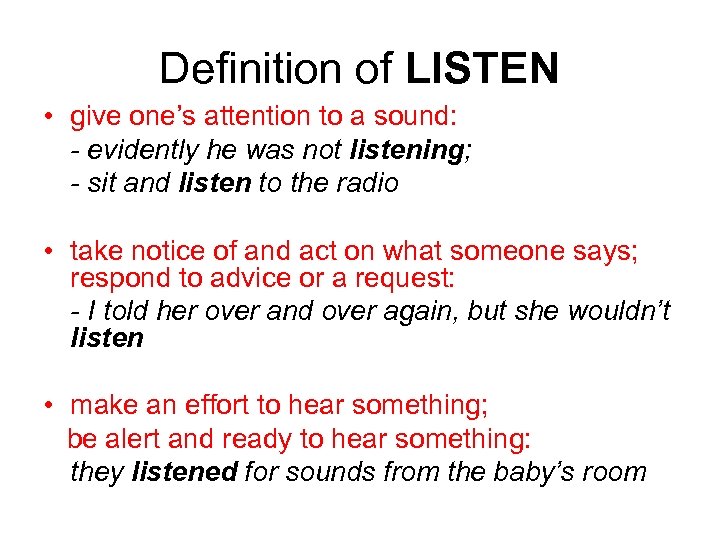 Definition of LISTEN • give one’s attention to a sound: - evidently he was not listening; - sit and listen to the radio • take notice of and act on what someone says; respond to advice or a request: - I told her over and over again, but she wouldn’t listen • make an effort to hear something; be alert and ready to hear something: they listened for sounds from the baby’s room
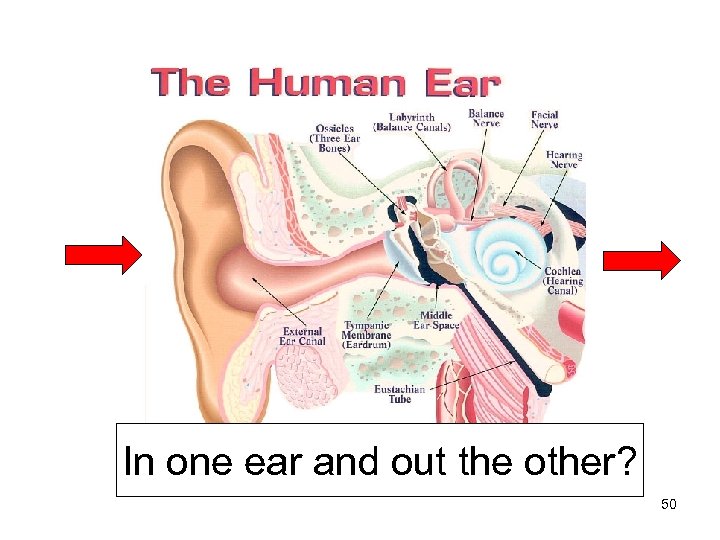
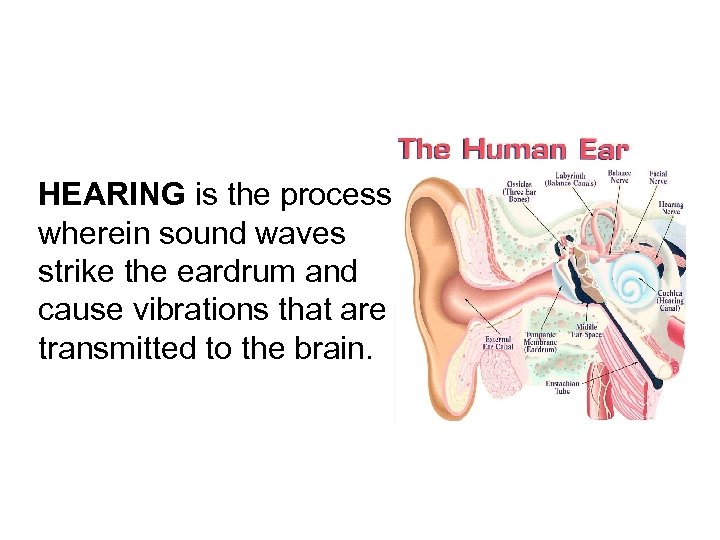 HEARING is the process wherein sound waves strike the eardrum and cause vibrations that are transmitted to the brain.
 LISTENING occurs when (i) the brain reconstructs these electrochemical impulses into a representation of the original sound and (ii) GIVES THEM MEANING.
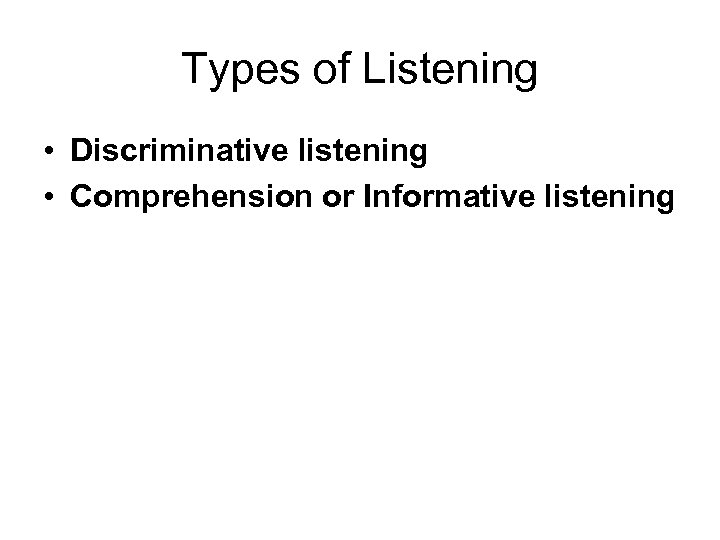
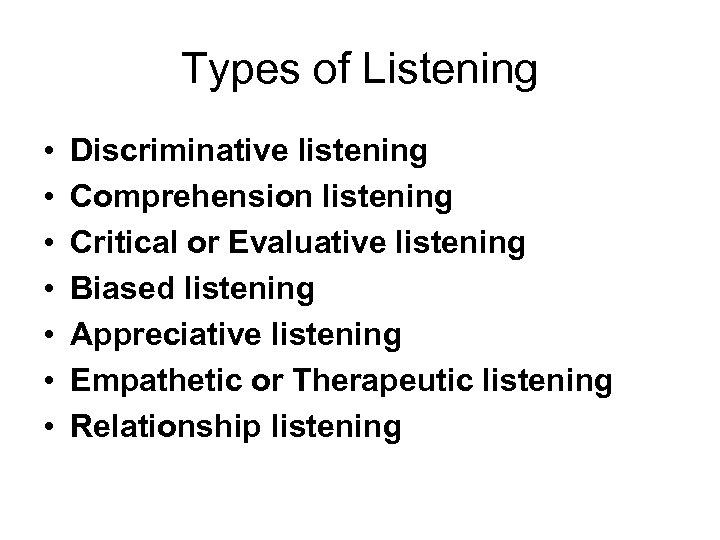
 Types of Listening • Discriminative listening
 18
18
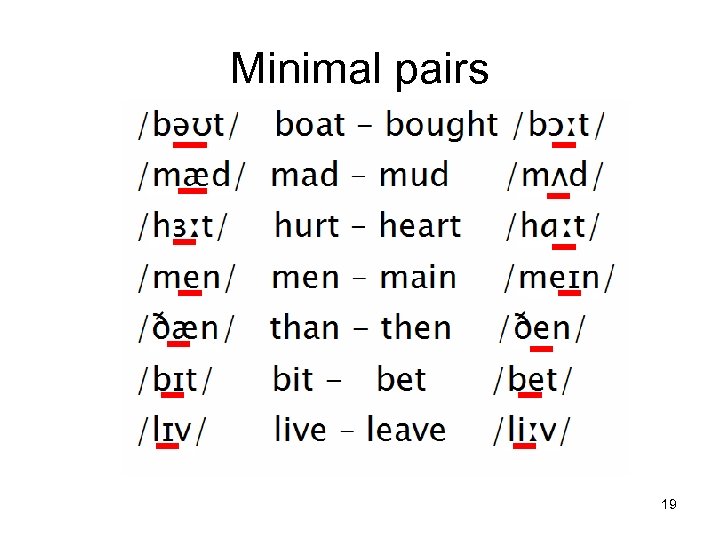 Minimal pairs 19
 Types of Listening • Discriminative listening • Comprehension or Informative listening
 21
21
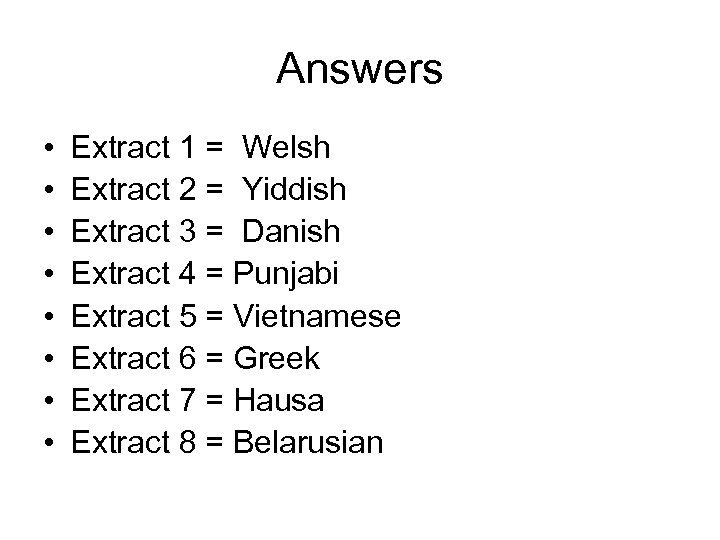 Answers • • Extract 1 = Welsh Extract 2 = Yiddish Extract 3 = Danish Extract 4 = Punjabi Extract 5 = Vietnamese Extract 6 = Greek Extract 7 = Hausa Extract 8 = Belarusian
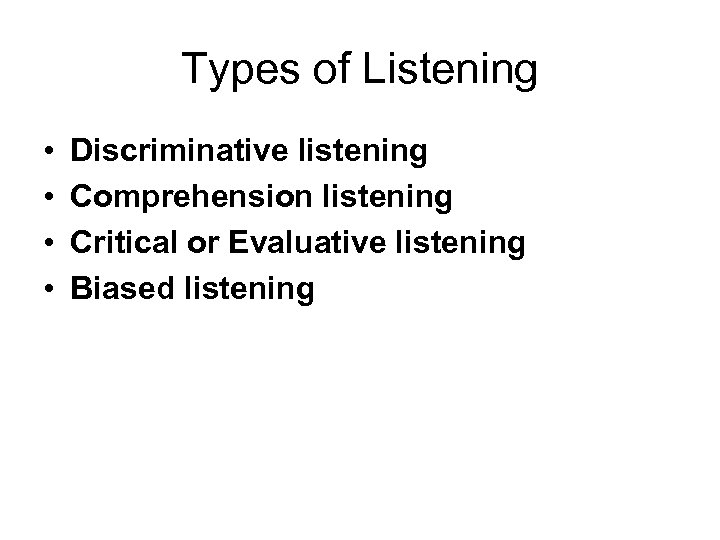 Types of Listening • • Discriminative listening Comprehension listening Critical or Evaluative listening Biased listening
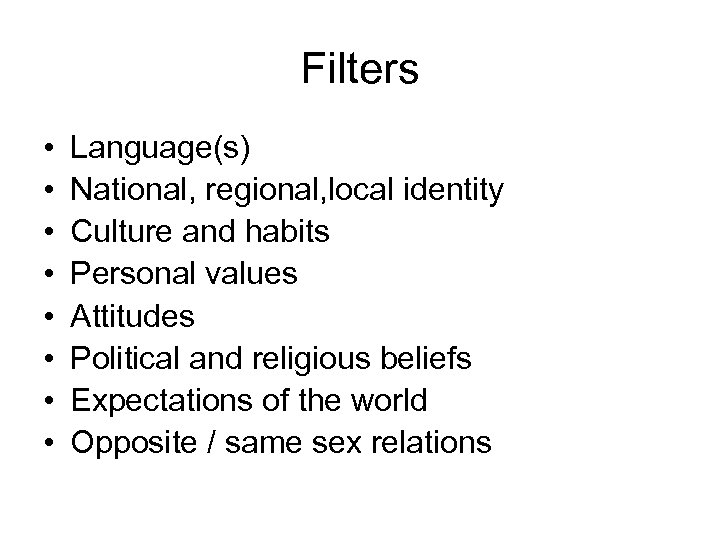 Filters • • Language(s) National, regional, local identity Culture and habits Personal values Attitudes Political and religious beliefs Expectations of the world Opposite / same sex relations
 25
25
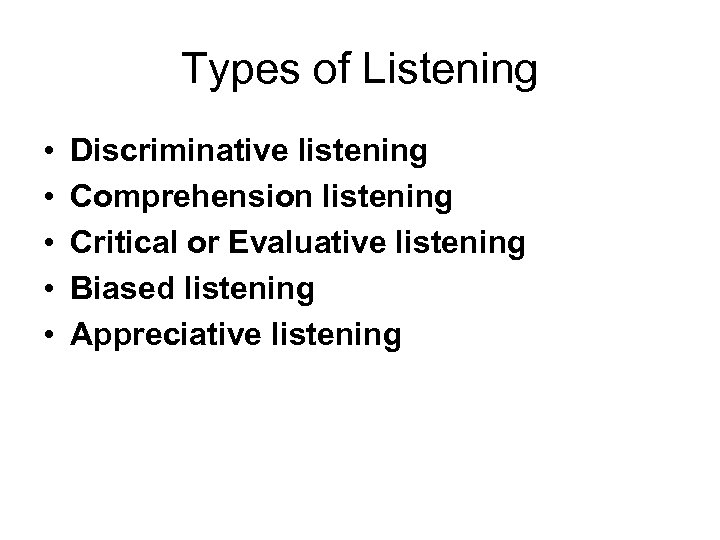 Types of Listening • • • Discriminative listening Comprehension listening Critical or Evaluative listening Biased listening Appreciative listening
 27
27
 1 2 3 4 5 6 7 8 28
 Types of Listening • • Discriminative listening Comprehension listening Critical or Evaluative listening Biased listening Appreciative listening Empathetic or Therapeutic listening Relationship listening
 • ATTENDING • SUPPORTING • EMPATHISING 30
 • sound in our everyday lives • discuss what listening actually means and raise awareness regarding our (in)ability to listen • listening and language learning
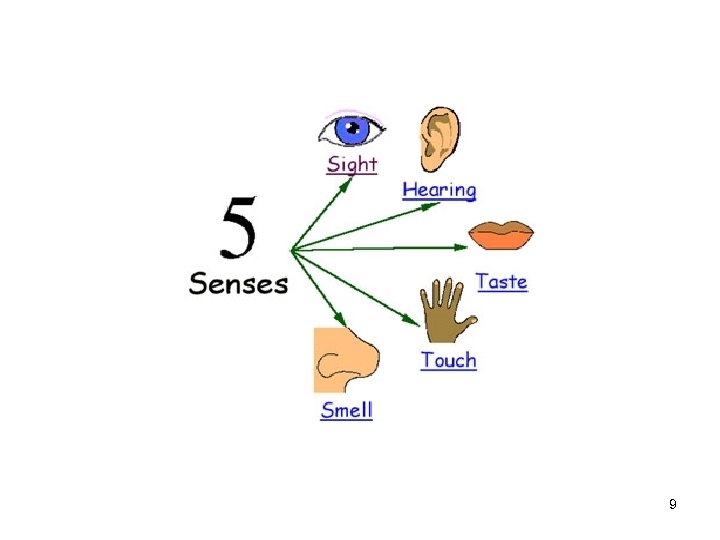
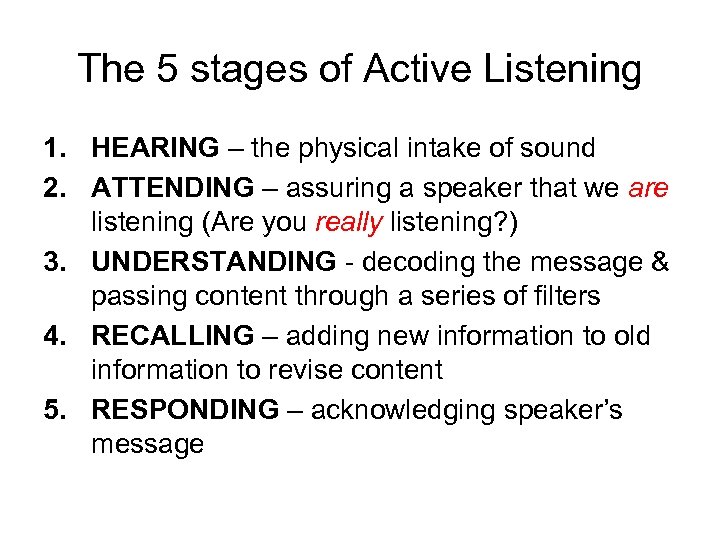 The 5 stages of Active Listening 1. HEARING – the physical intake of sound 2. ATTENDING – assuring a speaker that we are listening (Are you really listening? ) 3. UNDERSTANDING - decoding the message & passing content through a series of filters 4. RECALLING – adding new information to old information to revise content 5. RESPONDING – acknowledging speaker’s message
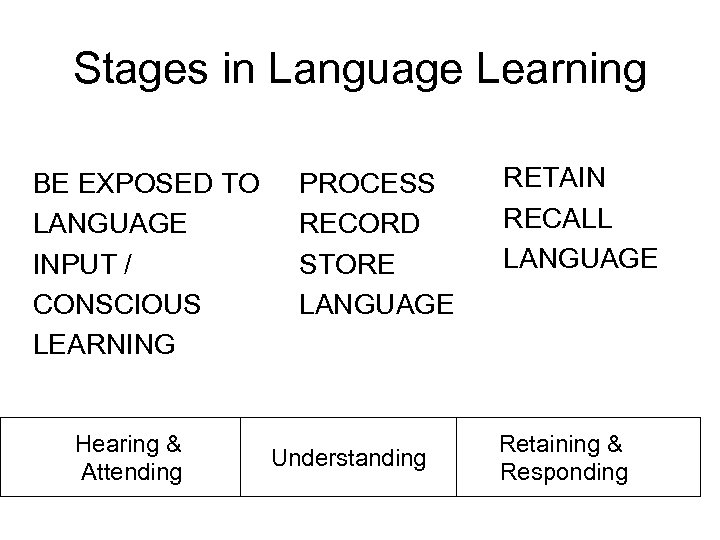 Stages in Language Learning BE EXPOSED TO LANGUAGE INPUT / CONSCIOUS LEARNING Hearing & Attending PROCESS RECORD STORE LANGUAGE Understanding RETAIN RECALL LANGUAGE Retaining & Responding
 So why don’t CONCENTRATION & MEMORY people listen actively?
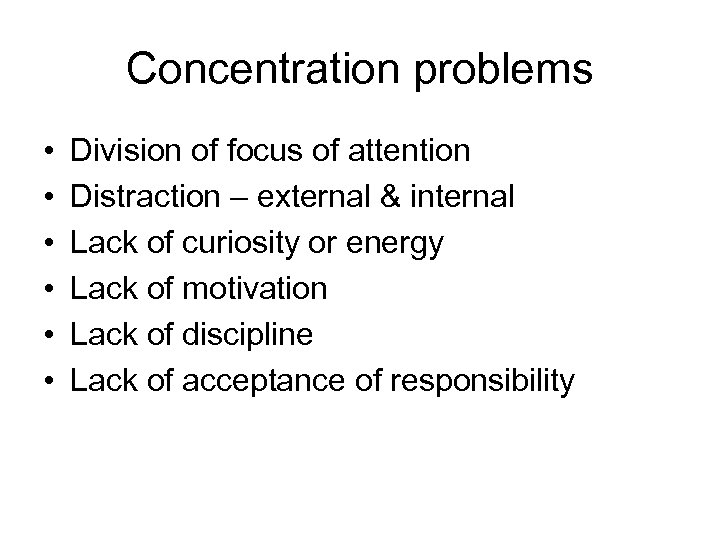 Concentration problems • • • Division of focus of attention Distraction – external & internal Lack of curiosity or energy Lack of motivation Lack of discipline Lack of acceptance of responsibility
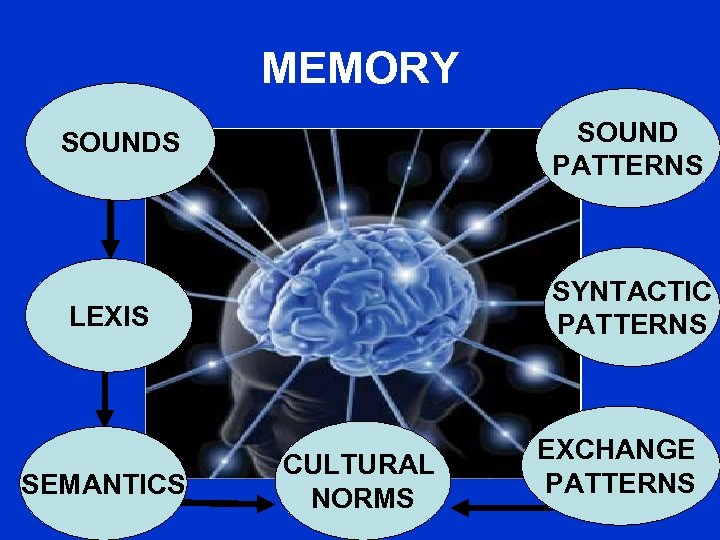 MEMORY SOUNDS SOUND PATTERNS LEXIS SYNTACTIC PATTERNS SEMANTICS CULTURAL NORMS EXCHANGE PATTERNS
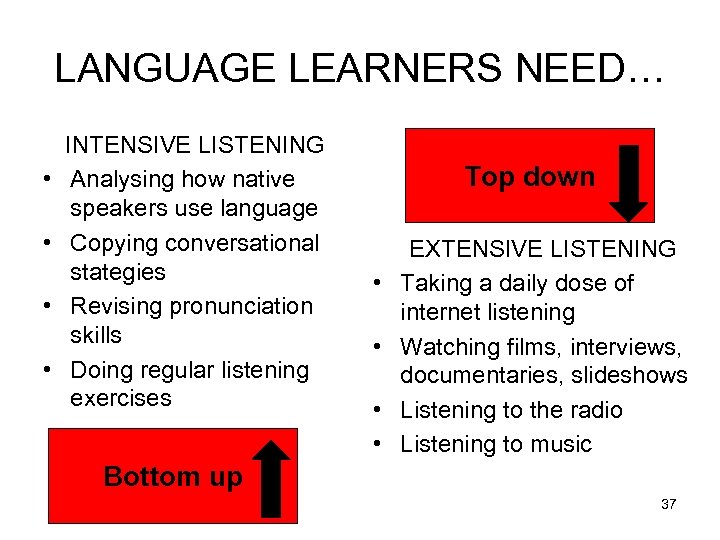 LANGUAGE LEARNERS NEED… • • INTENSIVE LISTENING Analysing how native speakers use language Copying conversational stategies Revising pronunciation skills Doing regular listening exercises Top down • • EXTENSIVE LISTENING Taking a daily dose of internet listening Watching films, interviews, documentaries, slideshows Listening to the radio Listening to music Bottom up 37

 39
39
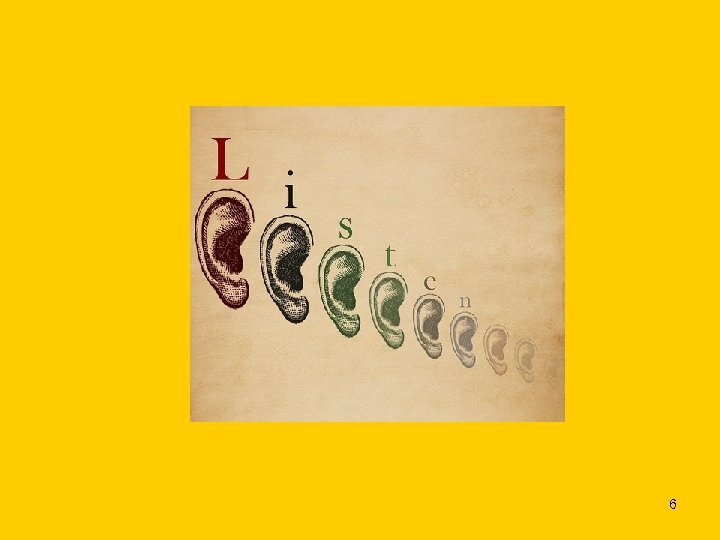
 LISTEN LIS TEN SIL ENT SILENT
 Are you Listening? • sound in our everyday lives • discuss what listening actually means and raise awareness regarding our (in)ability to listen • listening and language learning
 Deadline: Tuesday 25 th March 42
 1 43
1 43
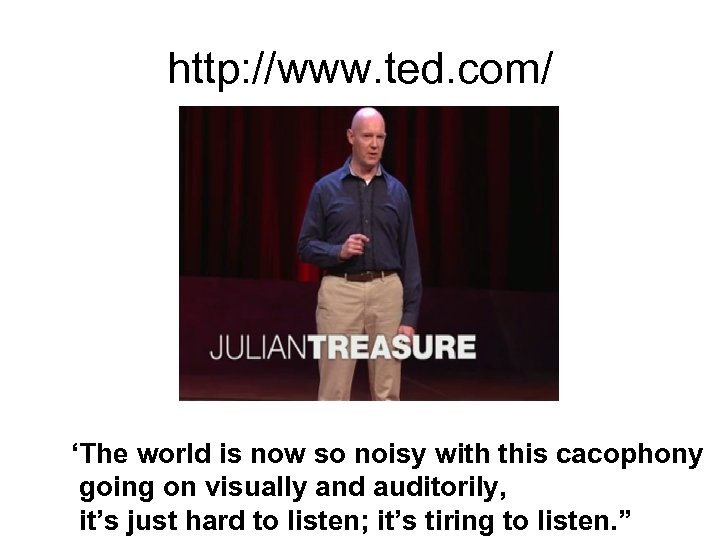 http: //www. ted. com/ ‘The world is now so noisy with this cacophony going on visually and auditorily, it’s just hard to listen; it’s tiring to listen. ”
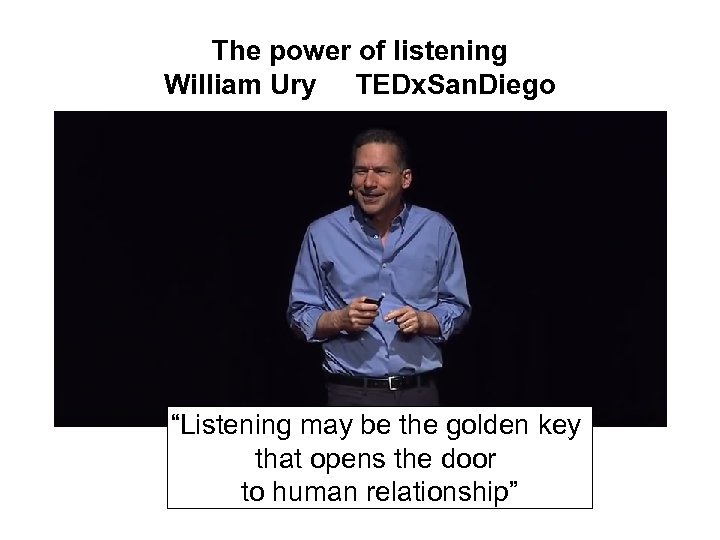 The power of listening William Ury TEDx. San. Diego “Listening may be the golden key that opens the door to human relationship”
 2 • • • Google ‘Listening’ and find audio material (with or without video support) related to the subject of LISTENING Analyse what you have chosen Record your impressions (c. 5 mins. )
 Send to: louisejayne. williams@unifi. it a link to the site(s) you consulted your audio file in MP 3 format
 Final, final 25/03/17
 3 Listen more actively.
 In one ear and out the other? 50
 51
51