 Скачать презентацию Architecture By Eric Augustine Period 6 ap
e67b2b5f5fb93595a9cb756a608267ea.ppt
- Количество слайдов: 49



Architecture By: Eric Augustine Period 6 ap
Chapters 1 -3
The anasazis • Lived in pueblos- Spanish for towns • Pueblos were clustered around central plazas with circular underground kivas. • Made canals flowing from mountain catchment bases • Stone and adobe dwellings built along cliff walls • Constructed with bricks made from sand, clay, and water with some fibrous or organic material • Known for their pottery • Pottery was used for cooking or storage • Pottery was usually painted black designs on white or light gray backgrounds
European Community’s • Rural Europeans lived in family households clustered in farming villages • Land was divided into hundreds of small territories, each ruled by a family of lords. • Noble lords lived in great estates and castles
First communities of new france • Encouraged families to settle along the narrow belt of fertile land along the St. Lawrence • With the buildings that they built, manor house of the lord, the catholic churchand a couple public buildings, it resembled the towns of northern france
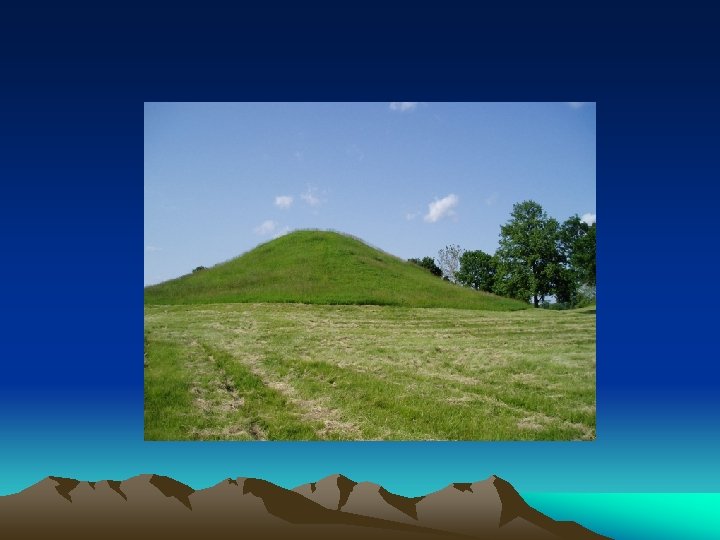
Mississippian culture • Constructed large earthwork pyramid mounds, or platform mounds • Usually square, rectangular, or sometimes circular • Houses temples, burial buildings, and others were usually constructed at the top of the mounds.
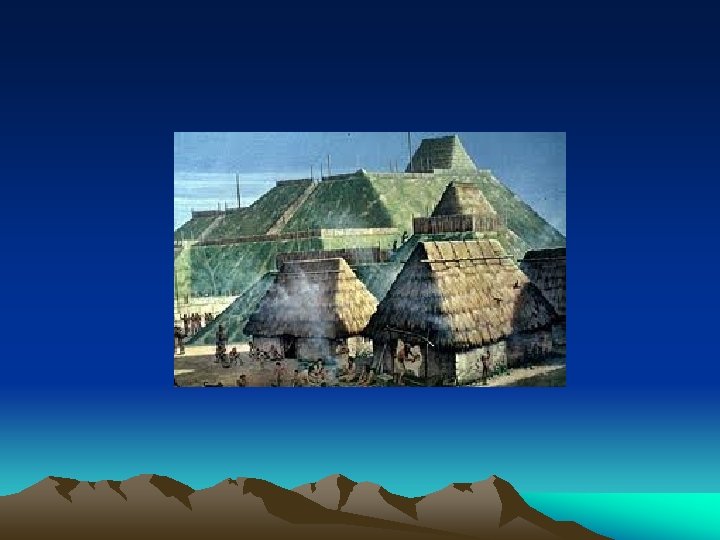
Cahokia • Urban cluster of about 30, 000 people • Its farm fields were made up of corn, beans, and pumpkins, crops Europeans had never seen • There was a temple, a huge pyramid, covered 15 acres at its base and rose up to about 10 stories high • On the top were sacred residences of chiefs and priests • A wall surrounded the ceremonial core of the city • thousands of homes formed neighborhoods • 20, 000 residents more populous than London. • Had a huge central plaza, like a downtown. • With pyramids and platforms • Thousands of homes in the area formed neighborhoods
5 terms 1. Pueblos- communities 1. Urban- Of, relating to, or that consisted of located in a city. apartment-like structures 2. Temple- A building made from stone, adobe dedicated to religious mud, and other local ceremonies or worship. material. These 3. Noble- Having or structures were usually showing qualities of high multi-storied buildings moral character, such as surrounding an open courage, generosity, or plaza and were occupied honor. by hundreds to thousands of Pueblo People. 2. Fertile land- Producing fruit or vegetation in abundance; fruitful able to produce abundantly.
Two people that pertain to architecture • Samuel de Champlain- • Pope of San Juan in 1605, he helped Pueblo- Spanish rule of establish the outpost of the Pueblo Indians of Port Royal on what is now the Rio Grande valley Nova Scotia, he also of New Mexico began in found the town of Quebec 1598. Although they at a site strategically numbered 40, 000 to located so that he could 80, 000 people at that intercept the traffic in furs time, the many to the Atlantic. independent towns, often speaking different languages and hostile to each other were unable to unite in opposition to the Spanish.
10 multiple choice questions for chapters 1 -3
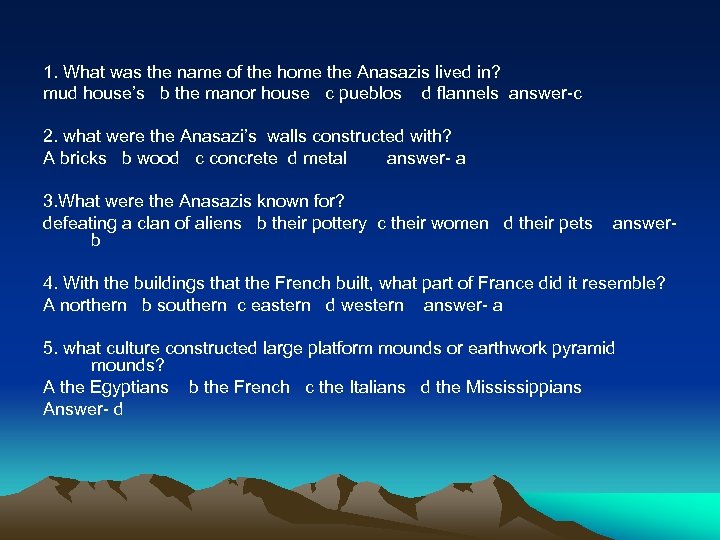
1. What was the name of the home the Anasazis lived in? mud house’s b the manor house c pueblos d flannels answer-c 2. what were the Anasazi’s walls constructed with? A bricks b wood c concrete d metal answer- a 3. What were the Anasazis known for? defeating a clan of aliens b their pottery c their women d their pets answer- b 4. With the buildings that the French built, what part of France did it resemble? A northern b southern c eastern d western answer- a 5. what culture constructed large platform mounds or earthwork pyramid mounds? A the Egyptians b the French c the Italians d the Mississippians Answer- d
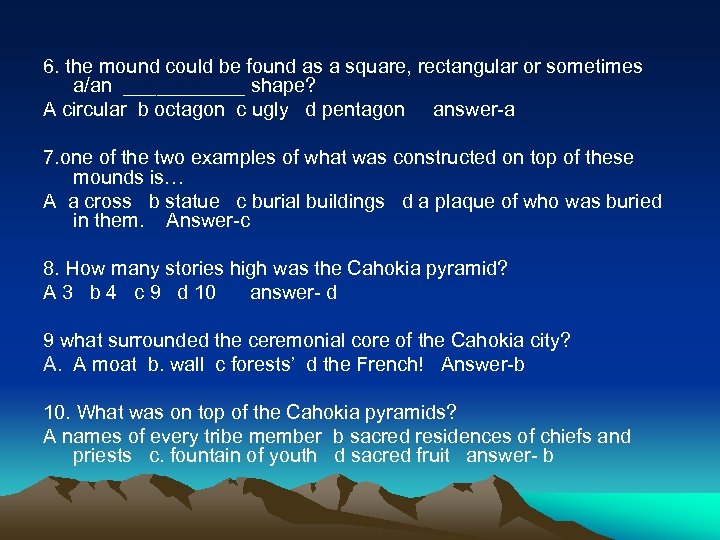
6. the mound could be found as a square, rectangular or sometimes a/an ______ shape? A circular b octagon c ugly d pentagon answer-a 7. one of the two examples of what was constructed on top of these mounds is… A a cross b statue c burial buildings d a plaque of who was buried in them. Answer-c 8. How many stories high was the Cahokia pyramid? A 3 b 4 c 9 d 10 answer- d 9 what surrounded the ceremonial core of the Cahokia city? A. A moat b. wall c forests’ d the French! Answer-b 10. What was on top of the Cahokia pyramids? A names of every tribe member b sacred residences of chiefs and priests c. fountain of youth d sacred fruit answer- b
Reference/ works cited: • Out of Many Author- John Faragher, Mari Jo Buhle • http//: www. wikipedia. org • http//: www. thefreedicti onary. com
Chapters 4 -6
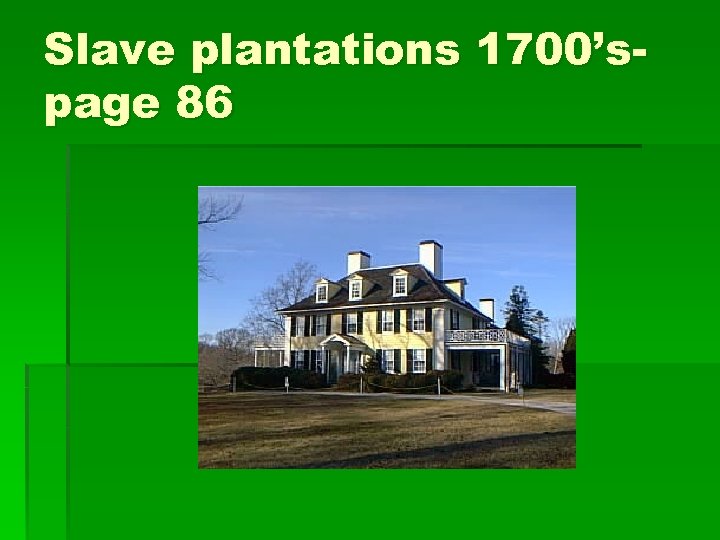
Slave plantations 1700’spage 86
§ On the slave house on rice plantations, had steep roofs on the slave cabins, which is an African architectural feature introduced in America by slave builders. § Kept living quarters cool down by allowing the heat to rise and dissipate in the rafters. § Dark colored roof which I assume was used to make the heat rise up easier to escape through the rafters. § Built in 1714 by Thomas Broughton. § one of the earliest plantation homes in the United States § Very small compared to the manor house. § Appears to be a dark green as the roof and a light brown as the rest of the cabin. § No windows in the cabins. § Cabins appear as huts, brought design from Africa. § Manor house is more than triple the size of each individual cabin. § Also has a dark roof and light colored walls. § Many windows. § Has a steep rood for either the heat as well or can be for snow to fall off easier. Depending on where this plantation is located § As well as the cabins, the manor house appears to have a couple rafters. § Two stories, most likely brought the design from Britain. § Manor house is placed facing the cabins, I believe this is so the owner or “master” can see what the slaves are doing. § Built in 1714 by Thomas Broughton. § One of the earliest plantation homes in the United States.
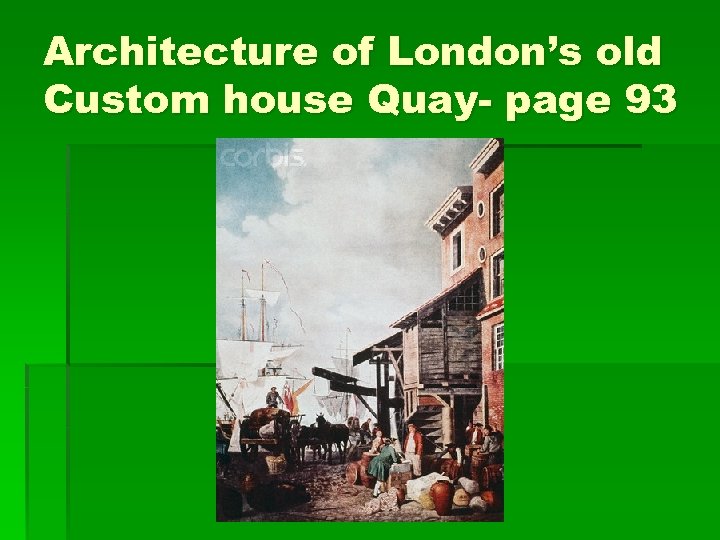
Architecture of London’s old Custom house Quay- page 93
§ Made mostly of bricks to stay strong for storms or floods. § Built high up not across to avoid possible floods from storms. § Slanted roof to allow rain to fall off easily to prevent leaks in roof. § Multiple windows for light to pass through § Also built up to be able to spot incoming ships to dock on the port. § Partially made of wood § Located directly on the seawall.
Kahnawake architecturepage 105
§ Community of Catholic Indians that lived like Deerfield, located in Montreal. § Farming town of about fifty or sixty homes clustered around a central church. § Surrounded by stockade to protect it from enemy raiders.
Church of San Xavier del Bac- Page 110
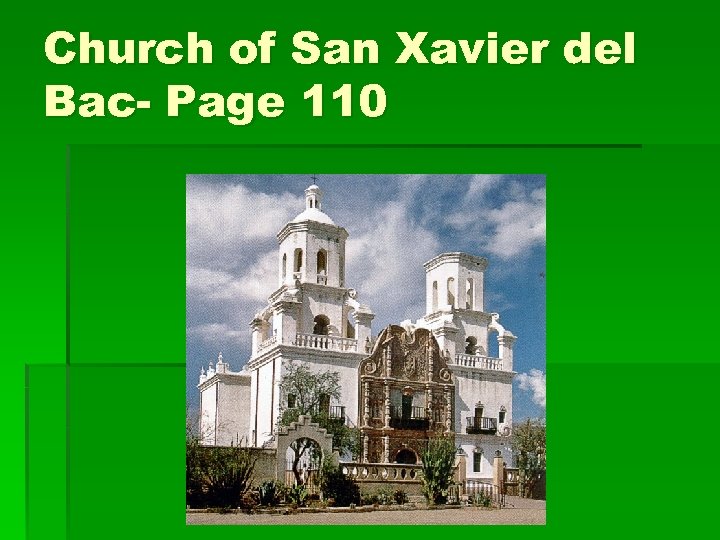
§ Acclaimed as the most striking example of Spanish colonial architecture in the United States. § Has a white, Moorish- inspired design. § Decorated Entrance § No records of the architect, builders, craftsmen and artisans responsible for creating and decorating it are known. § Labor was provided by Indians, and many believe they provided most of the artisans as well. § Interior is decorated with ornaments.
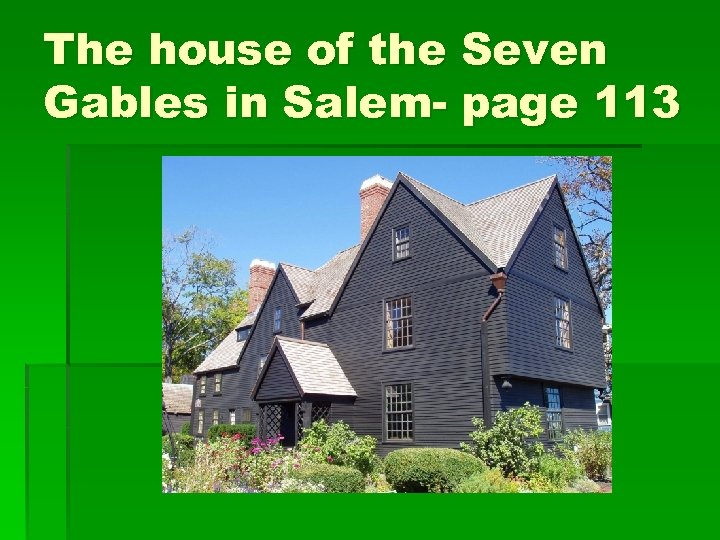
The house of the Seven Gables in Salem- page 113
§ Constructed in 17 th century § “In this style of Architecture, function prevailed over form as structures grew to accommodate their residents” § Rooms were added where and when they were needed § Style came from England § Wood for building was scarce, but the abundance of forests in north America created the conditions for an age of wood construction. § Very steep roofs to prevent snow damage, allowed snow to easily slide off to not break roofs § Multiple stories high § Made out of dense wood § Has a couple of chimneys made of what appears to be bricks, for the winters to provide warmth § Many windows
5 terms that pertains to architecture § Rafters- one of a series of sloped structural members (beams), that extend from the ridge or hip to the down slope perimeter or eave, designed to support the roof deck and its associated loads. § Manor House- The main house on an estate; a mansion § Seawall- An embankment to prevent erosion of a shoreline. § Stockade- A defensive barrier made of strong posts or timbers driven upright side by side into the ground § Moorish- a style of architecture common in Spain from the 13 th to 16 th centuries; characterized by horseshoeshaped arches
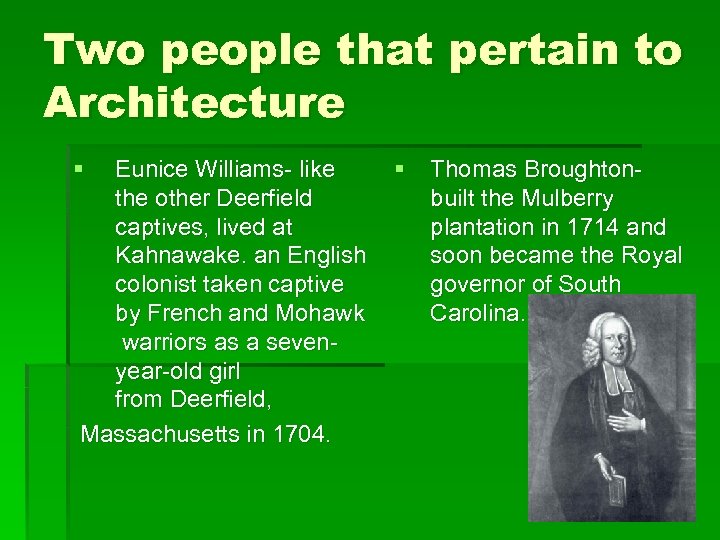
Two people that pertain to Architecture § Eunice Williams- like § the other Deerfield captives, lived at Kahnawake. an English colonist taken captive by French and Mohawk warriors as a sevenyear-old girl from Deerfield, Massachusetts in 1704. Thomas Broughton- built the Mulberry plantation in 1714 and soon became the Royal governor of South Carolina.

Multiple choice questions
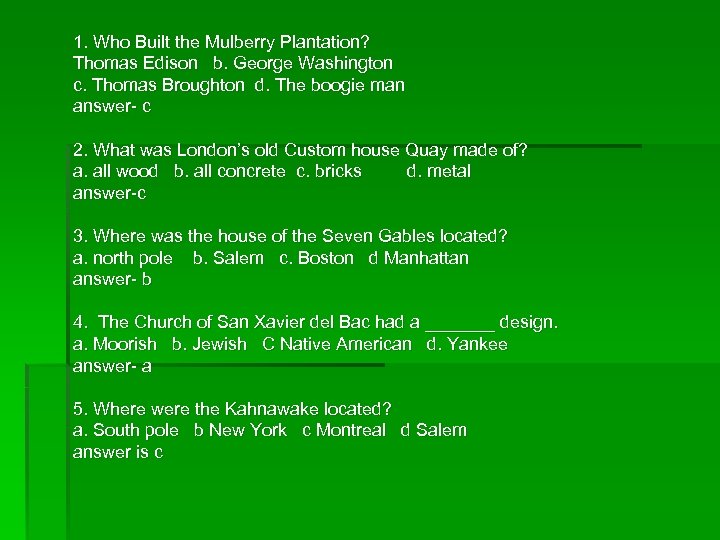
1. Who Built the Mulberry Plantation? Thomas Edison b. George Washington c. Thomas Broughton d. The boogie man answer- c 2. What was London’s old Custom house Quay made of? a. all wood b. all concrete c. bricks d. metal answer-c 3. Where was the house of the Seven Gables located? a. north pole b. Salem c. Boston d Manhattan answer- b 4. The Church of San Xavier del Bac had a _______ design. a. Moorish b. Jewish C Native American d. Yankee answer- a 5. Where were the Kahnawake located? a. South pole b New York c Montreal d Salem answer is c
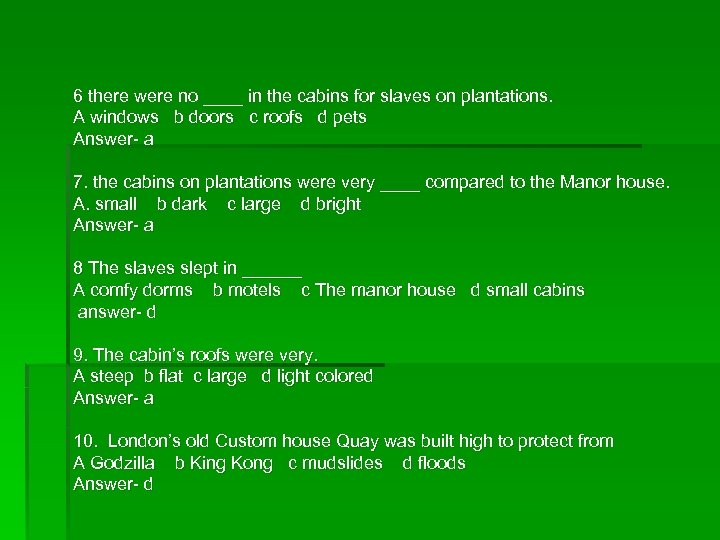
6 there were no ____ in the cabins for slaves on plantations. A windows b doors c roofs d pets Answer- a 7. the cabins on plantations were very ____ compared to the Manor house. A. small b dark c large d bright Answer- a 8 The slaves slept in ______ A comfy dorms b motels c The manor house d small cabins answer- d 9. The cabin’s roofs were very. A steep b flat c large d light colored Answer- a 10. London’s old Custom house Quay was built high to protect from A Godzilla b King Kong c mudslides d floods Answer- d
Reference § Out Of Many authors- John Faragher, Mari Jo Buhle, Daniel Czitrom, and Susan H. Armitage § http: //en. wikipedia. org/wiki/Rafter § http: //www. wikipedia. org/Mission_San_Xavier_ del_Bac § http: //www. thefreedictionary. com/manor § http: //www. thefreedictionary. com/seawall § http: //www. thefreedictionary. com/moorish § http: //en. wikipedia. org/wiki/Eunice_Williams
Chapters 7 -8
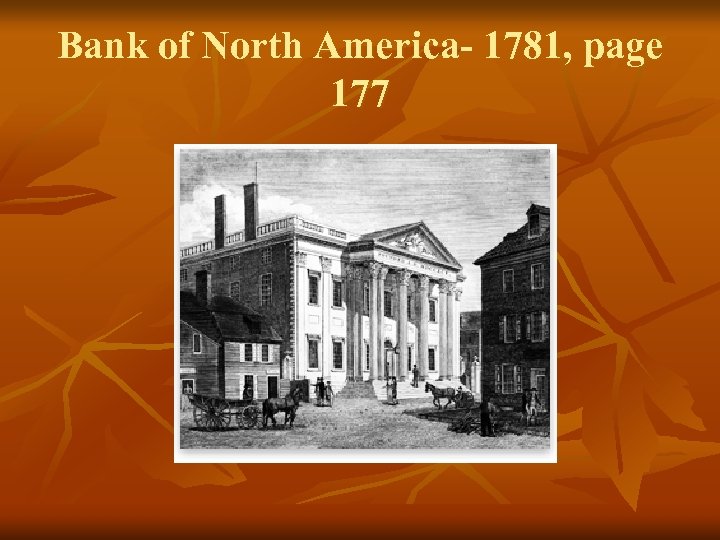
Bank of North America- 1781, page 177
n n n n Samuel Blogdett made the design for the Bank of America, he was the superintendent of buildings for the capital in Washington, DC. Made of stone. Very large and tall building for its time. Has large pillars in the front on the steps for support of the massive building. Has many windows for lighting, 13 just in the front. Has many designs on the building such as the pillars in the front are ridged, there is a picture at the top displaying a bird and other items. All white. Has a white painted railing at the top of the roof. Has 2 chimneys to produce heat for the cold. At the top, it has engraved into it, Founded A: D: MDCCXCV. Has 6 pillars on the front steps. Tallest building in Pennsylvania at that time. Two stories. Flat roof. You didn’t have to worry about this building falling down because of snow at that time because it is so massive compared to the buildings at that time.
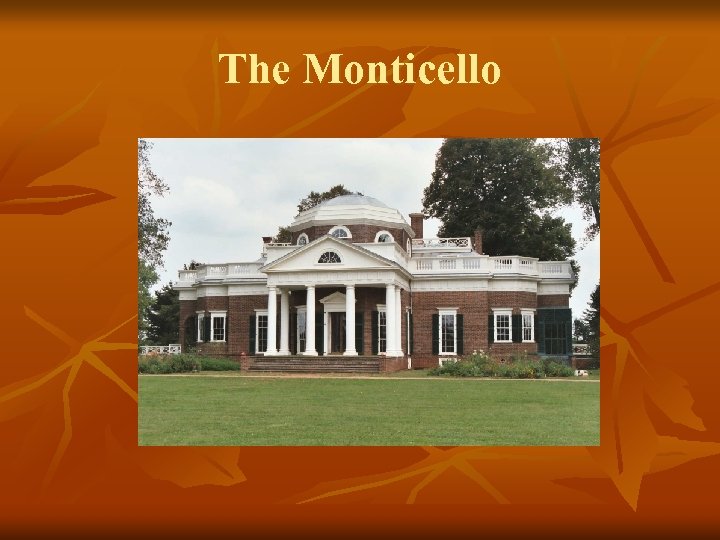
The Monticello
n n n n Located in Charlottesville, Virginia The estate of Thomas Jefferson Built in 1772 Thomas Jefferson was the architect Style was neoclassical architecture. Even the interior was all of Jefferson’s ideas himself. The south wing includes Jefferson's private suite of rooms. beds were built into alcoves cut into thick walls that contain storage space On the south end, there was A row of outhouse buildings and slave dwellings known as Mulberry Row. The house was the center of a plantation of 5, 000 acres About 150 slaves on the plantation Has 6 pillars on the front steps for support Made of bricks with a little wood for detail outlining Outlining was painted white. Appears to have a basement as well as a balcony on the second floor.
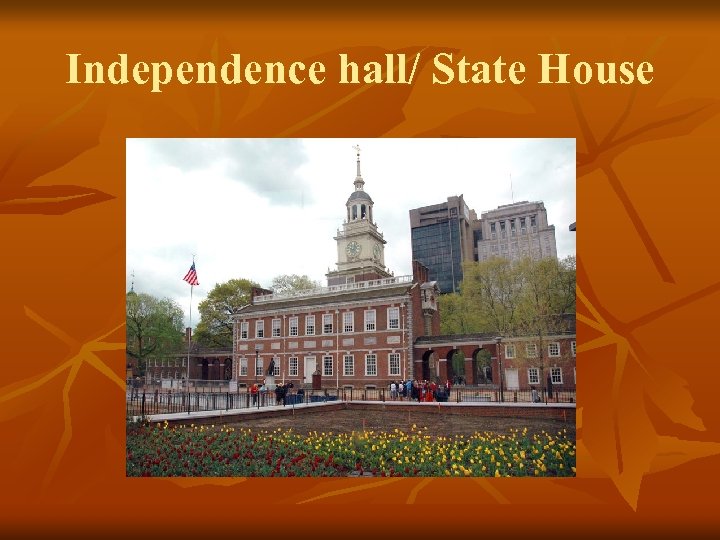
Independence hall/ State House
n n n n located in Philadelphia, Pennsylvania location where both the Declaration of Independence and the United States Constitution were debated and chosen. Also called the State house. completed in 1753 Was the meeting place for the Second Continental Congress from 1775 to 1783 Home to the liberty bell Has a clock on its tower on the roof Main building is 2 stories high with multiple windows. Made of bricks designed with a Georgian style designed by Edmund Woolley and Andrew Hamilton Built by Edmund Woolley 135 feet tall(from highest point)
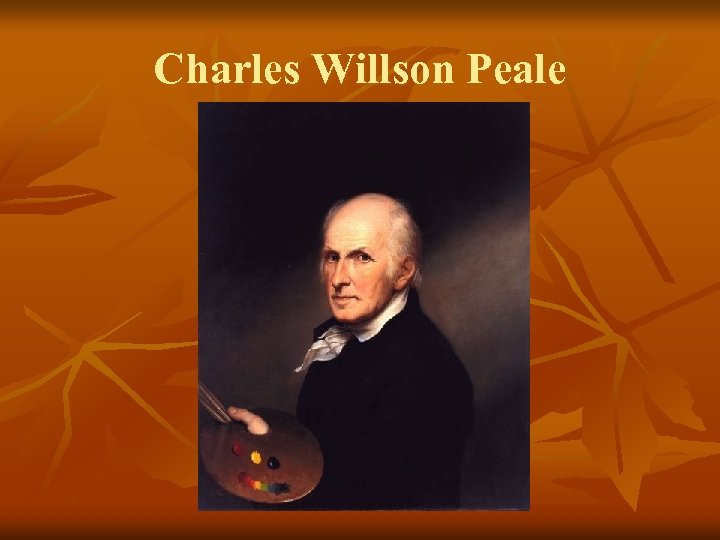
Charles Willson Peale
n n n n Born April 15, 1741, died February 22, 1827 American painter, and naturalist. born in Chester, Maryland 1776, Peale painted portraits of American notables and visitors from overseas on the capital of Pennsylvania. organized the first U. S. scientific expedition in 1801. Owned a museum, Philadelphia Museum, and was later renamed the Peale Museum Has many notable works.
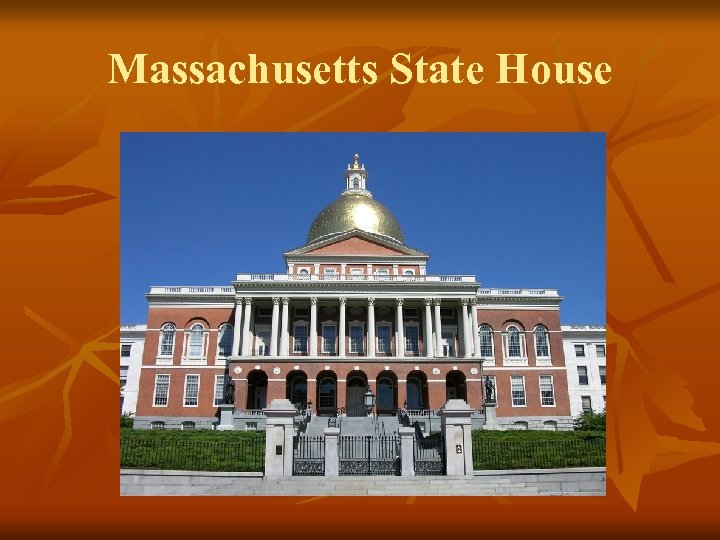
Massachusetts State House
n n n n Located in Boston, Massachusetts Built in 1795 The building is on 6. 7 acres of land It was built on land once owned by John Hancock Charles Bulfinch was the architect Inspired by two London buildings, William Chambers's Somerset House, and James Wyatt's Pantheon. The dome, at the top, was originally made of wood. But leaked, so it was covered with copper. The dome was first painted gray Made of bricks. The dome is now gilded in 23 karat gold. The second floor under the dome is decorated by murals 2 stories tall with many windows. Has a federal architectural style.
Two people that pertain to architecture n Thomas Jefferson- the third President of the United States, and the principal author of the Declaration of Independence. Also the architect for his building, the Monticello. n Benjamin west- first American to achieve prominence in the artistic world of Europe. The second president of the Royal Academy in London. Painted Benjamin Franklin’s portrait.
5 terms n n n Pillar- architectural element similar to a column in its role as a vertical support structure, but the base section is any shape but circular. neoclassical architecture- an architectural style produced by the neoclassical movement that began in the mid-18 th century. Portrait- a painting, photograph, sculpture, or other artistic representation of a person. Debate- a formal method of interactive and representational argument. Gild- decorative technique for applying fine gold leaf or powder to solid surfaces such as wood, stone, or metal to give a thin coating of gold.

Multiple choice questions
1. Who made the design for the bank of America? William forge b. Samuel blogdett c. George Washington d none of the above answer- b 2. what was the bank of north America made out of? A metal b wood c brick d stone answer- d 3. what state is the Monticello located in? A Florida b Virginia c New york d new jersey answer –b 4. about how many slaves lived on the Monticello plantation? A 23. 5 b 55 c 5000 d 150 answer- d 5. What state is the State house located in? A Pennsylvania b Florida c new york d none of the above answer- a
n n n n n 6 what another name for the state house? A. the big cumfy couch b independence hall c hall of ordinance d a and c answer- b 7 what is the state house made of? A wood b stone c tiles d brick answer- brick 8 what is the State house home to? a. Boston fans b. liberty bell c declaration of independence d all the above answer- b 9 Originally, what was the dome of the Massachusetts’ state house made of? A wood b silver c gold d monkey skin answer- a 10. what color was the dome first painted? A grey b purple c red d blue answer- a
Reference n n n Out of many, Authors- John Faragher, Mari Jo Buhle, Daniel Czitrom, Susan H. Armitage Http: //www. wikipedia. org http: //www. freedictionary. com http: //en. wikipedia. org/wiki/First_Bank_of_the _United_States http: //upload. wikimedia. org/wikipedia/commo ns/a/a 2/Thomas_Jefferson's_Monticello_Estate. jpg
Скачать презентацию Architecture By Eric Augustine Period 6 ap
e67b2b5f5fb93595a9cb756a608267ea.ppt