


 Скачать презентацию Architectural Stresses and Attempted Solutions Mark Handley UCL
b805205b768650d3225cd88c4888f9b1.ppt
- Количество слайдов: 32
 Architectural Stresses and Attempted Solutions Mark Handley UCL
 Goal of this talk n n n A lot of work has been done before. Very little of it has been deployed. o Change costs money. o Too little gain for the pain. If we’re going to get changes deployed, they need to provide maximum gain for minimum cost. o The organizations incurring the costs must be those that gain. o Not necessarily directly though.
 Architectural stagnation n The last really successful change to the core (L 3/L 4) architecture was CIDR (ca. 1994). Since then the world has changed a little. Stresses have been building. o Those that are not solved generally weren’t amenable to point solutions. o Typically these stresses are cross-layer. o Needs joined up, coordinated thinking. o We don’t do this well.
 Stresses n Where do the stresses originate? o Application-level Stresses o Transport-level Stresses o Network-level Stresses
 Application-level Stresses: Multimedia n n Multimedia (Vo. IP, TV, etc). o Needs a network that appears to never fail. • Not even for a few seconds while routing reconverges. o Needs low delay. • Can’t sit behind bw*rtt of TCP packets in some router queue. o Can’t adapt data rate quickly. o Needs instant start up. If your transport can’t do these things, don’t expect application writers to use it. Sad lesson from DCCP.
 Application-level Stresses: Online applications n n n The world is slowly moving towards online applications. o gmail, google maps, google docs, online games, web services. Latency, latency! o How quick can we start up? o Interactivity delays once started. o Bandwidth isn’t the main issue. Different reliability and congestion control constraints from multimedia.
 Application-stresses: Security n n n Applications continue to contain bugs. o OSes are getting better at blocking certain vectors, but the problem is not shrinking. The Net is a dangerous place. o No good way to shut down compromised hosts. DDo. S. Spam. Worse. Users don’t want the end-to-end transparent IP model. o Want firewalls and NATs because they provide some semblance of zero-config security. Even in IPv 6. o Need to re-think controlled transparency and connection signalling.
 Transport Stresses n n Good performance in high delay-bw product networks. o Is this a solved problem? Quick startup. o Exponential is too slow? Unpredictable links. o Wireless links. Unpredictable paths. o ARP, route changes, PIM-SM switch from RP-tree to SP -tree.
 Transport Stresses: Mobility n Most end systems will eventually be mobile. o Multiple radios are already becoming the norm. o Maybe software defined radio. • Ability to talk a new link type is just a software issue. o Transport protocols will exist in a world where “links” come and go constantly. • Must be able to use multiple radios simultaneously. • Need to separately congestion control different parts of one connection.
 Transport Stresses: Wireless n Unpredictable capacity: fast fading, interference. n What is a link anyway? o Network coding can significantly increase capacity. • Interesting effects on latency and predictability of capacity. o Directional antennas can increase capacity. • Not quite broadcast, not quite point-to-point. • Step changes in channel properties as you change segment.
 Network-level Stresses n Traffic Engineering o Routing (+MPLS? ) is the crude knob to adjust traffic patterns. • Match capacity to supply. • Match profits to expenses. o But application stresses say we can’t afford to tweak routing. • And Bit. Torrent messes with the economics.
 Network-level Stresses n Routing o Customers multi-home for reliability. o But this bloats the global routing tables, leading to potential instability. o Anytime an edge link fails, everyone knows about it, because BGP isn’t designed to hide the right information.
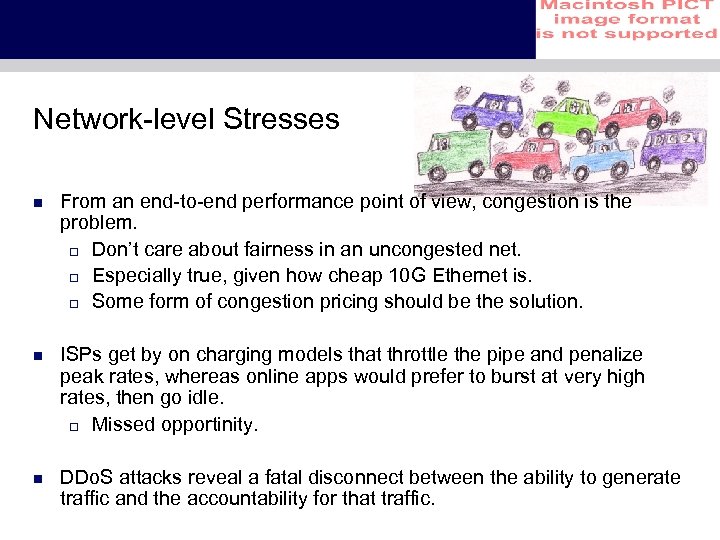 Network-level Stresses n From an end-to-end performance point of view, congestion is the problem. o Don’t care about fairness in an uncongested net. o Especially true, given how cheap 10 G Ethernet is. o Some form of congestion pricing should be the solution. n ISPs get by on charging models that throttle the pipe and penalize peak rates, whereas online apps would prefer to burst at very high rates, then go idle. o Missed opportinity. n DDo. S attacks reveal a fatal disconnect between the ability to generate traffic and the accountability for that traffic.
 Attempted Solutions n I’ll pick just two: o XCP o LISP
 High Speed Congestion Control n Isn’t this a done deal? o Vista, Linux already deploy solutions. o If these don’t work, lots more research papers! n I’m not convinced we even agree on the problem.
 High Speed vs Low Delay? n Can tweak TCP without router changes. o Going fast isn’t so hard. n Low delay matters to more people than going fast. o Assertion: It’s harder to do.
 Example: XCP n Goals: High speed, very low delay. o Two controllers: • Utililization: routers give out extra packets to flows based on under-utilization. • Fairness: when congested, routers explicitly trade packets off between flows to enforce fairness. o Use bits in packets to tell the routers the RTT and window, routers in turn indicate how to change the window.
 XCP: Tradeoffs n Tradeoff: o Frees bandwidth before allocating it. • Result is low delay. • Downside is relatively slow startup when the net is busy. o Can make different tradeoffs - VCP allocates before freeing, so gets faster connection start up at the expense of higher queuing delays. n We don’t really know how to appraise such tradeoffs.
 XCP: Costs of bits in packets. n Must change the routers, but the winners are the end systems. n Poor incentive for deployment. Assertion: No scheme that requires changing the routers will be deployed unless: 1. it brings a benefit to the companies that buy the routers 2. it is incrementally deployable.
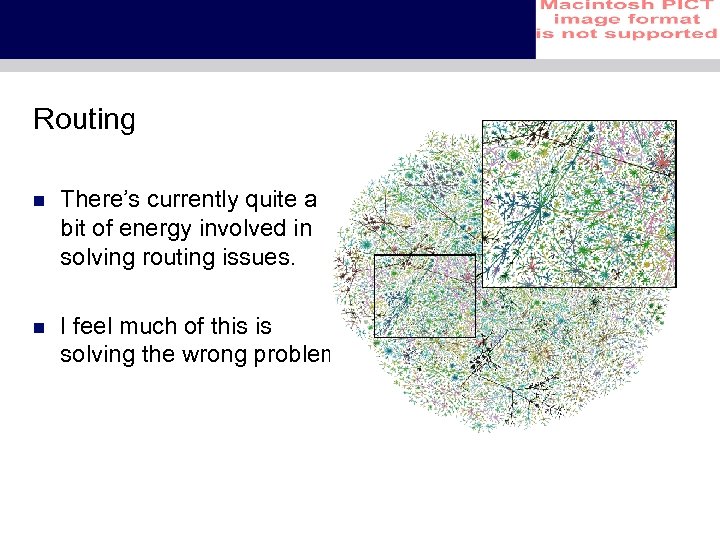 Routing n There’s currently quite a bit of energy involved in solving routing issues. n I feel much of this is solving the wrong problem.
 Routing: LISP (Locator-ID Separation Protocol) n n Want to have a backbone routing table that doesn’t need to do all that much actual routing. Give addresses to network attachment points at ISPs. o Route these in a sane and aggregatable manner. Give addresses to edge-networks in the dumbest way we know how (pretty much like what happens today). o Don’t route this in the backbone. Now how are the edge networks reachable?
 LISP: map and encap n n n Route traffic via default to it’s nearest encapsulation router. o At that router, do some magic to figure out the addresses of a set of decapsulation routers near the destination. o Encapsulate the traffic to one of those routers. The decapsulation router decapsulates, and forwards on to the final destination. The hard parts: o How to do the mapping? o How to cope when the destination isn’t reachable from the decapsulator you chose.
 Map and mess up transport? n Without XCP, transport is trying to infer a sane window size for the network from very little information. o The RTT can be confused by on-demand mapping, by further indirect routing at the decapculator. o The path can take dog-legs while failure recovery is happening. n None of this makes life any easier, even for dumb schemes like TCP. o For new schemes (eg FAST), the problems may be worse. Change the routers, but the losers are the end systems? n
 Stresses? n Is LISP solving a real problem? o Probably: if fully deployed it does reduce routing table size, and probably improves backbone convergence times. n Is it what the apps want? Probably not. o Too unpredictable. o Probably too unreliable. n
 So what might work? n n n Multipath. o Only real way to get robustness is redundancy. Multihoming, via multiple addresses. o Can aggregate. Mobility, via adding and removing addresses. o No need to involve the routing system, or use nonaggregatable addresses.
 So what might work? n n n Multipath-capable transport layers o Use multiple subflows within transport connections. o Congestion control them independently. o Traffic moves to the less congested paths. Note the involvement of congestion control is crucial. o You can’t solve this problem at the IP layer. Moves some of the stresses out of the routing system. o Might be able to converge slowly, and no-one cares?
 Multipath transport We already have it: Bit. Torrent. Providing traffic engineering for free to ISPs who don’t want that sort of traffic engineering : -) If flows were accountable for congestion, Bit. Torrent would be optimizing for cost. The problem for ISPs is that it reveals their pricing model is somewhat suboptimal.
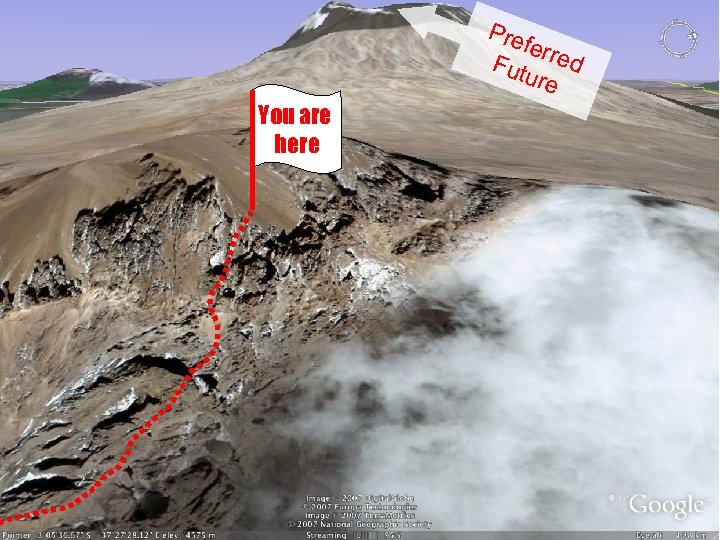
 Multipath Transport n What if all flows looked like Bit. Torrent? o Can we build an extremely robust and cost effective network for billions of mobile hosts based on multipath transport and multi-server services? n I think we can.
 y! y! ne ne mo mo re re mo mo Incre ased Utilit y You are here
 You are here
 Pre ferr Fut ed ure You are here
 Pre fe Fut rred ure You are here