


 Скачать презентацию Araneae spider Acari mite tick Elateridae
2a730aa8159bc8bc86d72bd890aa2fae.ppt
- Количество слайдов: 7
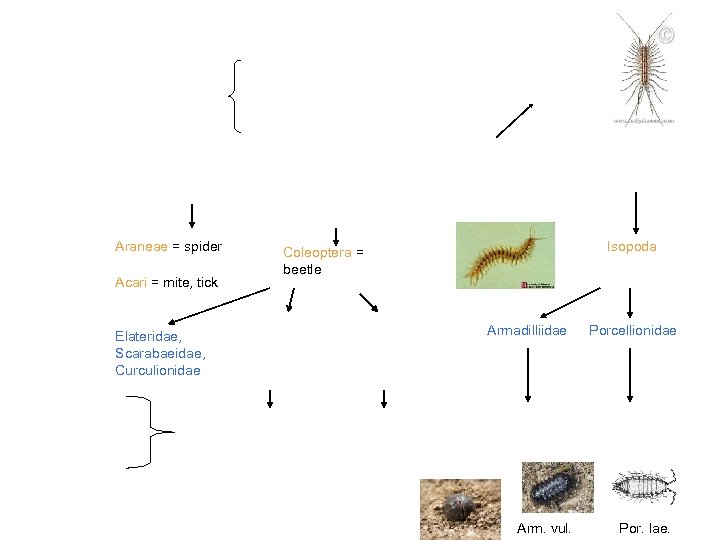 Araneae = spider Acari = mite, tick Elateridae, Scarabaeidae, Curculionidae Isopoda Coleoptera = beetle Armadilliidae Arm. vul. Porcellionidae Por. lae.
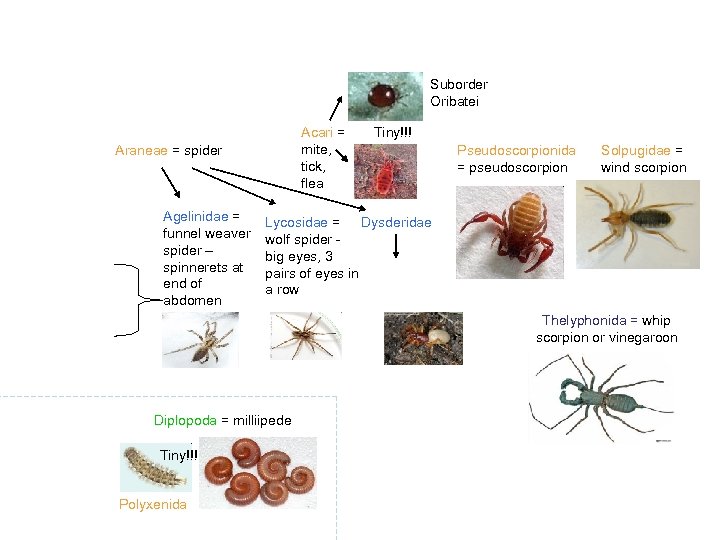 Suborder Oribatei Acari = mite, tick, flea Araneae = spider Agelinidae = funnel weaver spider – spinnerets at end of abdomen Tiny!!! Pseudoscorpionida = pseudoscorpion Solpugidae = wind scorpion Lycosidae = Dysderidae wolf spider big eyes, 3 pairs of eyes in a row Thelyphonida = whip scorpion or vinegaroon Diplopoda = milliipede Tiny!!! Polyxenida
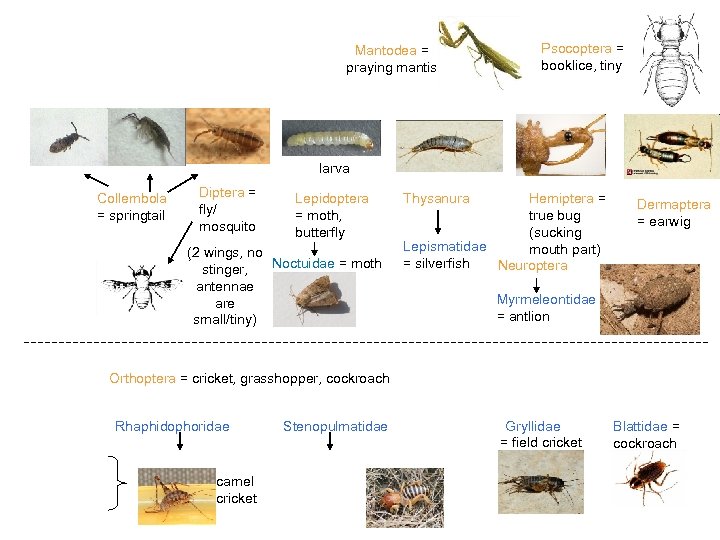 Mantodea = praying mantis Psocoptera = booklice, tiny larva Collembola = springtail Diptera = fly/ mosquito Lepidoptera = moth, butterfly (2 wings, no Noctuidae = moth stinger, antennae are small/tiny) Thysanura Hemiptera = true bug (sucking Lepismatidae mouth part) = silverfish Neuroptera Dermaptera = earwig Myrmeleontidae = antlion Orthoptera = cricket, grasshopper, cockroach Rhaphidophoridae camel cricket Stenopulmatidae Gryllidae = field cricket Blattidae = cockroach
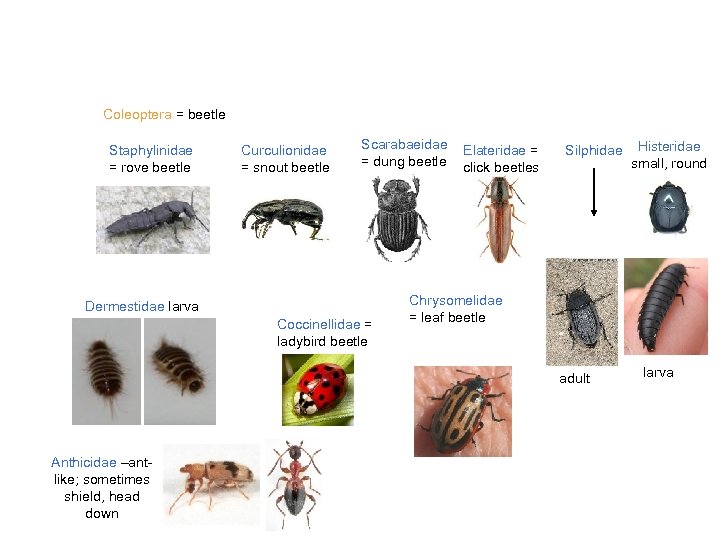 Coleoptera = beetle Staphylinidae = rove beetle Curculionidae = snout beetle Scarabaeidae = dung beetle Dermestidae larva Coccinellidae = ladybird beetle Elateridae = click beetles Silphidae Chrysomelidae = leaf beetle adult Anthicidae –antlike; sometimes shield, head down Histeridae small, round larva
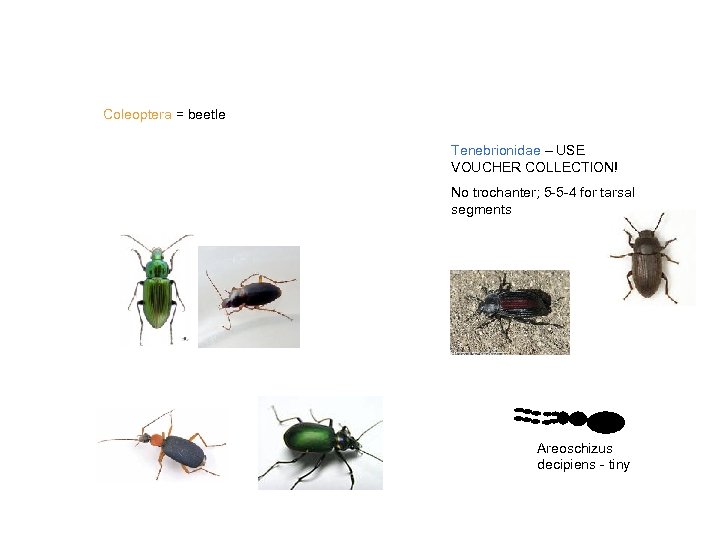 Coleoptera = beetle Tenebrionidae – USE VOUCHER COLLECTION! No trochanter; 5 -5 -4 for tarsal segments Areoschizus decipiens - tiny
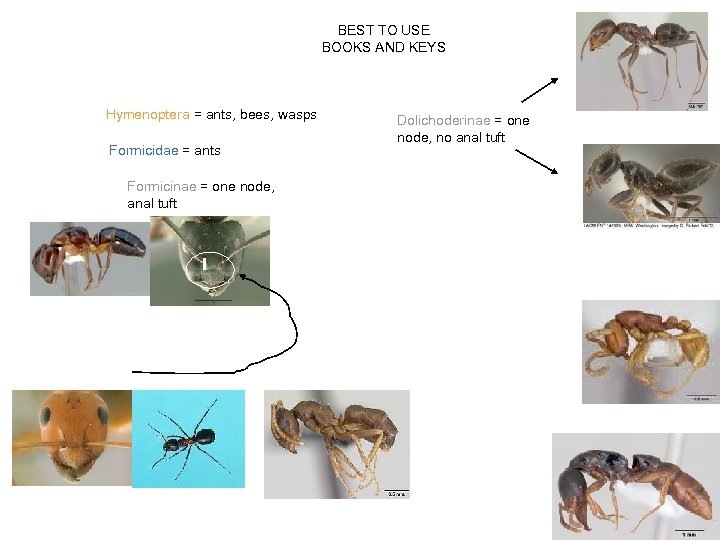 BEST TO USE BOOKS AND KEYS Hymenoptera = ants, bees, wasps Formicidae = ants Formicinae = one node, anal tuft Dolichoderinae = one node, no anal tuft
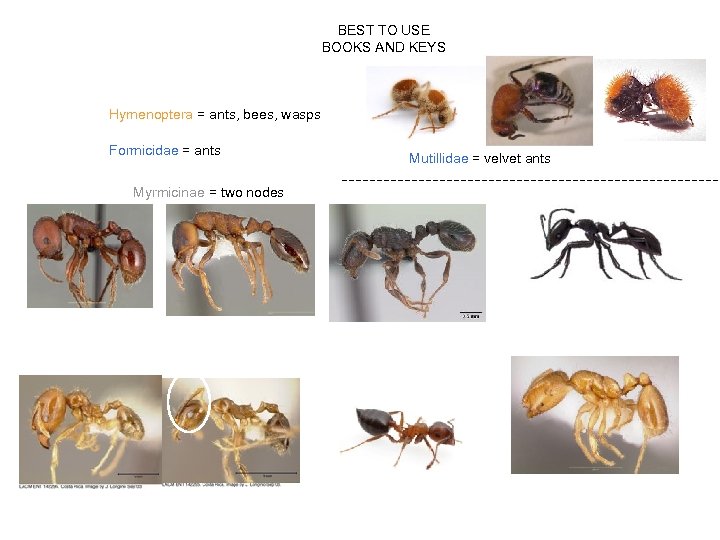 BEST TO USE BOOKS AND KEYS Hymenoptera = ants, bees, wasps Formicidae = ants Myrmicinae = two nodes Mutillidae = velvet ants