 Скачать презентацию Aquaponics Video http www youtube com watch v jp Zq
77987efbe04dab04bd1dc141a3070ff7.ppt
- Количество слайдов: 49



Aquaponics Video http: //www. youtube. com/watch? v=jp. Zq. Sq GMl. DQ
Aquaponics • Allan Nason • nasonallan@gmail. com • 905 -818 -6550 cell
Sustainable Aquaponics Multi-Disciplinary Tool for the Classroom
Integrating Aquaponics Into The CLASSROOM Develop Multi-Disciplinary Skills • Math • Biology • Chemistry • Environmental • Mechanical • Economics • Critical Thinking • Biotechnology • Independent Study • Decision Making • Research • Entrepreneurial
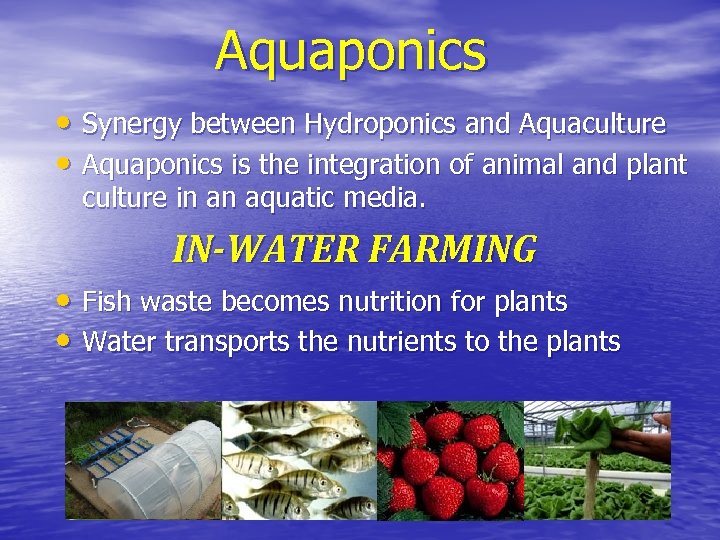
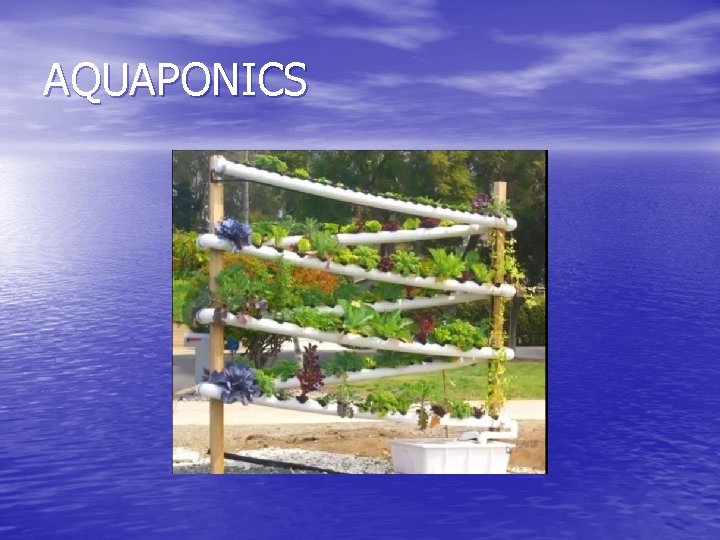
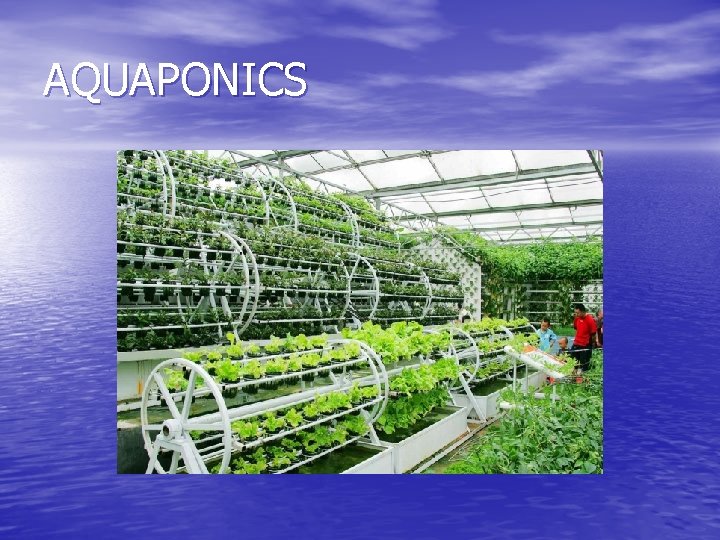
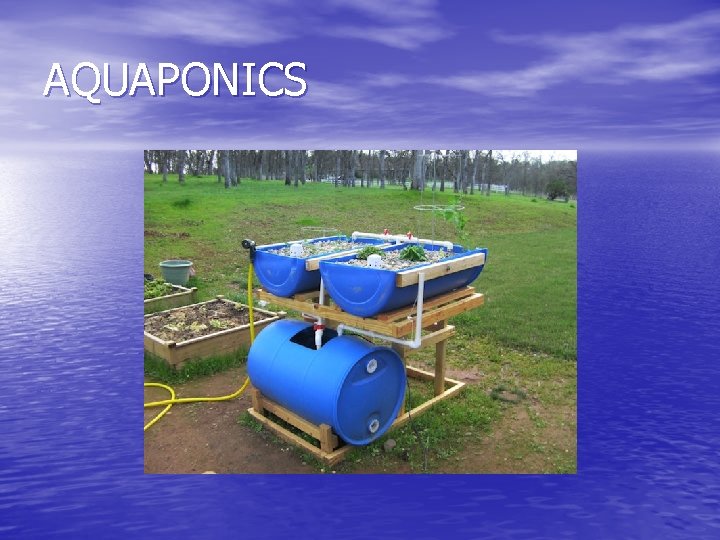
Aquaponics • Synergy between Hydroponics and Aquaculture • Aquaponics is the integration of animal and plant culture in an aquatic media. IN-WATER FARMING • Fish waste becomes nutrition for plants • Water transports the nutrients to the plants
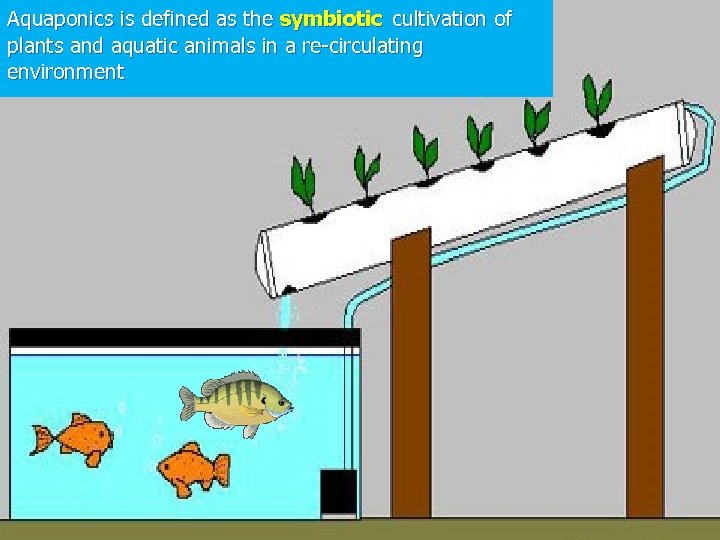
Aquaponics is defined as the symbiotic cultivation of plants and aquatic animals in a re-circulating environment
Why Aquaponics? • Reduced Water Utilization – Aquaponics uses only 1% to 3% of the water needed for traditional land based agriculture. – Traditional Aquaculture recirculating systems discharge 5 to 10% of their water daily to maintain water quality. • Minimizes Environmental Impact – Environmental problems associated with nutrient discharge (eutrophication of ecosystems and high nitrate groundwater). – Reduced dependence on synthetic fertilizer produced from nonrenewable oil - fish waste is an organic source of nutrients for plants. • Increases Productivity – Growing plants and fish together allows aquaponic systems to be the most healthy, reliable and productive source of food – Save on water quality monitoring costs. – The plants can generate substantial income as there is always a market for local / naturally grown / environmentally friendly produced food
Advantages of Aquaponics • Reduced Waste / fish waste is an organic source of nutrients for plants which can generate substantial income • Saves on water treatment cost / water is filtered naturally by the plants • Minimizes environmental impact cost. – Non-renewable oil is used to manufacture synthetic fertilizer. – Environmental problems associated with nutrient discharge (eutrophication of ecosystems and high nitrate groundwater).
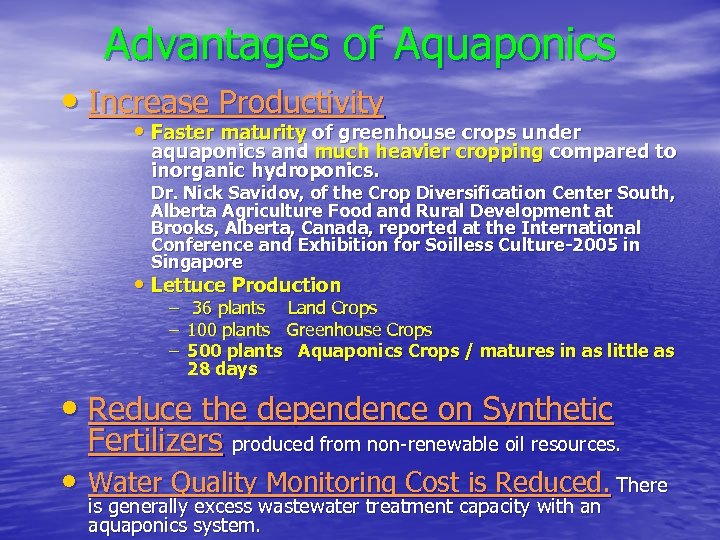
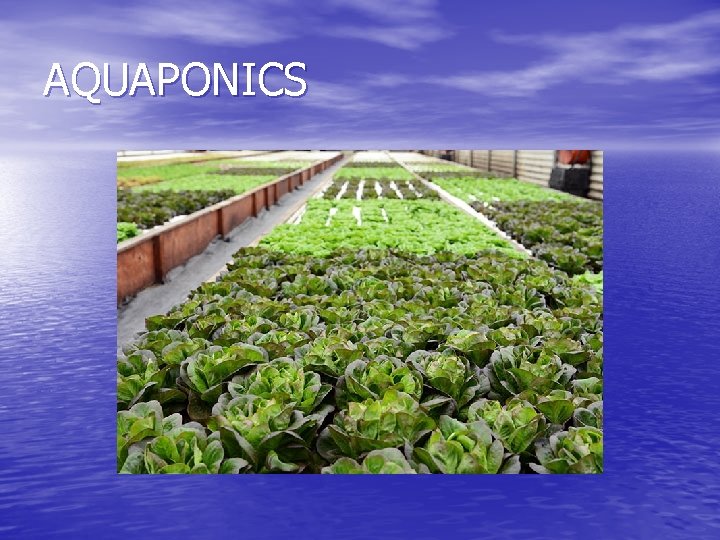
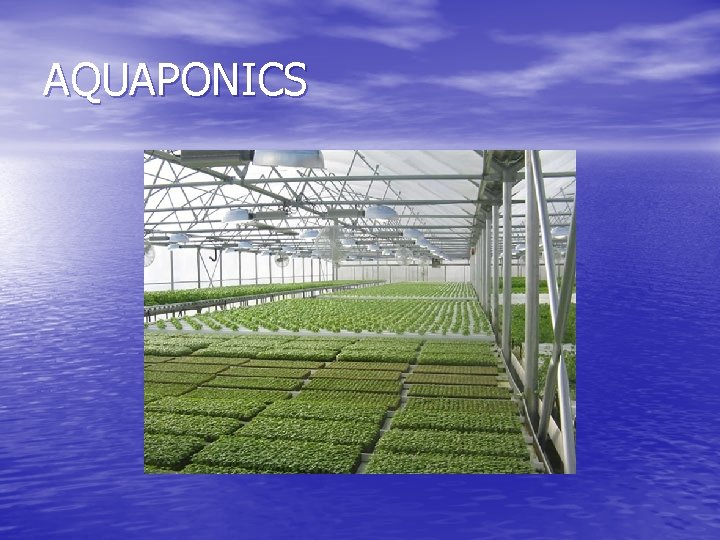
Advantages of Aquaponics • Increase Productivity • Faster maturity of greenhouse crops under aquaponics and much heavier cropping compared to inorganic hydroponics. Dr. Nick Savidov, of the Crop Diversification Center South, Alberta Agriculture Food and Rural Development at Brooks, Alberta, Canada, reported at the International Conference and Exhibition for Soilless Culture-2005 in Singapore • Lettuce Production – – – 36 plants Land Crops 100 plants Greenhouse Crops 500 plants Aquaponics Crops / matures in as little as 28 days • Reduce the dependence on Synthetic Fertilizers produced from non-renewable oil resources. • Water Quality Monitoring Cost is Reduced. There is generally excess wastewater treatment capacity with an aquaponics system.
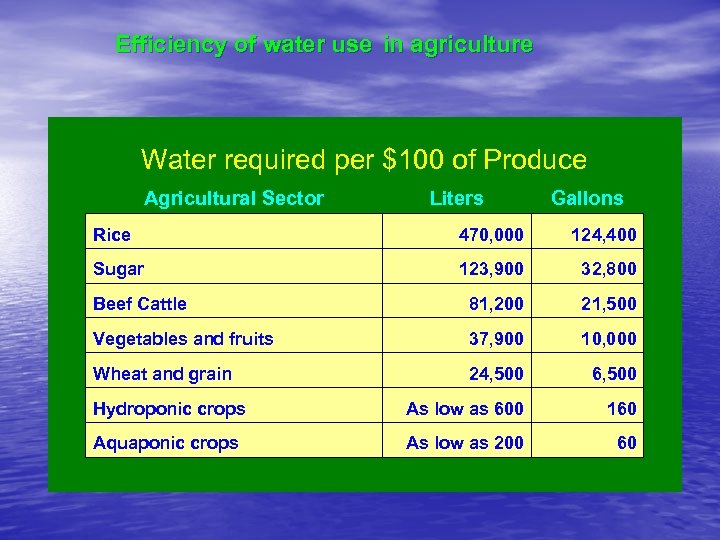
Efficiency of water use in agriculture Water required per $100 of Produce Agricultural Sector Liters Gallons Rice 470, 000 124, 400 Sugar 123, 900 32, 800 Beef Cattle 81, 200 21, 500 Vegetables and fruits 37, 900 10, 000 Wheat and grain 24, 500 6, 500 Hydroponic crops As low as 600 160 Aquaponic crops As low as 200 60
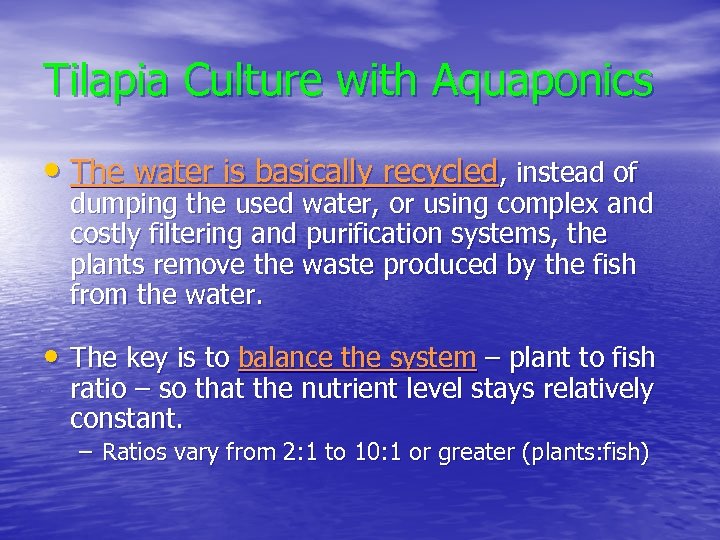
Tilapia Culture with Aquaponics • The water is basically recycled, instead of dumping the used water, or using complex and costly filtering and purification systems, the plants remove the waste produced by the fish from the water. • The key is to balance the system – plant to fish ratio – so that the nutrient level stays relatively constant. – Ratios vary from 2: 1 to 10: 1 or greater (plants: fish)
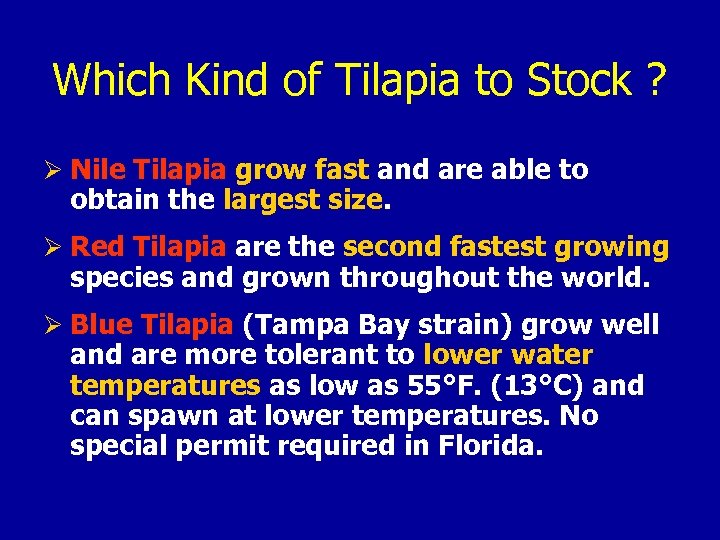
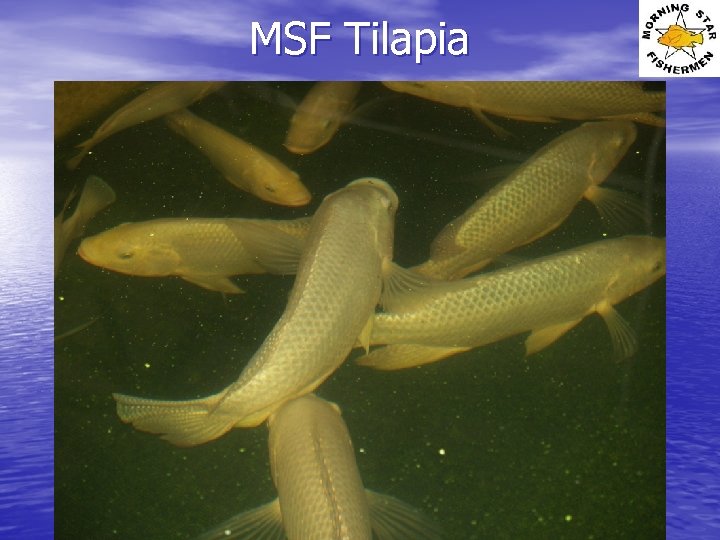
Which Kind of Tilapia to Stock ? Ø Nile Tilapia grow fast and are able to obtain the largest size. Ø Red Tilapia are the second fastest growing species and grown throughout the world. Ø Blue Tilapia (Tampa Bay strain) grow well and are more tolerant to lower water temperatures as low as 55°F. (13°C) and can spawn at lower temperatures. No special permit required in Florida.
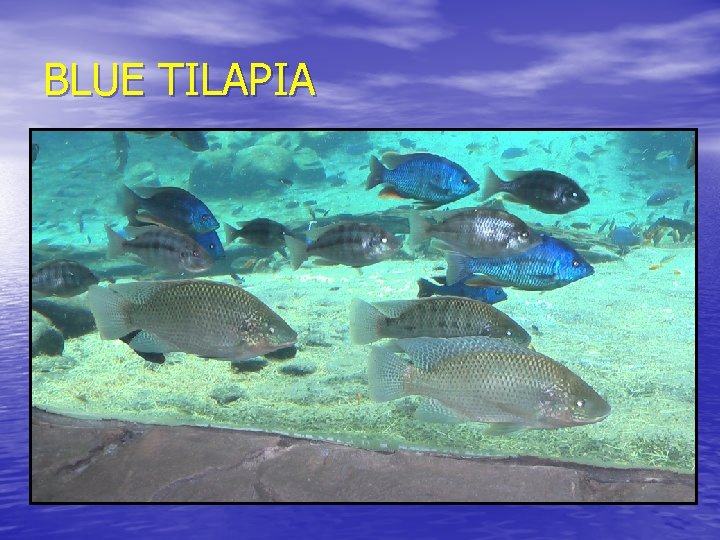
BLUE TILAPIA
Advantages of Farming Tilapia • • • Feeds low on the food chain Accepts wide range of feeds Resistant to poor water quality, disease, overcrowding and handling Good flesh quality and taste Fingerlings easy to produce year round
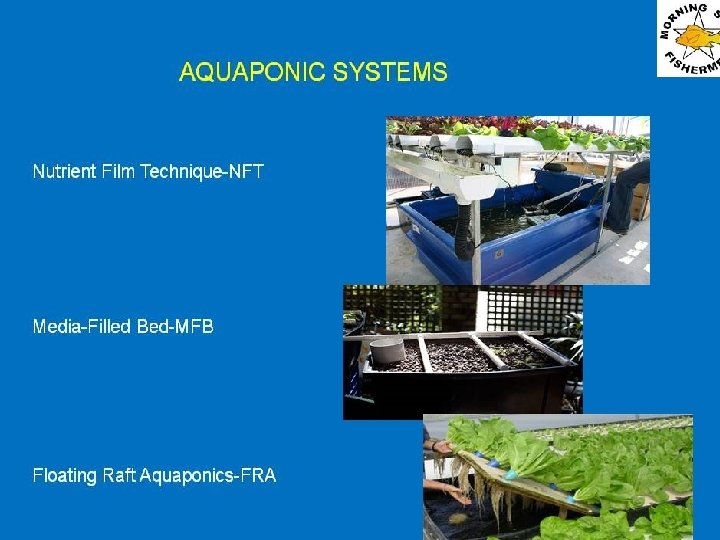
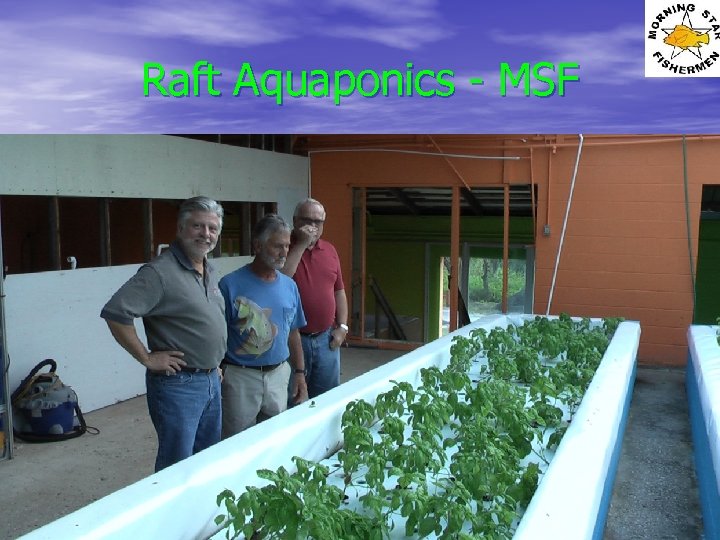
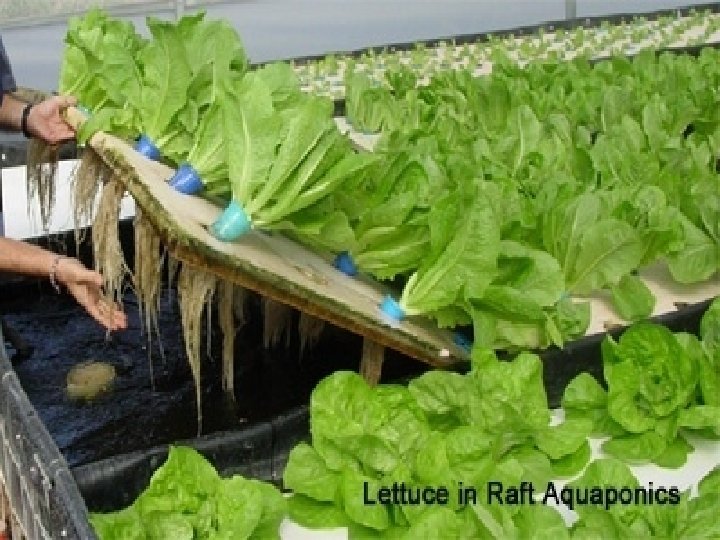
Raft Aquaponics - MSF
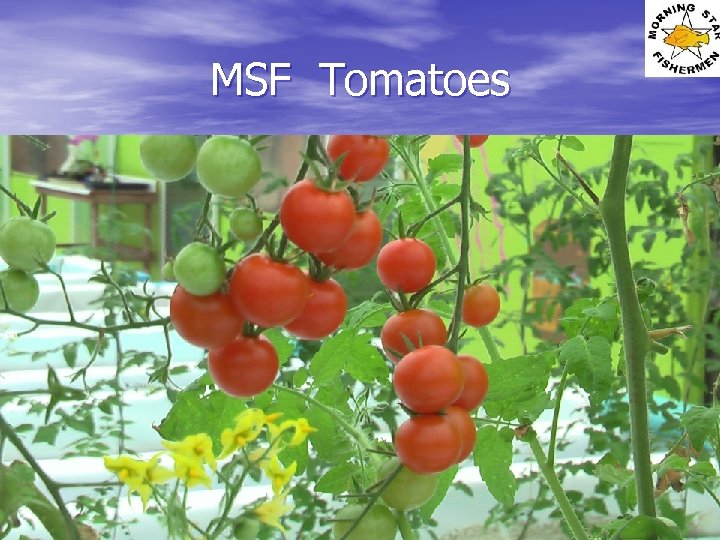
MSF Tomatoes
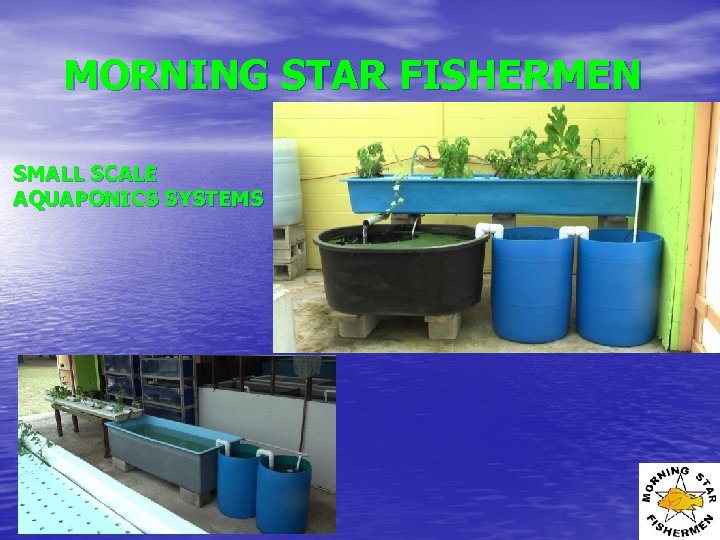
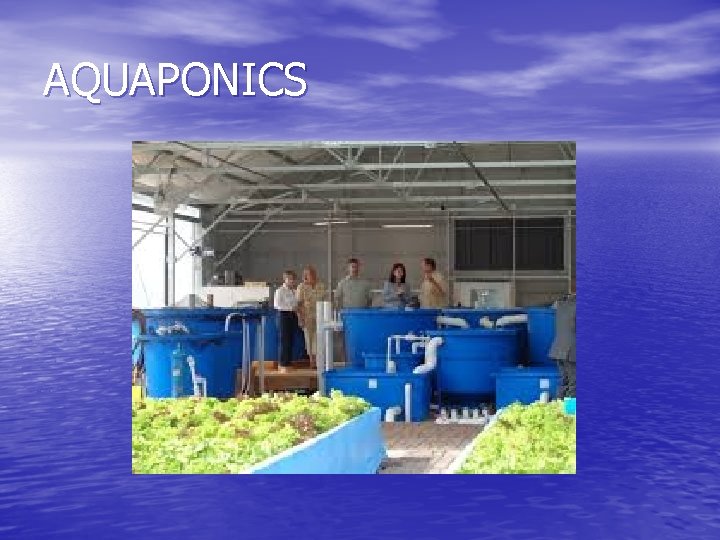
MORNING STAR FISHERMEN SMALL SCALE AQUAPONICS SYSTEMS
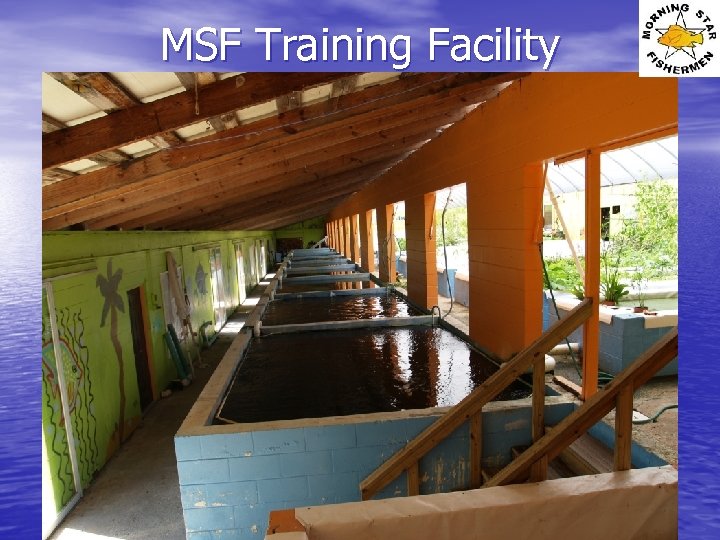
MSF Training Facility
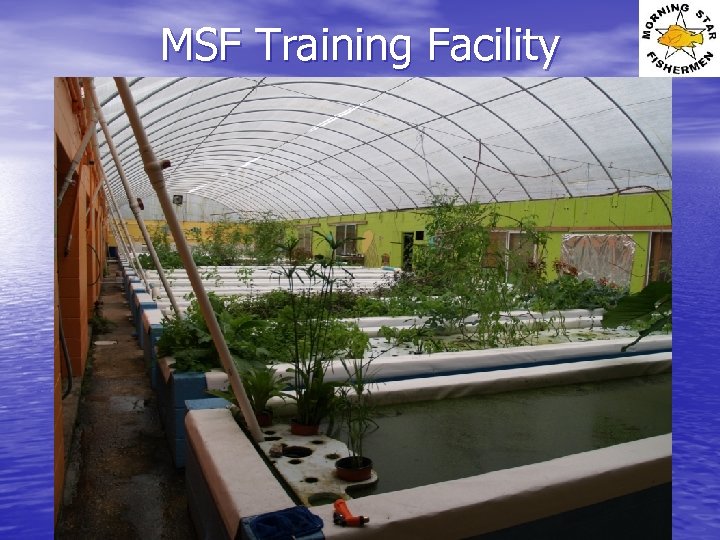
MSF Training Facility
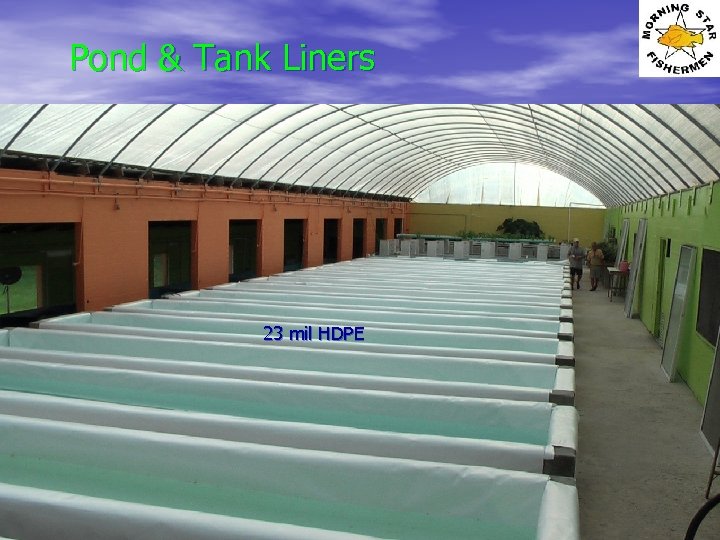
Pond & Tank Liners • Must be safe for fish and aquatic plant life. • Help control seepage loss as much as 75% of water loss is due to seepage not evaporation. 23 Medium • Polyethylene - High, mil HDPE or Low density Polyethylene. • Contains up to 5 percent carbon black, which makes it highly UV stable.
MSF Tilapia
Aquaponics in the Classroom • Micro-ecosystem • Nitrogen Cycle • Water Quality Chemistry & Testing • Fish & Vegetable Growing Techniques & Formulas • Reproduction Cycles of Plants & Animals
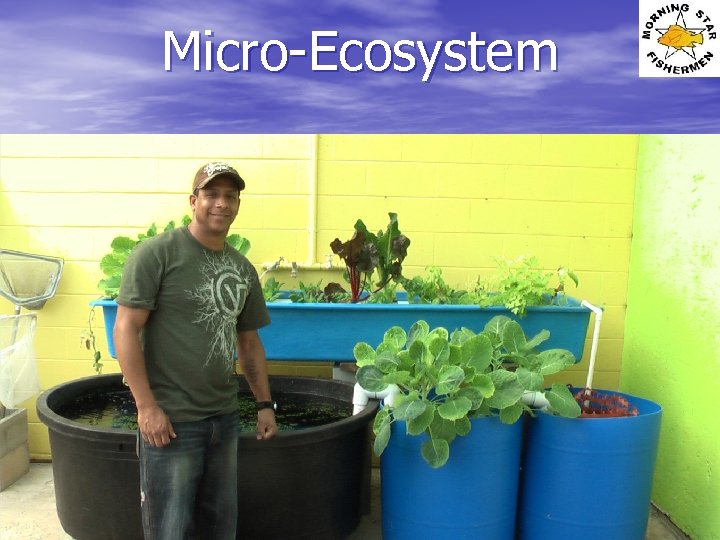
Micro-Ecosystem
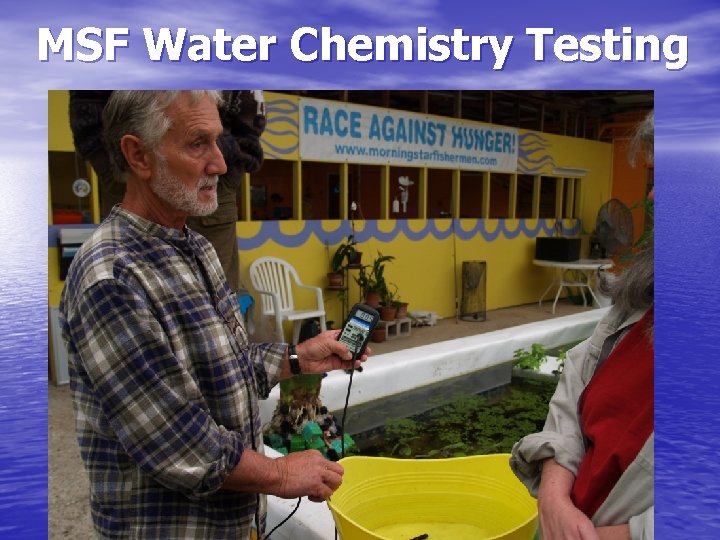
MSF Water Chemistry Testing
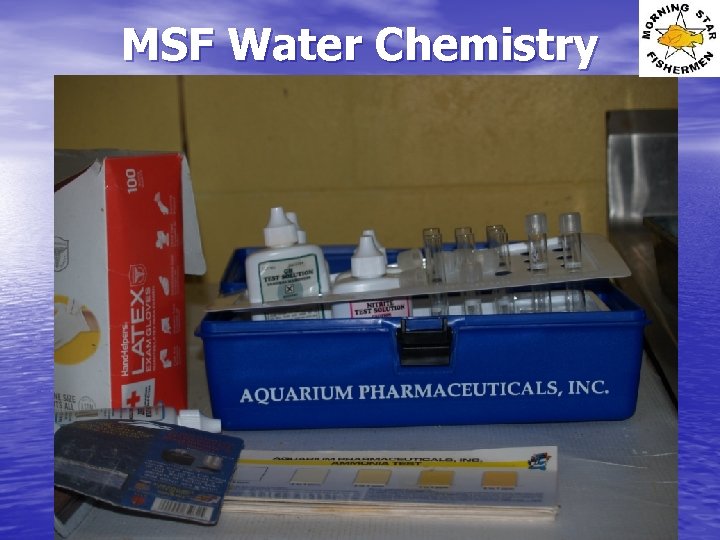
MSF Water Chemistry
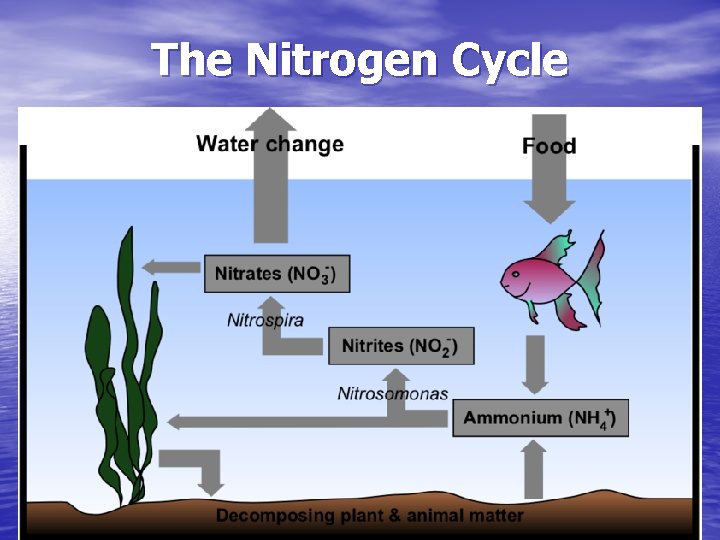
The Nitrogen Cycle
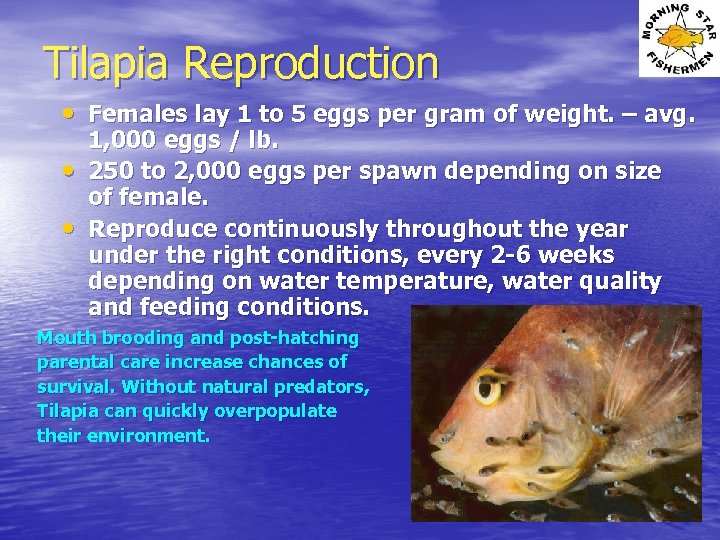
Tilapia Reproduction • Females lay 1 to 5 eggs per gram of weight. – avg. • • 1, 000 eggs / lb. 250 to 2, 000 eggs per spawn depending on size of female. Reproduce continuously throughout the year under the right conditions, every 2 -6 weeks depending on water temperature, water quality and feeding conditions. Mouth brooding and post-hatching parental care increase chances of survival. Without natural predators, Tilapia can quickly overpopulate their environment.
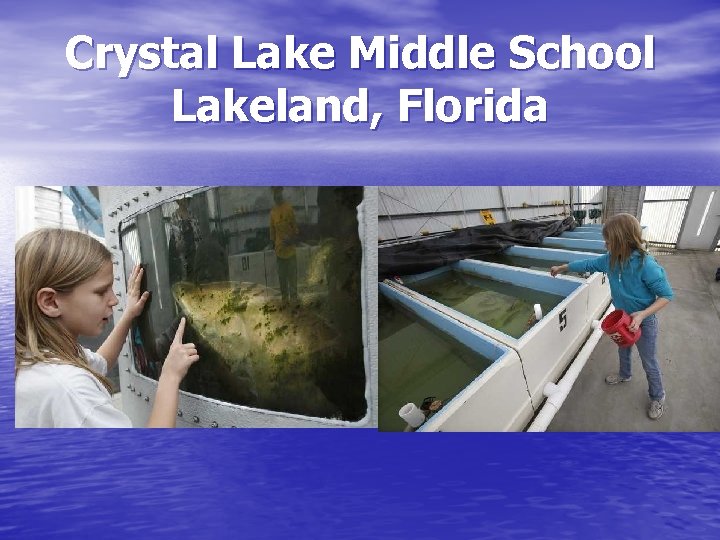
Crystal Lake Middle School Lakeland, Florida
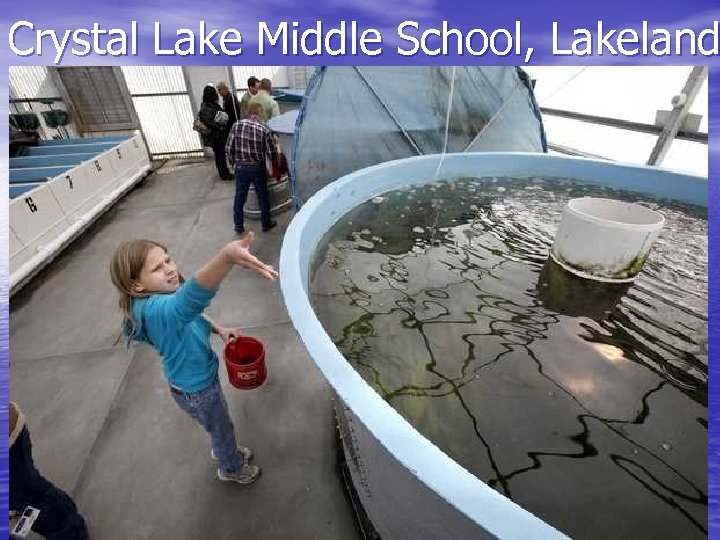
Crystal Lake Middle School, Lakeland
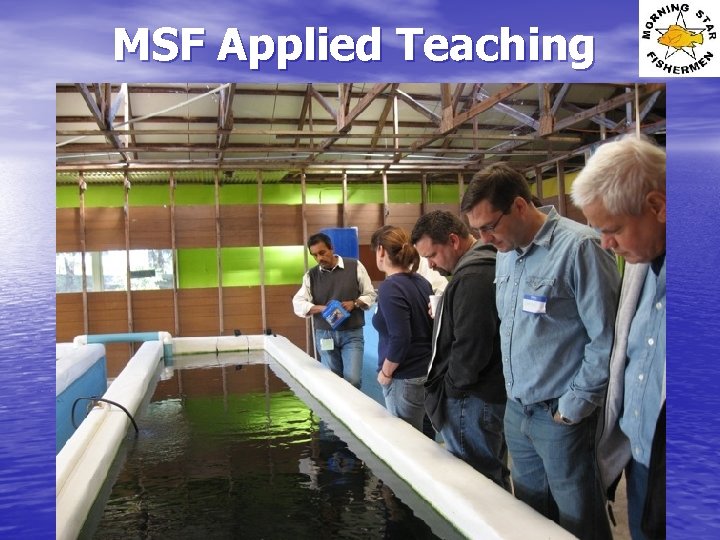
MSF Applied Teaching
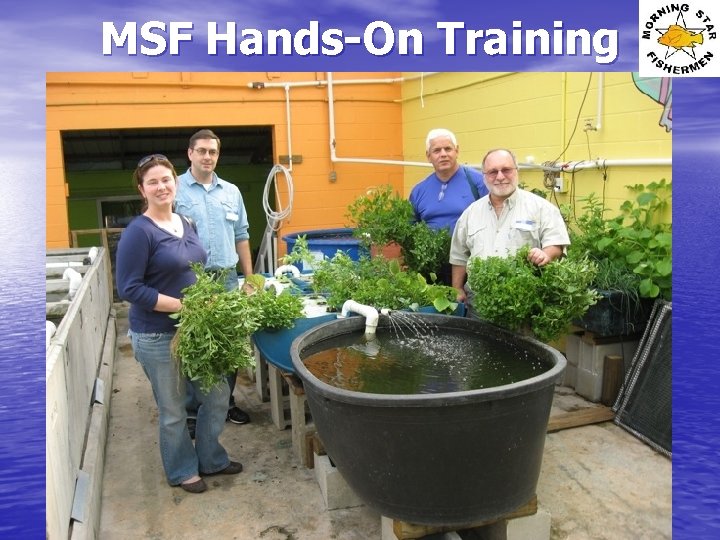
MSF Hands-On Training
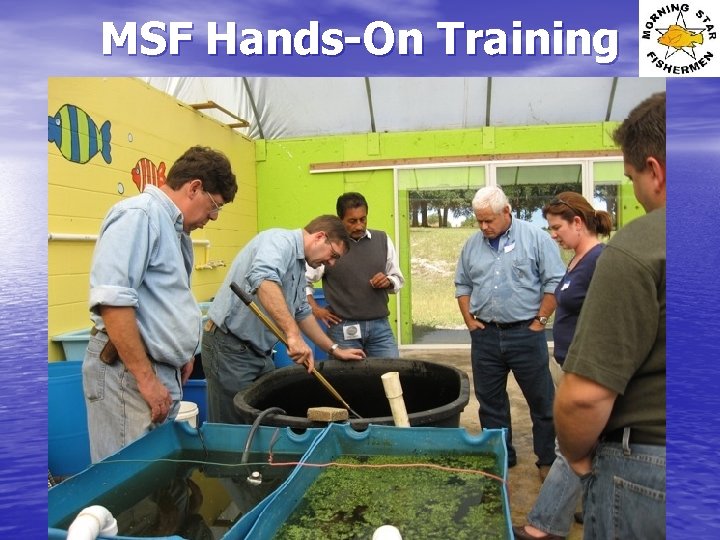
MSF Hands-On Training

Pasco High School Field Trip

St. Leo University 1 -Day Training
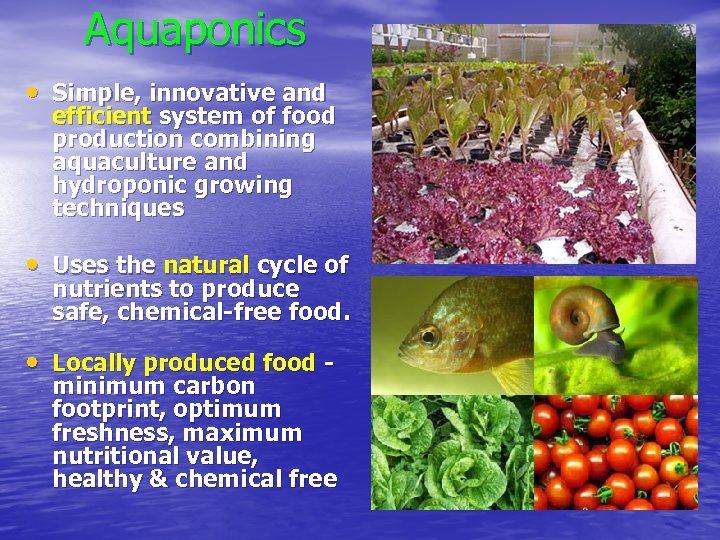
Aquaponics • Simple, innovative and efficient system of food production combining aquaculture and hydroponic growing techniques • Uses the natural cycle of nutrients to produce safe, chemical-free food. • Locally produced food - minimum carbon footprint, optimum freshness, maximum nutritional value, healthy & chemical free
Advantages of Aquaponics • Reduced Water Utilization - Abundant high-quality water is usually the single most crucial resource for agriculture and aquaculture enterprises. • Aquaponics uses only 1% to 3% of the water needed for traditional land based agriculture. (water loss due to evaporation and transpiration by the plants) • Traditional Aquaculture recirculating systems discharge 5 to 10% of their water daily to maintain water quality • Today’s agriculture utilizes 70% of the freshwater available in the world, and future population growth will continue to stress water availability.

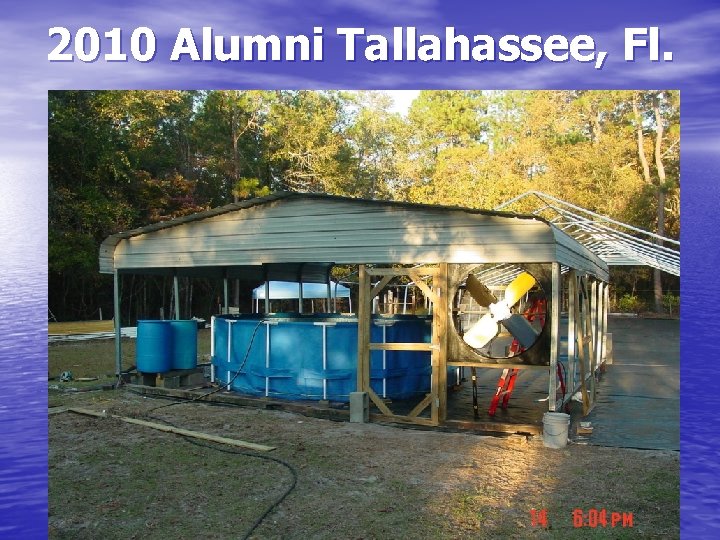
2010 Alumni Tallahassee, Fl.
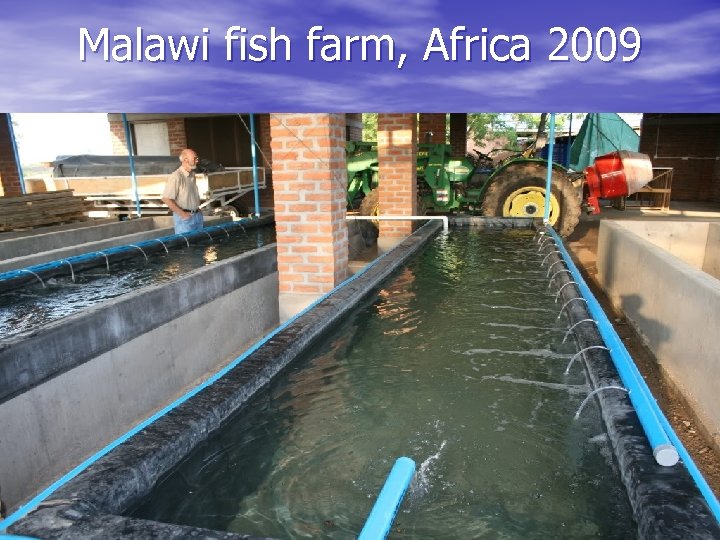
Malawi fish farm, Africa 2009
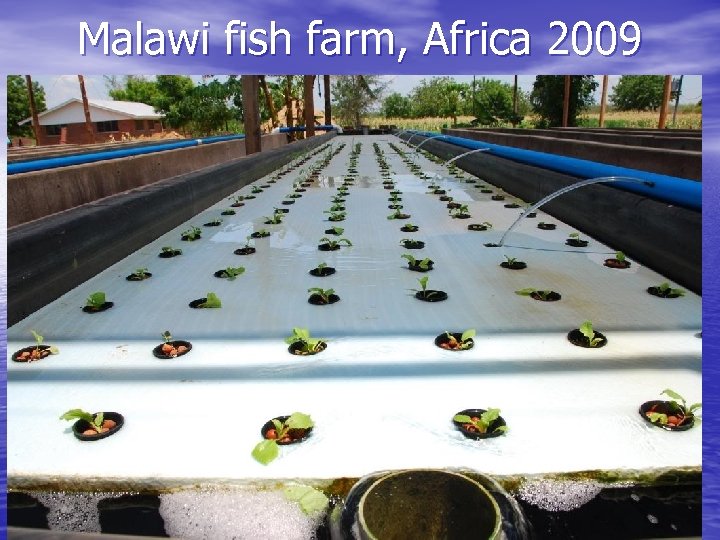
Malawi fish farm, Africa 2009
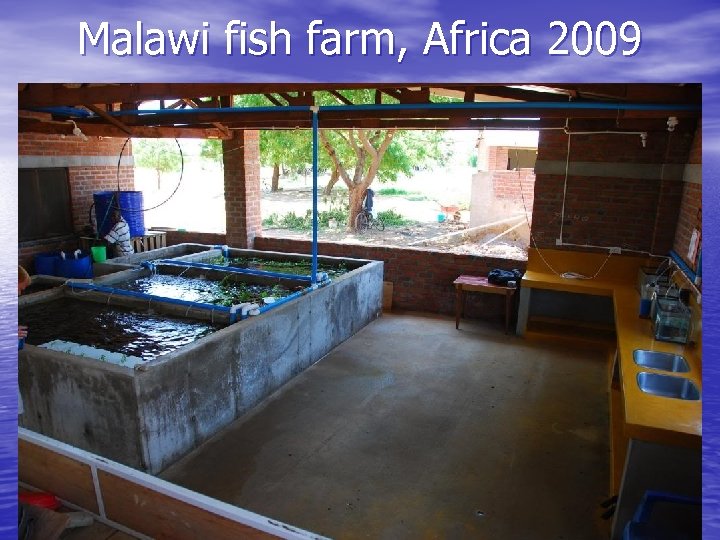
Malawi fish farm, Africa 2009
AQUAPONICS
AQUAPONICS
AQUAPONICS
AQUAPONICS
AQUAPONICS
AQUAPONICS
Скачать презентацию Aquaponics Video http www youtube com watch v jp Zq
77987efbe04dab04bd1dc141a3070ff7.ppt