


 Скачать презентацию Apricot 2001 Effectiveness of VLAN Chan Wai Kok
94c2f47138096ecf665ed138ce5337ad.ppt
- Количество слайдов: 25
 Apricot 2001 Effectiveness of VLAN Chan Wai Kok (wkchan@mmu. edu. my) Faculty of Information Technology Salim Beg (salim@mmu. edu. my) Faculty of Engineering Multimedia University 1
 The benefit of VLAN • Simplify the process of add, moves and changes • Provide broadcast, multicast traffic isolation by grouping similar traffic types to a VLAN. • Provide some form of security 2
 Goals of this presentation • To find out the broadcast traffic trend • To study the effectiveness of VLAN in broadcast isolation 3
 Why Broadcast isolation is important ? • On a 1 Gbps capacity backbone network • If 1% traffic is (broadcast + multicast + unknown unicast), all end stations with 10 Mbps link may be congested (but backbone have more capacity!!!) • Broadcast frames will take up CPU resources. E. g On Pentium 120 Mhz, – 1000 broadcast pps : - 15 % CPU resource – 3000 broadcast pps : - 28 % CPU resource 4
 Related Work (Will E. Leland & Daniel V Wilson Bellcore 1989 - 1990) • collected LAN traffic data for long time scale and analyzed the trend • Their showed that there is a great disparity in the values of peak to mean ratio for packet arrival rate. (73 to 861 for 5 sec to 5 milisec respectively) • LAN traffic is Bursty • Focus on behavior of total Ethernet traffic 5
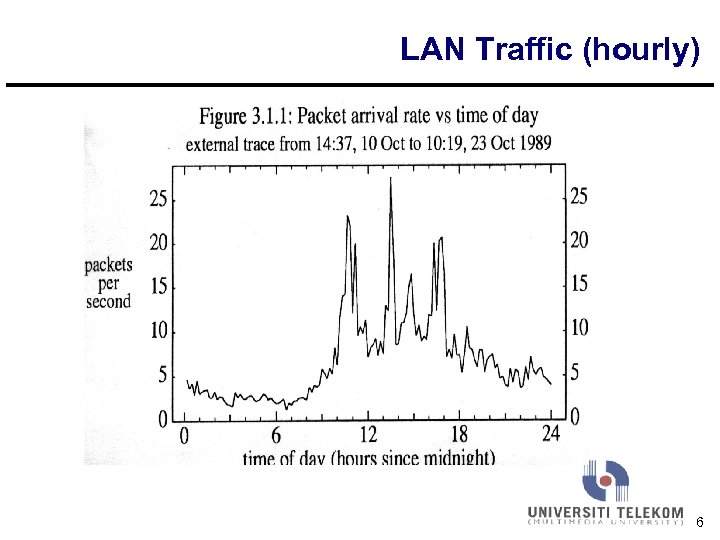 LAN Traffic (hourly) 6
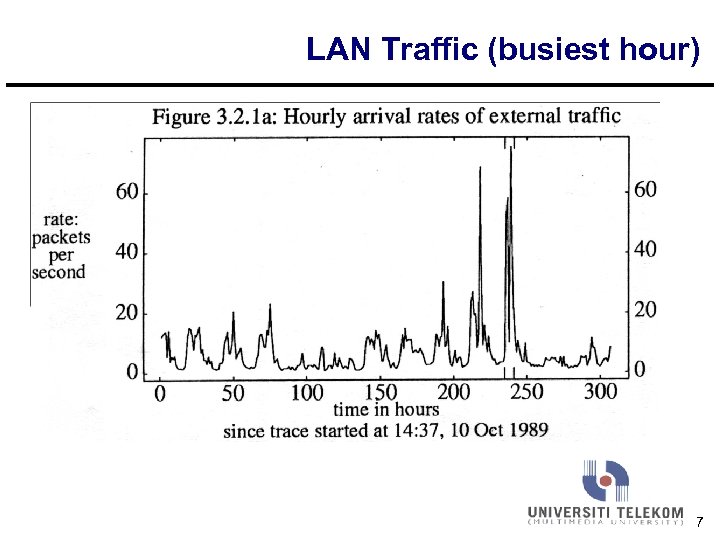 LAN Traffic (busiest hour) 7
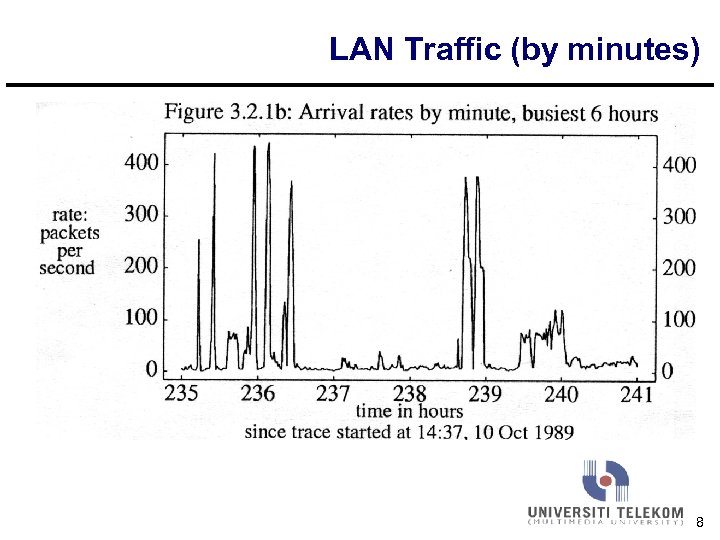 LAN Traffic (by minutes) 8
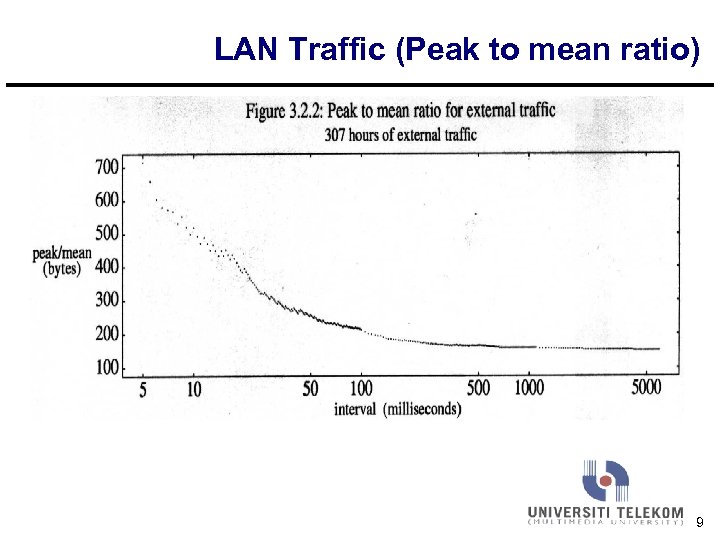 LAN Traffic (Peak to mean ratio) 9
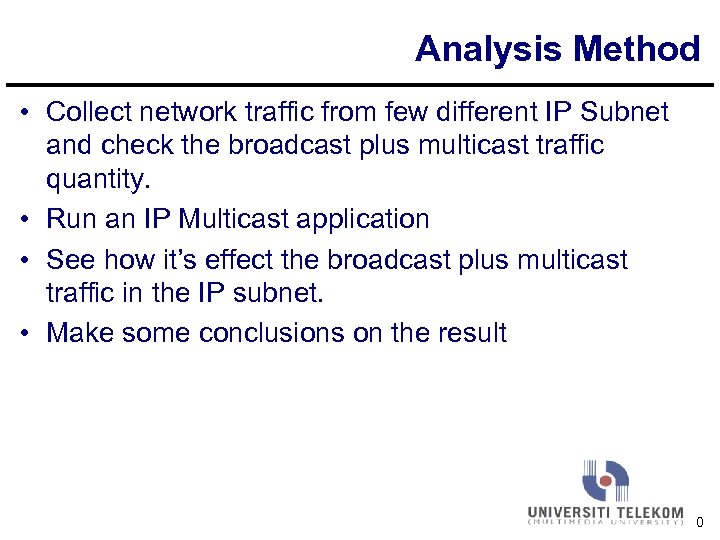 Analysis Method • Collect network traffic from few different IP Subnet and check the broadcast plus multicast traffic quantity. • Run an IP Multicast application • See how it’s effect the broadcast plus multicast traffic in the IP subnet. • Make some conclusions on the result 10
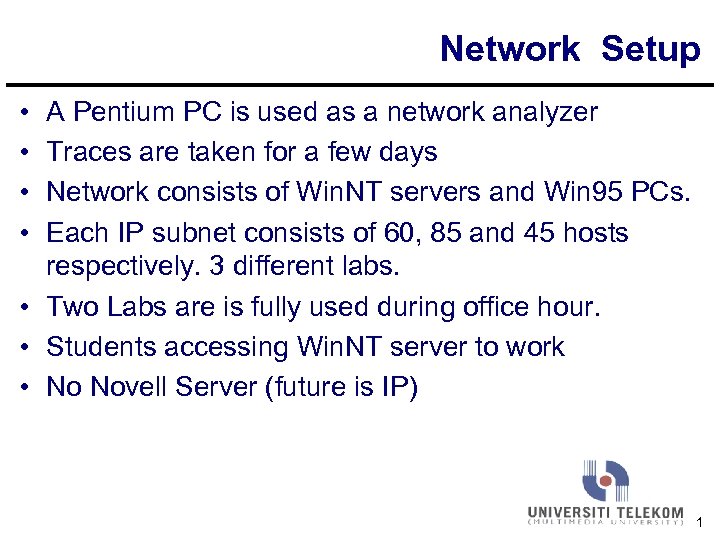 Network Setup • • A Pentium PC is used as a network analyzer Traces are taken for a few days Network consists of Win. NT servers and Win 95 PCs. Each IP subnet consists of 60, 85 and 45 hosts respectively. 3 different labs. • Two Labs are is fully used during office hour. • Students accessing Win. NT server to work • No Novell Server (future is IP) 11
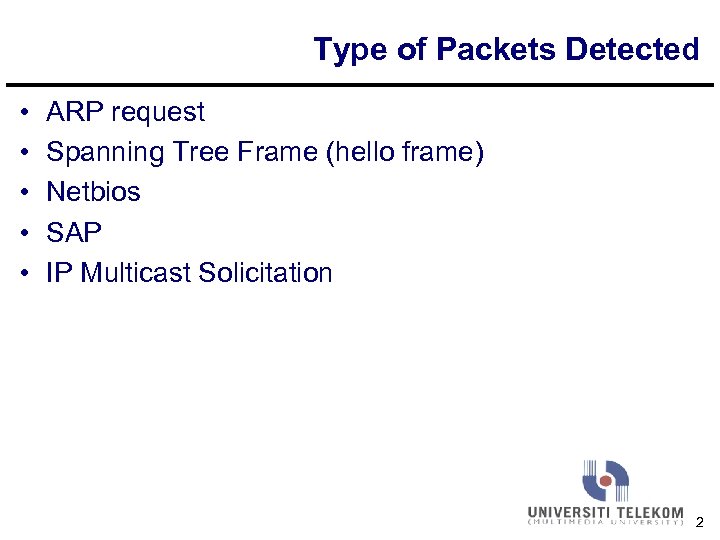 Type of Packets Detected • • • ARP request Spanning Tree Frame (hello frame) Netbios SAP IP Multicast Solicitation 12
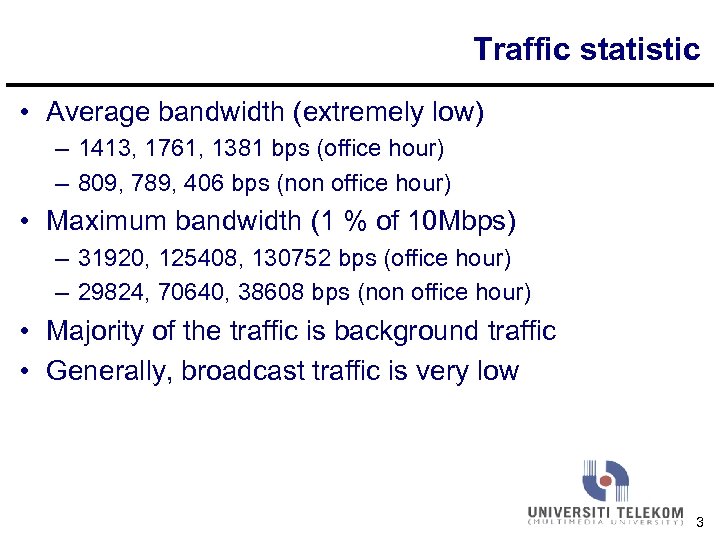 Traffic statistic • Average bandwidth (extremely low) – 1413, 1761, 1381 bps (office hour) – 809, 789, 406 bps (non office hour) • Maximum bandwidth (1 % of 10 Mbps) – 31920, 125408, 130752 bps (office hour) – 29824, 70640, 38608 bps (non office hour) • Majority of the traffic is background traffic • Generally, broadcast traffic is very low 13
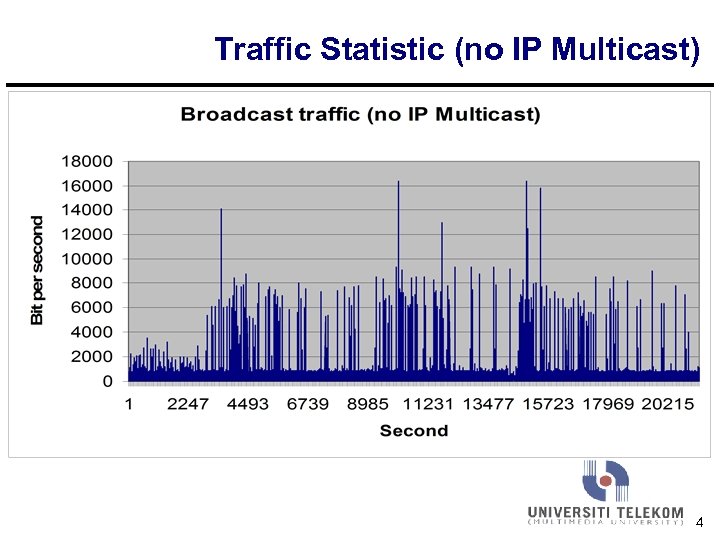 Traffic Statistic (no IP Multicast) 14
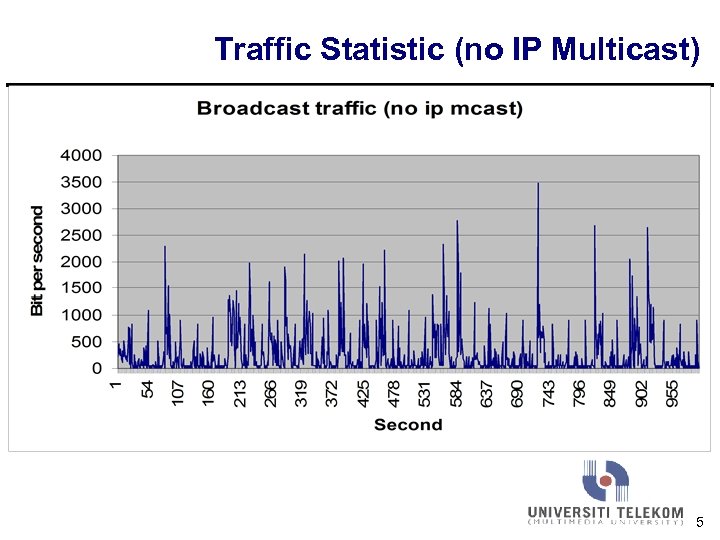 Traffic Statistic (no IP Multicast) 15
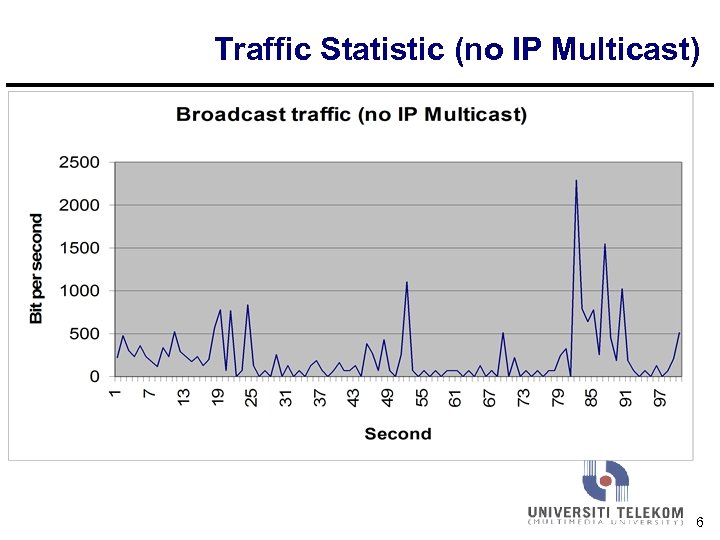 Traffic Statistic (no IP Multicast) 16
 Traffic Statistic with IP Multicast application • • One IP Multicast Channel sending audio and text. Average bandwidth : - 112 Kbps Maximum Bandwidth : - 155 Kbps Dramatic increased of (broadcast plus multicast) bandwidth when IP Multicast is ran. • Traffic isolation will required IP Multicast VLAN 17
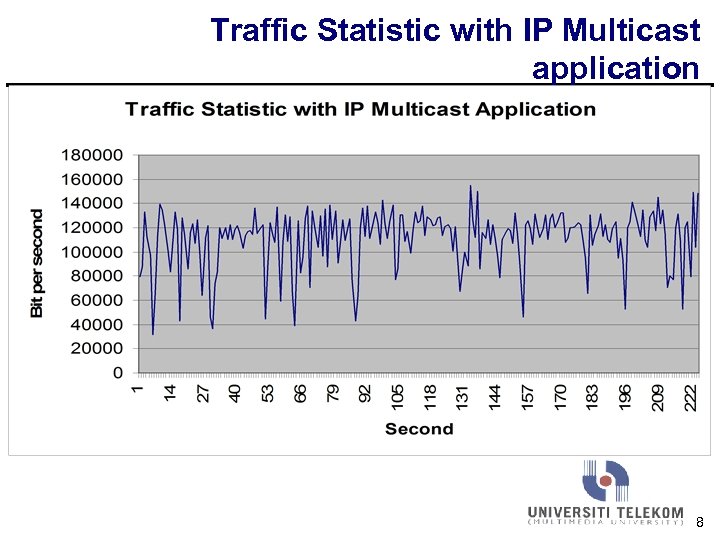 Traffic Statistic with IP Multicast application 18
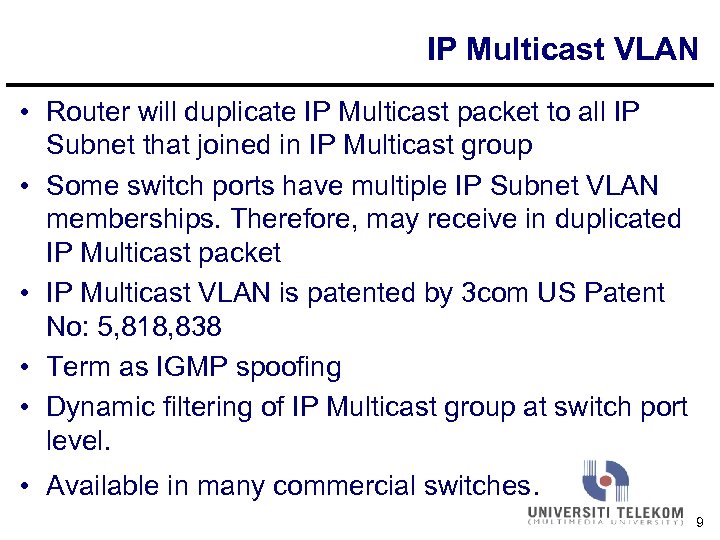 IP Multicast VLAN • Router will duplicate IP Multicast packet to all IP Subnet that joined in IP Multicast group • Some switch ports have multiple IP Subnet VLAN memberships. Therefore, may receive in duplicated IP Multicast packet • IP Multicast VLAN is patented by 3 com US Patent No: 5, 818, 838 • Term as IGMP spoofing • Dynamic filtering of IP Multicast group at switch port level. • Available in many commercial switches. 19
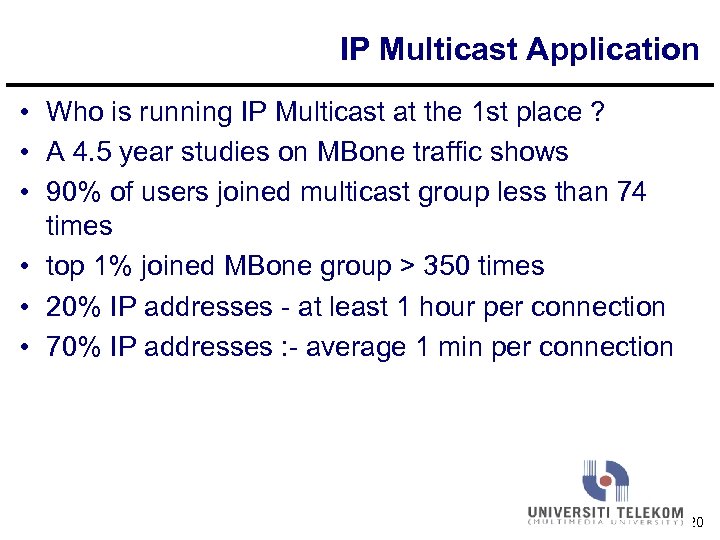 IP Multicast Application • Who is running IP Multicast at the 1 st place ? • A 4. 5 year studies on MBone traffic shows • 90% of users joined multicast group less than 74 times • top 1% joined MBone group > 350 times • 20% IP addresses - at least 1 hour per connection • 70% IP addresses : - average 1 min per connection 20
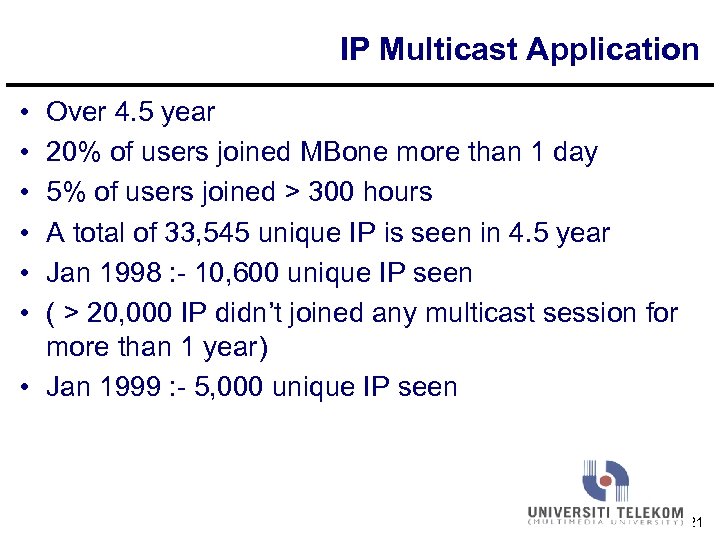 IP Multicast Application • • • Over 4. 5 year 20% of users joined MBone more than 1 day 5% of users joined > 300 hours A total of 33, 545 unique IP is seen in 4. 5 year Jan 1998 : - 10, 600 unique IP seen ( > 20, 000 IP didn’t joined any multicast session for more than 1 year) • Jan 1999 : - 5, 000 unique IP seen 21
 Conclusion • When no IP Multicast application • Total Broadcast and multicast traffic is very low • problem of broadcast isolation does not arise at the first place • VLAN is of little use 22
 Conclusion • When IP Multicast is deployed • Dramatic increase in mean bandwidth • VLAN is useful only when IP Multicast application is deployed • Make sure that current/future switch support IP Multicast VLAN • However, IP Multicast application is still not popular yet. • Studies have shown MBone is growing slowly and it uses is not widespread. 23
 References • http: //imj. ucsb. edu/publications. html – BGPK. Almeroth, "A Long-Term Analysis of Growth and Usage Patterns in the Multicast Backbone (MBone)", IEEE INFOCOM '00, Tel Aviv, ISRAEL, March 2000 • http: //www. patents. ibm. com • http: //www. argreenhouse. com/papers/wel/ – Will E. Leland, Daniel V. Wilson, “High Time-resolution Measurement and Analysis of LAN Traffic: Implications for LAN Interconnection, ” Proceedings IEEE Infocom 1991, Bal Harbour, Florida, April 1991, pp. 1360 -1366. building and forwarding 24
 Question ? ? Question can be forwarded to wkchan@mmu. edu. my 25