


 Скачать презентацию Approach of a UK auditor Paul Mudway Health
17ca733fcb27bb7d29a9a808742f1890.ppt
- Количество слайдов: 28
 Approach of a UK auditor Paul Mudway Health, Safety & Environment
 Approach of a UK auditor • Auditing the stack monitoring team – key points • Manual methods • Instrumental methods • Proficiency testing schemes
 Auditing the stack monitoring team – key points • In the UK a typical UKAS audit is 2 days: 1 day site witness, 1 day laboratory • Purpose of the audit is to assess conformity with standards, documented procedures and guidance notes • In Ireland, relevant documents are ISO/IEC 17025, TS 15675, EN 15259, AG 1 and AG 2
 Auditing the stack monitoring team – key points (cont. ) • Site-specific safety induction • Review risk assessment first (section 6 of AG 1) • Permanent/temporary platform inspection certificate (HSA GA 3) • Correct PPE being worn? • Site review (Appendix 4 of AG 2 and EN 15259) • Work file (Appendix 6 of AG 2)
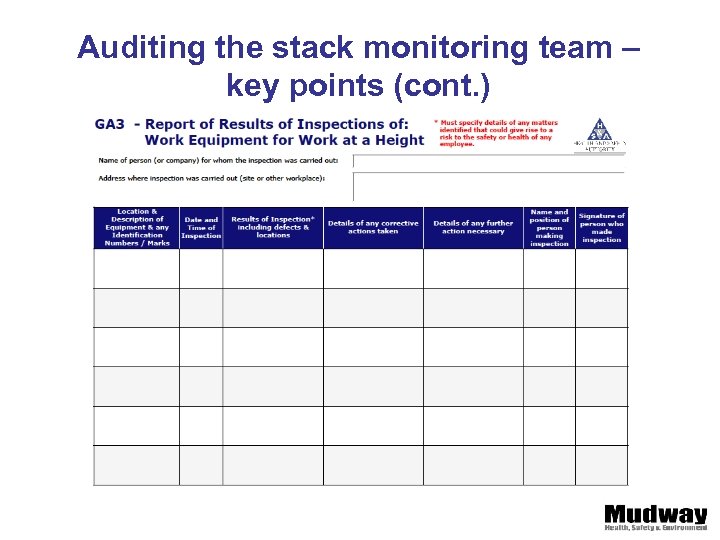 Auditing the stack monitoring team – key points (cont. )
 Auditing the stack monitoring team – key points (cont. ) • Site-specific protocol (Appendix 5 of AG 2 and EN 15259) • Documented procedures available? • Order of hierarchy? (CEN – ISO – National) • Copies of relevant sampling standards available (e. g. IE EN 13284 -1)?
 Manual methods
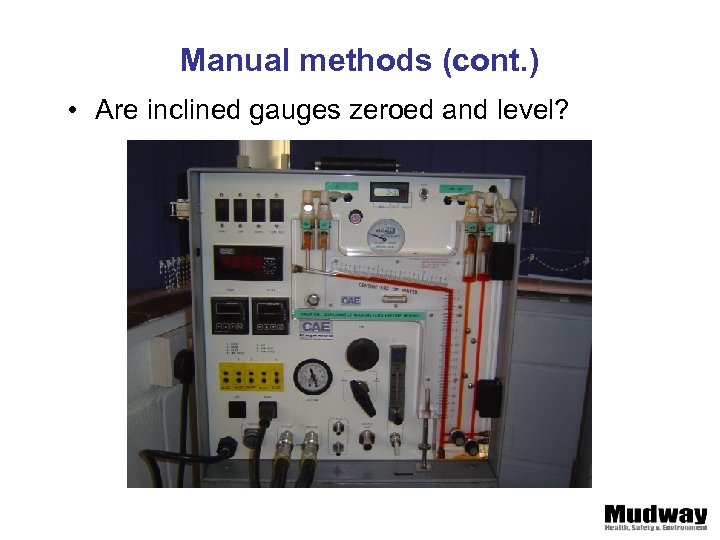 Manual methods (cont. ) • Are inclined gauges zeroed and level?
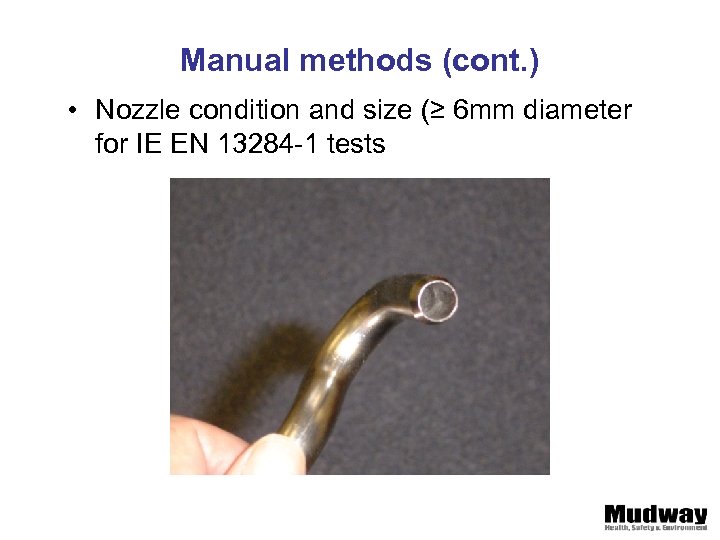 Manual methods (cont. ) • Nozzle condition and size (≥ 6 mm diameter for IE EN 13284 -1 tests
 Manual methods (cont. ) • Calibration status of all sampling train components • Pitot tube leak check (AG 2 section 5. 9) • Gas velocity traverse and swirl check? • Balance checked before weighing impingers?
 Manual methods (cont. )
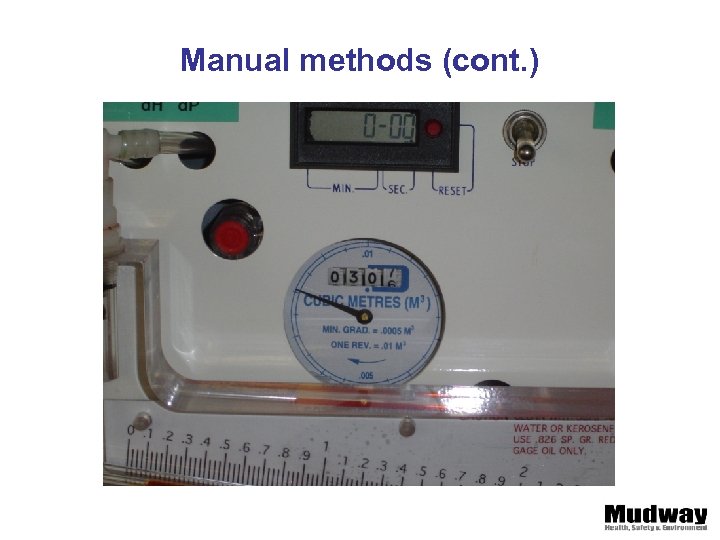
 Manual methods (cont. ) • Sampling train leak check: ≤ 2% of normal sampling flow rate (typically 2% of 1 m 3. h-1 = 0. 33 l. m-1 at vacuum (-10 to -15”Hg) 5% for PCDD/PCDF and PAH • Before and after test, if components are changed during test and when changing sampling lines for PCDD/PCDF tests • Leak checks also required for field blanks
 Manual methods (cont. )
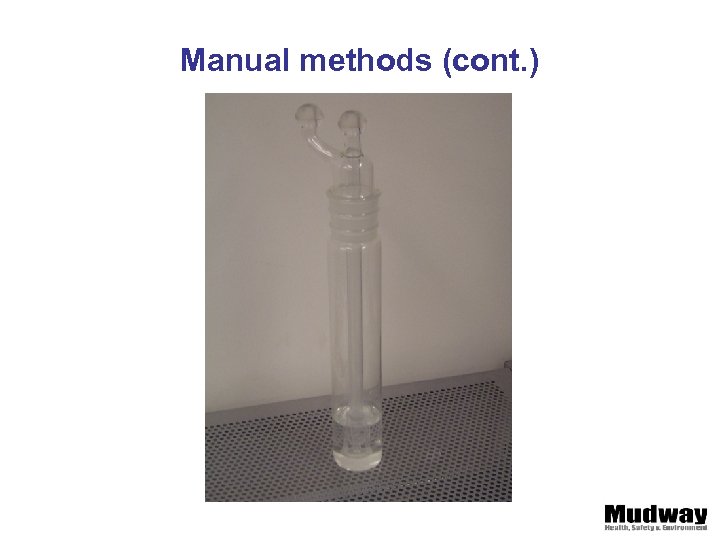
 Manual methods (cont. ) • Impinger/resin trap/sorbent tube inlet temperatures (refer to log sheets) • ≤ 20°C for PCDD/PCDF • ≤ 30°C for metals (can be useful!) • ≤ 40°C for VOC sorbent tubes
 Manual methods (cont. )
 Data verification
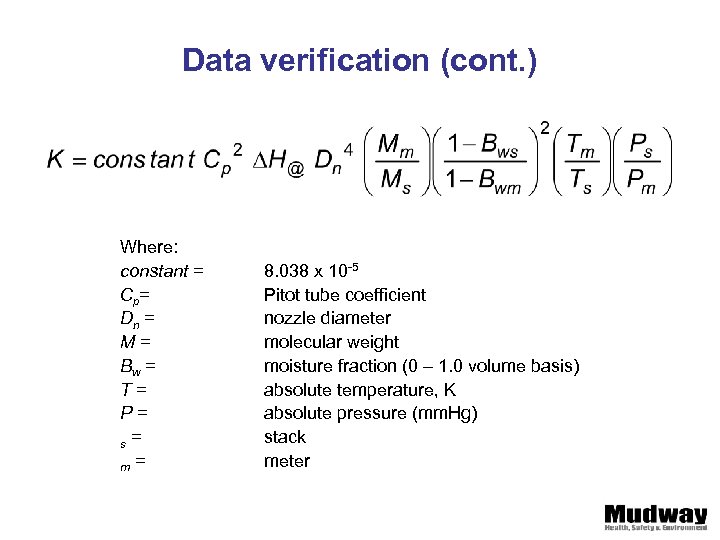 Data verification (cont. ) Where: constant = Cp = Dn = M= Bw = T= P= s = m = 8. 038 x 10 -5 Pitot tube coefficient nozzle diameter molecular weight moisture fraction (0 – 1. 0 volume basis) absolute temperature, K absolute pressure (mm. Hg) stack meter
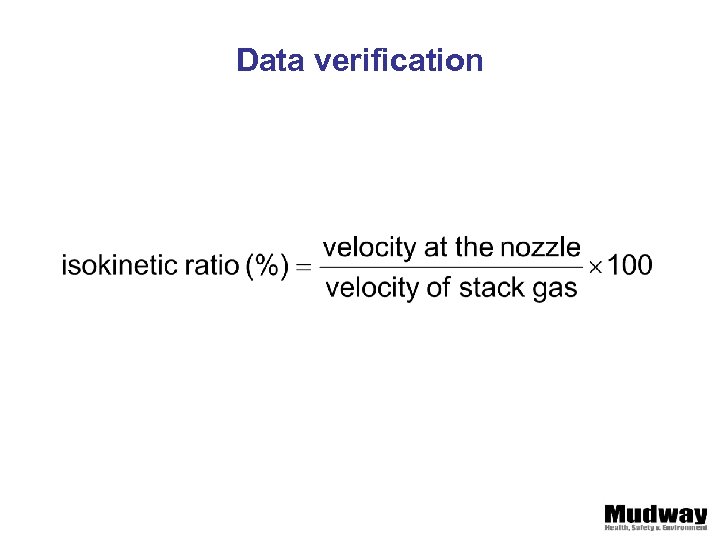
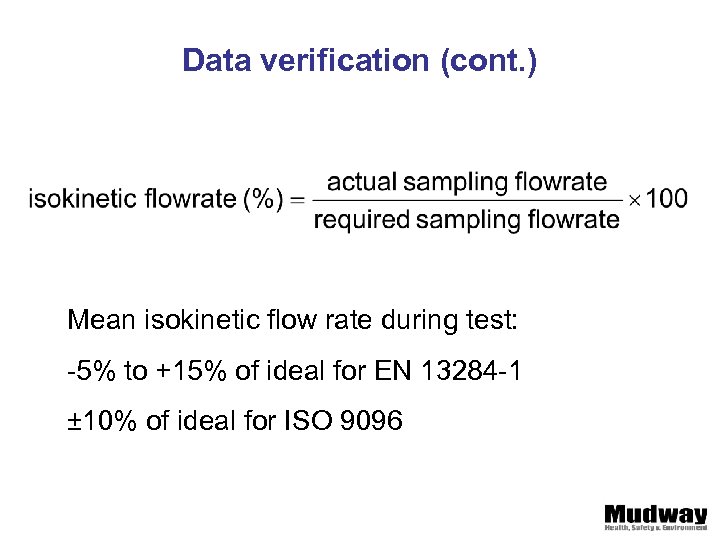 Data verification (cont. ) Mean isokinetic flow rate during test: -5% to +15% of ideal for EN 13284 -1 ± 10% of ideal for ISO 9096
 Instrumental methods
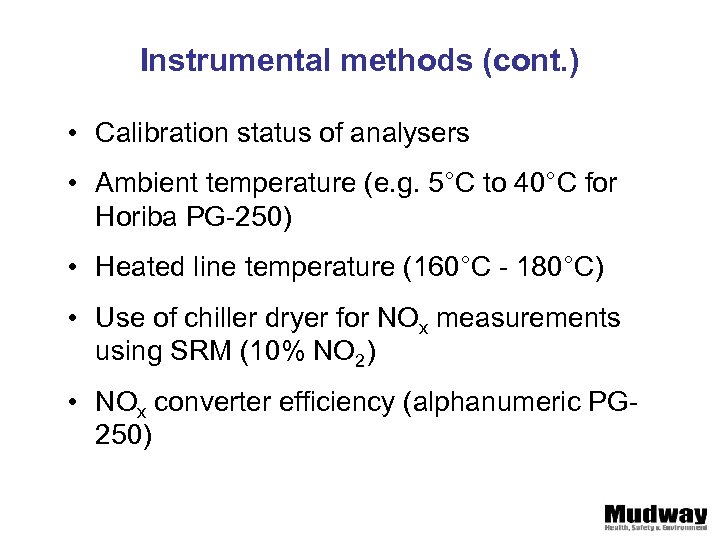 Instrumental methods (cont. ) • Calibration status of analysers • Ambient temperature (e. g. 5°C to 40°C for Horiba PG-250) • Heated line temperature (160°C - 180°C) • Use of chiller dryer for NOx measurements using SRM (10% NO 2) • NOx converter efficiency (alphanumeric PG 250)
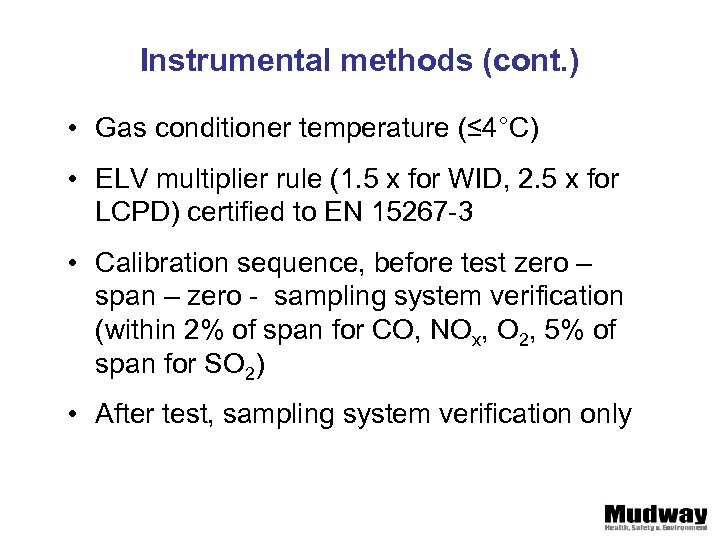 Instrumental methods (cont. ) • Gas conditioner temperature (≤ 4°C) • ELV multiplier rule (1. 5 x for WID, 2. 5 x for LCPD) certified to EN 15267 -3 • Calibration sequence, before test zero – span – zero - sampling system verification (within 2% of span for CO, NOx, O 2, 5% of span for SO 2) • After test, sampling system verification only
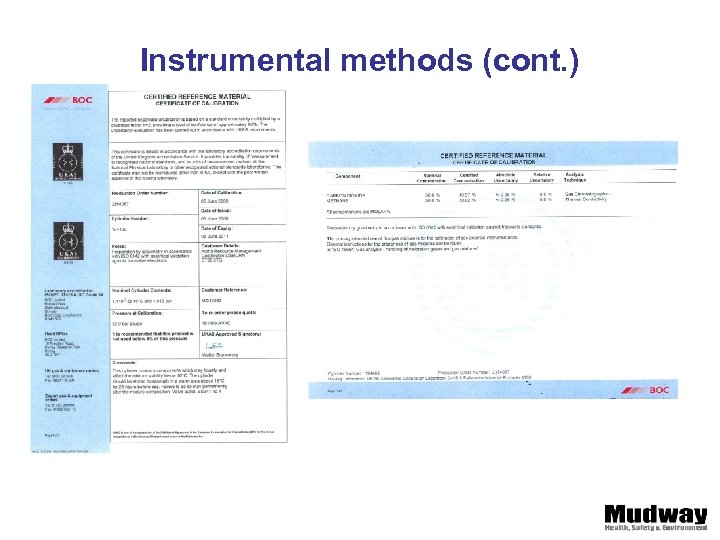
 Instrumental methods (cont. ) • Traceability of calibration gases • Check expiry dates
 Instrumental methods (cont. )
 Instrumental methods (cont. ) • However, it is not necessary to use certified gases on site, provided that standards are traceable to the SI by means of an unbroken chain of calibrations or comparisons linking them to relevant primary standards of the SI units of measurement • Span gas concentrations should be approximately the half-hourly ELV or 50% to 90% of the analyser range • EN 12619 specifies 16 mg. m-3 propane span gas
 Instrumental methods (cont. ) • Uncertainty quoted on certificate of analysis should be ≤± 2% • Analyser drift over measuring period. ≤ 2% of span value is acceptable, 2% - 5% apply drift correction >5% reject results
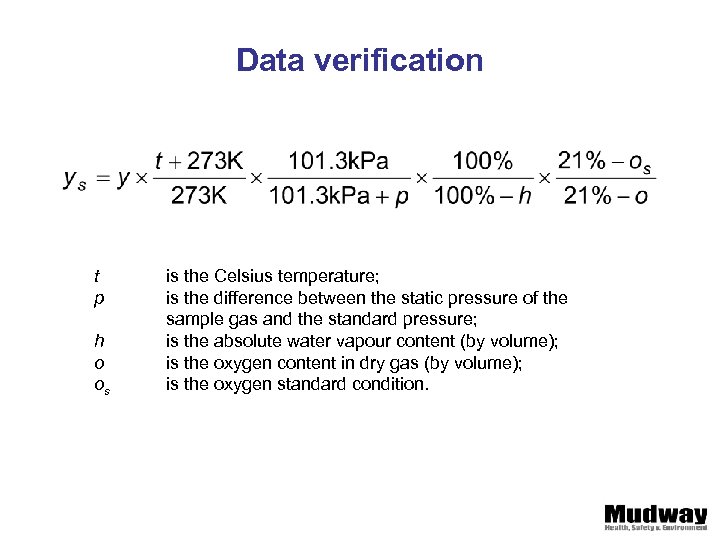 Data verification t p h o os is the Celsius temperature; is the difference between the static pressure of the sample gas and the standard pressure; is the absolute water vapour content (by volume); is the oxygen content in dry gas (by volume); is the oxygen standard condition.
 Proficiency testing (PT) schemes • Participation is requirement of ISO/IEC 17025 accreditation • NPL particulate stack emissions • NPL calibration gas (cylinders) • NPL gas measurement (stack simulator) • www. npl. co. uk
 Proficiency testing (PT) schemes (cont. ) • VSL Delft, Netherlands calibration gas (cylinders) • www. vsl. nl • All schemes are run twice per year