 Скачать презентацию Applying Lean Thinking to the Do D Consumable
1a680f571d7e45b6fd0d58b0334a6cda.ppt
- Количество слайдов: 19



Applying Lean Thinking to the Do. D Consumable Spares Supply Chain. . . 27 August 2003 Colonel Milton K. Lewis Director, Land-Based Weapon System Group Defense Supply Center, Columbus
Background. . . The Beginnings of Lean n Taiichi System Ohno and the Toyota Production – Started n “Lean After World War II Thinking” - Chronicled in The Machine That Changed the World, 1990 n Womack and Jones, Lean Thinking, 1996 2
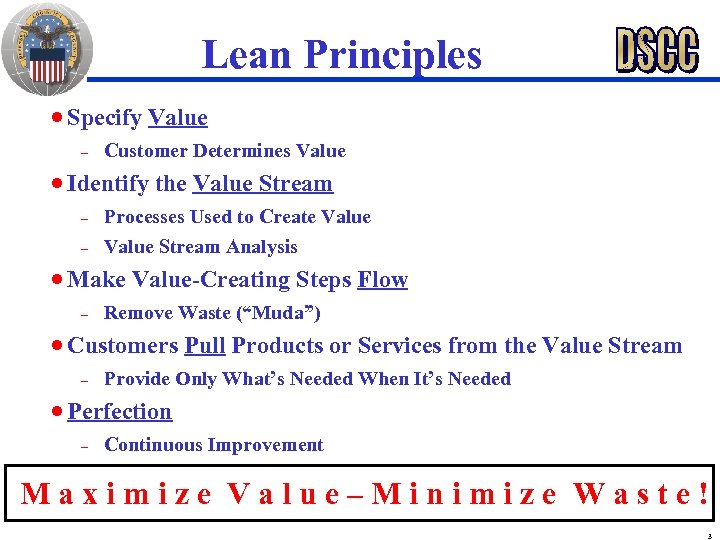
Lean Principles n Specify – Value Customer Determines Value n Identify the Value Stream – Processes Used to Create Value – Value Stream Analysis n Make – Value-Creating Steps Flow Remove Waste (“Muda”) n Customers – Pull Products or Services from the Value Stream Provide Only What’s Needed When It’s Needed n Perfection – Continuous Improvement Maximize Value–Minimize Waste! 3
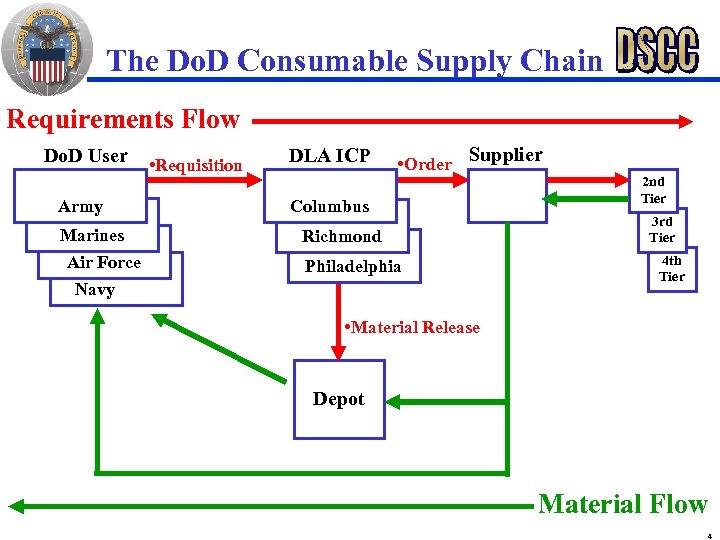
The Do. D Consumable Supply Chain Requirements Flow Do. D User Army Marines Air Force • Requisition DLA ICP • Order Supplier Columbus Richmond Philadelphia Navy 2 nd Tier 3 rd Tier 4 th Tier • Material Release Depot Material Flow 4
Supply Chain Management In Do. D. . . A Tough Environment n Challenges – Global Requirements – Demand Surges – Little or No Warning – Broad Array of Systems – Varying Fleet Age – Delays May Have Severe Consequences 5
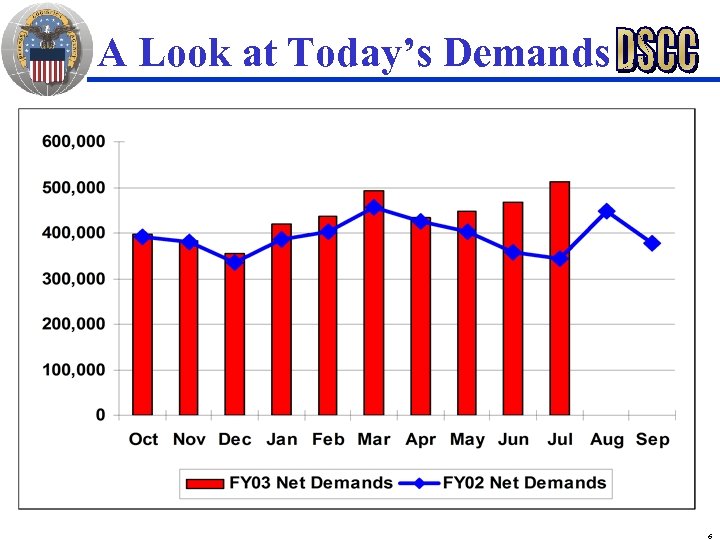
A Look at Today’s Demands 6
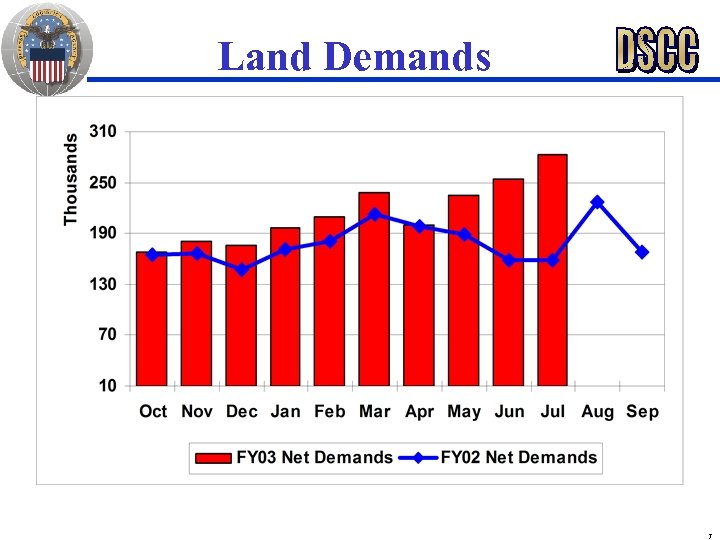
Land Demands 7
Other Unique Aspects n Limited Funding n Products/Services Not the Only Objective Ensure Level Playing Field – No One Unfairly Excluded Promote Socio/Economic Goals Result: Purchasing Highly Regulated - FAR/DFARS 8
Given the Do. D Environment. . . Can the Concepts, Principles and Practices of Lean be Applied to the DLA Consumable Supply Chain? A B S O L U T E L Y !
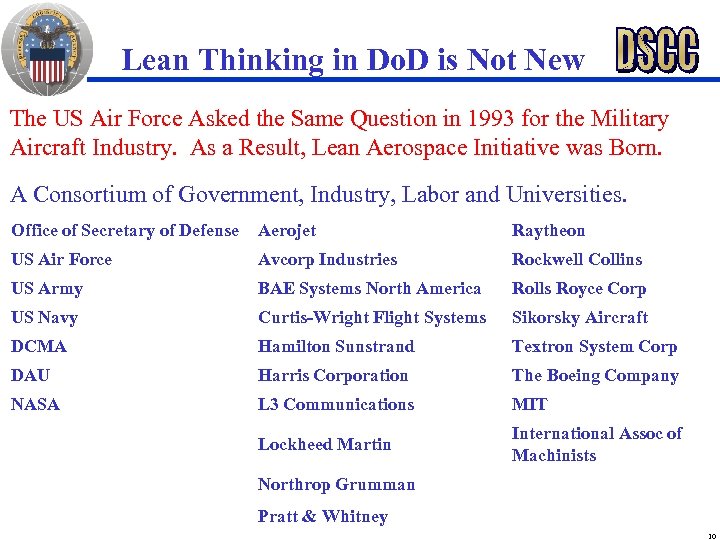
Lean Thinking in Do. D is Not New The US Air Force Asked the Same Question in 1993 for the Military Aircraft Industry. As a Result, Lean Aerospace Initiative was Born. A Consortium of Government, Industry, Labor and Universities. Office of Secretary of Defense Aerojet Raytheon US Air Force Avcorp Industries Rockwell Collins US Army BAE Systems North America Rolls Royce Corp US Navy Curtis-Wright Flight Systems Sikorsky Aircraft DCMA Hamilton Sunstrand Textron System Corp DAU Harris Corporation The Boeing Company NASA L 3 Communications MIT Lockheed Martin International Assoc of Machinists Northrop Grumman Pratt & Whitney 10
Consider this Comment from Dr. Jacques S. Gansler, Former Under Secretary of Defense (Acquisition and Technology). . . “. . . we spend more than $80 billion annually in the Do. D logistics area - - and don’t achieve world-class performance in either responsiveness or costs - - this is an extremely fruitful one to pursue…” - Remarks to Lean Aerospace Initiative Executive Council, May 4, 1999
You’ve Heard What the Do. D Customer Wants. . . n. Responsiveness n. Quality n. Affordability Here’s How You Know if the Supply Chain Delivered. . . 12
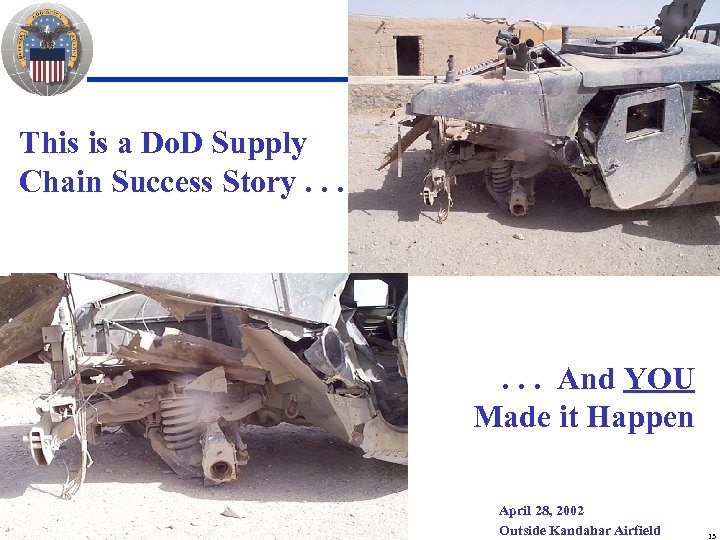
This is a Do. D Supply Chain Success Story. . . And YOU Made it Happen April 28, 2002 Outside Kandahar Airfield 13
Opportunities for Lean n Customer Wait Time n Forecasting n Administrative Time n Inventory Lead n Defects Communications Throughout the Supply Chain is Key 14
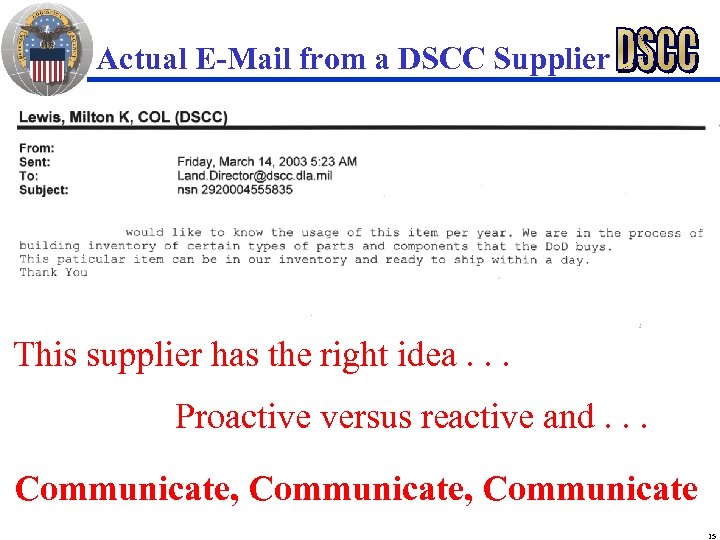
Actual E-Mail from a DSCC Supplier This supplier has the right idea. . . Proactive versus reactive and. . . Communicate, Communicate 15
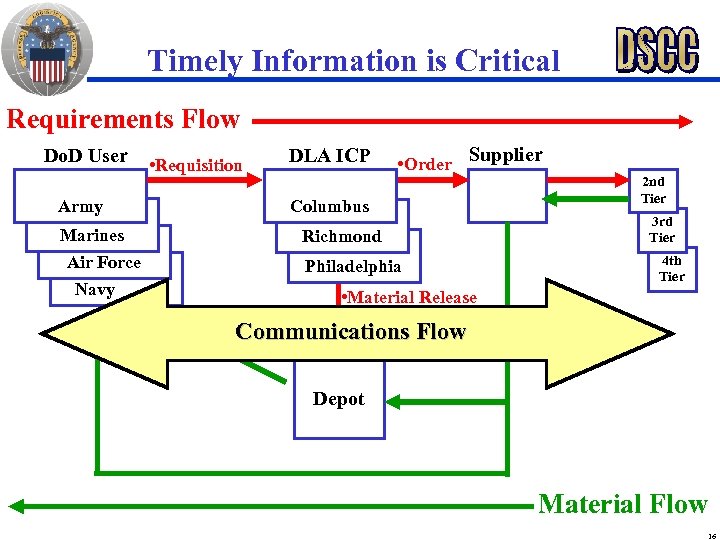
Timely Information is Critical Requirements Flow Do. D User Army Marines Air Force Navy • Requisition DLA ICP • Order Supplier Columbus Richmond Philadelphia 2 nd Tier 3 rd Tier 4 th Tier • Material Release Communications Flow Depot Material Flow 16
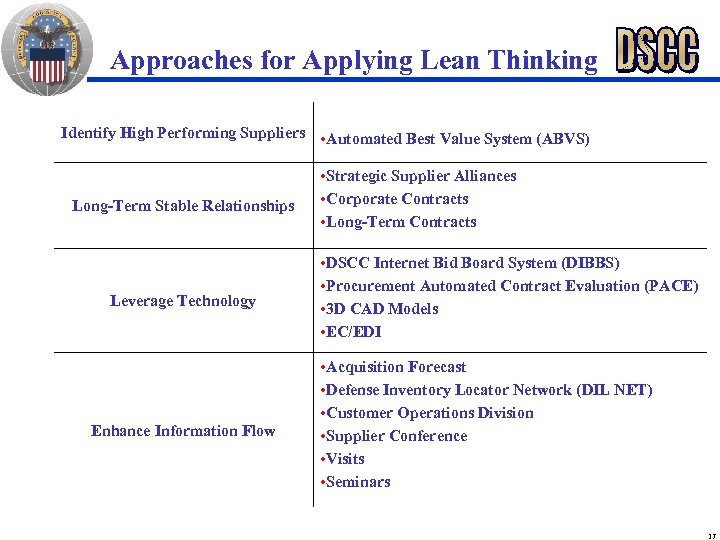
Approaches for Applying Lean Thinking Identify High Performing Suppliers • Automated Best Value System (ABVS) Long-Term Stable Relationships Leverage Technology Enhance Information Flow • Strategic Supplier Alliances • Corporate Contracts • Long-Term Contracts • DSCC Internet Bid Board System (DIBBS) • Procurement Automated Contract Evaluation (PACE) • 3 D CAD Models • EC/EDI • Acquisition Forecast • Defense Inventory Locator Network (DIL NET) • Customer Operations Division • Supplier Conference • Visits • Seminars 17
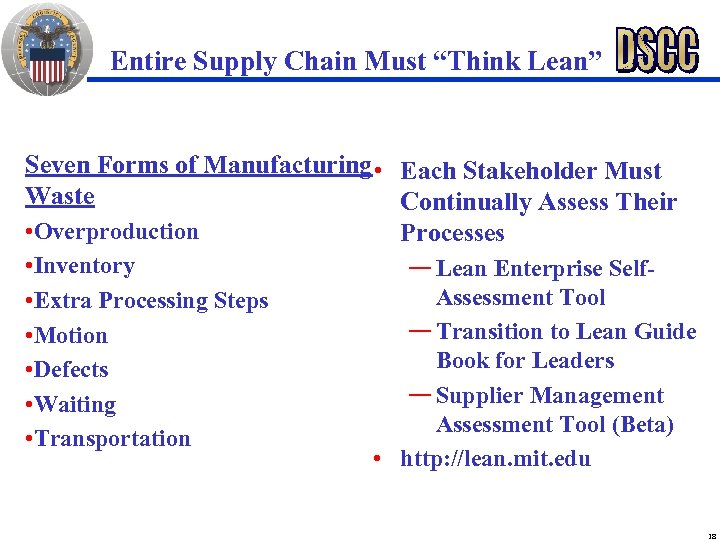
Entire Supply Chain Must “Think Lean” Seven Forms of Manufacturing • Each Stakeholder Must Waste Continually Assess Their • Overproduction Processes • Inventory • Extra Processing Steps • Motion • Defects • Waiting • Transportation — Lean Enterprise Self. Assessment Tool — Transition to Lean Guide Book for Leaders — Supplier Management Assessment Tool (Beta) • http: //lean. mit. edu 18
Summary n “Lean Thinking” - Adds Value to the Do. D Consumable Supply Chain n All Stakeholders Must Consider Impact Up/Down Supply Chain n Communications Optimization is Key to Supply Chain 19
Скачать презентацию Applying Lean Thinking to the Do D Consumable
1a680f571d7e45b6fd0d58b0334a6cda.ppt