 Скачать презентацию Apply Modern Biotechnology To better understand manage
b641479e297ff6daaeaf62fa396247a5.ppt
- Количество слайдов: 55



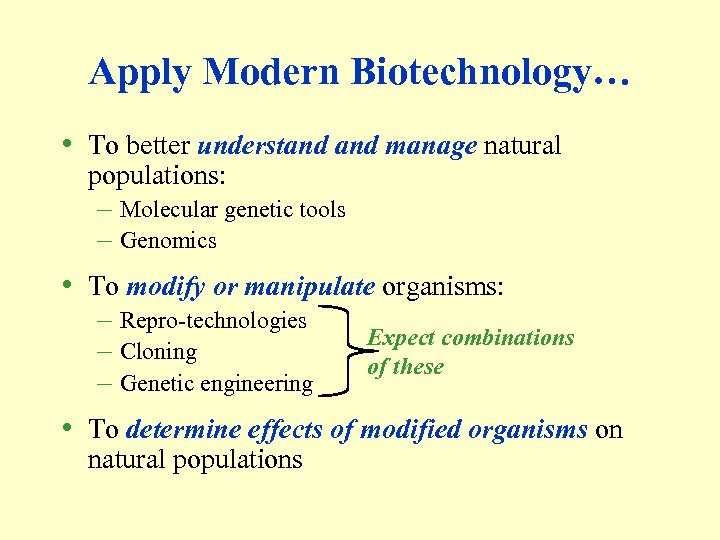
Apply Modern Biotechnology… • To better understand manage natural populations: – Molecular genetic tools – Genomics • To modify or manipulate organisms: – Repro-technologies – Cloning – Genetic engineering Expect combinations of these • To determine effects of modified organisms on natural populations
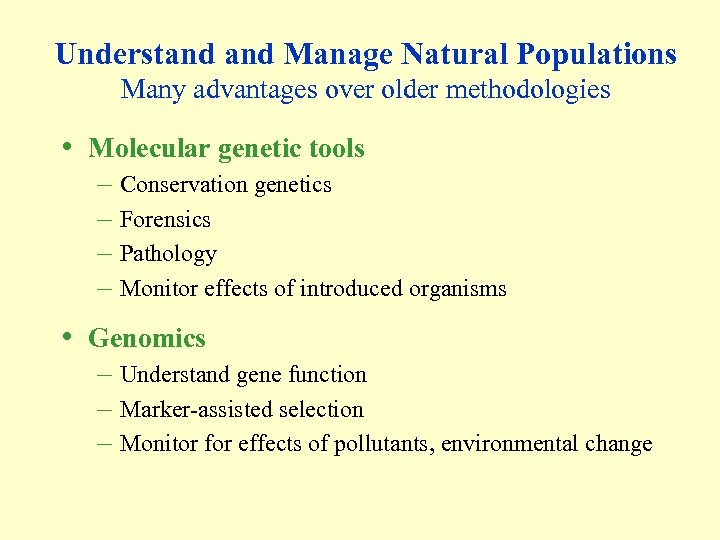
Understand Manage Natural Populations Many advantages over older methodologies • Molecular genetic tools – Conservation genetics – Forensics – Pathology – Monitor effects of introduced organisms • Genomics – Understand gene function – Marker-assisted selection – Monitor for effects of pollutants, environmental change
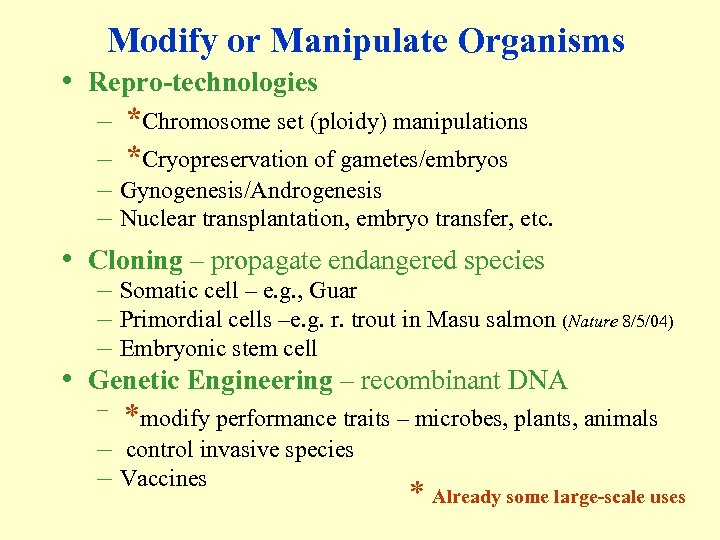
Modify or Manipulate Organisms • Repro-technologies – *Chromosome set (ploidy) manipulations – *Cryopreservation of gametes/embryos – Gynogenesis/Androgenesis – Nuclear transplantation, embryo transfer, etc. • Cloning – propagate endangered species – Somatic cell – e. g. , Guar – Primordial cells –e. g. r. trout in Masu salmon (Nature 8/5/04) – Embryonic stem cell • Genetic Engineering – recombinant DNA – *modify performance traits – microbes, plants, animals – control invasive species – Vaccines * Already some large-scale uses
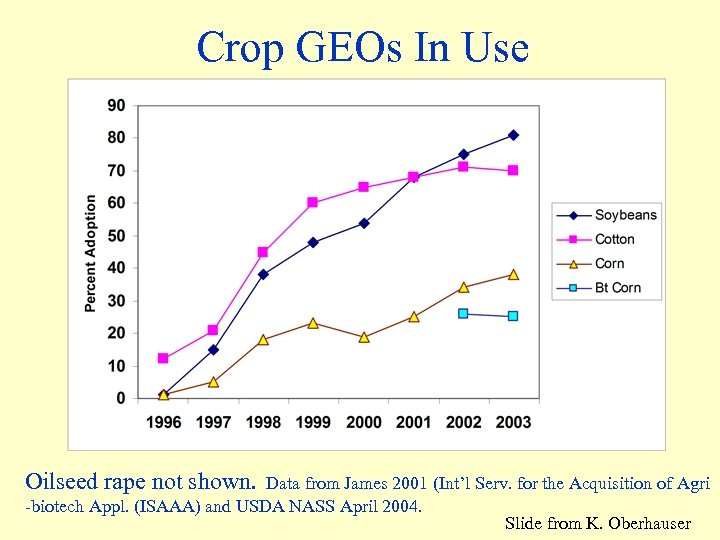
Crop GEOs In Use Oilseed rape not shown. Data from James 2001 (Int’l Serv. for the Acquisition of Agri -biotech Appl. (ISAAA) and USDA NASS April 2004. Slide from K. Oberhauser
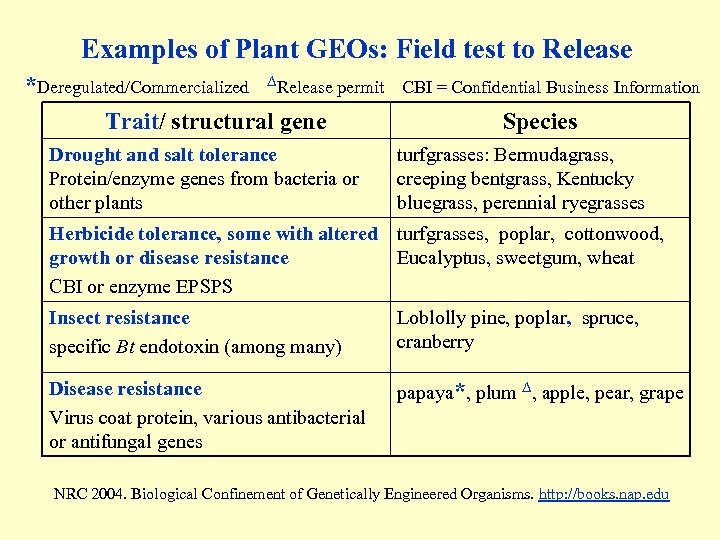
Examples of Plant GEOs: Field test to Release *Deregulated/Commercialized ∆Release permit CBI = Confidential Business Information Trait/ structural gene Drought and salt tolerance Protein/enzyme genes from bacteria or other plants Species turfgrasses: Bermudagrass, creeping bentgrass, Kentucky bluegrass, perennial ryegrasses Herbicide tolerance, some with altered turfgrasses, poplar, cottonwood, growth or disease resistance Eucalyptus, sweetgum, wheat CBI or enzyme EPSPS Insect resistance specific Bt endotoxin (among many) Loblolly pine, poplar, spruce, cranberry Disease resistance Virus coat protein, various antibacterial or antifungal genes papaya*, plum ∆, apple, pear, grape NRC 2004. Biological Confinement of Genetically Engineered Organisms. http: //books. nap. edu
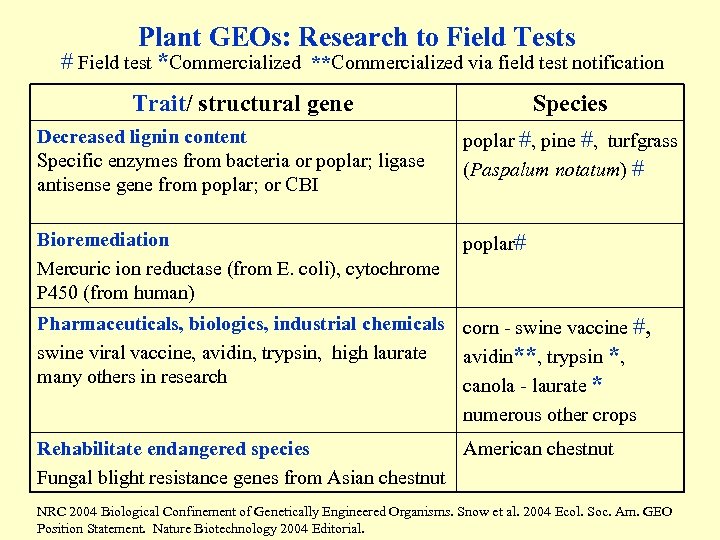
Plant GEOs: Research to Field Tests # Field test *Commercialized **Commercialized via field test notification Trait/ structural gene Decreased lignin content Specific enzymes from bacteria or poplar; ligase antisense gene from poplar; or CBI Species poplar #, pine #, turfgrass (Paspalum notatum) # Bioremediation poplar# Mercuric ion reductase (from E. coli), cytochrome P 450 (from human) Pharmaceuticals, biologics, industrial chemicals corn - swine vaccine #, swine viral vaccine, avidin, trypsin, high laurate avidin**, trypsin *, many others in research canola - laurate * numerous other crops Rehabilitate endangered species American chestnut Fungal blight resistance genes from Asian chestnut NRC 2004 Biological Confinement of Genetically Engineered Organisms. Snow et al. 2004 Ecol. Soc. Am. GEO Position Statement. Nature Biotechnology 2004 Editorial.

First Transgenic Animal on U. S. Market The New York Times Nov 22, 2003 Gene-Altering Revolution Nears the Pet Store: Glow-in-the-Dark Fish Glo. Fish casts light on murky policing of transgenic animals Nature 27 November 2003 www. glofish. com Marketed without regulatory environmental review. FDA is lead authority.
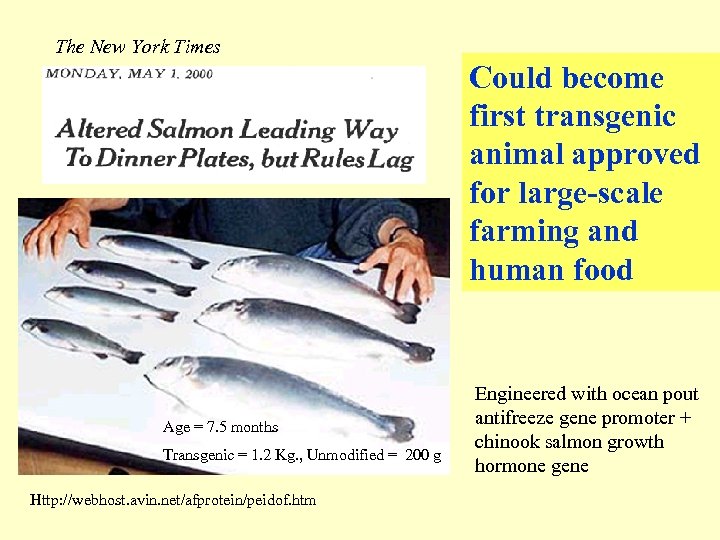
The New York Times Could become first transgenic animal approved for large-scale farming and human food Age = 7. 5 months Transgenic = 1. 2 Kg. , Unmodified = 200 g Http: //webhost. avin. net/afprotein/peidof. htm Engineered with ocean pout antifreeze gene promoter + chinook salmon growth hormone gene
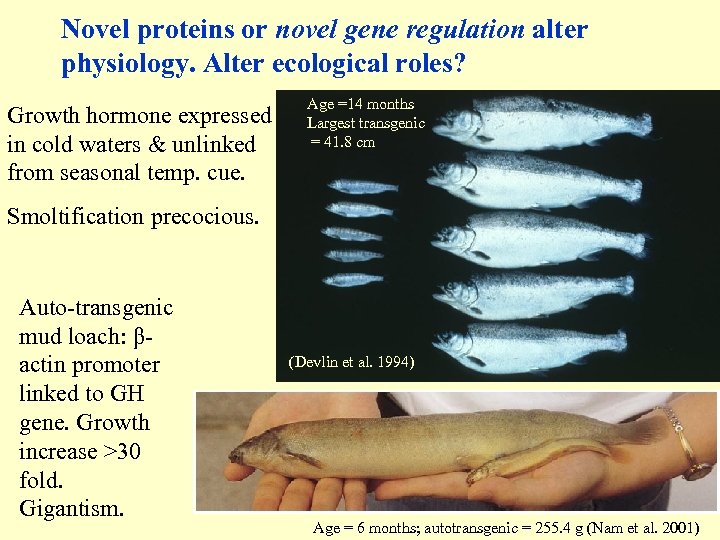
Novel proteins or novel gene regulation alter physiology. Alter ecological roles? Growth hormone expressed in cold waters & unlinked from seasonal temp. cue. Age =14 months Largest transgenic = 41. 8 cm Smoltification precocious. Auto-transgenic mud loach: βactin promoter linked to GH gene. Growth increase >30 fold. Gigantism. (Devlin et al. 1994) Age = 6 months; autotransgenic = 255. 4 g (Nam et al. 2001)
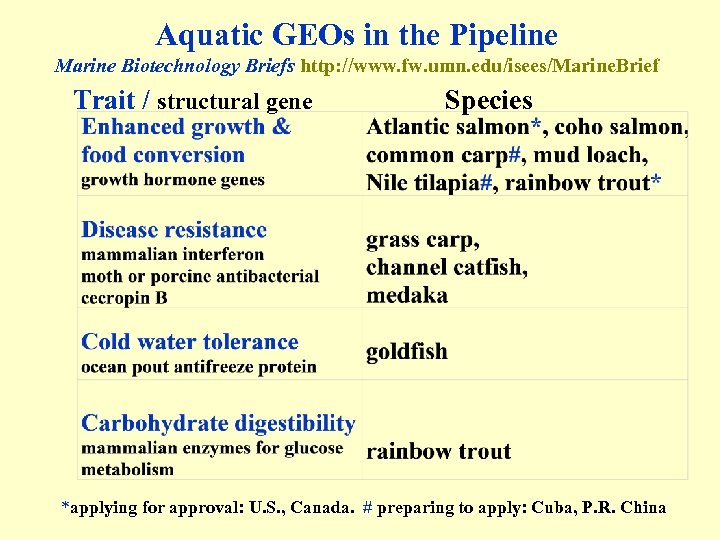
Aquatic GEOs in the Pipeline Marine Biotechnology Briefs http: //www. fw. umn. edu/isees/Marine. Brief Trait / structural gene Species *applying for approval: U. S. , Canada. # preparing to apply: Cuba, P. R. China
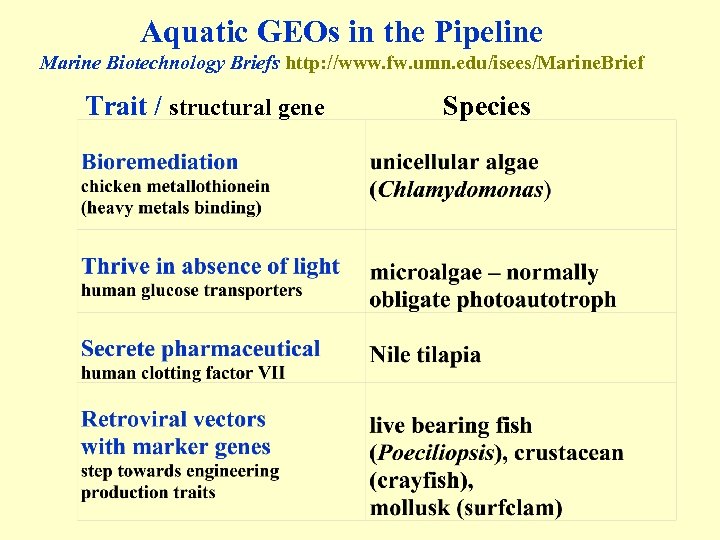
Aquatic GEOs in the Pipeline Marine Biotechnology Briefs http: //www. fw. umn. edu/isees/Marine. Brief Trait / structural gene Species
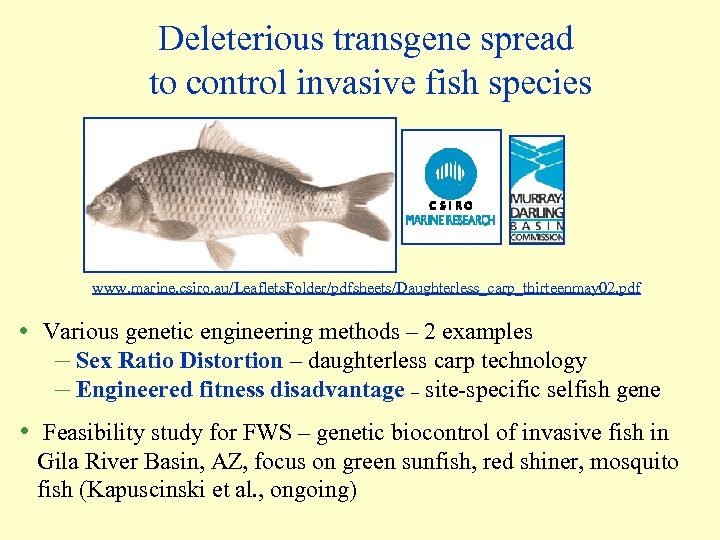
Deleterious transgene spread to control invasive fish species www. marine. csiro. au/Leaflets. Folder/pdfsheets/Daughterless_carp_thirteenmay 02. pdf • Various genetic engineering methods – 2 examples – Sex Ratio Distortion – daughterless carp technology – Engineered fitness disadvantage – site-specific selfish gene • Feasibility study for FWS – genetic biocontrol of invasive fish in Gila River Basin, AZ, focus on green sunfish, red shiner, mosquito fish (Kapuscinski et al. , ongoing)
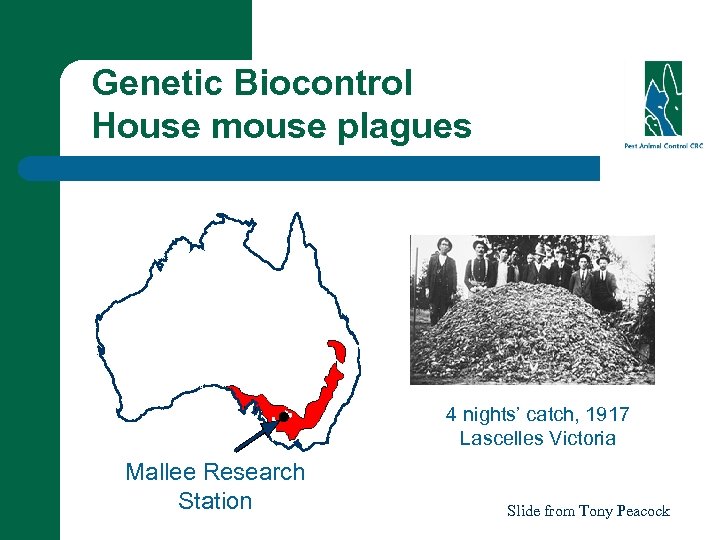
Genetic Biocontrol House mouse plagues 4 nights’ catch, 1917 Lascelles Victoria Mallee Research Station Slide from Tony Peacock
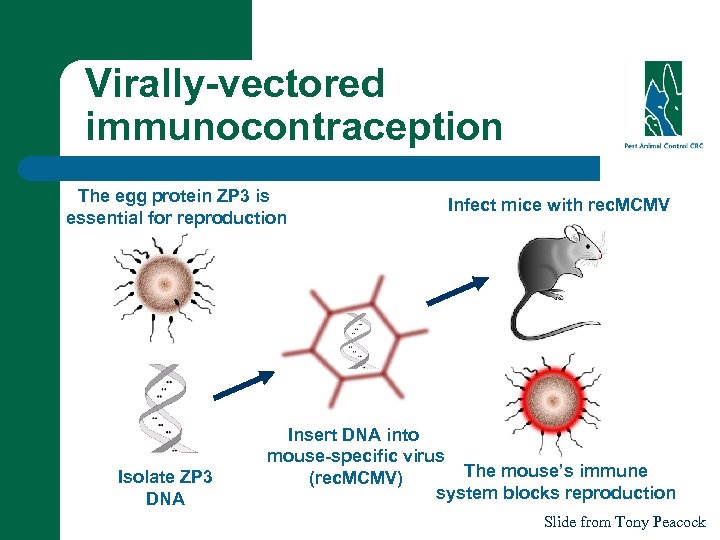
Virally-vectored immunocontraception The egg protein ZP 3 is essential for reproduction Isolate ZP 3 DNA Infect mice with rec. MCMV Insert DNA into mouse-specific virus The mouse’s immune (rec. MCMV) system blocks reproduction Slide from Tony Peacock
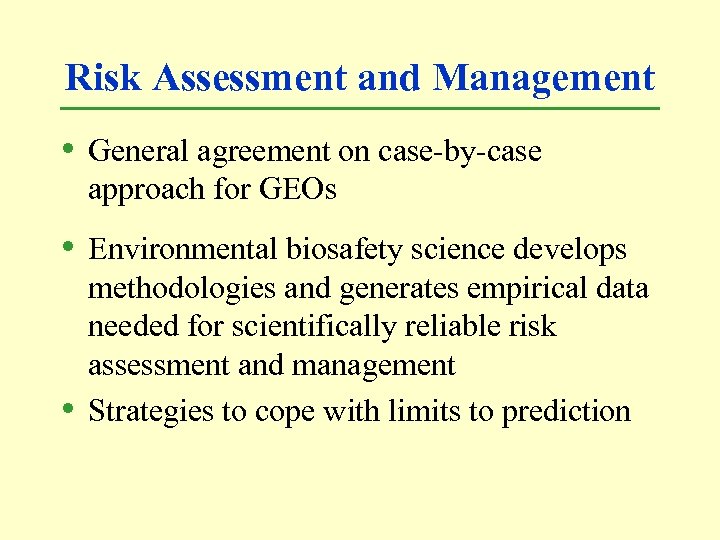
Risk Assessment and Management • General agreement on case-by-case approach for GEOs • Environmental biosafety science develops • methodologies and generates empirical data needed for scientifically reliable risk assessment and management Strategies to cope with limits to prediction
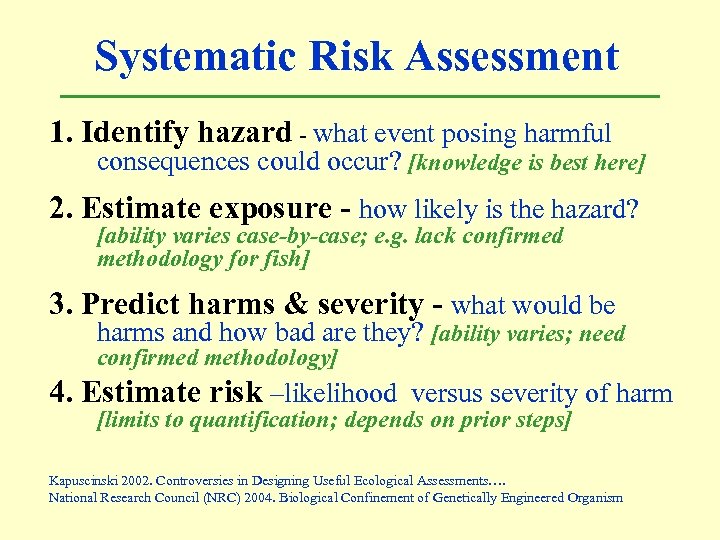
Systematic Risk Assessment 1. Identify hazard - what event posing harmful consequences could occur? [knowledge is best here] 2. Estimate exposure - how likely is the hazard? [ability varies case-by-case; e. g. lack confirmed methodology for fish] 3. Predict harms & severity - what would be harms and how bad are they? [ability varies; need confirmed methodology] 4. Estimate risk –likelihood versus severity of harm [limits to quantification; depends on prior steps] Kapuscinski 2002. Controversies in Designing Useful Ecological Assessments…. National Research Council (NRC) 2004. Biological Confinement of Genetically Engineered Organism
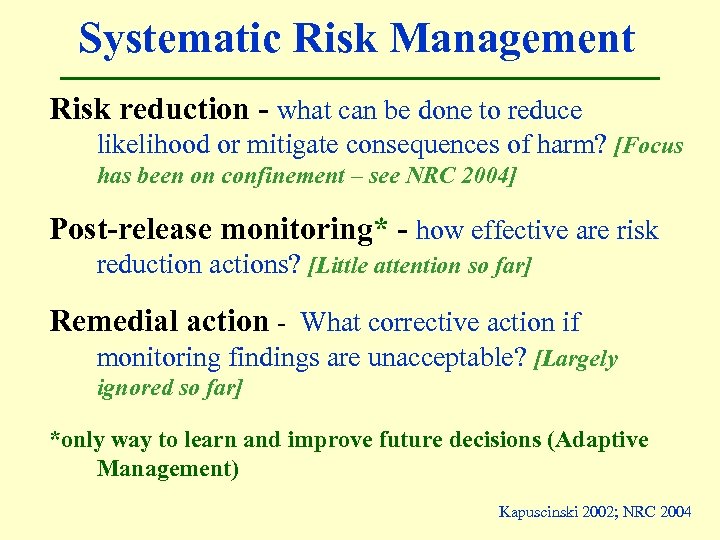
Systematic Risk Management Risk reduction - what can be done to reduce likelihood or mitigate consequences of harm? [Focus has been on confinement – see NRC 2004] Post-release monitoring* - how effective are risk reduction actions? [Little attention so far] Remedial action - What corrective action if monitoring findings are unacceptable? [Largely ignored so far] *only way to learn and improve future decisions (Adaptive Management) Kapuscinski 2002; NRC 2004
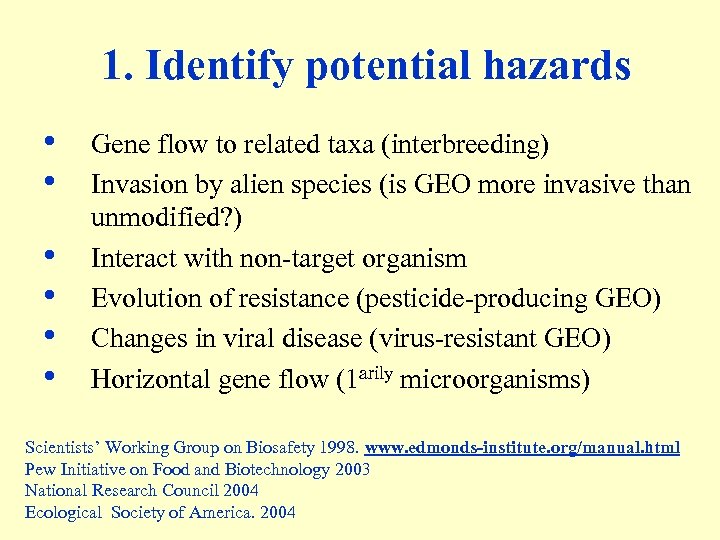
1. Identify potential hazards • • • Gene flow to related taxa (interbreeding) Invasion by alien species (is GEO more invasive than unmodified? ) Interact with non-target organism Evolution of resistance (pesticide-producing GEO) Changes in viral disease (virus-resistant GEO) Horizontal gene flow (1 arily microorganisms) Scientists’ Working Group on Biosafety 1998. www. edmonds-institute. org/manual. html Pew Initiative on Food and Biotechnology 2003 National Research Council 2004 Ecological Society of America. 2004
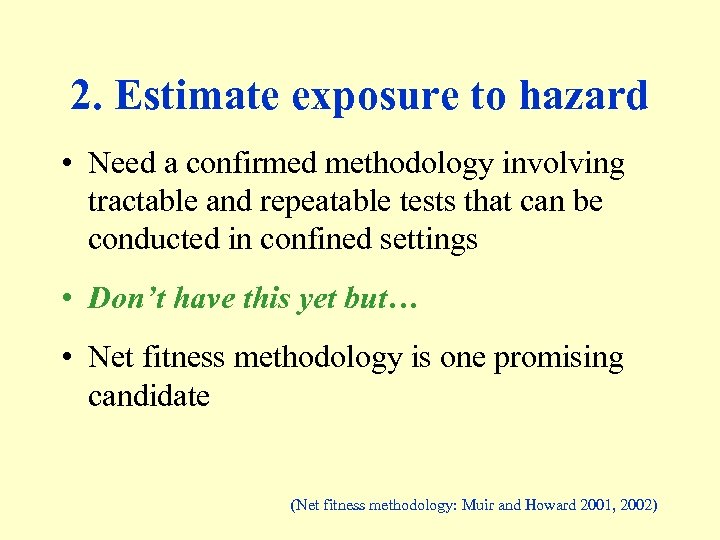
2. Estimate exposure to hazard • Need a confirmed methodology involving tractable and repeatable tests that can be conducted in confined settings • Don’t have this yet but… • Net fitness methodology is one promising candidate (Net fitness methodology: Muir and Howard 2001, 2002)
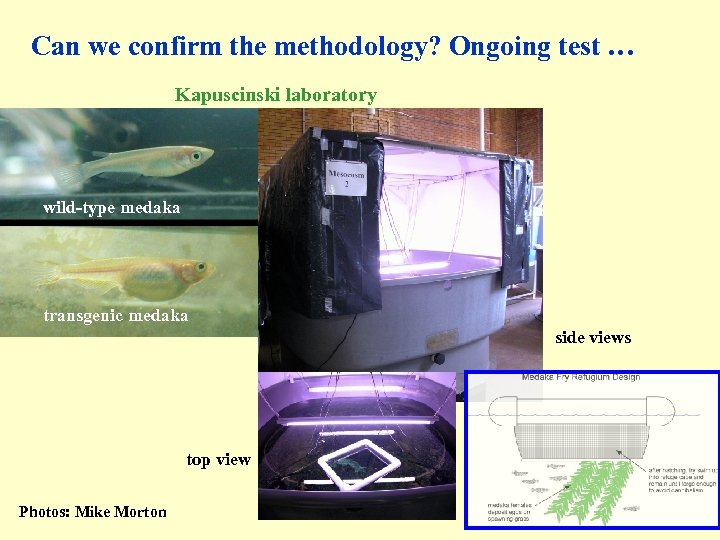
Can we confirm the methodology? Ongoing test … Kapuscinski laboratory wild-type medaka transgenic medaka side views top view Photos: Mike Morton
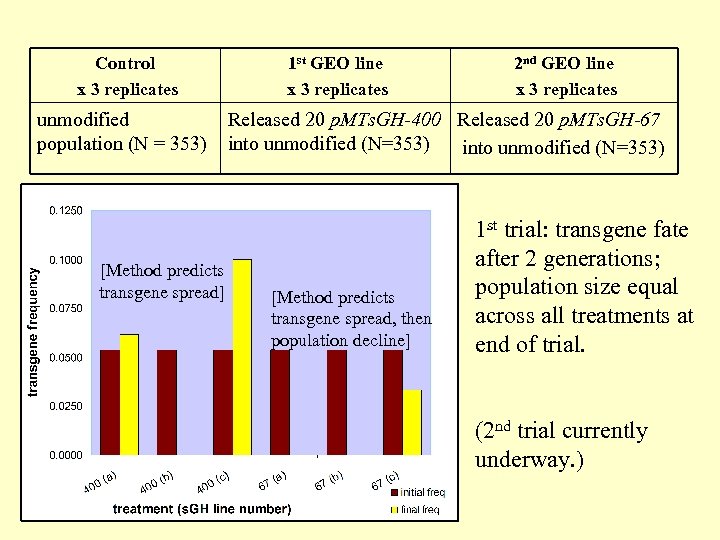
Control x 3 replicates unmodified population (N = 353) 1 st GEO line x 3 replicates 2 nd GEO line x 3 replicates Released 20 p. MTs. GH-400 Released 20 p. MTs. GH-67 into unmodified (N=353) [Method predicts transgene spread] [Method predicts transgene spread, then population decline] 1 st trial: transgene fate after 2 generations; population size equal across all treatments at end of trial. (2 nd trial currently underway. )
3. Predict Harms and Severity • Examples for fish and wildlife: 1. 2. 3. Loss of unique genetic resources – e. g. , center of origin, extinction by hybridization Decline in abundance of species of special concern - target of fishing/hunting, endangered, keystone in food web, culturally important, etc. Decline in resilience of biological community— ability to recover from external disturbances Challenges: cumulative, long-term, large-scale Scientists’ Working Group on Biosafety 1998. Pew Initiative on Food and Biotechnology 2003
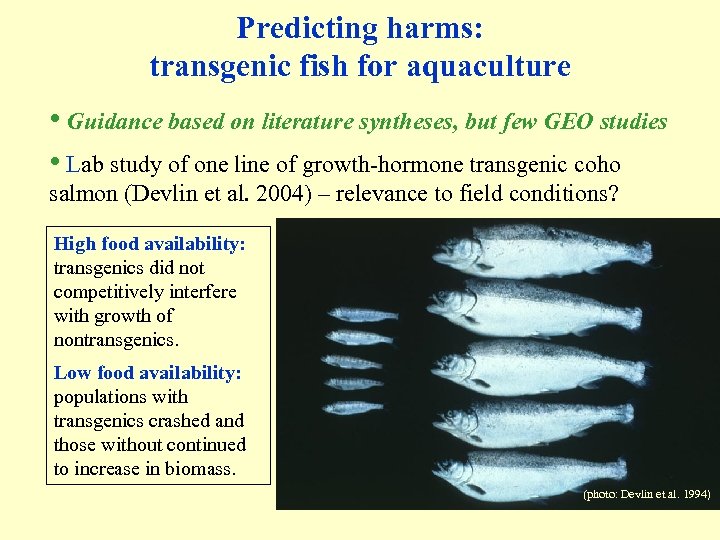
Predicting harms: transgenic fish for aquaculture • Guidance based on literature syntheses, but few GEO studies • Lab study of one line of growth-hormone transgenic coho salmon (Devlin et al. 2004) – relevance to field conditions? High food availability: transgenics did not competitively interfere with growth of nontransgenics. Low food availability: populations with transgenics crashed and those without continued to increase in biomass. (photo: Devlin et al. 1994)
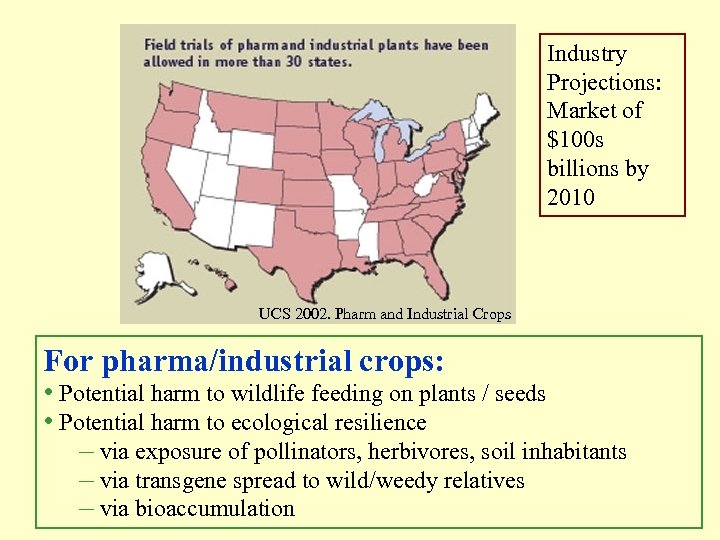
Industry Projections: Market of $100 s billions by 2010 UCS 2002. Pharm and Industrial Crops For pharma/industrial crops: • Potential harm to wildlife feeding on plants / seeds • Potential harm to ecological resilience – via exposure of pollinators, herbivores, soil inhabitants – via transgene spread to wild/weedy relatives – via bioaccumulation
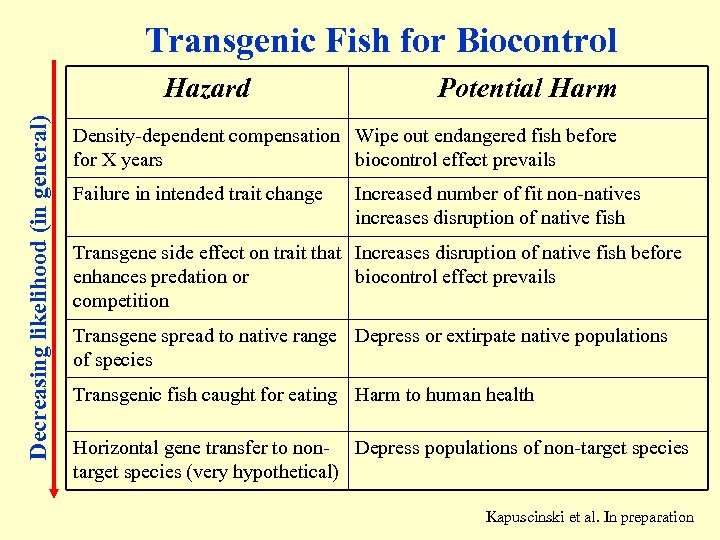
Transgenic Fish for Biocontrol Decreasing likelihood (in general) Hazard Potential Harm Density-dependent compensation Wipe out endangered fish before for X years biocontrol effect prevails Failure in intended trait change Increased number of fit non-natives increases disruption of native fish Transgene side effect on trait that Increases disruption of native fish before enhances predation or biocontrol effect prevails competition Transgene spread to native range Depress or extirpate native populations of species Transgenic fish caught for eating Harm to human health Horizontal gene transfer to non- Depress populations of non-target species (very hypothetical) Kapuscinski et al. In preparation
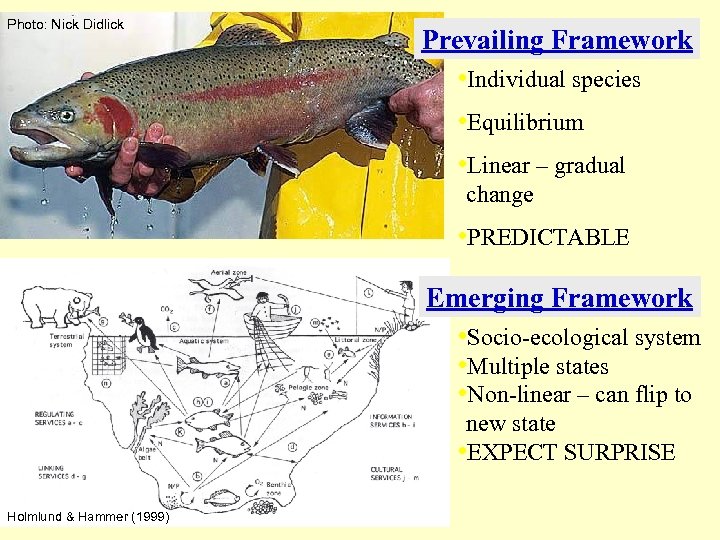
Photo: Nick Didlick Prevailing Framework • Individual species • Equilibrium • Linear – gradual change • PREDICTABLE Emerging Framework • Socio-ecological system • Multiple states • Non-linear – can flip to new state • EXPECT SURPRISE Holmlund & Hammer (1999)
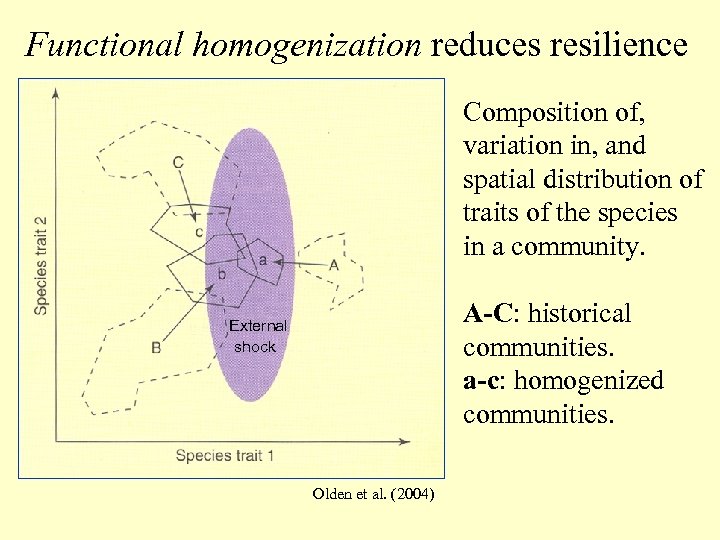
Functional homogenization reduces resilience Composition of, variation in, and spatial distribution of traits of the species in a community. A-C: historical communities. a-c: homogenized communities. External shock Olden et al. (2004)
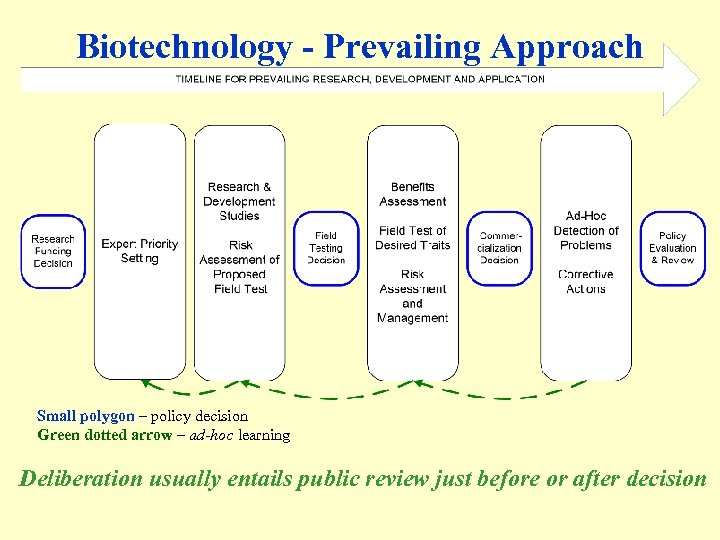
Biotechnology - Prevailing Approach Small polygon – policy decision Green dotted arrow – ad-hoc learning Deliberation usually entails public review just before or after decision
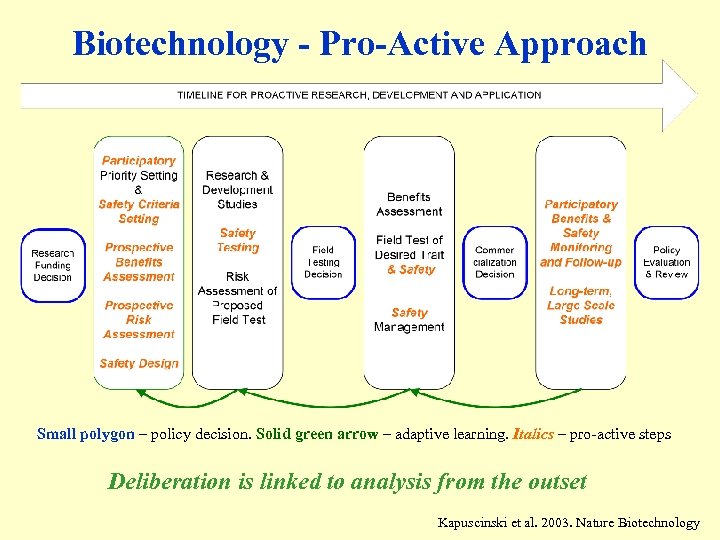
Biotechnology - Pro-Active Approach Small polygon – policy decision. Solid green arrow – adaptive learning. Italics – pro-active steps Deliberation is linked to analysis from the outset Kapuscinski et al. 2003. Nature Biotechnology
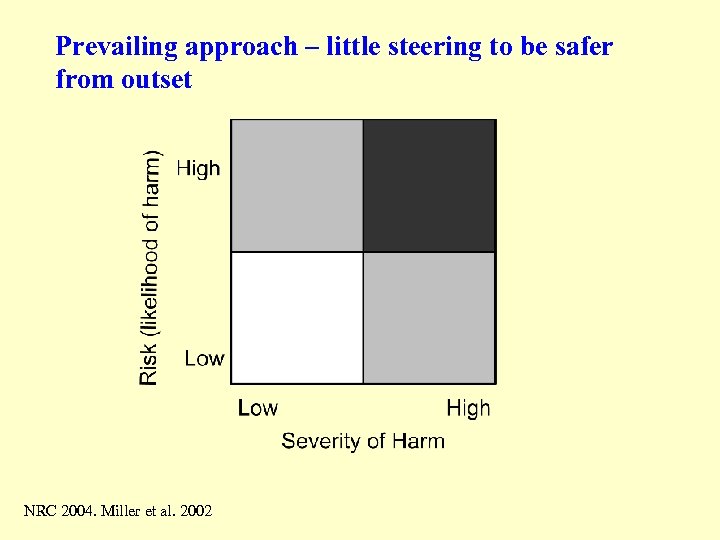
Prevailing approach – little steering to be safer from outset NRC 2004. Miller et al. 2002
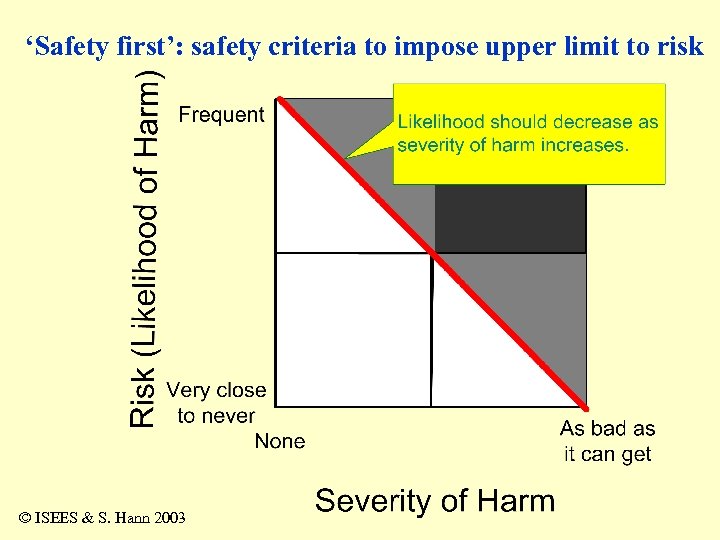
‘Safety first’: safety criteria to impose upper limit to risk © ISEES & S. Hann 2003
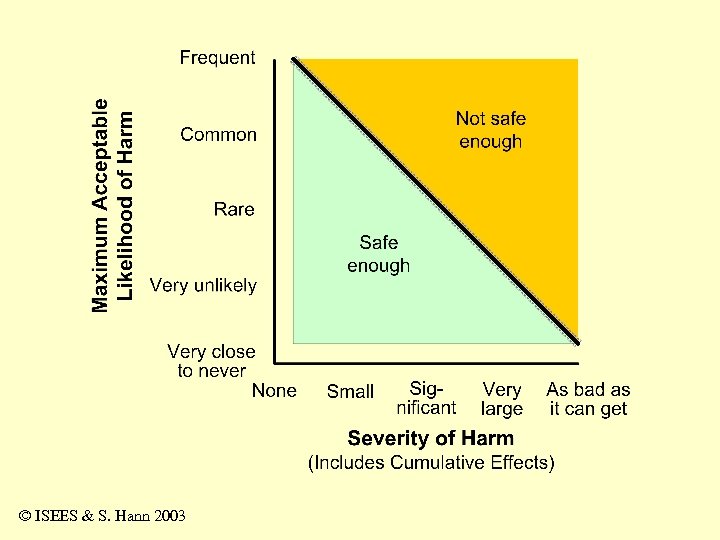
© ISEES & S. Hann 2003
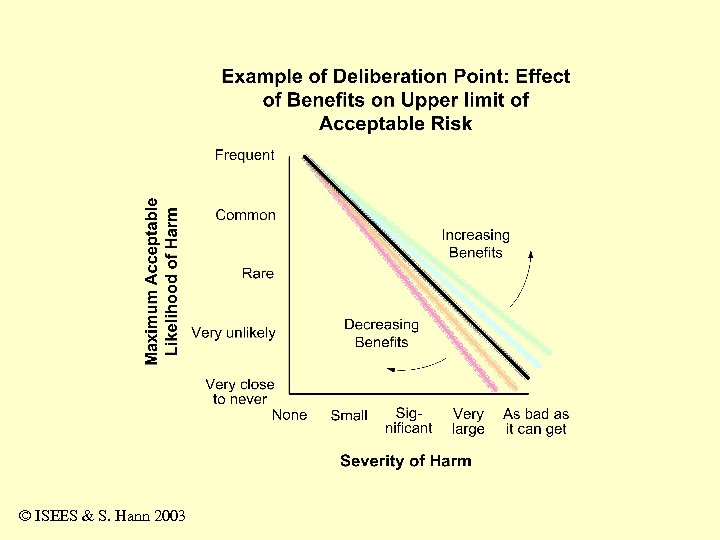
© ISEES & S. Hann 2003
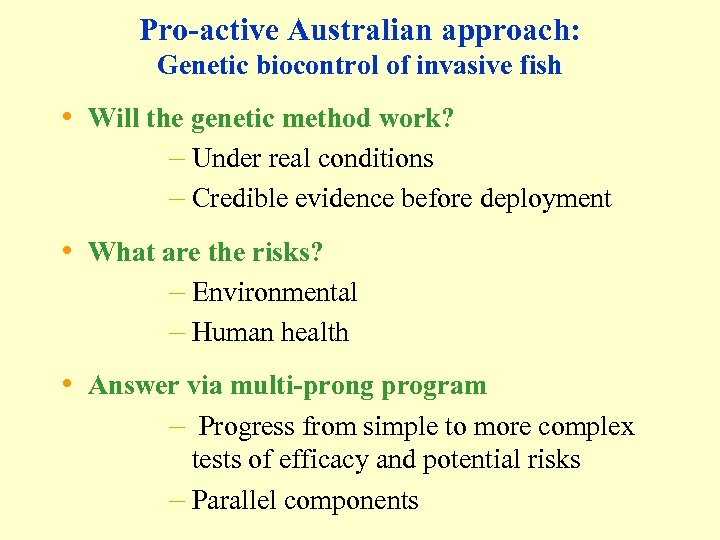
Pro-active Australian approach: Genetic biocontrol of invasive fish • Will the genetic method work? – Under real conditions – Credible evidence before deployment • What are the risks? – Environmental – Human health • Answer via multi-prong program – Progress from simple to more complex tests of efficacy and potential risks – Parallel components
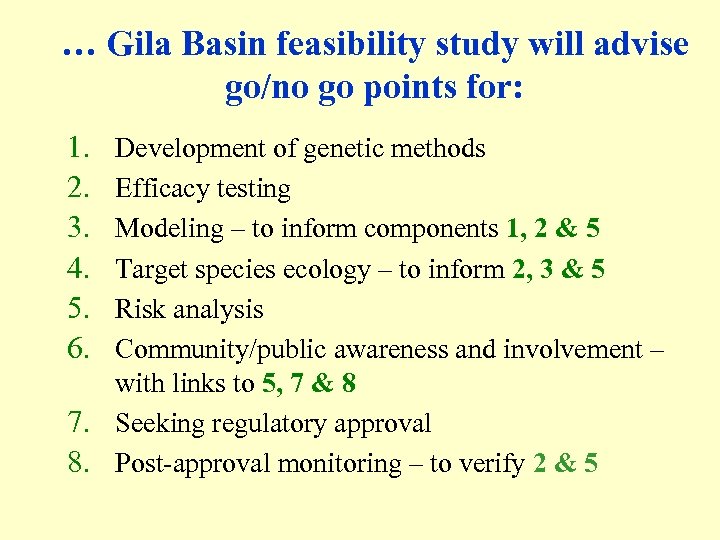
… Gila Basin feasibility study will advise go/no go points for: 1. 2. 3. 4. 5. 6. Development of genetic methods Efficacy testing Modeling – to inform components 1, 2 & 5 Target species ecology – to inform 2, 3 & 5 Risk analysis Community/public awareness and involvement – with links to 5, 7 & 8 7. Seeking regulatory approval 8. Post-approval monitoring – to verify 2 & 5
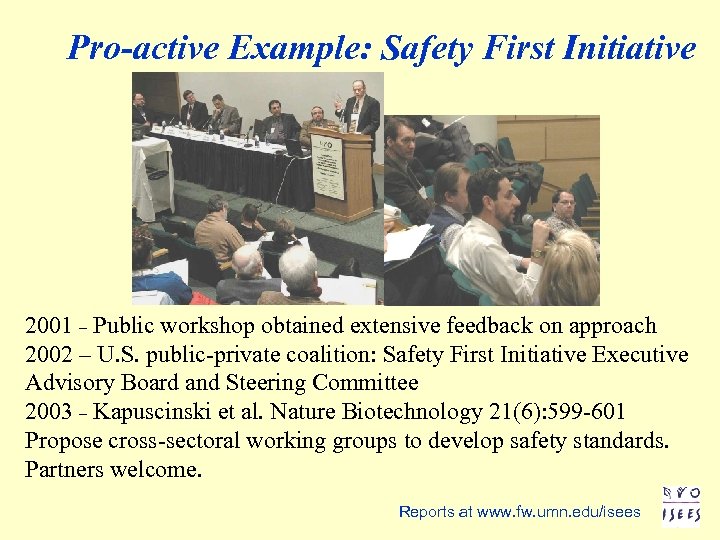
Pro-active Example: Safety First Initiative 2001 – Public workshop obtained extensive feedback on approach 2002 – U. S. public-private coalition: Safety First Initiative Executive Advisory Board and Steering Committee 2003 – Kapuscinski et al. Nature Biotechnology 21(6): 599 -601 Propose cross-sectoral working groups to develop safety standards. Partners welcome. Reports at www. fw. umn. edu/isees
Possible Bureau Roles - Science • Support research and outreach – inform more pro-active approach – scientific analysis – involve ecologists, conservation geneticists, etc. – representative deliberation • Provide biosafety research sites – confined field tests – contained labs for fish & other aquatics • Enhance species and ecological baselines – pre-commercialization studies – post-commercialization monitoring and verification tests – Long-term, large ecosystem scales
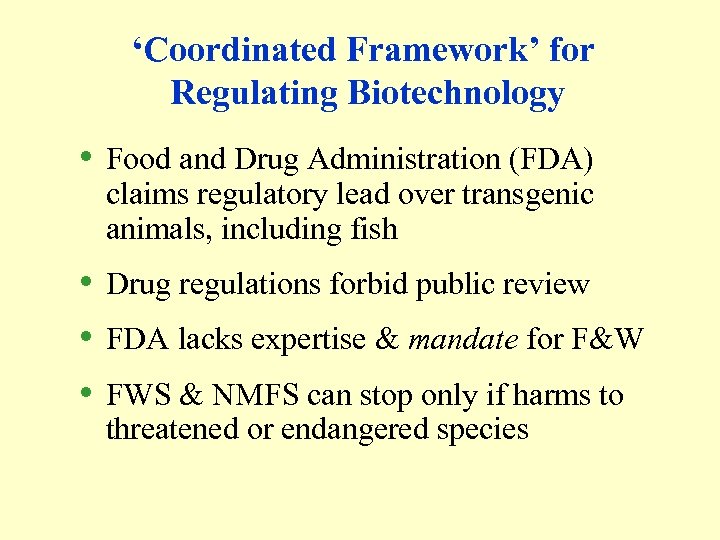
‘Coordinated Framework’ for Regulating Biotechnology • Food and Drug Administration (FDA) claims regulatory lead over transgenic animals, including fish • Drug regulations forbid public review • FDA lacks expertise & mandate for F&W • FWS & NMFS can stop only if harms to threatened or endangered species
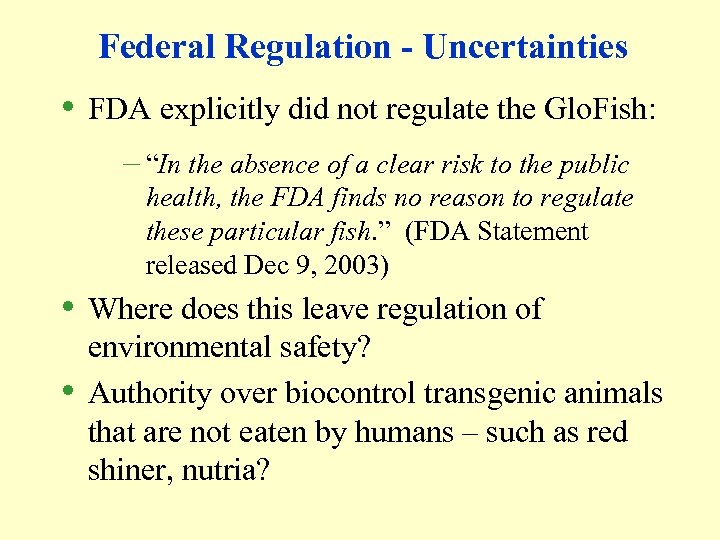
Federal Regulation - Uncertainties • FDA explicitly did not regulate the Glo. Fish: – “In the absence of a clear risk to the public health, the FDA finds no reason to regulate these particular fish. ” (FDA Statement released Dec 9, 2003) • Where does this leave regulation of • environmental safety? Authority over biocontrol transgenic animals that are not eaten by humans – such as red shiner, nutria?
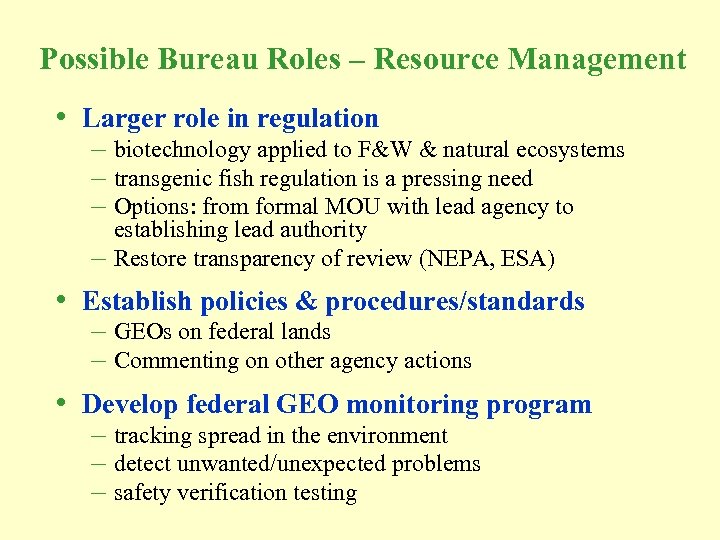
Possible Bureau Roles – Resource Management • Larger role in regulation – biotechnology applied to F&W & natural ecosystems – transgenic fish regulation is a pressing need – Options: from formal MOU with lead agency to establishing lead authority Restore transparency of review (NEPA, ESA) – • Establish policies & procedures/standards – GEOs on federal lands – Commenting on other agency actions • Develop federal GEO monitoring program – tracking spread in the environment – detect unwanted/unexpected problems – safety verification testing

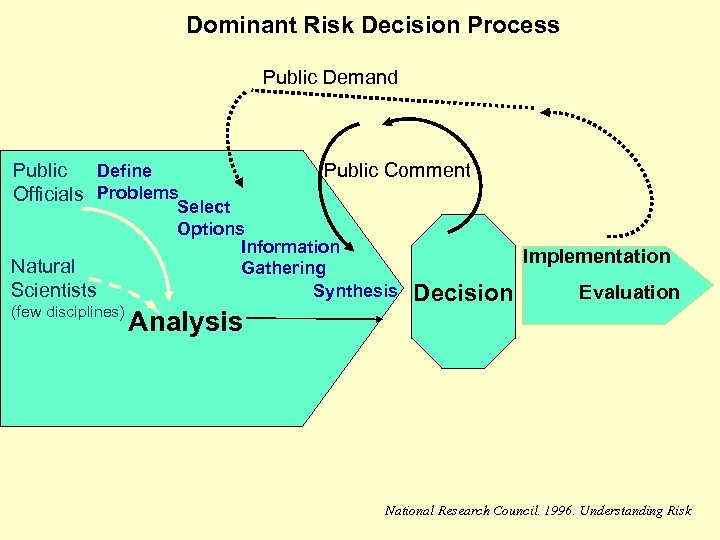
Dominant Risk Decision Process Public Demand Public Define Officials Problems Natural Scientists (few disciplines) Public Comment Select Options Information Gathering Synthesis Analysis Implementation Decision Evaluation National Research Council. 1996. Understanding Risk
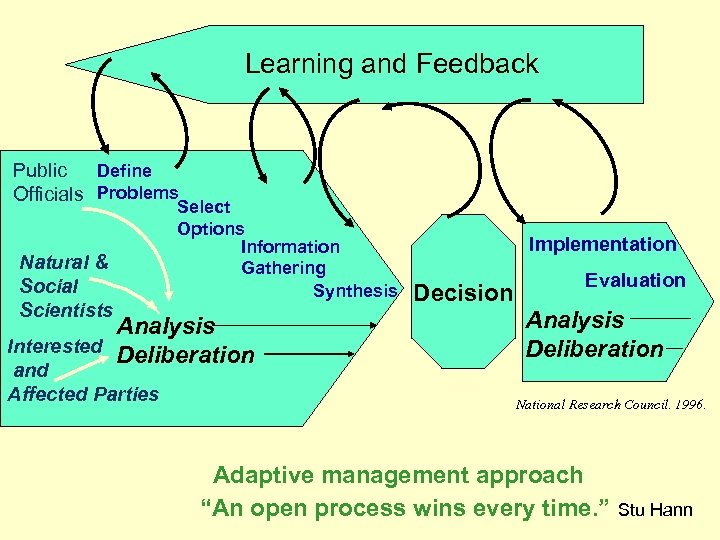
Learning and Feedback Public Define Officials Problems Natural & Social Scientists Select Options Information Gathering Synthesis Analysis Interested Deliberation and Affected Parties Implementation Decision Evaluation Analysis Deliberation National Research Council. 1996. Adaptive management approach “An open process wins every time. ” Stu Hann
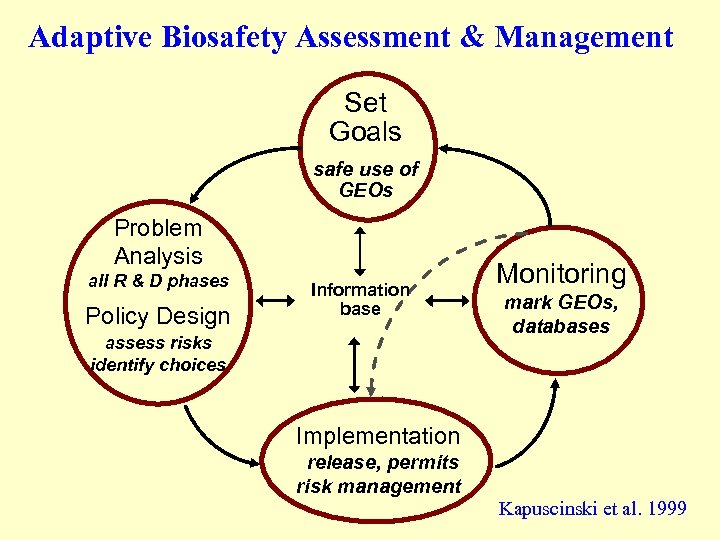
Adaptive Biosafety Assessment & Management Set Goals safe use of GEOs Problem Analysis all R & D phases Policy Design Information base assess risks identify choices Monitoring mark GEOs, databases Implementation release, permits risk management Kapuscinski et al. 1999
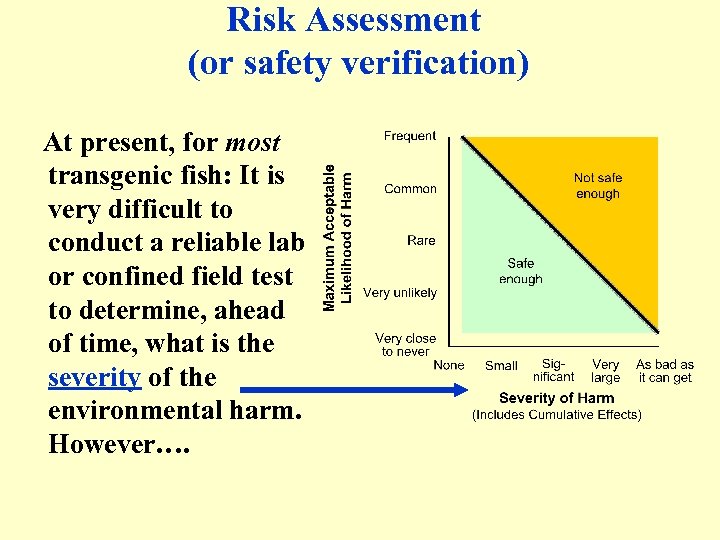
Risk Assessment (or safety verification) At present, for most transgenic fish: It is very difficult to conduct a reliable lab or confined field test to determine, ahead of time, what is the severity of the environmental harm. However….
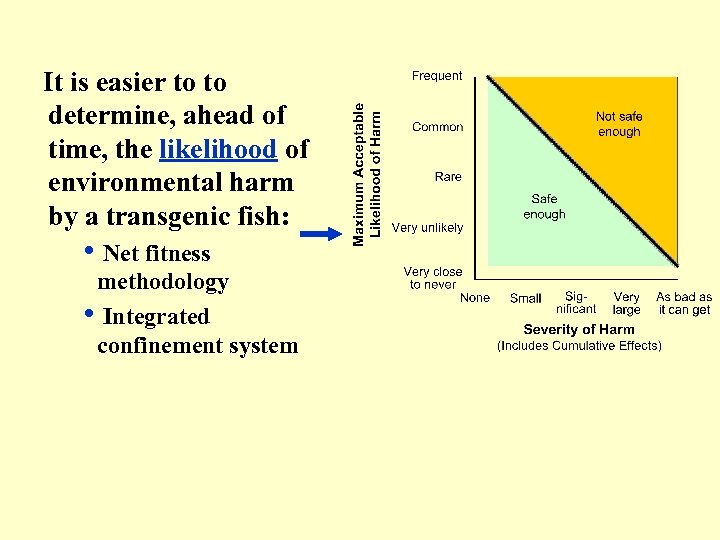
It is easier to to determine, ahead of time, the likelihood of environmental harm by a transgenic fish: • Net fitness methodology • Integrated confinement system
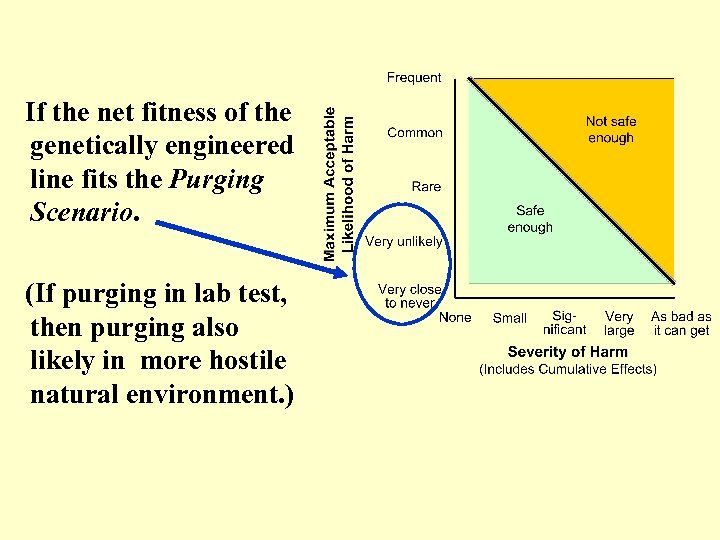
If the net fitness of the genetically engineered line fits the Purging Scenario. (If purging in lab test, then purging also likely in more hostile natural environment. )
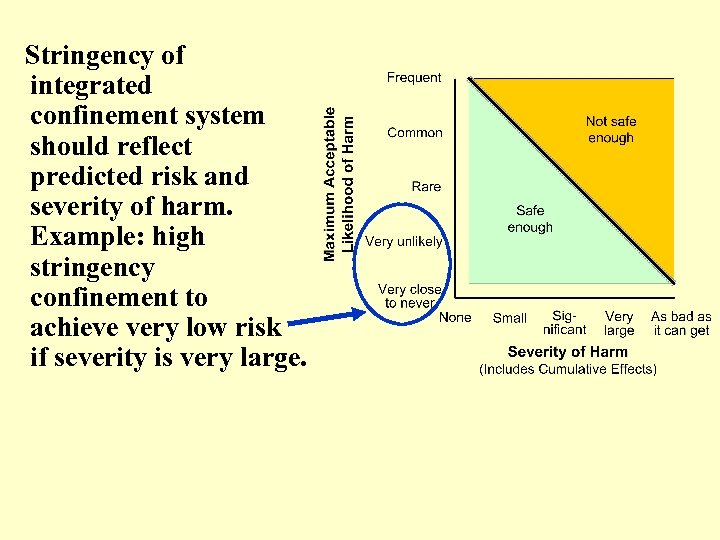
Stringency of integrated confinement system should reflect predicted risk and severity of harm. Example: high stringency confinement to achieve very low risk if severity is very large.
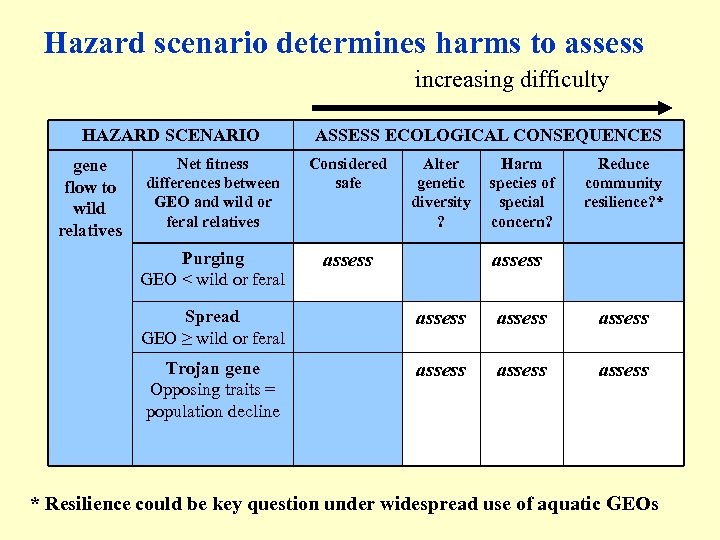
Hazard scenario determines harms to assess increasing difficulty HAZARD SCENARIO ASSESS ECOLOGICAL CONSEQUENCES Net fitness differences between GEO and wild or feral relatives Considered safe Purging GEO < wild or feral assess Spread GEO ≥ wild or feral Trojan gene Opposing traits = population decline gene flow to wild relatives Alter genetic diversity ? Harm species of special concern? Reduce community resilience? * assess assess * Resilience could be key question under widespread use of aquatic GEOs
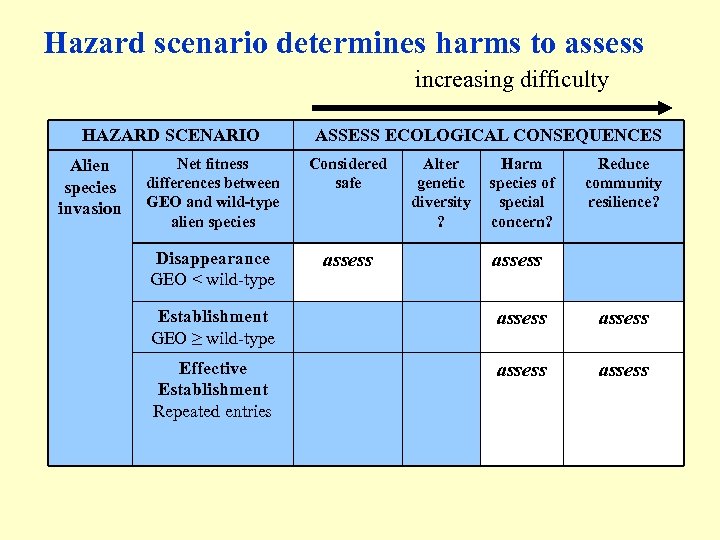
Hazard scenario determines harms to assess increasing difficulty HAZARD SCENARIO Alien species invasion ASSESS ECOLOGICAL CONSEQUENCES Net fitness differences between GEO and wild-type alien species Considered safe Disappearance GEO < wild-type Alter genetic diversity ? Harm species of special concern? Reduce community resilience? assess Establishment GEO ≥ wild-type assess Effective Establishment Repeated entries assess
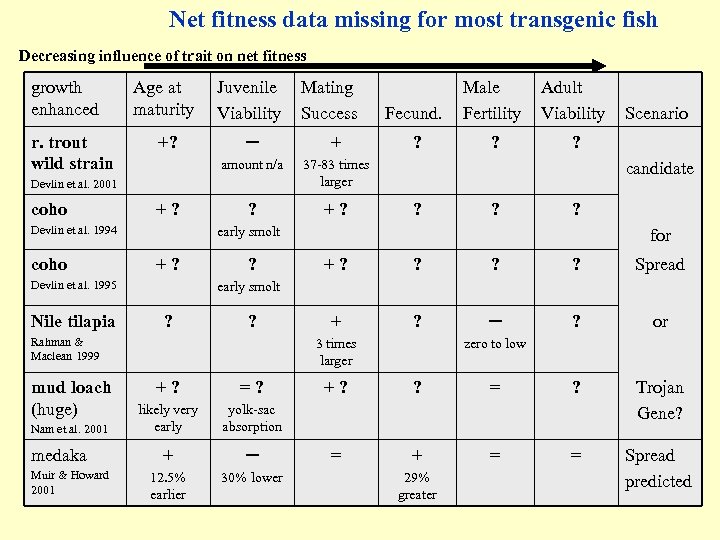
Net fitness data missing for most transgenic fish Decreasing influence of trait on net fitness growth enhanced r. trout wild strain Age at maturity Juvenile Viability +? ─ + amount n/a 37 -83 times larger ? + ? Devlin et al. 2001 coho + ? Devlin et al. 1994 coho + ? ? Nam et al. 2001 medaka Muir & Howard 2001 Adult Viability ? ? ? Scenario candidate ? ? ? for + ? ? Spread + ? ─ ? or early smolt ? ? Rahman & Maclean 1999 mud loach (huge) Fecund. Male Fertility early smolt Devlin et al. 1995 Nile tilapia Mating Success 3 times larger + ? = ? likely very early yolk-sac absorption + ─ 12. 5% earlier 30% lower zero to low + ? ? = ? Trojan Gene? = + = = Spread predicted 29% greater
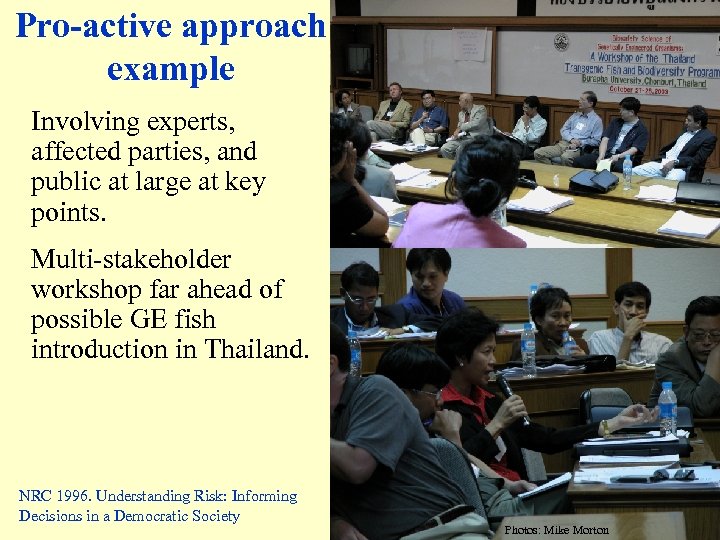
Pro-active approach example Involving experts, affected parties, and public at large at key points. Multi-stakeholder workshop far ahead of possible GE fish introduction in Thailand. NRC 1996. Understanding Risk: Informing Decisions in a Democratic Society Photos: Mike Morton
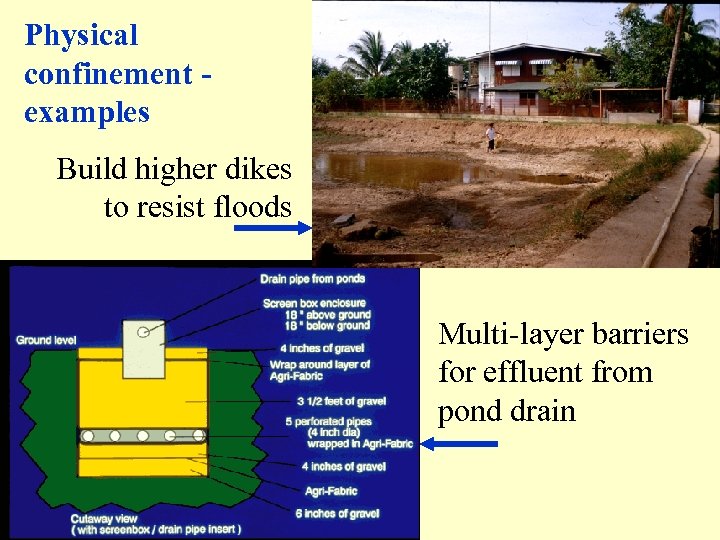
Physical confinement - examples Build higher dikes to resist floods Multi-layer barriers for effluent from pond drain
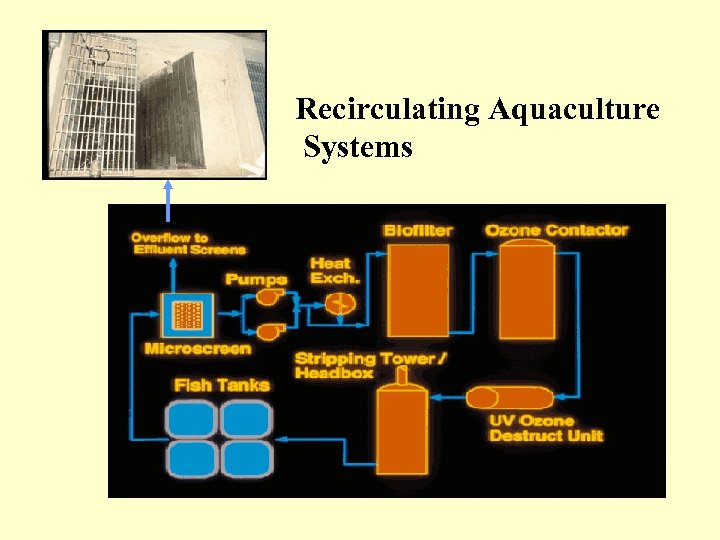
Recirculating Aquaculture Systems
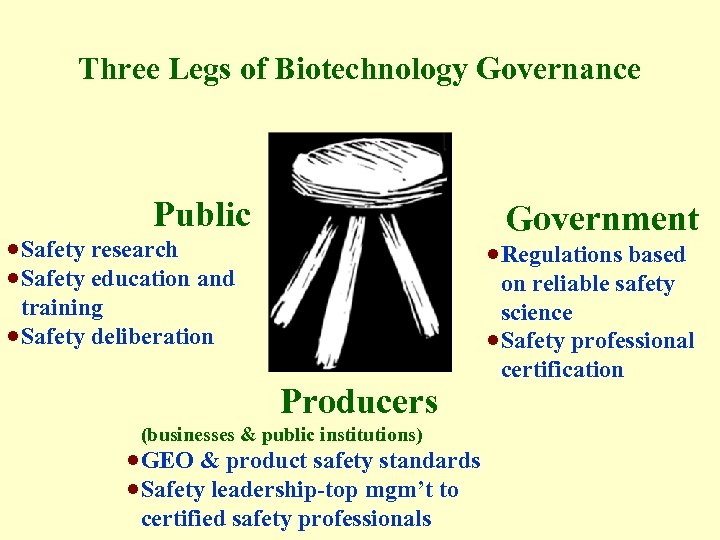
Three Legs of Biotechnology Governance Public · Safety research · Safety education and training · Safety deliberation Producers (businesses & public institutions) · GEO & product safety standards · Safety leadership-top mgm’t to certified safety professionals Government · Regulations based on reliable safety science · Safety professional certification
Скачать презентацию Apply Modern Biotechnology To better understand manage
b641479e297ff6daaeaf62fa396247a5.ppt