


 Скачать презентацию Apply Change Management Principles to Gunfire at Sea
10a799305638de7a2a8cec4098bb944e.ppt
- Количество слайдов: 24
 Apply Change Management Principles to Gunfire at Sea Case Study Intermediate Cost Analysis And Management
 Expect & Anticipate Resistance A good idea is not always enough to overcome resistance to change. .
 Terminal Learning Objective • Task: Apply Change Management Principles to Gunfire at Sea Case Study • Condition: You are training to become an ACE with access to ICAM course handouts, readings, and spreadsheet tools and awareness of Operational Environment (OE)/Contemporary Operational Environment (COE) variables and actors • Standard: with at least 80% accuracy • Identify components of change and needs analysis from real world scenario. • Identify steps to overcoming resistance to change in a real world scenario.
 Introduction This case introduces the technology that allowed navel gunners to be able to shoot while in motion, now known as Continuous-Aim Firing. The Ft. Hood case (discussed a couple of days ago) dealt with main battle tanks that adopted this same technology. Mr. Sims is the major player in the case. The case outlines the problems Mr. Sims faced selling a breakthrough technology to Senior Leadership. That technology now provides a competitive advantage in the battle field.
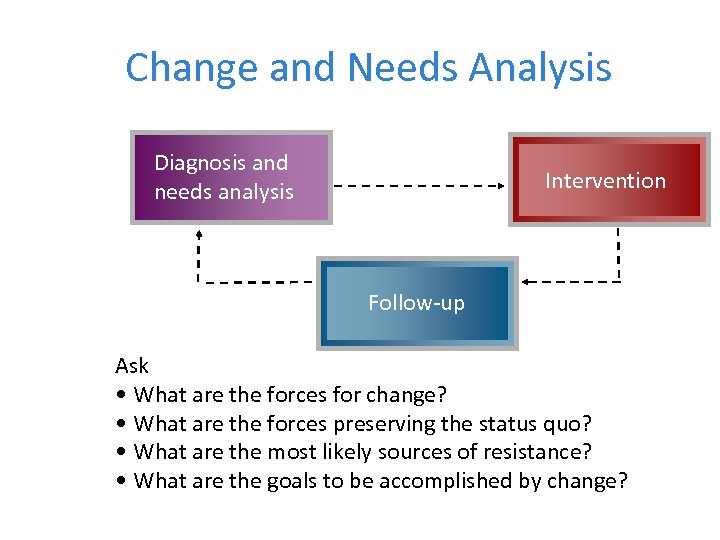 Change and Needs Analysis Diagnosis and needs analysis Intervention Follow-up Ask • What are the forces for change? • What are the forces preserving the status quo? • What are the most likely sources of resistance? • What are the goals to be accomplished by change?
 Gunfire at Sea: A Case Study of Innovation Setting the Stage Q: If you were Sims what would you do now?
 Gunfire at Sea: A Case Study of Innovation Setting the Stage Q: If you were Sims what would you do now? A. Report, document, develop support of what he is doing, assess what needs to happen, identify whom to talk to in order to get needed leadership support, introduce new way of thinking, start changing cultural mindset.
 Gunfire at Sea: A Case Study of Innovation What now? Q: What do you expect at this stage? Was this the correct approach? Was it handled appropriately?
 Gunfire at Sea: A Case Study of Innovation What now? Q: What do you expect at this stage? Was this the correct approach? Was it handled appropriately? A. Signs of resistance to change. Identify Power Field assessment and expected resistors. Build support. Get a leadership sponsor/ support/ buy in. A. Identify the Stakeholders, players and gate keepers.
 Gunfire at Sea: A Case Study of Innovation Response Q: What should Sims do now?
 Gunfire at Sea: A Case Study of Innovation Response Q: What should Sims do now? A. Create ‘Sea of Change’ – momentum, bring others from the field to support Sims’ findings, show support that what he is doing has merit and it can work for others not only Sims. Create support from the trenches. Get leadership support ASAP.
 Gunfire at Sea: A Case Study of Innovation Response – cont. Q: What should Sims do now? A. Realize why there is no response. Identify which are the arguments. What is the downside? A. Failed to assess the situation correctly. It was obvious to him, but not to the rest.
 Gunfire at Sea: A Case Study of Innovation Sims’s Final Action Q: Was his action correct? Why not?
 Gunfire at Sea: A Case Study of Innovation Sims’s Final Action Q: Was his action correct? Why not? • A: It was correct in principal. Though could have backfired. Did not have any other option else in case his final action failed. • However, he basically failed in the change process. It was by luck that eventually it happened.
 Gunfire at Sea: A Case Study of Innovation Sims’s Final Action - cont. Q: Was his action correct? Why not? Q: What did he try to achieve by his Final Action? • Muster management support. Something that he could not do before. • Exemplify entrepreneurial spirit to its ultimate: putting everything “on the line”.
 Learning Check Q. What are the forces for change? Q. What are the forces preserving the status quo? Q. What are the most likely sources of resistance?
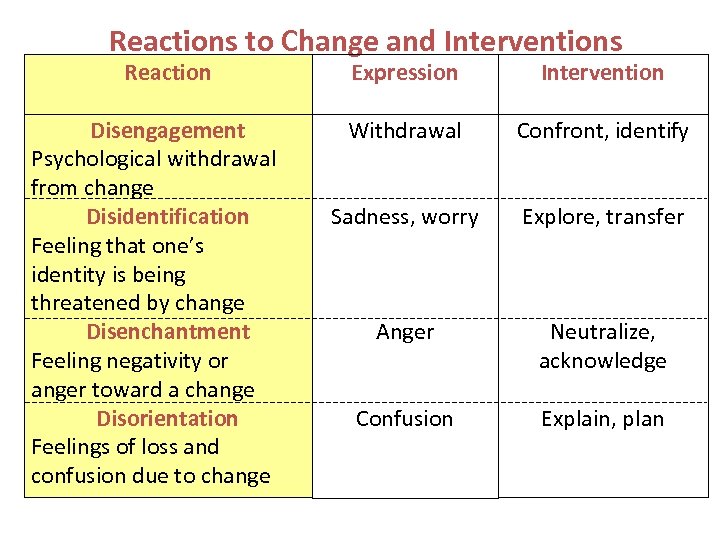 Reactions to Change and Interventions Reaction Disengagement Psychological withdrawal from change Disidentification Feeling that one’s identity is being threatened by change Disenchantment Feeling negativity or anger toward a change Disorientation Feelings of loss and confusion due to change Expression Intervention Withdrawal Confront, identify Sadness, worry Explore, transfer Anger Neutralize, acknowledge Confusion Explain, plan
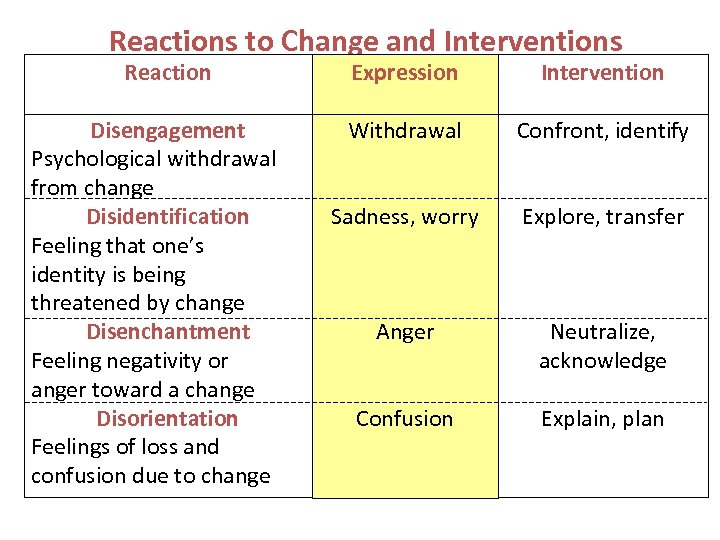 Reactions to Change and Interventions Reaction Disengagement Psychological withdrawal from change Disidentification Feeling that one’s identity is being threatened by change Disenchantment Feeling negativity or anger toward a change Disorientation Feelings of loss and confusion due to change Expression Intervention Withdrawal Confront, identify Sadness, worry Explore, transfer Anger Neutralize, acknowledge Confusion Explain, plan
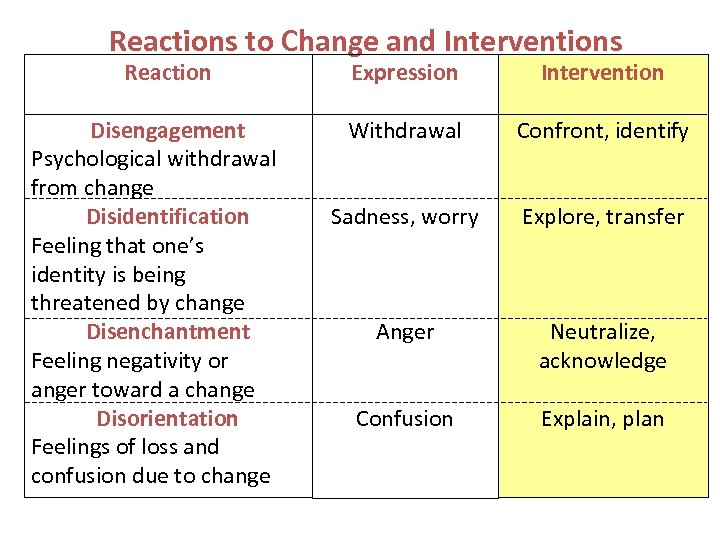 Reactions to Change and Interventions Reaction Disengagement Psychological withdrawal from change Disidentification Feeling that one’s identity is being threatened by change Disenchantment Feeling negativity or anger toward a change Disorientation Feelings of loss and confusion due to change Expression Intervention Withdrawal Confront, identify Sadness, worry Explore, transfer Anger Neutralize, acknowledge Confusion Explain, plan
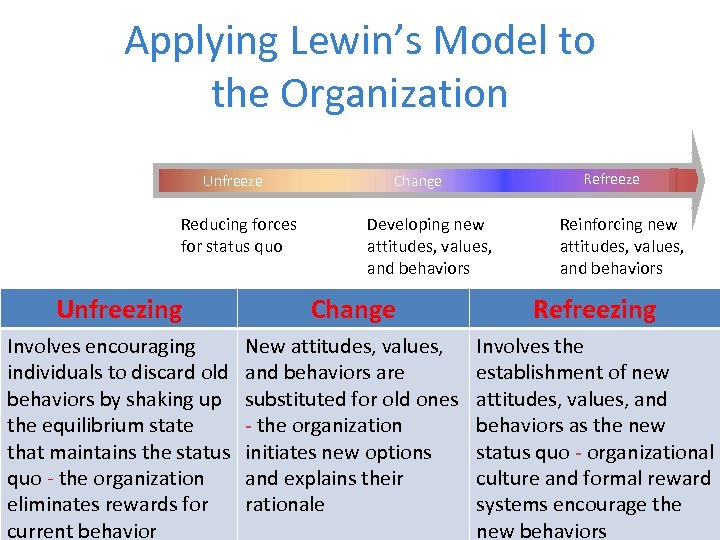 Applying Lewin’s Model to the Organization Unfreeze Reducing forces for status quo Refreeze Change Developing new attitudes, values, and behaviors Reinforcing new attitudes, values, and behaviors Unfreezing Change Refreezing Involves encouraging individuals to discard old behaviors by shaking up the equilibrium state that maintains the status quo - the organization eliminates rewards for current behavior New attitudes, values, and behaviors are substituted for old ones - the organization initiates new options and explains their rationale Involves the establishment of new attitudes, values, and behaviors as the new status quo - organizational culture and formal reward systems encourage the new behaviors
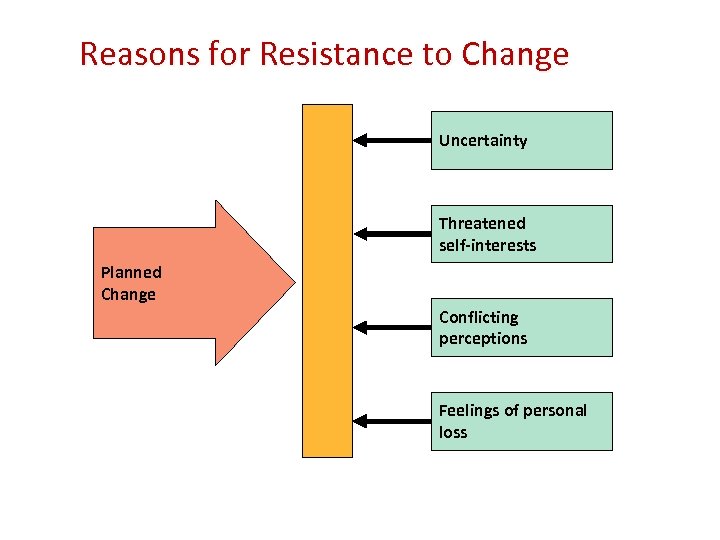 Reasons for Resistance to Change Uncertainty Threatened self-interests Planned Change Conflicting perceptions Feelings of personal loss
 Resistance to Change It can be either Behavioral, or Systemic, or both
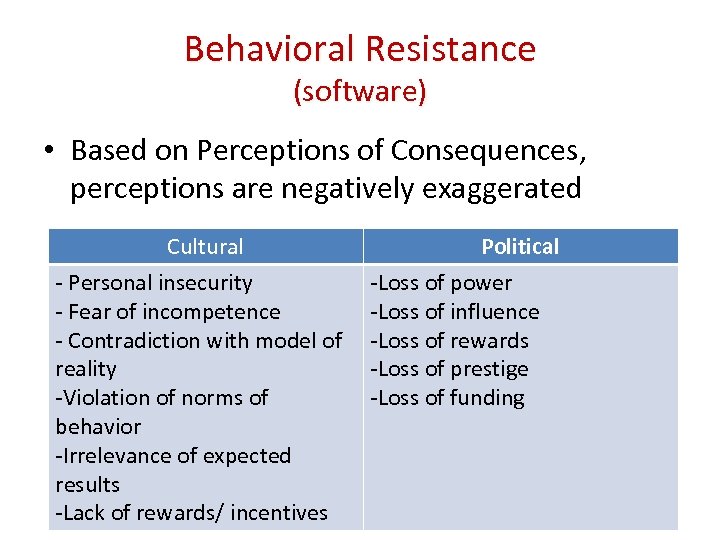 Behavioral Resistance (software) • Based on Perceptions of Consequences, perceptions are negatively exaggerated Cultural - Personal insecurity - Fear of incompetence - Contradiction with model of reality -Violation of norms of behavior -Irrelevance of expected results -Lack of rewards/ incentives Political -Loss of power -Loss of influence -Loss of rewards -Loss of prestige -Loss of funding
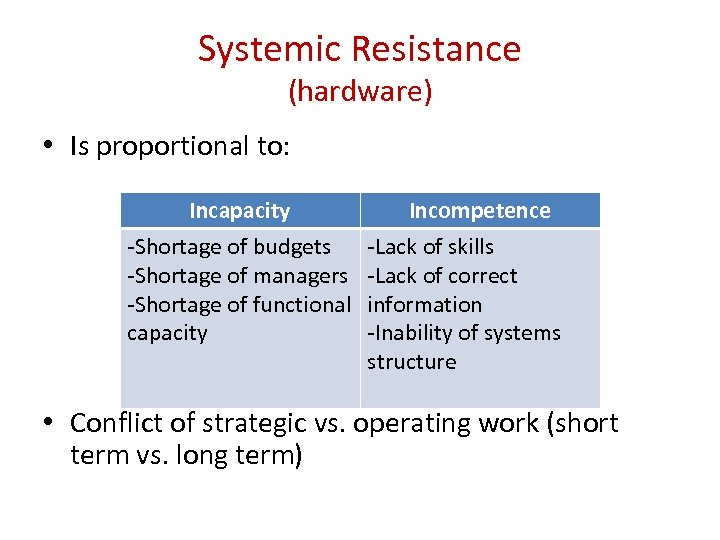 Systemic Resistance (hardware) • Is proportional to: Incapacity -Shortage of budgets -Shortage of managers -Shortage of functional capacity Incompetence -Lack of skills -Lack of correct information -Inability of systems structure • Conflict of strategic vs. operating work (short term vs. long term)