Скачать презентацию Applications of meteorology and climatology to volcanic ash
e34d1f2e92cb2988cd14eb6e68c8c623.ppt
- Количество слайдов: 18
 Applications of meteorology and climatology to volcanic ash disruption Julian Hunt University College, London University of Cambridge TU Delft House of Lords Met. Background ; warnings ; institutional arrangements ; future concerns/possibilities /proposals
 Volcanic plumes • Height depends on speed, size, temp of eruption ie Fb(but not v sensitive) and background stability of atmos N (H~F(1/4). N(-3/4) ~ 10 km +/-) -also verified by nuclear explosions (ie Fb can be unsteady). • Depth of plume much less than H –contains most of the eruption. ; plume moves with wind U(z) , z=H. • But if Fb varies -> variation of H-> plume spread over wider area, and greater depth since U varies with (z). • Plume physics; lightning induced in plume cloud-detected remotely (Met office atd-on web) ; Plume cloud spreads by mean flow gradients d. U/dz and turbulence cloud affects radiation , temp, turbulence, precip. (regional effects on crops -1780’s; Pinatubo reduces global temp by 0. 2 deg for about 2 years -1992)
 Zones in the atmosphere -in relation to height of volcanic plumes • Upper atmosphere –above 10 km Ionosphere, mesosphere- electrical signals ; waves ( as induced by convection in some equakes/volcanoes – Russian research-Maths Today june 2010) • Stratosphere (10 -100 km)-stable, weak turbulence, thin clouds-particles carried around the world-long range aircraft -high vol. plumes (ozone hole dynamics and chemistry) • Troposphere –below tropopause at 10 km Mixture of stable /convective/cloud motions 10 km 1000 km -particles carried over continental scale , -typical volc plumes – short range aircraft
 Long range dispersion –depending on ‘synoptic conditions’ (Maryon/Buckland studies 1995) • Particles carried by wind at different heights leads to spreading , but v slow dry deposition. -in usual westerly winds volc. (also chimneys/fires) plumes are as deep as the initial plume and carried within weather patterns-(1000 km) >deposition at fronts( if plume is in troposphere). -in blocked flows (easterly winds over europe ) plumes travel slowly and recirculate (eg Chernobyl; Iceland )-can thicken with convection • -can preclude aircraft paths around/under plume.
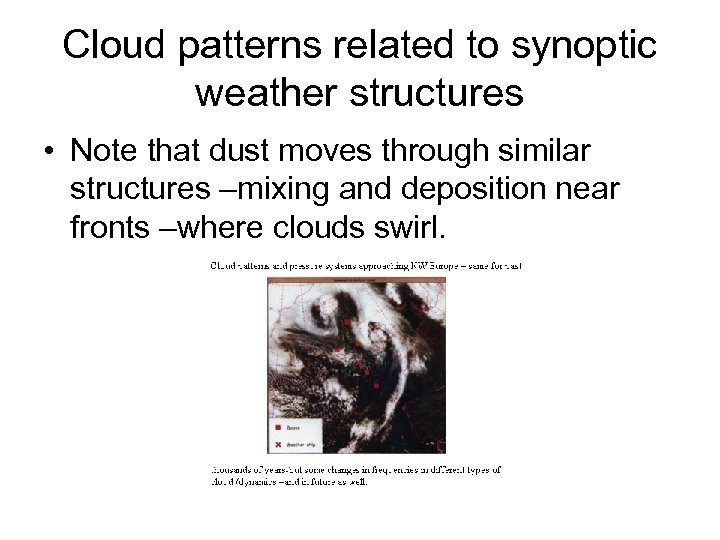 Cloud patterns related to synoptic weather structures • Note that dust moves through similar structures –mixing and deposition near fronts –where clouds swirl.
 Forecasts of dispersion • Overall plume forecast -Requires accuracy at all levels of plume; * accuracy needed where flow patterns change –esp from/to deep blocking. (note 5 -10 days possible – but timing may be in error) • * cloud/dispersion processes have to be modelled ( note detailed simulations on Jap earth sim. )
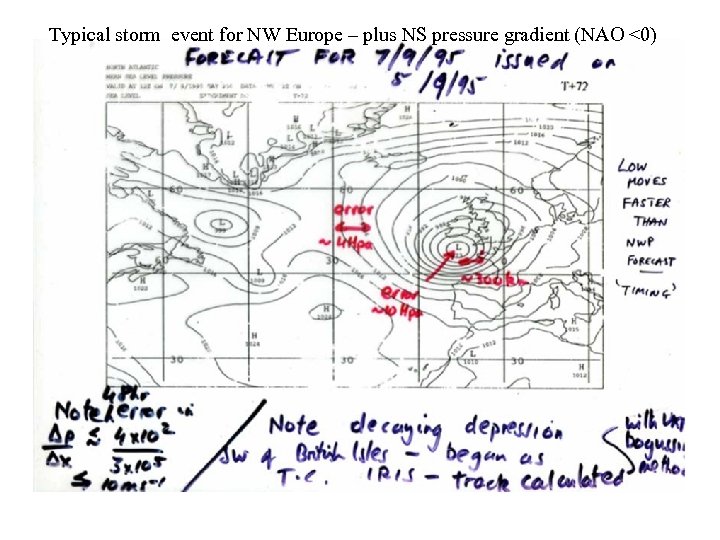 Typical storm event for NW Europe – plus NS pressure gradient (NAO <0)
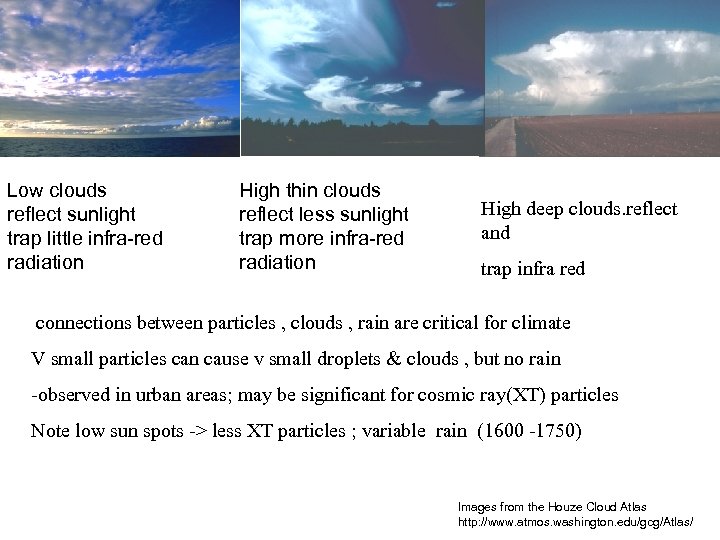 Clouds and Climate Low clouds reflect sunlight trap little infra-red radiation High thin clouds reflect less sunlight trap more infra-red radiation High deep clouds. reflect and trap infra red connections between particles , clouds , rain are critical for climate V small particles can cause v small droplets & clouds , but no rain -observed in urban areas; may be significant for cosmic ray(XT) particles Note low sun spots -> less XT particles ; variable rain (1600 -1750) Images from the Houze Cloud Atlas http: //www. atmos. washington. edu/gcg/Atlas/
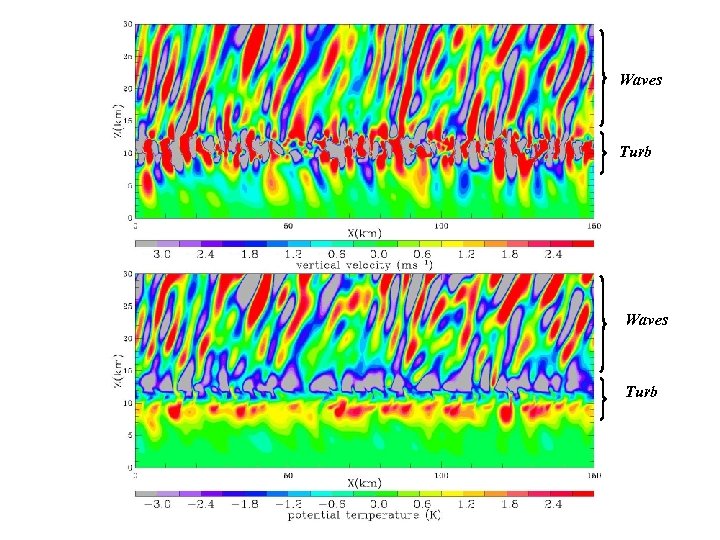
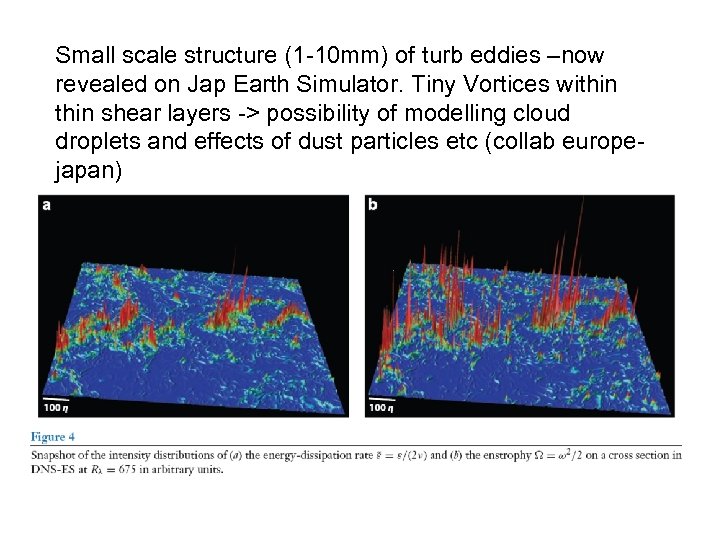 Small scale structure (1 -10 mm) of turb eddies –now revealed on Jap Earth Simulator. Tiny Vortices within shear layers -> possibility of modelling cloud droplets and effects of dust particles etc (collab europejapan)
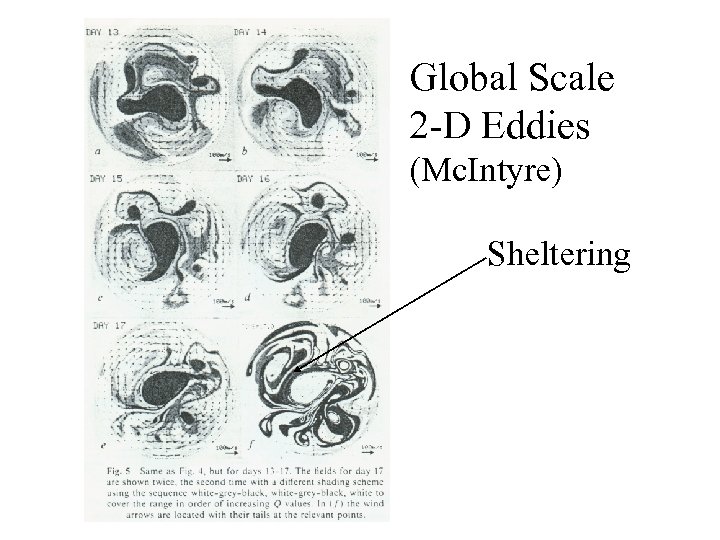 Global Scale 2 -D Eddies (Mc. Intyre) Sheltering
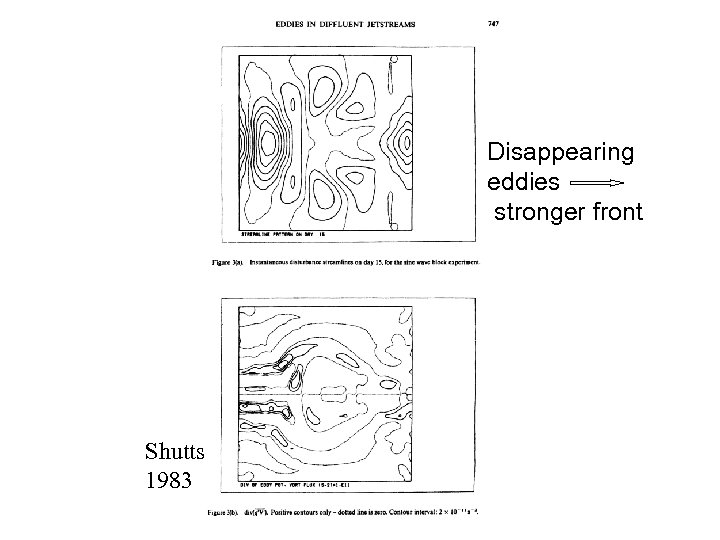 Disappearing eddies stronger front Shutts 1983
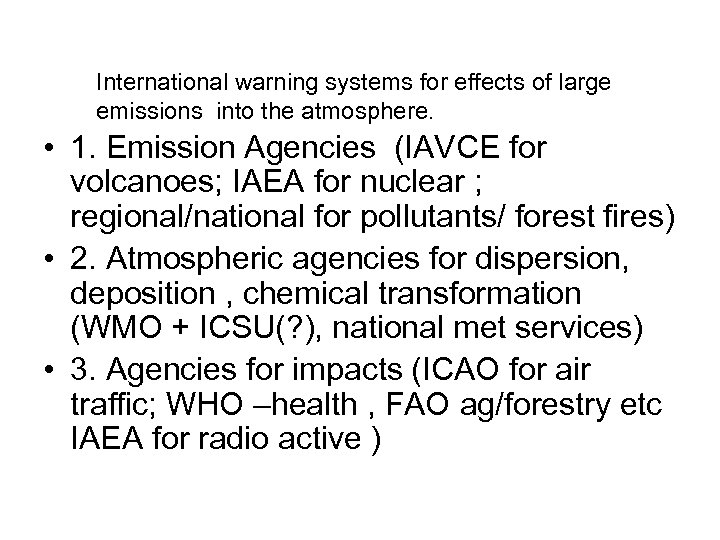 International warning systems for effects of large emissions into the atmosphere. • 1. Emission Agencies (IAVCE for volcanoes; IAEA for nuclear ; regional/national for pollutants/ forest fires) • 2. Atmospheric agencies for dispersion, deposition , chemical transformation (WMO + ICSU(? ), national met services) • 3. Agencies for impacts (ICAO for air traffic; WHO –health , FAO ag/forestry etc IAEA for radio active )
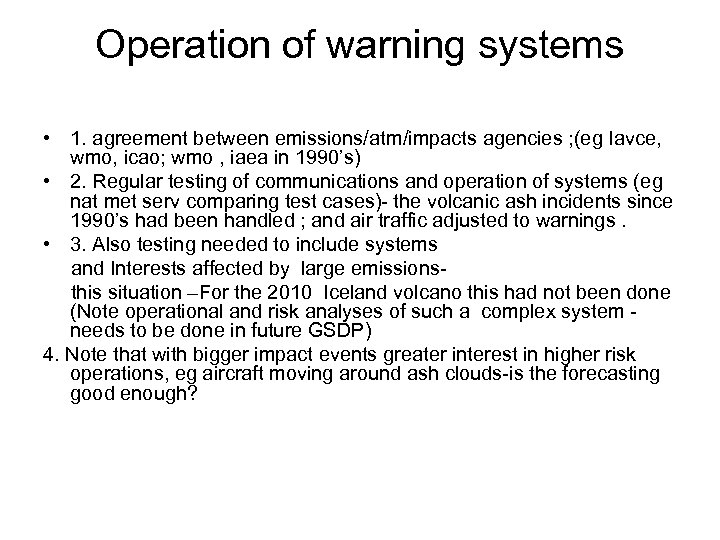 Operation of warning systems • 1. agreement between emissions/atm/impacts agencies ; (eg Iavce, wmo, icao; wmo , iaea in 1990’s) • 2. Regular testing of communications and operation of systems (eg nat met serv comparing test cases)- the volcanic ash incidents since 1990’s had been handled ; and air traffic adjusted to warnings. • 3. Also testing needed to include systems and Interests affected by large emissionsthis situation –For the 2010 Iceland volcano this had not been done (Note operational and risk analyses of such a complex system needs to be done in future GSDP) 4. Note that with bigger impact events greater interest in higher risk operations, eg aircraft moving around ash clouds-is the forecasting good enough?
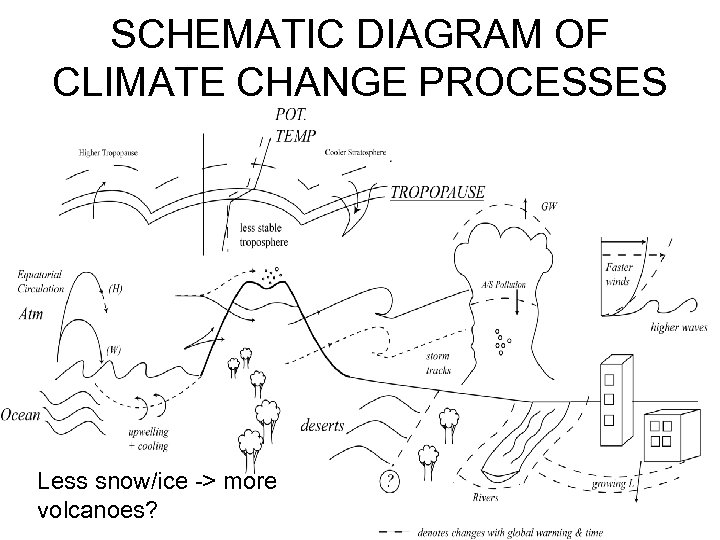 SCHEMATIC DIAGRAM OF CLIMATE CHANGE PROCESSES Less snow/ice -> more volcanoes?
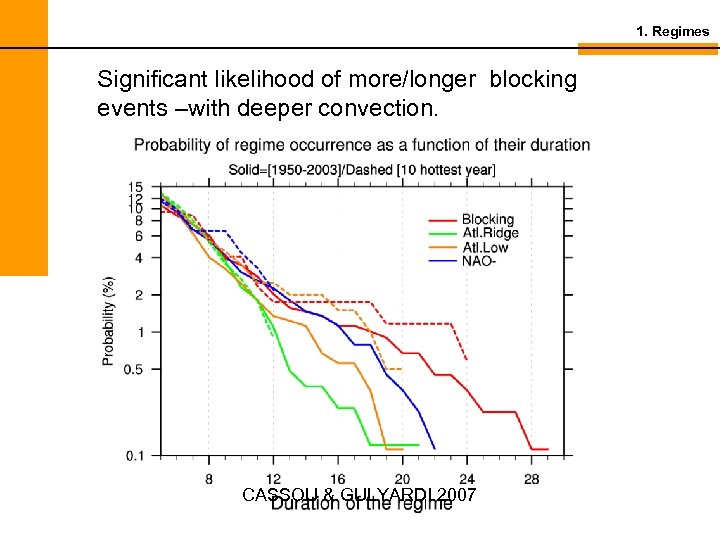 1. Regimes Significant likelihood of more/longer blocking events –with deeper convection. CASSOU & GULYARDI 2007
 Conclusions and recommendations • Development in volcano warning and monitoring world wide (new/open multi-disciplinary technology –satellites/sferics/elec fields) -+Russia-Jap • Forecasts improving-but better physics needed esp in cloud processes (+jap es) • More effective use of data and forecasts for operations and for risks –complex system methods needed. (GSDP project –needs to be part of international control/planning system) • Note some scientific and operational similarities for different large atmospheric emission problems. • Governments and research agencies should collaborate more closely with the UN agencies –often ignored-> duplication (EU/EC needs new mechanisms for its projects to integrate with UN operations /programs).
 Waves Turb