 Скачать презентацию Application of Jute geo-textile in Punjab Shivaliks for
8f77adcf7d692fadd6d7de2e9b2169c8.ppt
- Количество слайдов: 19



Application of Jute geo-textile in Punjab Shivaliks for control of mass erosion Dr. V. K. Bhatt, Principal Scientist (Engg. ) Dr. A. K. Tiwari, Principal Scientist (Engg. ) & Head Dr. Ram Parsad, Senior Scientist (Horticulture) Central Soil and Water Conservation Research &Training Institute, Research Centre Chandigarh, India
IMPORTANCE Jute geo-textile is one of the most important diversified jute products with a potentially large-scale application • Soil erosion control • Rehabilitations of land slide area • Vegetation establishment • Agro-mulching • Reinforcement and protection of riverbanks & embankments • Road pavement construction Absence of adequate awareness, affecting the possible expansion of the market
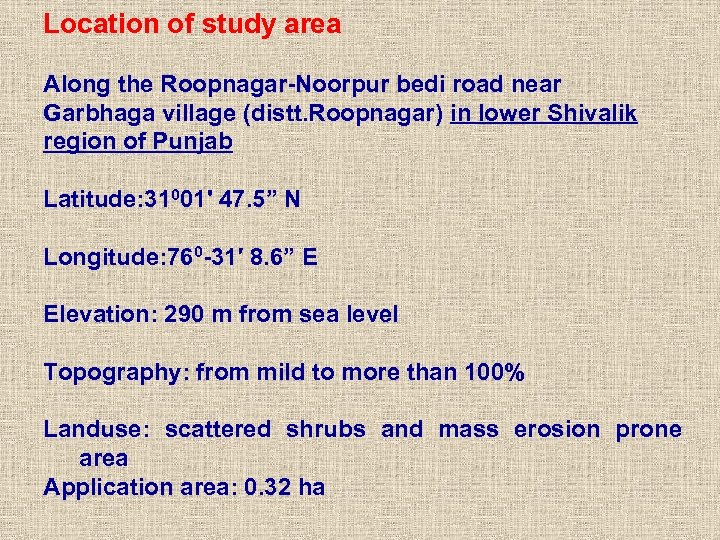
Location of study area Along the Roopnagar-Noorpur bedi road near Garbhaga village (distt. Roopnagar) in lower Shivalik region of Punjab Latitude: 31001' 47. 5” N Longitude: 760 -31′ 8. 6” E Elevation: 290 m from sea level Topography: from mild to more than 100% Landuse: scattered shrubs and mass erosion prone area Application area: 0. 32 ha
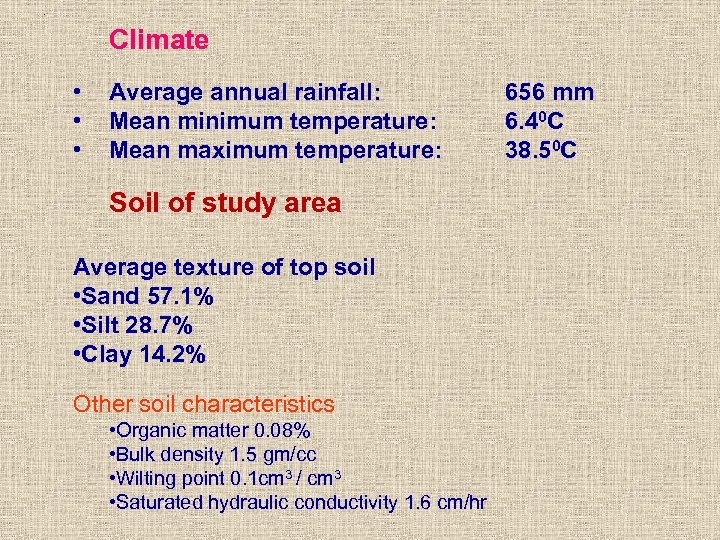
. Climate • • • Average annual rainfall: Mean minimum temperature: Mean maximum temperature: Soil of study area Average texture of top soil • Sand 57. 1% • Silt 28. 7% • Clay 14. 2% Other soil characteristics • Organic matter 0. 08% • Bulk density 1. 5 gm/cc • Wilting point 0. 1 cm 3 / cm 3 • Saturated hydraulic conductivity 1. 6 cm/hr 656 mm 6. 40 C 38. 50 C
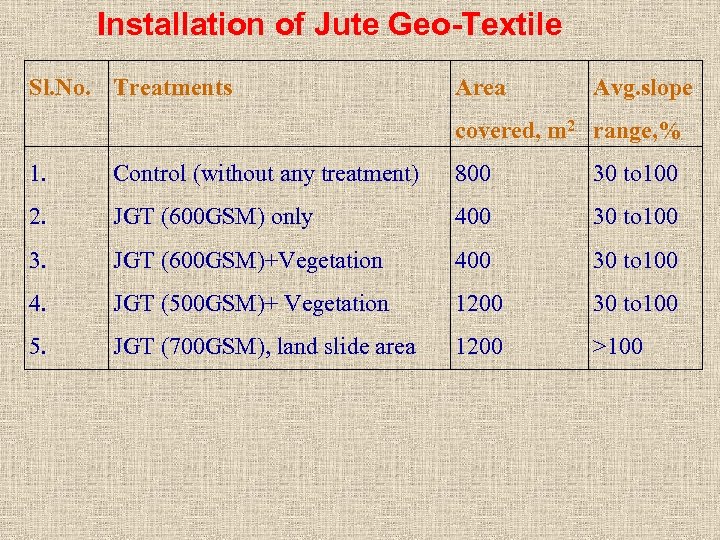
Installation of Jute Geo-Textile Sl. No. Treatments Area Avg. slope covered, m 2 range, % 1. Control (without any treatment) 800 30 to 100 2. JGT (600 GSM) only 400 30 to 100 3. JGT (600 GSM)+Vegetation 400 30 to 100 4. JGT (500 GSM)+ Vegetation 1200 30 to 100 5. JGT (700 GSM), land slide area 1200 >100
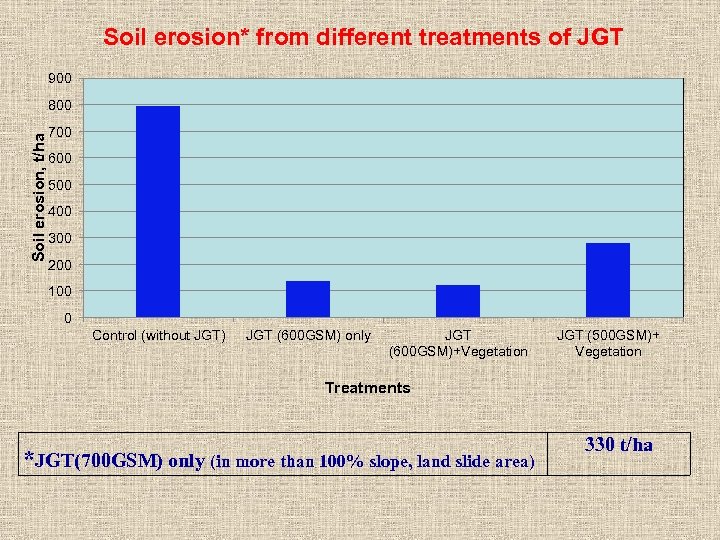
Soil erosion* from different treatments of JGT 900 Soil erosion, t/ha 800 700 600 500 400 300 200 100 0 Control (without JGT) JGT (600 GSM) only JGT (600 GSM)+Vegetation JGT (500 GSM)+ Vegetation Treatments *JGT(700 GSM) only (in more than 100% slope, land slide area) 330 t/ha
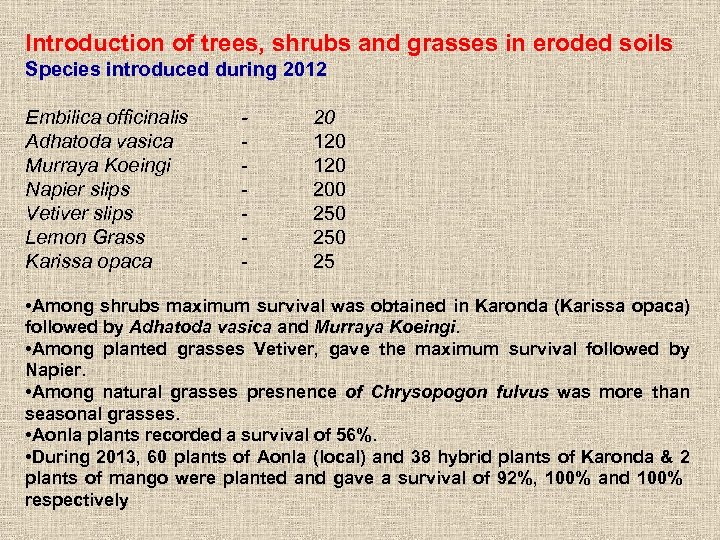
Introduction of trees, shrubs and grasses in eroded soils Species introduced during 2012 Embilica officinalis Adhatoda vasica Murraya Koeingi Napier slips Vetiver slips Lemon Grass Karissa opaca - 20 120 200 250 25 • Among shrubs maximum survival was obtained in Karonda (Karissa opaca) followed by Adhatoda vasica and Murraya Koeingi. • Among planted grasses Vetiver, gave the maximum survival followed by Napier. • Among natural grasses presnence of Chrysopogon fulvus was more than seasonal grasses. • Aonla plants recorded a survival of 56%. • During 2013, 60 plants of Aonla (local) and 38 hybrid plants of Karonda & 2 plants of mango were planted and gave a survival of 92%, 100% and 100% respectively
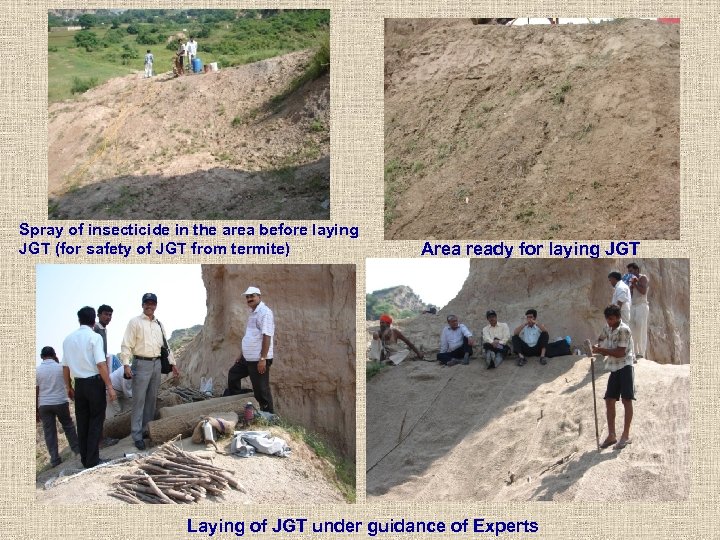
Spray of insecticide in the area before laying JGT (for safety of JGT from termite) Area ready for laying JGT Laying of JGT under guidance of Experts
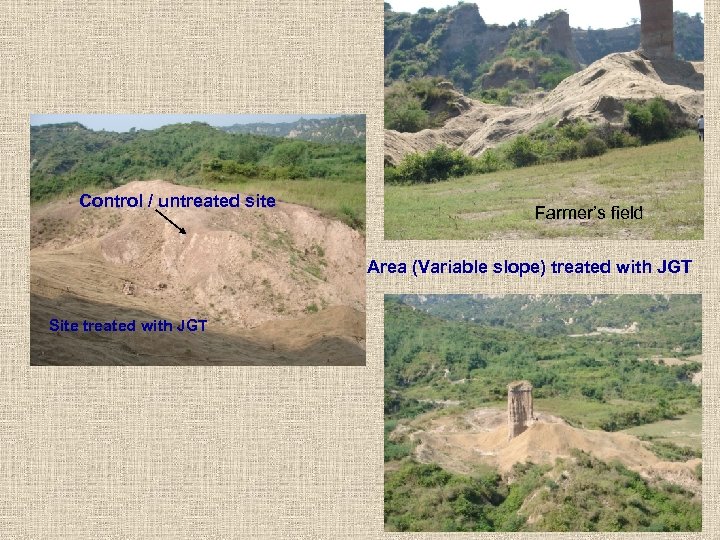
Control / untreated site Farmer’s field Area (Variable slope) treated with JGT Site treated with JGT
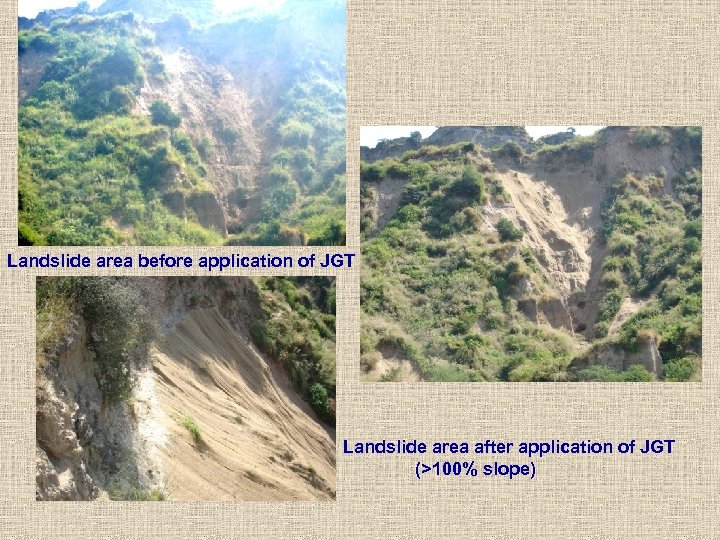
Landslide area before application of JGT Landslide area after application of JGT (>100% slope)
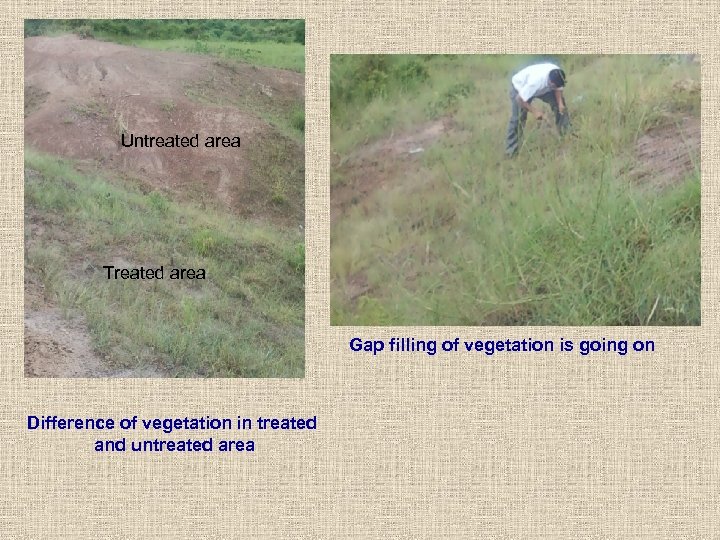
Untreated area Treated area Gap filling of vegetation is going on Difference of vegetation in treated and untreated area
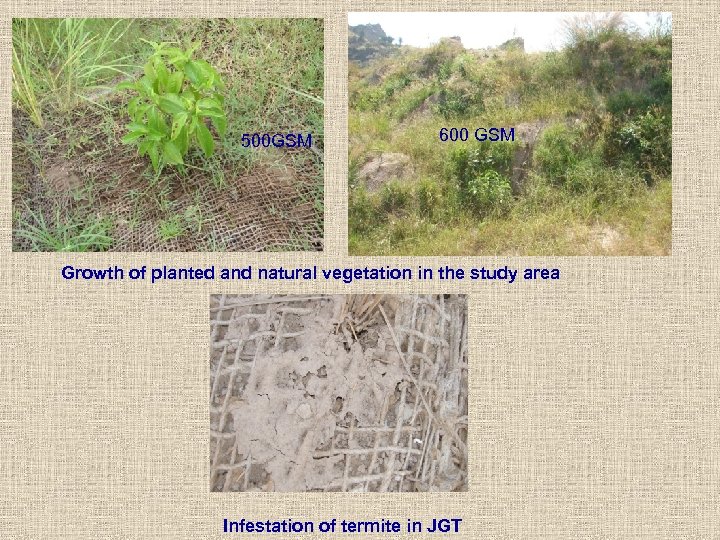
500 GSM 600 GSM Growth of planted and natural vegetation in the study area Infestation of termite in JGT
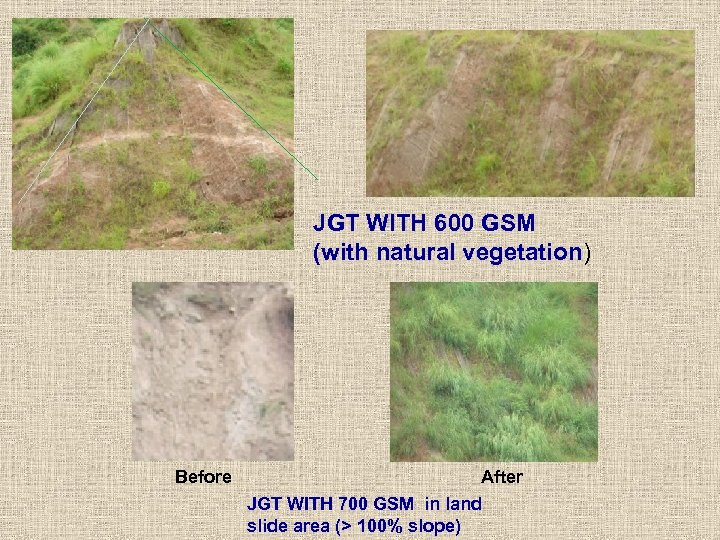
JGT WITH 600 GSM (with natural vegetation) Before After JGT WITH 700 GSM in land slide area (> 100% slope)
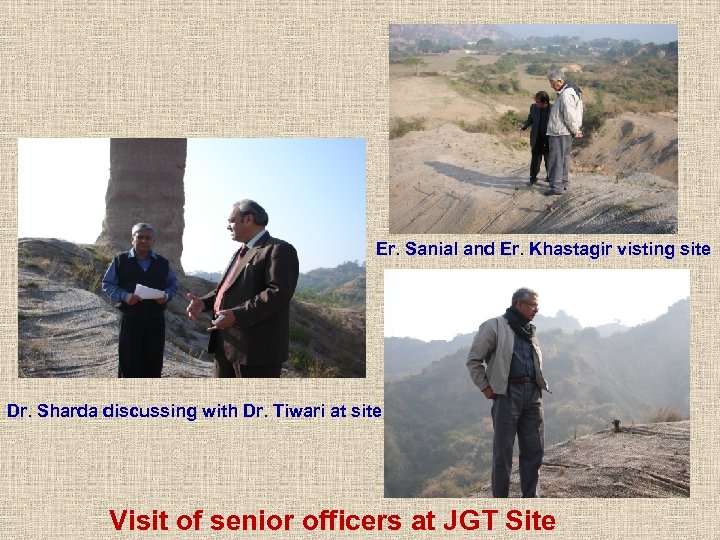
Er. Sanial and Er. Khastagir visting site Dr. Sharda discussing with Dr. Tiwari at site Visit of senior officers at JGT Site
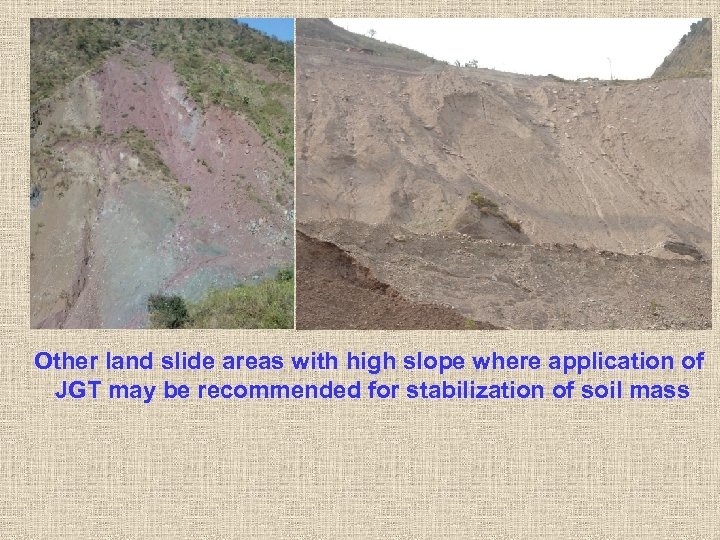
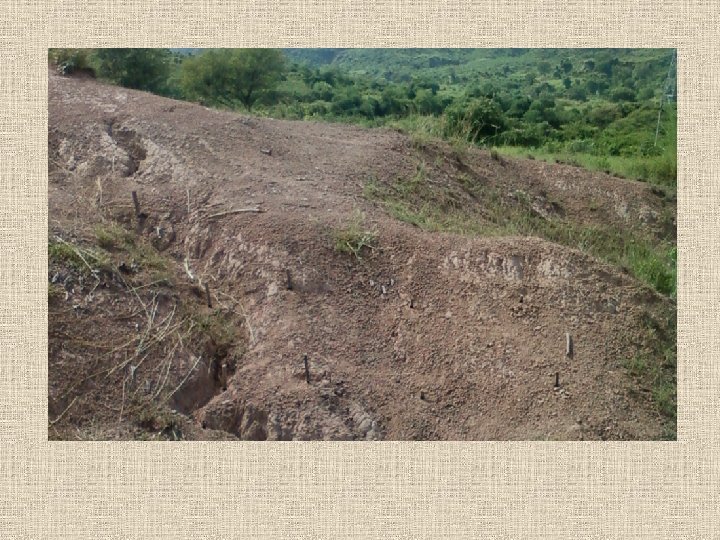
Other land slide areas with high slope where application of JGT may be recommended for stabilization of soil mass
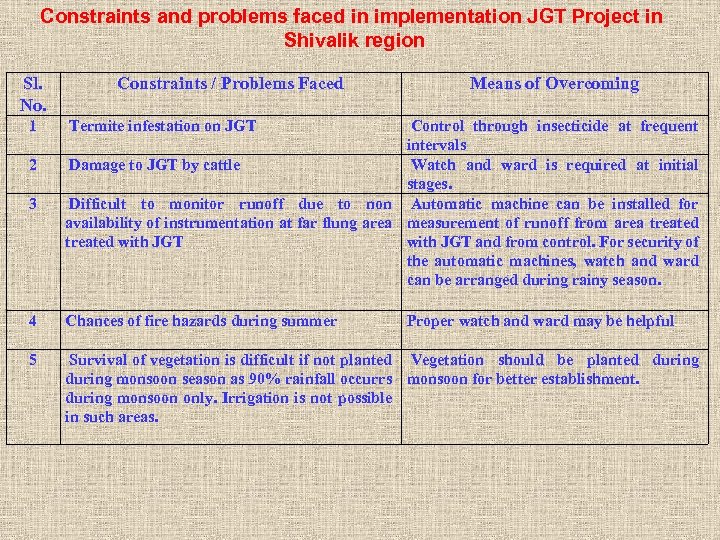
Constraints and problems faced in implementation JGT Project in Shivalik region Sl. No. 1 Constraints / Problems Faced Means of Overcoming 3 Control through insecticide at frequent intervals Damage to JGT by cattle Watch and ward is required at initial stages. Difficult to monitor runoff due to non Automatic machine can be installed for availability of instrumentation at far flung area measurement of runoff from area treated with JGT and from control. For security of the automatic machines, watch and ward can be arranged during rainy season. 4 Chances of fire hazards during summer 5 Survival of vegetation is difficult if not planted Vegetation should be planted during monsoon season as 90% rainfall occurrs monsoon for better establishment. during monsoon only. Irrigation is not possible in such areas. 2 Termite infestation on JGT Proper watch and ward may be helpful
CONCLUSIONS • Soil surface became stable as soil erosion reduced in the area treated by JGT by up to 85% • Mass erosion was completely stopped from the treated area • In pockets local grasses have come naturally in treated area due to increase in soil moisture retention capacity of soil • Where ever grass slips and other plants were planted a luxurious growth of vegetation was seen • Farmer started taking crops in the adjoining field as eroded soil stopped to deposit in his land • Impact of treatment was more pronounced after two seasons of monsoon rain • Soil erosion and land slide may drastically reduced if applied in road sides of hill region, stream banks and on embankments

 Скачать презентацию Application of Jute geo-textile in Punjab Shivaliks for
8f77adcf7d692fadd6d7de2e9b2169c8.ppt