


 Скачать презентацию Application Concerns for Control of Invasive Species A
910ecd3222f57fe8871eb24ae50fa9a9.ppt
- Количество слайдов: 41
 Application Concerns for Control of Invasive Species ‘A focus on Equipment & Calibration’
 Changes in the Application Industry! • • • Historically inefficient process Increased cost of pesticides Product rates are changing (< an ounce/acre) More pest specific products Biotechnology and GMO’s (Roundup Ready, Bt’s) More sophisticated equipment (electronics) $$$ Farmers doing there own spraying? ? Variable rates Site-specific Focus on Drift
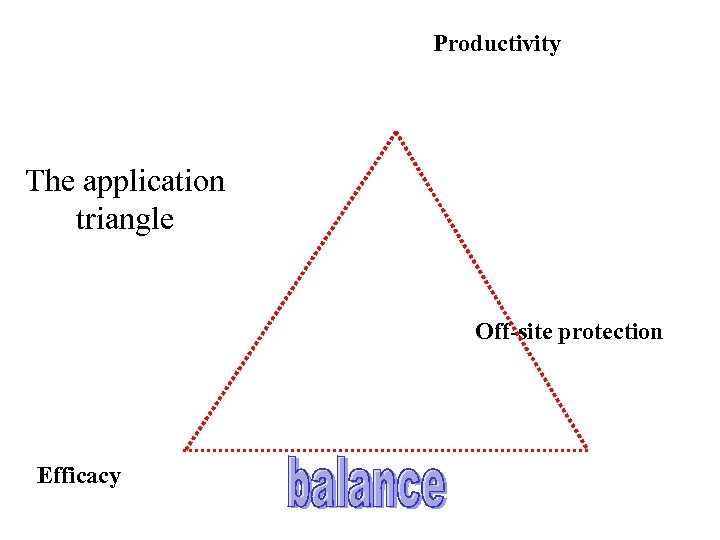 Productivity The application triangle Off-site protection Efficacy
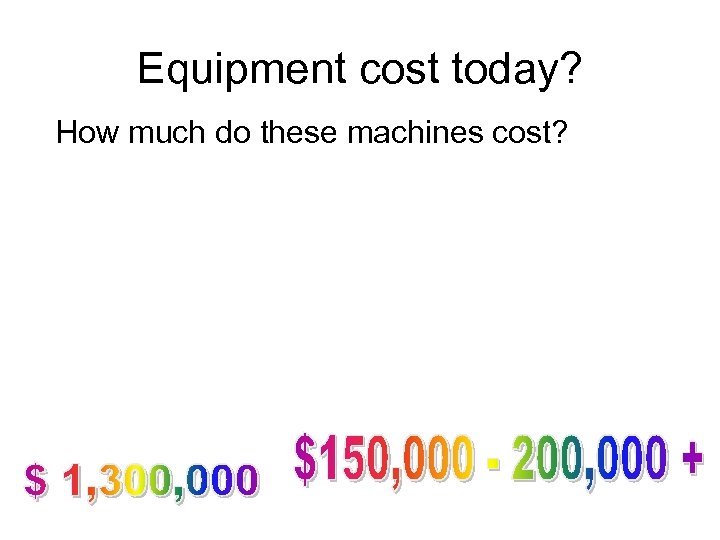 Equipment cost today? How much do these machines cost?
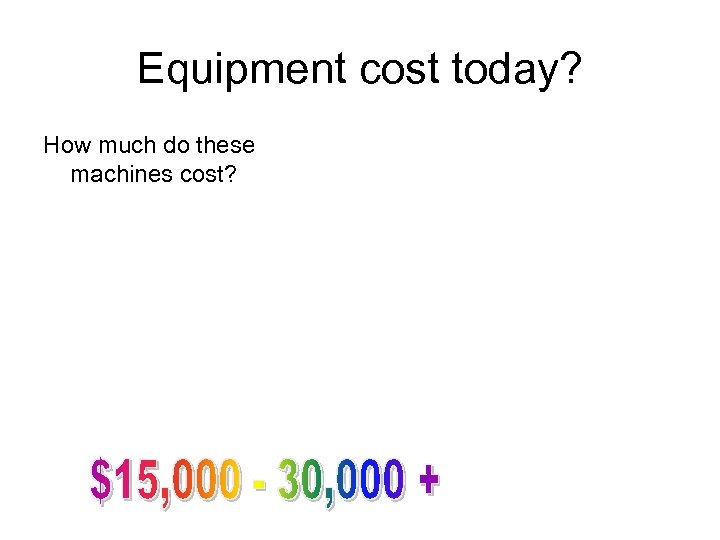 Equipment cost today? How much do these machines cost?
 Automated Systems • Injection • Multiple position nozzles • Multiple chemicals
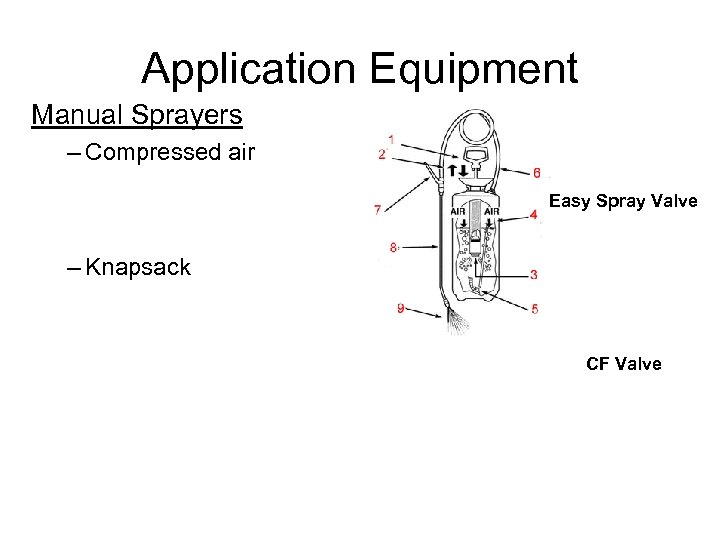 Application Equipment Manual Sprayers – Compressed air Easy Spray Valve – Knapsack CF Valve
 Application Equipment Power Hydraulic Sprayer – Low-pressure – High pressure


 Sericea Lespedeza Control
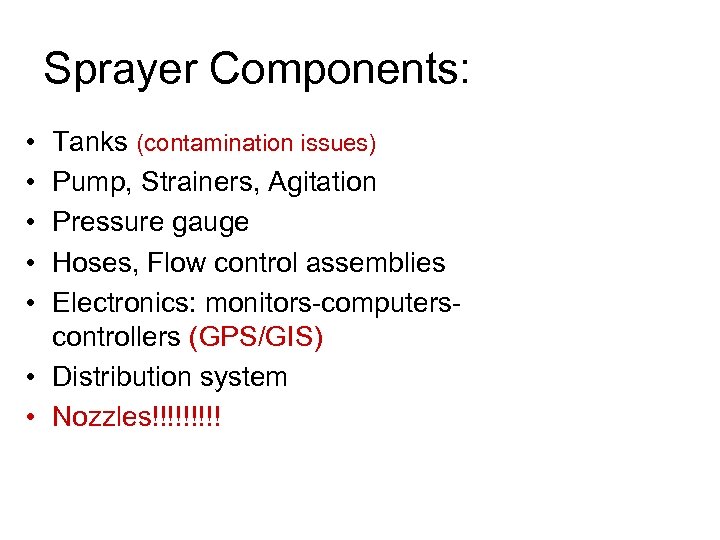 Sprayer Components: • • • Tanks (contamination issues) Pump, Strainers, Agitation Pressure gauge Hoses, Flow control assemblies Electronics: monitors-computers- controllers (GPS/GIS) • Distribution system • Nozzles!!!!!
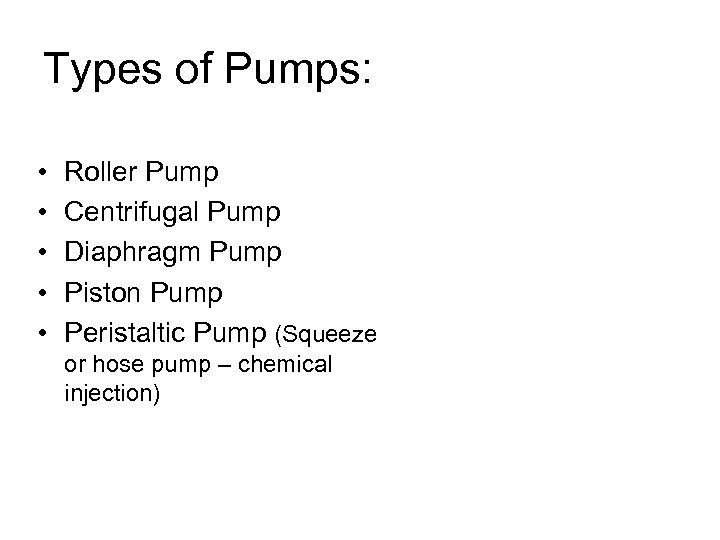 Types of Pumps: • • • Roller Pump Centrifugal Pump Diaphragm Pump Piston Pump Peristaltic Pump (Squeeze or hose pump – chemical injection)
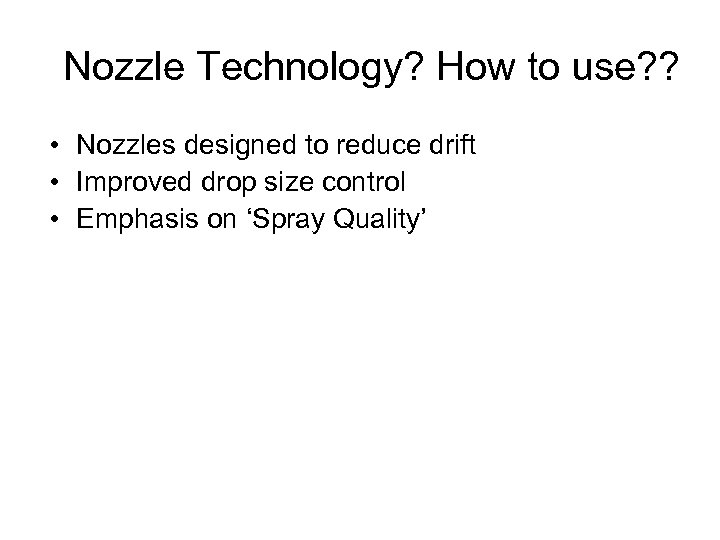 Nozzle Technology? How to use? ? • Nozzles designed to reduce drift • Improved drop size control • Emphasis on ‘Spray Quality’
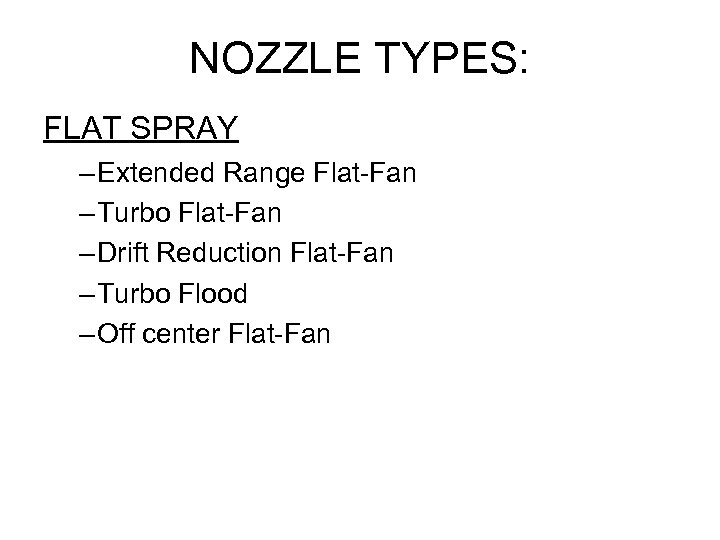 NOZZLE TYPES: FLAT SPRAY – Extended Range Flat-Fan – Turbo Flat-Fan – Drift Reduction Flat-Fan – Turbo Flood – Off center Flat-Fan
 Spray Characteristics are Important Demonstrates Turbo Flat vs Turbo. Drop-5 MPH Wind
 Is this tip good or bad?
 Off-Center Venturi Flat-fan
 Boom Buster
 XP Boom. Jet
 Boom Extender:
 Aerial Applications

 The CP STRAIGHT STREAM NOZZLE

 Nozzles are important because: • • Control the amount – GPA. Determine uniformity of application. Affects the coverage. Influences the drift potential.
 1. Control the Amount applied: Nozzle Flow Rate is affected by: • Orifice size • Pressure • Solution characteristics Page 15
 Nozzle Selection Chart: Pages 9, 12
 Calibration!!!! Ensuring that the spray output is what it is supposed to be!
 #$!@&%! GPA= 5940 Calculations
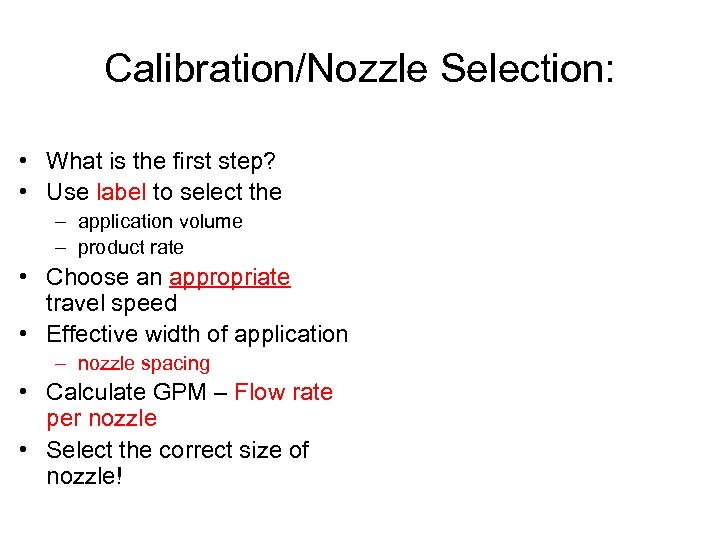 Calibration/Nozzle Selection: • What is the first step? • Use label to select the – application volume – product rate • Choose an appropriate travel speed • Effective width of application – nozzle spacing • Calculate GPM – Flow rate per nozzle • Select the correct size of nozzle!
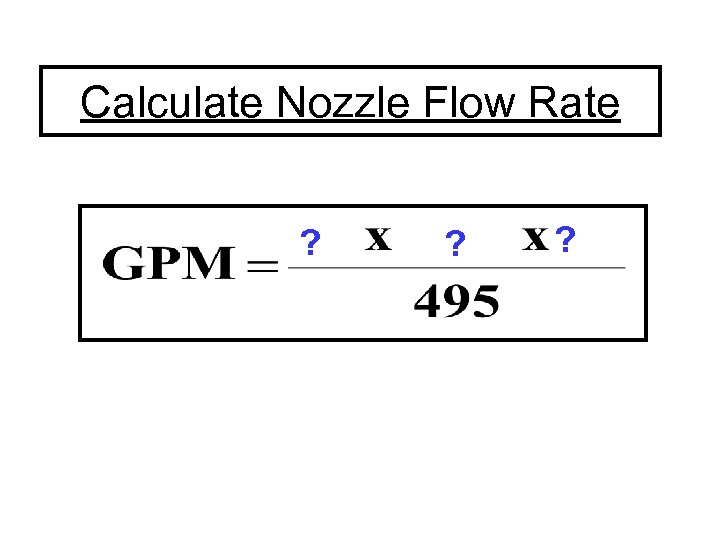
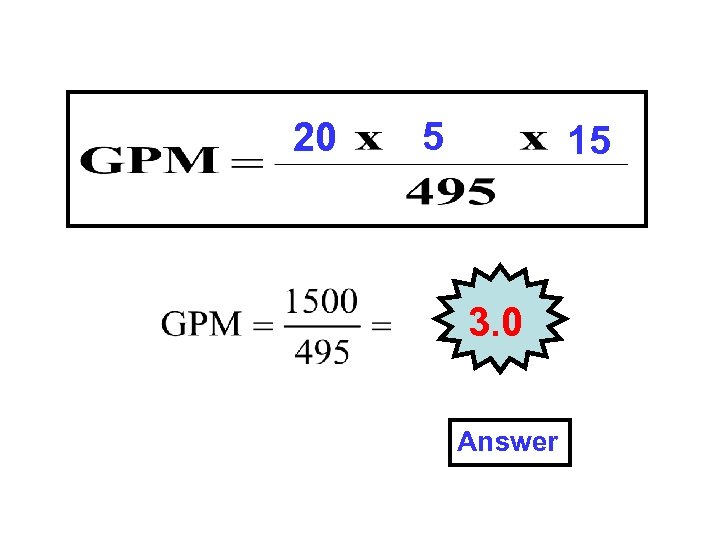
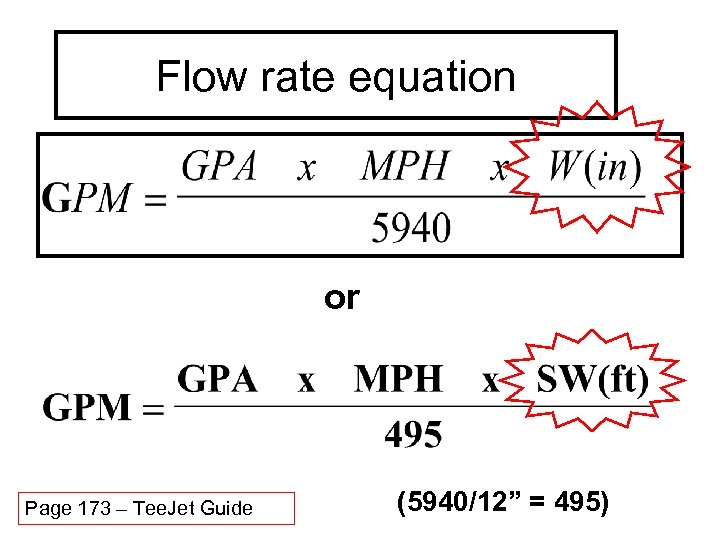 Flow rate equation or Page 173 – Tee. Jet Guide (5940/12” = 495)
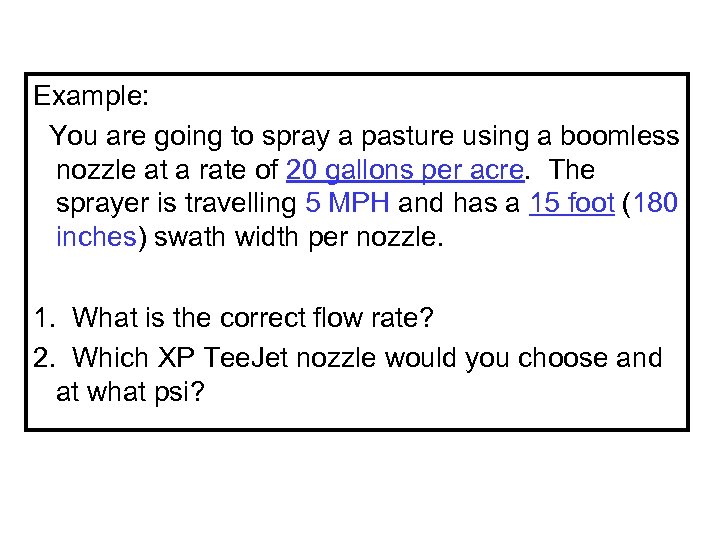 Example: You are going to spray a pasture using a boomless nozzle at a rate of 20 gallons per acre. The sprayer is travelling 5 MPH and has a 15 foot (180 inches) swath width per nozzle. 1. What is the correct flow rate? 2. Which XP Tee. Jet nozzle would you choose and at what psi?
 Calculate Nozzle Flow Rate ? ? ?
 20 5 15 3. 0 Answer
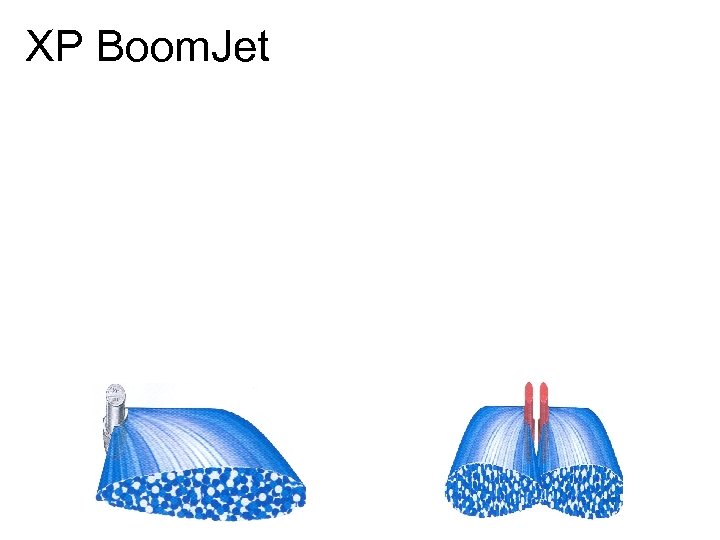
 XP Boom. Jet: Page – 32, 33
 Measuring Ground Speed - Miles Per Hour (MPH) Where traveling 88 ft. in 60 seconds = 1 MPH Doubling the ground speed reduces the output by 1/2.
 Hand Sprayer Calibration Spraying to the point of runoff “Dilute” • product added to each gal. or 100 gal. • uniform coverage-dripping from leaves • time and gallons per tree/1000 sq. ft. Technique important!!
 Calibration Procedure Steps: – Mark off a calibration course of 1000 sq. ft. – Accurately measure the time required to spray the calibration course using a proper technique. Remember only record the amount of time the gun is actually spraying. – Measure the flow rate from the gun. Using the time recorded in step 2, spray into a calibrated container for that same length of time. – Amount in the container represents the application rate per 1000 sq. ft.
 Hand Spray Guns: cont. Example: It took 50 seconds for an applicator to spray the 1000 sq. ft. calibration course. The amount of spray collected from the gun in the 50 seconds was 1. 4 gallons. The application rate for this example is: 1. 4 gallons per 1000 sq. ft. or 61 gallons per acre (43. 56 x 1. 4)
 Thursday: Sprayer Workshop • Discuss hand sprayers – show examples • Discuss hose end sprayers on flat bed truck. • Calibrate hose end sprayer using a 500 sq. ft. area. • Discuss big spray truck and boombuster nozzle setup. • Demonstrate boombuster and collect patterns.