


 Скачать презентацию AP U S GOVERNMENT POLITICS Monday January
2062afd8528cb7298a4204f9bf4406d7.ppt
- Количество слайдов: 28
 AP U. S. GOVERNMENT & POLITICS Monday, January 8, 2018
 HW DISCUSSION “Mr. Smith Re-writes the Constitution”
 PRACTICE FRQ #10
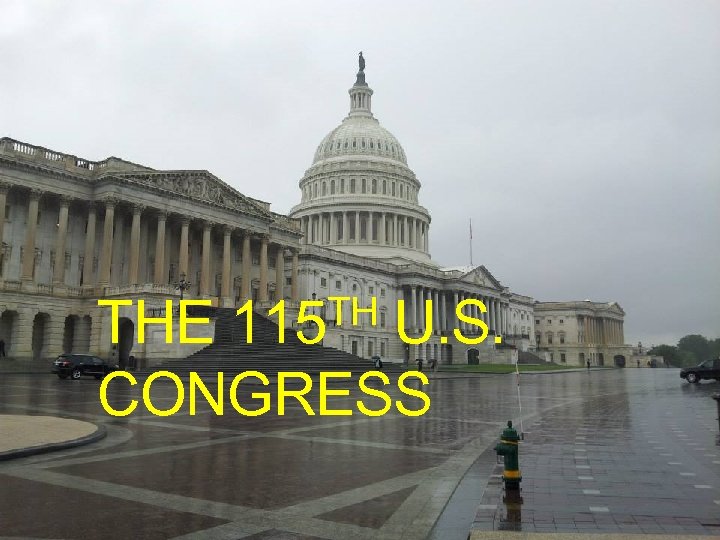 TH 115 THE U. S. CONGRESS
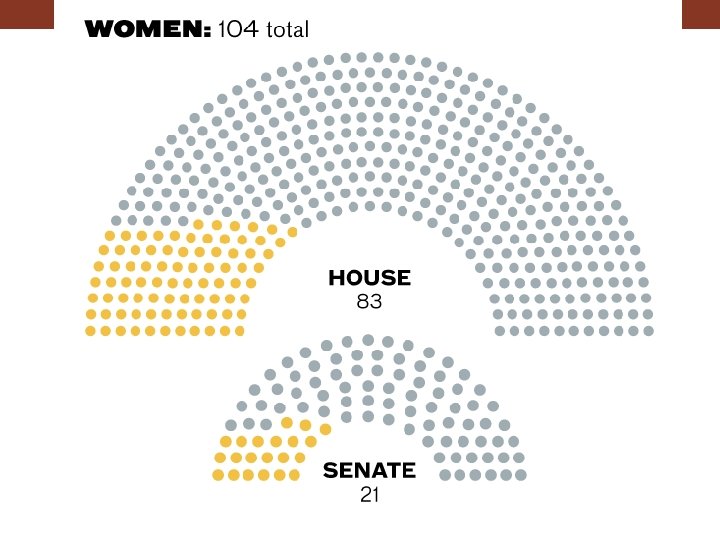
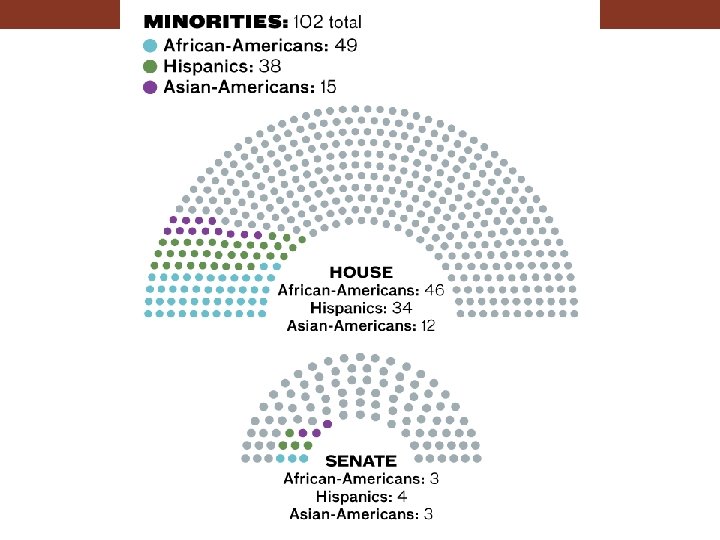
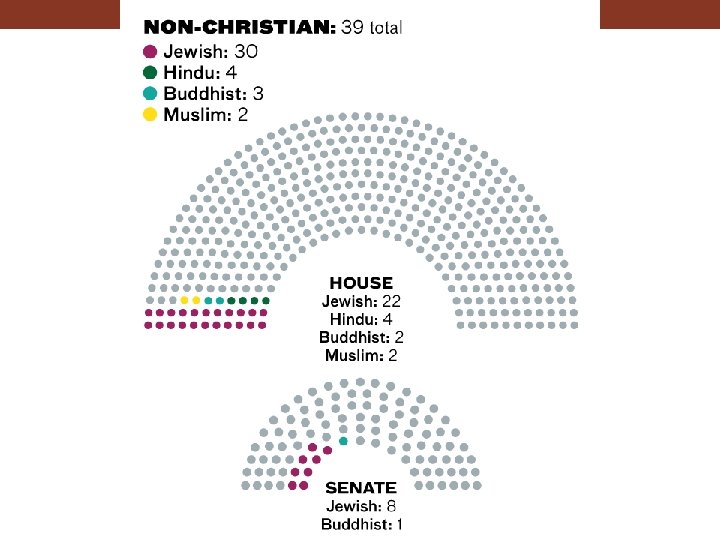
 History of Congressional Membership • Constitutional Changes • Direct Election of Senators: • 17 th Amendment • 1913 • Membership in the House: • Permanent Apportionment Act of 1929 • Set the number of Representatives at 435 • Unclear why this did not require an Amendment • Demographic Landmarks • First African-American Congressmen: • Rep. Joseph Rainey (SC-1870) • Sen. Hiram Revels (MS-1870) • Rep. Oscar De. Priest (IL-1928) • First Women Congressmen: • Rep. Jeanette Rankin (MN-1917) • Sen. Hattie Carraway (AR-1932) • First Openly Gay Congressmen • Rep. Gary Studds (MA) • Rep. Barney Frank (MA) • Sen. Tammy Baldwin (WI)
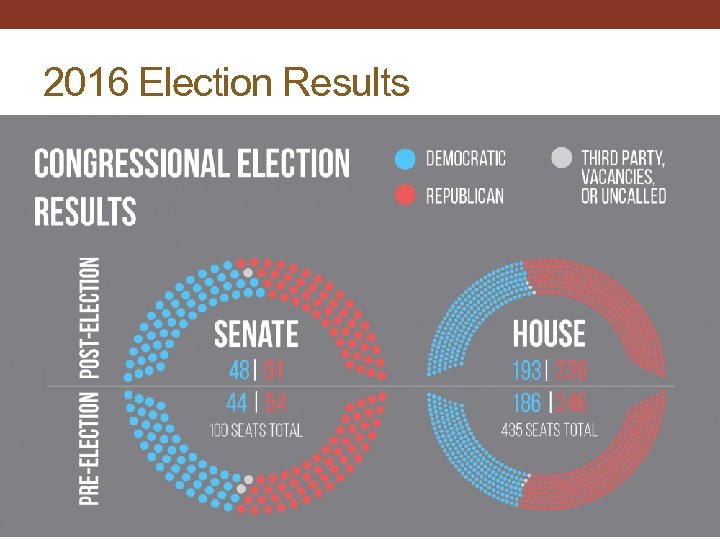 2016 Election Results
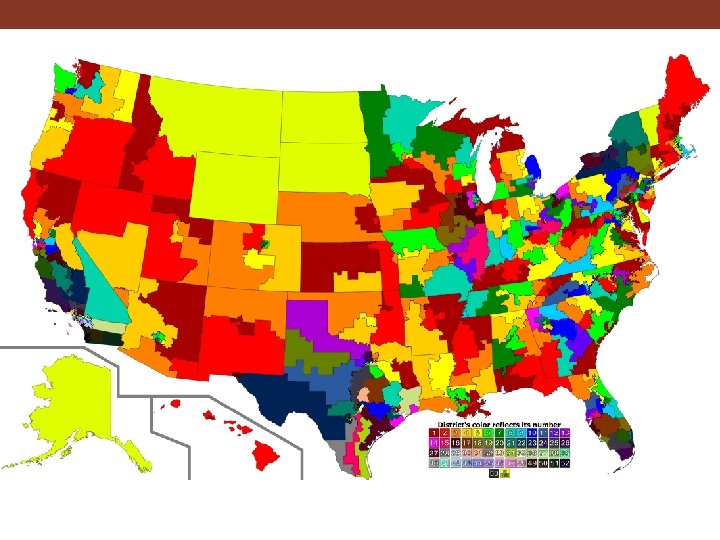
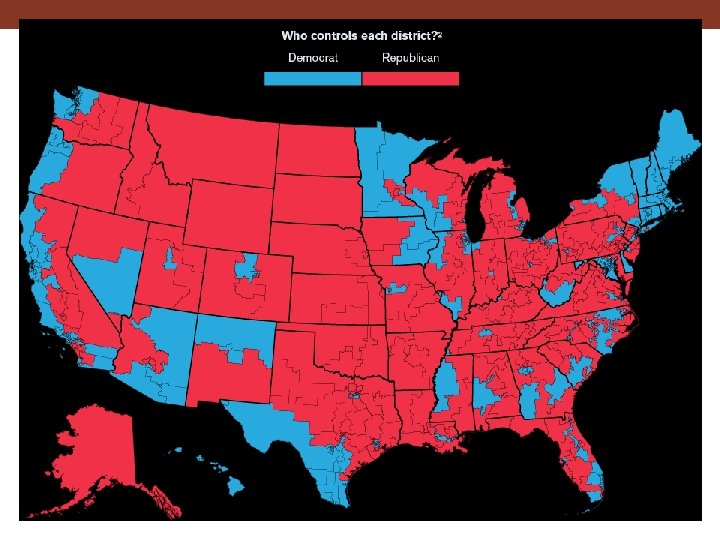
 Polarization in Congress • Congress has increasingly become more polarized • Conservatives are more conservative, liberals more liberal, and the gap between political ideologies is wider with less chance for compromise • Reasons: • Districts drawn to favor one party --> constituents are more likely to favor this party --> elect polarizing candidates --> Congressional behavior reflects ideological attitudes of constituencies • House more likely to be more extreme in political views than Senate because of districts • Other Reasons?
 CONGRESSIONAL LEADERSHIP
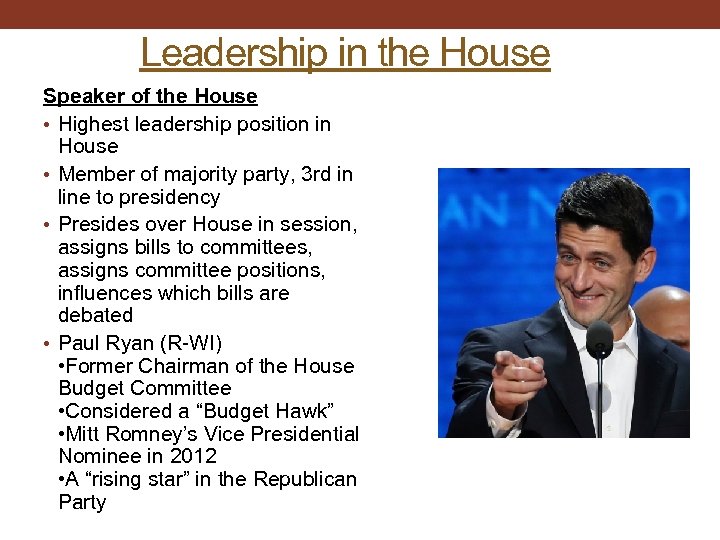 Leadership in the House Speaker of the House • Highest leadership position in House • Member of majority party, 3 rd in line to presidency • Presides over House in session, assigns bills to committees, assigns committee positions, influences which bills are debated • Paul Ryan (R-WI) • Former Chairman of the House Budget Committee • Considered a “Budget Hawk” • Mitt Romney’s Vice Presidential Nominee in 2012 • A “rising star” in the Republican Party
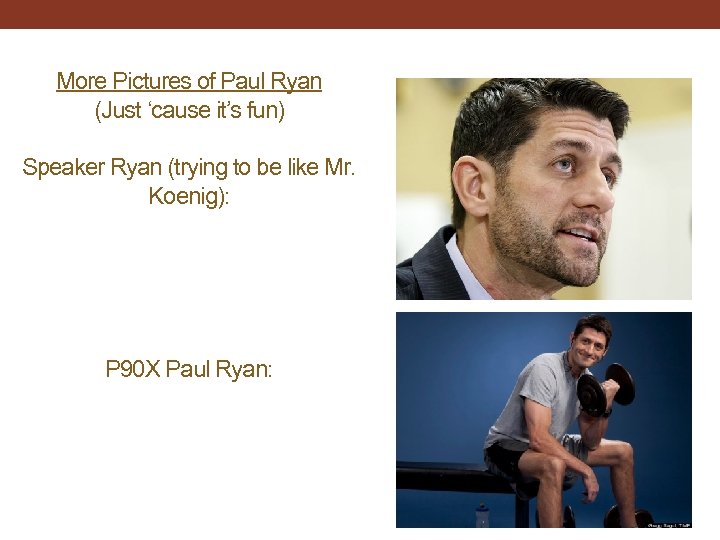 More Pictures of Paul Ryan (Just ‘cause it’s fun) Speaker Ryan (trying to be like Mr. Koenig): P 90 X Paul Ryan:
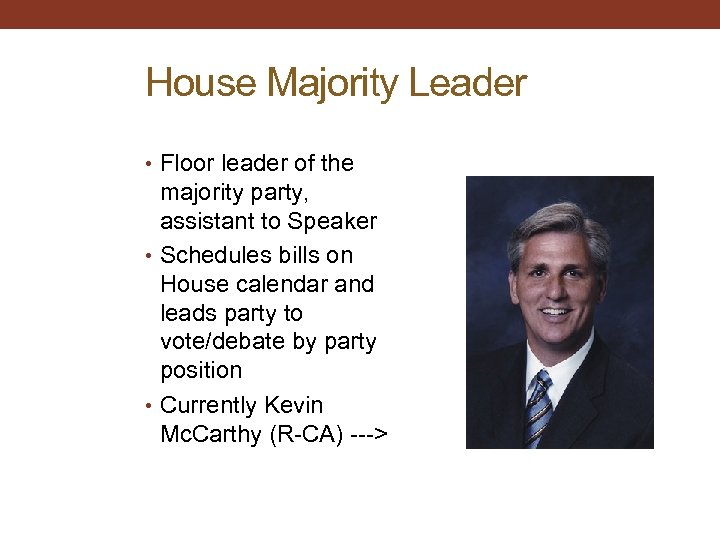 House Majority Leader • Floor leader of the majority party, assistant to Speaker • Schedules bills on House calendar and leads party to vote/debate by party position • Currently Kevin Mc. Carthy (R-CA) --->
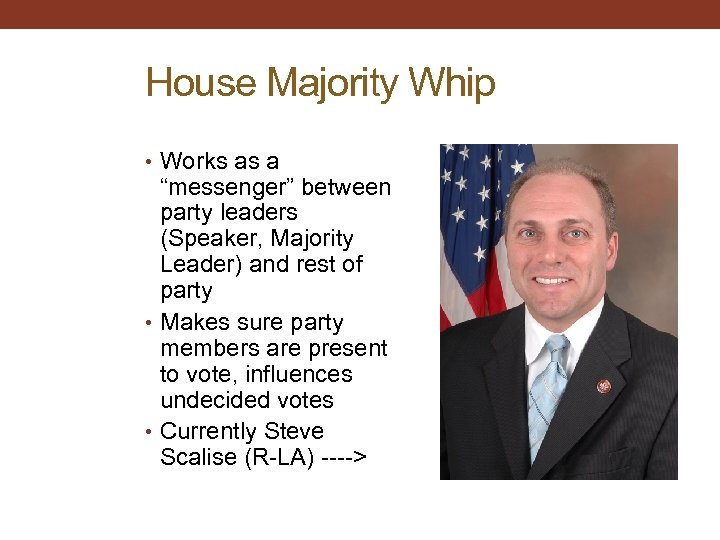 House Majority Whip • Works as a “messenger” between party leaders (Speaker, Majority Leader) and rest of party • Makes sure party members are present to vote, influences undecided votes • Currently Steve Scalise (R-LA) ---->
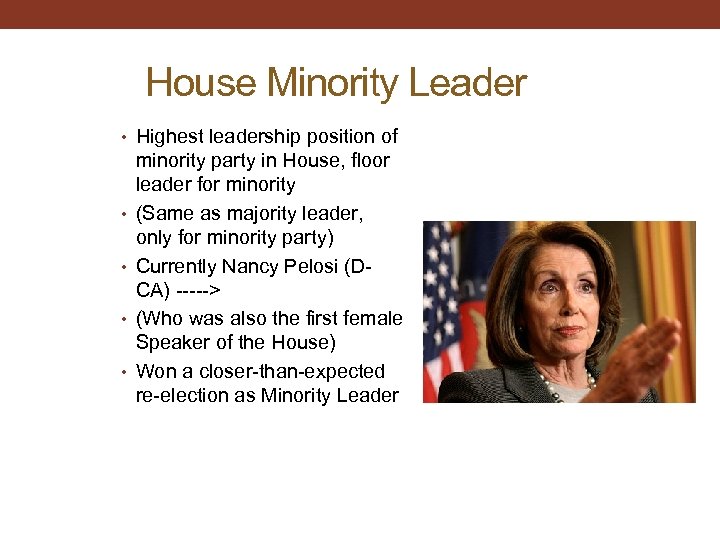 House Minority Leader • Highest leadership position of • • minority party in House, floor leader for minority (Same as majority leader, only for minority party) Currently Nancy Pelosi (DCA) -----> (Who was also the first female Speaker of the House) Won a closer-than-expected re-election as Minority Leader
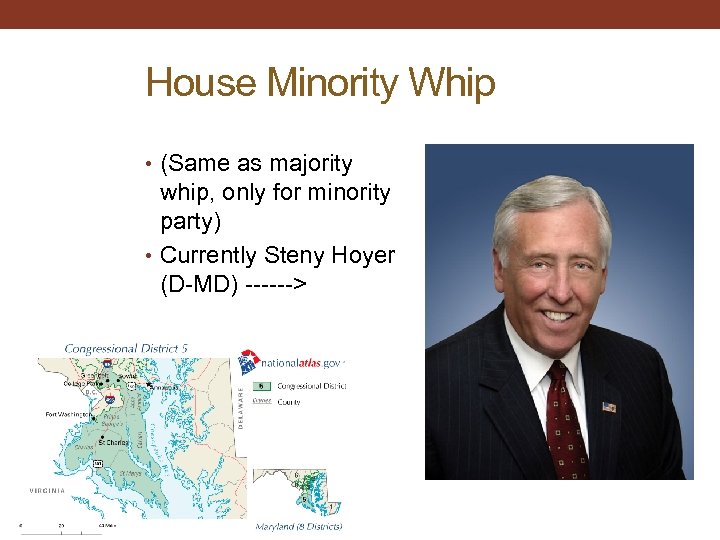 House Minority Whip • (Same as majority whip, only for minority party) • Currently Steny Hoyer (D-MD) ------>
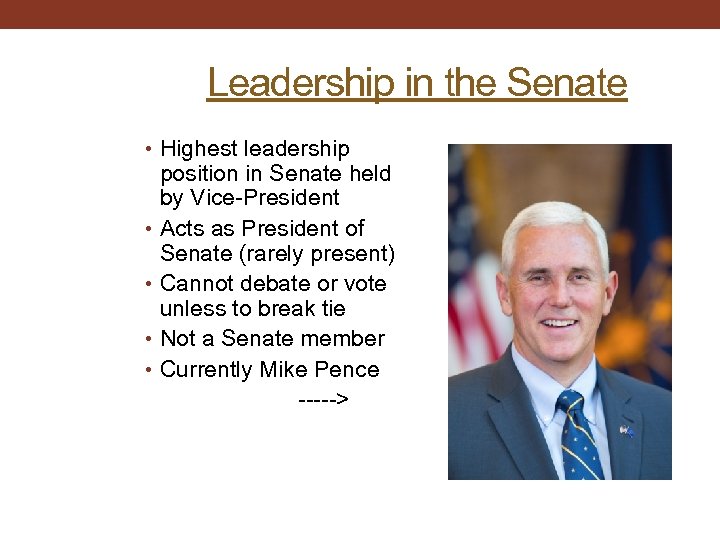 Leadership in the Senate • Highest leadership • • position in Senate held by Vice-President Acts as President of Senate (rarely present) Cannot debate or vote unless to break tie Not a Senate member Currently Mike Pence ----->
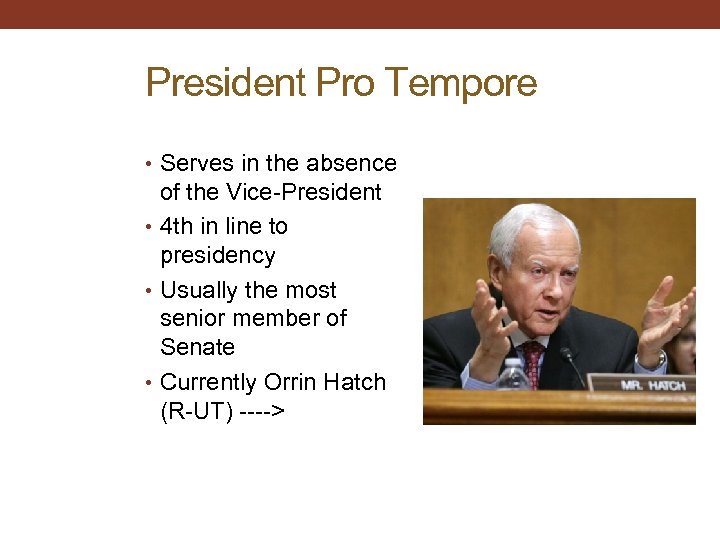 President Pro Tempore • Serves in the absence of the Vice-President • 4 th in line to presidency • Usually the most senior member of Senate • Currently Orrin Hatch (R-UT) ---->
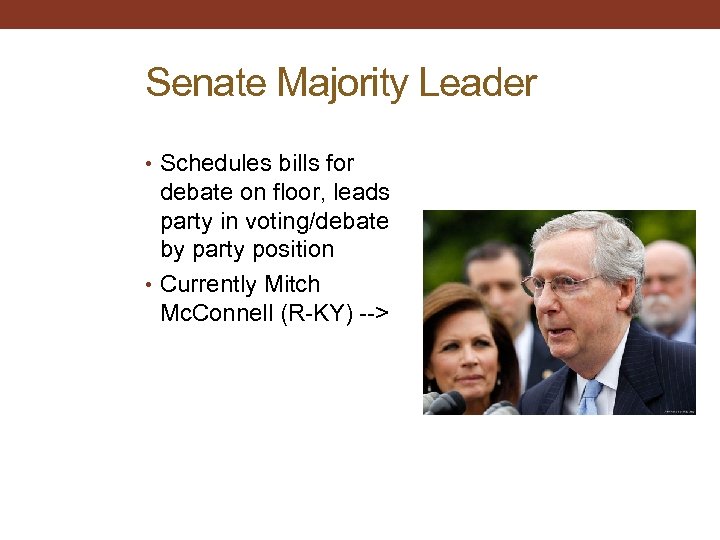 Senate Majority Leader • Schedules bills for debate on floor, leads party in voting/debate by party position • Currently Mitch Mc. Connell (R-KY) -->
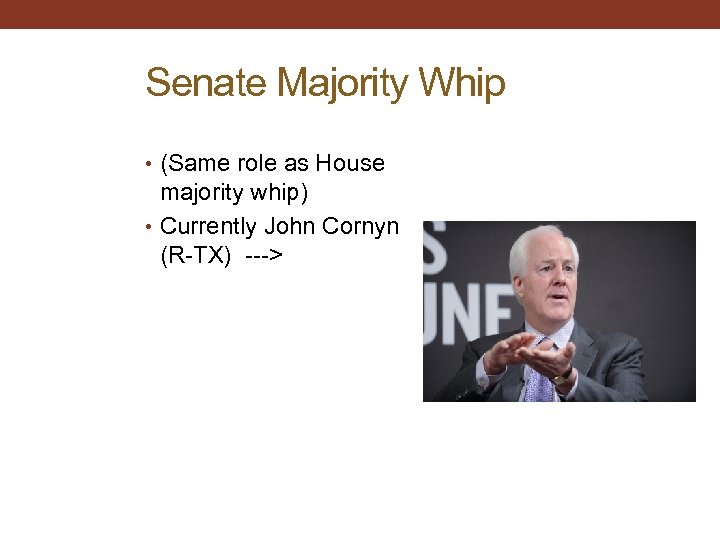 Senate Majority Whip • (Same role as House majority whip) • Currently John Cornyn (R-TX) --->
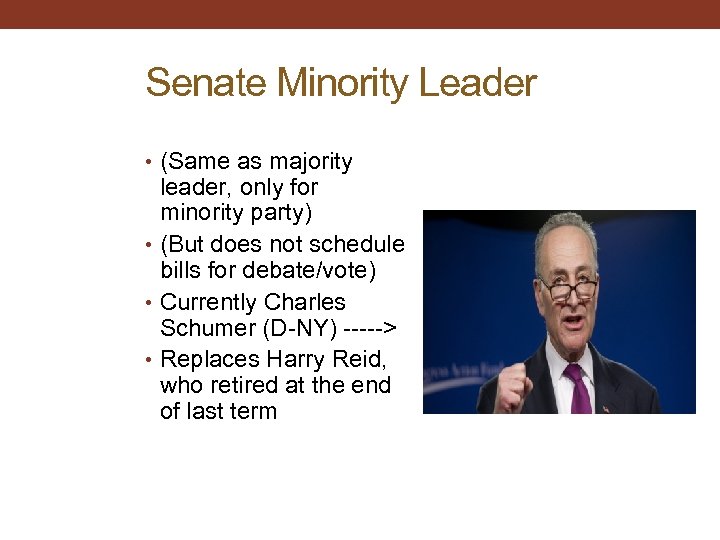 Senate Minority Leader • (Same as majority leader, only for minority party) • (But does not schedule bills for debate/vote) • Currently Charles Schumer (D-NY) -----> • Replaces Harry Reid, who retired at the end of last term
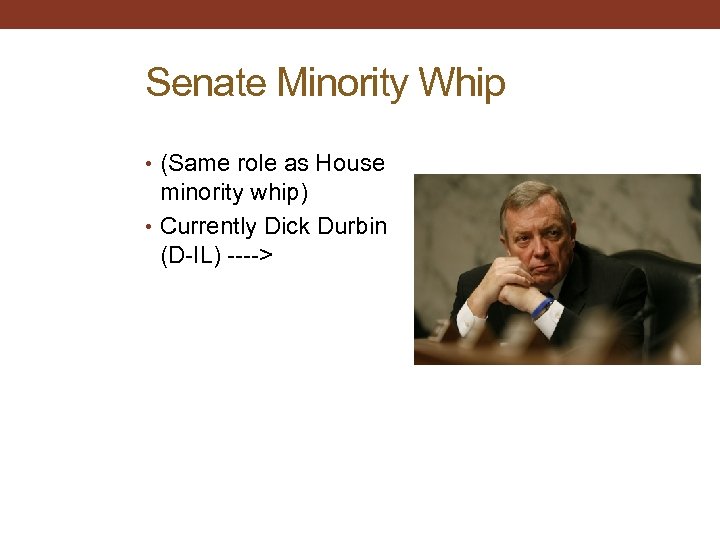 Senate Minority Whip • (Same role as House minority whip) • Currently Dick Durbin (D-IL) ---->
 Exit Ticket: Practice MCQ • An electoral system based on single--‐member districts is usually characterized by • a. Strong, centralized political parties and a weak executive. • b. Higher rates of voter turnout than are common in other systems. • c. Legislative representation of each party in proportion to the number of votes it receives proportion. • d. Domination of the legislature by two political parties. • e. Ideological rather than mass--‐based parties.
 Homework • Textbook, Chapter 11 – Reading & Outline • Due Friday, January 19 • Vocab Quiz that Same Day
 PIHS MOCK CONGRESS INTRO