


 Скачать презентацию AP Government Review Sessions Session 3 Sat April
22eef08bb0a3b7549bf029f653b245f2.ppt
- Количество слайдов: 87
 AP Government Review Sessions Session 3: Sat. April 26 (1: 30 PM- HHS Library) Session 4: Sat. May 3 (9: 30 AM- Freshman Center Lecture Hall Follow @heymisterfitz for updates #Fitz. APGov www. misterfitz. net If you miss a session, you can stream the audio at the above link as well as grab tons of review sources
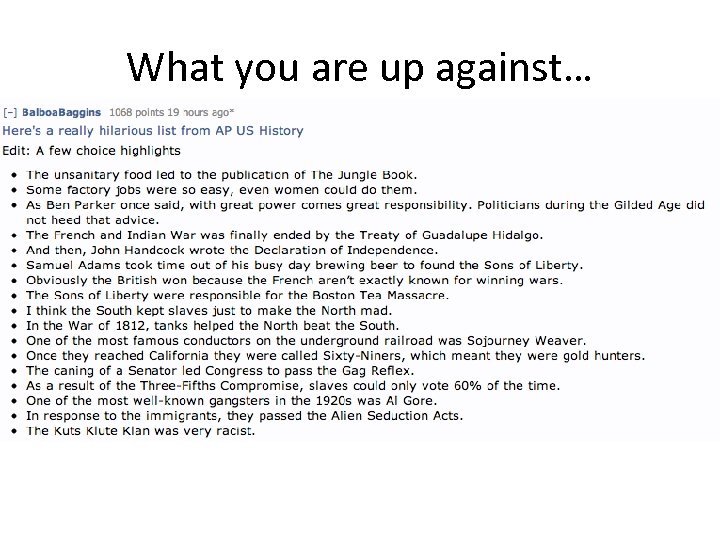 What you are up against…
 Some tips… • Multiple Choice: 1. Read each question carefully. Don’t fall for the distractors 2. Bubble as you go! • FRQS: 1. Define, Identify and Explain 2. Give examples even if not asked 3. No intro, thesis or conclusion 4. If it asks you to choose TWO of the following, choose ALL THREE for insurance 5. Demarcate your FRQs (A, B, C and so forth) this makes the reader happy
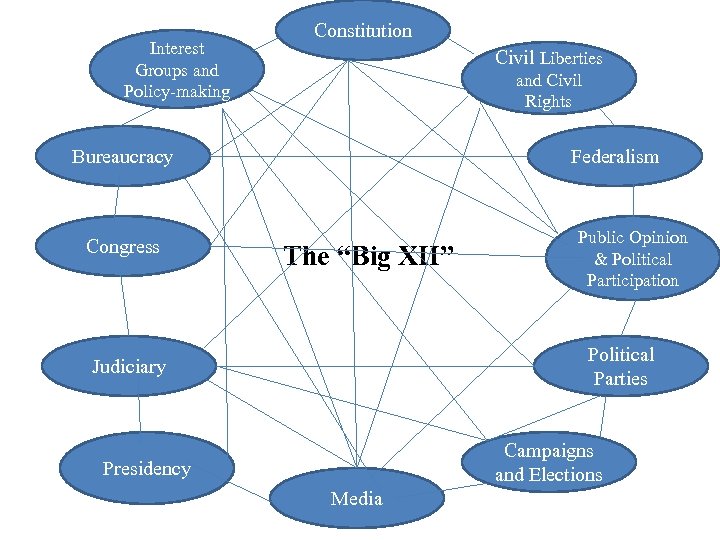 Interest Groups and Policy-making Constitution Civil Liberties and Civil Rights Bureaucracy Congress Federalism The “Big XII” Public Opinion & Political Participation Political Parties Judiciary Campaigns and Elections Presidency Media
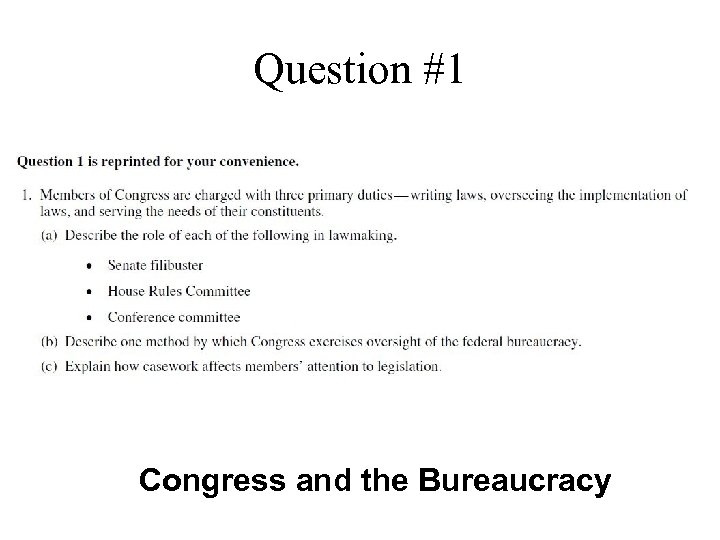 Question #1 Congress and the Bureaucracy
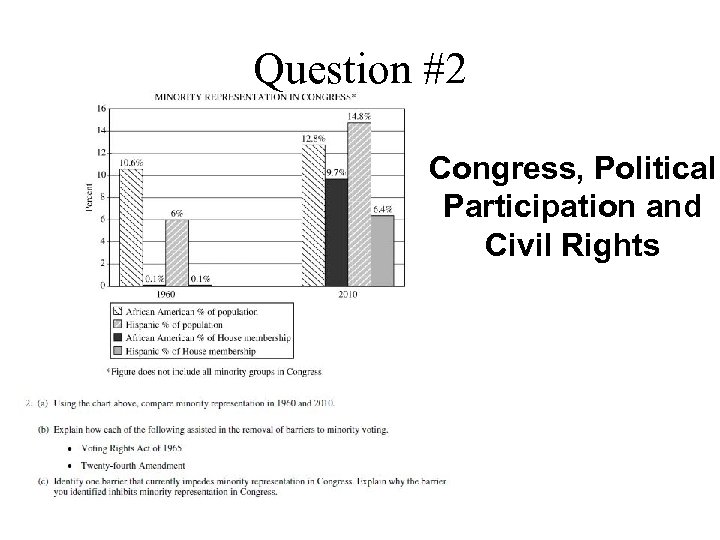 Question #2 Congress, Political Participation and Civil Rights
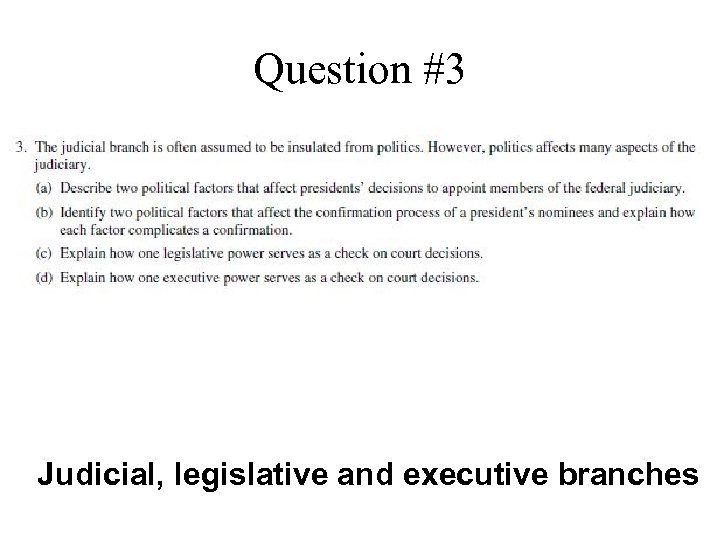 Question #3 Judicial, legislative and executive branches
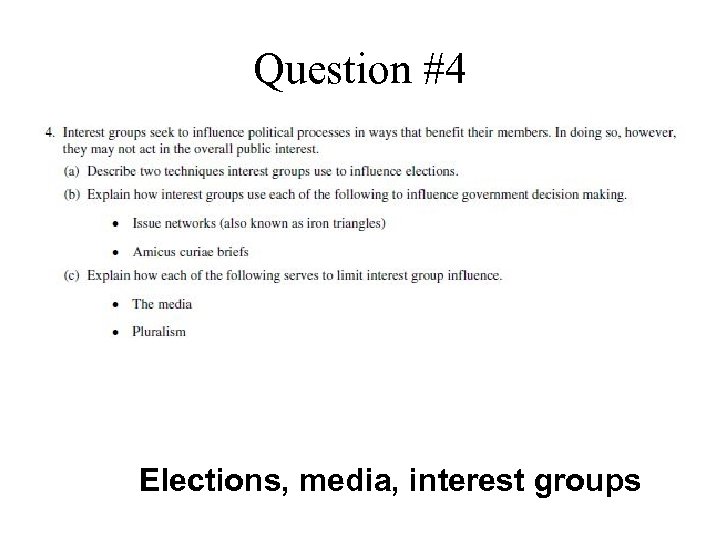 Question #4 Elections, media, interest groups
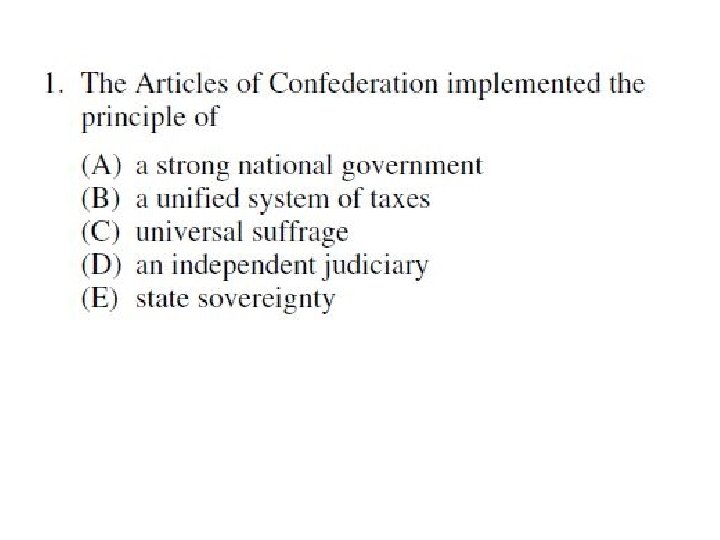
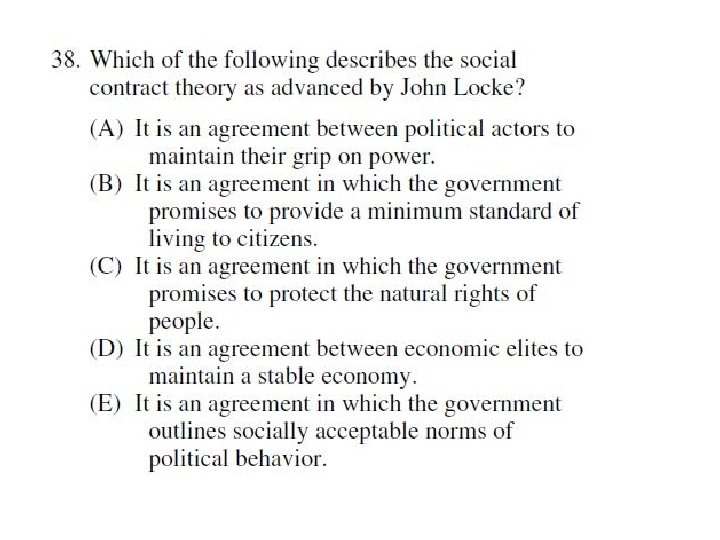
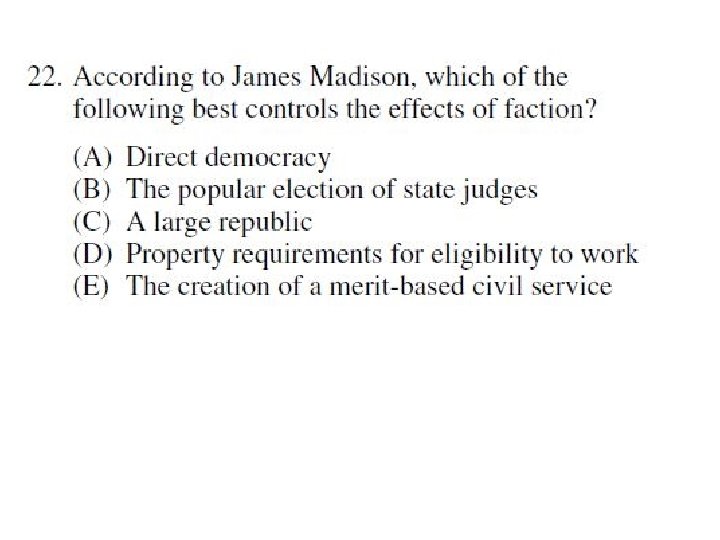
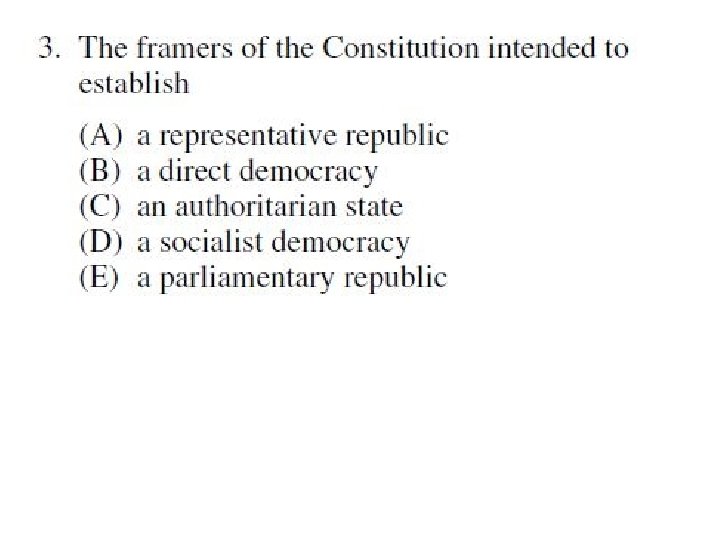
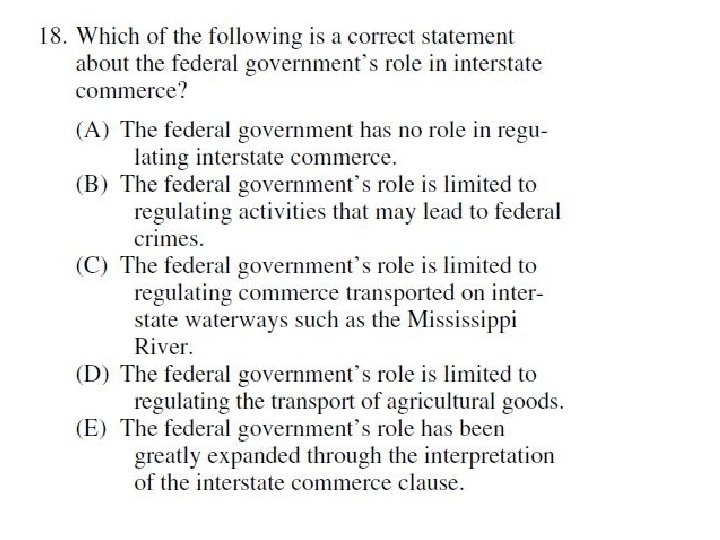
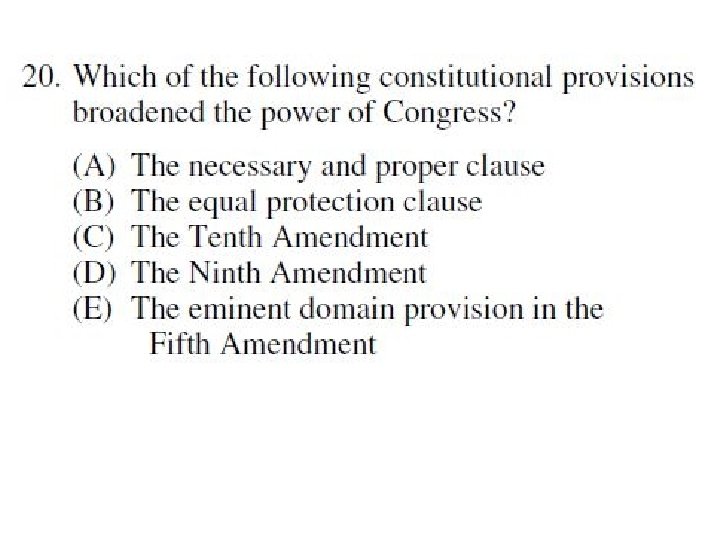
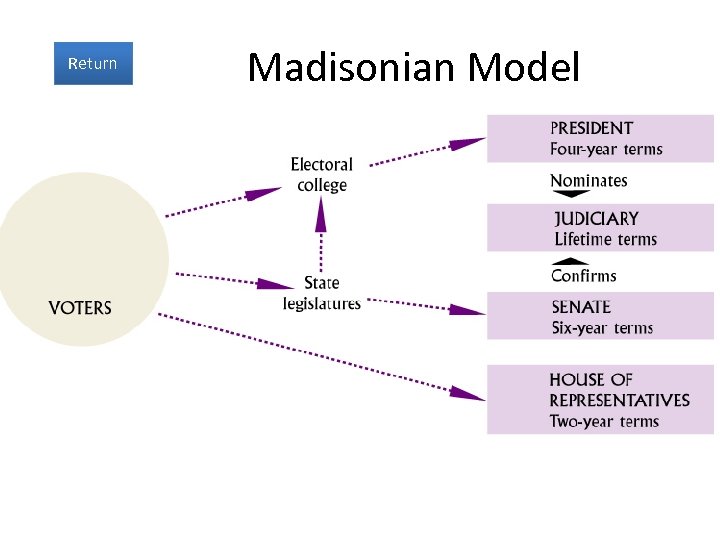
 I. Constitution (5 -15%) • Locke and natural rights • Shays • “Miracle at Philadelphia” • Factions and Federalist 10 • Madisonian Model • Tyranny of the majority • Great compromise • Ratification debates • Necessary and Proper clause (“elastic”) • Commerce Clause • 10 th Amendment • Theories of democratic gov’t: – Pluralism – Hyper pluralism – Elite theory
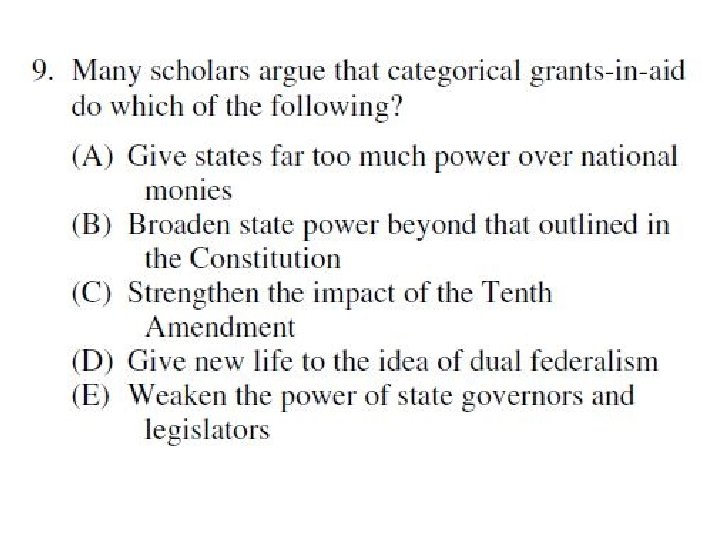
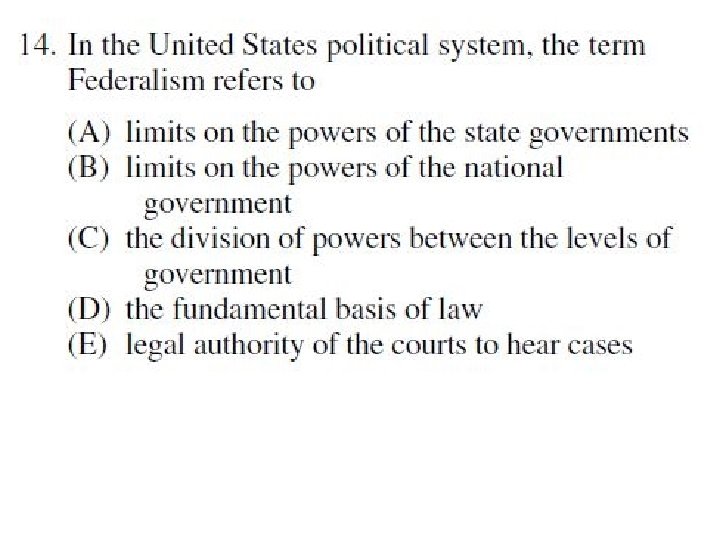
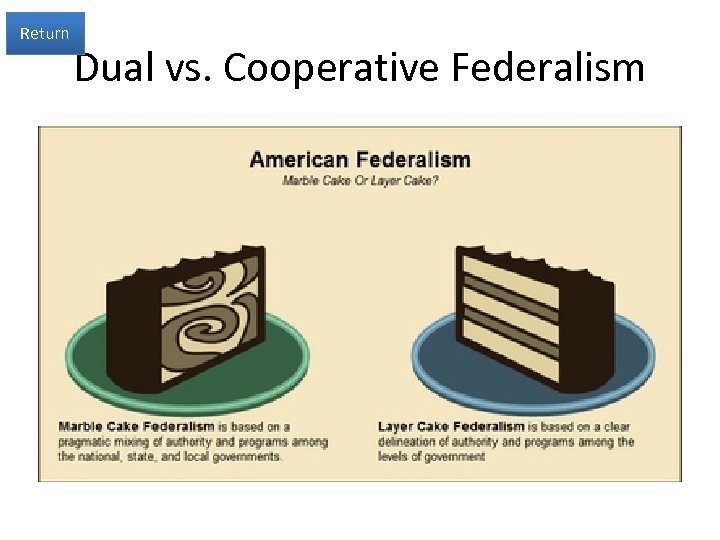
 II. Federalism (5 -15%) • • • Dual federalism Fiscal federalism Supremacy clause Block grants Categorical grants Grants-in-aid Gibbons v. Ogden (1823) U. S. v. Lopez (1995) Mandates ADA (1990) • Mc. Culloch v. Maryland (1819) • Devolution (New federalism) • Welfare Reform Act (1996) • “Laboratories of Democracy” • Inequality?
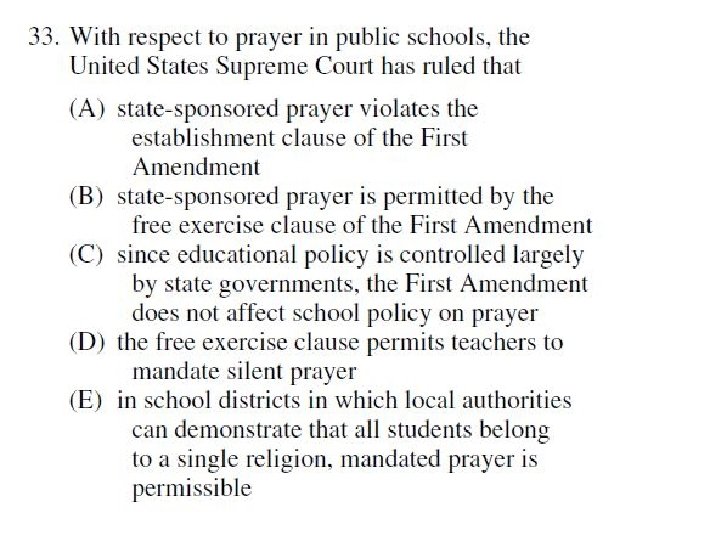
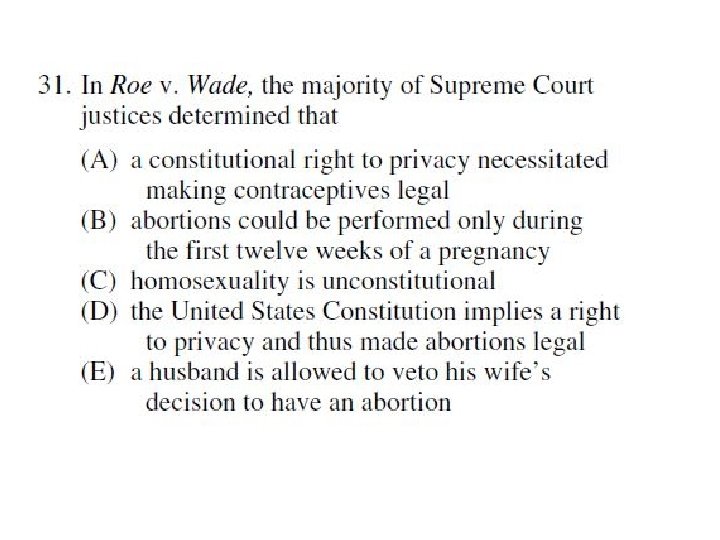
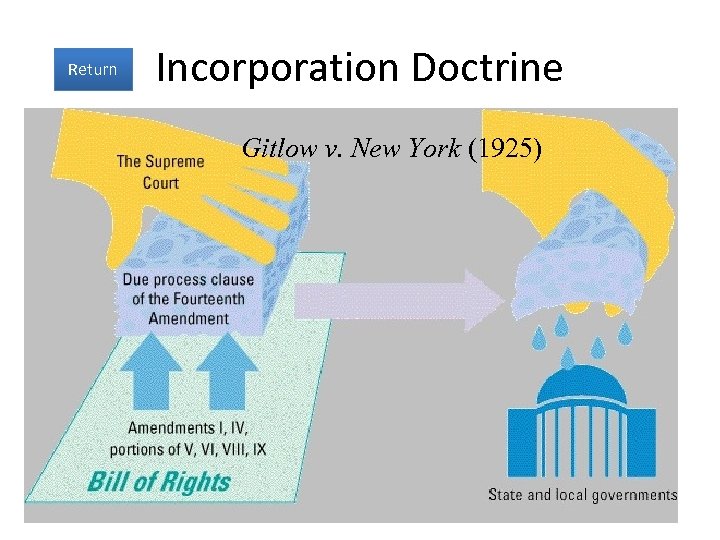
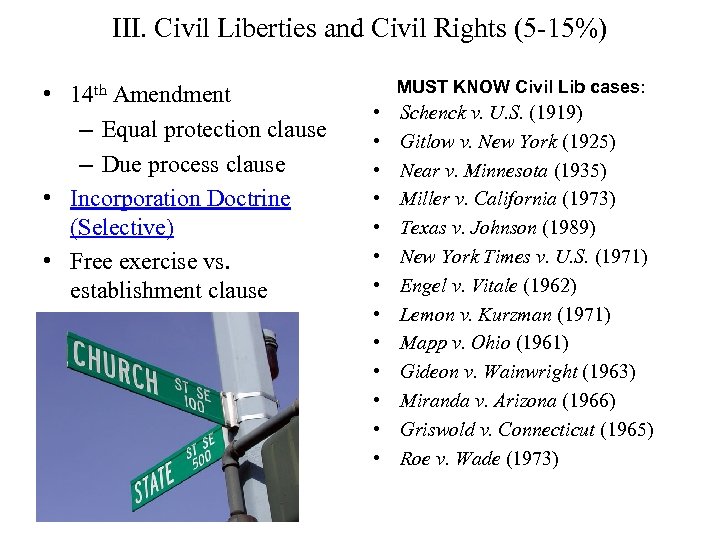 III. Civil Liberties and Civil Rights (5 -15%) • 14 th Amendment – Equal protection clause – Due process clause • Incorporation Doctrine (Selective) • Free exercise vs. establishment clause MUST KNOW Civil Lib cases: • • • • Schenck v. U. S. (1919) Gitlow v. New York (1925) Near v. Minnesota (1935) Miller v. California (1973) Texas v. Johnson (1989) New York Times v. U. S. (1971) Engel v. Vitale (1962) Lemon v. Kurzman (1971) Mapp v. Ohio (1961) Gideon v. Wainwright (1963) Miranda v. Arizona (1966) Griswold v. Connecticut (1965) Roe v. Wade (1973)
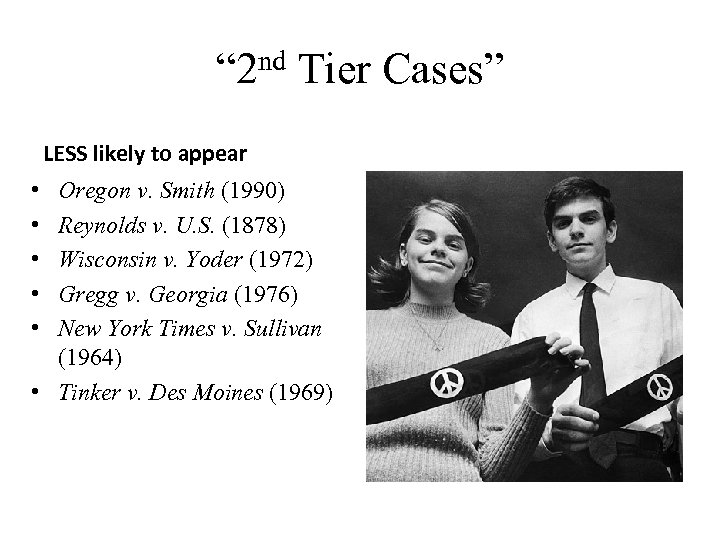 “ 2 nd Tier Cases” LESS likely to appear • • • Oregon v. Smith (1990) Reynolds v. U. S. (1878) Wisconsin v. Yoder (1972) Gregg v. Georgia (1976) New York Times v. Sullivan (1964) • Tinker v. Des Moines (1969)
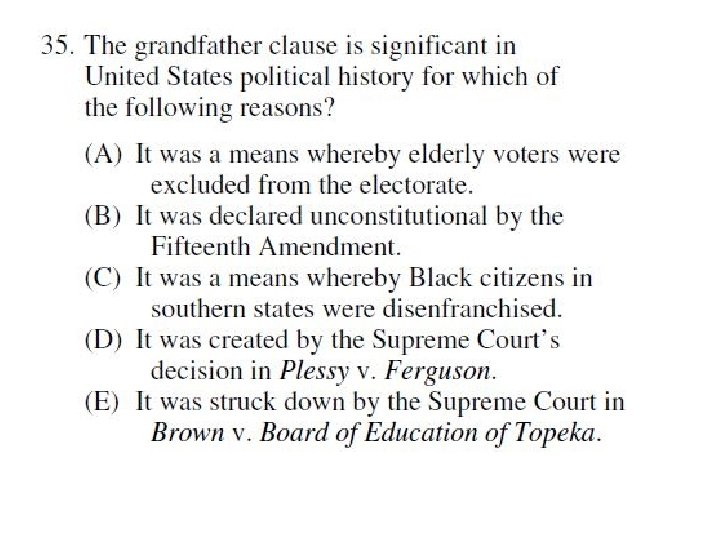
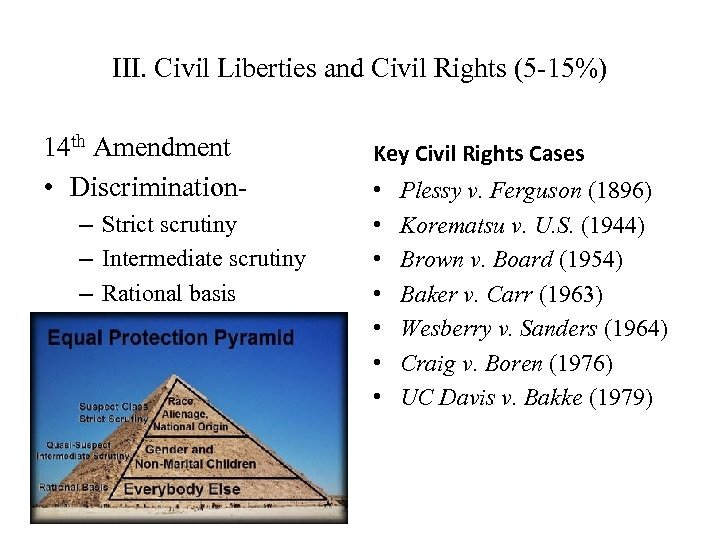 III. Civil Liberties and Civil Rights (5 -15%) 14 th Amendment • Discrimination– Strict scrutiny – Intermediate scrutiny – Rational basis Key Civil Rights Cases • • Plessy v. Ferguson (1896) Korematsu v. U. S. (1944) Brown v. Board (1954) Baker v. Carr (1963) Wesberry v. Sanders (1964) Craig v. Boren (1976) UC Davis v. Bakke (1979)
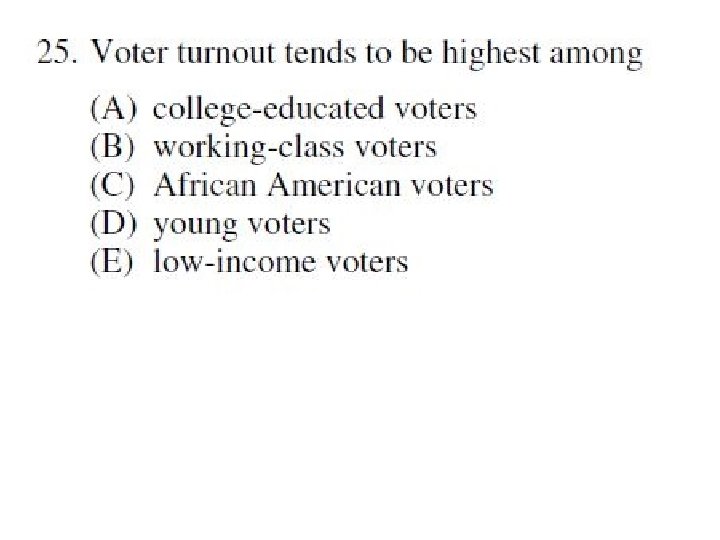
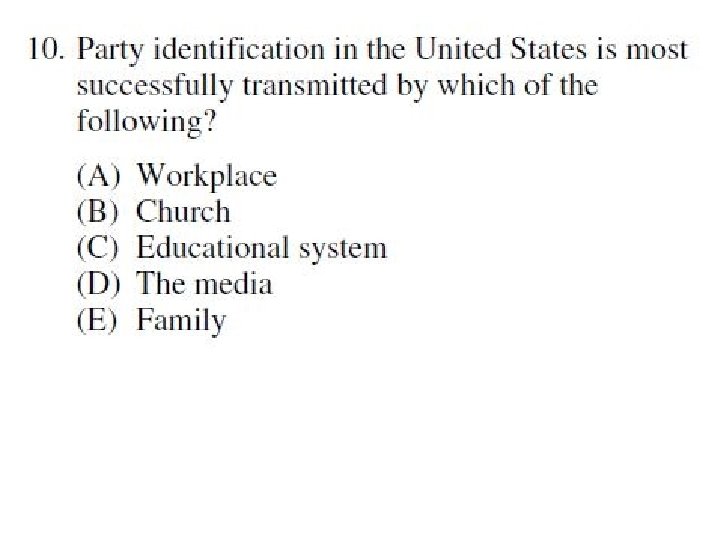
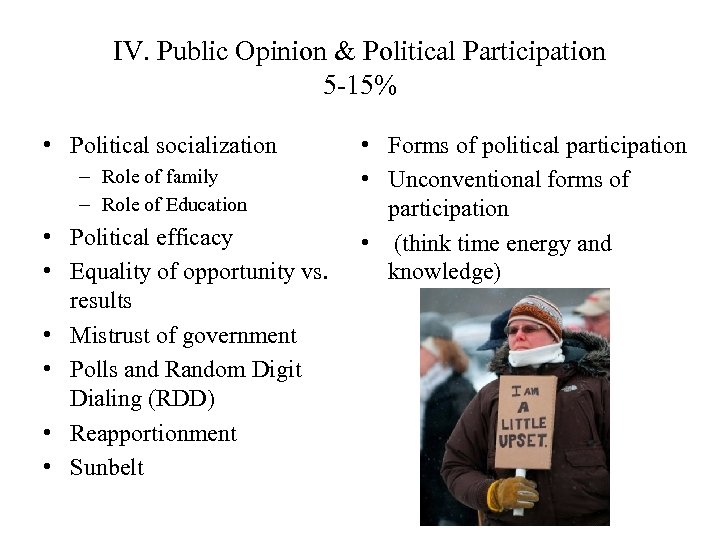 IV. Public Opinion & Political Participation 5 -15% • Political socialization – Role of family – Role of Education • Political efficacy • Equality of opportunity vs. results • Mistrust of government • Polls and Random Digit Dialing (RDD) • Reapportionment • Sunbelt • Forms of political participation • Unconventional forms of participation • (think time energy and knowledge)
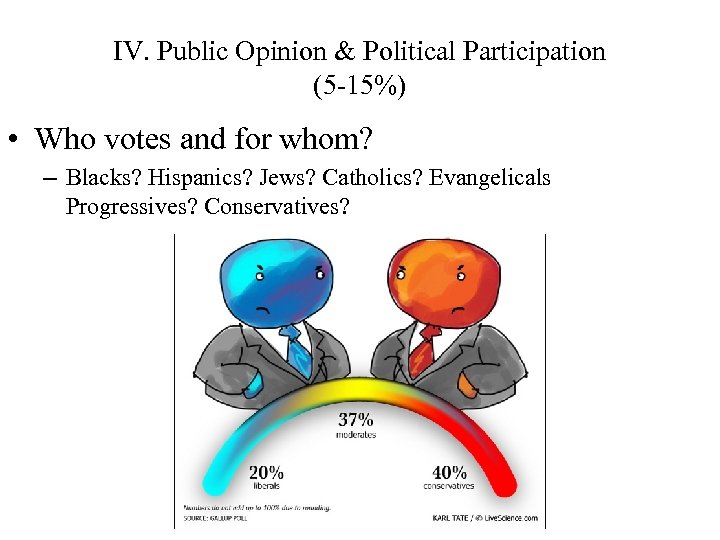 IV. Public Opinion & Political Participation (5 -15%) • Who votes and for whom? – Blacks? Hispanics? Jews? Catholics? Evangelicals Progressives? Conservatives?
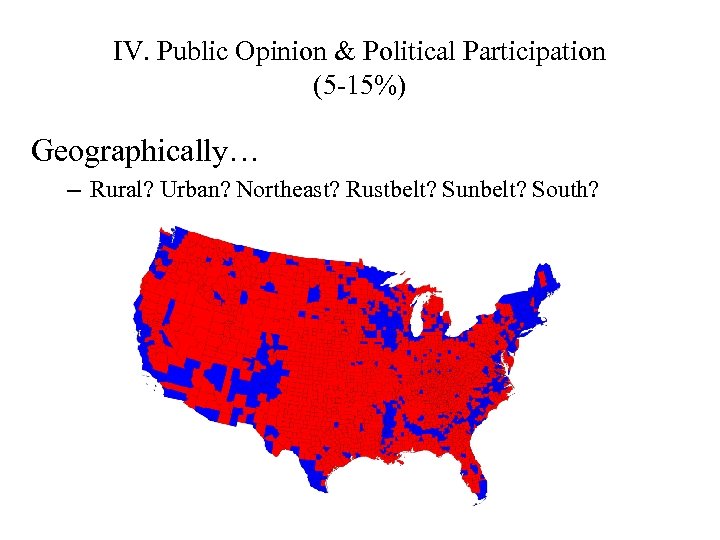 IV. Public Opinion & Political Participation (5 -15%) Geographically… – Rural? Urban? Northeast? Rustbelt? Sunbelt? South?
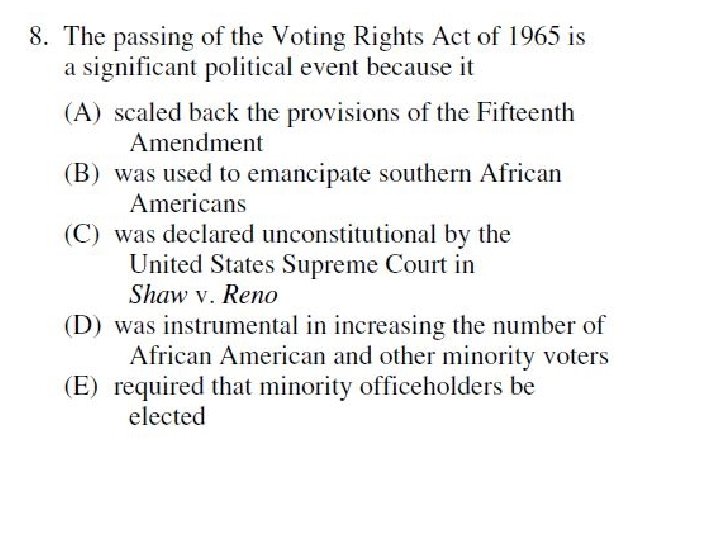
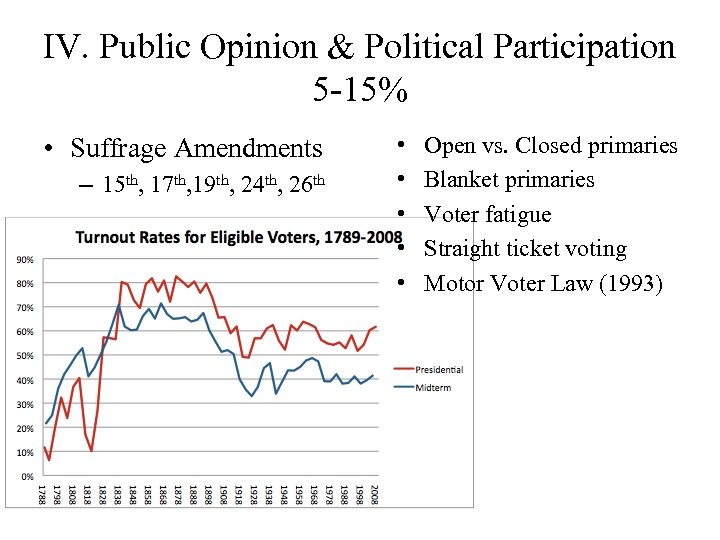 IV. Public Opinion & Political Participation 5 -15% • Suffrage Amendments – 15 th, 17 th, 19 th, 24 th, 26 th • • • Open vs. Closed primaries Blanket primaries Voter fatigue Straight ticket voting Motor Voter Law (1993)
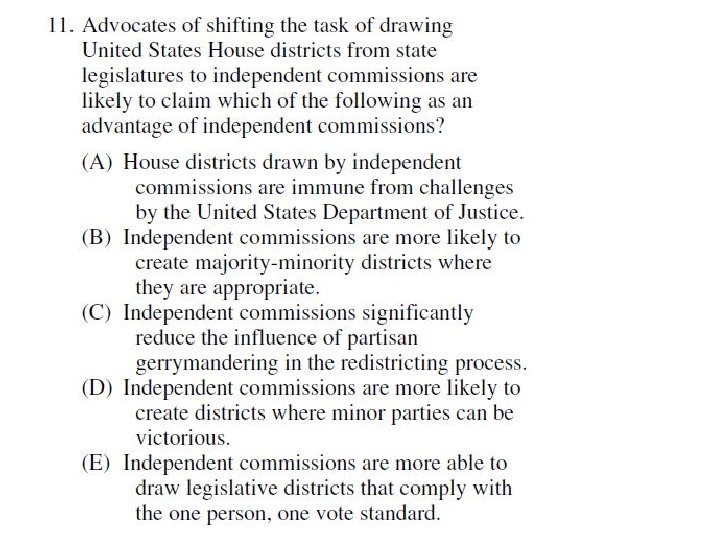
 V. Political Parties (5 -15%) • • • Linkage institutions Party-in-the-electorate Party-in-government Party as an organization Party realignment Critical elections – 1828, 1860, 1896, 1932, 1968 • Gerrymandering • Role of third parties
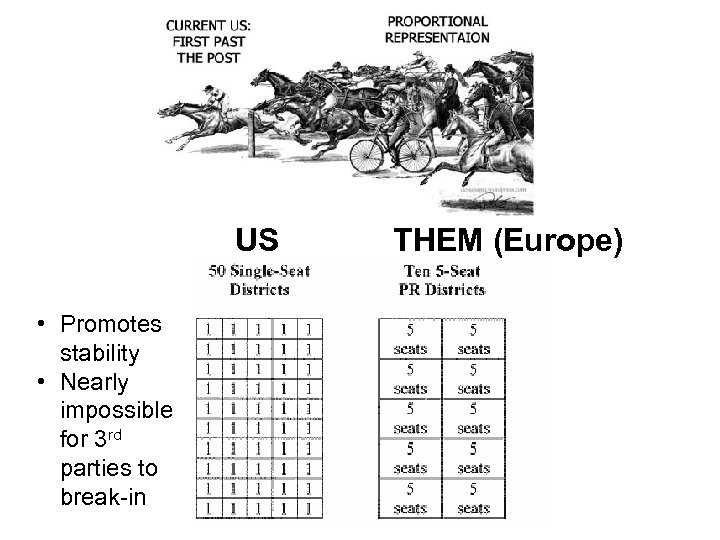 US • Promotes stability • Nearly impossible for 3 rd parties to break-in THEM (Europe)
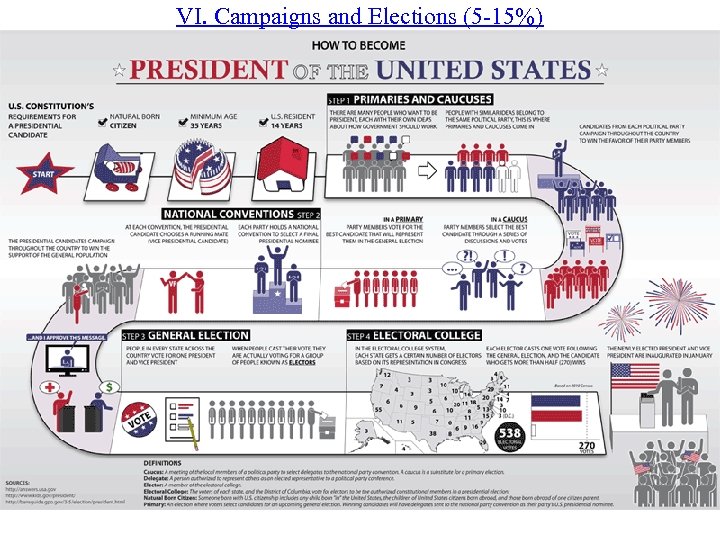 VI. Campaigns and Elections (5 -15%)
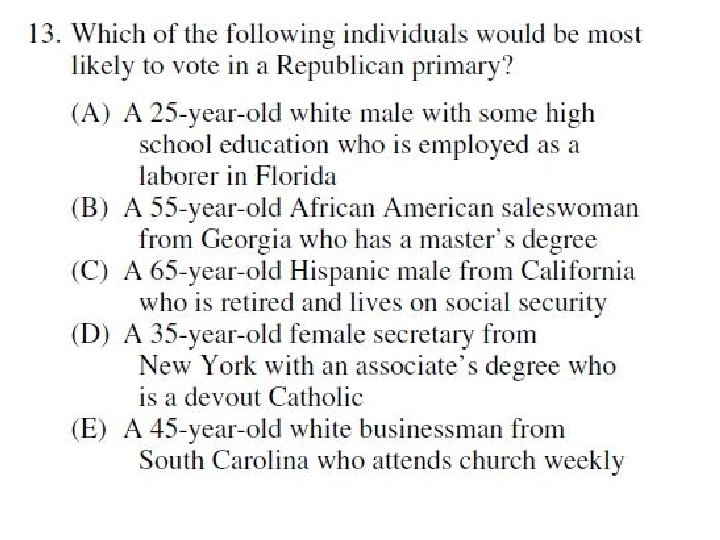
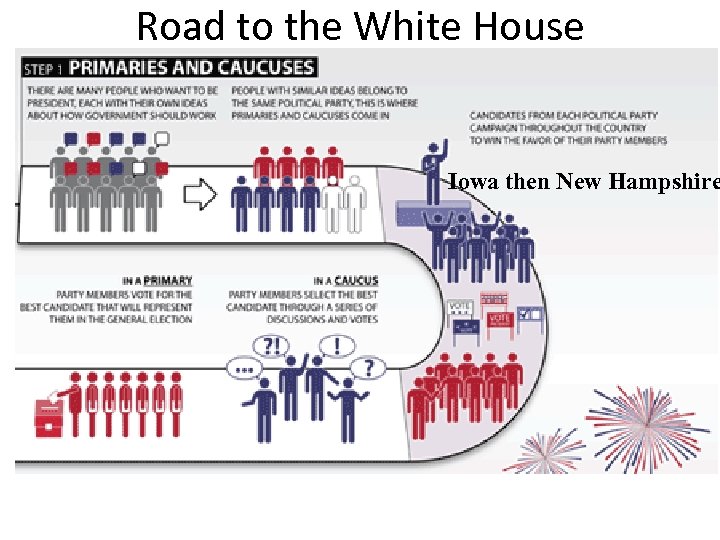
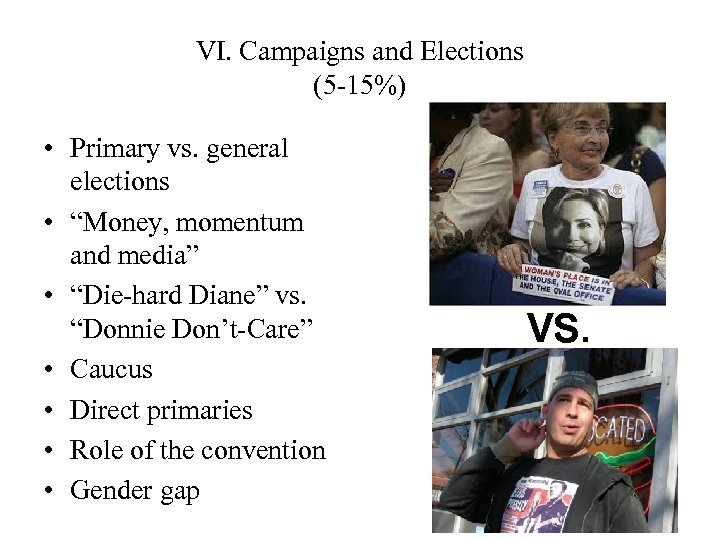 VI. Campaigns and Elections (5 -15%) • Primary vs. general elections • “Money, momentum and media” • “Die-hard Diane” vs. “Donnie Don’t-Care” • Caucus • Direct primaries • Role of the convention • Gender gap VS.
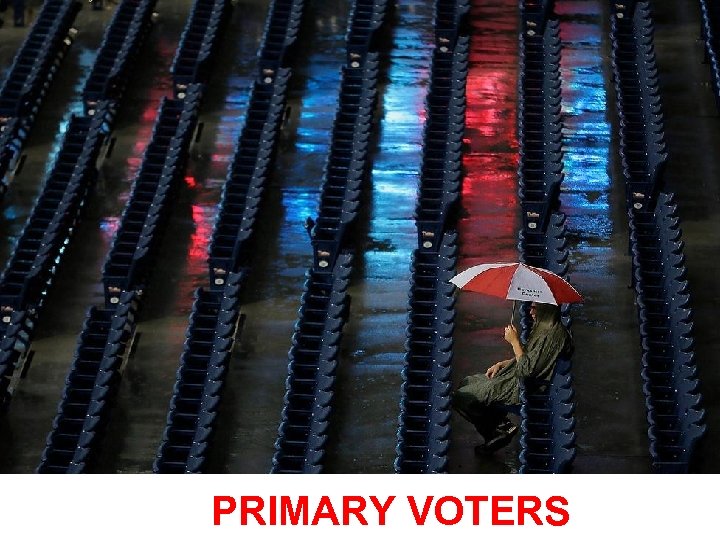 PRIMARY VOTERS
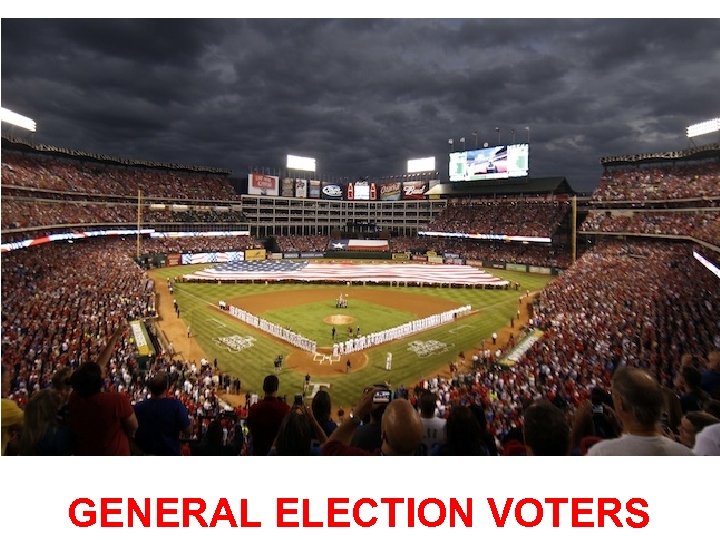 GENERAL ELECTION VOTERS
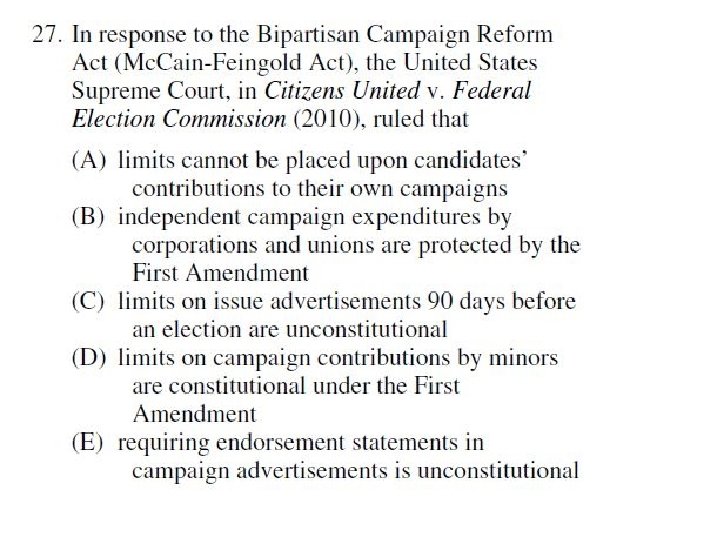
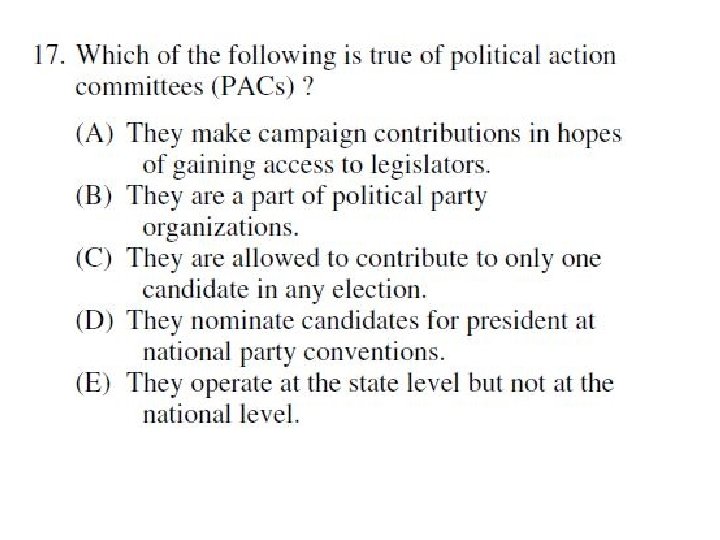
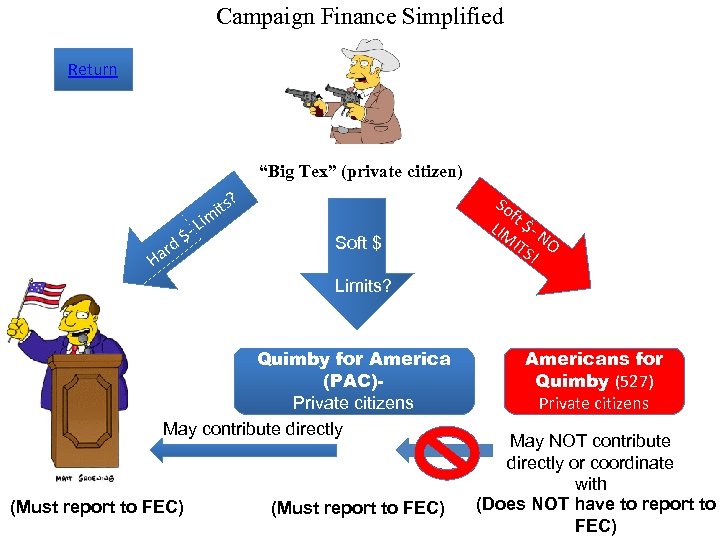
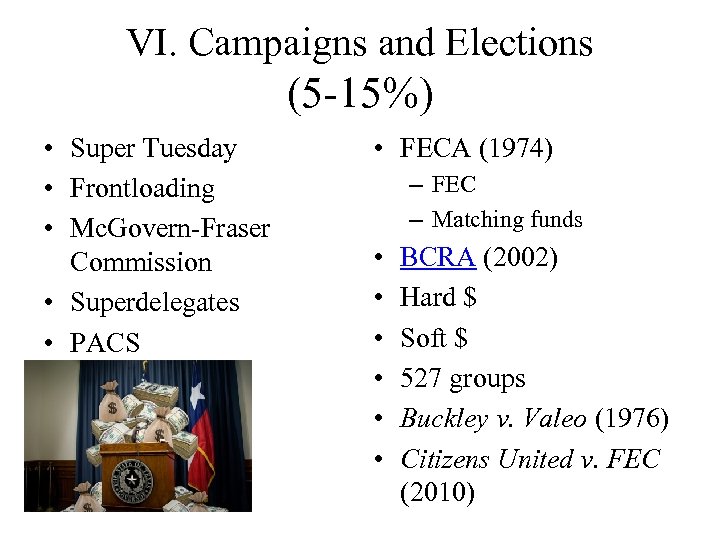 VI. Campaigns and Elections (5 -15%) • Super Tuesday • Frontloading • Mc. Govern-Fraser Commission • Superdelegates • PACS • FECA (1974) – FEC – Matching funds • • • BCRA (2002) Hard $ Soft $ 527 groups Buckley v. Valeo (1976) Citizens United v. FEC (2010)
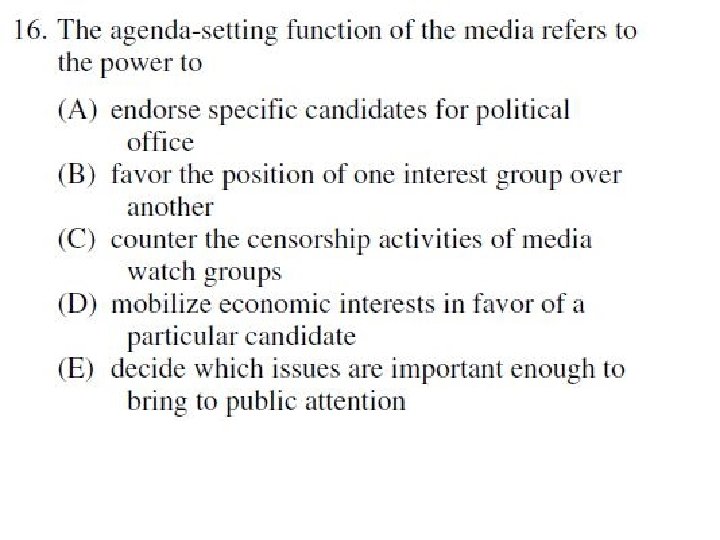
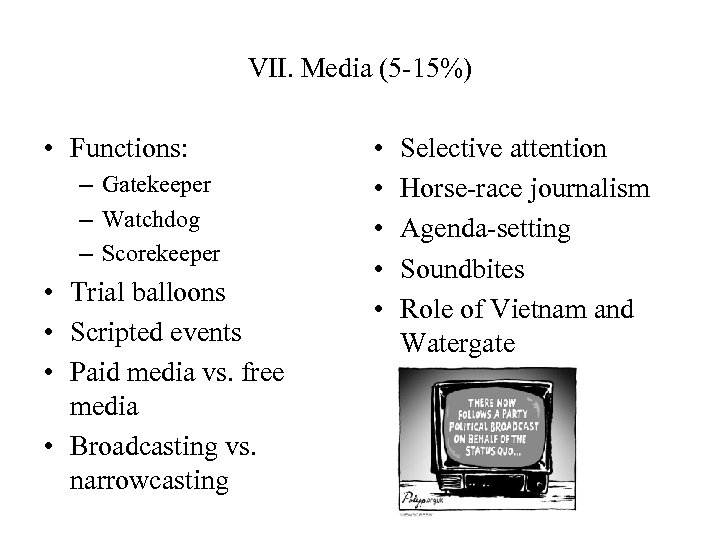 VII. Media (5 -15%) • Functions: – Gatekeeper – Watchdog – Scorekeeper • Trial balloons • Scripted events • Paid media vs. free media • Broadcasting vs. narrowcasting • • • Selective attention Horse-race journalism Agenda-setting Soundbites Role of Vietnam and Watergate
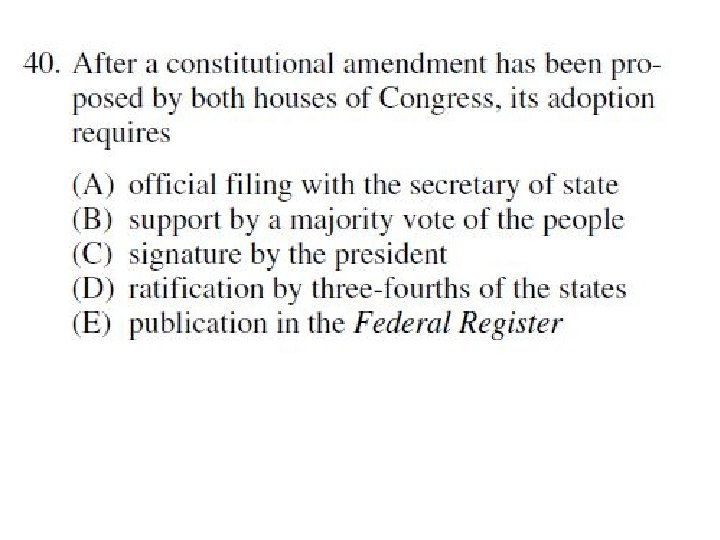
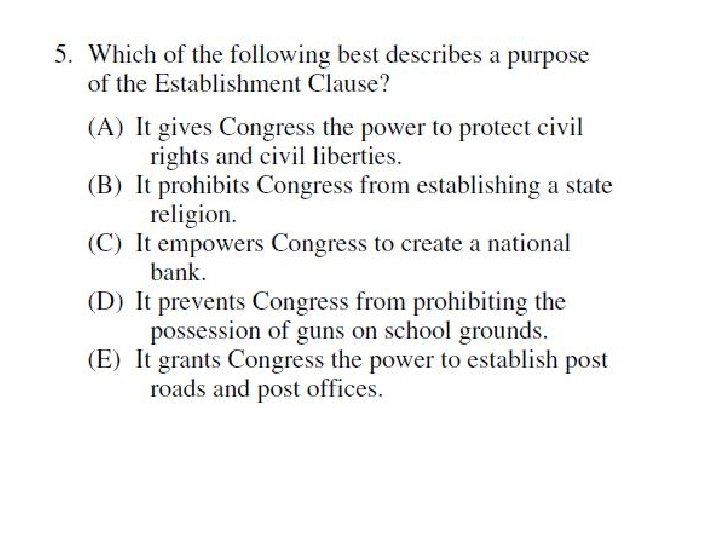
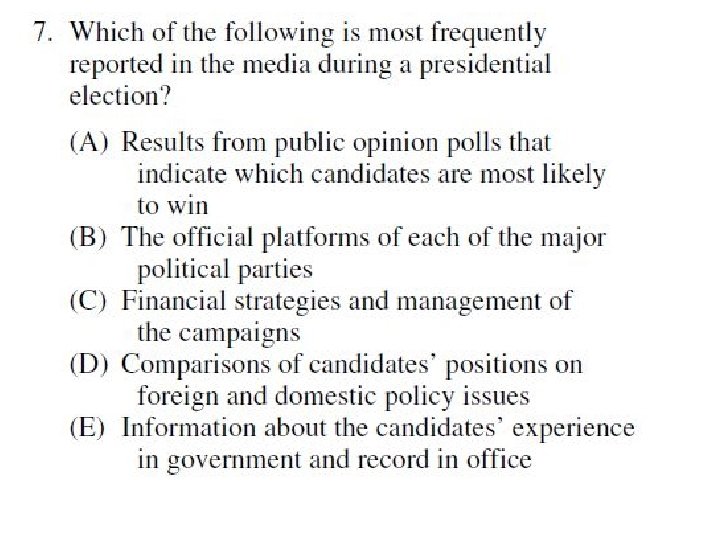
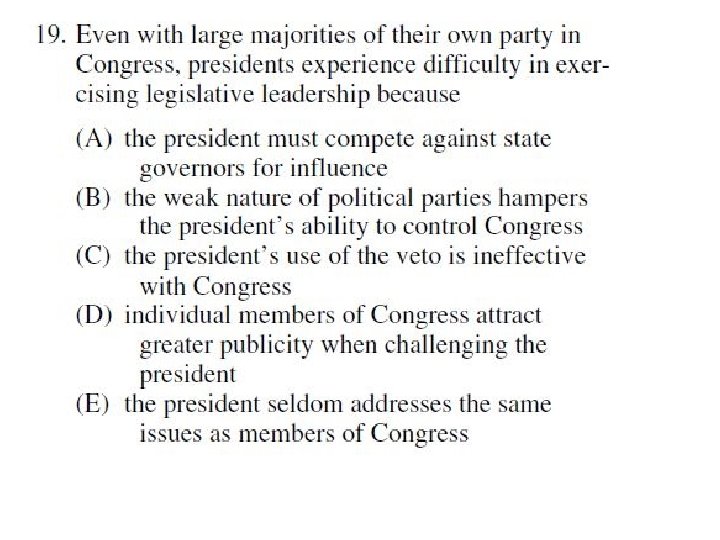
 4 -26 -2014 • As you’re waiting start working through the released questions embedded in your handout
 AP Government Review Sessions Session 3: Sat. April 26 (1: 30 PM- HHS Library) Session 4: Sat. May 3 (9: 30 AM- Freshman Center Lecture Hall Follow @heymisterfitz for updates #Fitz. APGov www. misterfitz. net If you miss a session, you can stream the audio at the above link as well as grab tons of review sources
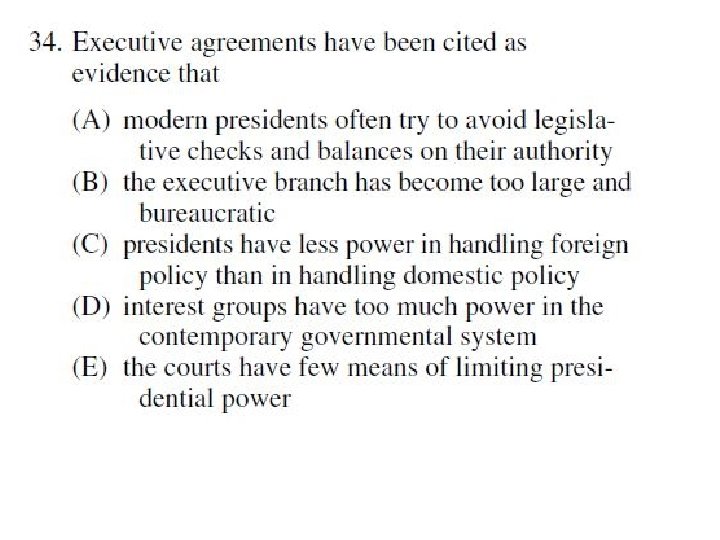
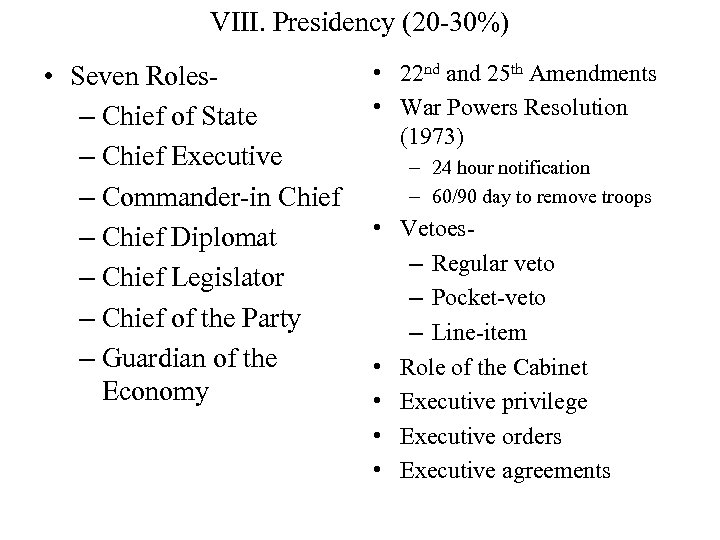 VIII. Presidency (20 -30%) • Seven Roles– Chief of State – Chief Executive – Commander-in Chief – Chief Diplomat – Chief Legislator – Chief of the Party – Guardian of the Economy • 22 nd and 25 th Amendments • War Powers Resolution (1973) – 24 hour notification – 60/90 day to remove troops • Vetoes– Regular veto – Pocket-veto – Line-item • Role of the Cabinet • Executive privilege • Executive orders • Executive agreements
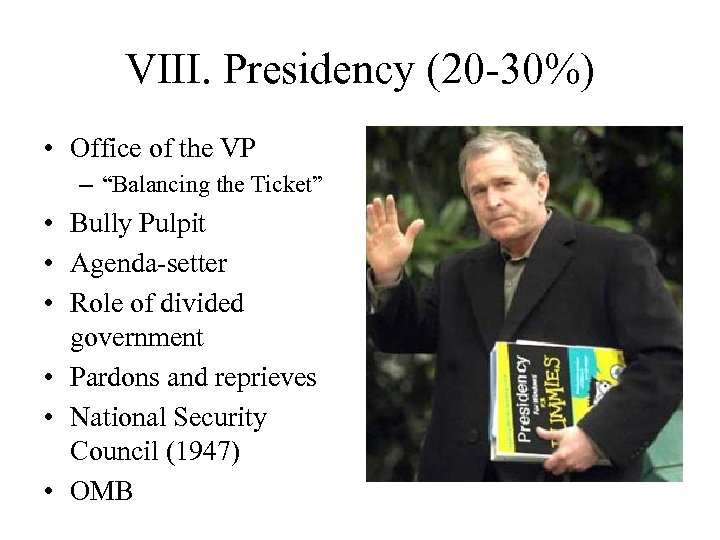 VIII. Presidency (20 -30%) • Office of the VP – “Balancing the Ticket” • Bully Pulpit • Agenda-setter • Role of divided government • Pardons and reprieves • National Security Council (1947) • OMB
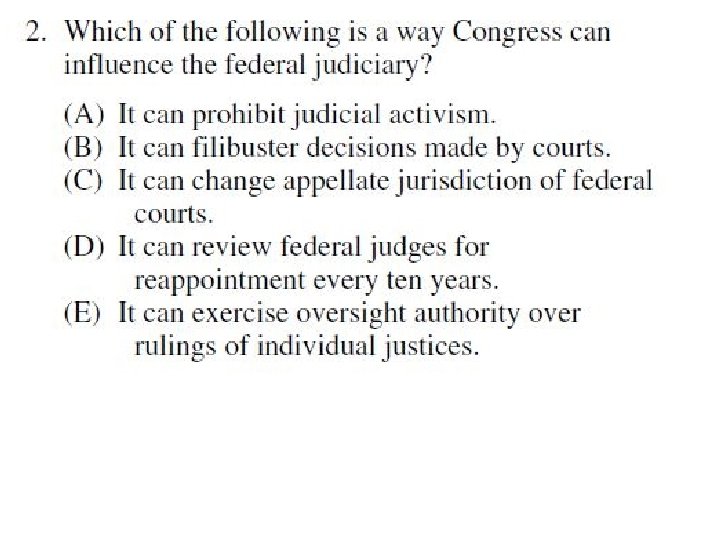
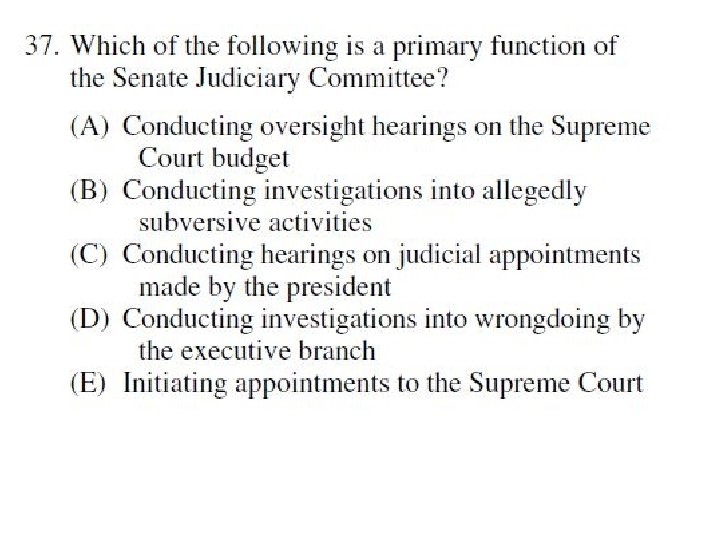
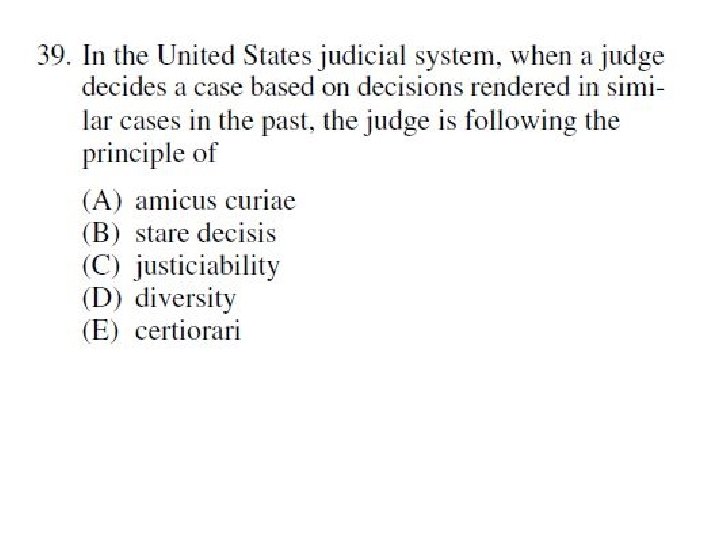
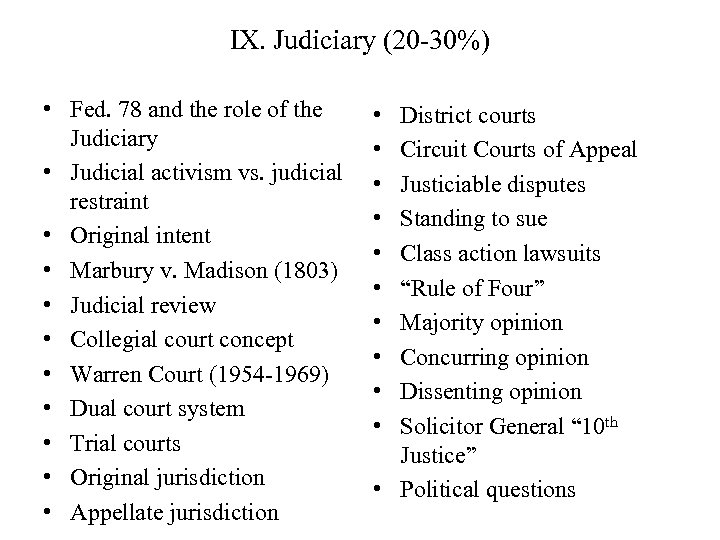 IX. Judiciary (20 -30%) • Fed. 78 and the role of the Judiciary • Judicial activism vs. judicial restraint • Original intent • Marbury v. Madison (1803) • Judicial review • Collegial court concept • Warren Court (1954 -1969) • Dual court system • Trial courts • Original jurisdiction • Appellate jurisdiction • • • District courts Circuit Courts of Appeal Justiciable disputes Standing to sue Class action lawsuits “Rule of Four” Majority opinion Concurring opinion Dissenting opinion Solicitor General “ 10 th Justice” • Political questions
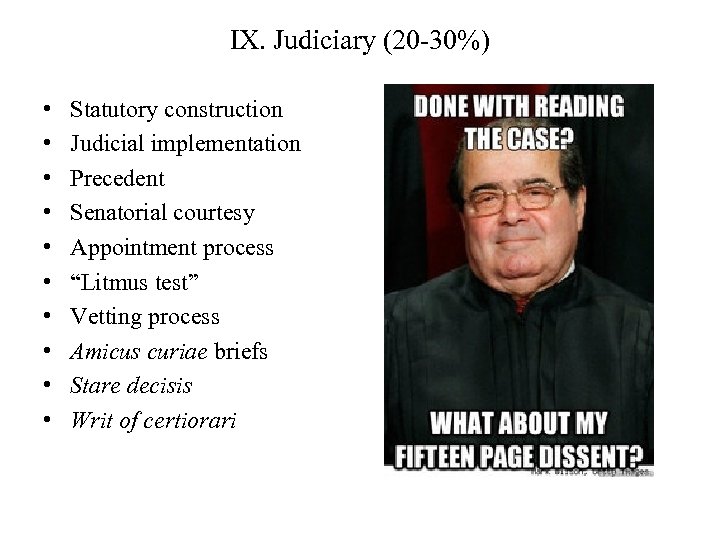 IX. Judiciary (20 -30%) • • • Statutory construction Judicial implementation Precedent Senatorial courtesy Appointment process “Litmus test” Vetting process Amicus curiae briefs Stare decisis Writ of certiorari
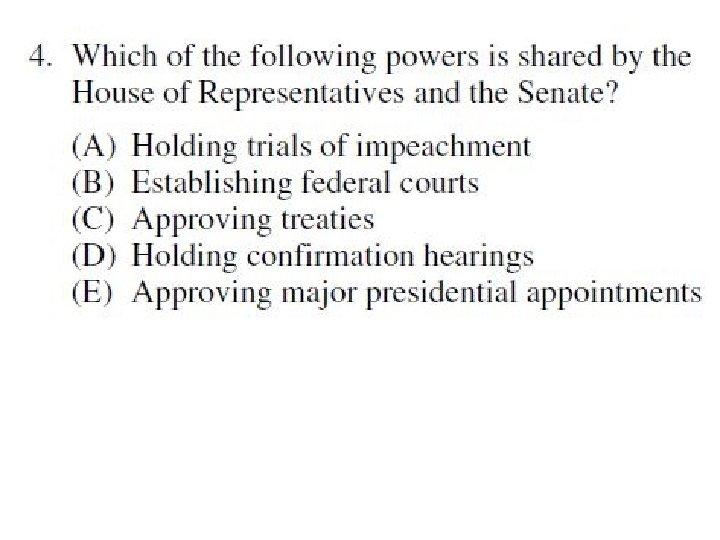
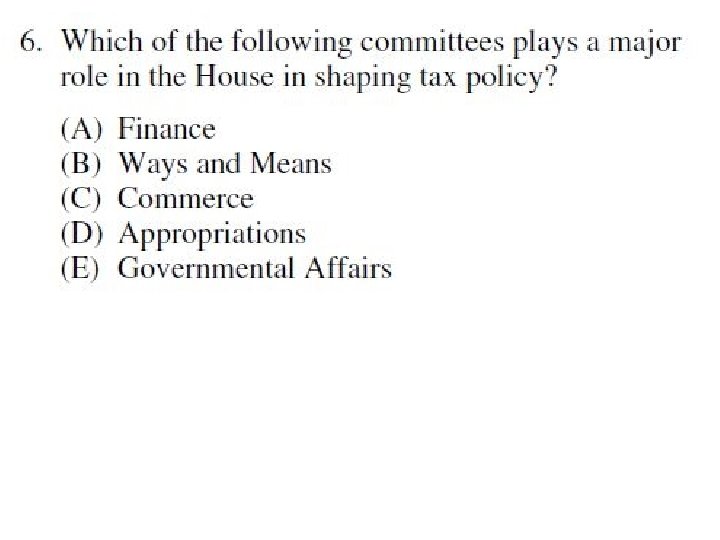
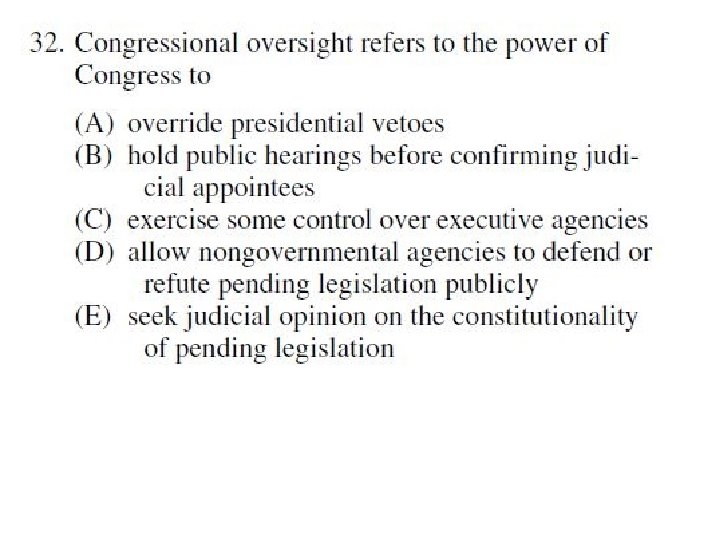
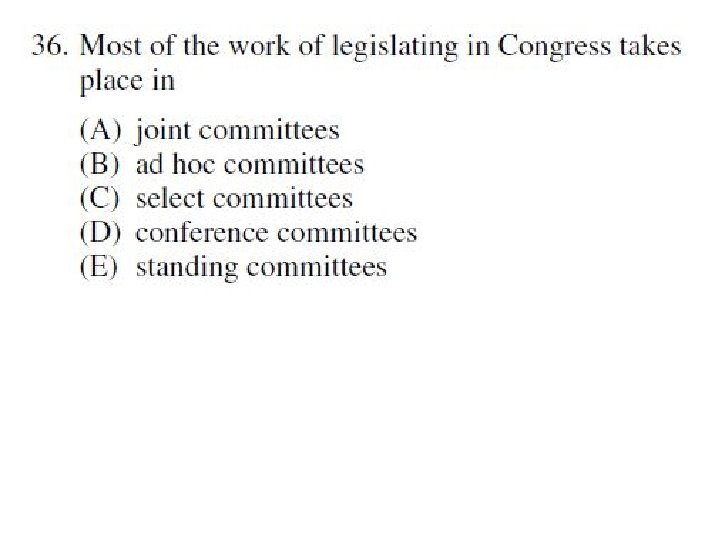
 X. Congress (20 -30%)…Hope you’re sitting down • Coffee pot (House) vs. the Saucer (Senate) • Bicameralism • Enumerated powers • Know your checks and balances • Legislative process • Legislative oversight • Implied powers (Necessary and Proper Clause) • • • Commerce clause Reapportionment Gerrymandering CBO GAO Models of representation– Delegate – Trustee – Politico
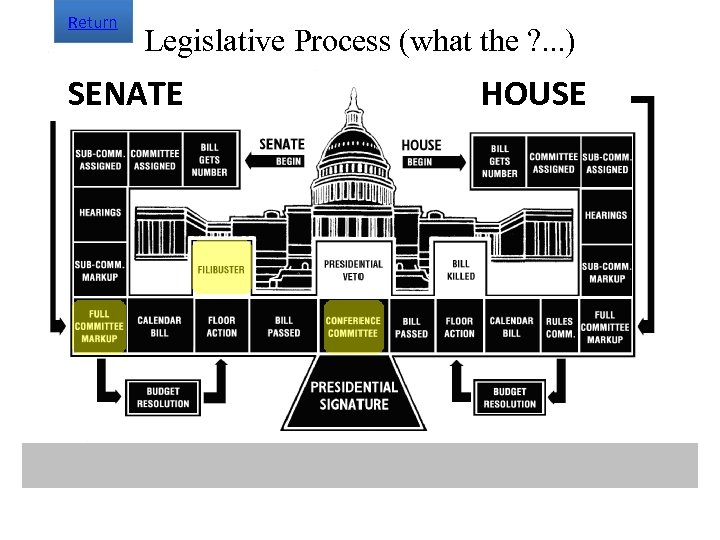 Return Legislative Process (what the ? . . . ) SENATE HOUSE
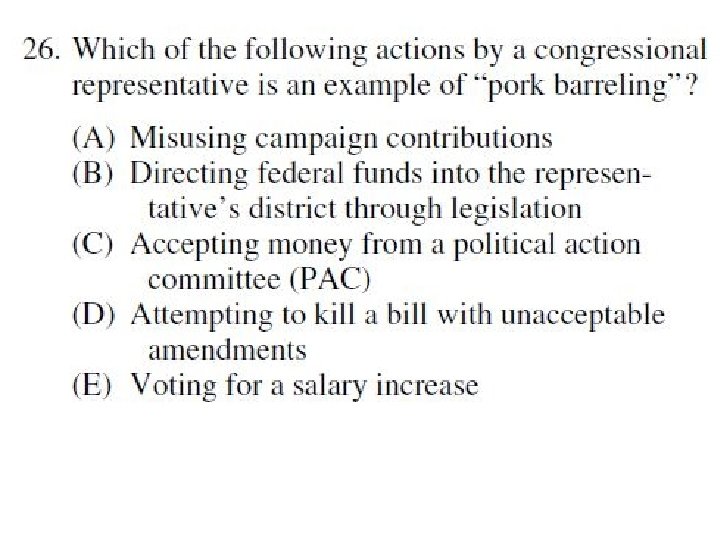
 X. Congress (20 -30%)…Hope you’re sitting down • Incumbency advantage 1. Name recognition 2. Casework 3. Party ID 4. Franking privilege 5. Access to $$$ 6. Political “pork” 7. Position-taking 8. Weak opponents • • • Safe seats Open seats Credit claiming Speaker of the House Pres. Pro Tempore (Senate) • Majority Leader (Senate) • Minority Leader (H/S)
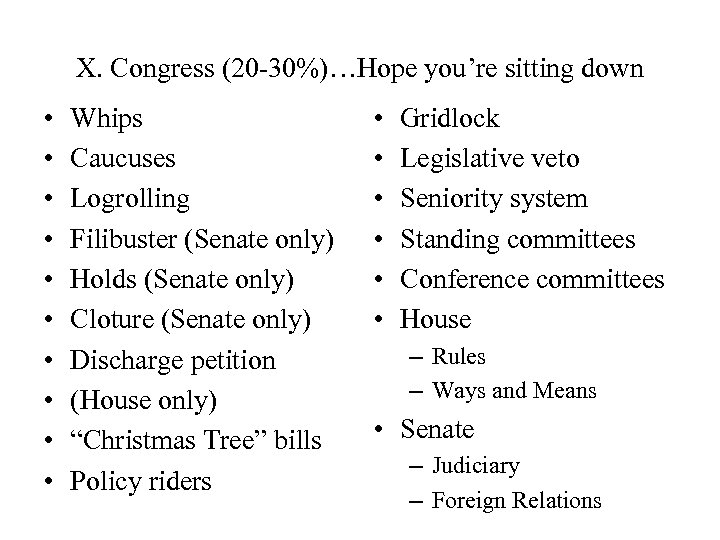 X. Congress (20 -30%)…Hope you’re sitting down • • • Whips Caucuses Logrolling Filibuster (Senate only) Holds (Senate only) Cloture (Senate only) Discharge petition (House only) “Christmas Tree” bills Policy riders • • • Gridlock Legislative veto Seniority system Standing committees Conference committees House – Rules – Ways and Means • Senate – Judiciary – Foreign Relations
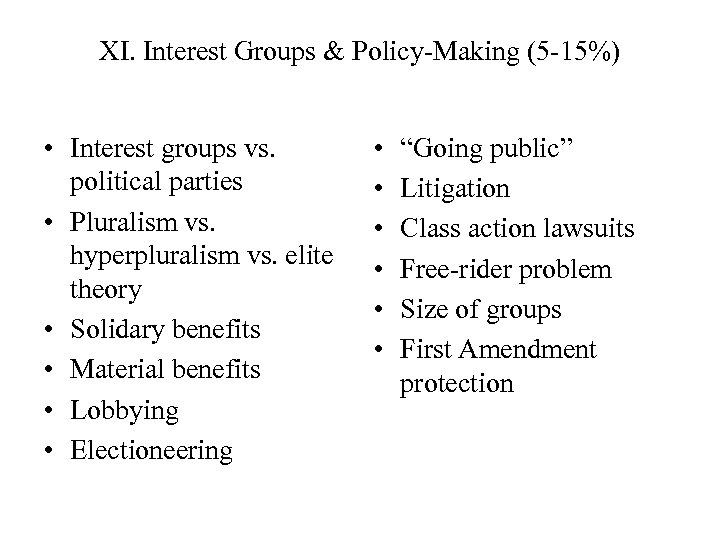 XI. Interest Groups & Policy-Making (5 -15%) • Interest groups vs. political parties • Pluralism vs. hyperpluralism vs. elite theory • Solidary benefits • Material benefits • Lobbying • Electioneering • • • “Going public” Litigation Class action lawsuits Free-rider problem Size of groups First Amendment protection
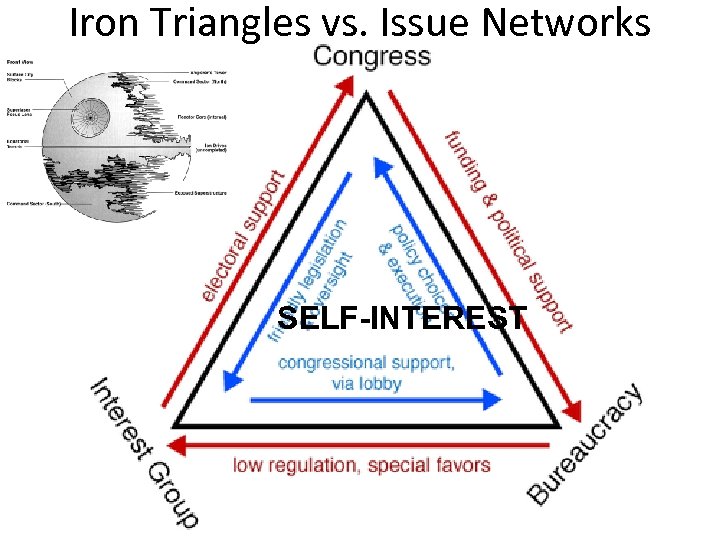 Iron Triangles vs. Issue Networks SELF-INTEREST
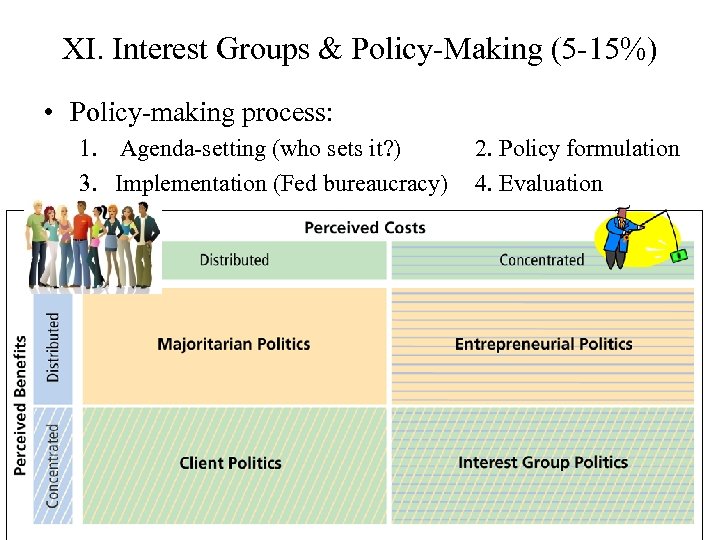 XI. Interest Groups & Policy-Making (5 -15%) • Policy-making process: 1. Agenda-setting (who sets it? ) 3. Implementation (Fed bureaucracy) 2. Policy formulation 4. Evaluation
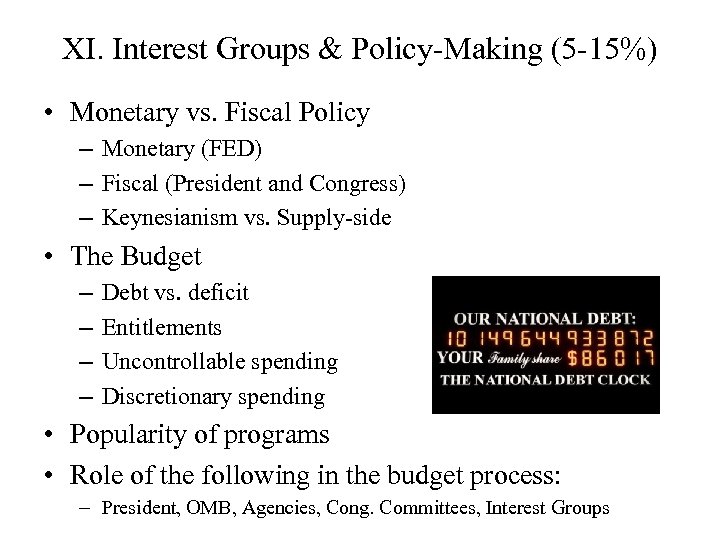 XI. Interest Groups & Policy-Making (5 -15%) • Monetary vs. Fiscal Policy – Monetary (FED) – Fiscal (President and Congress) – Keynesianism vs. Supply-side • The Budget – – Debt vs. deficit Entitlements Uncontrollable spending Discretionary spending • Popularity of programs • Role of the following in the budget process: – President, OMB, Agencies, Cong. Committees, Interest Groups
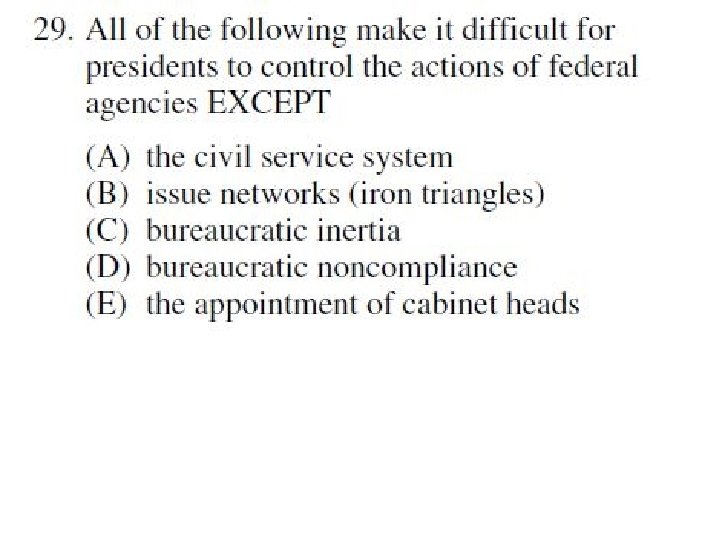
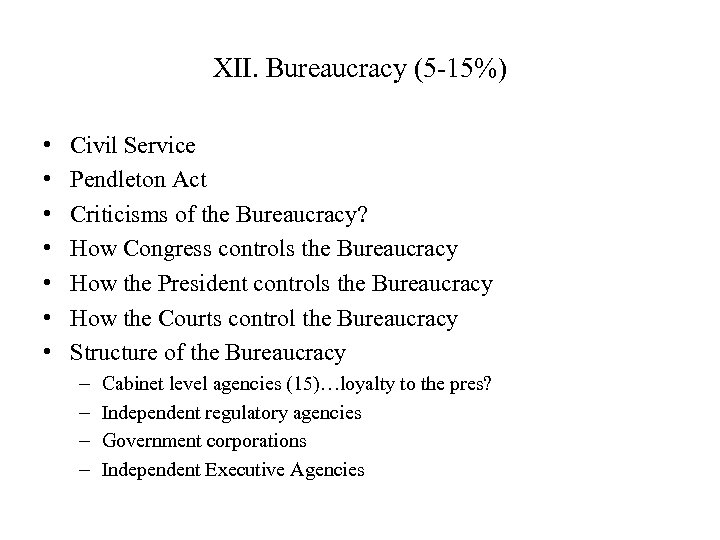 XII. Bureaucracy (5 -15%) • • Civil Service Pendleton Act Criticisms of the Bureaucracy? How Congress controls the Bureaucracy How the President controls the Bureaucracy How the Courts control the Bureaucracy Structure of the Bureaucracy – – Cabinet level agencies (15)…loyalty to the pres? Independent regulatory agencies Government corporations Independent Executive Agencies
 Some final thoughts • I will post the keys on my website over the weekend: www. misterfitz. net • Good luck!
 Return
 Return Madisonian Model
 Return Dual vs. Cooperative Federalism
 Return Incorporation Doctrine Gitlow v. New York (1925)
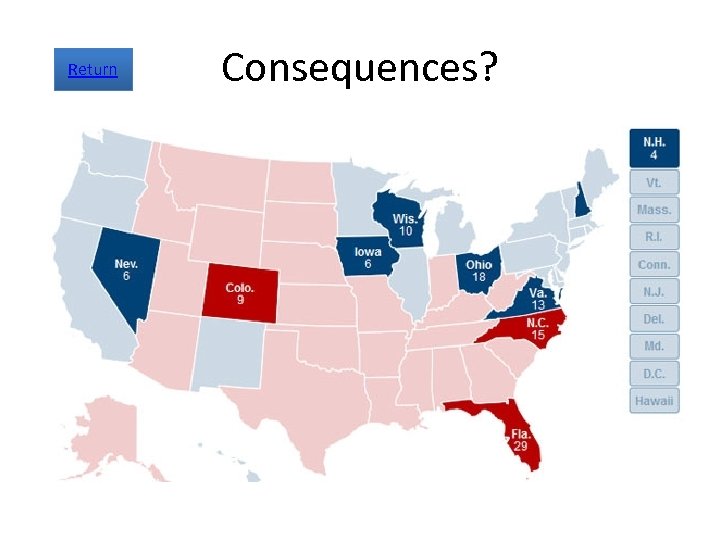
 Road to the White House Iowa then New Hampshire
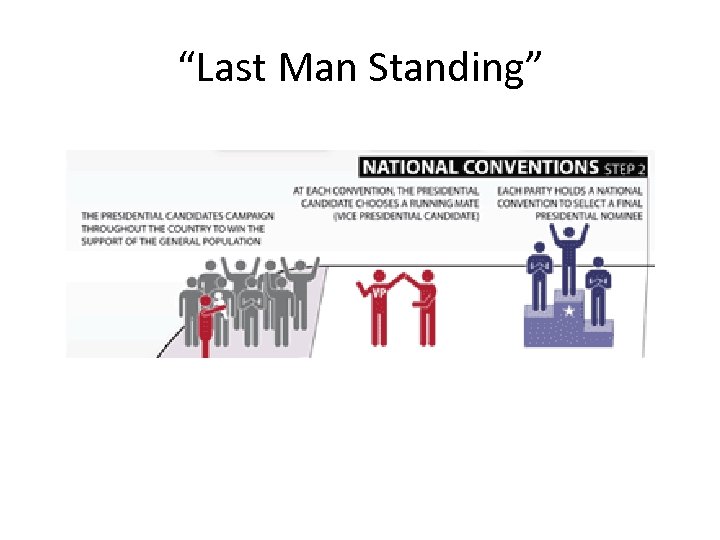 “Last Man Standing”
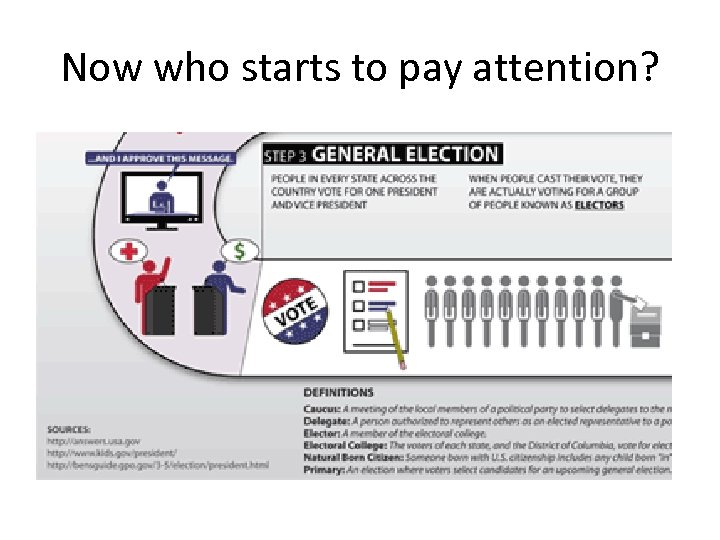 Now who starts to pay attention?
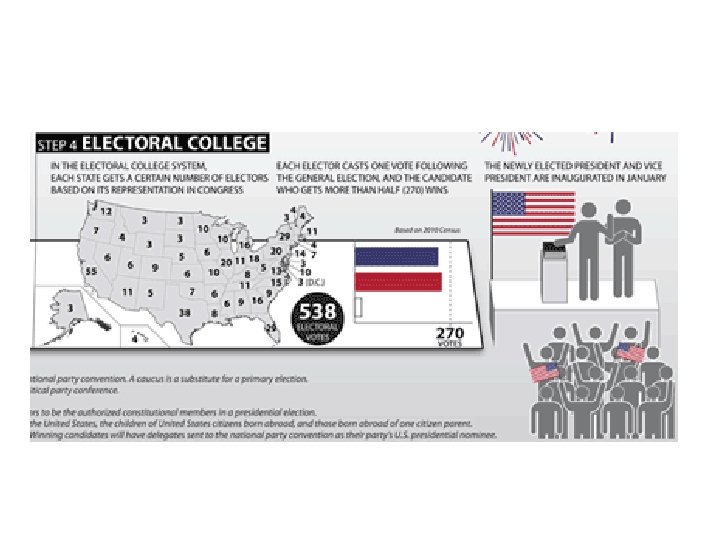
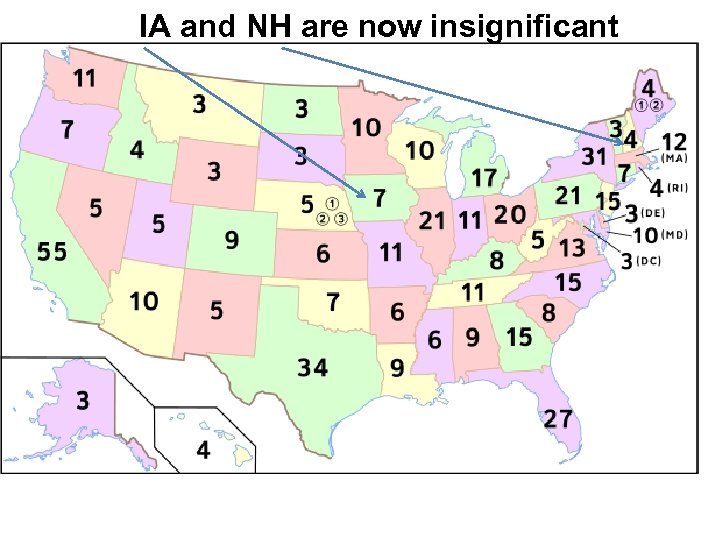 IA and NH are now insignificant
 Return Consequences?
 Campaign Finance Simplified Return “Big Tex” (private citizen) i r Ha L $d ? ts mi Soft $ So ft LIM $- N ITS O ! Limits? Quimby for America (PAC)Private citizens May contribute directly (Must report to FEC) Americans for Quimby (527) Private citizens May NOT contribute directly or coordinate with (Does NOT have to report to FEC)