


 Скачать презентацию AP Government and Politics Chapter 1 Why Government
20a3daabc875b7acde5e000afe4134ac.ppt
- Количество слайдов: 32
 AP Government and Politics Chapter 1 Why Government? Theories of Democracy
 Hajlelluha, You’re Finally On Your Own… • What is the first thing that you would do, that you haven’t done because of your current situation, if you were totally independent? • • • What would you buy? Would you go somewhere? Would you move into your own place?


 …Are Any of Us Completely Independent? • What did you do today that was made easier by what someone else had done first? • What help (aid, assistance, wisdom) did you receive today? • What mistake did you NOT make because someone goofed up first…and you learned?
 As Humans… • …We’re social beings (Locke). We need to be with other people. We have self-interest. • …Being with other people causes “drama. ” • …We need somethin’ to keep the madness of the human experience contained.
 What If We Had No Structure? ? • What would the world be like with no rules? • Would it be fun? . . . …Maybe for a while, but then what? • How would people act? • Would you be in school today?
 CHAOS!!! • Got Food? • Got a Government? • Got an Earthquake?
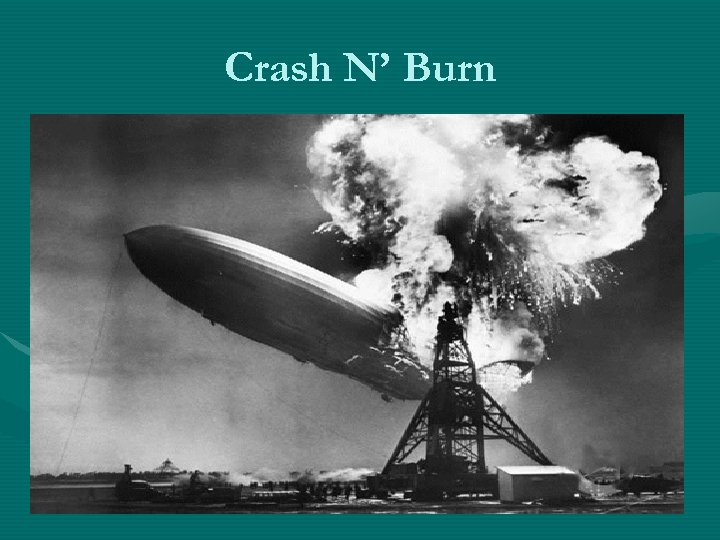 Crash N’ Burn
 Chapter 1
 Do We Need A Government? • Does America (and people in general) really need government control? • How should we govern and what should government do? • Who actually holds the power?
 What is politics?
 What Governments Provide: How are these influenced by politics? 1. 2. 3. 4. 5. Maintain Public Defense Provide Public Services Preserve Order Socialize the Young Collect Taxes How is Haiti doin’?
 Democracy • Traditional • Contemporary Theories – Pluralist – Elite and Class – Hyperplualism
 Policy/Public Agenda • What is this? • What is on the agenda today? • What was on it last year at this time? • Why does it change and who changes it?
 Traditional Democracy’s 5 Principles Any problems here? 1. Equality in voting • Not necessarily universal 2. Effective Participation • Adequate and equal opportunities 3. Enlightened Understanding • Freedom of speech needed 4. Citizen Control of Agenda • Collective Control 5. Inclusion • Rights and citizenship to those it governs Majority rule with minority rights required
 Contemporary theories look to answer “Who actually governs? ”
 Contemporary - Pluralist Theory • Competition among groups to influence policy and politics. No group(s) monopolize. • UAW vs. Chamber of Commerce – Interest Groups – Compromise to make policy reflecting public • Separation of Powers allows for multiple policy avenues • Golf vs. golf leagues
 Contemporary – Elite and Class Theory • An upper-class rules • Wealth is the basis of power – Pay-to-Play – Buying access - is this a reality? • Big business, tax cuts, and policy – BP • Reagan and Bush policies…Obama policy? ?
 Contemporary – Hyperpluralism • • • Interest groups (IG) gone bezerk IG so powerful that government is weakend Too many policy avenues – Either to promote or curtail policy • Political leaders pander to IG, which may not reflect public interest – Michigan budget process
 Where are we now? Where have we been? Pluralist Elite/Class Hyperpluralism
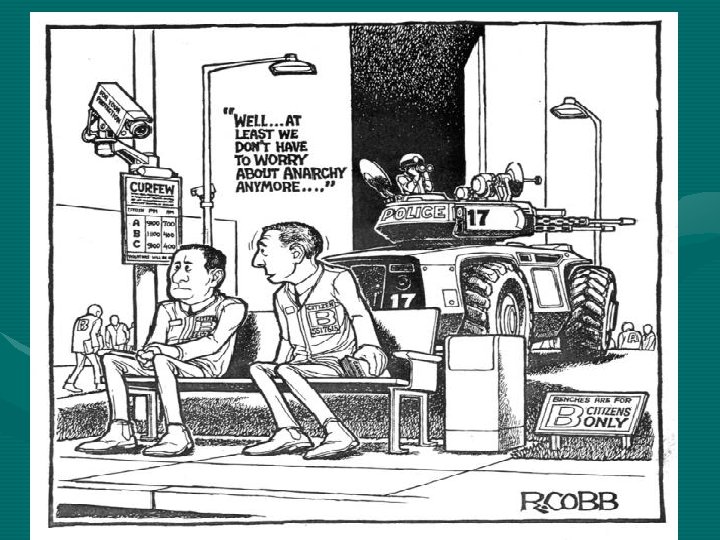
 What Do Governments Work To Achieve? 1. Power 2. Authority 3. Legitimacy 4. Sovereignty
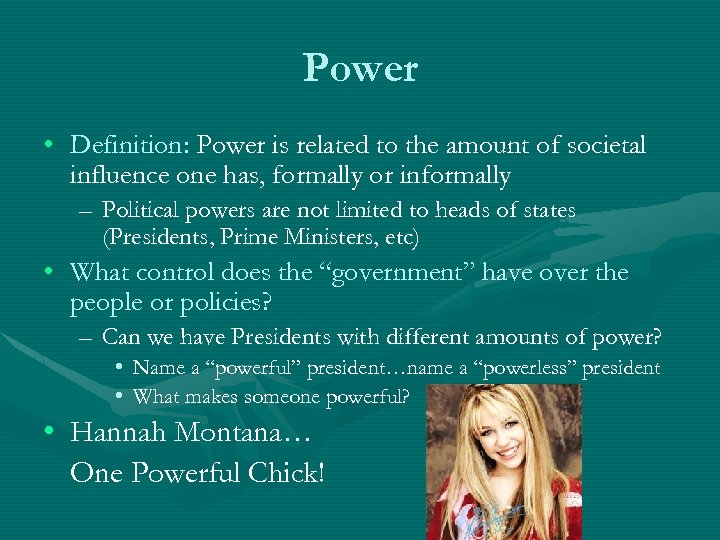 Power • Definition: Power is related to the amount of societal influence one has, formally or informally – Political powers are not limited to heads of states (Presidents, Prime Ministers, etc) • What control does the “government” have over the people or policies? – Can we have Presidents with different amounts of power? • Name a “powerful” president…name a “powerless” president • What makes someone powerful? • Hannah Montana… One Powerful Chick!
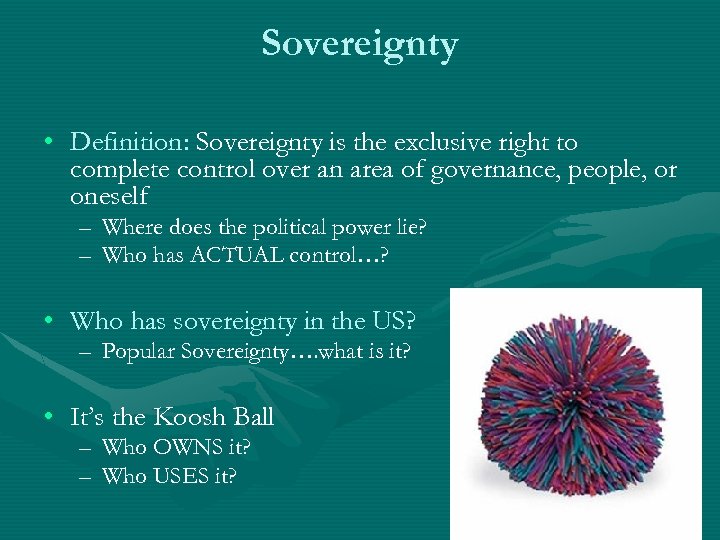 Sovereignty • Definition: Sovereignty is the exclusive right to complete control over an area of governance, people, or oneself – Where does the political power lie? – Who has ACTUAL control…? • Who has sovereignty in the US? – Popular Sovereignty…. what is it? • It’s the Koosh Ball – Who OWNS it? – Who USES it?
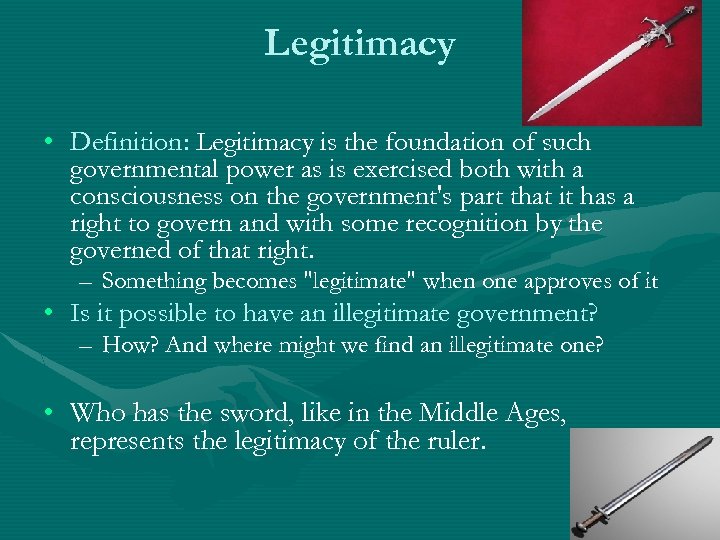 Legitimacy • Definition: Legitimacy is the foundation of such governmental power as is exercised both with a consciousness on the government's part that it has a right to govern and with some recognition by the governed of that right. – Something becomes "legitimate" when one approves of it • Is it possible to have an illegitimate government? – How? And where might we find an illegitimate one? • Who has the sword, like in the Middle Ages, represents the legitimacy of the ruler.
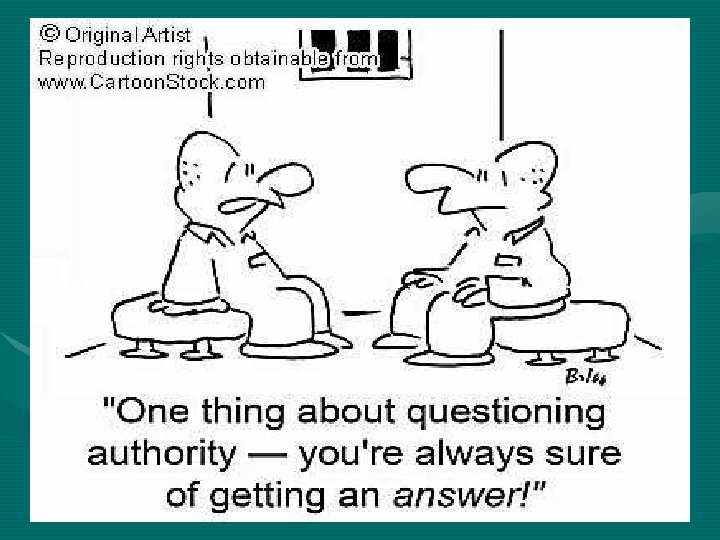
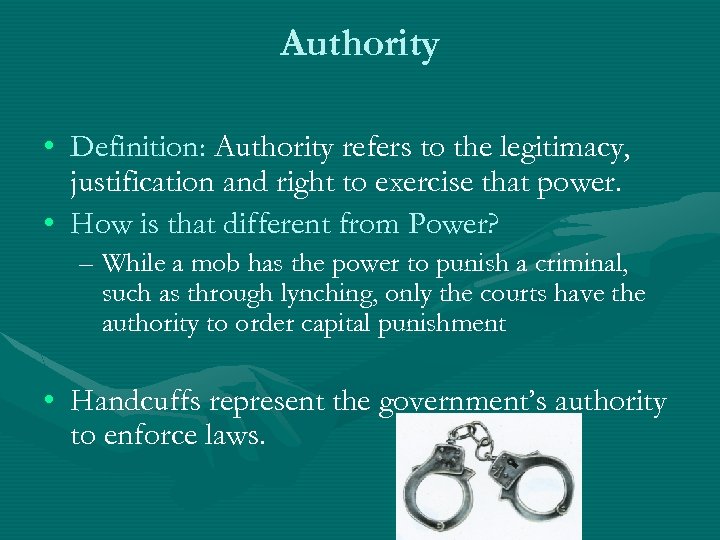 Authority • Definition: Authority refers to the legitimacy, justification and right to exercise that power. • How is that different from Power? – While a mob has the power to punish a criminal, such as through lynching, only the courts have the authority to order capital punishment • Handcuffs represent the government’s authority to enforce laws.
 Major Political Theories For centuries historians, philosophers, and others have pondered the question of the origin of the state. There are four main theories as the most widely accepted explanations for the origin of the state. The Force Theory The Evolutionary Theory The Divine Right Theory The Social Contract Theory
 Origins of the State • The Force Theory: – One person or small group claims control and forces all in that territory to submit to their rule • The Evolutionary Theory: – Out of the family structure…head of household is head of “government” – Tribal chiefs…out of respect more than force
 Origins of the State • The Divine Right Theory: – Always has religious influence!! – God has put a person or family in a position to rule over a territory that God has given them • The leader can never be wrong…God gives them power to create law • If against Government, against God • Organized religion, nature (China) will determine when person or family should no longer be in power. • Social Contract Theory – Arose out of a voluntary act – Governed allow themselves to be governed by a state • Government only exists to help citizens…if they do not? ?