


 Скачать презентацию AP ENVIRONMENTAL SCIENCE ENERGY RESOURCES CONUMPTION AP
b724873bd4e36bd403fa0bf6888c0637.ppt
- Количество слайдов: 15
 AP ENVIRONMENTAL SCIENCE ENERGY RESOURCES & CONUMPTION AP EXAM REVIEW QUESTIONS Answer the following questions on a sheet of paper. Check your answers by the final slide.
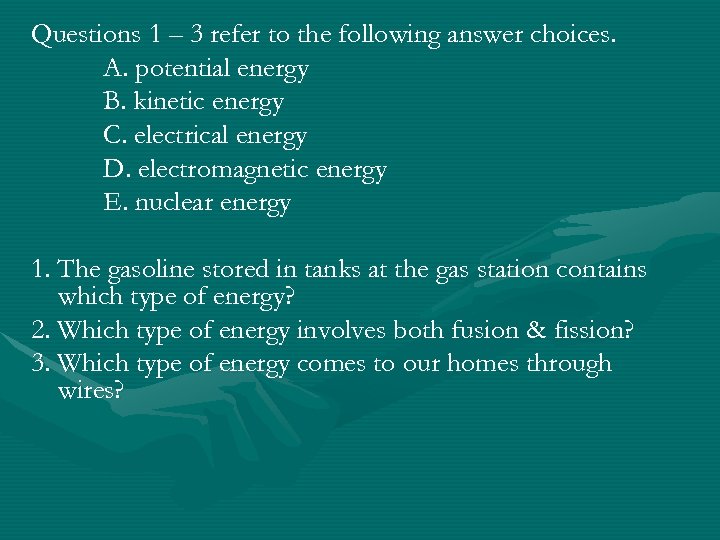 Questions 1 – 3 refer to the following answer choices. A. potential energy B. kinetic energy C. electrical energy D. electromagnetic energy E. nuclear energy 1. The gasoline stored in tanks at the gas station contains which type of energy? 2. Which type of energy involves both fusion & fission? 3. Which type of energy comes to our homes through wires?
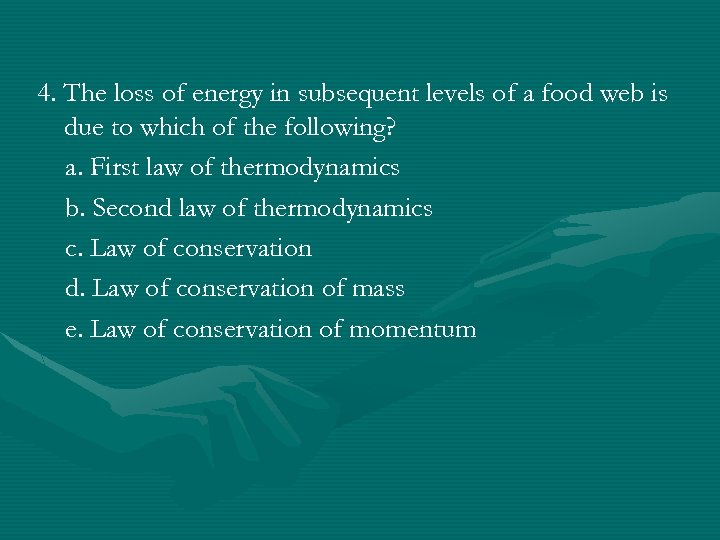 4. The loss of energy in subsequent levels of a food web is due to which of the following? a. First law of thermodynamics b. Second law of thermodynamics c. Law of conservation d. Law of conservation of mass e. Law of conservation of momentum
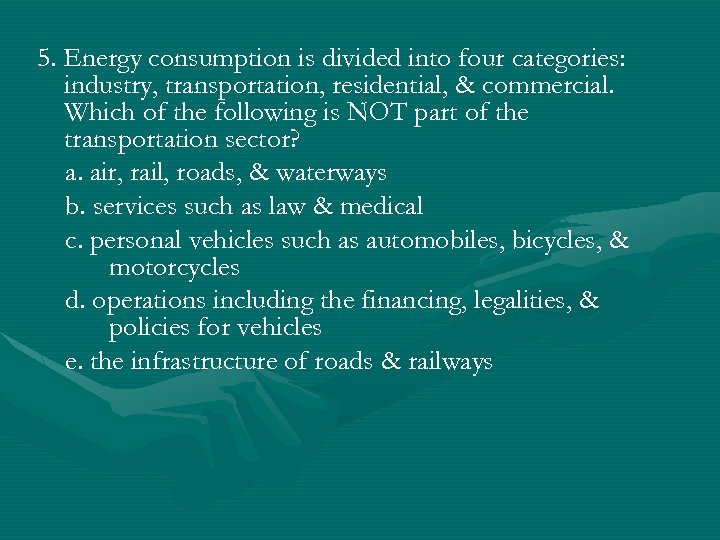 5. Energy consumption is divided into four categories: industry, transportation, residential, & commercial. Which of the following is NOT part of the transportation sector? a. air, rail, roads, & waterways b. services such as law & medical c. personal vehicles such as automobiles, bicycles, & motorcycles d. operations including the financing, legalities, & policies for vehicles e. the infrastructure of roads & railways
 6. Which fuel source is NOT being considered for future energy use? a. clean coal b. methane hydrates c. oil shale d. petroleum e. tar sands
 7. Which of the following is NOT considered a fossil fuel? a. graphite b. coal c. petroleum d. natural gas e. methane hydrates
 8. Which of the following is NOT an advantage of coal production? a. high net-energy yield b. subsidies to keep the prices low c. non-explosiveness d. estimated large supply of undiscovered reserves e. decreased biodiversity
 9. Which of the following is NOT an advantage of nuclear power? a. No air pollutants are produced. b. Decommissioning is expensive. c. Water pollution is low. d. Little carbon dioxide is released during processing. e. Disruption of the land is moderate.
 10. Dams have both advantages & disadvantages. Which of the following is an advantage of building a dam across a river? a. large flooded area behind the dam b. controlled downstream flooding c. sediments building up behind the dam d. increased water evaporation e. building expenses
 11. If you live in the Southwest & you want to make your house more energy-efficient, which of the following would NOT be a way to do so? a. replacing your 25 year old air conditioner b. replacing your single-paned windows with doublepaned windows c. removing ceiling fans because you replaced your air conditioner d. adding weather stripping e. adding insulation
 12. What is the percentage change in average passenger car fuel mileage from 1978 at 18 mpg to 2010 at 27. 5 mpg? (You may NOT use a calculator. ) a. 18 b. 26. 2 c. 27. 0 d. 37. 5 e. 52. 8
 13. Which of the following is NOT a disadvantage of solar energy? a. It is inefficient where sunlight is seasonal. b. Battery technology is limited. c. It is great for remote locations. d. Efficiency is low. e. Systems get old & need to be replaced.
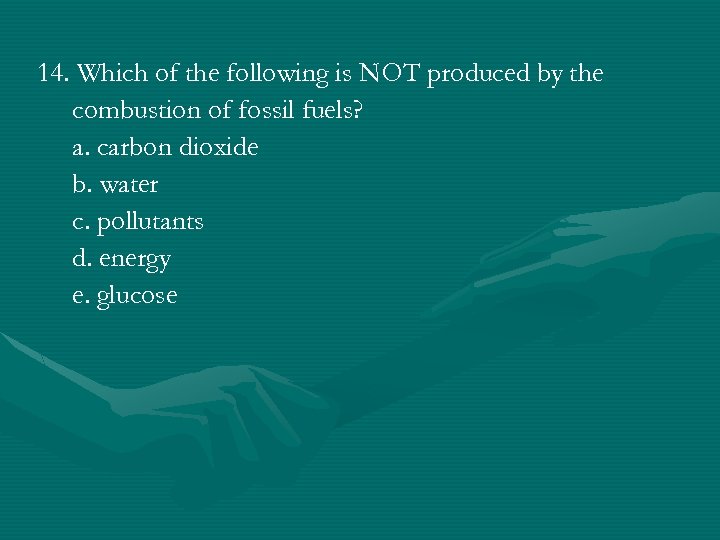 14. Which of the following is NOT produced by the combustion of fossil fuels? a. carbon dioxide b. water c. pollutants d. energy e. glucose
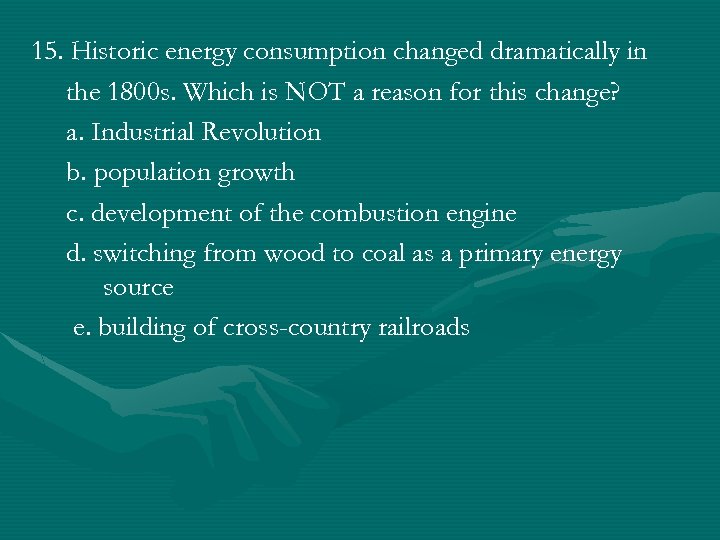 15. Historic energy consumption changed dramatically in the 1800 s. Which is NOT a reason for this change? a. Industrial Revolution b. population growth c. development of the combustion engine d. switching from wood to coal as a primary energy source e. building of cross-country railroads
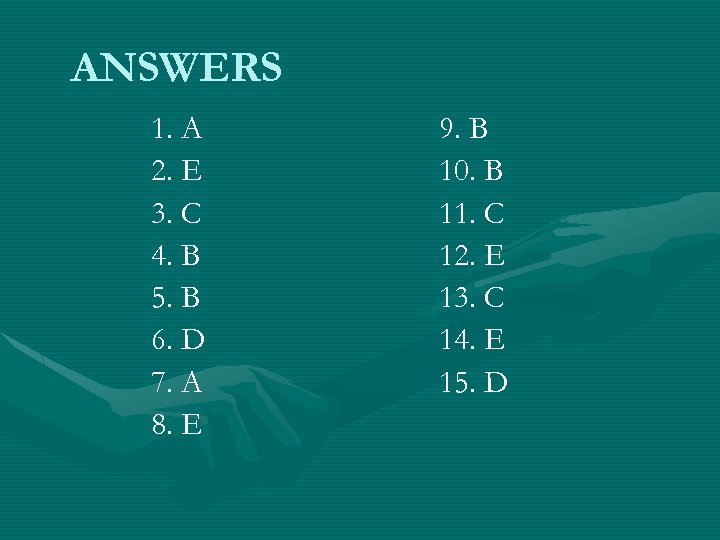 ANSWERS 1. A 2. E 3. C 4. B 5. B 6. D 7. A 8. E 9. B 10. B 11. C 12. E 13. C 14. E 15. D