 Скачать презентацию AOSS 401 Fall 2007 Lecture 2 September 7
2c4c9e159c290e63904b7e4e1a45ae80.ppt
- Количество слайдов: 80



AOSS 401, Fall 2007 Lecture 2 September 7, 2007 Richard B. Rood (Room 2525, SRB) rbrood@umich. edu 734 -647 -3530 Derek Posselt (Room 2517 D, SRB) dposselt@umich. edu 734 -936 -0502

Class News • Ctools site (AOSS 401 001 F 07) – Calendar (completed for whole semester) – Syllabus – Lectures • Posted on day of – Homework (and solutions) • Homework has been posted – Under “resources” in homework folder • Due next Wednesday (September 12, 2007)

Class news: Schedule issues • Currently 4. 5 hours are scheduled for a 4. 0 hour course. (So we have some flexibility; we can “cancel” 4 classes) – There will be no class on September 14 – There will be no class on October 12 – There will be no class on November 21 – When to schedule final exam?
Weather • National Weather Service – http: //www. nws. noaa. gov/ – Model forecasts: http: //www. hpc. ncep. noaa. gov/basicwx/day 07 loop. html • Weather Underground – http: //www. wunderground. com/cgibin/findweather/get. Forecast? query=ann+arbor – Model forecasts: http: //www. wunderground. com/modelmaps/maps. asp ? model=NAM&domain=US
Outline • Pressure gradient force • Gravitational Force • Viscous force • Centrifugal Force • Coriolis Force Should be review. So we are going fast. You have the power to slow us down.
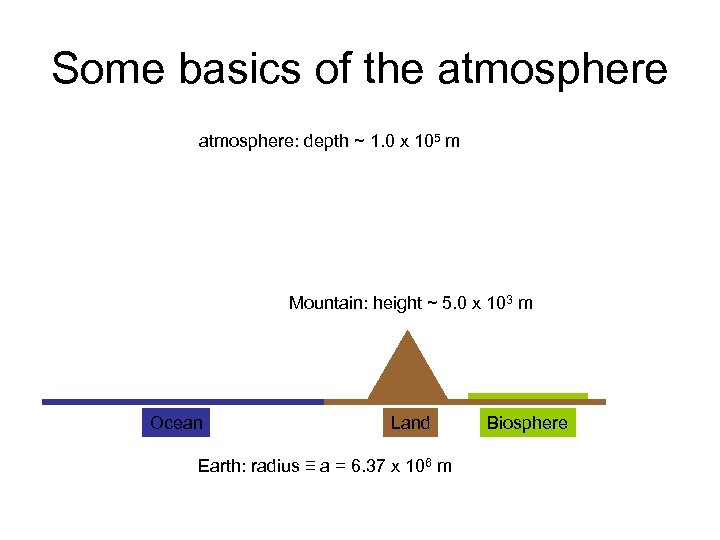
Some basics of the atmosphere: depth ~ 1. 0 x 105 m Mountain: height ~ 5. 0 x 103 m Ocean Land Earth: radius ≡ a = 6. 37 x 106 m Biosphere
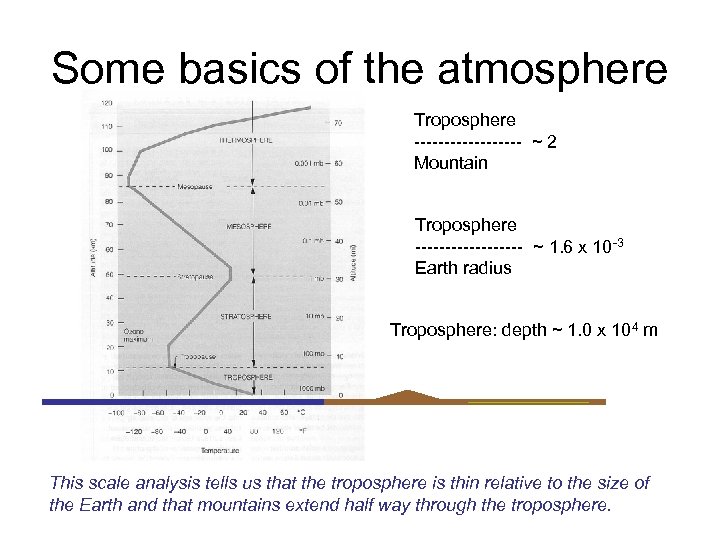
Some basics of the atmosphere Troposphere --------- ~ 2 Mountain Troposphere --------- ~ 1. 6 x 10 -3 Earth radius Troposphere: depth ~ 1. 0 x 104 m This scale analysis tells us that the troposphere is thin relative to the size of the Earth and that mountains extend half way through the troposphere.
Newton’s Law of Motion F = ma Force = mass x acceleration In general we will work with force per unit mass; hence, a = F/m And with the definition of acceleration Bold will represent vectors.
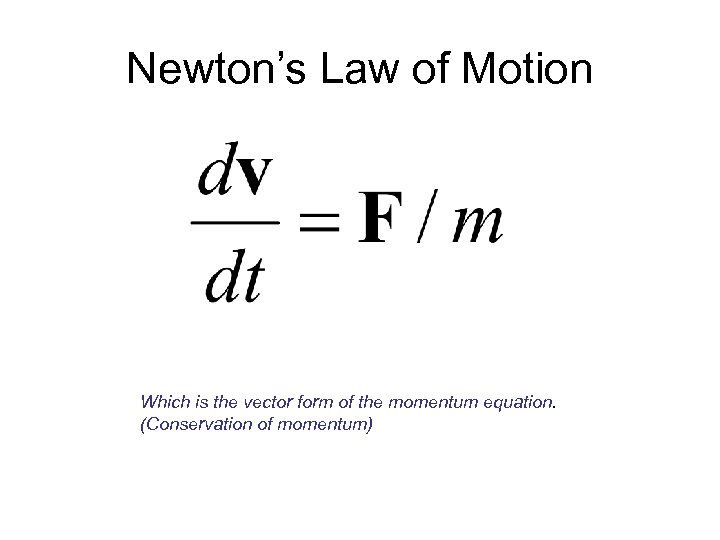
Newton’s Law of Motion Which is the vector form of the momentum equation. (Conservation of momentum)
What are the forces? • • • Pressure gradient force Gravitational force Viscous force Apparent forces Can you think of other classical forces and would they be important in the Earth’s atmosphere? • Total Force is the sum of all of these forces.
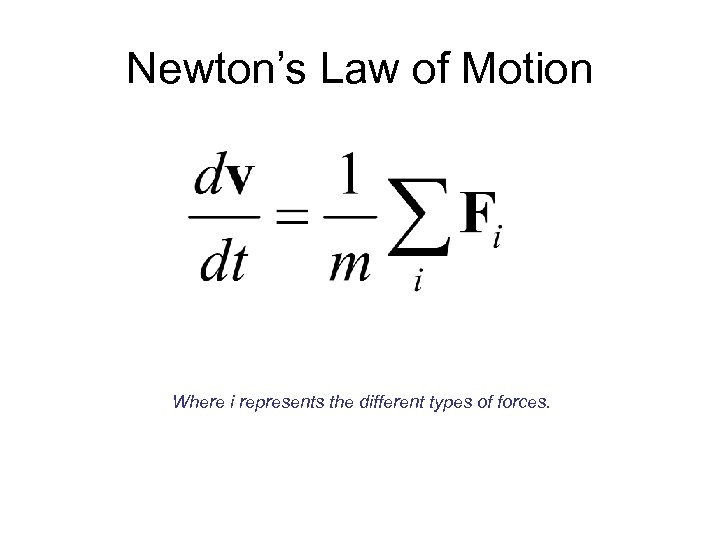
Newton’s Law of Motion Where i represents the different types of forces.
How do we express the forces? • In general, we assume the existence of an idealized parcel or “particle” of fluid. • We calculate the forces on this idealized parcel. • We take the limit of this parcel being infinitesimally small. – This yields a continuous, as opposed to discrete, expression of the force. • Use the concept of the continuum to extend this notion to the entire fluid domain.
An intrinsic assumption • There is an equation of state that describes thermodynamic properties of the fluid, the air.
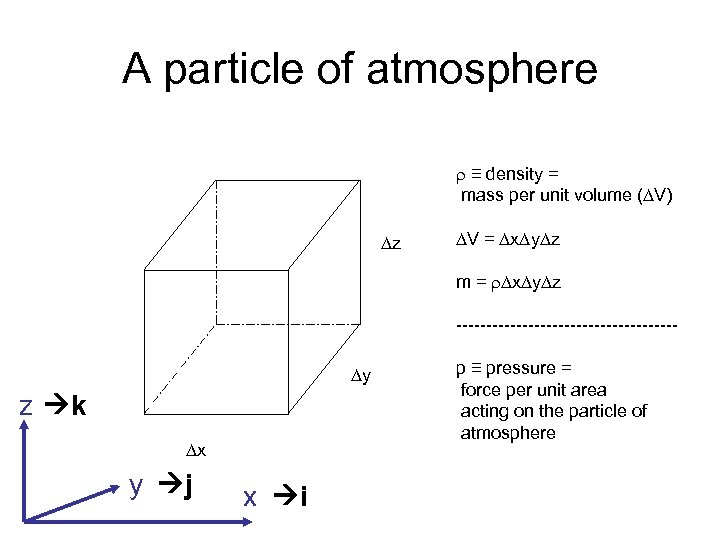
A particle of atmosphere r ≡ density = mass per unit volume (DV) Dz DV = Dx. Dy. Dz m = r. Dx. Dy. Dz ------------------- Dy z k Dx y j x i p ≡ pressure = force per unit area acting on the particle of atmosphere
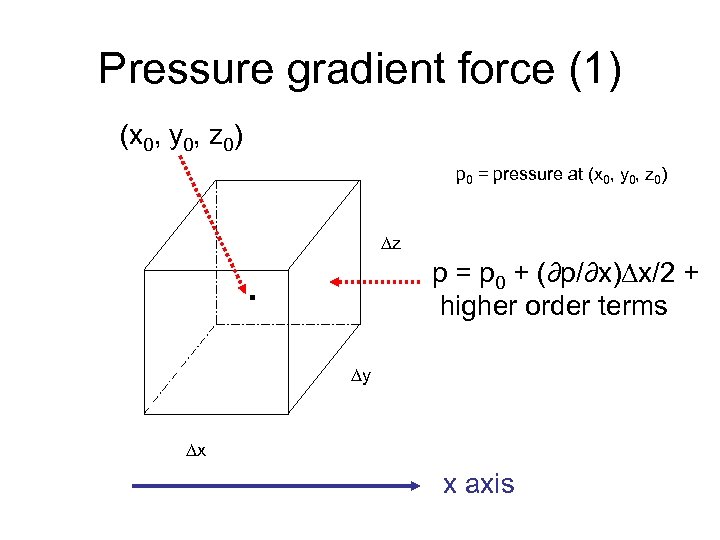
Pressure gradient force (1) (x 0, y 0, z 0) p 0 = pressure at (x 0, y 0, z 0) Dz p = p 0 + (∂p/∂x)Dx/2 + higher order terms . Dy Dx x axis
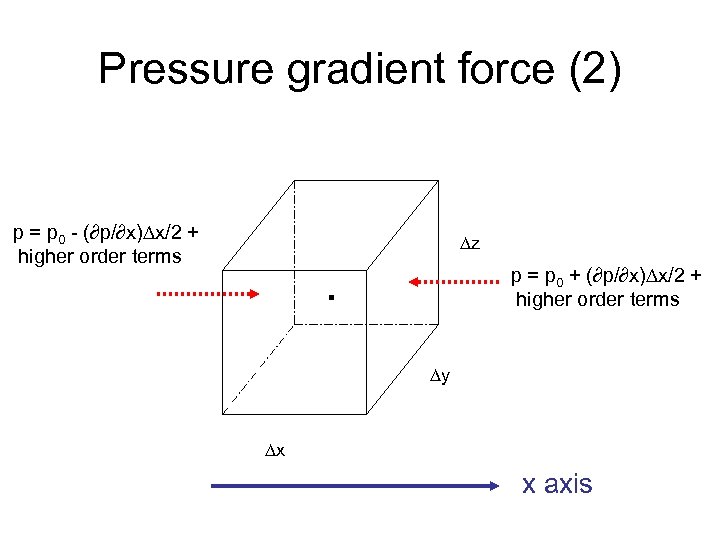
Pressure gradient force (2) p = p 0 - (∂p/∂x)Dx/2 + higher order terms Dz . p = p 0 + (∂p/∂x)Dx/2 + higher order terms Dy Dx x axis
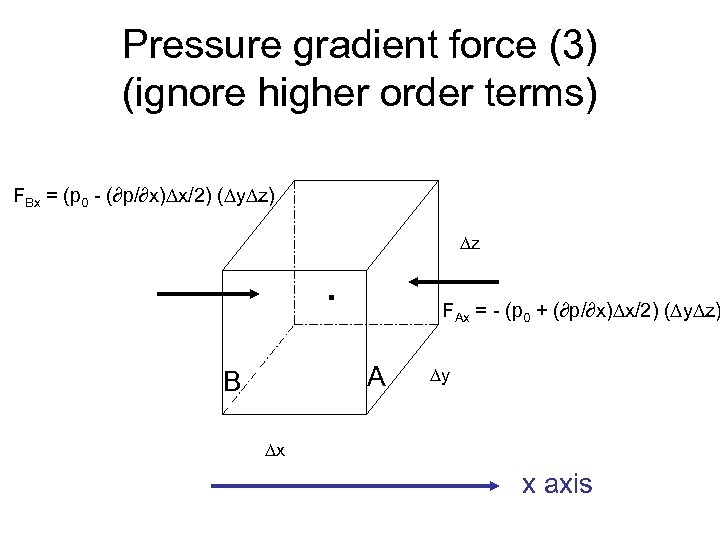
Pressure gradient force (3) (ignore higher order terms) FBx = (p 0 - (∂p/∂x)Dx/2) (Dy. Dz) Dz . FAx = - (p 0 + (∂p/∂x)Dx/2) (Dy. Dz) A B Dy Dx x axis
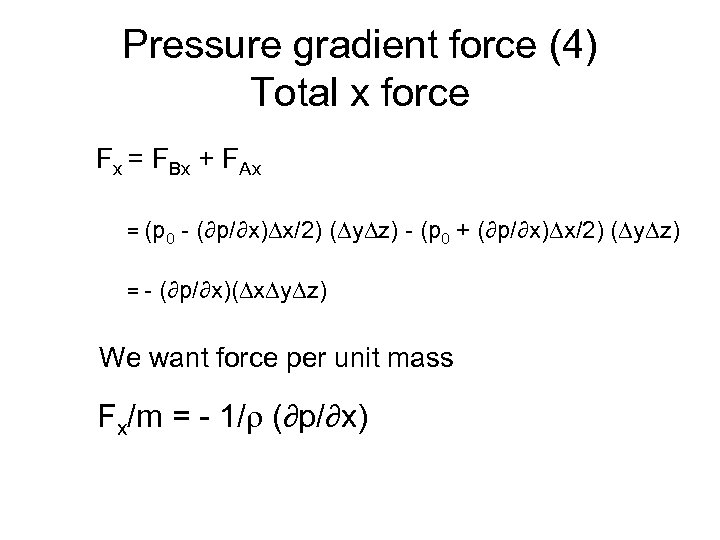
Pressure gradient force (4) Total x force Fx = FBx + FAx = (p 0 =- - (∂p/∂x)Dx/2) (Dy. Dz) - (p 0 + (∂p/∂x)Dx/2) (Dy. Dz) (∂p/∂x)(Dx. Dy. Dz) We want force per unit mass Fx/m = - 1/r (∂p/∂x)
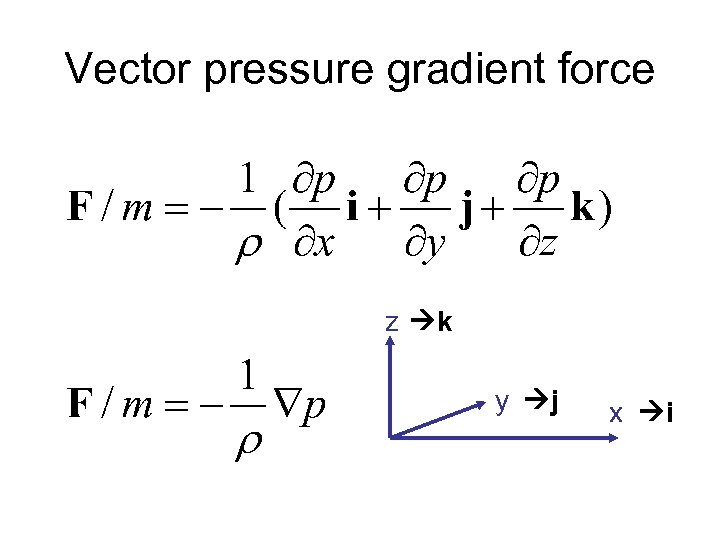
Vector pressure gradient force z k y j x i
Viscous force (1) Derivation is at end of lecture or in the text. • There is in a fluid friction, which resists the flow. It is dissipative, and if the fluid is not otherwise forced, It will slow the fluid and bring it to rest. Away from boundaries in the atmosphere this frictional force is often small, and it is often ignored. (We will revisit this as we learn more. ) • Close to the boundaries, however, we have to consider friction.
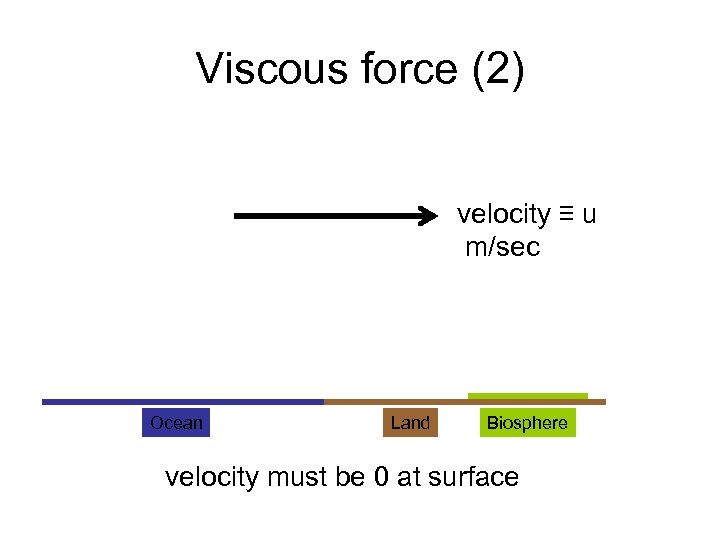
Viscous force (2) velocity ≡ u m/sec Ocean Land Biosphere velocity must be 0 at surface
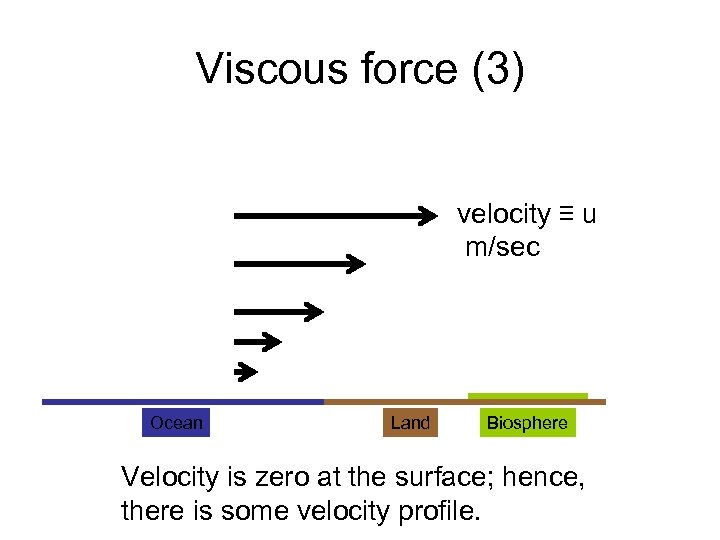
Viscous force (3) velocity ≡ u m/sec Ocean Land Biosphere Velocity is zero at the surface; hence, there is some velocity profile.
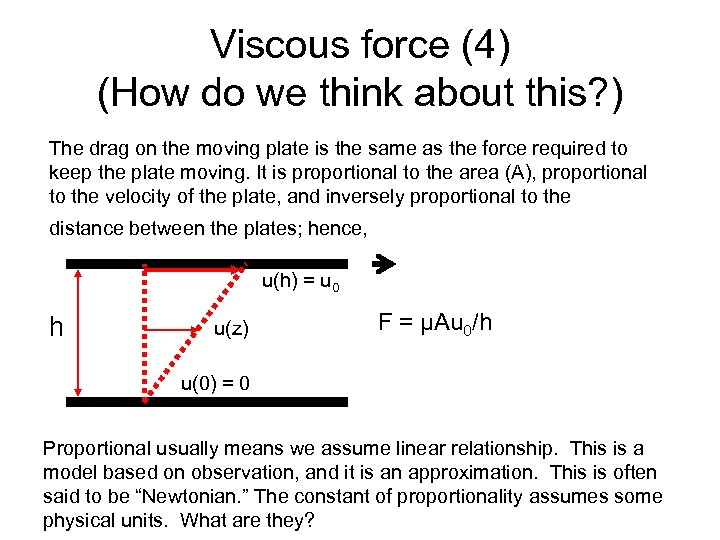
Viscous force (4) (How do we think about this? ) The drag on the moving plate is the same as the force required to keep the plate moving. It is proportional to the area (A), proportional to the velocity of the plate, and inversely proportional to the distance between the plates; hence, u(h) = u 0 h u(z) F = μAu 0/h u(0) = 0 Proportional usually means we assume linear relationship. This is a model based on observation, and it is an approximation. This is often said to be “Newtonian. ” The constant of proportionality assumes some physical units. What are they?
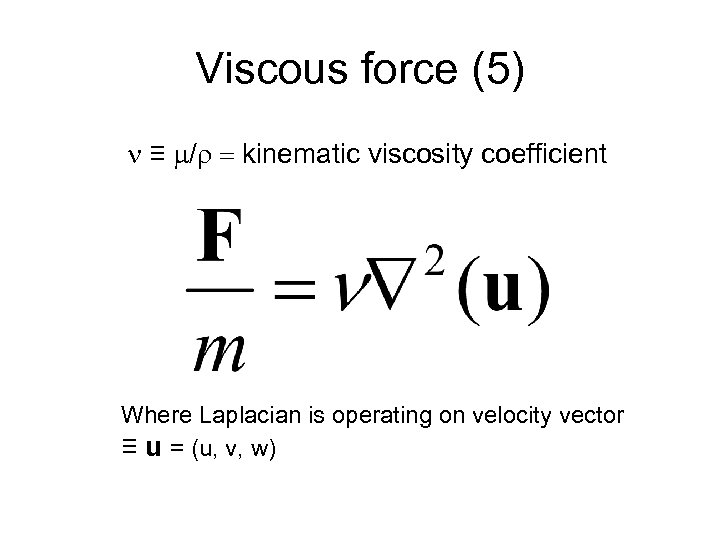
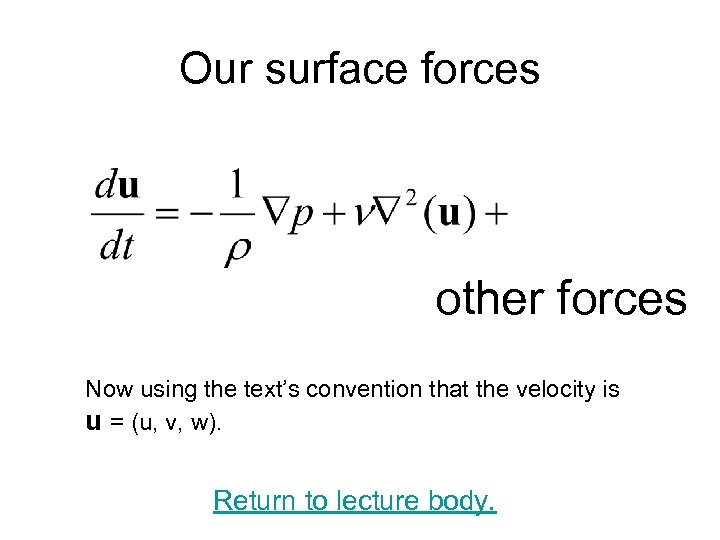
Viscous force (5) n ≡ m/r = kinematic viscosity coefficient Where Laplacian is operating on velocity vector ≡ u = (u, v, w)
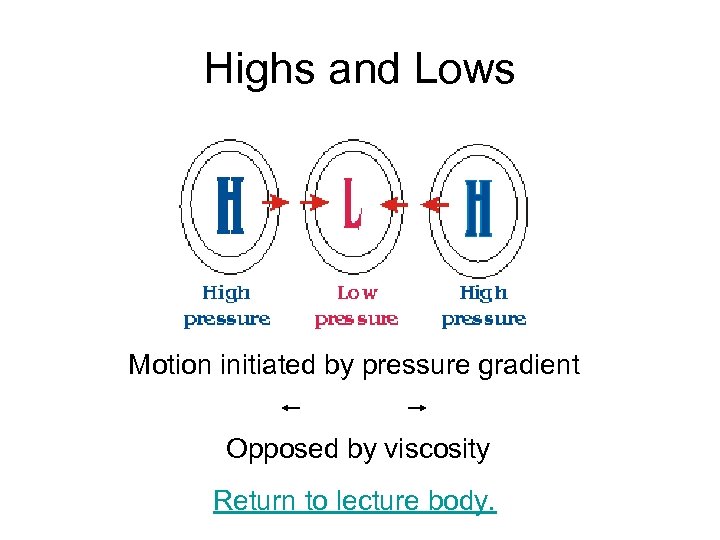
Surface forces • Pressure gradient force and the viscous force are examples of a surface force. • Surface forces are proportional to the area of the surface of our particle of atmosphere. • Surface forces are independent of the mass of the particle of atmosphere. • They depend on characteristics of the particle of atmosphere; characteristics of the flow.
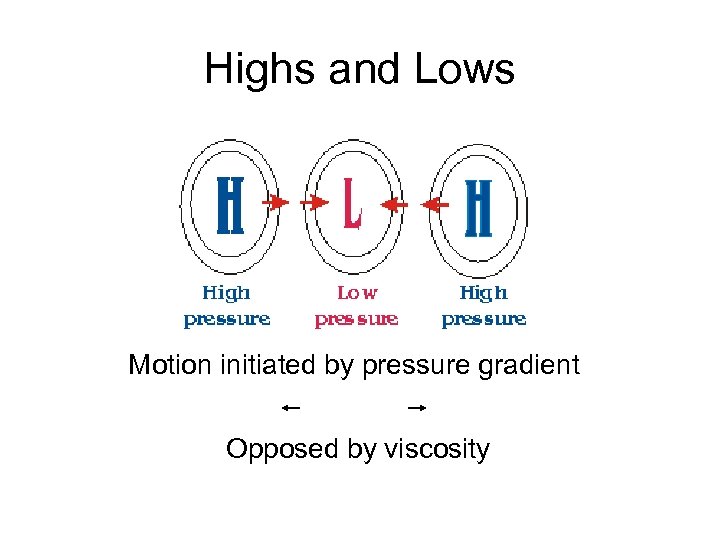
Highs and Lows Motion initiated by pressure gradient Opposed by viscosity
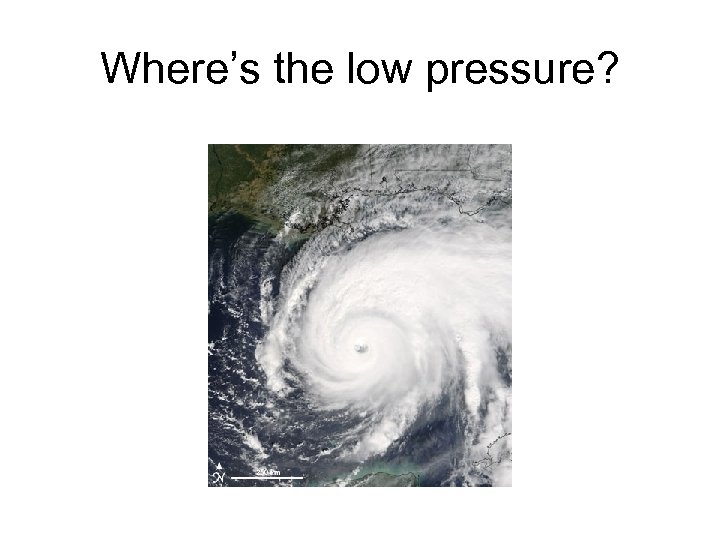
Where’s the low pressure?
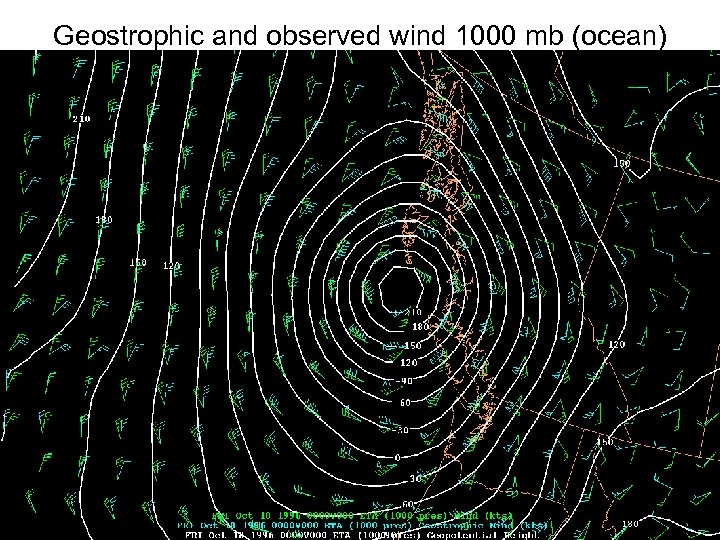
Geostrophic and observed wind 1000 mb (ocean)
Body forces • Body forces act on the center of mass of the parcel of fluid. • Magnitude of the force is proportional to the mass of the parcel. • The body force of interest to dynamic meteorology is gravity.
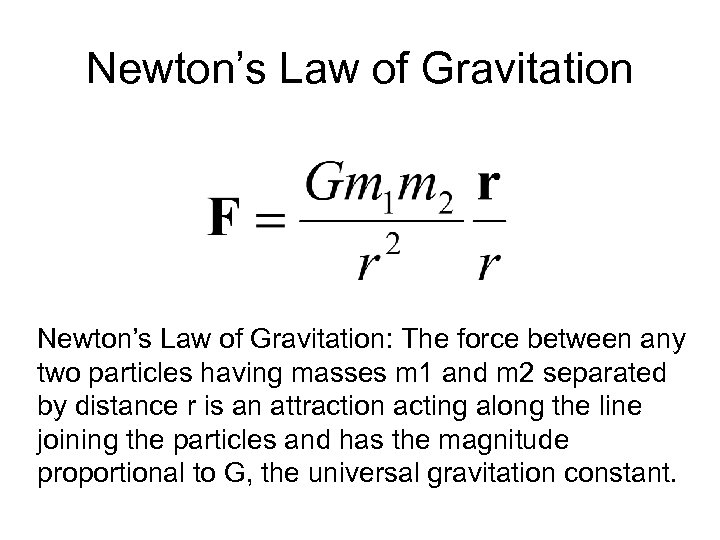
Newton’s Law of Gravitation: The force between any two particles having masses m 1 and m 2 separated by distance r is an attraction acting along the line joining the particles and has the magnitude proportional to G, the universal gravitation constant.
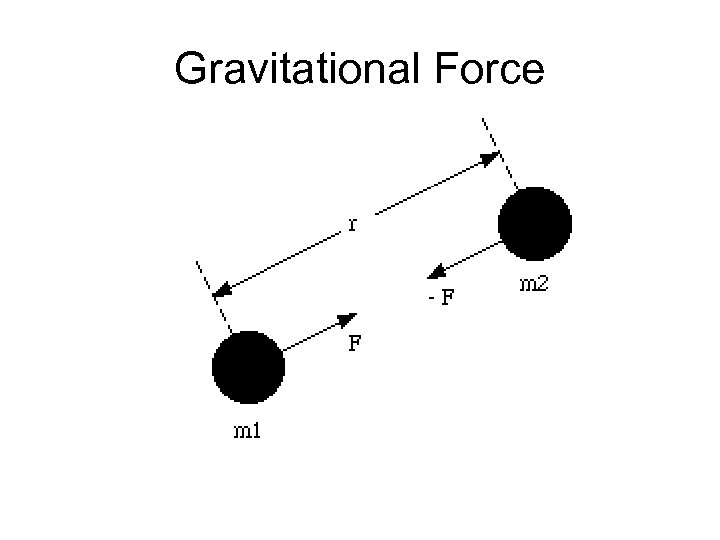
Gravitational Force
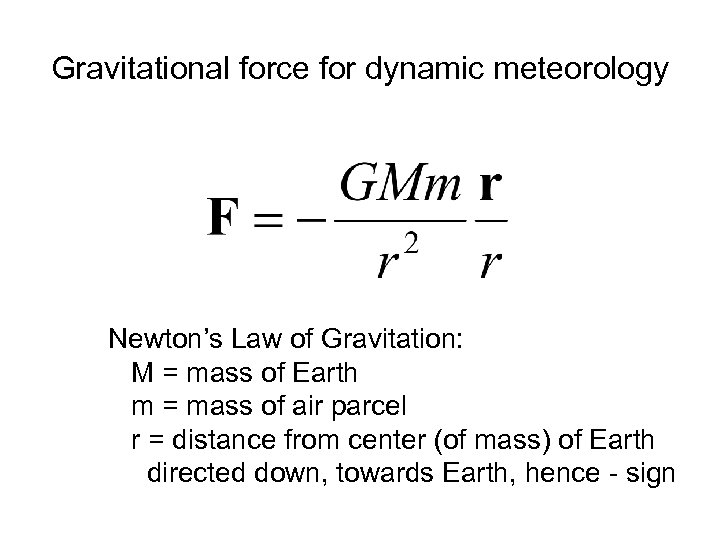
Gravitational force for dynamic meteorology Newton’s Law of Gravitation: M = mass of Earth m = mass of air parcel r = distance from center (of mass) of Earth directed down, towards Earth, hence - sign
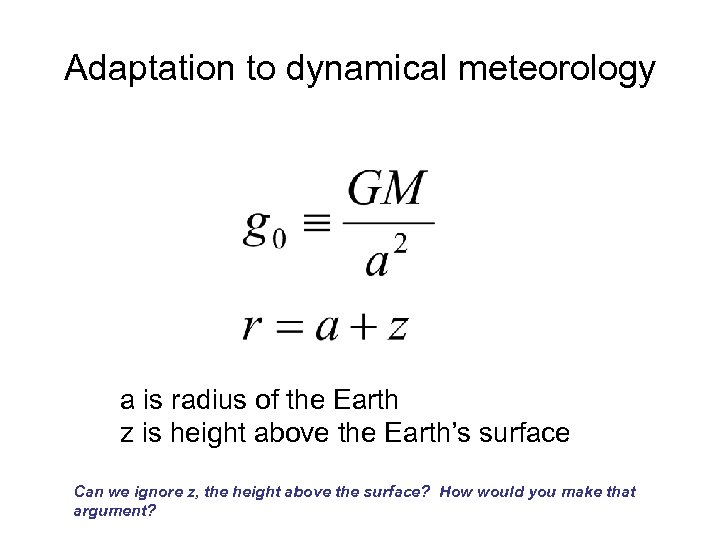
Adaptation to dynamical meteorology a is radius of the Earth z is height above the Earth’s surface Can we ignore z, the height above the surface? How would you make that argument?
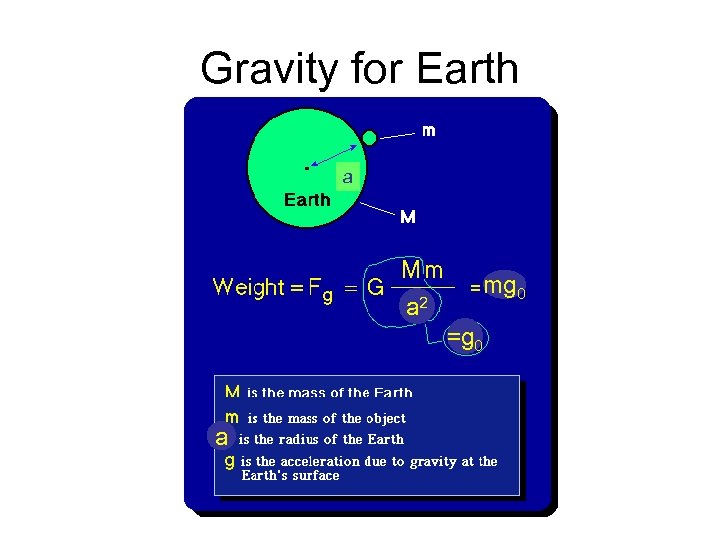
Gravity for Earth a mg 0 a 2 =g 0 a
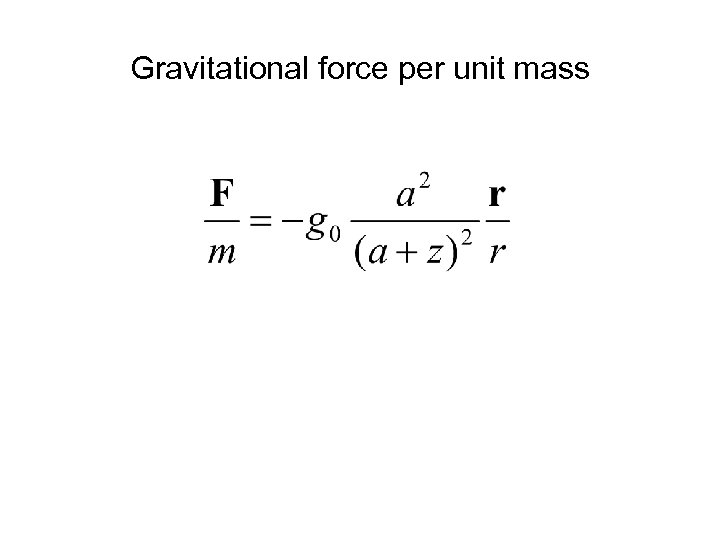
Gravitational force per unit mass
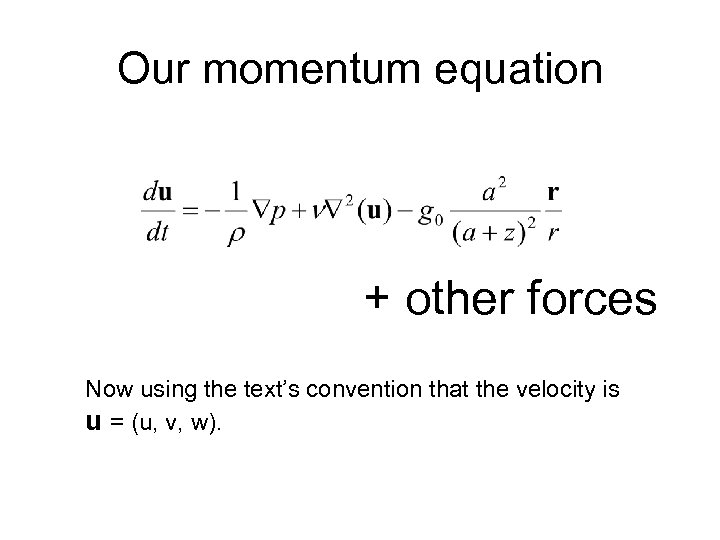
Our momentum equation + other forces Now using the text’s convention that the velocity is u = (u, v, w).
Apparent forces
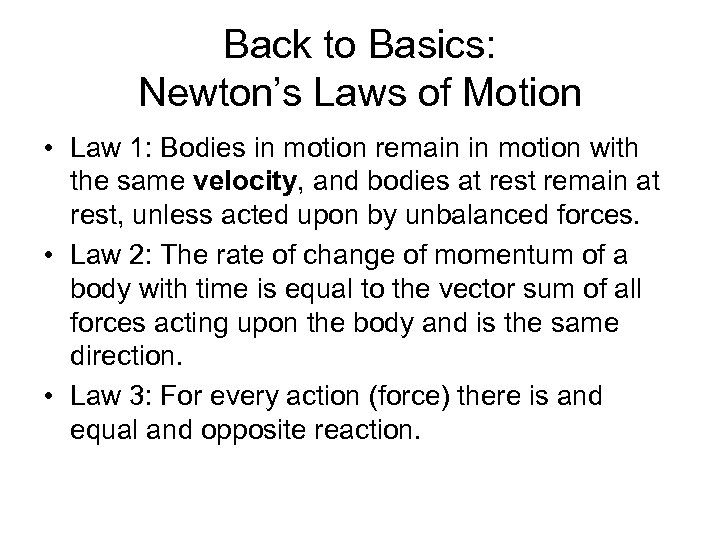
Back to Basics: Newton’s Laws of Motion • Law 1: Bodies in motion remain in motion with the same velocity, and bodies at rest remain at rest, unless acted upon by unbalanced forces. • Law 2: The rate of change of momentum of a body with time is equal to the vector sum of all forces acting upon the body and is the same direction. • Law 3: For every action (force) there is and equal and opposite reaction.
Back to basics: A couple of definitions • Newton’s laws assume we have an “inertial” coordinate system; that is, and absolute frame of reference – fixed, absolutely, in space. • Velocity is the change in position of a particle (or parcel). It is a vector and can vary either by a change in magnitude (speed) or direction.
Apparent forces: A mathematical approach • Non-inertial, non-absolute coordinate system
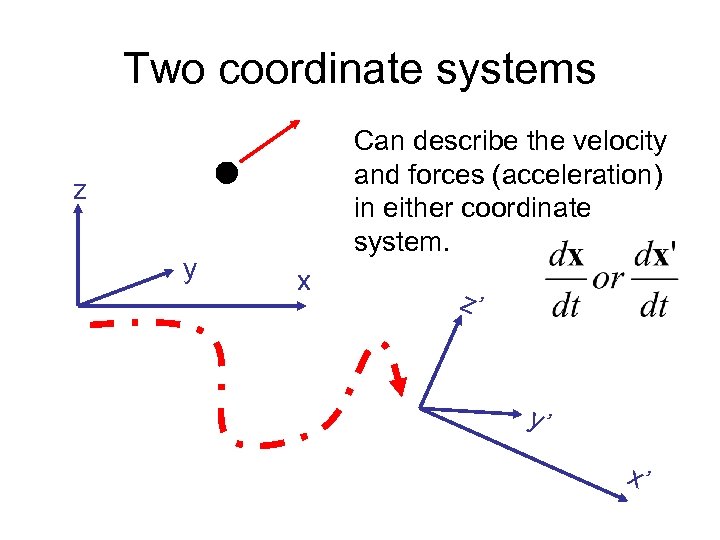
Two coordinate systems Can describe the velocity and forces (acceleration) in either coordinate system. z y x z’ y’ x’
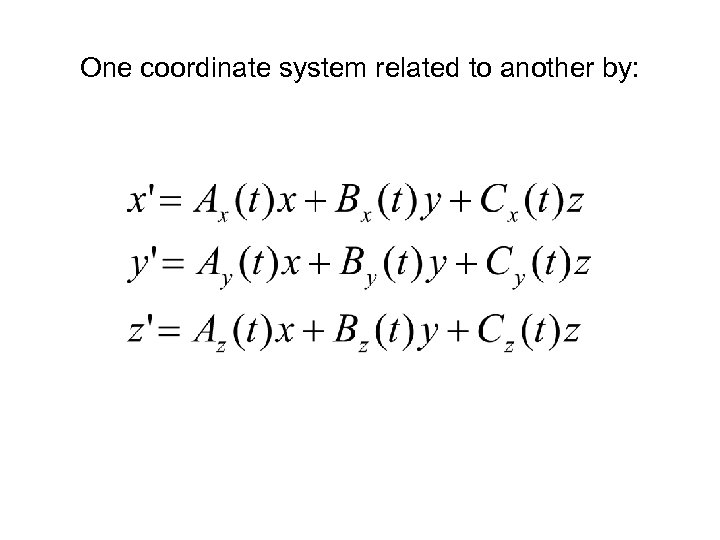
One coordinate system related to another by:
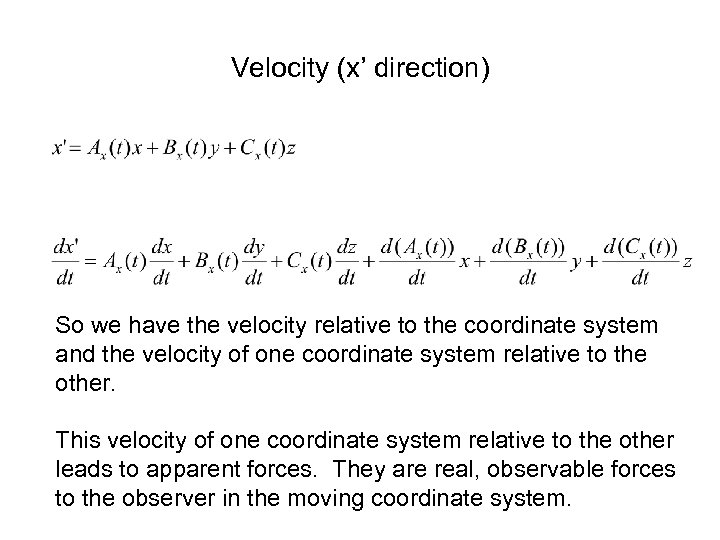
Velocity (x’ direction) So we have the velocity relative to the coordinate system and the velocity of one coordinate system relative to the other. This velocity of one coordinate system relative to the other leads to apparent forces. They are real, observable forces to the observer in the moving coordinate system.
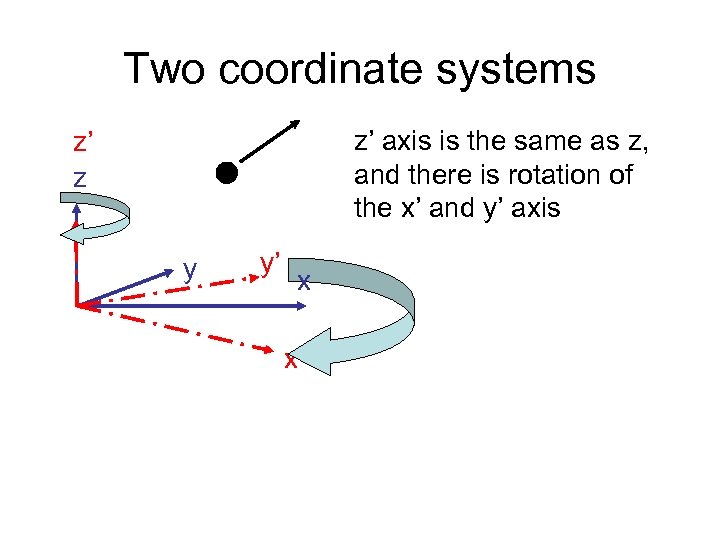
Two coordinate systems z’ axis is the same as z, and there is rotation of the x’ and y’ axis z’ z y y’ x x’
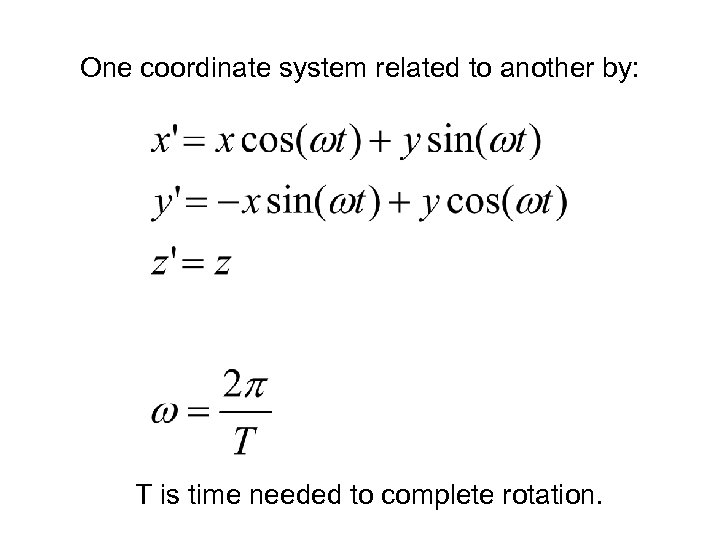
One coordinate system related to another by: T is time needed to complete rotation.
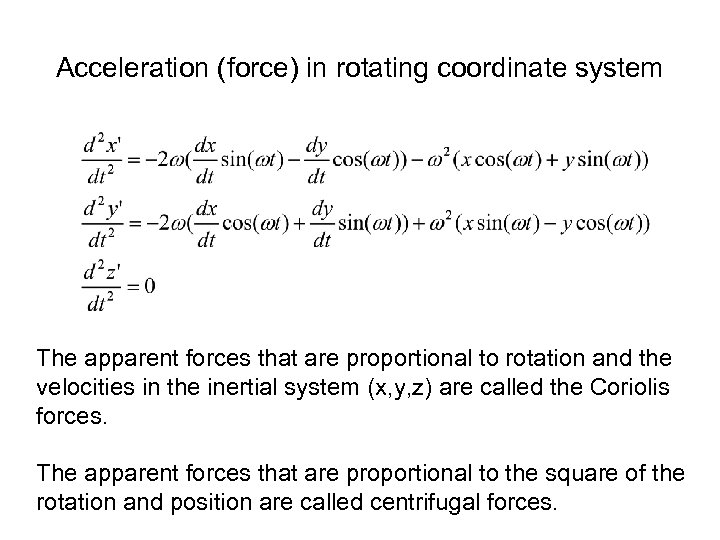
Acceleration (force) in rotating coordinate system The apparent forces that are proportional to rotation and the velocities in the inertial system (x, y, z) are called the Coriolis forces. The apparent forces that are proportional to the square of the rotation and position are called centrifugal forces.
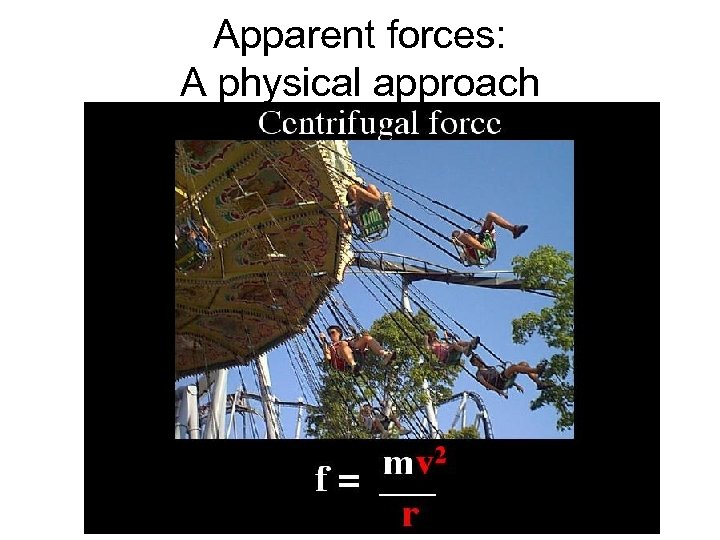
Apparent forces: A physical approach
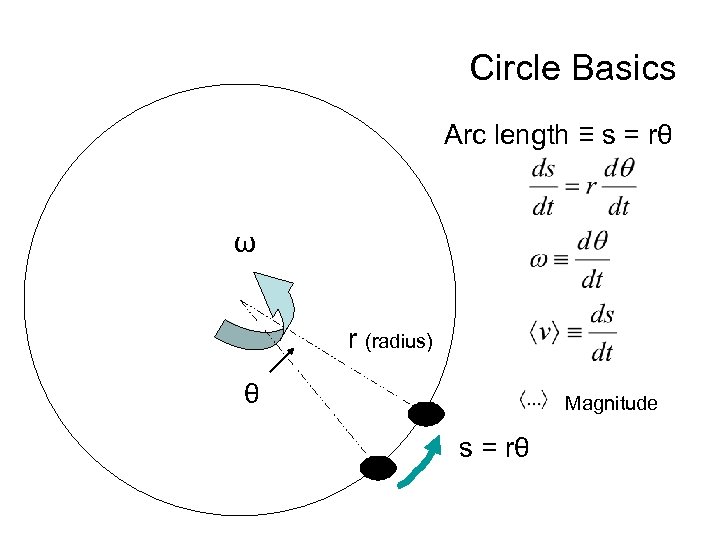
Circle Basics Arc length ≡ s = rθ ω r (radius) θ Magnitude s = rθ
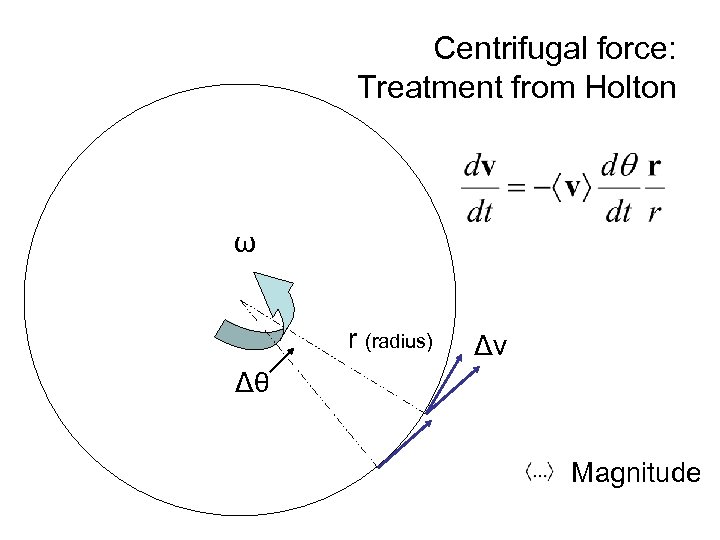
Centrifugal force: Treatment from Holton ω r (radius) Δv Δθ Magnitude
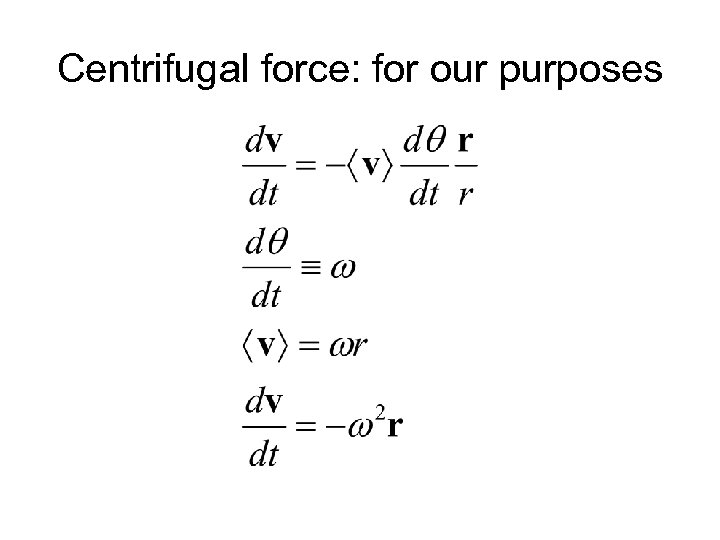
Centrifugal force: for our purposes
Now we are going to think about the Earth • The preceding was a schematic to think about the centrifugal acceleration problem. Note that the r vector above and below are not the same!
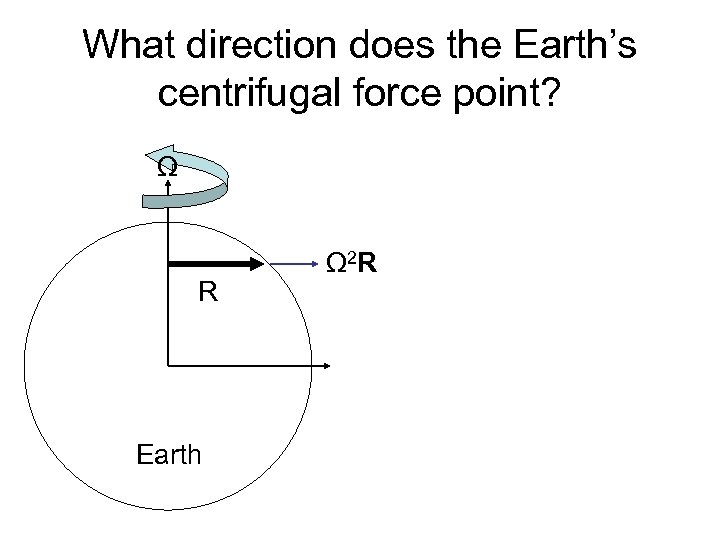
What direction does the Earth’s centrifugal force point? Ω R Earth Ω 2 R
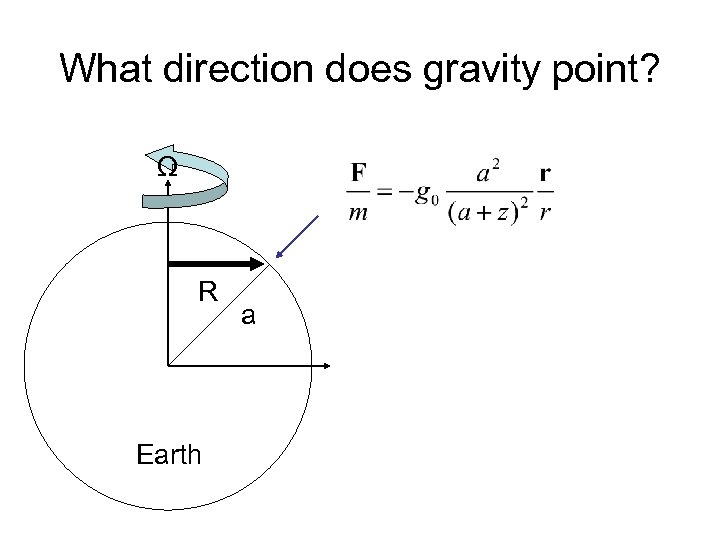
What direction does gravity point? Ω R Earth a
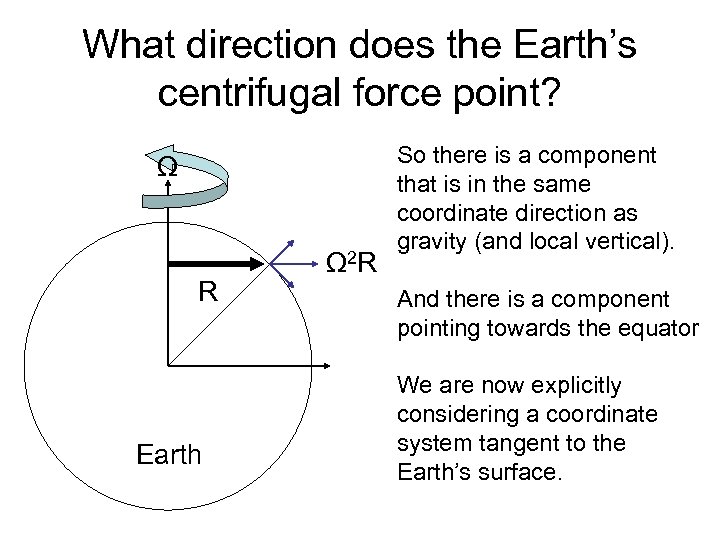
What direction does the Earth’s centrifugal force point? Ω R Earth Ω 2 R So there is a component that is in the same coordinate direction as gravity (and local vertical). And there is a component pointing towards the equator We are now explicitly considering a coordinate system tangent to the Earth’s surface.
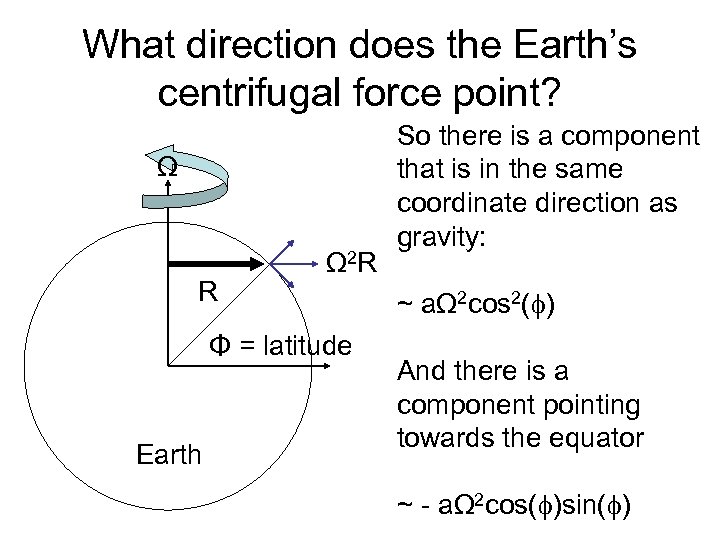
What direction does the Earth’s centrifugal force point? Ω R Ω 2 R Φ = latitude Earth So there is a component that is in the same coordinate direction as gravity: ~ aΩ 2 cos 2(f) And there is a component pointing towards the equator ~ - aΩ 2 cos(f)sin(f)
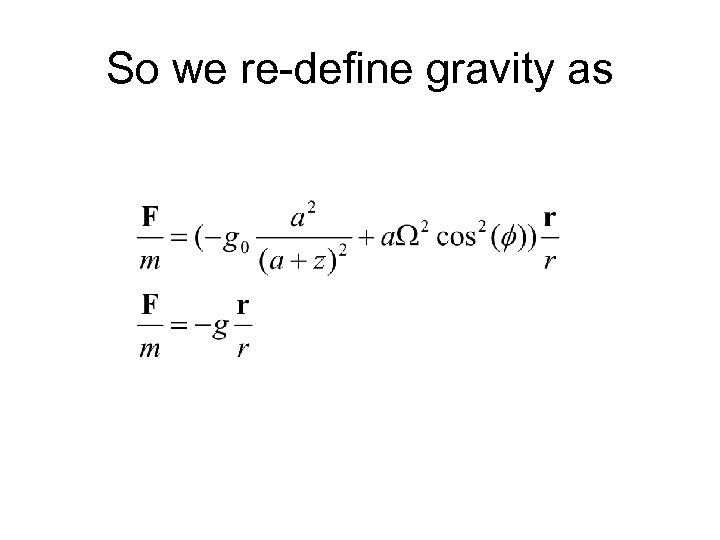
So we re-define gravity as
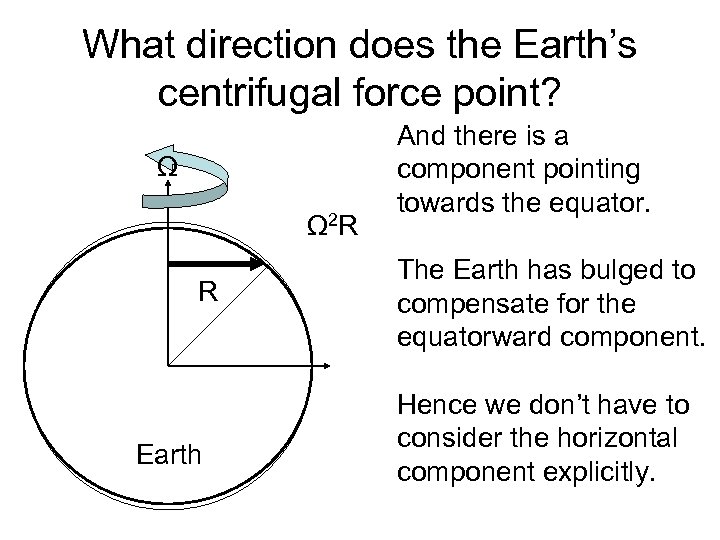
What direction does the Earth’s centrifugal force point? Ω Ω 2 R R Earth And there is a component pointing towards the equator. The Earth has bulged to compensate for the equatorward component. Hence we don’t have to consider the horizontal component explicitly.
Centrifugal force of Earth • Vertical component incorporated into redefinition of gravity. • Horizontal component does not need to be considered when we consider a coordinate system tangent to the Earth’s surface, because the Earth has bulged to compensate for this force. • Hence, centrifugal force does not appear EXPLICITLY in the equations.
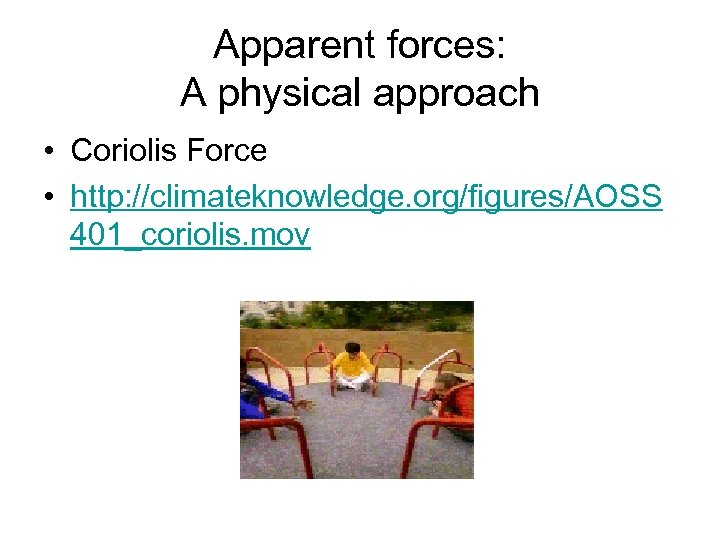
Apparent forces: A physical approach • Coriolis Force • http: //climateknowledge. org/figures/AOSS 401_coriolis. mov
Next time • Coriolis Force – Read and re-read the section in the text. • Pressure as a vertical coordinate – Geopotential
Weather • National Weather Service – http: //www. nws. noaa. gov/ – Model forecasts: http: //www. hpc. ncep. noaa. gov/basicwx/day 07 loop. html • Weather Underground – http: //www. wunderground. com/cgibin/findweather/get. Forecast? query=ann+arbor – Model forecasts: http: //www. wunderground. com/modelmaps/maps. asp ? model=NAM&domain=US
Derivation of viscous force Return to lecture body.
Viscous force (1) • There is in a fluid friction, which resists the flow. It is dissipative, and if the fluid is not otherwise forced, It will slow the fluid and bring it to rest. Away from boundaries in the atmosphere this frictional force is often small, and it is often ignored. (We will revisit this as we learn more. ) • Close to the boundaries, however, we have to consider friction. Return to lecture body.
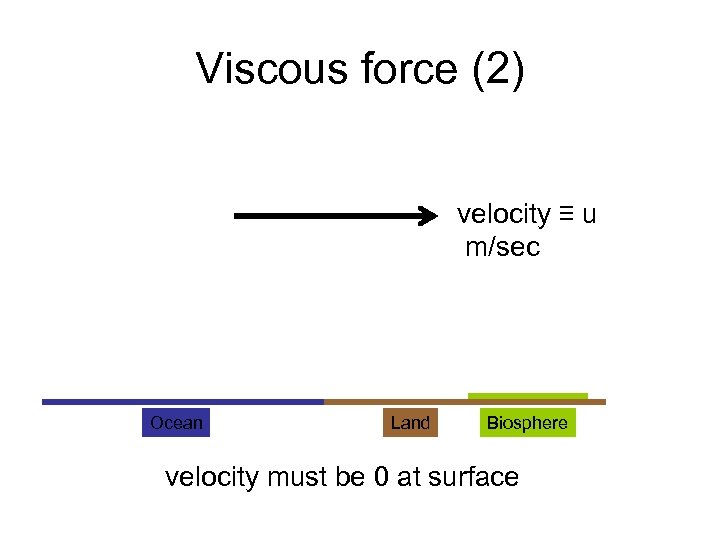
Viscous force (2) velocity ≡ u m/sec Ocean Land Biosphere velocity must be 0 at surface
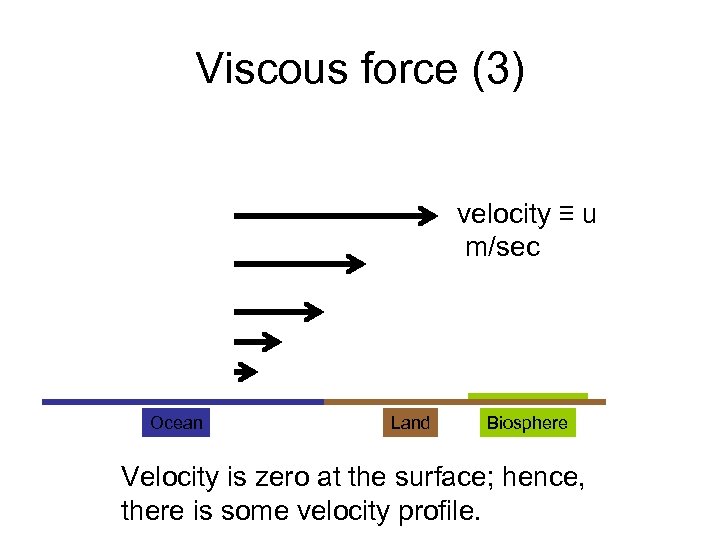
Viscous force (3) velocity ≡ u m/sec Ocean Land Biosphere Velocity is zero at the surface; hence, there is some velocity profile.
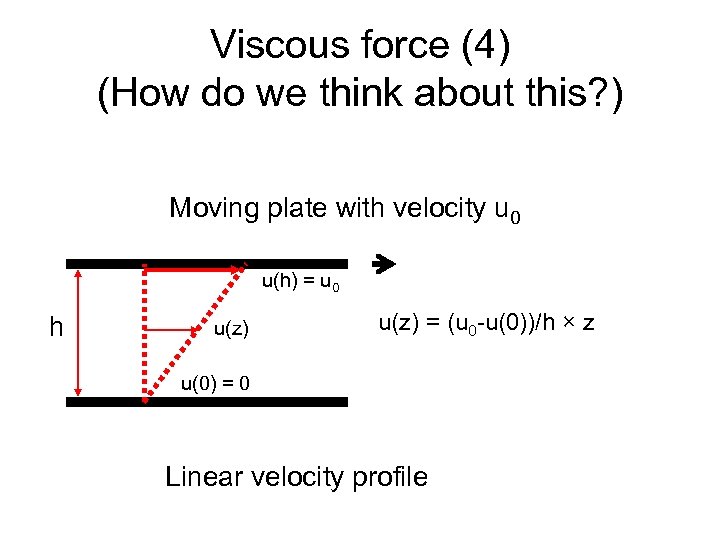
Viscous force (4) (How do we think about this? ) Moving plate with velocity u 0 u(h) = u 0 h u(z) = (u 0 -u(0))/h × z u(0) = 0 Linear velocity profile
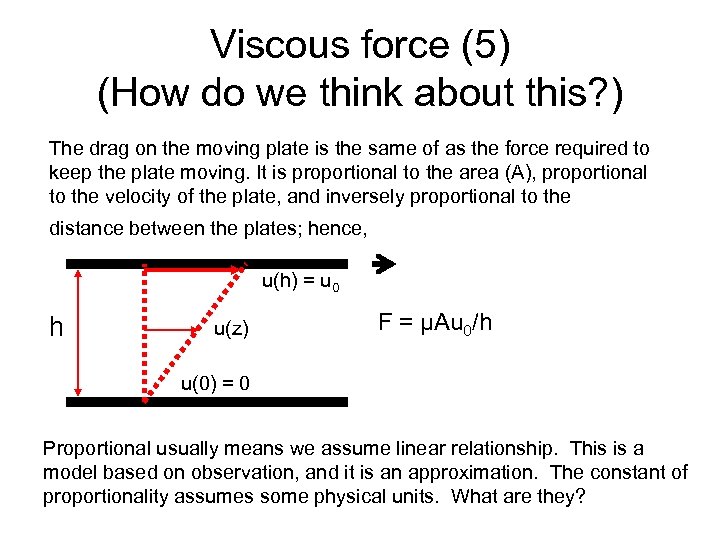
Viscous force (5) (How do we think about this? ) The drag on the moving plate is the same of as the force required to keep the plate moving. It is proportional to the area (A), proportional to the velocity of the plate, and inversely proportional to the distance between the plates; hence, u(h) = u 0 h u(z) F = μAu 0/h u(0) = 0 Proportional usually means we assume linear relationship. This is a model based on observation, and it is an approximation. The constant of proportionality assumes some physical units. What are they?
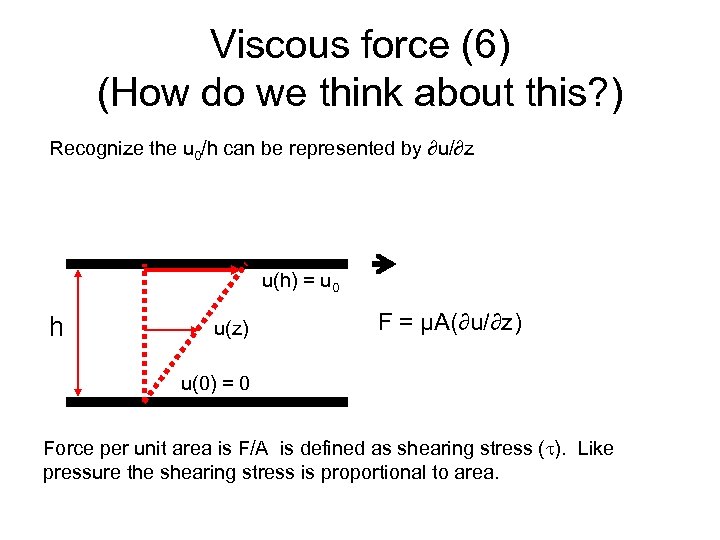
Viscous force (6) (How do we think about this? ) Recognize the u 0/h can be represented by ∂u/∂z u(h) = u 0 h u(z) F = μA(∂u/∂z) u(0) = 0 Force per unit area is F/A is defined as shearing stress (t). Like pressure the shearing stress is proportional to area.
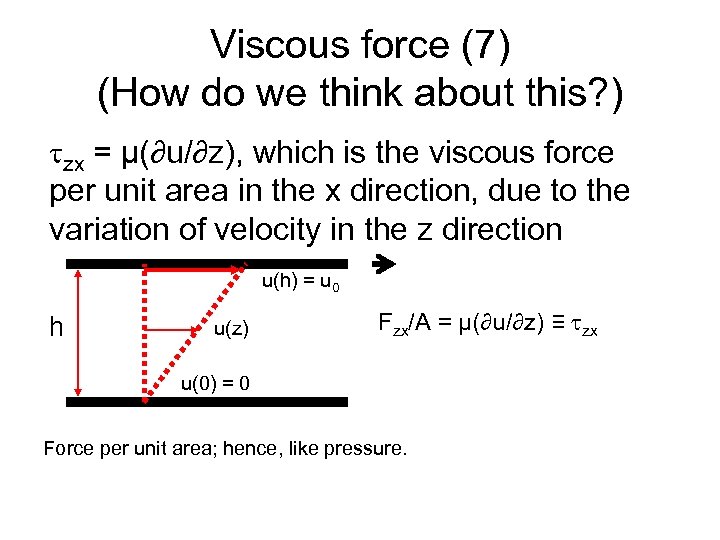
Viscous force (7) (How do we think about this? ) tzx = μ(∂u/∂z), which is the viscous force per unit area in the x direction, due to the variation of velocity in the z direction u(h) = u 0 h u(z) Fzx/A = μ(∂u/∂z) ≡ tzx u(0) = 0 Force per unit area; hence, like pressure.
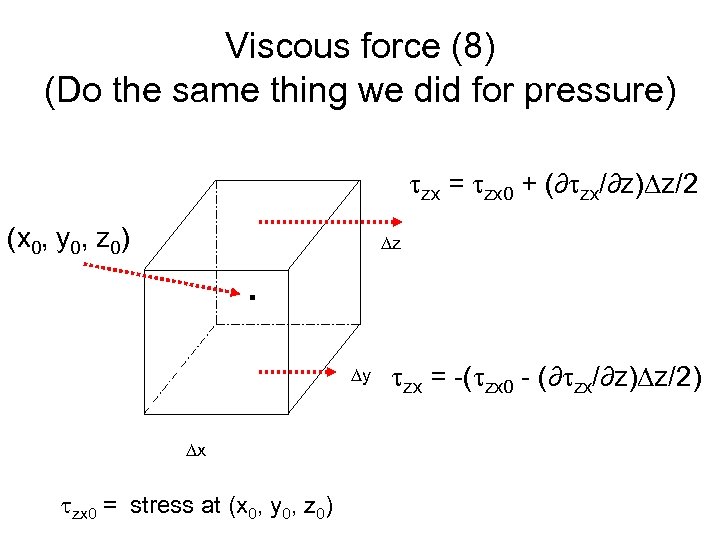
Viscous force (8) (Do the same thing we did for pressure) tzx = tzx 0 + (∂tzx/∂z)Dz/2 (x 0, y 0, z 0) Dz . Dy Dx tzx 0 = stress at (x 0, y 0, z 0) tzx = -(tzx 0 - (∂tzx/∂z)Dz/2)
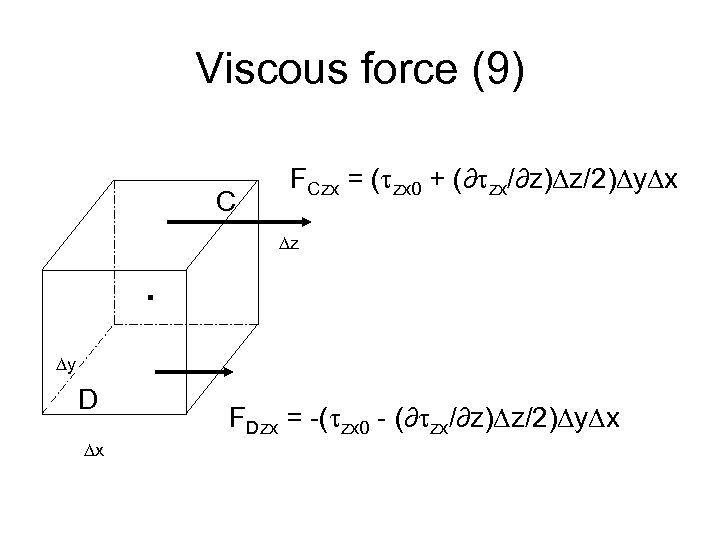
Viscous force (9) C FCzx = (tzx 0 + (∂tzx/∂z)Dz/2)Dy. Dx Dz . Dy D Dx FDzx = -(tzx 0 - (∂tzx/∂z)Dz/2)Dy. Dx
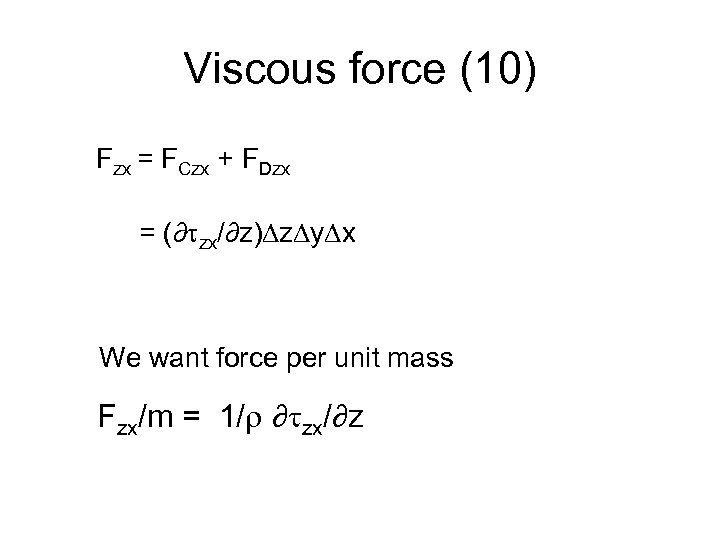
Viscous force (10) Fzx = FCzx + FDzx = (∂tzx/∂z)Dz. Dy. Dx We want force per unit mass Fzx/m = 1/r ∂tzx/∂z
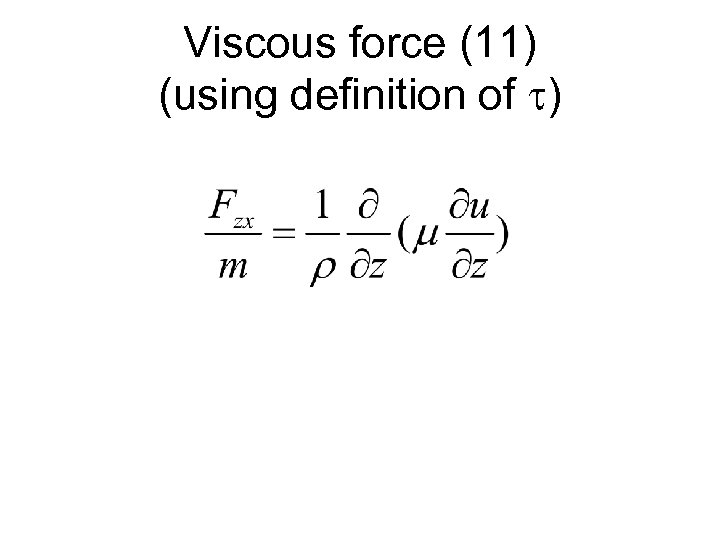
Viscous force (11) (using definition of t)
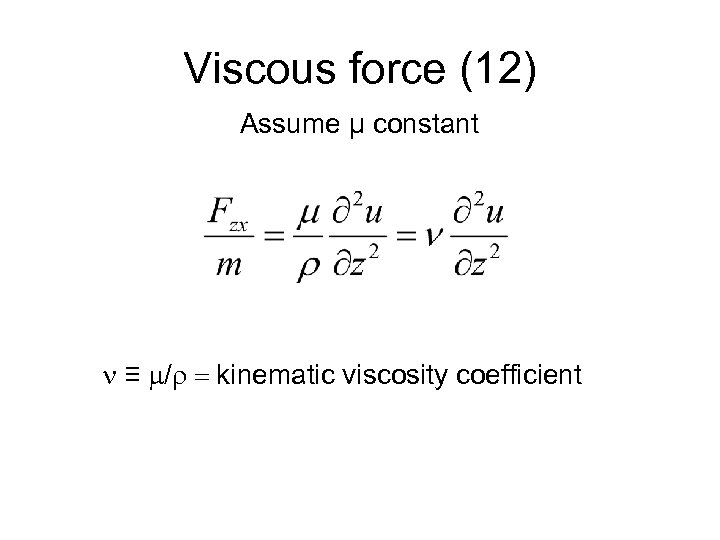
Viscous force (12) Assume μ constant n ≡ m/r = kinematic viscosity coefficient
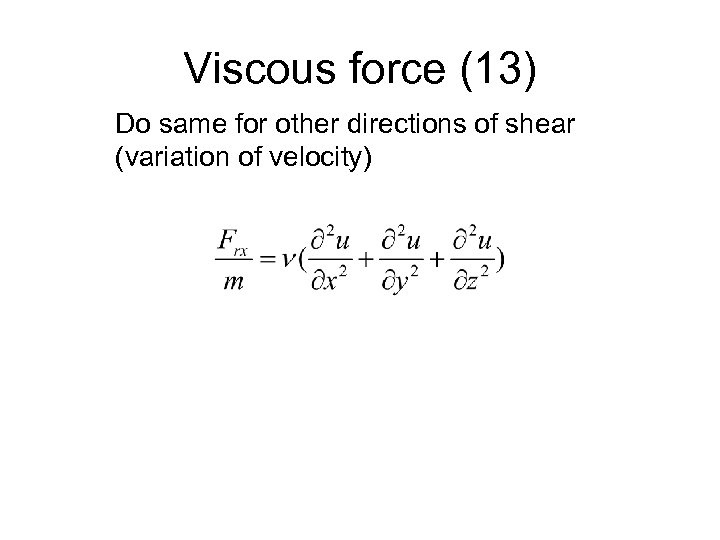
Viscous force (13) Do same for other directions of shear (variation of velocity)
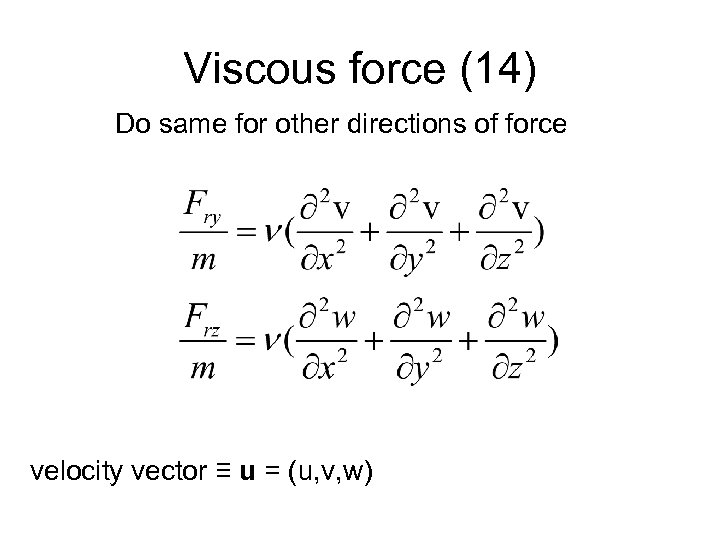
Viscous force (14) Do same for other directions of force velocity vector ≡ u = (u, v, w)
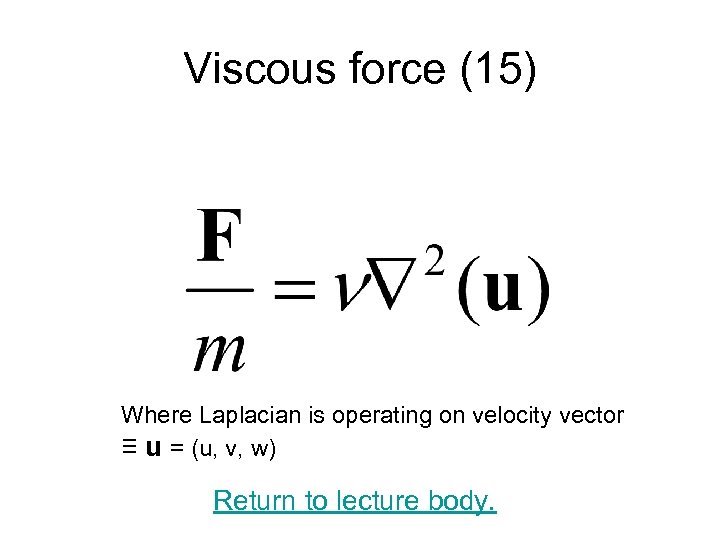
Viscous force (15) Where Laplacian is operating on velocity vector ≡ u = (u, v, w) Return to lecture body.
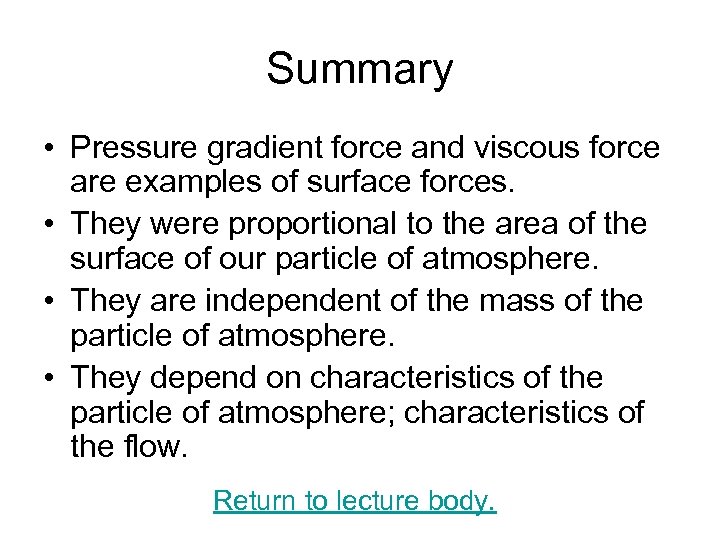
Summary • Pressure gradient force and viscous force are examples of surface forces. • They were proportional to the area of the surface of our particle of atmosphere. • They are independent of the mass of the particle of atmosphere. • They depend on characteristics of the particle of atmosphere; characteristics of the flow. Return to lecture body.
Our surface forces other forces Now using the text’s convention that the velocity is u = (u, v, w). Return to lecture body.
Highs and Lows Motion initiated by pressure gradient Opposed by viscosity Return to lecture body.
Скачать презентацию AOSS 401 Fall 2007 Lecture 2 September 7
2c4c9e159c290e63904b7e4e1a45ae80.ppt