 Скачать презентацию Antibiotic selection in community-acquired pneumonia CAP appropriate benefit-risk
bc5784686368aa50e83038772a596622.ppt
- Количество слайдов: 43



Antibiotic selection in community-acquired pneumonia (CAP): appropriate benefit-risk profiles Paul M. Tulkens, MD, Ph. D * Françoise Van Bambeke, Pharm. D, Ph. D a Cellular and Molecular Pharmacology Unit & Centre for Clinical Pharmacy Université catholique de Louvain, Brussels, Belgiuma co-workers: Ann Lismond, MSc (resistance studies) – S. Carbonnelle, MD, Ph. D (clinical studies) * also • Professor of Human Biochemistry and Biochemical Pathology Université de Mons/Hainaut, Mons, Belgium • member of the EUCAST (European Committee for Antibiotic Susceptibility Testing) steering committee • founding member and past-President of the International Society of Anti-infective Pharmacology 26 -06 -2009 Leverkusen 1
Einige Wörter… • Ich bedauere, diese Darstellung nicht auf deutsch geben zu können. . . • Die Deutsche Sprache ist jedoch sowohl sehr schön als auch sehr logisch. . . • Und ich bin ein begeisteter Zuhörer von J. S. Bach's Passionnen oder Operns von Wagner. . . • Aber ich musste bereits alle Tage Französisch, Flämisch und Englisch sprechen. . . und Deutsch ist für einen Französigsprachigen schwierig. . . • Ich werde versuchen, die Fragen auf deutsch zu verstehen. . . Die Lokalisierung der Université catholique de Louvain in Brüssel 26 -06 -2009 Leverkusen Die Gebäude der medizinischen Fakultät und das Krankenhaus Die Gruppe der Pharmakologie/Toxikologie der Antibiotika 2
Contents of the Presentation • All antimicrobials used for CAP have associated toxicity risks … – Major non-serious and serious side-effects associated with the main antimicrobials used in the treatment of CAP ( -lactams, macrolides, tetracyclines, fluoroquinolones). • Adverse effects of moxifloxacin vs other agents – a comprehensive analysis • The risk of bacterial failure – are guidelines "safe" ? • Conclusions 26 -06 -2009 Leverkusen 3
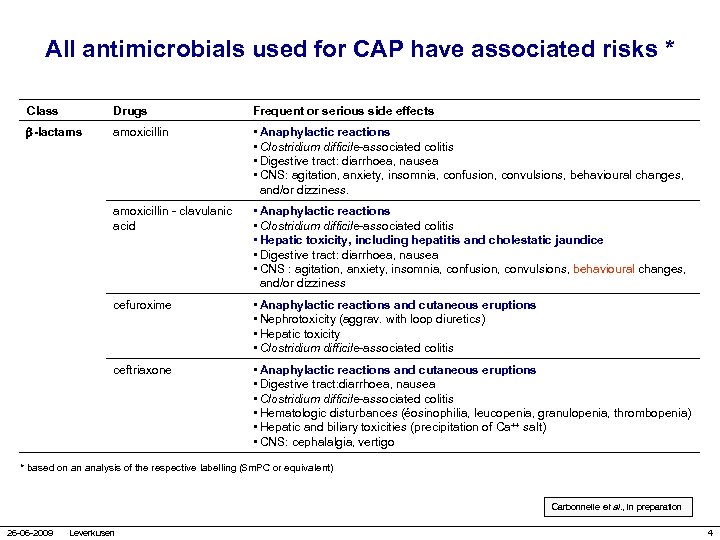
All antimicrobials used for CAP have associated risks * Class Drugs Frequent or serious side effects -lactams amoxicillin • Anaphylactic reactions • Clostridium difficile-associated colitis • Digestive tract: diarrhoea, nausea • CNS: agitation, anxiety, insomnia, confusion, convulsions, behavioural changes, and/or dizziness. amoxicillin - clavulanic acid • Anaphylactic reactions • Clostridium difficile-associated colitis • Hepatic toxicity, including hepatitis and cholestatic jaundice • Digestive tract: diarrhoea, nausea • CNS : agitation, anxiety, insomnia, confusion, convulsions, behavioural changes, and/or dizziness cefuroxime • Anaphylactic reactions and cutaneous eruptions • Nephrotoxicity (aggrav. with loop diuretics) • Hepatic toxicity • Clostridium difficile-associated colitis ceftriaxone • Anaphylactic reactions and cutaneous eruptions • Digestive tract: diarrhoea, nausea • Clostridium difficile-associated colitis • Hematologic disturbances (éosinophilia, leucopenia, granulopenia, thrombopenia) • Hepatic and biliary toxicities (precipitation of Ca++ salt) • CNS: cephalalgia, vertigo * based on an analysis of the respective labelling (Sm. PC or equivalent) Carbonnelle et al. , in preparation 26 -06 -2009 Leverkusen 4
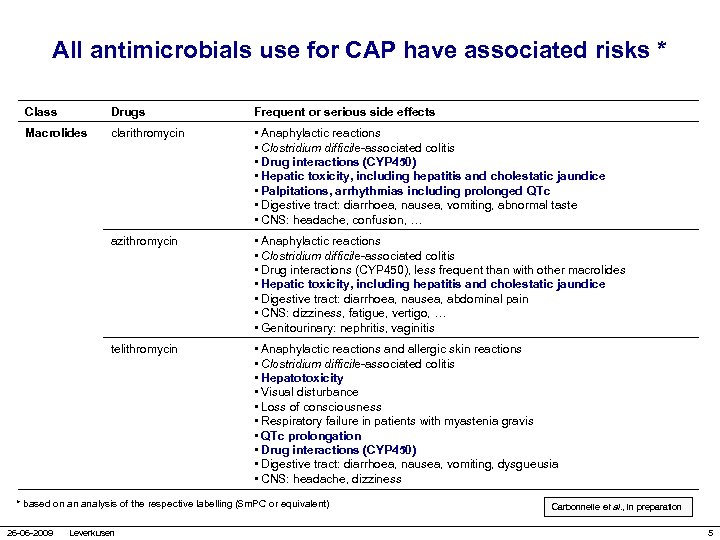
All antimicrobials use for CAP have associated risks * Class Drugs Frequent or serious side effects Macrolides clarithromycin • Anaphylactic reactions • Clostridium difficile-associated colitis • Drug interactions (CYP 450) • Hepatic toxicity, including hepatitis and cholestatic jaundice • Palpitations, arrhythmias including prolonged QTc • Digestive tract: diarrhoea, nausea, vomiting, abnormal taste • CNS: headache, confusion, … azithromycin • Anaphylactic reactions • Clostridium difficile-associated colitis • Drug interactions (CYP 450), less frequent than with other macrolides • Hepatic toxicity, including hepatitis and cholestatic jaundice • Digestive tract: diarrhoea, nausea, abdominal pain • CNS: dizziness, fatigue, vertigo, … • Genitourinary: nephritis, vaginitis telithromycin • Anaphylactic reactions and allergic skin reactions • Clostridium difficile-associated colitis • Hepatotoxicity • Visual disturbance • Loss of consciousness • Respiratory failure in patients with myastenia gravis • QTc prolongation • Drug interactions (CYP 450) • Digestive tract: diarrhoea, nausea, vomiting, dysgueusia • CNS: headache, dizziness * based on an analysis of the respective labelling (Sm. PC or equivalent) 26 -06 -2009 Leverkusen Carbonnelle et al. , in preparation 5
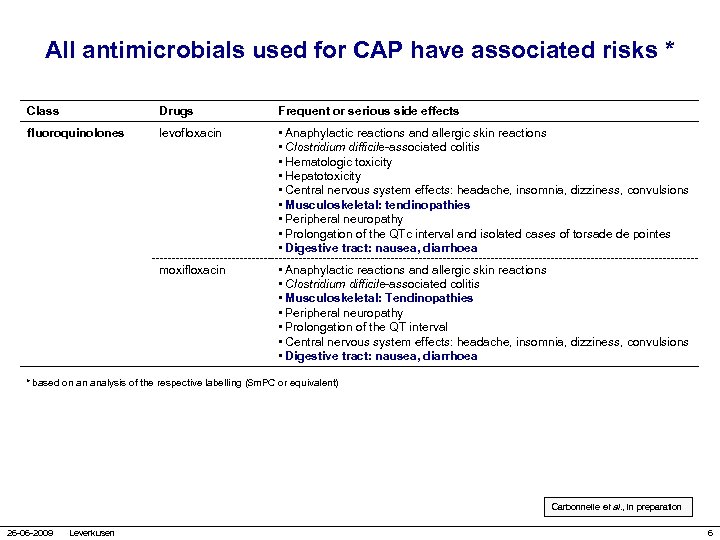
All antimicrobials used for CAP have associated risks * Class Drugs Frequent or serious side effects fluoroquinolones levofloxacin • Anaphylactic reactions and allergic skin reactions • Clostridium difficile-associated colitis • Hematologic toxicity • Hepatotoxicity • Central nervous system effects: headache, insomnia, dizziness, convulsions • Musculoskeletal: tendinopathies • Peripheral neuropathy • Prolongation of the QTc interval and isolated cases of torsade de pointes • Digestive tract: nausea, diarrhoea moxifloxacin • Anaphylactic reactions and allergic skin reactions • Clostridium difficile-associated colitis • Musculoskeletal: Tendinopathies • Peripheral neuropathy • Prolongation of the QT interval • Central nervous system effects: headache, insomnia, dizziness, convulsions • Digestive tract: nausea, diarrhoea * based on an analysis of the respective labelling (Sm. PC or equivalent) Carbonnelle et al. , in preparation 26 -06 -2009 Leverkusen 6
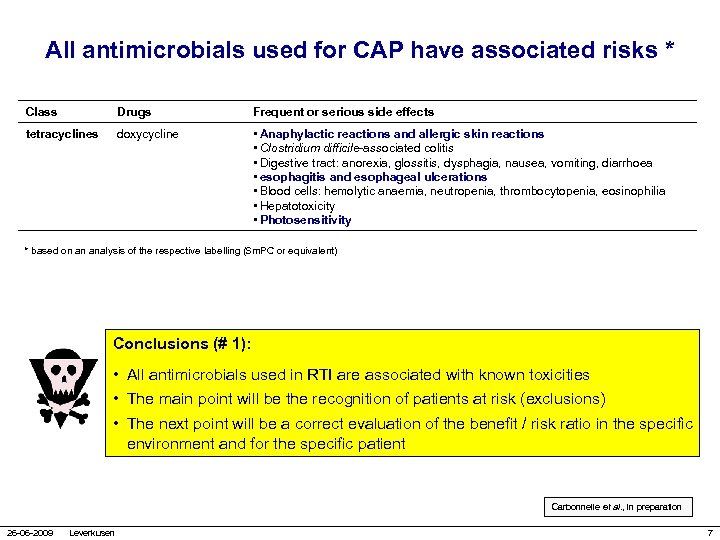
All antimicrobials used for CAP have associated risks * Class Drugs Frequent or serious side effects tetracyclines doxycycline • Anaphylactic reactions and allergic skin reactions • Clostridium difficile-associated colitis • Digestive tract: anorexia, glossitis, dysphagia, nausea, vomiting, diarrhoea • esophagitis and esophageal ulcerations • Blood cells: hemolytic anaemia, neutropenia, thrombocytopenia, eosinophilia • Hepatotoxicity • Photosensitivity * based on an analysis of the respective labelling (Sm. PC or equivalent) Conclusions (# 1): • All antimicrobials used in RTI are associated with known toxicities • The main point will be the recognition of patients at risk (exclusions) • The next point will be a correct evaluation of the benefit / risk ratio in the specific environment and for the specific patient Carbonnelle et al. , in preparation 26 -06 -2009 Leverkusen 7
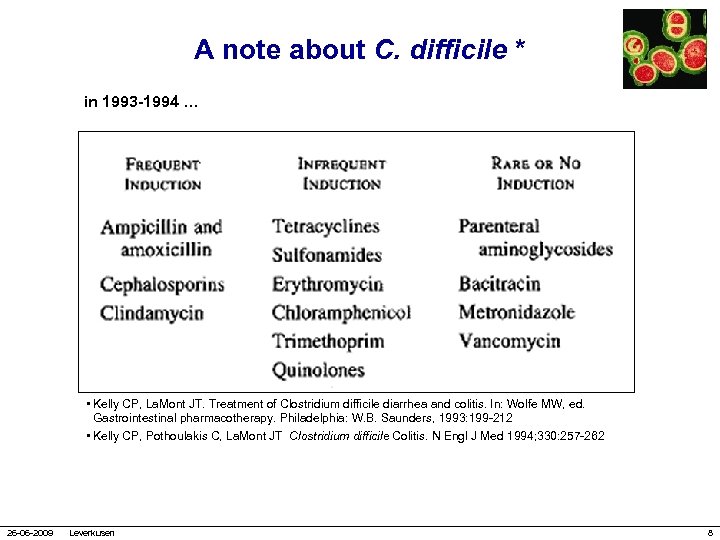
A note about C. difficile * in 1993 -1994 … • Kelly CP, La. Mont JT. Treatment of Clostridium difficile diarrhea and colitis. In: Wolfe MW, ed. Gastrointestinal pharmacotherapy. Philadelphia: W. B. Saunders, 1993: 199 -212 • Kelly CP, Pothoulakis C, La. Mont JT Clostridium difficile Colitis. N Engl J Med 1994; 330: 257 -262 26 -06 -2009 Leverkusen 8
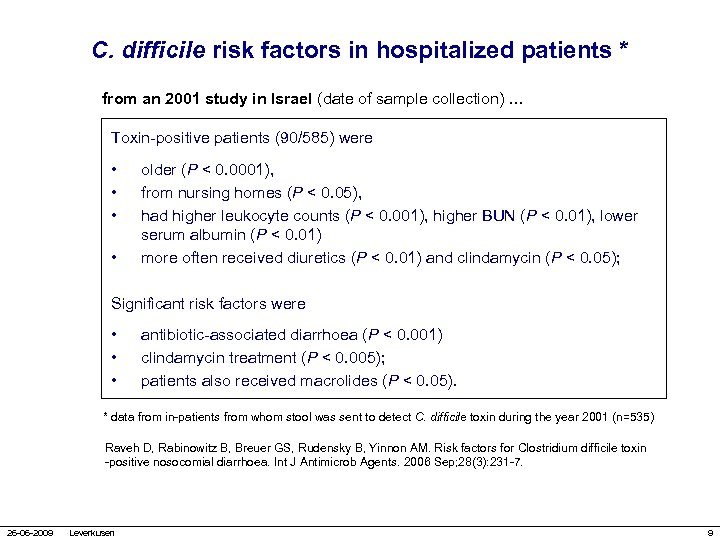
C. difficile risk factors in hospitalized patients * from an 2001 study in Israel (date of sample collection) … Toxin-positive patients (90/585) were • • older (P < 0. 0001), from nursing homes (P < 0. 05), had higher leukocyte counts (P < 0. 001), higher BUN (P < 0. 01), lower serum albumin (P < 0. 01) more often received diuretics (P < 0. 01) and clindamycin (P < 0. 05); Significant risk factors were • • • antibiotic-associated diarrhoea (P < 0. 001) clindamycin treatment (P < 0. 005); patients also received macrolides (P < 0. 05). * data from in-patients from whom stool was sent to detect C. difficile toxin during the year 2001 (n=535) Raveh D, Rabinowitz B, Breuer GS, Rudensky B, Yinnon AM. Risk factors for Clostridium difficile toxin -positive nosocomial diarrhoea. Int J Antimicrob Agents. 2006 Sep; 28(3): 231 -7. 26 -06 -2009 Leverkusen 9
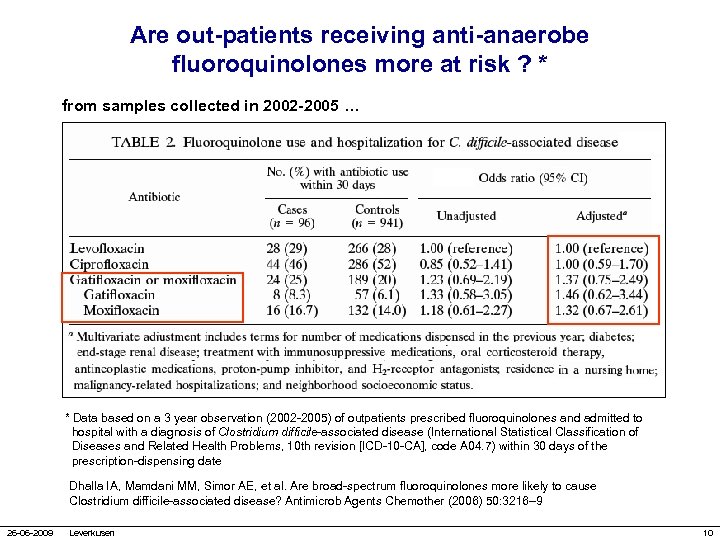
Are out-patients receiving anti-anaerobe fluoroquinolones more at risk ? * from samples collected in 2002 -2005 … * Data based on a 3 year observation (2002 -2005) of outpatients prescribed fluoroquinolones and admitted to hospital with a diagnosis of Clostridium difficile-associated disease (International Statistical Classification of Diseases and Related Health Problems, 10 th revision [ICD-10 -CA], code A 04. 7) within 30 days of the prescription-dispensing date Dhalla IA, Mamdani MM, Simor AE, et al. Are broad-spectrum fluoroquinolones more likely to cause Clostridium difficile-associated disease? Antimicrob Agents Chemother (2006) 50: 3216– 9 26 -06 -2009 Leverkusen 10
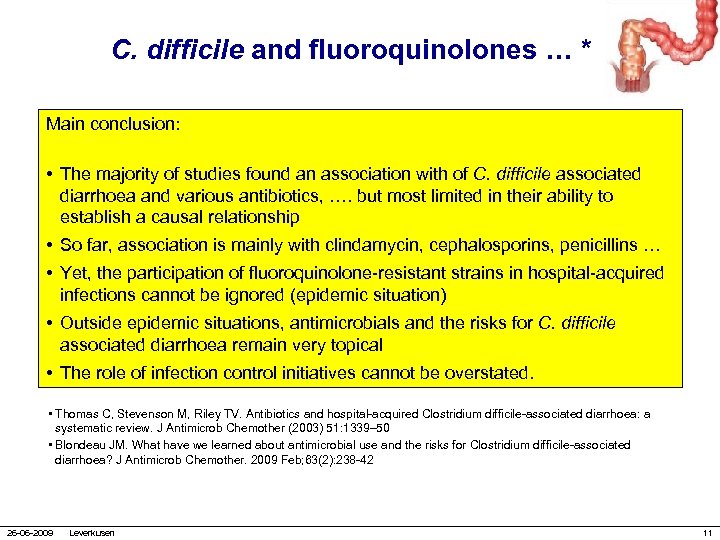
C. difficile and fluoroquinolones … * Main conclusion: • The majority of studies found an association with of C. difficile associated diarrhoea and various antibiotics, …. but most limited in their ability to establish a causal relationship • So far, association is mainly with clindamycin, cephalosporins, penicillins … • Yet, the participation of fluoroquinolone-resistant strains in hospital-acquired infections cannot be ignored (epidemic situation) • Outside epidemic situations, antimicrobials and the risks for C. difficile associated diarrhoea remain very topical • The role of infection control initiatives cannot be overstated. • Thomas C, Stevenson M, Riley TV. Antibiotics and hospital-acquired Clostridium difficile-associated diarrhoea: a systematic review. J Antimicrob Chemother (2003) 51: 1339– 50 • Blondeau JM. What have we learned about antimicrobial use and the risks for Clostridium difficile-associated diarrhoea? J Antimicrob Chemother. 2009 Feb; 63(2): 238 -42 26 -06 -2009 Leverkusen 11
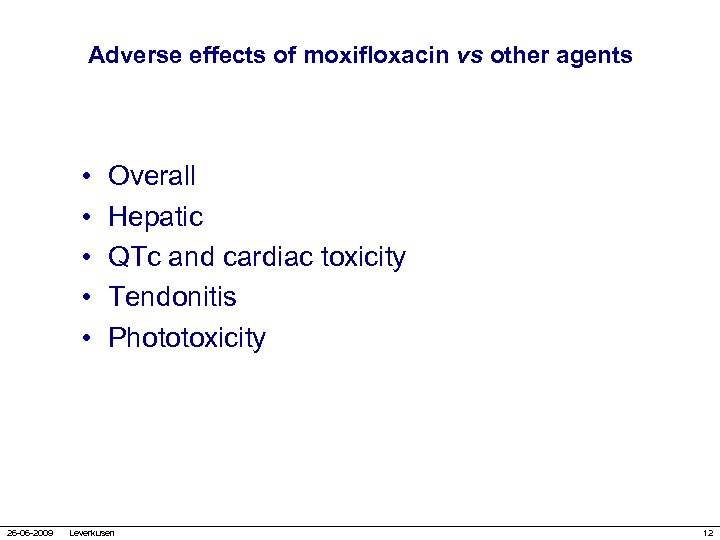
Adverse effects of moxifloxacin vs other agents • • • 26 -06 -2009 Overall Hepatic QTc and cardiac toxicity Tendonitis Phototoxicity Leverkusen 12
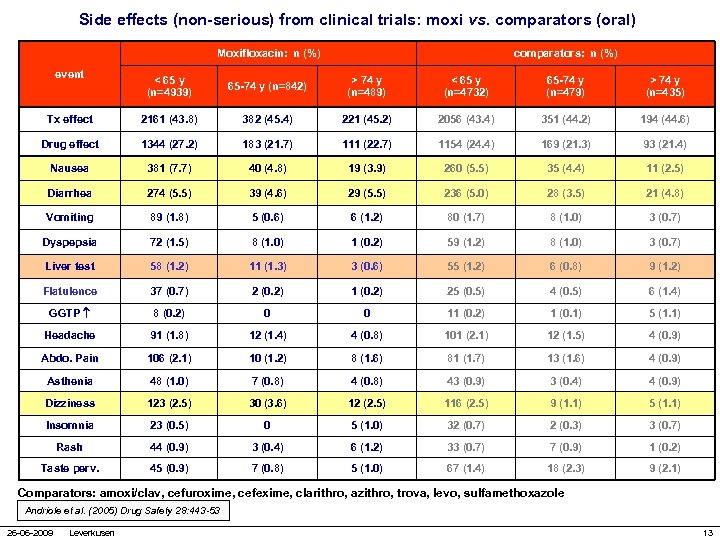
Side effects (non-serious) from clinical trials: moxi vs. comparators (oral) Moxifloxacin: n (%) event comparators: n (%) < 65 y (n=4939) 65 -74 y (n=842) > 74 y (n=489) < 65 y (n=4732) 65 -74 y (n=479) > 74 y (n=435) Tx effect 2161 (43. 8) 382 (45. 4) 221 (45. 2) 2056 (43. 4) 351 (44. 2) 194 (44. 6) Drug effect 1344 (27. 2) 183 (21. 7) 111 (22. 7) 1154 (24. 4) 169 (21. 3) 93 (21. 4) Nausea 381 (7. 7) 40 (4. 8) 19 (3. 9) 260 (5. 5) 35 (4. 4) 11 (2. 5) Diarrhea 274 (5. 5) 39 (4. 6) 29 (5. 5) 236 (5. 0) 28 (3. 5) 21 (4. 8) Vomiting 89 (1. 8) 5 (0. 6) 6 (1. 2) 80 (1. 7) 8 (1. 0) 3 (0. 7) Dyspepsia 72 (1. 5) 8 (1. 0) 1 (0. 2) 59 (1. 2) 8 (1. 0) 3 (0. 7) Liver test 58 (1. 2) 11 (1. 3) 3 (0. 6) 55 (1. 2) 6 (0. 8) 9 (1. 2) Flatulence 37 (0. 7) 2 (0. 2) 1 (0. 2) 25 (0. 5) 4 (0. 5) 6 (1. 4) GGTP 8 (0. 2) 0 0 11 (0. 2) 1 (0. 1) 5 (1. 1) Headache 91 (1. 8) 12 (1. 4) 4 (0. 8) 101 (2. 1) 12 (1. 5) 4 (0. 9) Abdo. Pain 106 (2. 1) 10 (1. 2) 8 (1. 6) 81 (1. 7) 13 (1. 6) 4 (0. 9) Asthenia 48 (1. 0) 7 (0. 8) 43 (0. 9) 3 (0. 4) 4 (0. 9) Dizziness 123 (2. 5) 30 (3. 6) 12 (2. 5) 116 (2. 5) 9 (1. 1) 5 (1. 1) Insomnia 23 (0. 5) 0 5 (1. 0) 32 (0. 7) 2 (0. 3) 3 (0. 7) Rash 44 (0. 9) 3 (0. 4) 6 (1. 2) 33 (0. 7) 7 (0. 9) 1 (0. 2) Taste perv. 45 (0. 9) 7 (0. 8) 5 (1. 0) 67 (1. 4) 18 (2. 3) 9 (2. 1) Comparators: amoxi/clav, cefuroxime, cefexime, clarithro, azithro, trova, levo, sulfamethoxazole Andriole et al. (2005) Drug Safety 28: 443 -53 26 -06 -2009 Leverkusen 13
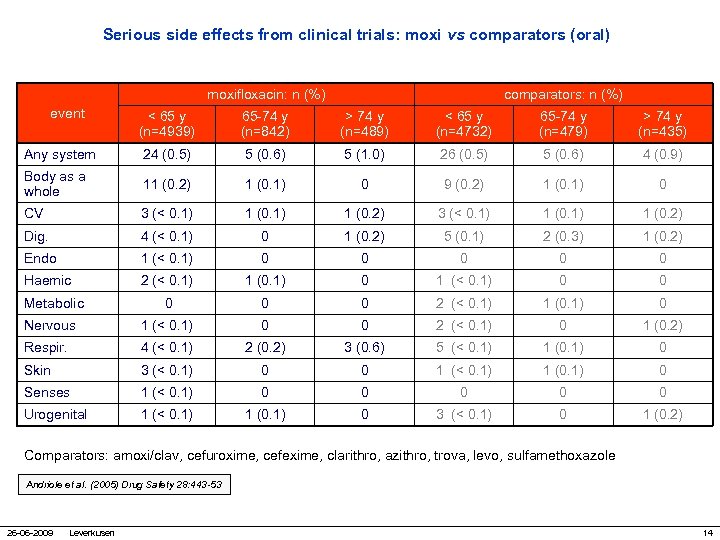
Serious side effects from clinical trials: moxi vs comparators (oral) moxifloxacin: n (%) event comparators: n (%) < 65 y (n=4939) 65 -74 y (n=842) > 74 y (n=489) < 65 y (n=4732) 65 -74 y (n=479) > 74 y (n=435) Any system 24 (0. 5) 5 (0. 6) 5 (1. 0) 26 (0. 5) 5 (0. 6) 4 (0. 9) Body as a whole 11 (0. 2) 1 (0. 1) 0 9 (0. 2) 1 (0. 1) 0 CV 3 (< 0. 1) 1 (0. 2) Dig. 4 (< 0. 1) 0 1 (0. 2) 5 (0. 1) 2 (0. 3) 1 (0. 2) Endo 1 (< 0. 1) 0 0 0 Haemic 2 (< 0. 1) 1 (0. 1) 0 1 (< 0. 1) 0 0 Metabolic 0 0 0 2 (< 0. 1) 1 (0. 1) 0 Nervous 1 (< 0. 1) 0 0 2 (< 0. 1) 0 1 (0. 2) Respir. 4 (< 0. 1) 2 (0. 2) 3 (0. 6) 5 (< 0. 1) 1 (0. 1) 0 Skin 3 (< 0. 1) 0 0 1 (< 0. 1) 1 (0. 1) 0 Senses 1 (< 0. 1) 0 0 0 Urogenital 1 (< 0. 1) 1 (0. 1) 0 3 (< 0. 1) 0 1 (0. 2) Comparators: amoxi/clav, cefuroxime, cefexime, clarithro, azithro, trova, levo, sulfamethoxazole Andriole et al. (2005) Drug Safety 28: 443 -53 26 -06 -2009 Leverkusen 14
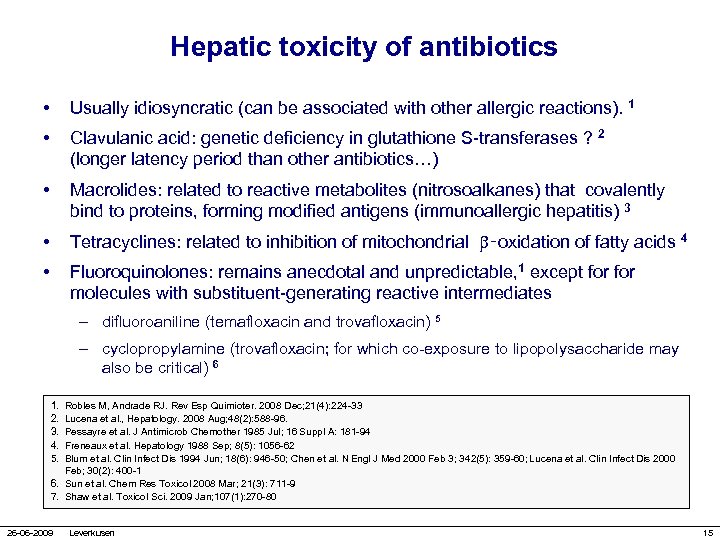
Hepatic toxicity of antibiotics • Usually idiosyncratic (can be associated with other allergic reactions). 1 • Clavulanic acid: genetic deficiency in glutathione S-transferases ? 2 (longer latency period than other antibiotics…) • Macrolides: related to reactive metabolites (nitrosoalkanes) that covalently bind to proteins, forming modified antigens (immunoallergic hepatitis) 3 • Tetracyclines: related to inhibition of mitochondrial ‑oxidation of fatty acids 4 • Fluoroquinolones: remains anecdotal and unpredictable, 1 except for molecules with substituent-generating reactive intermediates – difluoroaniline (temafloxacin and trovafloxacin) 5 – cyclopropylamine (trovafloxacin; for which co-exposure to lipopolysaccharide may also be critical) 6 1. 2. 3. 4. 5. Robles M, Andrade RJ. Rev Esp Quimioter. 2008 Dec; 21(4): 224 -33 Lucena et al. , Hepatology. 2008 Aug; 48(2): 588 -96. Pessayre et al. J Antimicrob Chemother 1985 Jul; 16 Suppl A: 181 -94 Freneaux et al. Hepatology 1988 Sep; 8(5): 1056 -62 Blum et al. Clin Infect Dis 1994 Jun; 18(6): 946 -50; Chen et al. N Engl J Med 2000 Feb 3; 342(5): 359 -60; Lucena et al. Clin Infect Dis 2000 Feb; 30(2): 400 -1 6. Sun et al. Chem Res Toxicol 2008 Mar; 21(3): 711 -9 7. Shaw et al. Toxicol Sci. 2009 Jan; 107(1): 270 -80 26 -06 -2009 Leverkusen 15
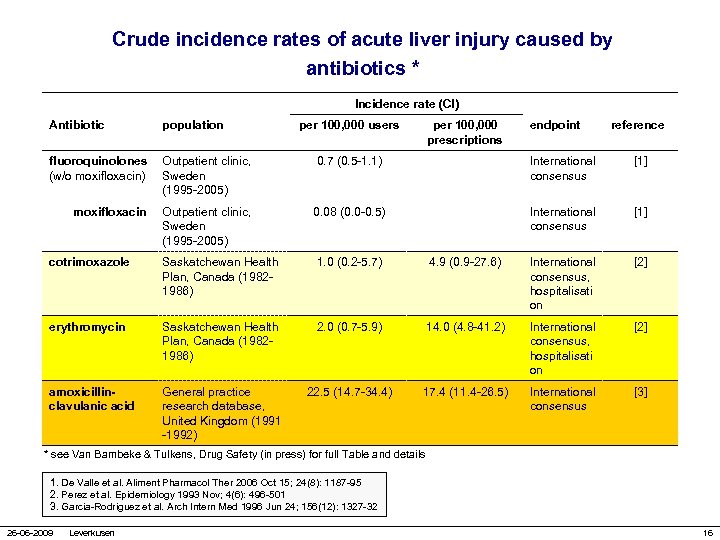
Crude incidence rates of acute liver injury caused by antibiotics * Incidence rate (CI) Antibiotic population fluoroquinolones Outpatient clinic, (w/o moxifloxacin) Sweden (1995 -2005) per 100, 000 users per 100, 000 prescriptions endpoint reference 0. 7 (0. 5 -1. 1) International consensus [1] Outpatient clinic, Sweden (1995 -2005) 0. 08 (0. 0 -0. 5) International consensus [1] cotrimoxazole Saskatchewan Health Plan, Canada (19821986) 1. 0 (0. 2 -5. 7) 4. 9 (0. 9 -27. 6) International consensus, hospitalisati on [2] erythromycin Saskatchewan Health Plan, Canada (19821986) 2. 0 (0. 7 -5. 9) 14. 0 (4. 8 -41. 2) International consensus, hospitalisati on [2] amoxicillinclavulanic acid General practice research database, United Kingdom (1991 -1992) 22. 5 (14. 7 -34. 4) 17. 4 (11. 4 -26. 5) International consensus [3] moxifloxacin * see Van Bambeke & Tulkens, Drug Safety (in press) for full Table and details 1. De Valle et al. Aliment Pharmacol Ther 2006 Oct 15; 24(8): 1187 -95 2. Perez et al. Epidemiology 1993 Nov; 4(6): 496 -501 3. Garcia-Rodriguez et al. Arch Intern Med 1996 Jun 24; 156(12): 1327 -32 26 -06 -2009 Leverkusen 16
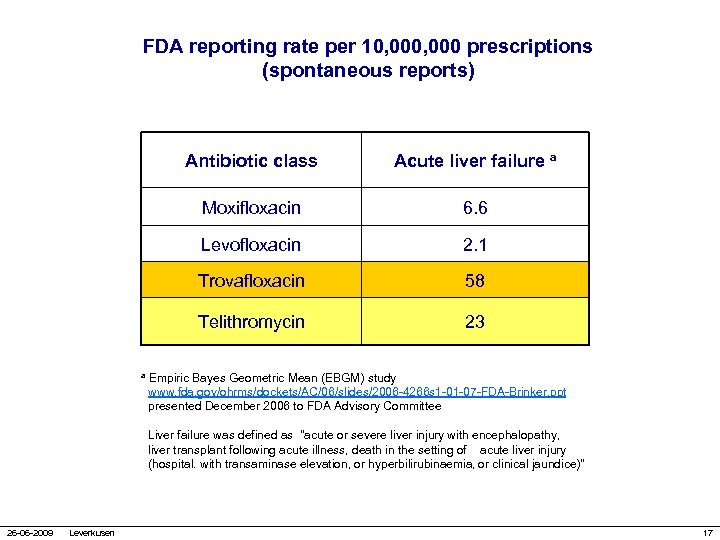
FDA reporting rate per 10, 000 prescriptions (spontaneous reports) Antibiotic class Acute liver failure a Moxifloxacin 6. 6 Levofloxacin 2. 1 Trovafloxacin 58 Telithromycin 23 a Empiric Bayes Geometric Mean (EBGM) study www. fda. gov/ohrms/dockets/AC/06/slides/2006 -4266 s 1 -01 -07 -FDA-Brinker. ppt presented December 2006 to FDA Advisory Committee Liver failure was defined as "acute or severe liver injury with encephalopathy, liver transplant following acute illness, death in the setting of acute liver injury (hospital. with transaminase elevation, or hyperbilirubinaemia, or clinical jaundice)" 26 -06 -2009 Leverkusen 17
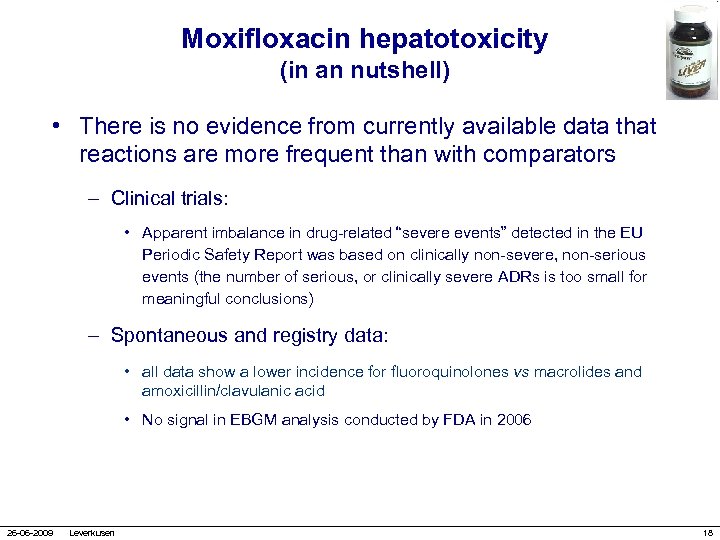
Moxifloxacin hepatotoxicity (in an nutshell) • There is no evidence from currently available data that reactions are more frequent than with comparators – Clinical trials: • Apparent imbalance in drug-related “severe events” detected in the EU Periodic Safety Report was based on clinically non-severe, non-serious events (the number of serious, or clinically severe ADRs is too small for meaningful conclusions) – Spontaneous and registry data: • all data show a lower incidence for fluoroquinolones vs macrolides and amoxicillin/clavulanic acid • No signal in EBGM analysis conducted by FDA in 2006 26 -06 -2009 Leverkusen 18
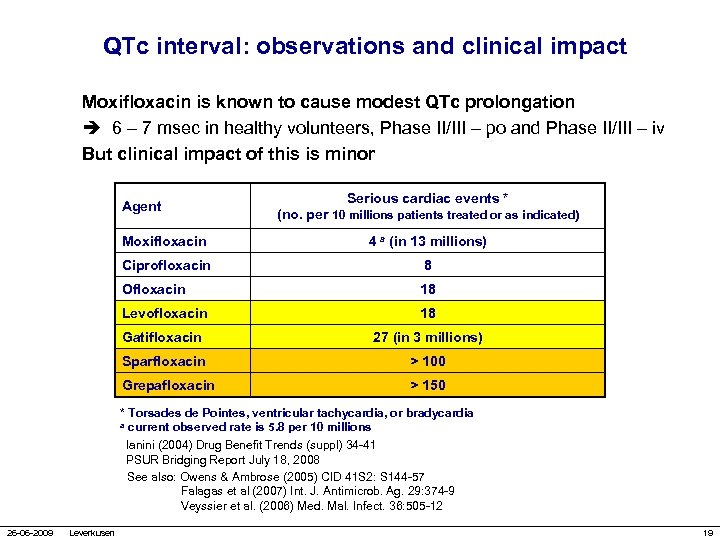
QTc interval: observations and clinical impact Moxifloxacin is known to cause modest QTc prolongation è 6 – 7 msec in healthy volunteers, Phase II/III – po and Phase II/III – iv But clinical impact of this is minor Agent Serious cardiac events * (no. per 10 millions patients treated or as indicated) Moxifloxacin 4 a (in 13 millions) Ciprofloxacin 8 Ofloxacin 18 Levofloxacin 18 Gatifloxacin 27 (in 3 millions) Sparfloxacin > 100 Grepafloxacin > 150 * Torsades de Pointes, ventricular tachycardia, or bradycardia a current observed rate is 5. 8 per 10 millions Ianini (2004) Drug Benefit Trends (suppl) 34 -41 PSUR Bridging Report July 18, 2008 See also: Owens & Ambrose (2005) CID 41 S 2: S 144 -57 Falagas et al (2007) Int. J. Antimicrob. Ag. 29: 374 -9 Veyssier et al. (2006) Med. Mal. Infect. 36: 505 -12 26 -06 -2009 Leverkusen 19
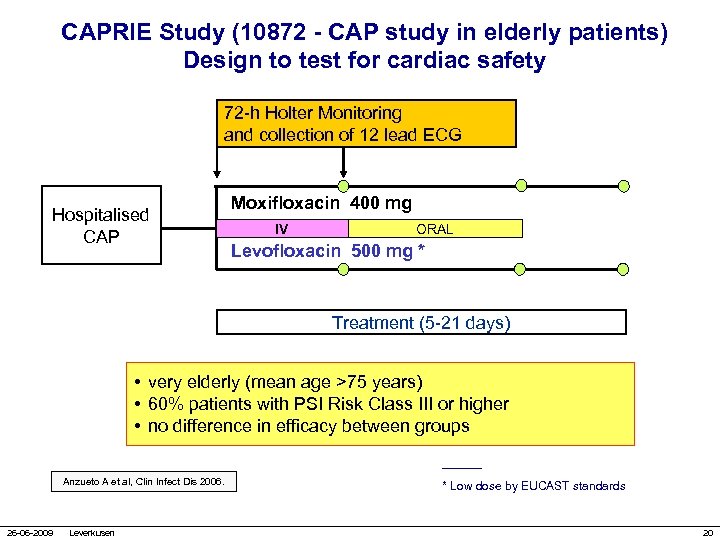
CAPRIE Study (10872 - CAP study in elderly patients) Design to test for cardiac safety 72 -h Holter Monitoring and collection of 12 lead ECG Hospitalised CAP Moxifloxacin 400 mg IV ORAL Levofloxacin 500 mg * Treatment (5 -21 days) • very elderly (mean age >75 years) • 60% patients with PSI Risk Class III or higher • no difference in efficacy between groups Anzueto A et al, Clin Infect Dis 2006. 26 -06 -2009 Leverkusen * Low dose by EUCAST standards 20
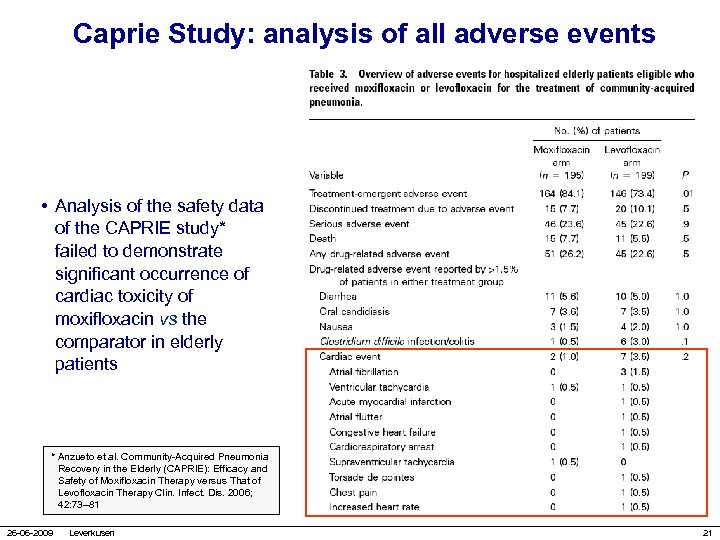
Caprie Study: analysis of all adverse events • Analysis of the safety data of the CAPRIE study* failed to demonstrate significant occurrence of cardiac toxicity of moxifloxacin vs the comparator in elderly patients * Anzueto et al. Community-Acquired Pneumonia Recovery in the Elderly (CAPRIE): Efficacy and Safety of Moxifloxacin Therapy versus That of Levofloxacin Therapy Clin. Infect. Dis. 2006; 42: 73– 81 26 -06 -2009 Leverkusen 21
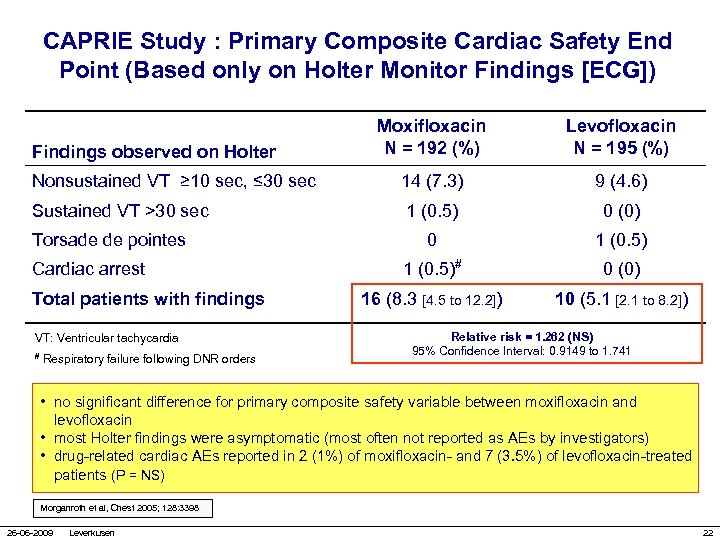
CAPRIE Study : Primary Composite Cardiac Safety End Point (Based only on Holter Monitor Findings [ECG]) Moxifloxacin N = 192 (%) Levofloxacin N = 195 (%) Nonsustained VT ≥ 10 sec, ≤ 30 sec 14 (7. 3) 9 (4. 6) Sustained VT >30 sec 1 (0. 5) 0 (0) 0 1 (0. 5)# 0 (0) 16 (8. 3 [4. 5 to 12. 2]) 10 (5. 1 [2. 1 to 8. 2]) Findings observed on Holter Torsade de pointes Cardiac arrest Total patients with findings VT: Ventricular tachycardia # Respiratory failure following DNR orders Relative risk = 1. 262 (NS) 95% Confidence Interval: 0. 9149 to 1. 741 • no significant difference for primary composite safety variable between moxifloxacin and levofloxacin • most Holter findings were asymptomatic (most often not reported as AEs by investigators) • drug-related cardiac AEs reported in 2 (1%) of moxifloxacin- and 7 (3. 5%) of levofloxacin-treated patients (P = NS) Morganroth et al, Chest 2005; 128: 3398 26 -06 -2009 Leverkusen 22
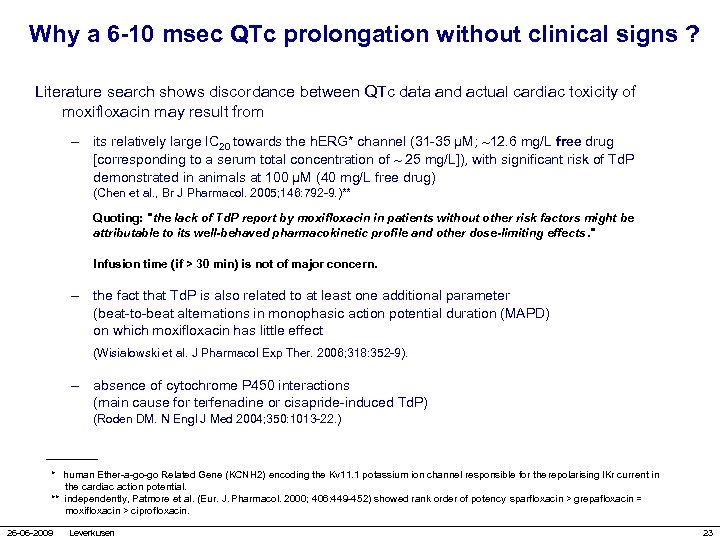
Why a 6 -10 msec QTc prolongation without clinical signs ? Literature search shows discordance between QTc data and actual cardiac toxicity of moxifloxacin may result from – its relatively large IC 20 towards the h. ERG* channel (31 -35 µM; 12. 6 mg/L free drug [corresponding to a serum total concentration of 25 mg/L]), with significant risk of Td. P demonstrated in animals at 100 µM (40 mg/L free drug) (Chen et al. , Br J Pharmacol. 2005; 146: 792 -9. )** Quoting: "the lack of Td. P report by moxifloxacin in patients without other risk factors might be attributable to its well-behaved pharmacokinetic profile and other dose-limiting effects. " Infusion time (if > 30 min) is not of major concern. – the fact that Td. P is also related to at least one additional parameter (beat-to-beat alternations in monophasic action potential duration (MAPD) on which moxifloxacin has little effect (Wisialowski et al. J Pharmacol Exp Ther. 2006; 318: 352 -9). – absence of cytochrome P 450 interactions (main cause for terfenadine or cisapride-induced Td. P) (Roden DM. N Engl J Med 2004; 350: 1013 -22. ) * human Ether-a-go-go Related Gene (KCNH 2) encoding the Kv 11. 1 potassium ion channel responsible for the repolarising IKr current in the cardiac action potential. ** independently, Patmore et al. (Eur. J. Pharmacol. 2000; 406: 449 -452) showed rank order of potency sparfloxacin > grepafloxacin = moxifloxacin > ciprofloxacin. 26 -06 -2009 Leverkusen 23
![Multiple risk factors that increase the probability of torsades de pointes [23] Owens, R.](https://present5.com/presentation/bc5784686368aa50e83038772a596622/image-24.jpg "Multiple risk factors that increase the probability of torsades de pointes [23] Owens, R.")
Multiple risk factors that increase the probability of torsades de pointes [23] Owens, R. C. , CID 2006 43 1603 -11 26 -06 -2009 Leverkusen 24
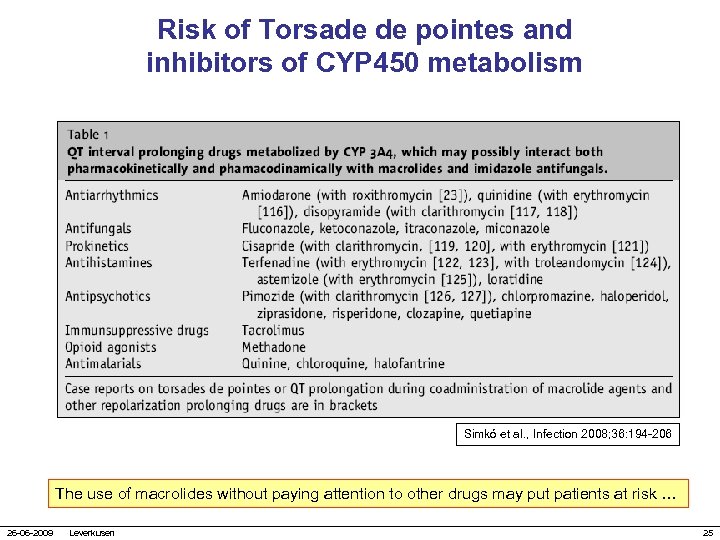
Risk of Torsade de pointes and inhibitors of CYP 450 metabolism Simkó et al. , Infection 2008; 36: 194 -206 The use of macrolides without paying attention to other drugs may put patients at risk … 26 -06 -2009 Leverkusen 25
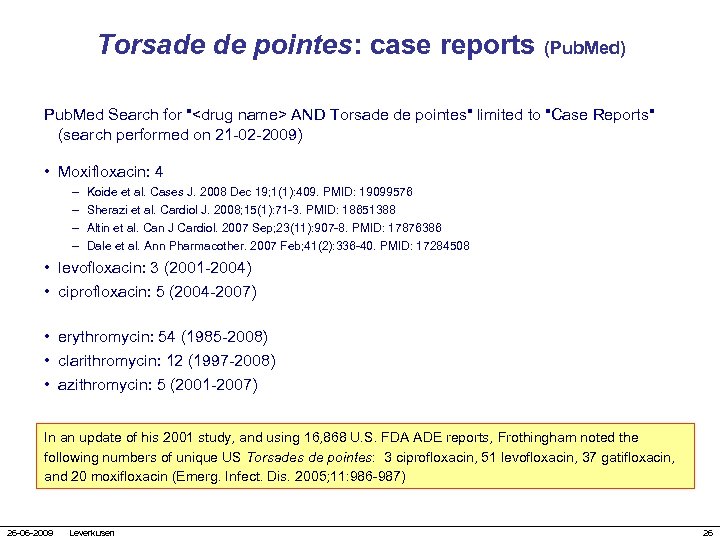
Torsade de pointes: case reports (Pub. Med) Pub. Med Search for "<drug name> AND Torsade de pointes" limited to "Case Reports" (search performed on 21 -02 -2009) • Moxifloxacin: 4 – – Koide et al. Cases J. 2008 Dec 19; 1(1): 409. PMID: 19099576 Sherazi et al. Cardiol J. 2008; 15(1): 71 -3. PMID: 18651388 Altin et al. Can J Cardiol. 2007 Sep; 23(11): 907 -8. PMID: 17876386 Dale et al. Ann Pharmacother. 2007 Feb; 41(2): 336 -40. PMID: 17284508 • levofloxacin: 3 (2001 -2004) • ciprofloxacin: 5 (2004 -2007) • erythromycin: 54 (1985 -2008) • clarithromycin: 12 (1997 -2008) • azithromycin: 5 (2001 -2007) In an update of his 2001 study, and using 16, 868 U. S. FDA ADE reports, Frothingham noted the following numbers of unique US Torsades de pointes: 3 ciprofloxacin, 51 levofloxacin, 37 gatifloxacin, and 20 moxifloxacin (Emerg. Infect. Dis. 2005; 11: 986 -987) 26 -06 -2009 Leverkusen 26
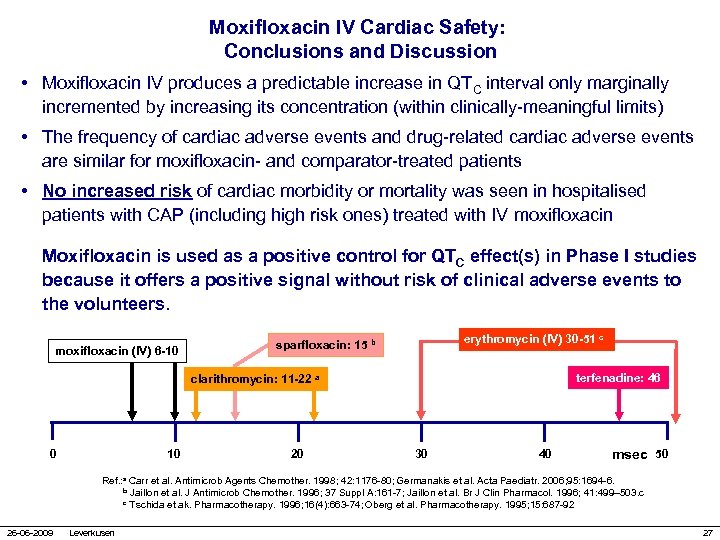
Moxifloxacin IV Cardiac Safety: Conclusions and Discussion • Moxifloxacin IV produces a predictable increase in QTC interval only marginally incremented by increasing its concentration (within clinically-meaningful limits) • The frequency of cardiac adverse events and drug-related cardiac adverse events are similar for moxifloxacin- and comparator-treated patients • No increased risk of cardiac morbidity or mortality was seen in hospitalised patients with CAP (including high risk ones) treated with IV moxifloxacin Moxifloxacin is used as a positive control for QTC effect(s) in Phase I studies because it offers a positive signal without risk of clinical adverse events to the volunteers. moxifloxacin (IV) 6 -10 erythromycin (IV) 30 -51 c sparfloxacin: 15 b terfenadine: 46 clarithromycin: 11 -22 a 0 10 20 30 40 msec 50 Ref. : a Carr et al. Antimicrob Agents Chemother. 1998; 42: 1176 -80; Germanakis et al. Acta Paediatr. 2006; 95: 1694 -6. b Jaillon et al. J Antimicrob Chemother. 1996; 37 Suppl A: 161 -7; Jaillon et al. Br J Clin Pharmacol. 1996; 41: 499– 503. c c Tschida et ak. Pharmacotherapy. 1996; 16(4): 663 -74; Oberg et al. Pharmacotherapy. 1995; 15: 687 -92 26 -06 -2009 Leverkusen 27
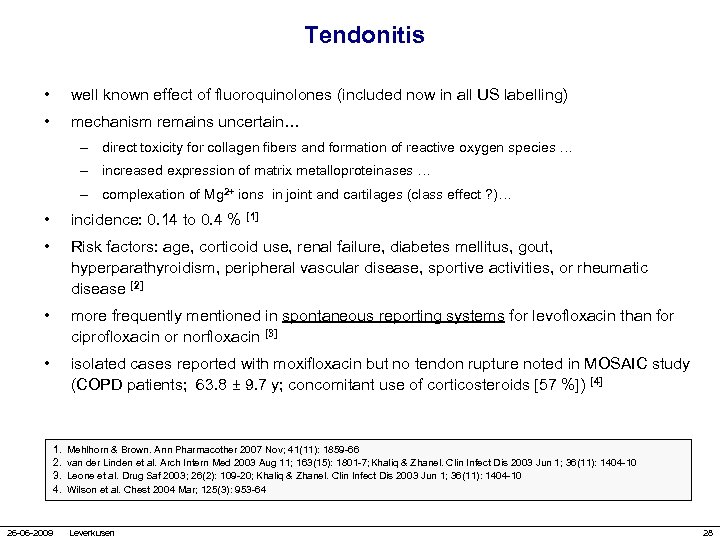
Tendonitis • well known effect of fluoroquinolones (included now in all US labelling) • mechanism remains uncertain… – direct toxicity for collagen fibers and formation of reactive oxygen species … – increased expression of matrix metalloproteinases … – complexation of Mg 2+ ions in joint and cartilages (class effect ? )… • incidence: 0. 14 to 0. 4 % [1] • Risk factors: age, corticoid use, renal failure, diabetes mellitus, gout, hyperparathyroidism, peripheral vascular disease, sportive activities, or rheumatic disease [2] • more frequently mentioned in spontaneous reporting systems for levofloxacin than for ciprofloxacin or norfloxacin [3] • isolated cases reported with moxifloxacin but no tendon rupture noted in MOSAIC study (COPD patients; 63. 8 ± 9. 7 y; concomitant use of corticosteroids [57 %]) [4] 1. 2. 3. 4. 26 -06 -2009 Mehlhorn & Brown. Ann Pharmacother 2007 Nov; 41(11): 1859 -66 van der Linden et al. Arch Intern Med 2003 Aug 11; 163(15): 1801 -7; Khaliq & Zhanel. Clin Infect Dis 2003 Jun 1; 36(11): 1404 -10 Leone et al. Drug Saf 2003; 26(2): 109 -20; Khaliq & Zhanel. Clin Infect Dis 2003 Jun 1; 36(11): 1404 -10 Wilson et al. Chest 2004 Mar; 125(3): 953 -64 Leverkusen 28
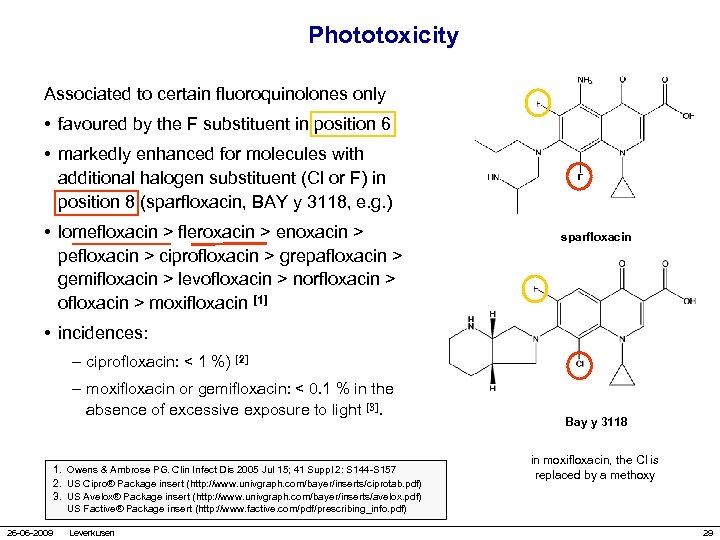
Phototoxicity Associated to certain fluoroquinolones only • favoured by the F substituent in position 6 • markedly enhanced for molecules with additional halogen substituent (Cl or F) in position 8 (sparfloxacin, BAY y 3118, e. g. ) • lomefloxacin > fleroxacin > enoxacin > pefloxacin > ciprofloxacin > grepafloxacin > gemifloxacin > levofloxacin > norfloxacin > ofloxacin > moxifloxacin [1] sparfloxacin • incidences: – ciprofloxacin: < 1 %) [2] – moxifloxacin or gemifloxacin: < 0. 1 % in the absence of excessive exposure to light [3]. 1. Owens & Ambrose PG. Clin Infect Dis 2005 Jul 15; 41 Suppl 2: S 144 -S 157 2. US Cipro® Package insert (http: //www. univgraph. com/bayer/inserts/ciprotab. pdf) 3. US Avelox® Package insert (http: //www. univgraph. com/bayer/inserts/avelox. pdf) US Factive® Package insert (http: //www. factive. com/pdf/prescribing_info. pdf) 26 -06 -2009 Leverkusen Bay y 3118 in moxifloxacin, the Cl is replaced by a methoxy 29
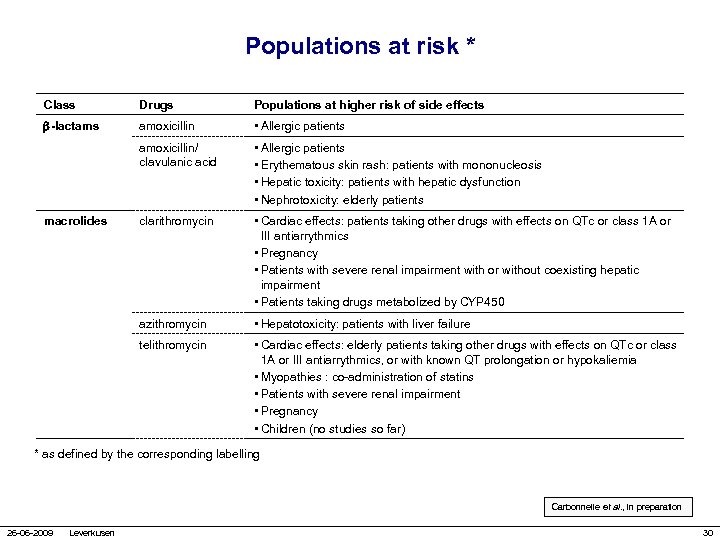
Populations at risk * Class Drugs Populations at higher risk of side effects -lactams amoxicillin • Allergic patients amoxicillin/ clavulanic acid • Allergic patients • Erythematous skin rash: patients with mononucleosis • Hepatic toxicity: patients with hepatic dysfunction • Nephrotoxicity: elderly patients clarithromycin • Cardiac effects: patients taking other drugs with effects on QTc or class 1 A or III antiarrythmics • Pregnancy • Patients with severe renal impairment with or without coexisting hepatic impairment • Patients taking drugs metabolized by CYP 450 azithromycin • Hepatotoxicity: patients with liver failure telithromycin • Cardiac effects: elderly patients taking other drugs with effects on QTc or class 1 A or III antiarrythmics, or with known QT prolongation or hypokaliemia • Myopathies : co-administration of statins • Patients with severe renal impairment • Pregnancy • Children (no studies so far) macrolides * as defined by the corresponding labelling Carbonnelle et al. , in preparation 26 -06 -2009 Leverkusen 30
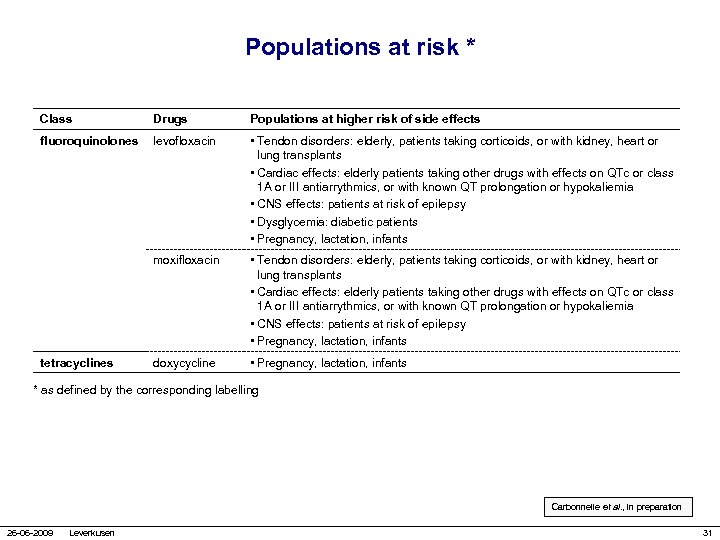
Populations at risk * Class Drugs Populations at higher risk of side effects fluoroquinolones levofloxacin • Tendon disorders: elderly, patients taking corticoids, or with kidney, heart or lung transplants • Cardiac effects: elderly patients taking other drugs with effects on QTc or class 1 A or III antiarrythmics, or with known QT prolongation or hypokaliemia • CNS effects: patients at risk of epilepsy • Dysglycemia: diabetic patients • Pregnancy, lactation, infants moxifloxacin • Tendon disorders: elderly, patients taking corticoids, or with kidney, heart or lung transplants • Cardiac effects: elderly patients taking other drugs with effects on QTc or class 1 A or III antiarrythmics, or with known QT prolongation or hypokaliemia • CNS effects: patients at risk of epilepsy • Pregnancy, lactation, infants doxycycline • Pregnancy, lactation, infants tetracyclines * as defined by the corresponding labelling Carbonnelle et al. , in preparation 26 -06 -2009 Leverkusen 31
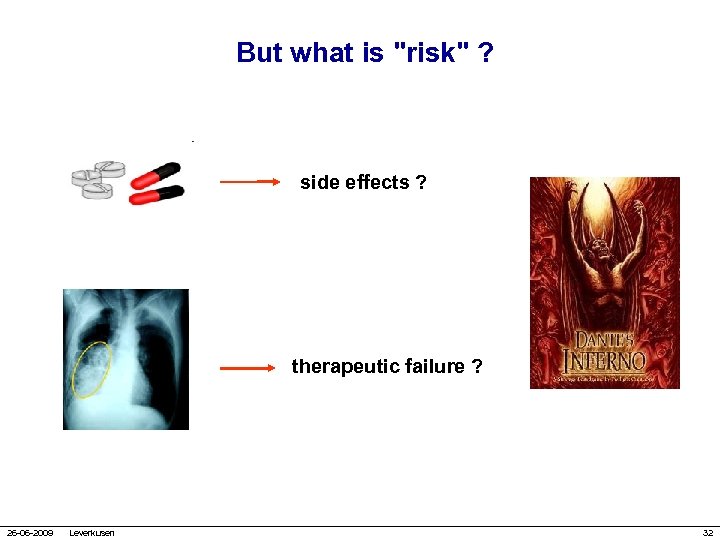
But what is "risk" ? side effects ? therapeutic failure ? 26 -06 -2009 Leverkusen 32
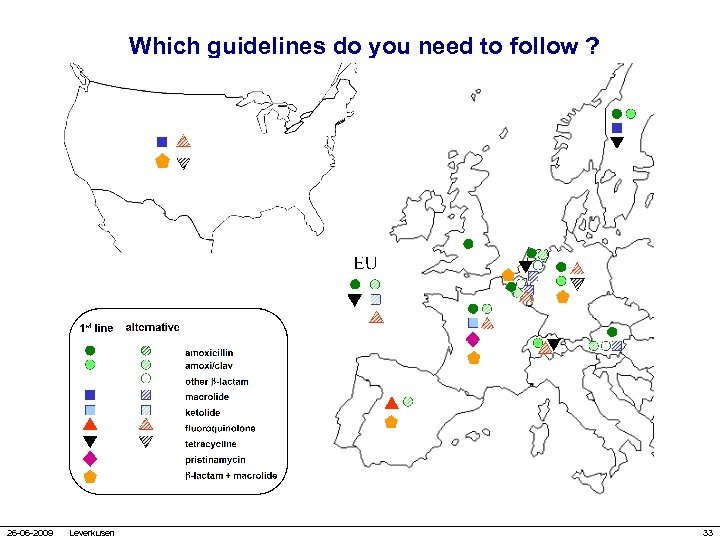
Which guidelines do you need to follow ? 26 -06 -2009 Leverkusen 33
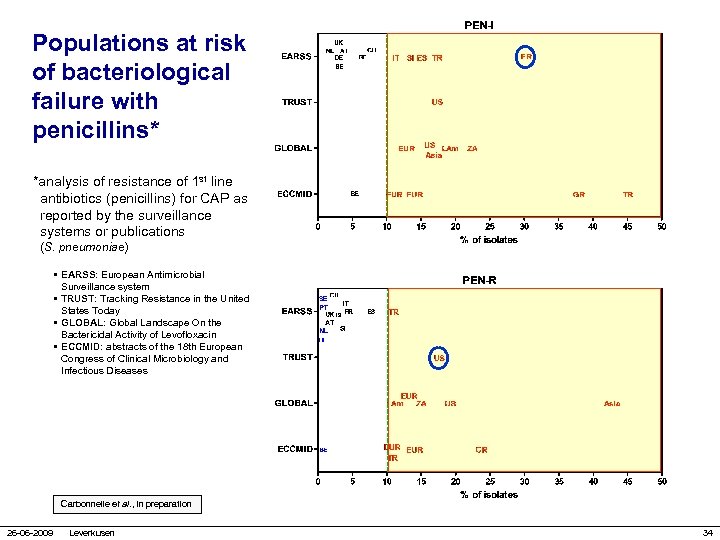
Populations at risk of bacteriological failure with penicillins* *analysis of resistance of 1 st line antibiotics (penicillins) for CAP as reported by the surveillance systems or publications (S. pneumoniae) • EARSS: European Antimicrobial Surveillance system • TRUST: Tracking Resistance in the United States Today • GLOBAL: Global Landscape On the Bactericidal Activity of Levofloxacin • ECCMID: abstracts of the 18 th European Congress of Clinical Microbiology and Infectious Diseases Carbonnelle et al. , in preparation 26 -06 -2009 Leverkusen 34
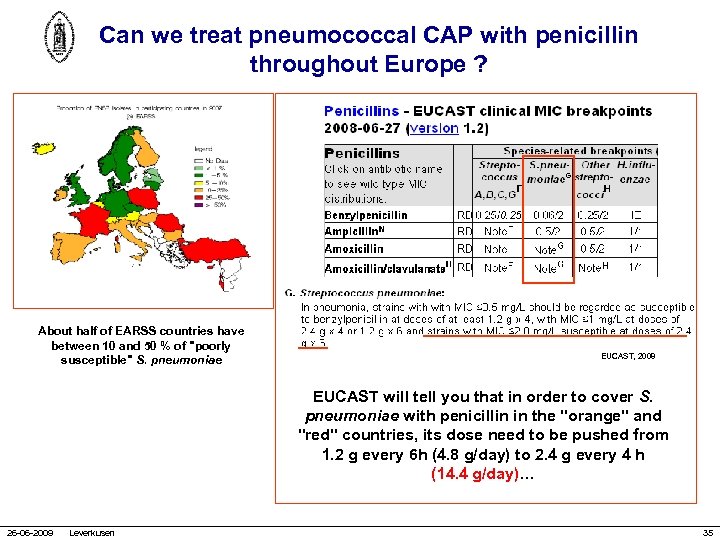
Can we treat pneumococcal CAP with penicillin throughout Europe ? About half of EARSS countries have between 10 and 50 % of "poorly susceptible" S. pneumoniae EUCAST, 2008 EUCAST will tell you that in order to cover S. pneumoniae with penicillin in the "orange" and "red" countries, its dose need to be pushed from 1. 2 g every 6 h (4. 8 g/day) to 2. 4 g every 4 h (14. 4 g/day)… 26 -06 -2009 Leverkusen 35
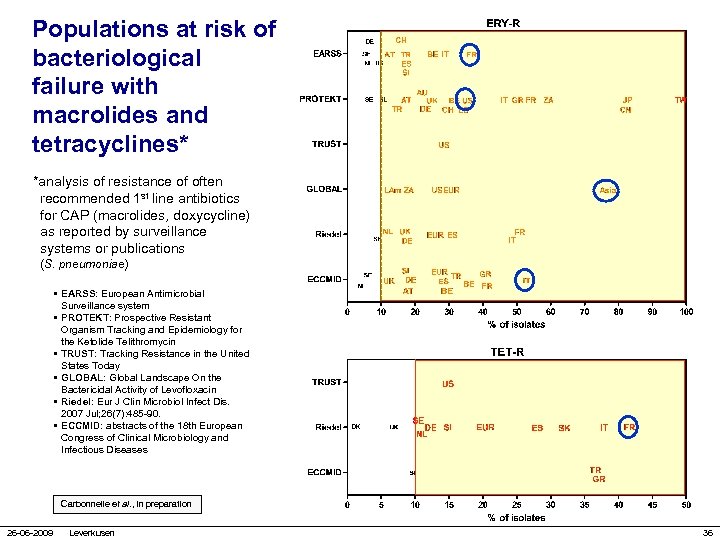
Populations at risk of bacteriological failure with macrolides and tetracyclines* *analysis of resistance of often recommended 1 st line antibiotics for CAP (macrolides, doxycycline) as reported by surveillance systems or publications (S. pneumoniae) • EARSS: European Antimicrobial Surveillance system • PROTEKT: Prospective Resistant Organism Tracking and Epidemiology for the Ketolide Telithromycin • TRUST: Tracking Resistance in the United States Today • GLOBAL: Global Landscape On the Bactericidal Activity of Levofloxacin • Riedel: Eur J Clin Microbiol Infect Dis. 2007 Jul; 26(7): 485 -90. • ECCMID: abstracts of the 18 th European Congress of Clinical Microbiology and Infectious Diseases Carbonnelle et al. , in preparation 26 -06 -2009 Leverkusen 36
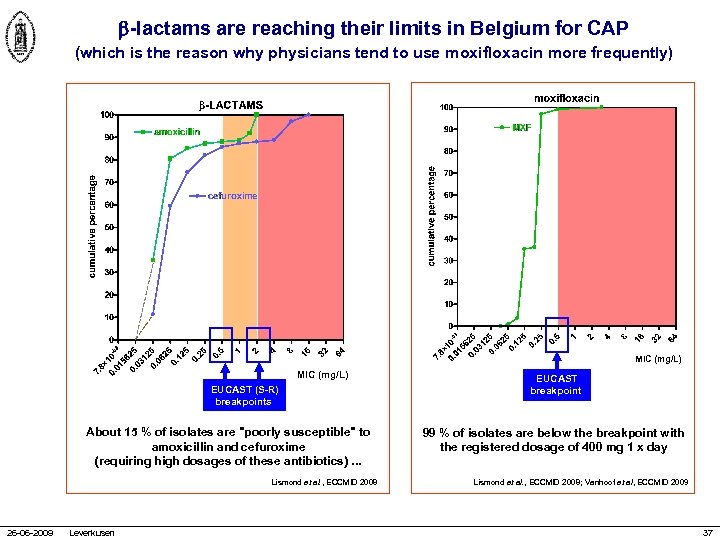
-lactams are reaching their limits in Belgium for CAP (which is the reason why physicians tend to use moxifloxacin more frequently) MIC (mg/L) EUCAST (S-R) breakpoints About 15 % of isolates are "poorly susceptible" to amoxicillin and cefuroxime (requiring high dosages of these antibiotics). . . Lismond et al. , ECCMID 2008 26 -06 -2009 Leverkusen EUCAST breakpoint 99 % of isolates are below the breakpoint with the registered dosage of 400 mg 1 x day Lismond et al. , ECCMID 2008; Vanhoof et al, ECCMID 2009 37
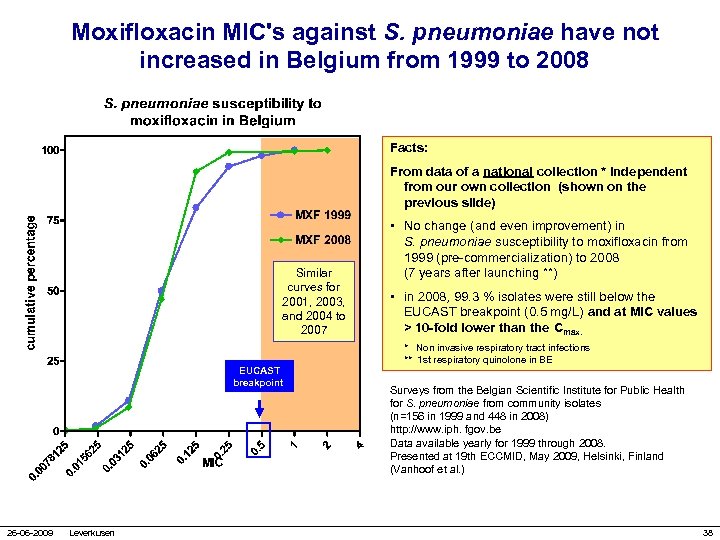
Moxifloxacin MIC's against S. pneumoniae have not increased in Belgium from 1999 to 2008 Facts: From data of a national collection * independent from our own collection (shown on the previous slide) Similar curves for 2001, 2003, and 2004 to 2007 EUCAST breakpoint 26 -06 -2009 Leverkusen • No change (and even improvement) in S. pneumoniae susceptibility to moxifloxacin from 1999 (pre-commercialization) to 2008 (7 years after launching **) • in 2008, 99. 3 % isolates were still below the EUCAST breakpoint (0. 5 mg/L) and at MIC values > 10 -fold lower than the Cmax. * Non invasive respiratory tract infections ** 1 st respiratory quinolone in BE Surveys from the Belgian Scientific Institute for Public Health for S. pneumoniae from community isolates (n=156 in 1999 and 448 in 2008) http: //www. iph. fgov. be Data available yearly for 1999 through 2008. Presented at 19 th ECCMID, May 2009, Helsinki, Finland (Vanhoof et al. ) 38
![Pharmacokinetics and breakpoint Levofloxacin 500 mg 1 X / jr • AUC [(mg/l)xh] 47](https://present5.com/presentation/bc5784686368aa50e83038772a596622/image-39.jpg "Pharmacokinetics and breakpoint Levofloxacin 500 mg 1 X / jr • AUC [(mg/l)xh] 47")
Pharmacokinetics and breakpoint Levofloxacin 500 mg 1 X / jr • AUC [(mg/l)xh] 47 • peak [mg/l] 5 è MICmax < 0. 5 PK/PD breakpoint AUC/MIC = 100 % of strains 100 moxi 80 60 Moxifloxacin 400 mg 1 X /jr • AUC [(mg/l)xh] 48 • peak [mg/l] 4. 5 levo 40 20 è MICmax < 0. 5 0 0. 015 0. 03 0. 06 0. 125 0. 25 MIC 26 -06 -2009 Leverkusen 0. 5 1 2 4 MIC data: J. Verhaegen et al. , 2003 39
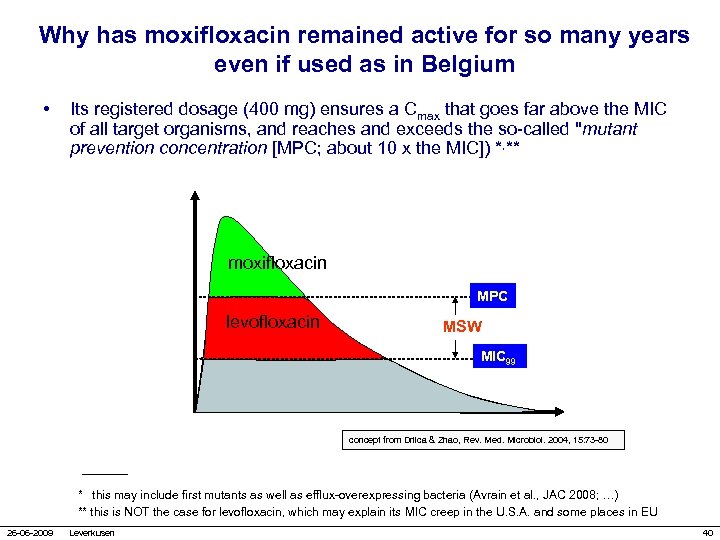
Why has moxifloxacin remained active for so many years even if used as in Belgium • Its registered dosage (400 mg) ensures a Cmax that goes far above the MIC of all target organisms, and reaches and exceeds the so-called "mutant prevention concentration [MPC; about 10 x the MIC]) *, ** moxifloxacin MPC levofloxacin MSW MIC 99 concept from Drlica & Zhao, Rev. Med. Microbiol. 2004, 15: 73 -80 * this may include first mutants as well as efflux-overexpressing bacteria (Avrain et al. , JAC 2008; …) ** this is NOT the case for levofloxacin, which may explain its MIC creep in the U. S. A. and some places in EU 26 -06 -2009 Leverkusen 40
Conclusions (1 of 2) • The overall safety profile of fluoroquinolones (and moxifloxacin in particular) is similar or better than comparators from clinical trials and spontaneous report systems. More specifically, and with regard to recent questions: – Hepatic events reactions are well within range of other commonly used antibacterials, or lower than amoxicillin/clavulanic acid or macrolides – QTc prolongation is well characterized but cardiac events/Td. P are not different from other fluoroquinolones and lower than those of macrolides – Specific toxicities (tendonitis, e. g. ) are well known and can be taken care of – skin events are very rare and, in any case, much less frequent than with -lactams 26 -06 -2009 Leverkusen 41
Conclusions (2 of 2) • Fluoroquinolones (and moxifloxacin in particular, for PK/PD reasons) are a useful alternative in those countries (or specific situations) where resistance to so-called "1 st line antibiotics" (for CAP or COPD) is becoming worrying, or where or when a fast-acting agent may be advantageous; • The safety profiles of higher doses of -lactams or of levofloxacin (needed to meet the resistance levels patterns of S. pneumoniae) are not well characterised, and potentially worse than established profiles from low doses studies. • Conversely, and based on all available evidence, the use of moxifloxacin should not be vitiated by excessive toxicity if it is prescribed for the correct indications and with due attention to the contraindications and warnings mentioned in the labeling (Van Bambeke & Tulkens, Drug Saf. 2009; 32(5): 359 -78) Flämischer Maler Hieronymus Bosch (c 1450 -1516) zeigt großer Fantasie in seinem Triptychon Altarpiece „das letzte Urteil“ (c 1510 -15, Akademie, Wien) 26 -06 -2009 Leverkusen 42
Disclosures Financial support from • the Belgian Fonds de la Recherche Scientifique (and other federal and regional funding agencies) for basic research on pharmacology and toxicology of antibiotics and related topics • the Public Federal Service "Public Health" for "Appropriate antibiotic use" studies in General Practice • Pharmaceutical Industry for specific drug-related studies Note: • all work, irrespective the source of funding, is published in peer-reviewed journals and is available from our web site * • P. M. Tulkens is member of the Committee organising public campaigns for appropriate use of antibiotics in Belgium since 2000 ** * http: //www. facm. ucl. ac. be/publicat_facm. htm ** http: //www. antibiotiques. org/ Selected publications in relation to this presentation: "Was auch als Wahrheit oder Fabel In tausend Büchern dir erscheint, Das alles ist ein Turm zu Babel, Wenn es die Liebe nicht vereint. " J. W. von Goethe 26 -06 -2009 Leverkusen • Van Bambeke F, Tulkens PM. Safety profile of the respiratory fluoroquinolone moxifloxacin: comparison with other fluoroquinolones and other antibacterial classes. Drug Saf. 2009; 32(5): 359 -78. Pub. Med PMID: 19419232. • Van Bambeke F, Reinert RR, Appelbaum PC, Tulkens PM, Peetermans WE. Multidrug-resistant Streptococcus pneumoniae infections: current and future therapeutic options. Drugs. 2007; 67(16): 2355 -82. Review. Pub. Med PMID: 17983256. • Van Bambeke F, Michot JM, Van Eldere J, Tulkens PM. Quinolones in 2005: an update. Clin Microbiol Infect. 2005 Apr; 11(4): 256 -80. Review. Erratum in: Clin Microbiol Infect. 2005 Jun; 11(6): 513. Pub. Med PMID: 15760423. 43
Скачать презентацию Antibiotic selection in community-acquired pneumonia CAP appropriate benefit-risk
bc5784686368aa50e83038772a596622.ppt