

Anti-Arrhythmic Drugs Dr. omar houssein Kharkiv national medical

![Atrial [Supra-ventricular] arrhythmias: Atrial flutter Recent atrial fibrillation (↓↓ 6 months) Atrial](https://present5.com/presentacii-2/20171211\26356-antiarrhythmic_omar_houssein.ppt\26356-antiarrhythmic_omar_houssein_18.jpg "Atrial [Supra-ventricular] arrhythmias: Atrial flutter Recent atrial fibrillation (↓↓ 6 months) Atrial")

 Скачать презентацию Anti-Arrhythmic Drugs Dr. omar houssein Kharkiv national medical
26356-antiarrhythmic_omar_houssein.ppt
- Количество слайдов: 44
Anti-Arrhythmic Drugs Dr. omar houssein Kharkiv national medical University
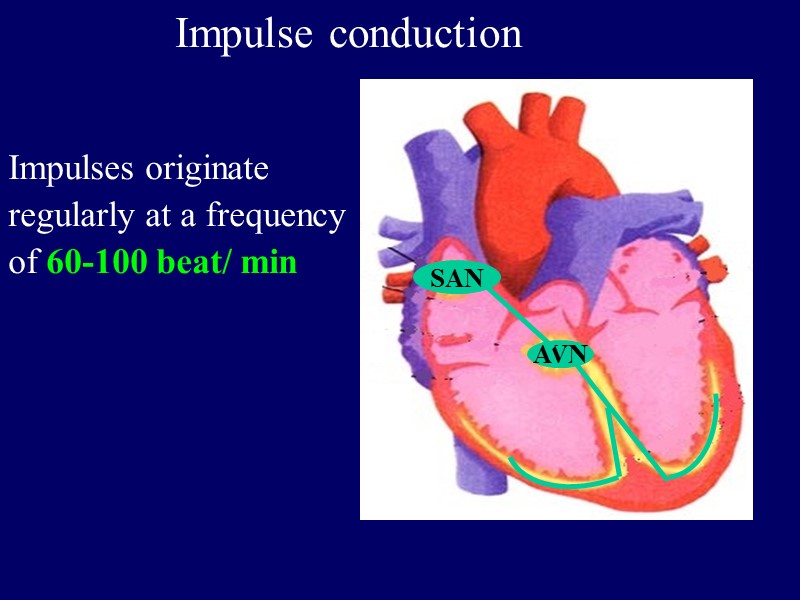
SAN AVN Impulse conduction Impulses originate regularly at a frequency of 60-100 beat/ min
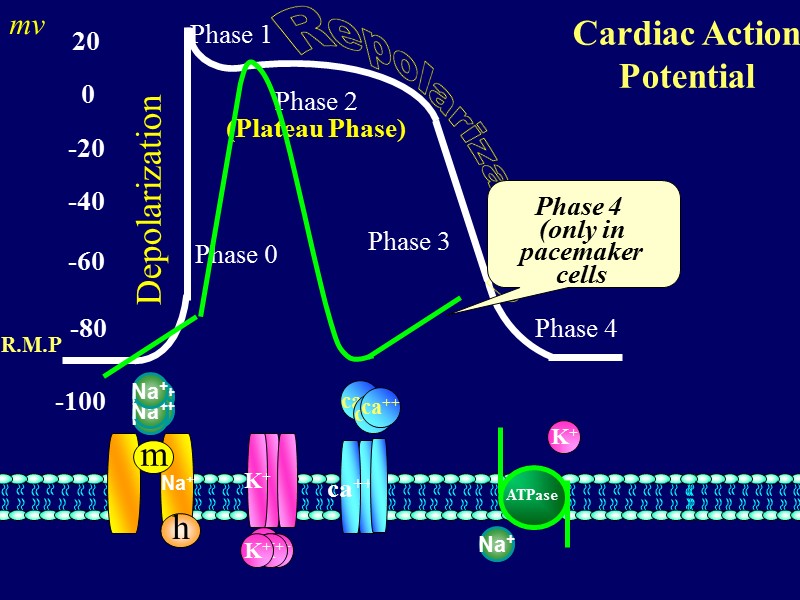
-100 -80 -60 -40 -20 0 20 Phase 0 Phase 1 Phase 2 Phase 3 Phase 4 Na+ ca++ ATPase mv Cardiac Action Potential R.M.P Na+ m Na+ Na+ Na+ Na+ Na+ h K+ ca++ K+ K+ K+ ca++ ca++ (Plateau Phase) K+ K+ K+ Na+ K+ Depolarization Repolarization Phase 4 (only in pacemaker cells
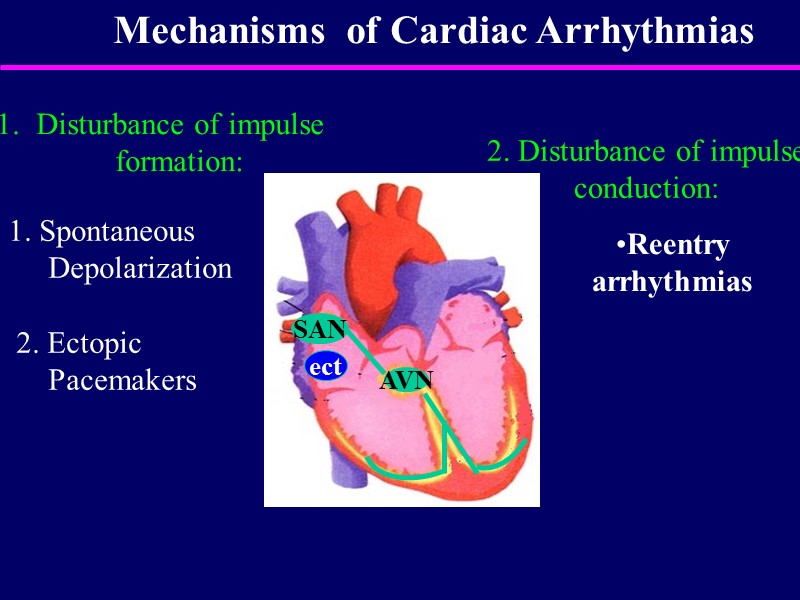
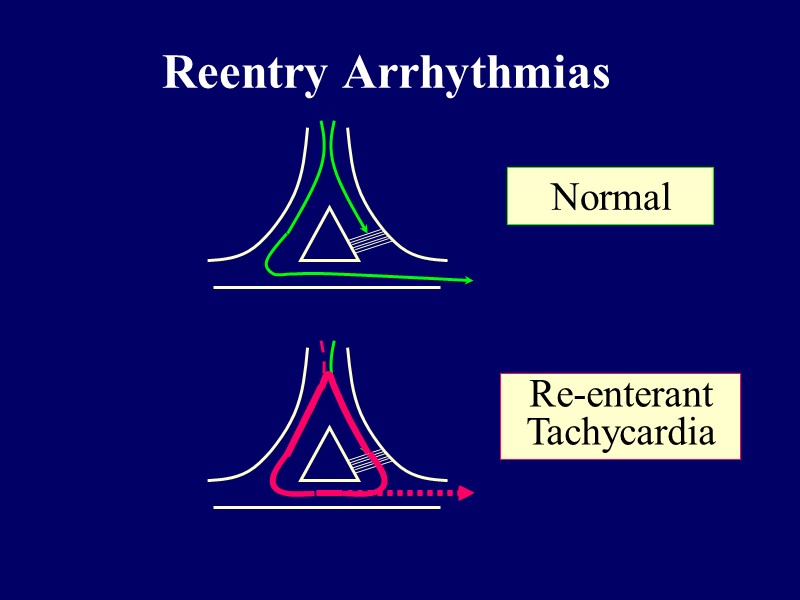
SAN AVN Mechanisms of Cardiac Arrhythmias Disturbance of impulse formation: 1. Spontaneous Depolarization 2. Ectopic Pacemakers ect 2. Disturbance of impulse conduction: Reentry arrhythmias
Reentry Arrhythmias Normal Re-enterant Tachycardia
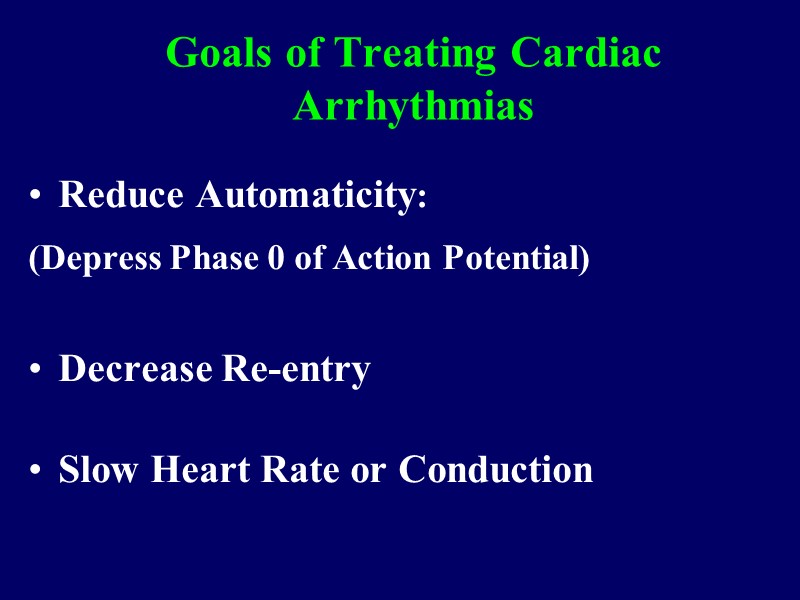
Goals of Treating Cardiac Arrhythmias Reduce Automaticity: (Depress Phase 0 of Action Potential) Decrease Re-entry Slow Heart Rate or Conduction
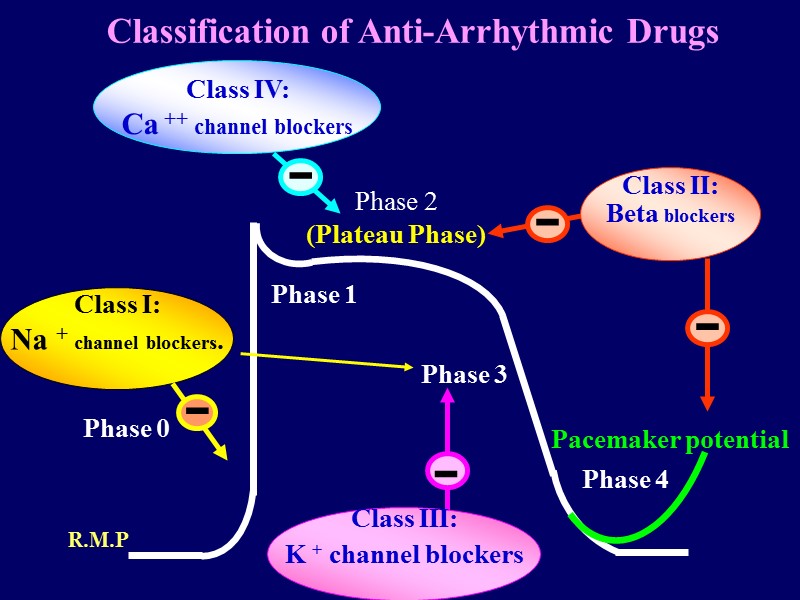
Phase 0 Phase 1 Phase 2 Phase 3 Phase 4 R.M.P (Plateau Phase) Class I: Na + channel blockers. Pacemaker potential Class III: K + channel blockers Class IV: Ca ++ channel blockers Class II: Beta blockers Classification of Anti-Arrhythmic Drugs
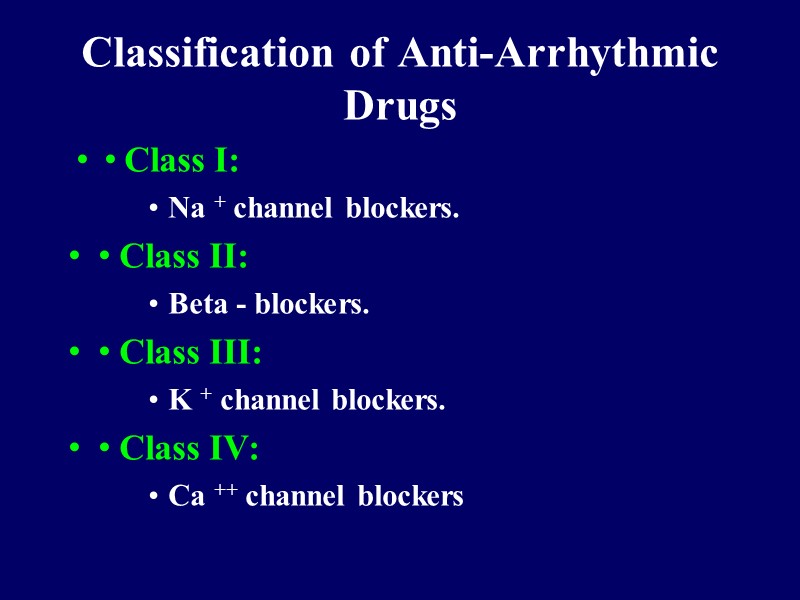
Classification of Anti-Arrhythmic Drugs • • Class I: Na + channel blockers. • Class II: Beta - blockers. • Class III: K + channel blockers. • Class IV: Ca ++ channel blockers
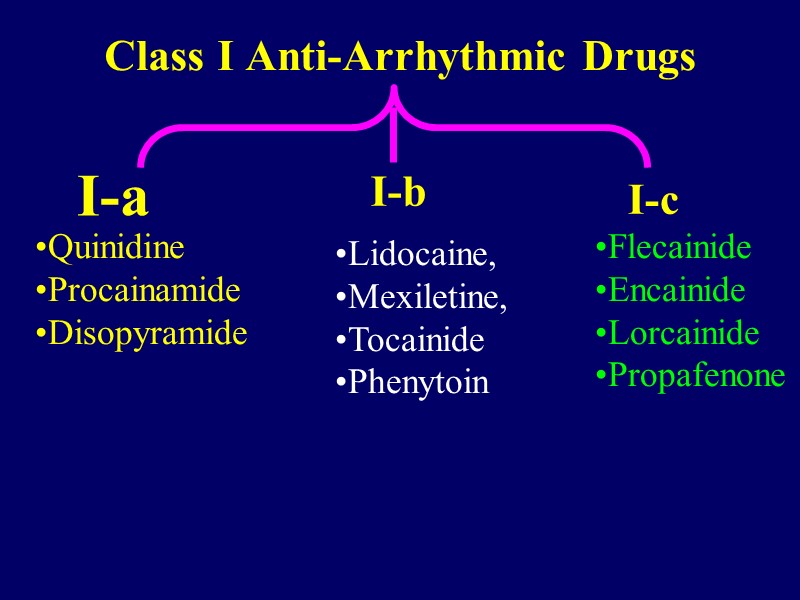
Class I Anti-Arrhythmic Drugs I-a I-b I-c Quinidine Procainamide Disopyramide Lidocaine, Mexiletine, Tocainide Phenytoin Flecainide Encainide Lorcainide Propafenone
Class I-a Anti-Arrhythmic Drugs Quinidine
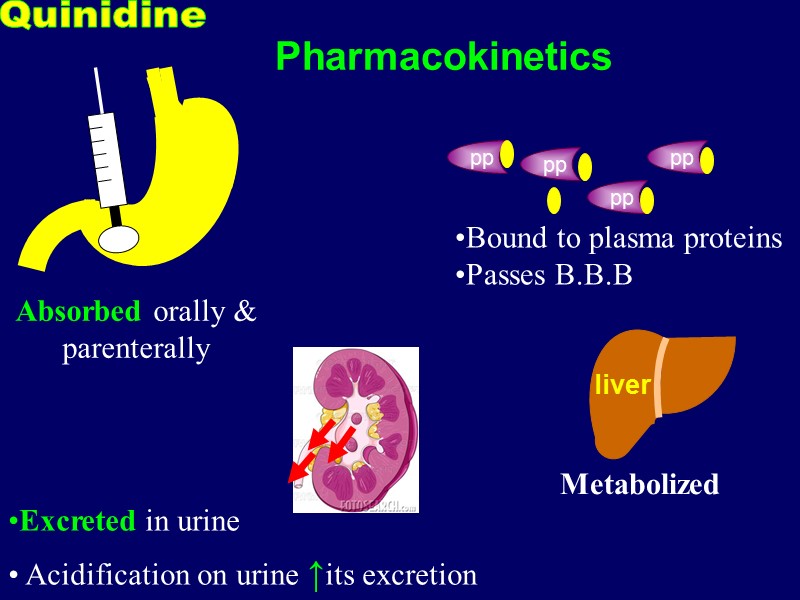
Quinidine Pharmacokinetics pp pp Absorbed orally & parenterally Bound to plasma proteins Passes B.B.B Metabolized Excreted in urine Acidification on urine ↑its excretion
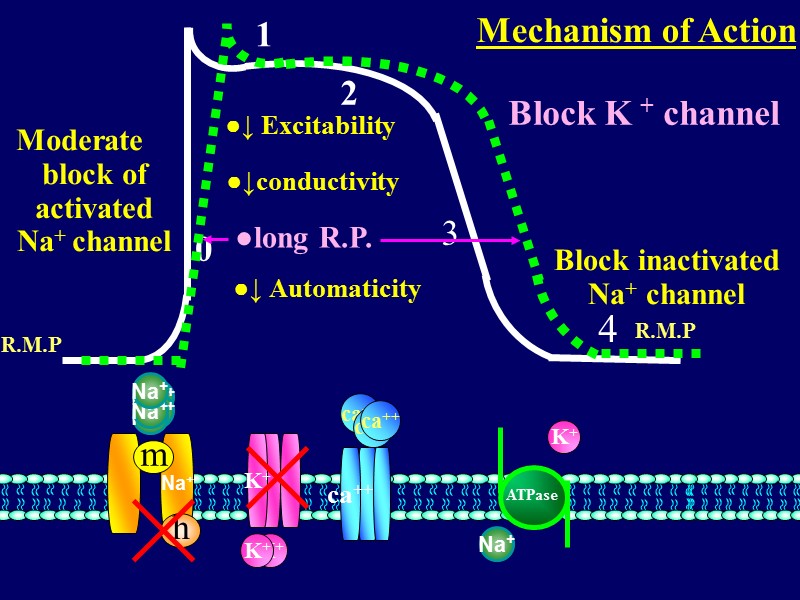
0 1 2 3 4 Na+ ATPase R.M.P Na+ m Na+ Na+ Na+ Na+ Na+ h Na+ K+ R.M.P Mechanism of Action Moderate block of activated Na+ channel ●↓ Excitability ●↓conductivity Block K + channel ca++ ca++ ca++ ca++ Block inactivated Na+ channel ●long R.P. ●↓ Automaticity K+ K+ K+
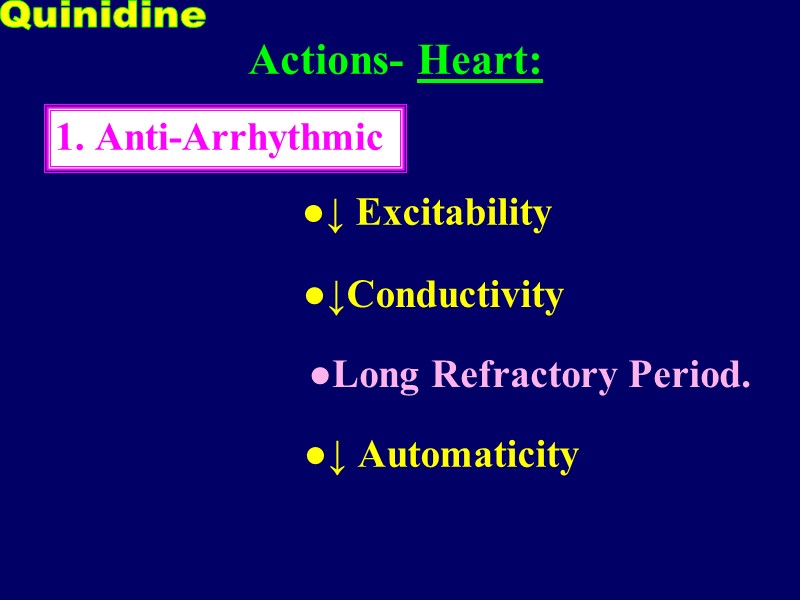
●↓ Excitability ●Long Refractory Period. ●↓Conductivity ●↓ Automaticity Actions- Heart: Quinidine Anti-Arrhythmic
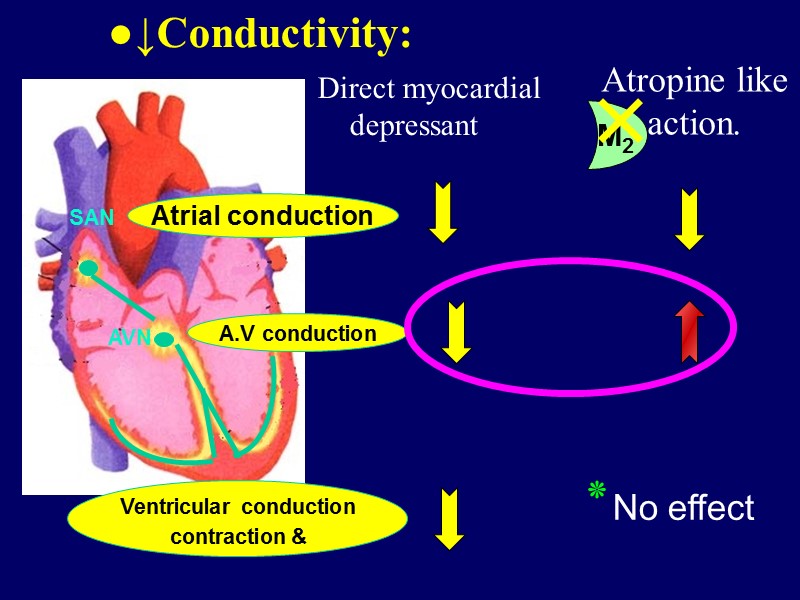
Atrial conduction A.V conduction ٭No effect SAN AVN Ventricular conduction & contraction M2 ●↓Conductivity: Direct myocardial depressant Atropine like action.
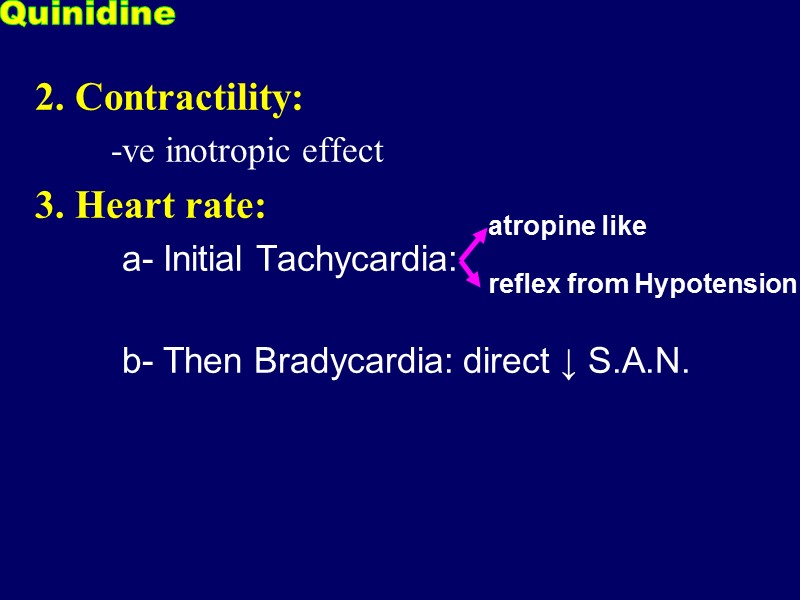
2. Contractility: -ve inotropic effect 3. Heart rate: a- Initial Tachycardia: b- Then Bradycardia: direct ↓ S.A.N. Quinidine atropine like reflex from Hypotension
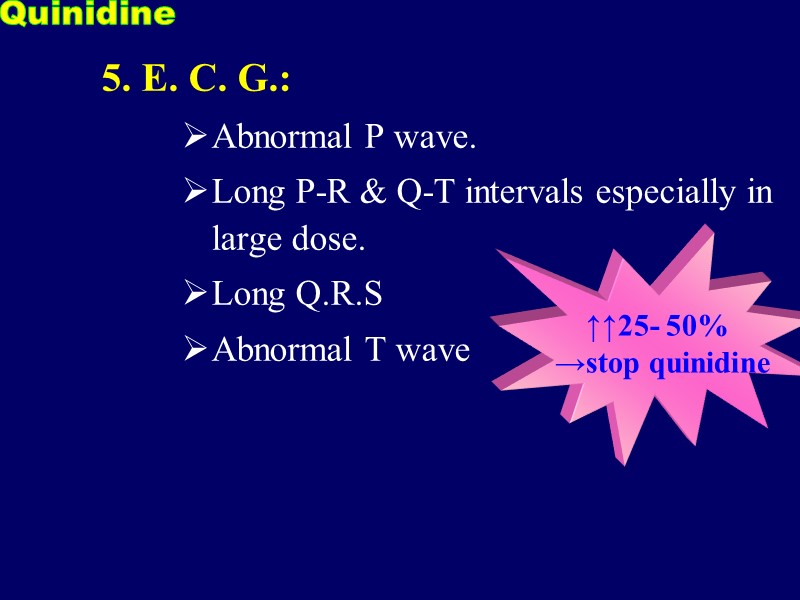
5. E. C. G.: Abnormal P wave. Long P-R & Q-T intervals especially in large dose. Long Q.R.S Abnormal T wave Quinidine ↑↑25- 50% →stop quinidine
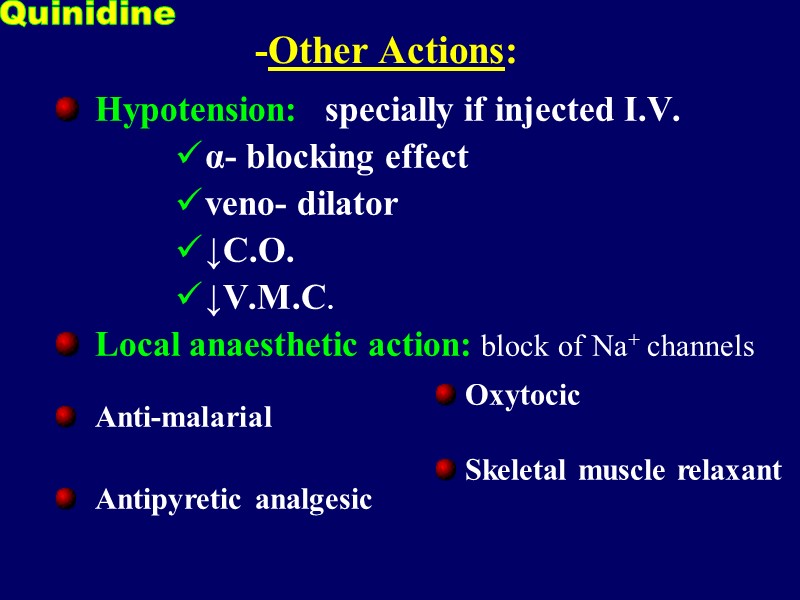
Hypotension: specially if injected I.V. α- blocking effect veno- dilator ↓C.O. ↓V.M.C. Local anaesthetic action: block of Na+ channels Anti-malarial Antipyretic analgesic -Other Actions: Oxytocic Skeletal muscle relaxant Quinidine
Atrial [Supra-ventricular] arrhythmias: Atrial flutter Recent atrial fibrillation (↓↓ 6 months) Atrial extrasystoles Paroxysmal atrial tachycardia. Ventricular arrhythmias: Ventricular tachycardia Prevention of ventricular fibrillation. -Uses: Quinidine
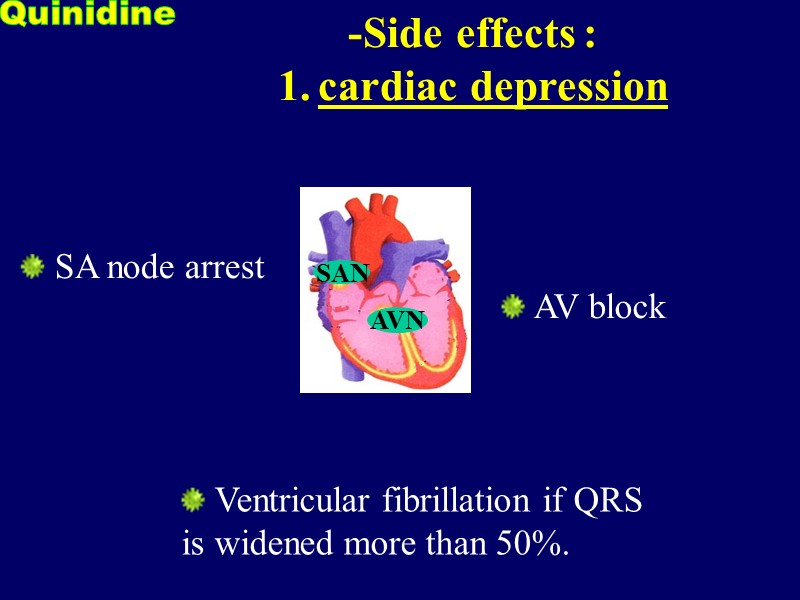
Ventricular fibrillation if QRS is widened more than 50%. -Side effects : cardiac depression Quinidine SAN AVN SA node arrest AV block
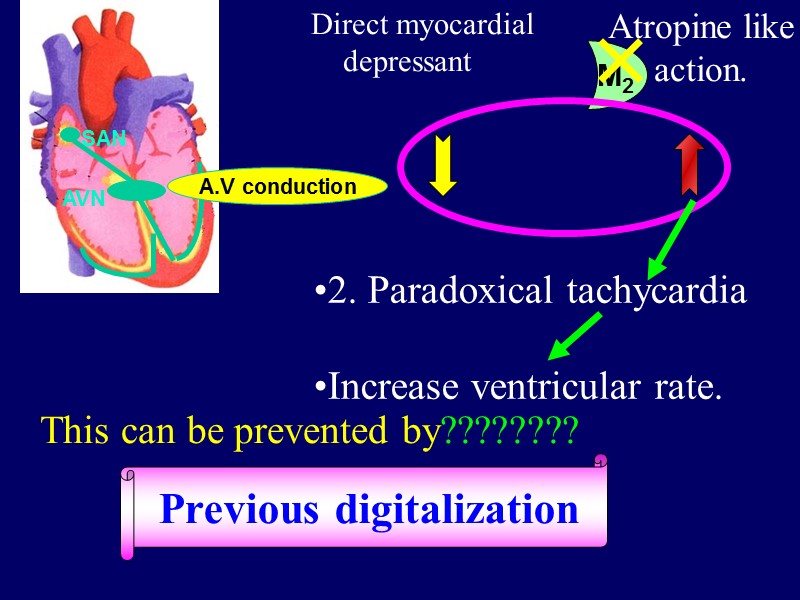
SAN AVN M2 Direct myocardial depressant Atropine like action. 2. Paradoxical tachycardia Increase ventricular rate. A.V conduction This can be prevented by???????? Previous digitalization
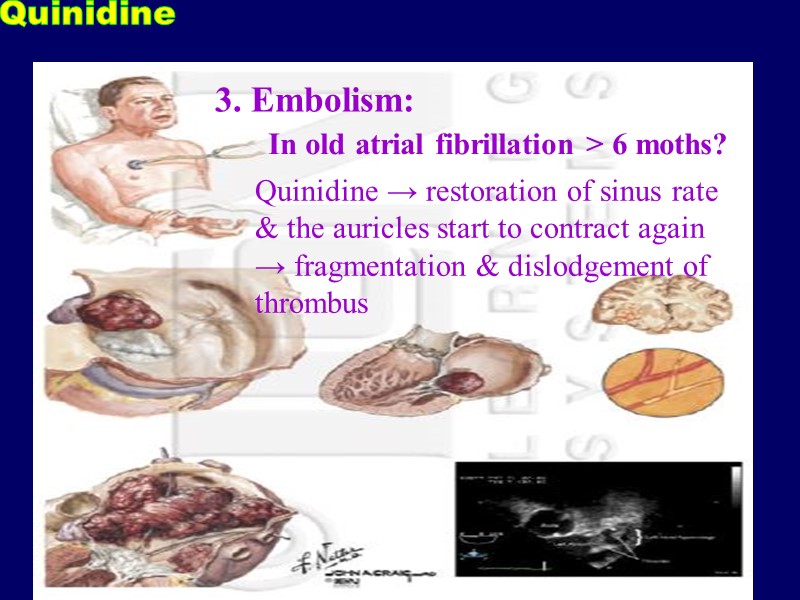
3. Embolism: In old atrial fibrillation > 6 moths? Quinidine → restoration of sinus rate & the auricles start to contract again → fragmentation & dislodgement of thrombus Quinidine
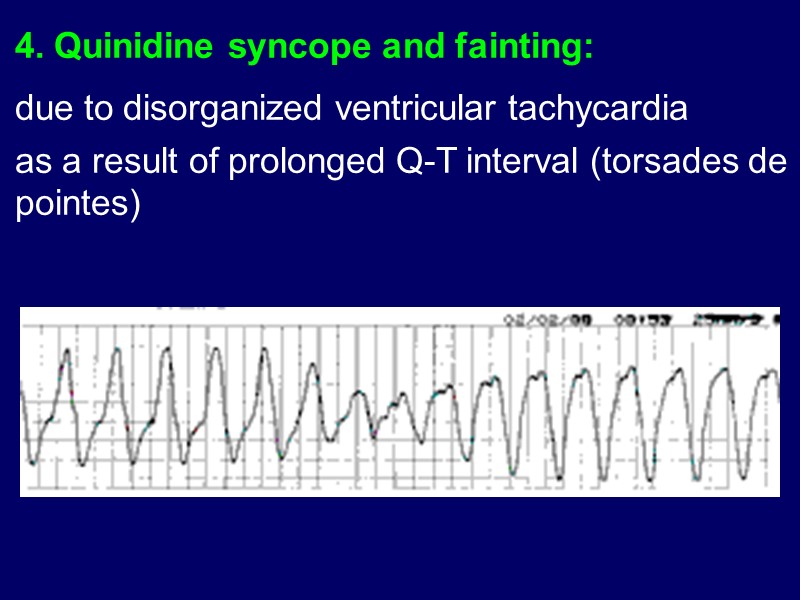
4. Quinidine syncope and fainting: due to disorganized ventricular tachycardia as a result of prolonged Q-T interval (torsades de pointes)
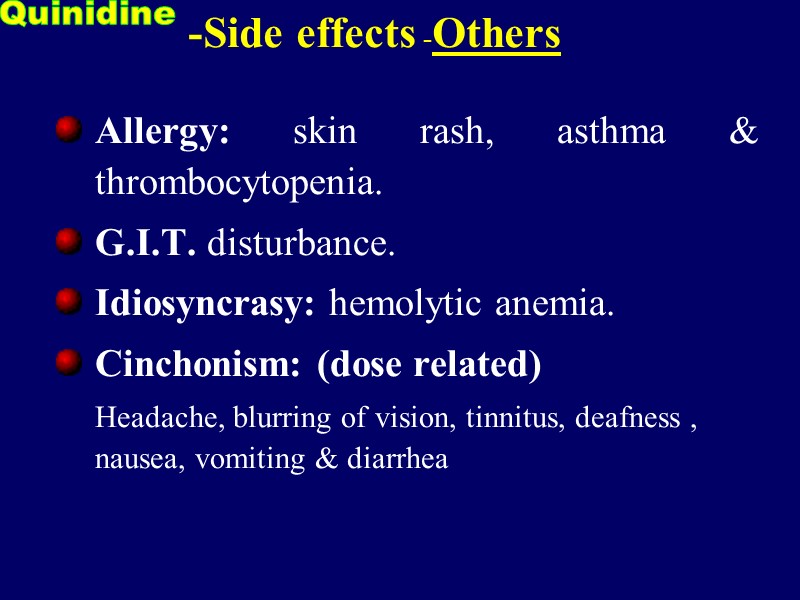
Allergy: skin rash, asthma & thrombocytopenia. G.I.T. disturbance. Idiosyncrasy: hemolytic anemia. Cinchonism: (dose related) Headache, blurring of vision, tinnitus, deafness , nausea, vomiting & diarrhea -Side effects -Others Quinidine
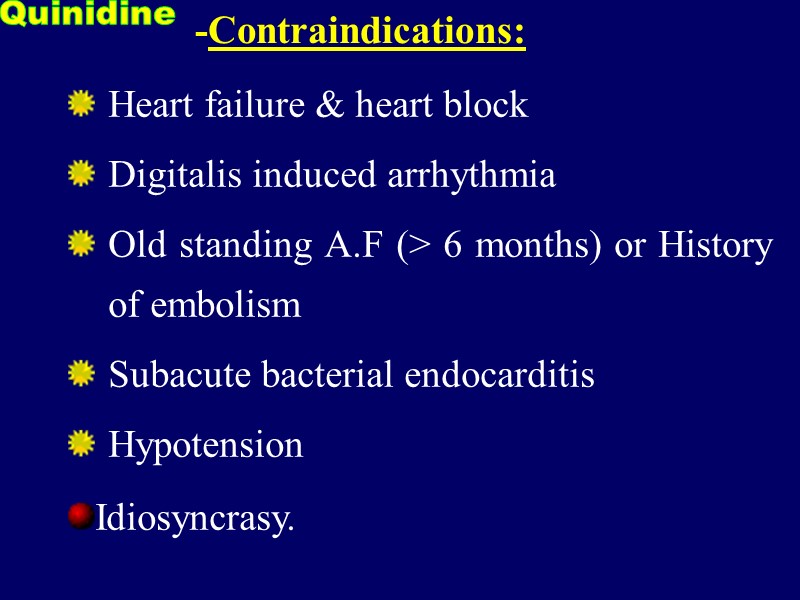
Heart failure & heart block Digitalis induced arrhythmia Old standing A.F (> 6 months) or History of embolism Subacute bacterial endocarditis Hypotension -Contraindications: Quinidine Idiosyncrasy.
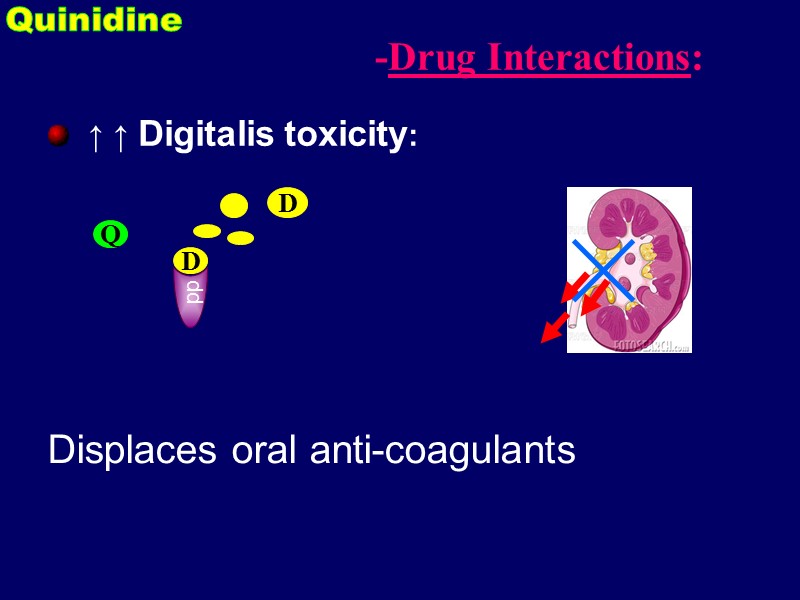
↑ ↑ Digitalis toxicity: -Drug Interactions: Quinidine pp D Q D Displaces oral anti-coagulants
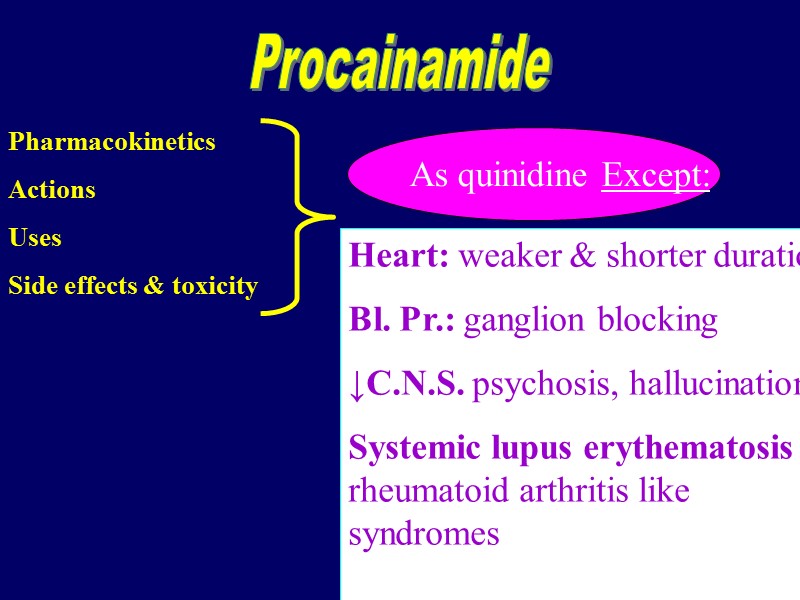
Pharmacokinetics Actions Uses Side effects & toxicity Procainamide As quinidine Except: Heart: weaker & shorter duration Bl. Pr.: ganglion blocking ↓C.N.S. psychosis, hallucinations Systemic lupus erythematosis & rheumatoid arthritis like syndromes
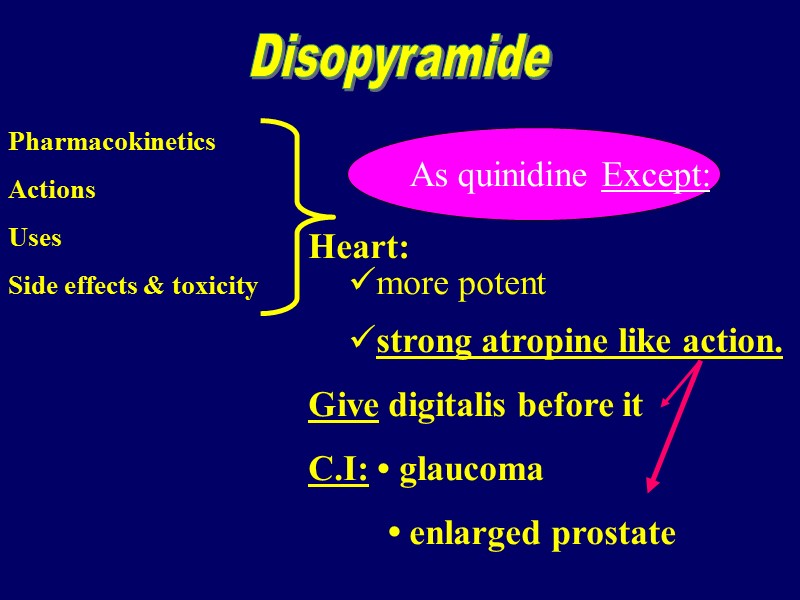
Pharmacokinetics Actions Uses Side effects & toxicity Disopyramide As quinidine Except: Heart: more potent strong atropine like action. Give digitalis before it C.I: • glaucoma • enlarged prostate
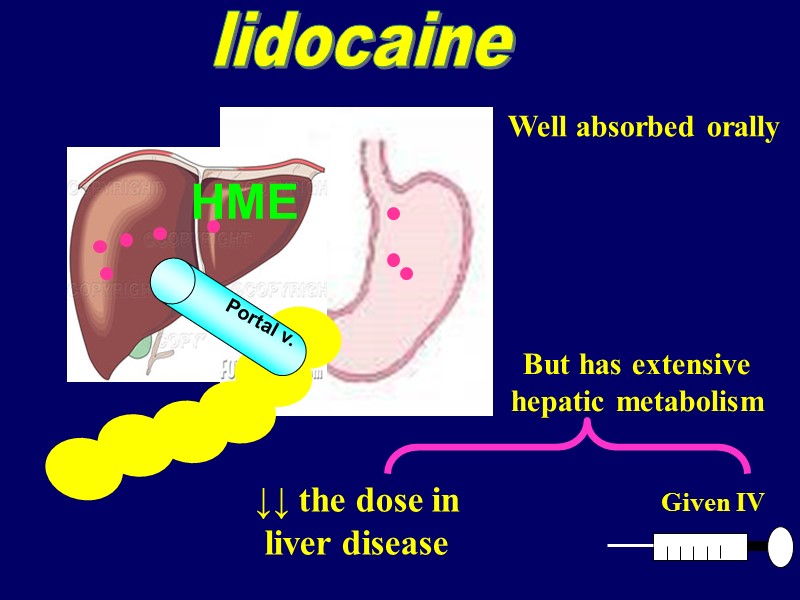
Portal v. HME lidocaine Well absorbed orally But has extensive hepatic metabolism Given IV ↓↓ the dose in liver disease
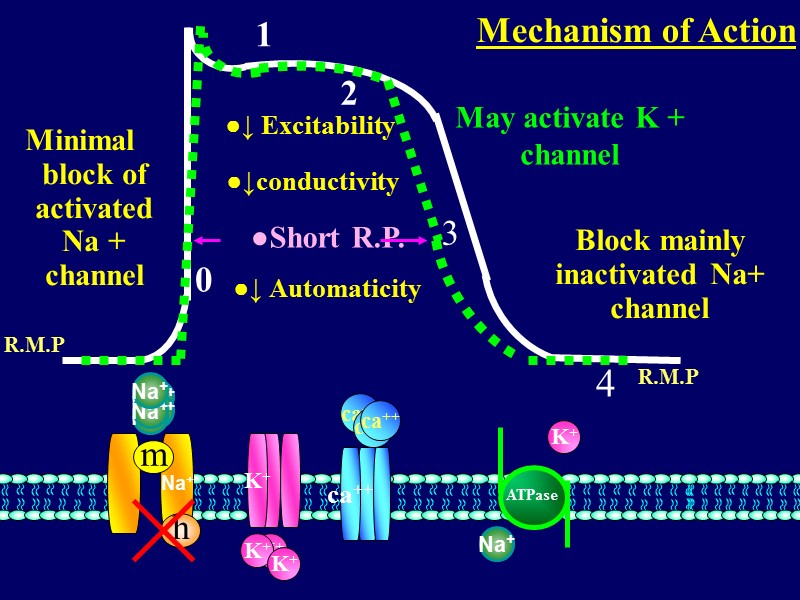
0 1 2 3 4 Na+ ATPase R.M.P Na+ m Na+ Na+ Na+ Na+ Na+ h Na+ K+ R.M.P Mechanism of Action Minimal block of activated Na + channel ●↓ Excitability ●↓conductivity May activate K + channel ca++ ca++ ca++ ca++ Block mainly inactivated Na+ channel ●Short R.P. ●↓ Automaticity K+ K+ K+ K+
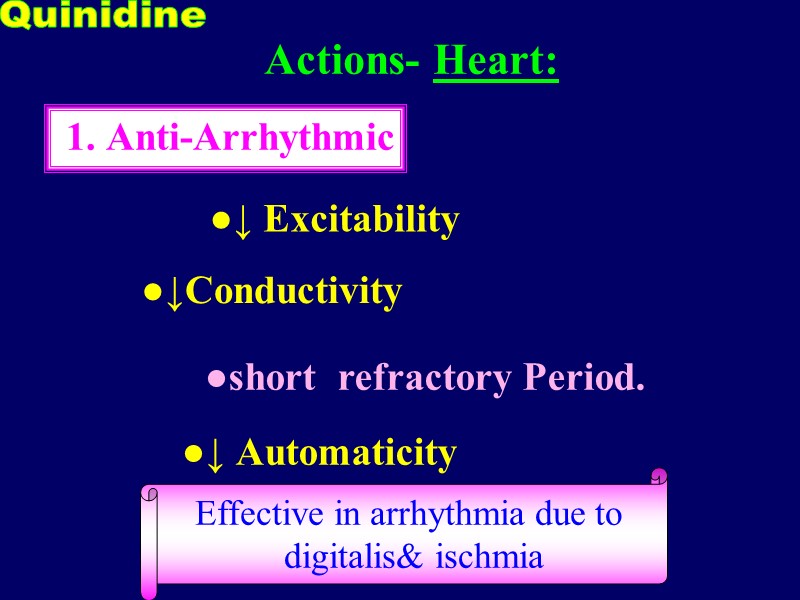
●↓ Excitability ●short refractory Period. ●↓Conductivity ●↓ Automaticity Actions- Heart: Quinidine Anti-Arrhythmic Effective in arrhythmia due to digitalis& ischmia
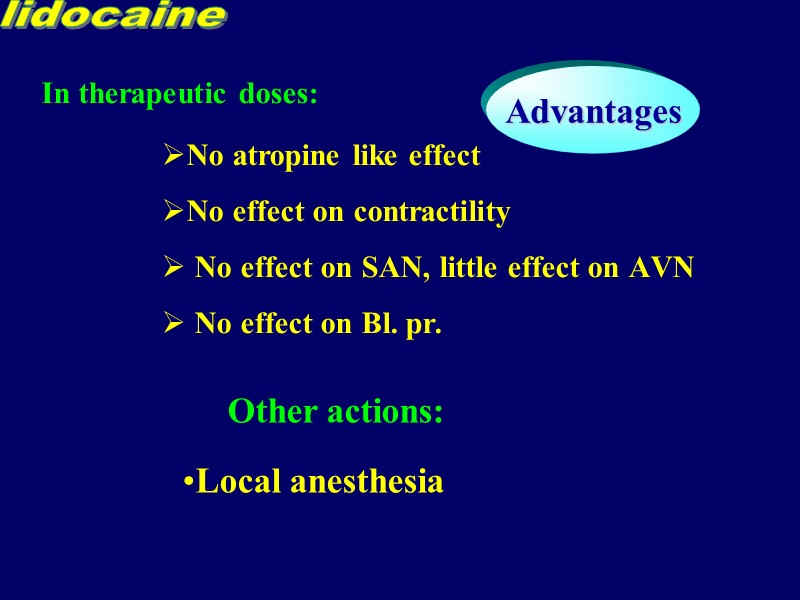
In therapeutic doses: No atropine like effect No effect on contractility No effect on SAN, little effect on AVN No effect on Bl. pr. lidocaine Other actions: Local anesthesia Advantages
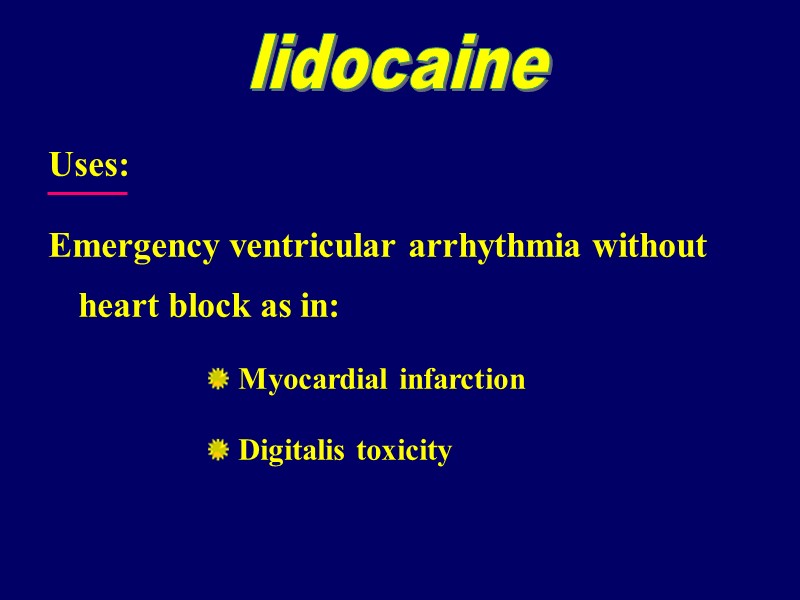
Uses: Emergency ventricular arrhythmia without heart block as in: Myocardial infarction Digitalis toxicity lidocaine
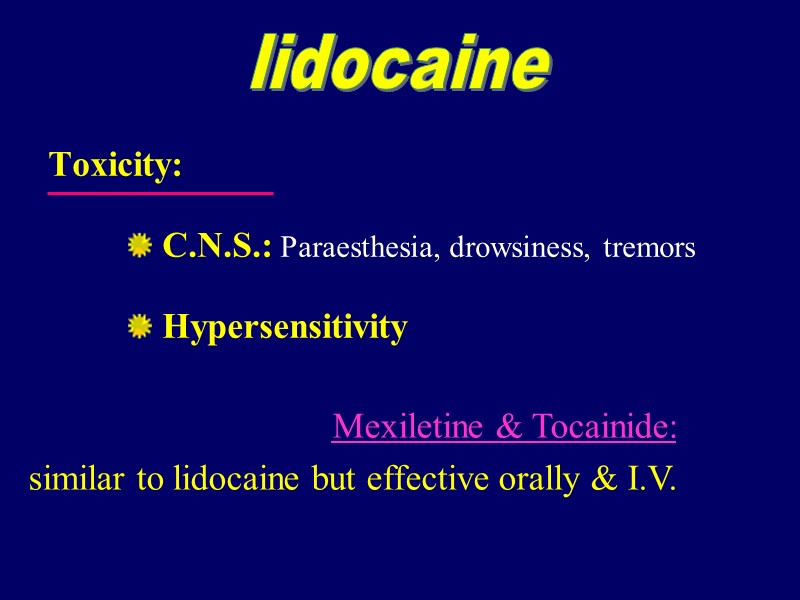
Toxicity: C.N.S.: Paraesthesia, drowsiness, tremors Hypersensitivity lidocaine Mexiletine & Tocainide: similar to lidocaine but effective orally & I.V.
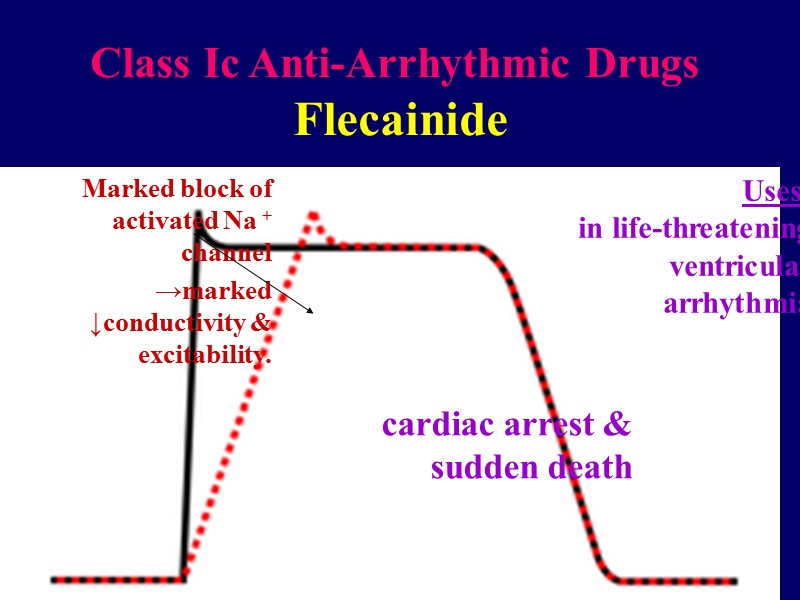
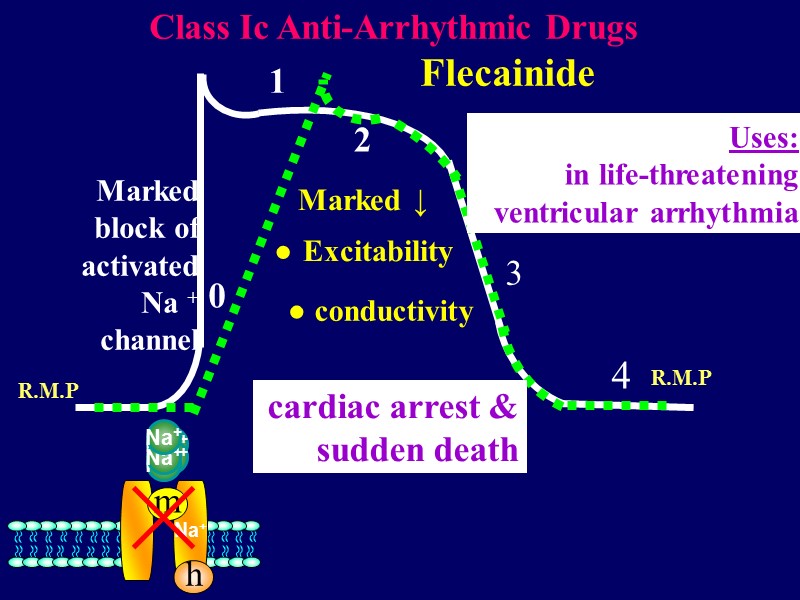
Class Ic Anti-Arrhythmic Drugs Flecainide Marked block of activated Na + channel →marked ↓conductivity & excitability. Uses: in life-threatening ventricular arrhythmia cardiac arrest & sudden death
0 1 2 3 4 Na+ R.M.P Na+ m Na+ Na+ Na+ Na+ Na+ h R.M.P Marked block of activated Na + channel Marked ↓ ● Excitability ● conductivity Class Ic Anti-Arrhythmic Drugs Flecainide Uses: in life-threatening ventricular arrhythmia cardiac arrest & sudden death
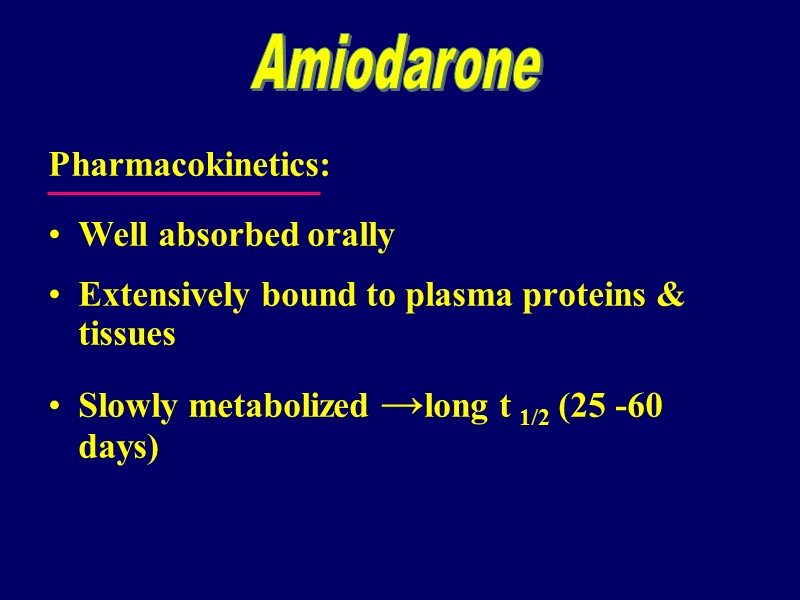
Pharmacokinetics: Well absorbed orally Extensively bound to plasma proteins & tissues Slowly metabolized →long t 1/2 (25 -60 days) Amiodarone
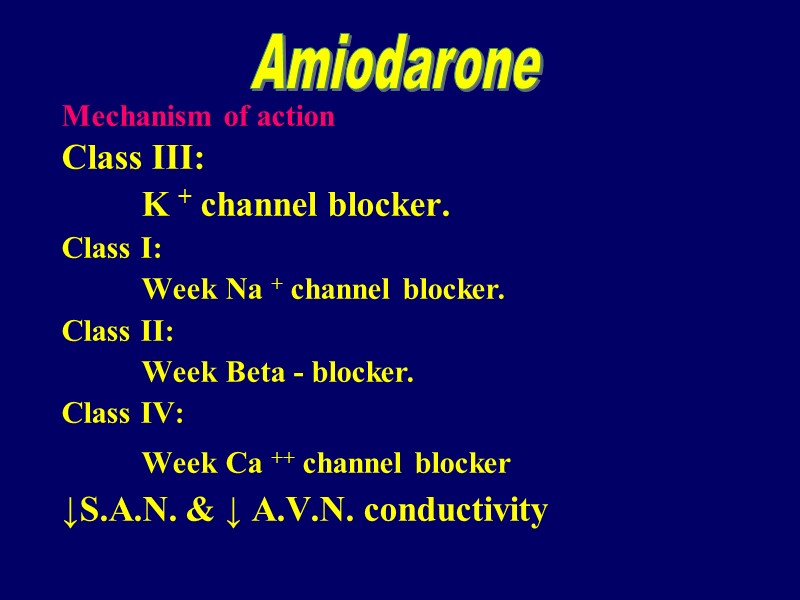
Mechanism of action Class III: K + channel blocker. Class I: Week Na + channel blocker. Class II: Week Beta - blocker. Class IV: Week Ca ++ channel blocker ↓S.A.N. & ↓ A.V.N. conductivity Amiodarone
Uses: Supraventricular & ventricular arrhythmias Angina pectoris (coronary V.D., ↓ cardiac work & ↓need) Amiodarone
Side effects C.N.S: headache, tremors & ataxia Corneal deposits (opacities) Skin deposits ( photosensitivity & photodermatitis) Thyroid dysfunction (Hyper or Hypothyroidism) Amiodarone
Side effects Pulmonary toxicity (fatal interstitial pulmonary fibrosis) C.V.S; Bradycardia, heart block, heart failure & hypotension Hepatotoxicity (hepatocellular necrosis) Constipation Amiodarone
Class III anti- arrhythmic Similar to guanethidine I.V. infusion in emergency ventricular arrhythmia Postural Hypotension Parotid pain Bretylium
Mechanism: ↑potassium conductance → hyperpolarization ↓cAMP induced Ca influx→ ↓action potential Action: When given IV bolus →↓A-V conduction Adenosine
Uses: by IV bolus drug of choice in supraventricular arrhythmia - Side effects: Bronchospasm heart block flush &Hypotension Antidote: Theophylline Adenosine
Thank you for your attention!