 Скачать презентацию Antebellum Industry and Expansion Chapter 14 Objective
31eac784148f5378bda884566862f992.ppt
- Количество слайдов: 63




Antebellum Industry and Expansion Chapter 14
Objective #1 • Describe the movement and growth of America’s population in the early nineteenth century.

Objective #2 • Describe the early development of the factory system and Eli Whitney’s contributions.
Objective #3 • Explain the effect of early industrialism on workers, including women and children

Objective #4 • Describe the impact of new technology and transportation systems on American business and agriculture.
Objective #5 • Describe the sequence of major transportation and communication systems that developed from 1790 and 1860 and indicate their economic consequences.

Objective #6 • Describe the effects of the market revolution on the American economy, including the new disparities between rich and poor.
Economic Growth (1820 -1860) • Move away from agriculture towards industry and technology • Agriculture still dominates overall • Per capita income doubles between 1820 -1860 • Population still doubling every 25 years • Had 33 states by 1860
Factors that led to growth • Abundance of natural resources and raw materials • New workers/consumers – Women – Immigrants • Transportation improvements allowed for more distant markets, expansion
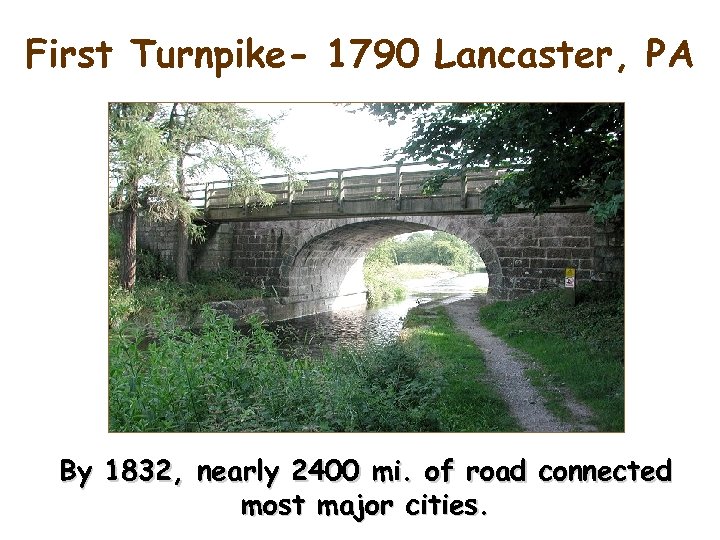
First Turnpike- 1790 Lancaster, PA By 1832, nearly 2400 mi. of road connected most major cities.
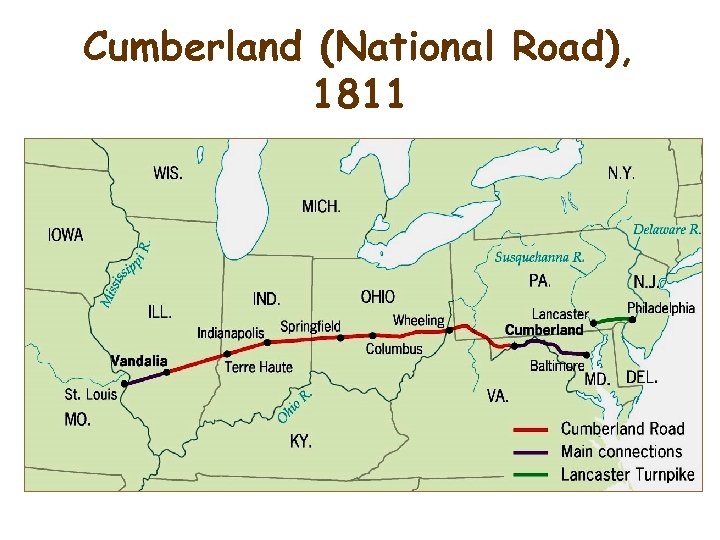
Cumberland (National Road), 1811
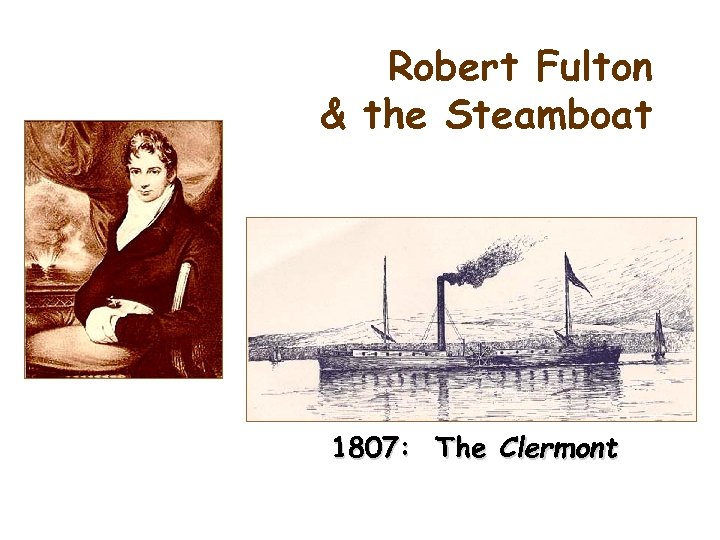
Robert Fulton & the Steamboat 1807: The Clermont
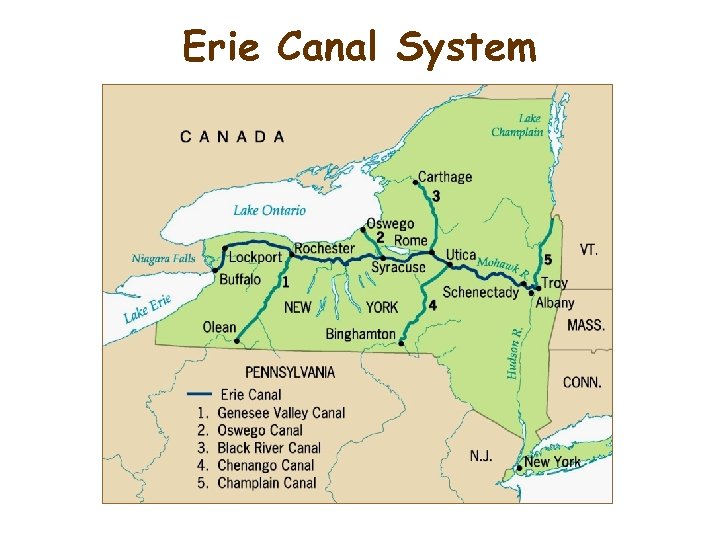
Erie Canal System
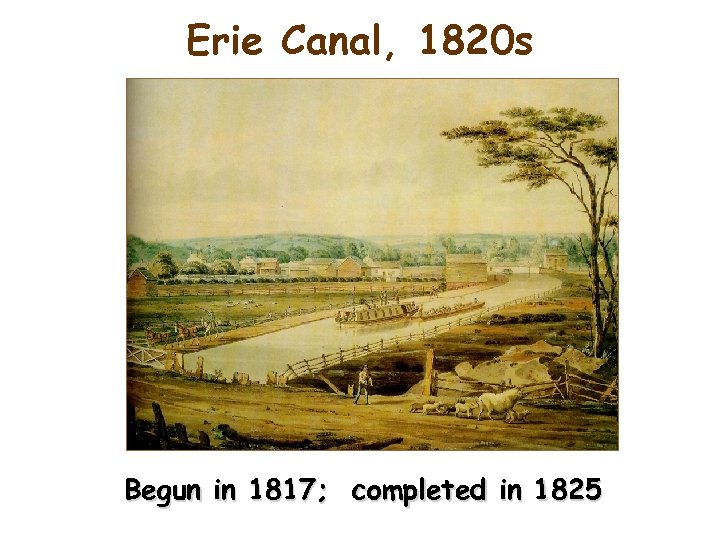
Erie Canal, 1820 s Begun in 1817; completed in 1825
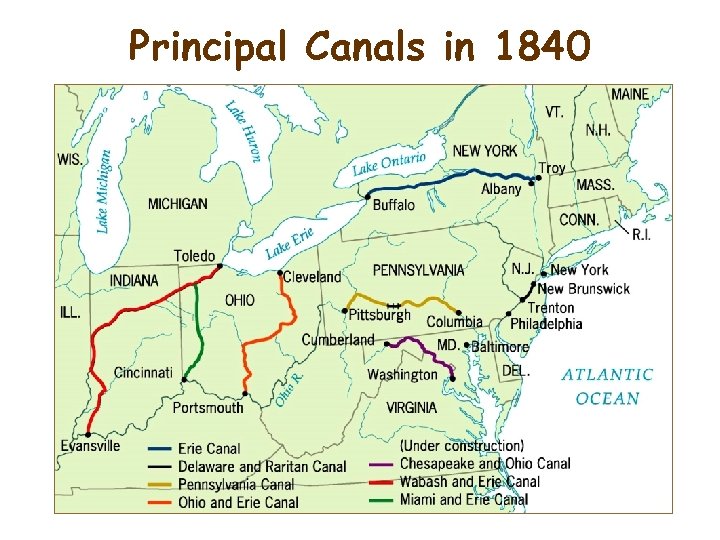
Principal Canals in 1840
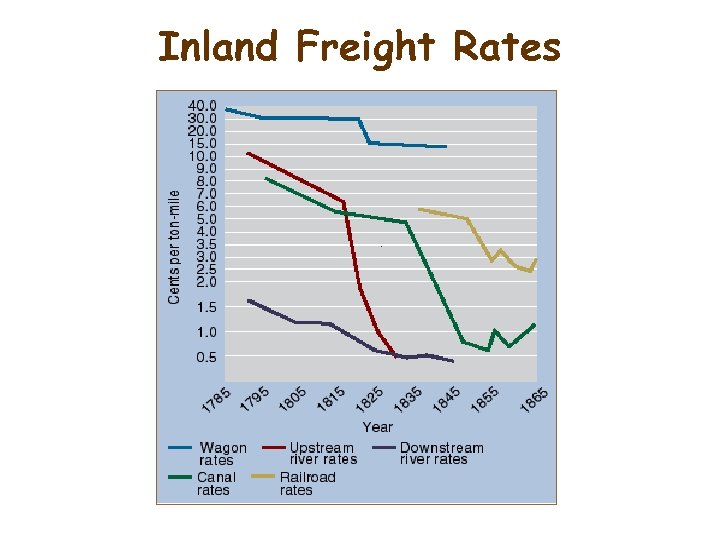
Inland Freight Rates
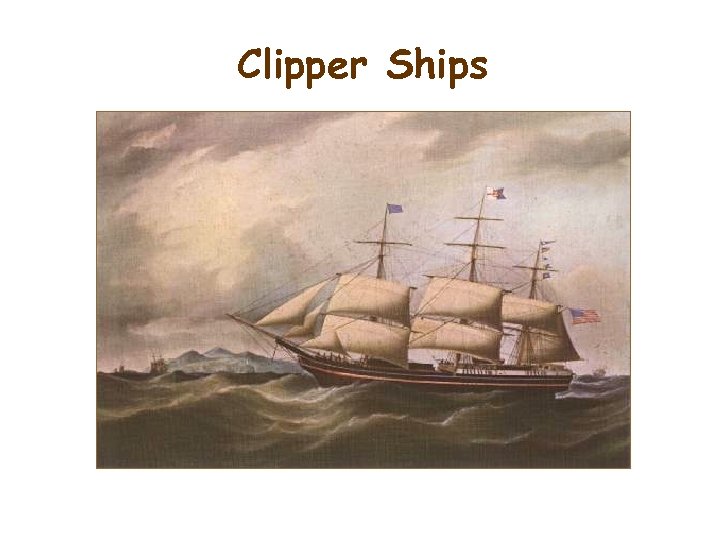
Clipper Ships
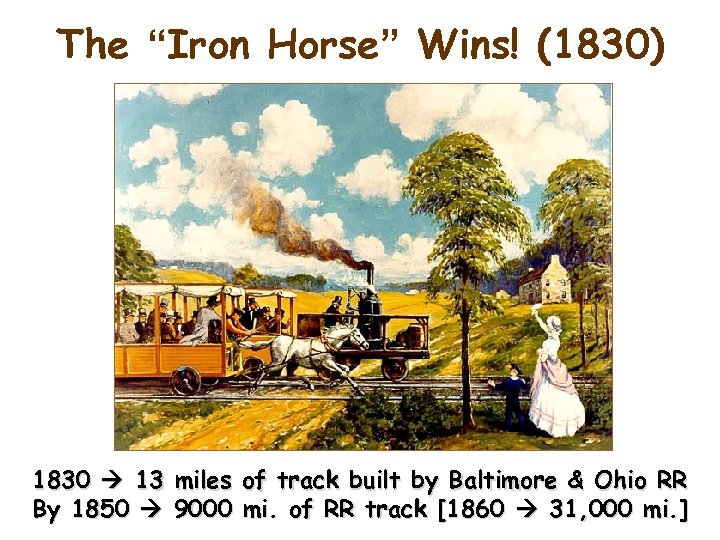
The “Iron Horse” Wins! (1830) 1830 13 miles of track built by Baltimore & Ohio RR By 1850 9000 mi. of RR track [1860 31, 000 mi. ]
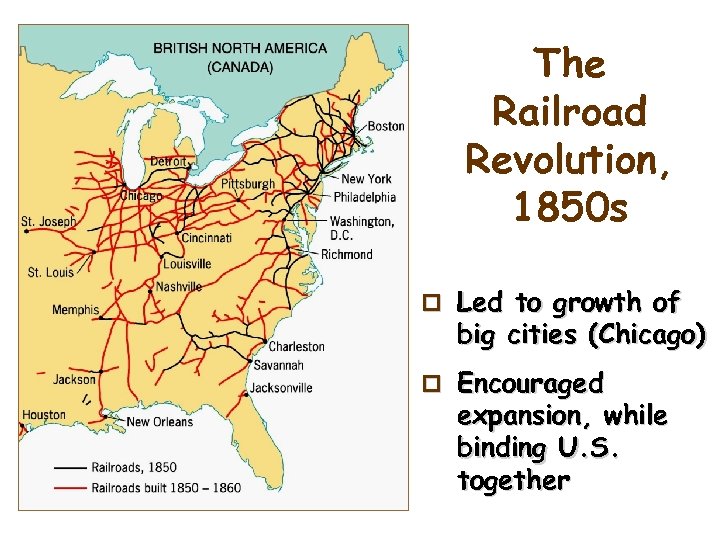
The Railroad Revolution, 1850 s p Led to growth of big cities (Chicago) p Encouraged expansion, while binding U. S. together
Resourcefulness & Experimentation p Americans were willing to try anything. p They were first copiers, then innovators. 1800 41 patents were approved. 1860 4, 357 “ “ “
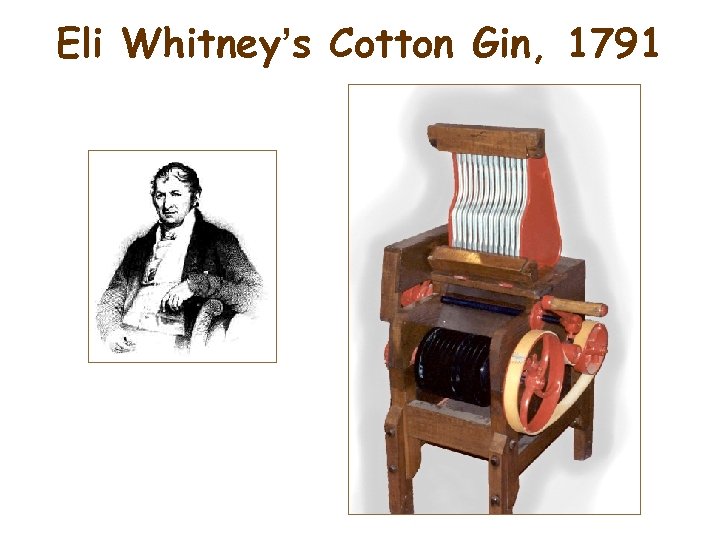
Eli Whitney’s Cotton Gin, 1791
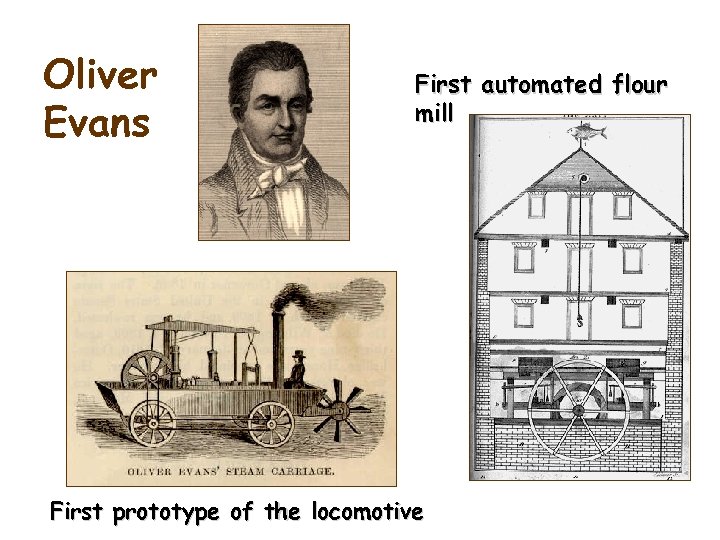
Oliver Evans First automated flour mill First prototype of the locomotive
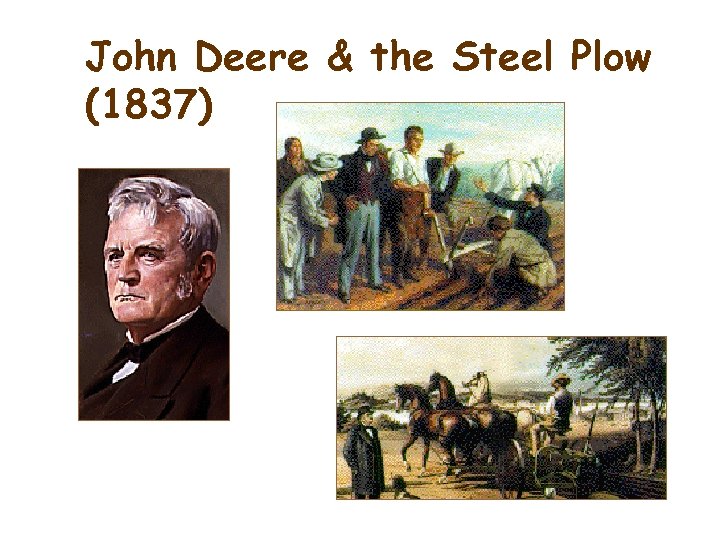
John Deere & the Steel Plow (1837)
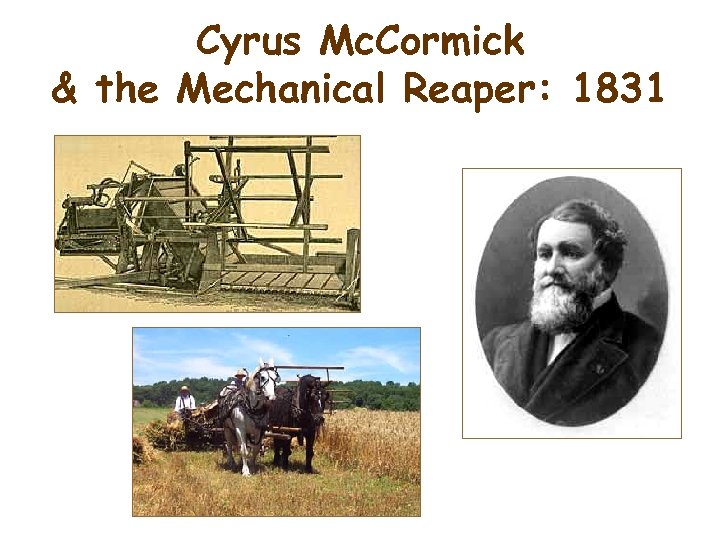
Cyrus Mc. Cormick & the Mechanical Reaper: 1831
Agricultural Specialization • New England= Dairy • Midwest = Grain • South = Cotton, Tobacco
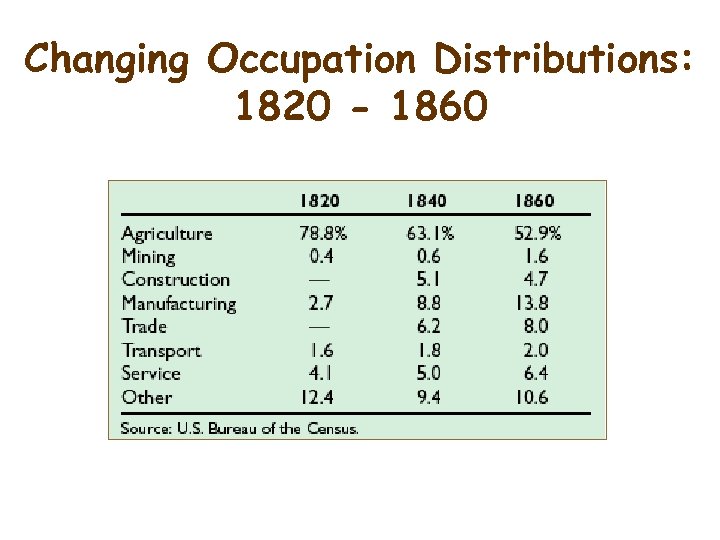
Changing Occupation Distributions: 1820 - 1860
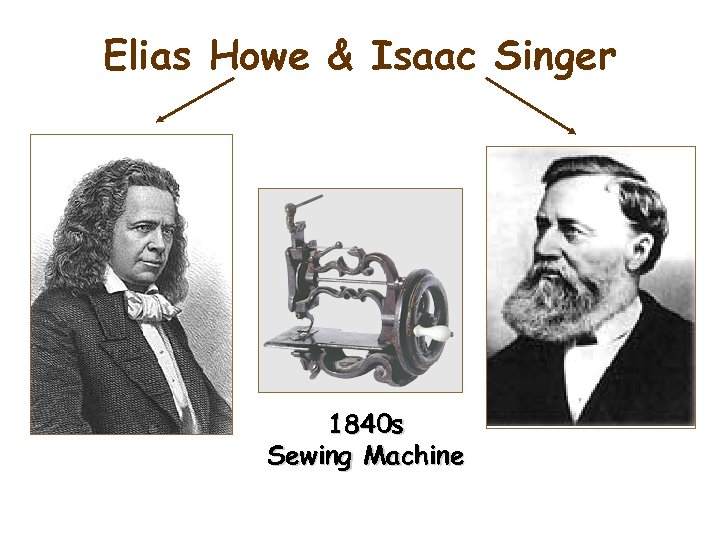
Elias Howe & Isaac Singer 1840 s Sewing Machine
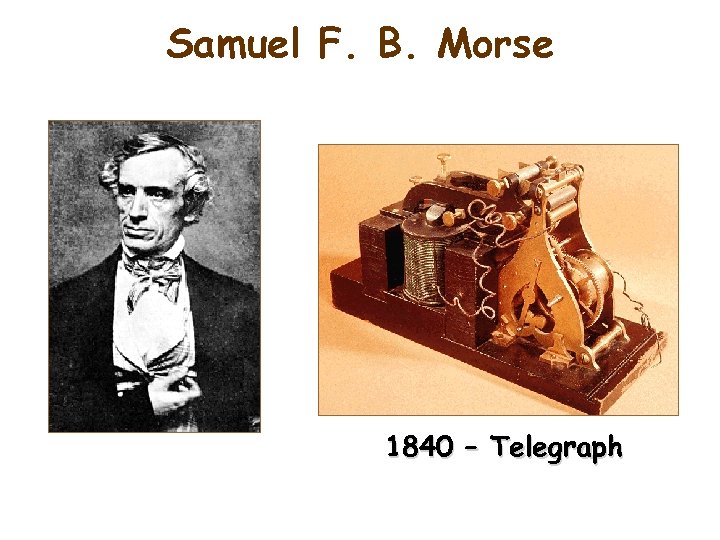
Samuel F. B. Morse 1840 – Telegraph
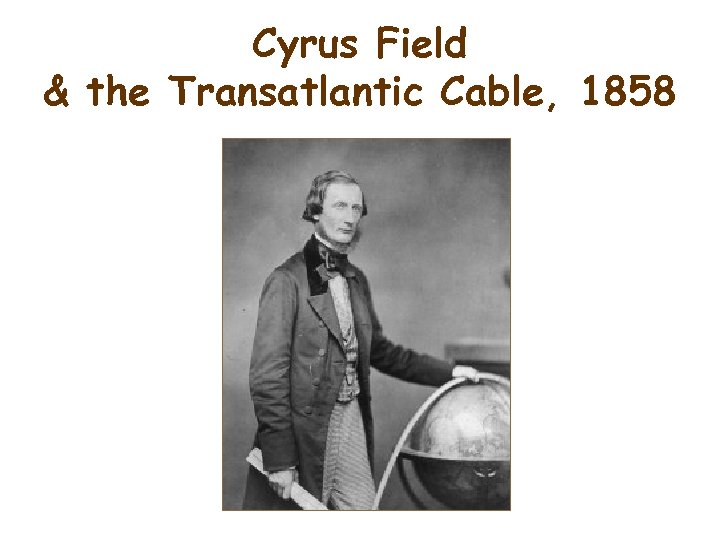
Cyrus Field & the Transatlantic Cable, 1858
The “American Dream” z They all regarded material advance as the natural fruit of American republicanism & proof of the country’s virtue and promise. A German visitor in the 1840 s, Friedrich List, observed: Anything new is quickly introduced here, including all of the latest inventions. There is no clinging to old ways. The moment an American hears the word “invention, ” he pricks up his ears.
Industrial Advancement • Innovations in transportation, agriculture, communication meant increased urban population • Embargoes, Non-intercourse and War of 1812 and tariff fueled US industry • 1820 -1860: Production reorganized into factories (mechanization) • Market Revolution: National network of industry and commerce
1820 Manufacturing • 2/3 of clothing made in home • Domestic System – Gain raw materials used in production – Distribute materials to workers – Pay them piecemeal • Very slow • Pay is low • Prices of goods are high
Changes in Manufacturing • Factories allow for all steps of production to be centralized • Cheap land to build factories • Immigration brings workers • Efficiency = less expensive goods • Use of power drive tools
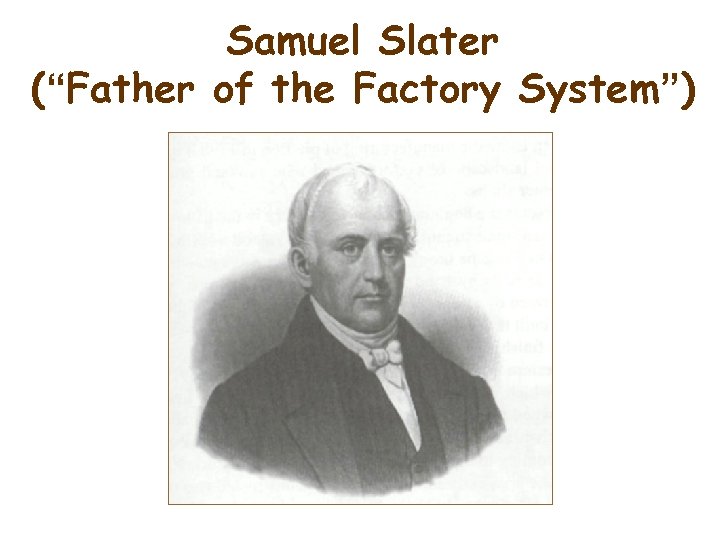
Samuel Slater (“Father of the Factory System”)

Eli Whitney’s Gun Factory Interchangeable Parts Rifle
Factory Working Conditions • • • Long hours Low pay Unsafe and unsanitary Government did very little to regulate Unions were usually outlawed in 1820 s Children made up a high percentage of workers
Jackson and Van Buren • Politicians begin listening to “common man” as they participate more in politics • Van Buren establishes 10 -hr. day for federal employees in 1840 • More unions in 1830 s • Over 300, 000 strikes 1830 s • Unions usually unsuccessful due to strength of employers, ease of finding replacements • Panic of 1837 killed labor movement
Commonwealth v. Hunt • 1842: U. S. Supreme Court legalized unions stating they were honorable and peaceful
Improved technology in Printing • Adopted and improved upon British inventions • Drives cost of books down • Increased number of books • Increased literacy • Book business was $10 million/yr. business by 1850
In the South • Majority of cotton went to England, but larger amounts going North • Cotton dominates • Increased need for slavery
Textile Manufacturing • Leading U. S. industry 1820 -1860 • Centered in New England Mid-Atlantic – – Swift streams Ease of trade Large urban populations Poor farmland • 71% of manufacturing went on in New England by 1860
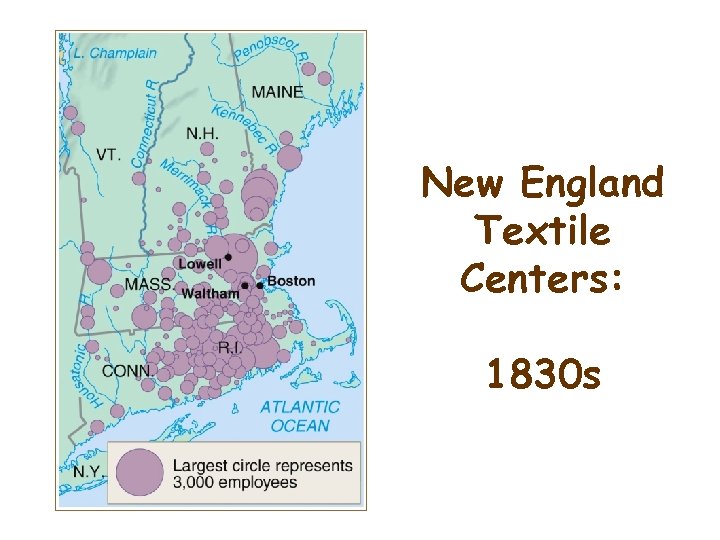
New England Textile Centers: 1830 s
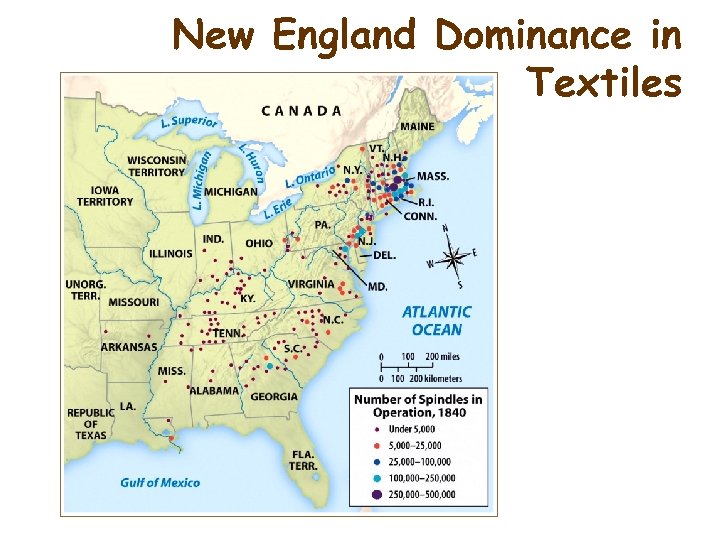
New England Dominance in Textiles
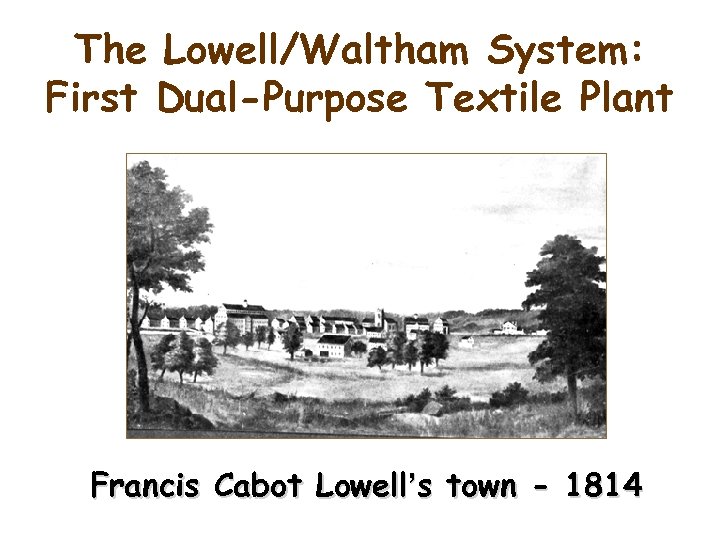
The Lowell/Waltham System: First Dual-Purpose Textile Plant Francis Cabot Lowell’s town - 1814
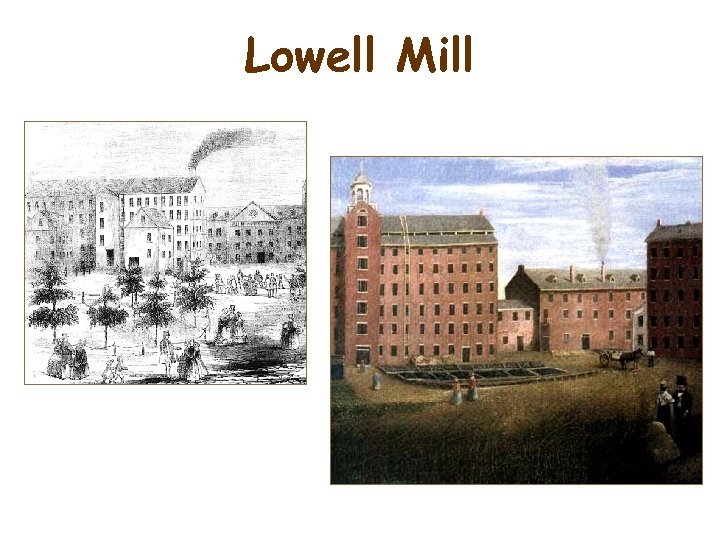
Lowell Mill
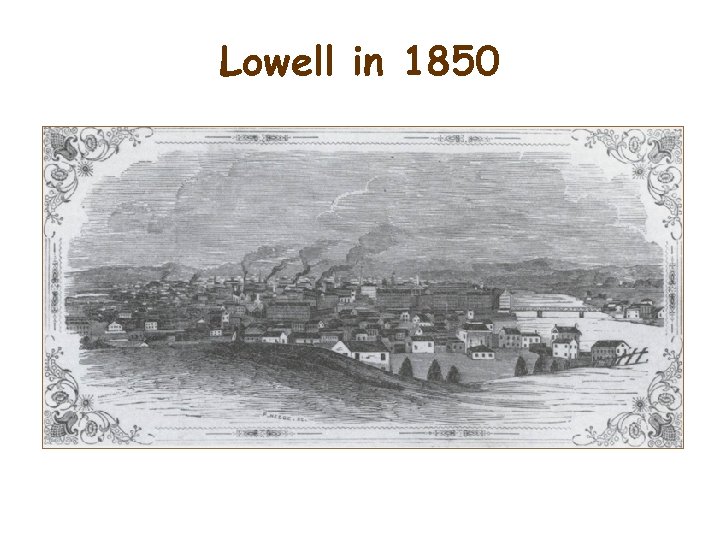
Lowell in 1850
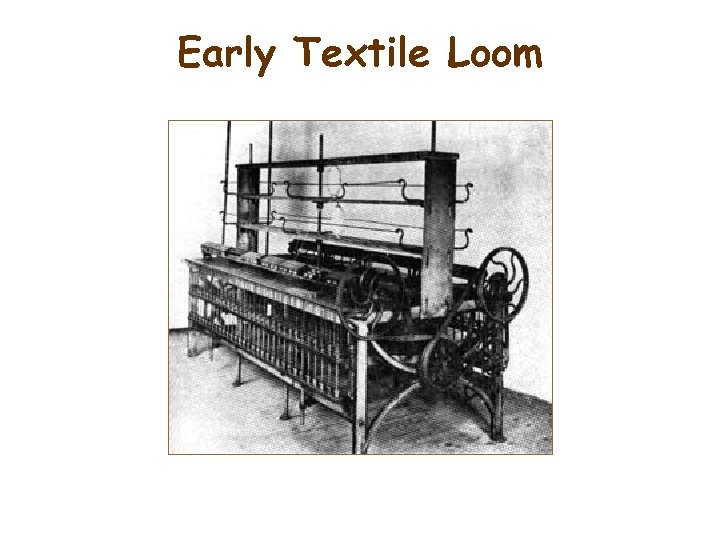
Early Textile Loom
Women Working Outside of Home • Usually worked as nurses, domestic servants or teachers • 1850: 10% of women worked outside of home • “Cult of Domesticity” glorified role of women as homemaker
Lowell Women • Made up 70% of work force • First women to labor outside of home in large numbers • Gave unmarried women the chance to leave the farm • 60% of Lowell’s workers were women between 15 -29
Lowell’s Working Conditions • Paid relatively well ($2. 40 -$3. 20/wk) – Domestic servants (&. 75/wk) – Seamstresses ($. 90/wk) • 12 hour days/6 days per week • Women often viewed this as a temporary job
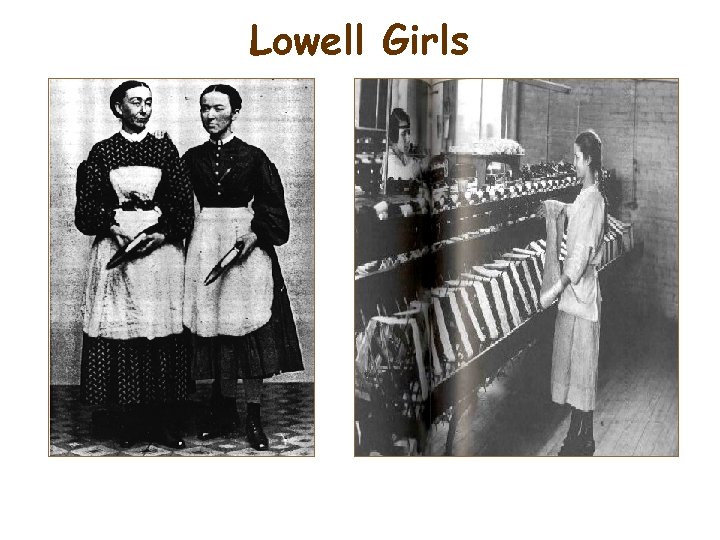
Lowell Girls
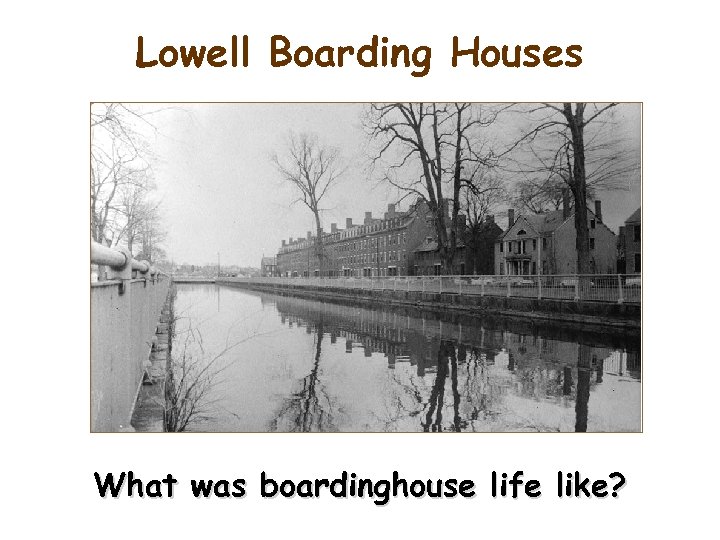
Lowell Boarding Houses What was boardinghouse life like?
Strict living Conditions • • Curfews Little Privacy 4 -6 girls in a room Doors locked Windows nailed Bad lighting and ventilation Very little job mobility
1834: Hard Times Hit Lowell • Falling prices, poor sales, lower profits • Owners cut salaries by 15% • Attempt to unionize and strike failed – Ease of replacements – Some wanted job – Short tenure of workers
Lowell turns to Immigrants • Immigration meant glut of workers • Would work less than women • By 1860: 50% of workers were Irish immigrants (8% in 1845)
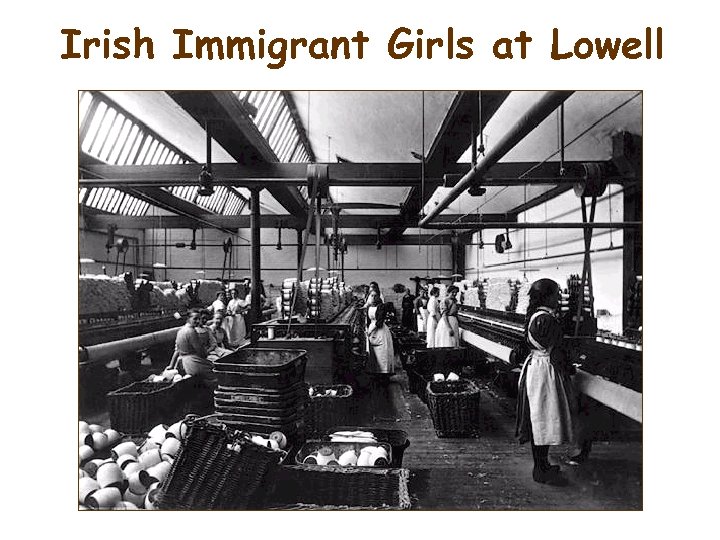
Irish Immigrant Girls at Lowell
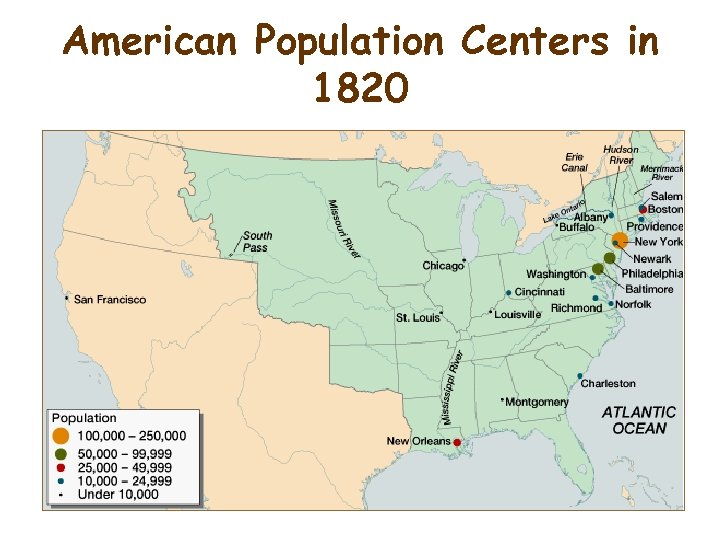
American Population Centers in 1820
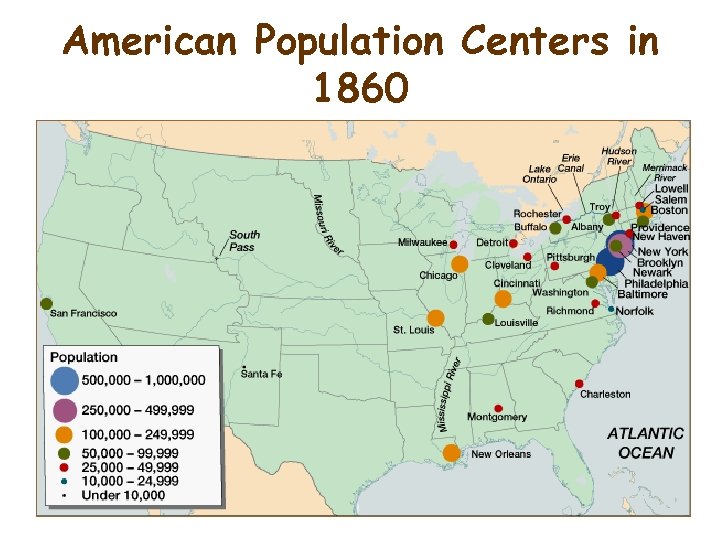
American Population Centers in 1860
Immigration Increases • • 1820: 128, 000 immigrants 1860: 2. 8 million Increases mean more job competition Increased nativism
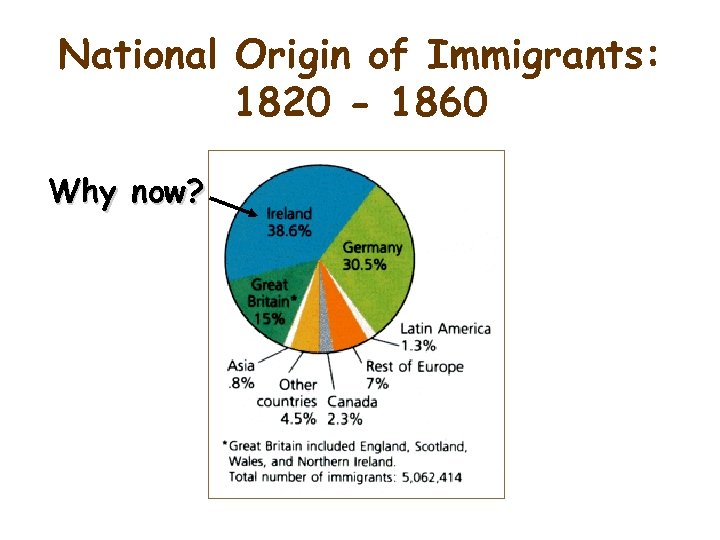
National Origin of Immigrants: 1820 - 1860 Why now?
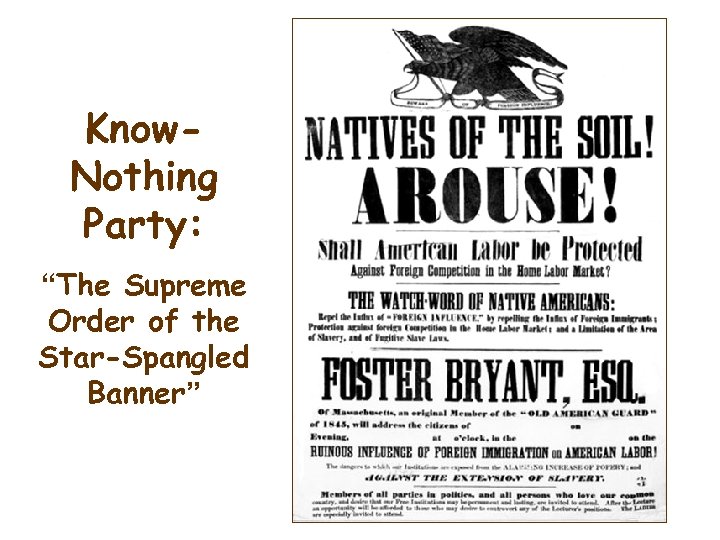
Know. Nothing Party: “The Supreme Order of the Star-Spangled Banner”
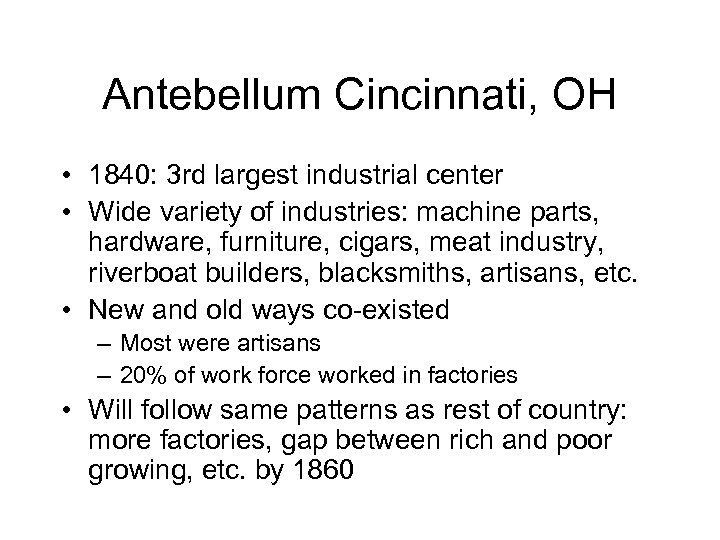
Antebellum Cincinnati, OH • 1840: 3 rd largest industrial center • Wide variety of industries: machine parts, hardware, furniture, cigars, meat industry, riverboat builders, blacksmiths, artisans, etc. • New and old ways co-existed – Most were artisans – 20% of work force worked in factories • Will follow same patterns as rest of country: more factories, gap between rich and poor growing, etc. by 1860
Impact of Immigration on Cincinnati • By 1850, 50% of Cincinnati residents were German or descended from Germans.
Скачать презентацию Antebellum Industry and Expansion Chapter 14 Objective
31eac784148f5378bda884566862f992.ppt