 Скачать презентацию Annual BVA-ABA Conference Brussels 15 January 2016 Communication
a45c6eb079d2d7aa05918b2fe194a7f8.ppt
- Количество слайдов: 39



Annual BVA-ABA Conference Brussels, 15 January 2016 Communication to the Public: A Critical Analysis Prof. Martin Senftleben VU University Amsterdam Bird & Bird, The Hague

Current Challenges
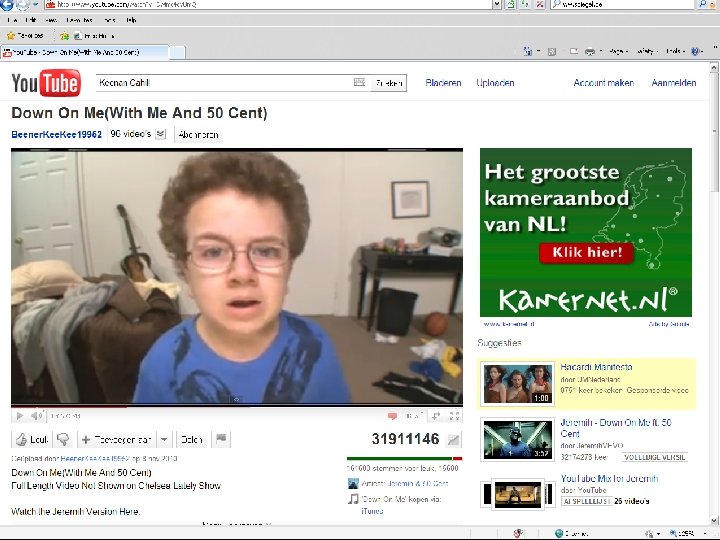
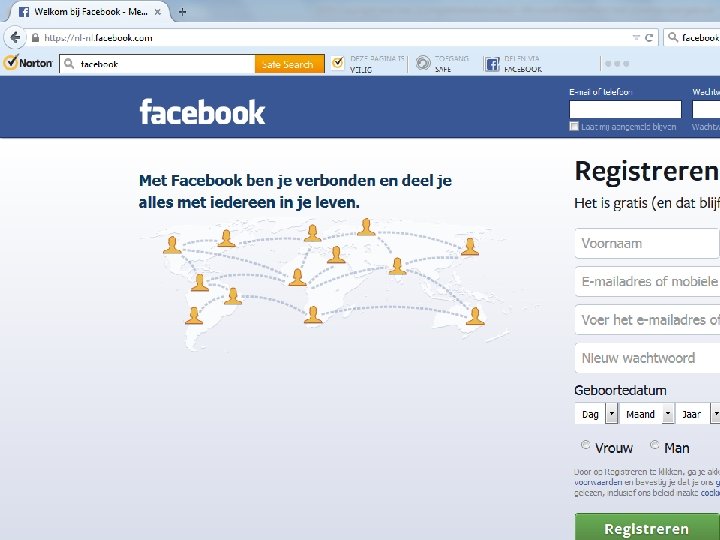
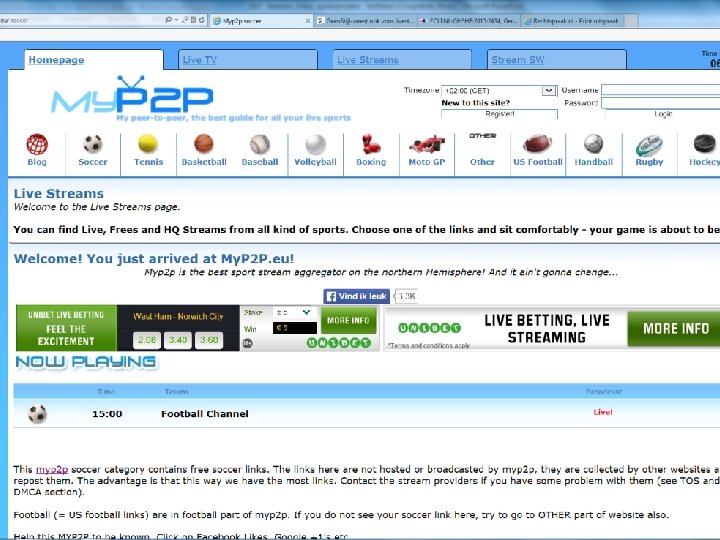
Infringement? BGH: Paperboy
BGH, 17 July 2003, case I ZR 259/00, ‘Paperboy’ • publisher of ‘Handelsblatt’ and DM – invokes copyright to articles – offers articles on own internet platform • www. paperboy. de – search engine for news on current topics – searches and indexes contents of several hundred news providers – search result contains deeplinks and short text fragments taken from articles
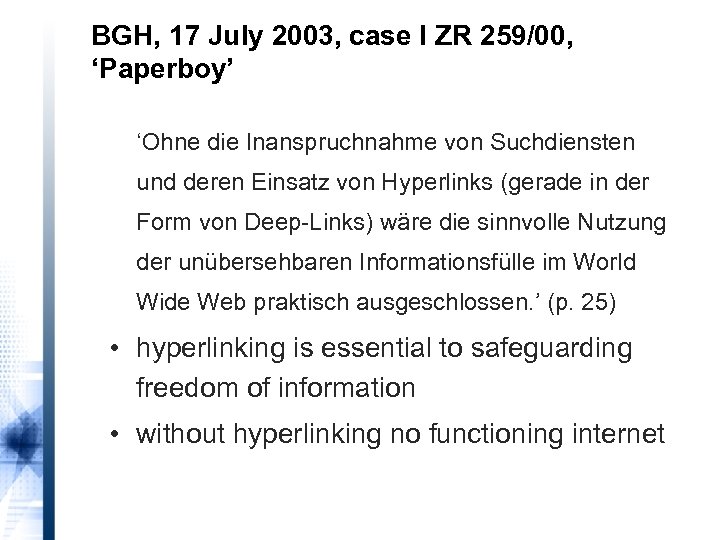
BGH, 17 July 2003, case I ZR 259/00, ‘Paperboy’ ‘Ohne die Inanspruchnahme von Suchdiensten und deren Einsatz von Hyperlinks (gerade in der Form von Deep-Links) wäre die sinnvolle Nutzung der unübersehbaren Informationsfülle im World Wide Web praktisch ausgeschlossen. ’ (p. 25) • hyperlinking is essential to safeguarding freedom of information • without hyperlinking no functioning internet
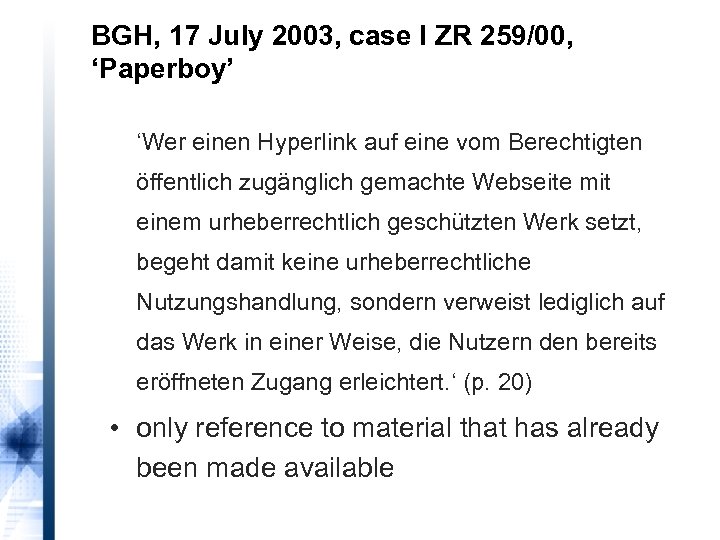
BGH, 17 July 2003, case I ZR 259/00, ‘Paperboy’ ‘Wer einen Hyperlink auf eine vom Berechtigten öffentlich zugänglich gemachte Webseite mit einem urheberrechtlich geschützten Werk setzt, begeht damit keine urheberrechtliche Nutzungshandlung, sondern verweist lediglich auf das Werk in einer Weise, die Nutzern den bereits eröffneten Zugang erleichtert. ‘ (p. 20) • only reference to material that has already been made available
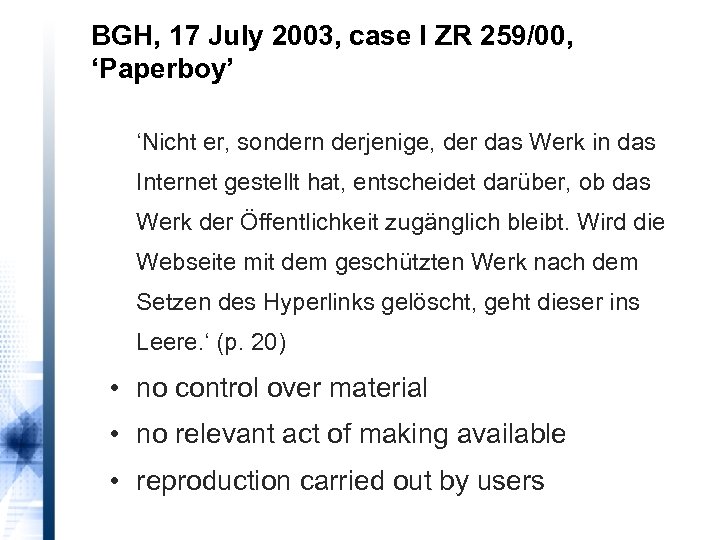
BGH, 17 July 2003, case I ZR 259/00, ‘Paperboy’ ‘Nicht er, sondern derjenige, der das Werk in das Internet gestellt hat, entscheidet darüber, ob das Werk der Öffentlichkeit zugänglich bleibt. Wird die Webseite mit dem geschützten Werk nach dem Setzen des Hyperlinks gelöscht, geht dieser ins Leere. ‘ (p. 20) • no control over material • no relevant act of making available • reproduction carried out by users
Infringement? CJEU: Svensson
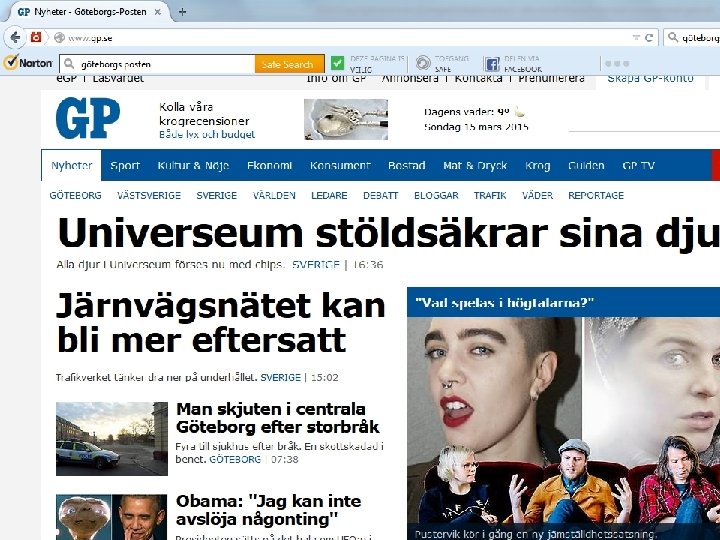
CJEU, 13 February 2014, case C-466/12, Svensson • Svensson and other journalists – wrote articles for Götenborgs-Posten – published in the newspaper and on freely available website – assert copyright against use of links • Retriever – is a news aggregator – exploits a website with lists of links to articles on other websites, including Svensson’s articles
Available options • comparable with traditional hyperlinks • act of secondary communication to the public • mere reference • other organisation • no control • broader public
CJEU, 13 February 2014, case C-466/12, Svensson • intervention? ‘In the circumstances of this case, it must be observed that the provision, on a website, of clickable links to protected works published without any access restrictions on another site, affords users of the first site direct access to those works. ’ (para. 18) • thus: relevant intervention, the work is made available • first criterion is fulfilled
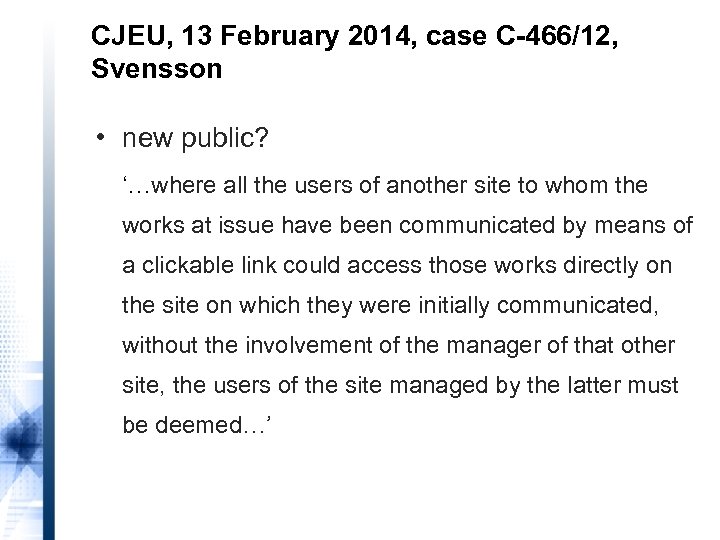
CJEU, 13 February 2014, case C-466/12, Svensson • new public? ‘…where all the users of another site to whom the works at issue have been communicated by means of a clickable link could access those works directly on the site on which they were initially communicated, without the involvement of the manager of that other site, the users of the site managed by the latter must be deemed…’
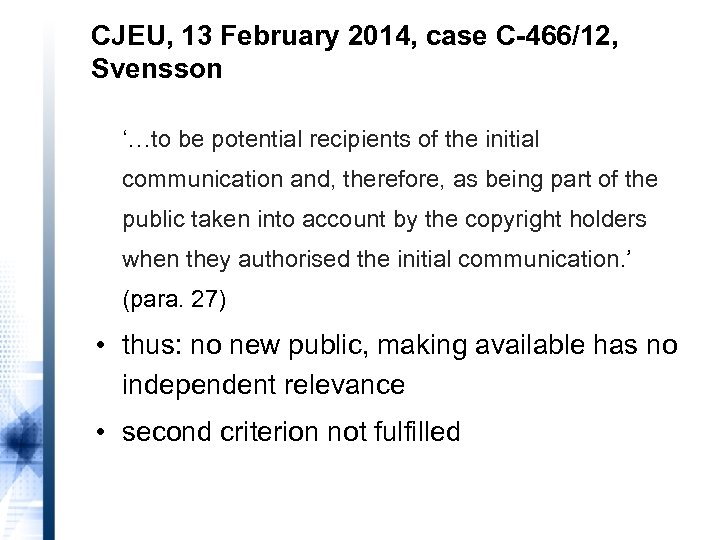
CJEU, 13 February 2014, case C-466/12, Svensson ‘…to be potential recipients of the initial communication and, therefore, as being part of the public taken into account by the copyright holders when they authorised the initial communication. ’ (para. 27) • thus: no new public, making available has no independent relevance • second criterion not fulfilled
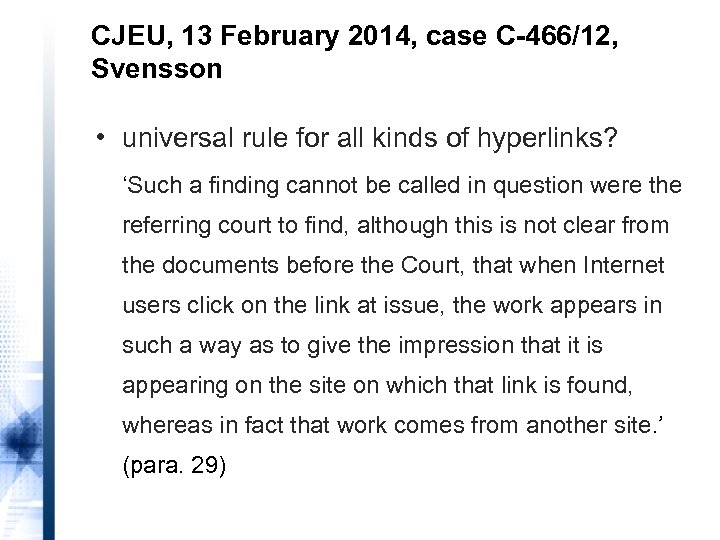
CJEU, 13 February 2014, case C-466/12, Svensson • universal rule for all kinds of hyperlinks? ‘Such a finding cannot be called in question were the referring court to find, although this is not clear from the documents before the Court, that when Internet users click on the link at issue, the work appears in such a way as to give the impression that it is appearing on the site on which that link is found, whereas in fact that work comes from another site. ’ (para. 29)
A closer look at the ‘new public’ criterion
CJEU, 7 December 2006, case C-306/05, Rafael Hoteles ‘Thus, such a transmission is made to a public different from the public at which the original act of communication of the work is directed, that is, to a new public. ’ (para. 40) • unclear whether this is a subjective or rather objective criterion – subjective: intentions of copyright holder – objective: comparison of groups of recipients
CJEU, 13 October 2011, cases C-431/09 and C-432/09, Airfield ‘…a new public, that is to say, a public which was not taken into account by the authors of the protected works within the framework of an authorisation given to another person. ’ (para. 72) • in this case: subjective criterion • inquiry into intentions of the copyright holder seems decisive
CJEU, 7 March 2013, case C-607/11, TVCatchup ‘…a new public which was not considered by the authors concerned when they authorised the broadcast in question. ’ (para. 38) • again: subjective criterion • inquiry into intentions of the copyright holder seems decisive
CJEU, 13 February 2014, case C-466/12, Svensson ‘…to be potential recipients of the initial communication and, therefore, as being part of the public taken into account by the copyright holders when they authorised the initial communication. ’ (para. 27) • assumption of intention to reach entire internet community • still subjective?
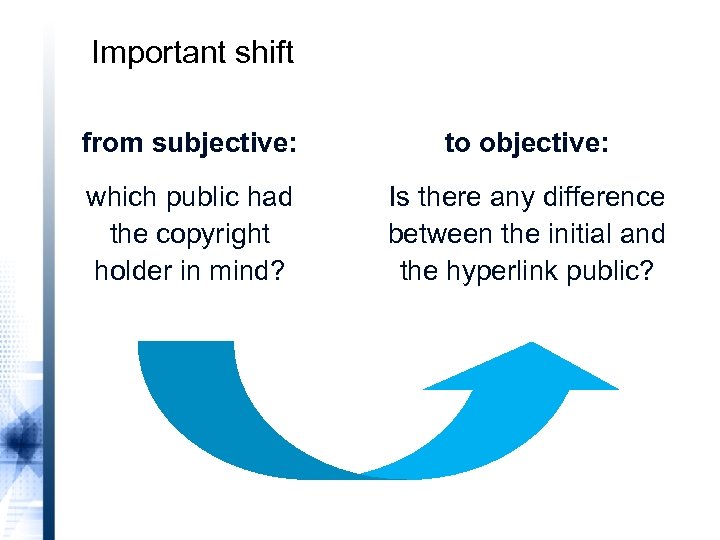
Important shift from subjective: to objective: which public had the copyright holder in mind? Is there any difference between the initial and the hyperlink public?
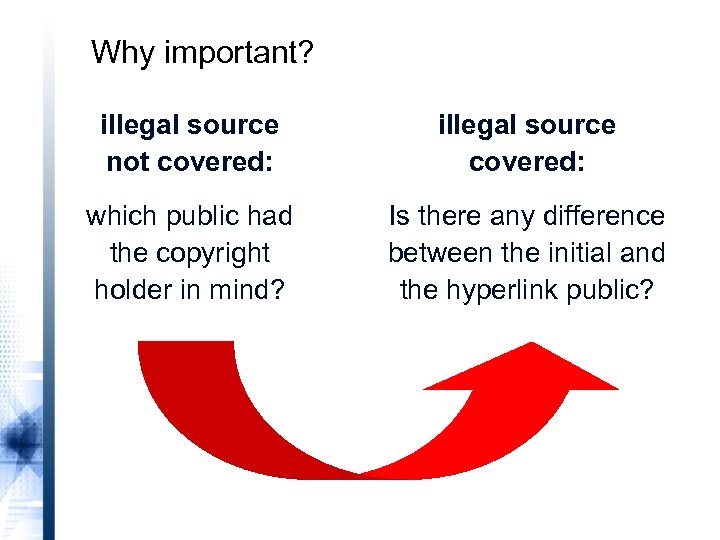
Why important? illegal source not covered: illegal source covered: which public had the copyright holder in mind? Is there any difference between the initial and the hyperlink public?
Links to illegal content
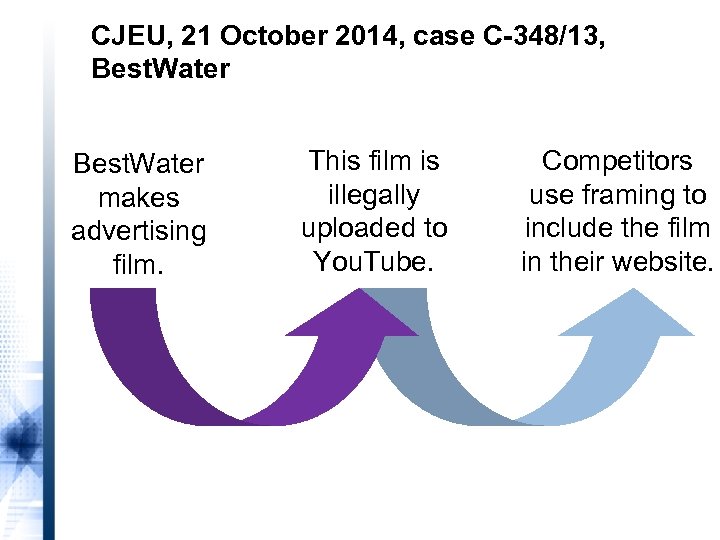
CJEU, 21 October 2014, case C-348/13, Best. Water makes advertising film. This film is illegally uploaded to You. Tube. Competitors use framing to include the film in their website.
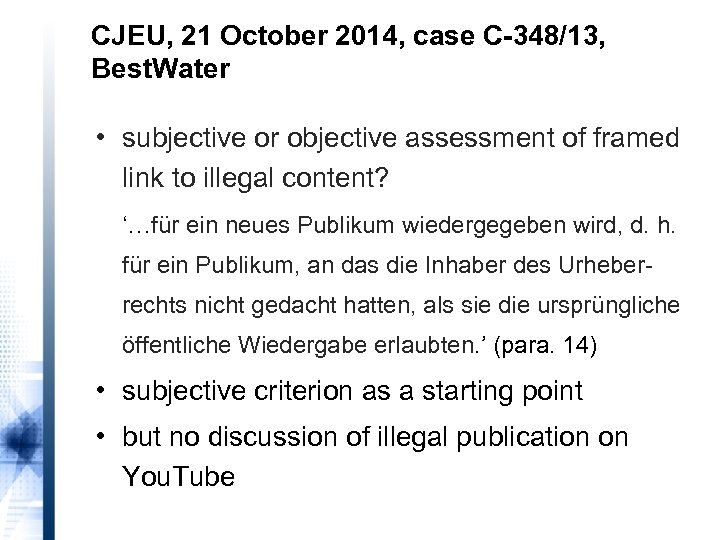
CJEU, 21 October 2014, case C-348/13, Best. Water • subjective or objective assessment of framed link to illegal content? ‘…für ein neues Publikum wiedergegeben wird, d. h. für ein Publikum, an das die Inhaber des Urheberrechts nicht gedacht hatten, als sie die ursprüngliche öffentliche Wiedergabe erlaubten. ’ (para. 14) • subjective criterion as a starting point • but no discussion of illegal publication on You. Tube
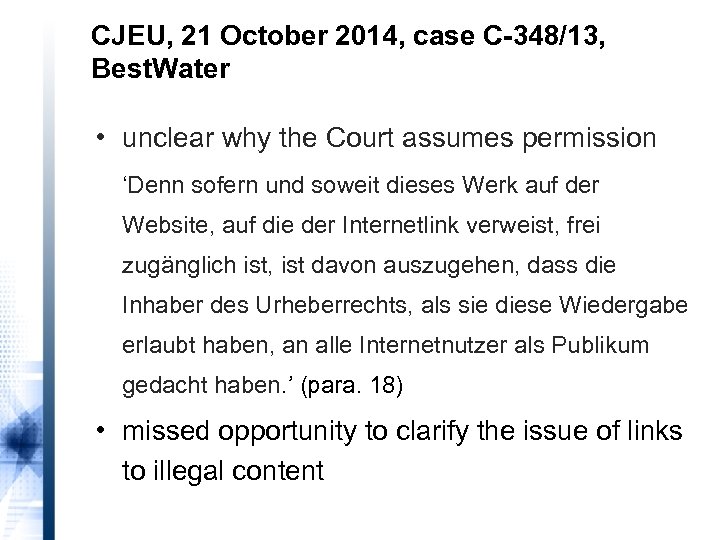
CJEU, 21 October 2014, case C-348/13, Best. Water • unclear why the Court assumes permission ‘Denn sofern und soweit dieses Werk auf der Website, auf die der Internetlink verweist, frei zugänglich ist, ist davon auszugehen, dass die Inhaber des Urheberrechts, als sie diese Wiedergabe erlaubt haben, an alle Internetnutzer als Publikum gedacht haben. ’ (para. 18) • missed opportunity to clarify the issue of links to illegal content
Pending case: HR: Geen Stijl Media
Critical Remarks
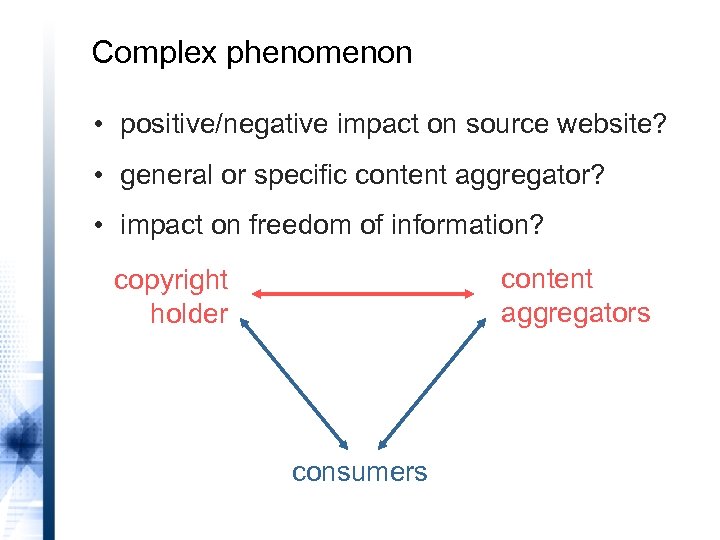
Complex phenomenon • positive/negative impact on source website? • general or specific content aggregator? • impact on freedom of information? content aggregators copyright holder consumers
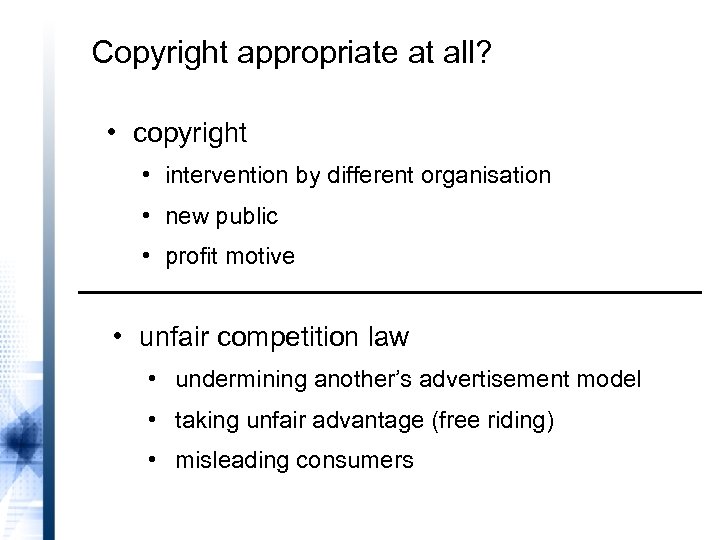
Copyright appropriate at all? • copyright • intervention by different organisation • new public • profit motive • unfair competition law • undermining another’s advertisement model • taking unfair advantage (free riding) • misleading consumers
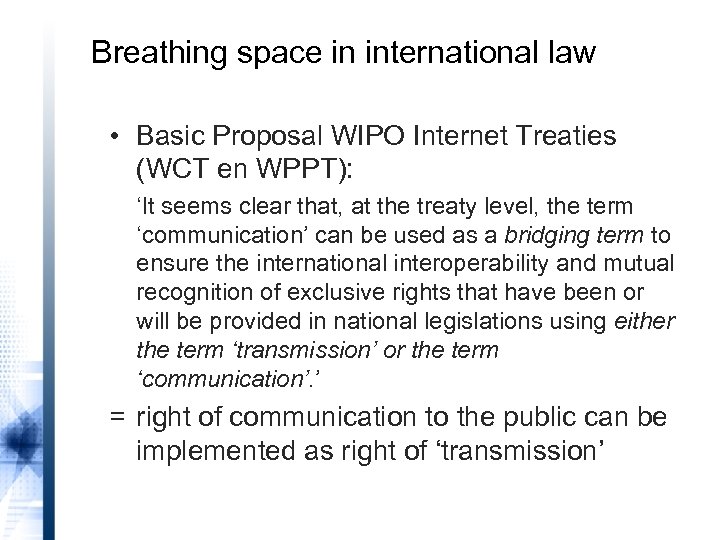
Breathing space in international law • Basic Proposal WIPO Internet Treaties (WCT en WPPT): ‘It seems clear that, at the treaty level, the term ‘communication’ can be used as a bridging term to ensure the international interoperability and mutual recognition of exclusive rights that have been or will be provided in national legislations using either the term ‘transmission’ or the term ‘communication’. ’ = right of communication to the public can be implemented as right of ‘transmission’
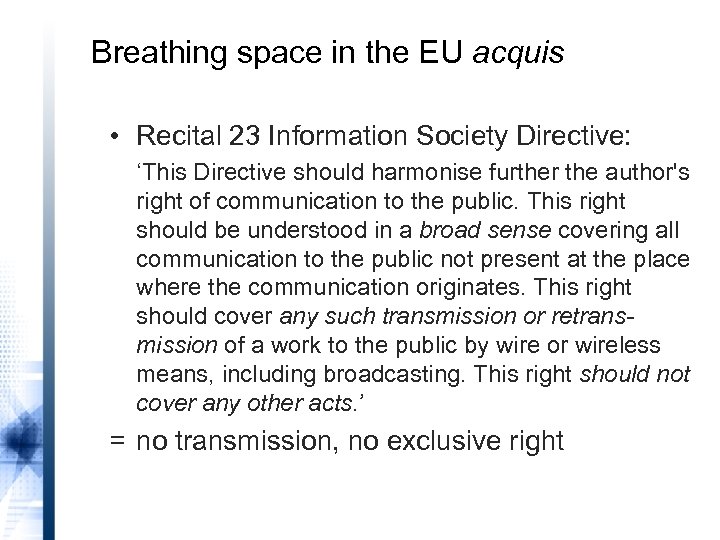
Breathing space in the EU acquis • Recital 23 Information Society Directive: ‘This Directive should harmonise further the author's right of communication to the public. This right should be understood in a broad sense covering all communication to the public not present at the place where the communication originates. This right should cover any such transmission or retransmission of a work to the public by wire or wireless means, including broadcasting. This right should not cover any other acts. ’ = no transmission, no exclusive right
CJEU offers unnecessary WCT-plus protection • hyperlinking = reference to content • hyperlinking ≠ transmission of content • thus: no obligation to apply copyright • application in case of new public is optional expansion of protection • unfair competition law more flexible – individual assessment case-by-case – no prohibition of formalities
The end. Thank you! contact: m. r. f. senftleben@vu. nl
Скачать презентацию Annual BVA-ABA Conference Brussels 15 January 2016 Communication
a45c6eb079d2d7aa05918b2fe194a7f8.ppt