 Скачать презентацию Ann Benson gben brightok net bensoneducation com 1
f1b51c2adfe4490dd5d075ba0f14f62b.ppt
- Количество слайдов: 33




Ann Benson gben@brightok. net bensoneducation. com 1
Essential Question Career clusters, career pathways and programs of study - - Another one of those “deals” that comes along, or the real “deal” that can change the way we do business? 2
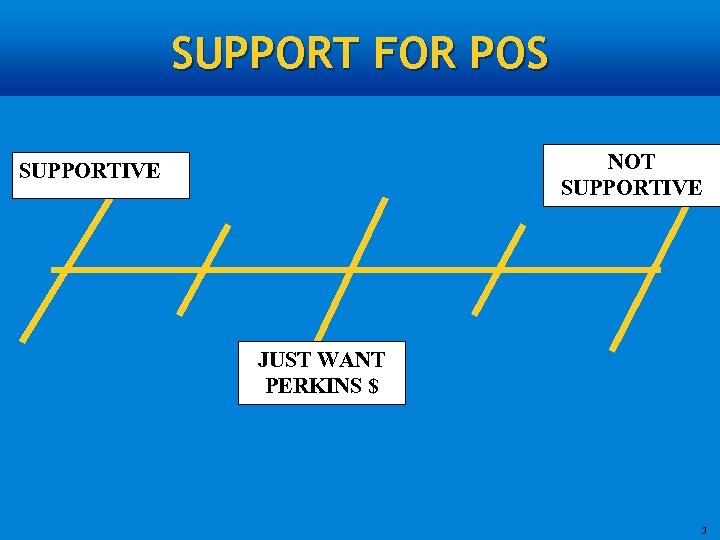
SUPPORT FOR POS NOT SUPPORTIVE JUST WANT PERKINS $ 3
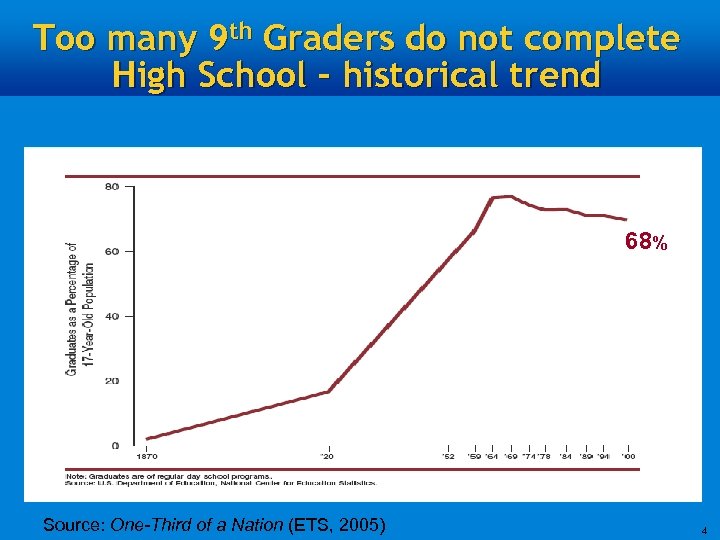
Too many 9 th Graders do not complete High School – historical trend 68% Source: One-Third of a Nation (ETS, 2005) 4
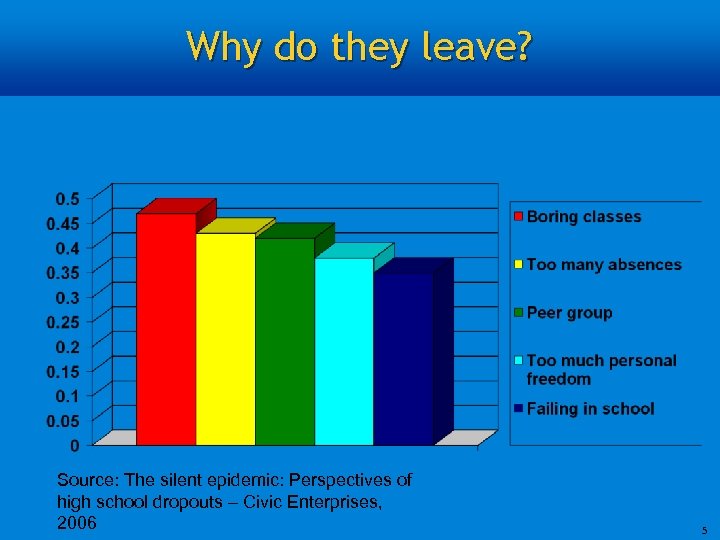
Why do they leave? Source: The silent epidemic: Perspectives of high school dropouts – Civic Enterprises, 2006 5
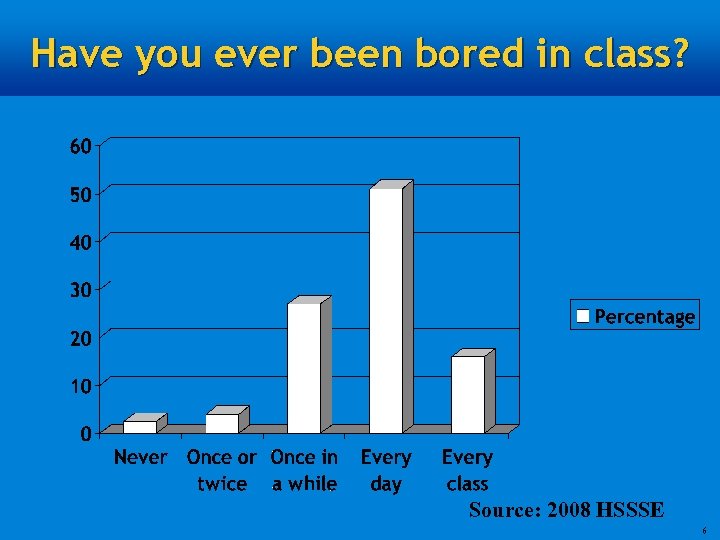
Have you ever been bored in class? Source: 2008 HSSSE 6
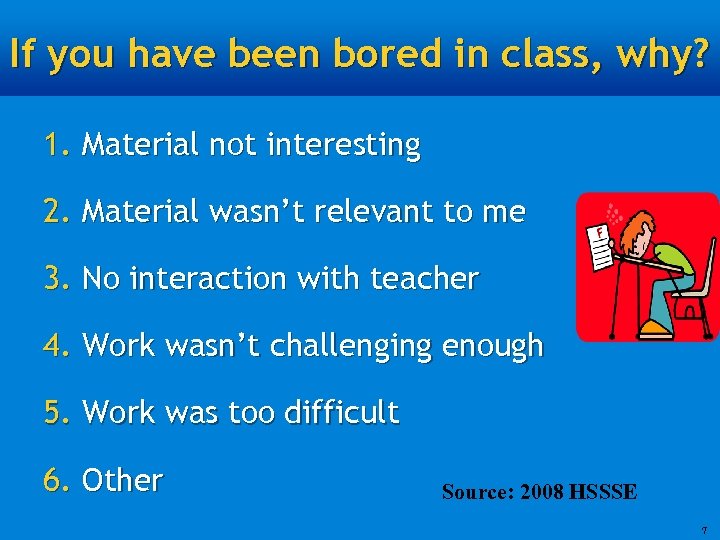
If you have been bored in class, why? 1. Material not interesting 2. Material wasn’t relevant to me 3. No interaction with teacher 4. Work wasn’t challenging enough 5. Work was too difficult 6. Other Source: 2008 HSSSE 7
Why Career Clusters? New Definition of CTE “The global economy requires an educational system that is seamless with numerous exit and reentry points and a curriculum that emphasizes employability and technical skills integrated with rigorous academic content. To effect this shift, CTE and the broader education and workforce systems must respond. So how do we get from where we are to where we need to be? ” Career Clusters: A Plan of Education for a Global Economy States’ Career Clusters Initiative 8
National Surveys: From 2004 to 2007 § For each Career Cluster, the number of states reporting implementation has increased. (Largest increases were in Education and Training and STEM. ) § Secondary implementation increased by 12%, two-year colleges by 43%, and four-year universities by 74%. 9
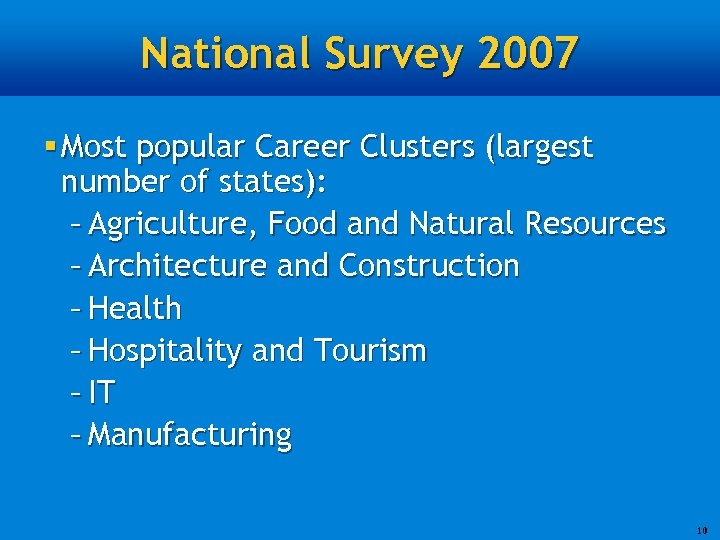
National Survey 2007 § Most popular Career Clusters (largest number of states): – Agriculture, Food and Natural Resources – Architecture and Construction – Health – Hospitality and Tourism – IT – Manufacturing 10
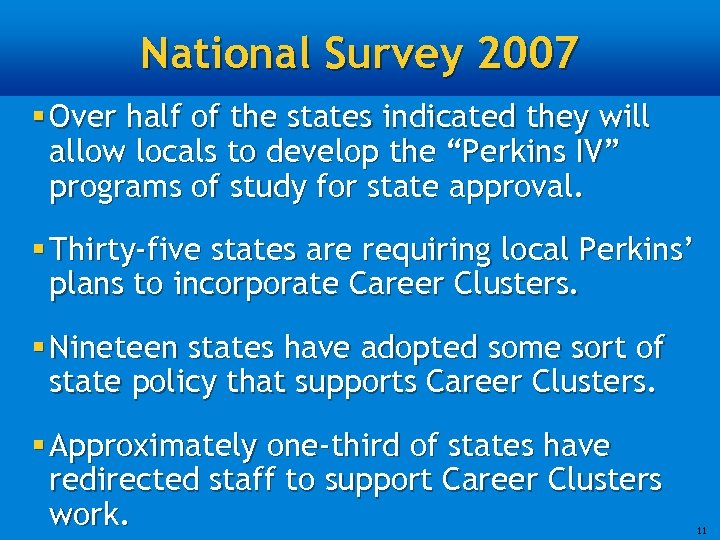
National Survey 2007 § Over half of the states indicated they will allow locals to develop the “Perkins IV” programs of study for state approval. § Thirty-five states are requiring local Perkins’ plans to incorporate Career Clusters. § Nineteen states have adopted some sort of state policy that supports Career Clusters. § Approximately one-third of states have redirected staff to support Career Clusters work. 11
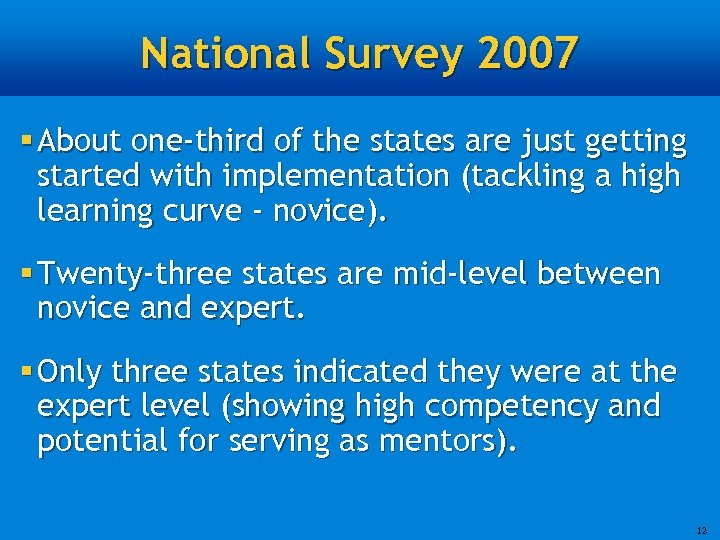
National Survey 2007 § About one-third of the states are just getting started with implementation (tackling a high learning curve - novice). § Twenty-three states are mid-level between novice and expert. § Only three states indicated they were at the expert level (showing high competency and potential for serving as mentors). 12
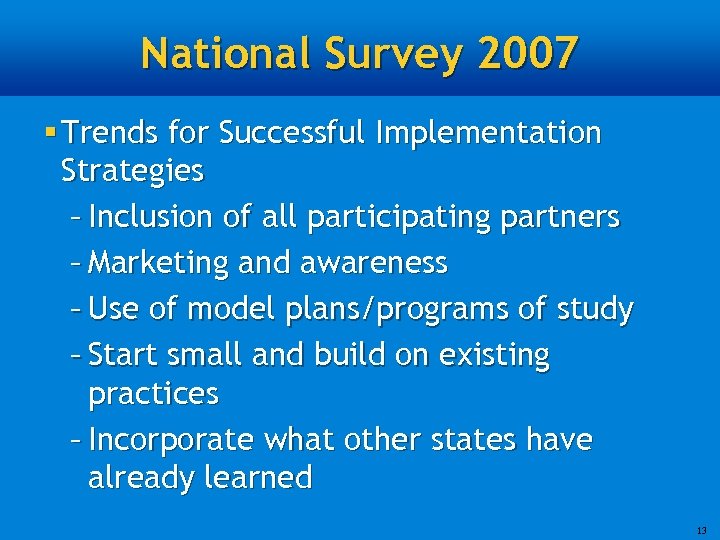
National Survey 2007 § Trends for Successful Implementation Strategies – Inclusion of all participating partners – Marketing and awareness – Use of model plans/programs of study – Start small and build on existing practices – Incorporate what other states have already learned 13
§Someone has to take the lead with local implementation— If not you, then WHO? 14
“Need to Know” Information about Perkins? § At least one Program of Study must be in place during the next school year; § The Programs of Study must include courses at both the secondary and postsecondary levels; 15
“Need to Know” Information about Perkins? § The Programs of Study must include both academic and CTE/degree major courses; and § The Programs of Study must lead somewhere – a credential, certificate, license, degree, etc. 16
So where do Career Clusters fit in? What are they? § Career Clusters are groupings of occupations and industries § A Career Pathway represents a grouping of occupations within a cluster based on commonalities § A Program of Study is the plan to get students from high school entry to success in careers and postsecondary education. 17
Let’s say it again…… § A Program of Study is the plan to get students from high school entry to success in careers and postsecondary education. § It’s not hard, but someone has to take the lead and dedicate the time. 18
What’s Most Important? § NOT – What you call courses. § NOT – How many courses you take. § It’s being sure students get the content they need. § The Key is the Knowledge and Skills Statements. 19
www. careerclusters. org 20
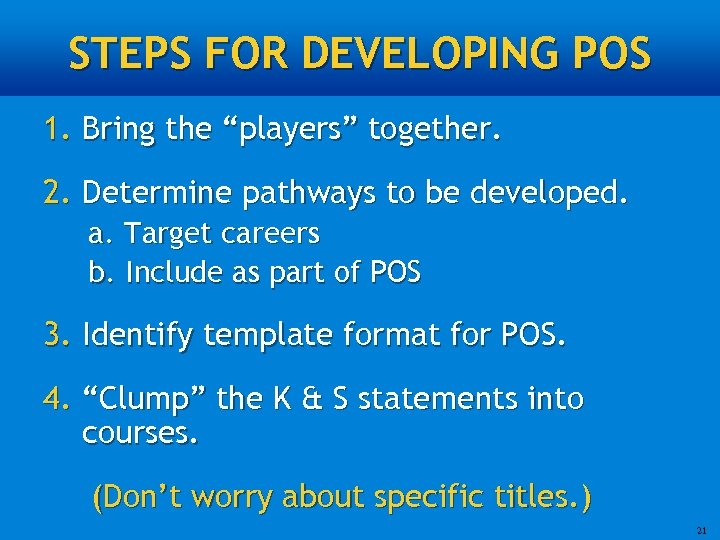
STEPS FOR DEVELOPING POS 1. Bring the “players” together. 2. Determine pathways to be developed. a. Target careers b. Include as part of POS 3. Identify template format for POS. 4. “Clump” the K & S statements into courses. (Don’t worry about specific titles. ) 21
STEPS FOR DEVELOPING POS 5. Write course descriptions based on K & S. 6. Identify academic courses to support K & S. 7. Crosswalk to ensure appropriate local, state and national standards are met. 8. Remember the target audience— Students! 22
Other Hints for Development § Don’t “forcefeed” existing courses § Don’t worry about course titles § Don’t try to include everything-focus on the knowledge and skills § Do prepare for lots of PD § Be willing to repeat yourself 23
POS Checklist þAre both academic and degree major courses included? þAre both secondary and postsecondary courses included? þDoes coursework reflect the K & S? þDo courses represent a sequence of instruction that leads to a degree, certificate or credential? 24
POS Checklist, con’t. þDo courses represent a coherent and rigorous program of studies? þHave courses been cross-referenced against state and national standards? þDoes completion of the high school courses ensure success at the postsecondary level? þDoes the high school plan reflect opportunities for postsecondary enrollment? 25
Why Do All This? § Worst Reasons!!! – Perkins Legislation—Just to get the money – Someone says we have to 26
Why Do All This? § Best Reasons!!! – It is best for students – It links the various levels of education – It causes academic courses and CTE/degree major courses to have a linkage – It gives faculty members a reason to work together 27
Why Do All This? *It puts a “reason” into what students are learning *Reduce remediation *Increase academic and career success 28
Leaders Must Do Hard Things… “Far too many young people today enter high school at risk of becoming “lost in transition” because our K-20 educational system has failed in its duty to build clear pathways to academic and career success. This tragic waste of human resources will not only condemn millions of adults in the next generation to unfulfilling lives marked by low-wage jobs and unrealized potential, . . Source: Lost in Transition, 2008 29
. . it will threaten the economic security and social stability of our states and nation. ” Source: Lost in Transition, 2008 30

We’ve Got a Choice…. 31
Or, Stick Our Necks Out and Move Forward!! 32
If I can provide you with any assistance, please contact: Ann Benson 405 -743 -2919 (office) 405 -880 -5383 (cell) gben@brightok. net or bensoneducation. com 33
Скачать презентацию Ann Benson gben brightok net bensoneducation com 1
f1b51c2adfe4490dd5d075ba0f14f62b.ppt